
8 Best Chest Freezers of 2026
This post contains affiliate links. As an Amazon Associate, we earn from qualifying purchases.
The Hamilton Beach 17 cu ft Chest Freezer is our top pick for those needing reliable, large-capacity storage with garage-ready performance. For smaller spaces or tighter budgets, the Midea 7.0 Cu.ft Convertible Freezer stands out with its flexibility and strong temperature retention.
Finding the right chest freezer isn’t just about keeping things cold, it’s about matching your storage habits, space, and climate. Too often, people end up with units that are either too small, too inefficient, or unsuitable for their environment.
This guide cuts through the noise by focusing on what matters: real-world reliability, consistent temperatures, and practical features like convertible modes and garage readiness. I researched each model based on specs, owner feedback, and how well it serves different household needs.
Top 8 Chest Freezers in the Market
The Best Chest Freezers, Reviewed
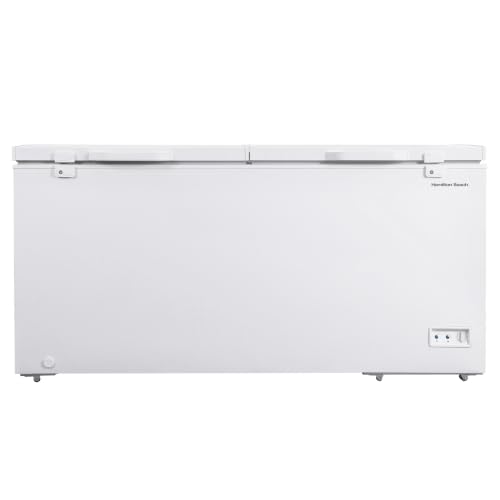
Hamilton Beach 17 cu ft Chest Freezer
Strengths
- High storage capacity
- Stay-open lid
- Front-access drain
- Sturdy basket
- Garage-ready
Trade-offs
- Large footprint
- Higher energy consumption
- No convertible mode
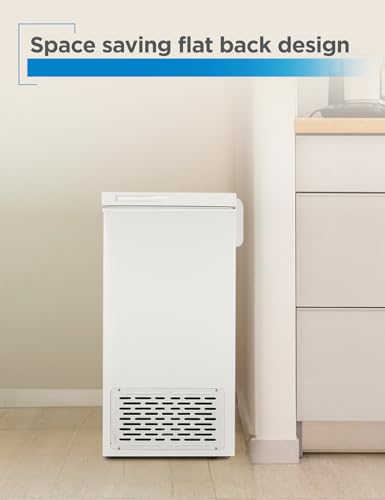
At 17 cu ft, this Hamilton Beach is in a different league, built for serious bulk storage. It’s the only one in this list that truly serves large families or homesteaders who buy meat by the quarter-hog or freeze garden harvests. The flat-back design helps it fit flush against walls, and the stay-open lid is a standout when loading heavy trays.
Owners consistently praise the 7-setting thermostat and the front-access drain, which simplifies defrosting without moving the unit. It’s also garage-ready, though it lacks the convertible feature of smaller Midea models. Build quality feels solid, but at this size, noise and energy use are naturally higher. Still, for the capacity, it’s well-priced.
Video review
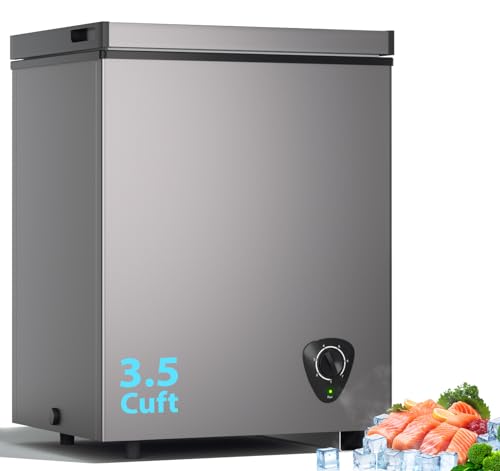
3.5 Cu.Ft Small Chest Freezer
Strengths
- Very low price
- Energy efficient
- Quiet operation
- Good temp range
- Compact size
Trade-offs
- Flimsy basket
- No convertible option
- Basic interior finish
This 3.5 cu ft freezer is one of the most affordable options here, and honestly, it shows. It delivers bare-bones functionality at a rock-bottom price. The seven temperature settings offer decent range, going as low as -11.4°F, which is colder than some larger models. It’s also impressively quiet under 40 dB and uses very little power.
But owners report the plastic feels thin, and the basket is flimsier than expected. It’s best seen as a temporary or supplemental freezer, perfect for a college student or a second unit in the garage. Compared to the Midea 3.5 cu ft, it lacks convertible mode and LED lighting, but it’s half the price. If you just need cold space and nothing more, it works.
Video review
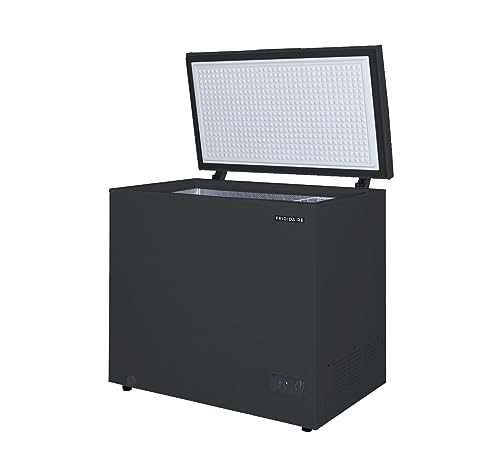
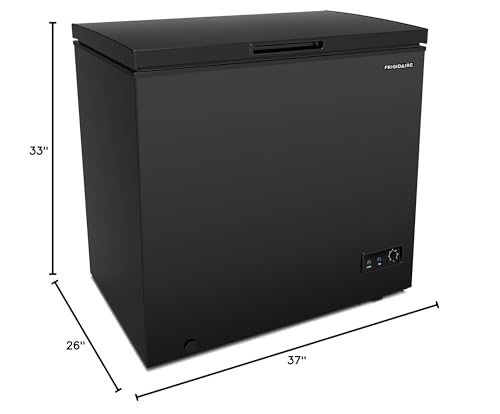
FRIGIDAIRE 7 Cu. Ft Chest Freezer

Strengths
- Aluminum interior
- Durable build
- 7 temp settings
- Exterior defrost drain
- Power indicator light
Trade-offs
- Louder than average
- No convertible option
- Heavier than competitors
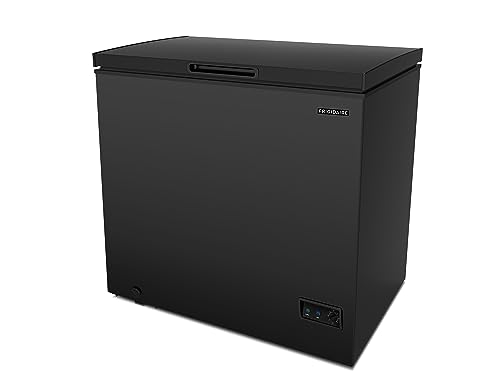
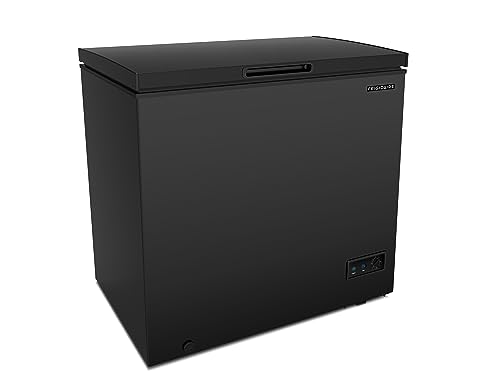
Frigidaire brings its reputation for durability here, and that shows in the aluminum interior liner, a feature usually found on more expensive models. That alone makes it stand out in the 7 cu ft class, where most competitors use plastic. It’s built to last, and owners note fewer issues with frost buildup and odors over time.
The 7-setting thermostat offers good control, and the removable vinyl-coated basket is sturdier than most. It doesn’t have the quietest compressor, some report a noticeable hum, but for a garage or basement, that’s not a dealbreaker. At this price, it’s clearly targeting families who want reliability, not just capacity. I’d pick this over similarly sized plastic-lined models for long-term use.
Product photos

Midea 7.0 Cu.ft Convertible Freezer

Strengths
- Convertible fridge-freezer
- LED interior light
- Garage-ready
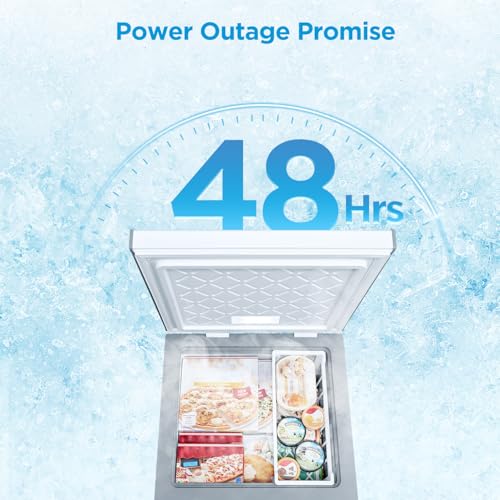
- 48-hour freeze retention
- Adjustable legs
Trade-offs
- Slightly higher energy use
- Cooling not ultra-fast
- Basket is plastic
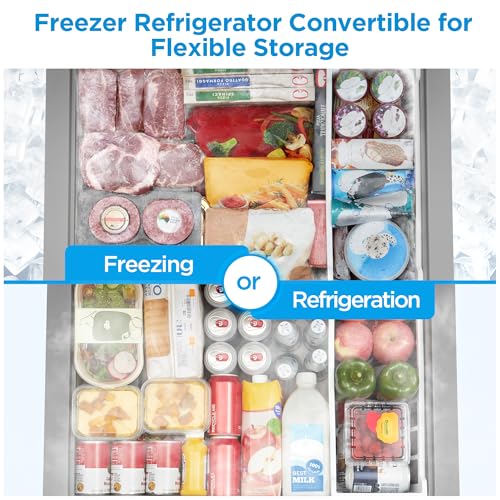
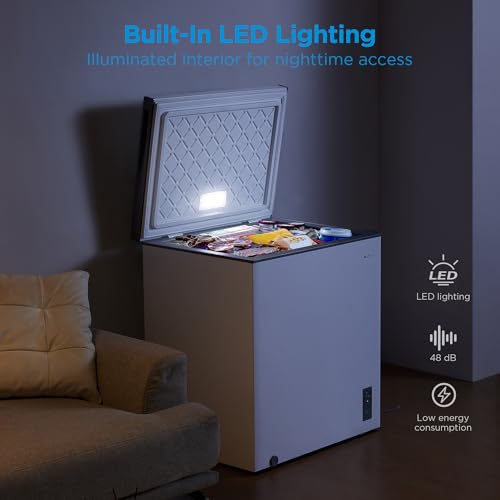
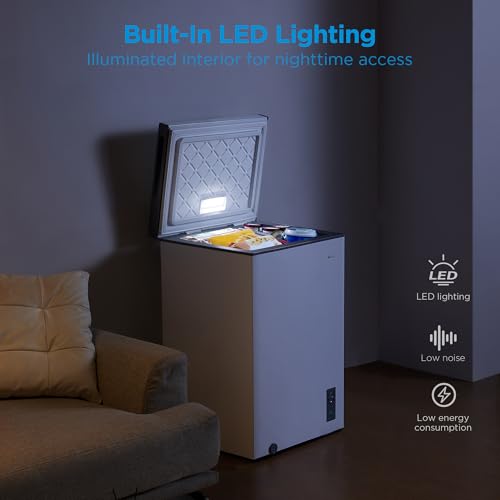
What makes this Midea special isn’t just the 7 cu ft capacity, it’s the convertible function. Being able to switch between fridge and freezer modes gives it unmatched flexibility, especially for seasonal needs like holiday prep or summer beverage chilling. The LED light is another underrated perk, making it much easier to find items in dim garages or basements.
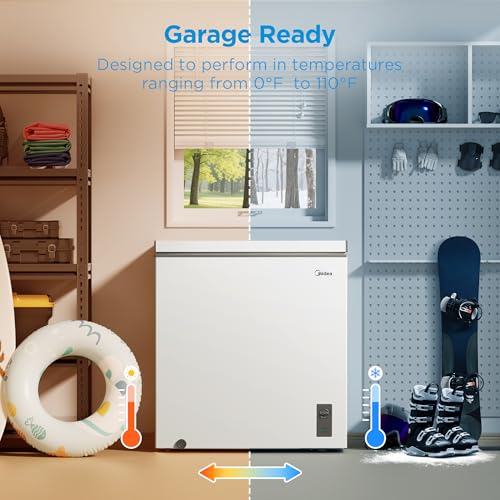
It’s also garage-ready across a wide temperature range and holds temps for up to 48 hours during outages, critical for peace of mind. Owners love the adjustable legs for uneven floors, and the removable basket works well for grouping items. While it doesn’t get quite as cold as the Kismile, the versatility makes it the smarter buy for dynamic households.
Product photos


Kismile 7.0 Cu Ft Chest Freezer

Strengths
- Very cold temperature range
- Three storage baskets
- Quiet operation
- Energy efficient
- Garage-ready design
Trade-offs
- Plastic interior
- No power outage rating
- Defrost drain not as accessible
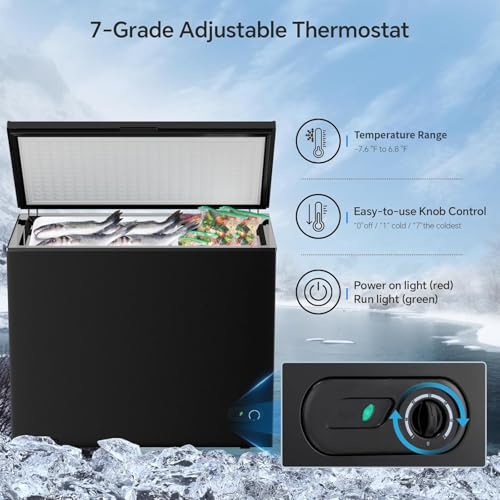
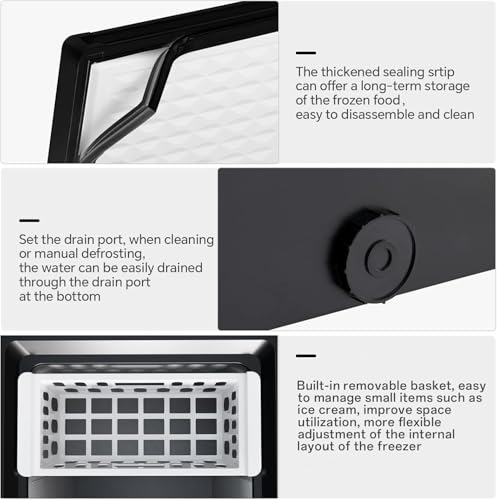
The Kismile stands out in the midsize class with a 7-grade thermostat and one of the coldest temp ranges on the list, down to -7.6°F. That kind of deep freeze capability is ideal for preserving meats, seafood, or breast milk long-term. Owners appreciate the three wire baskets, which make organization far easier than the single basket most models include.
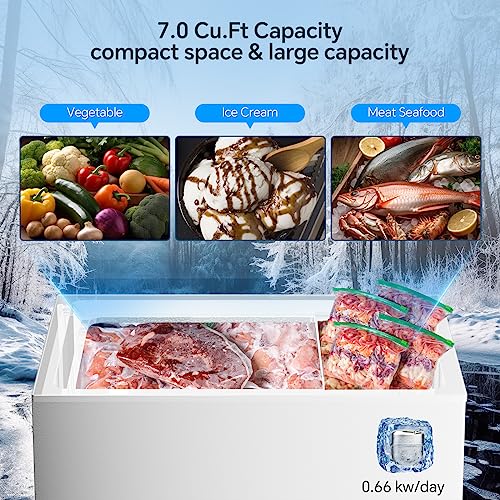
It’s also one of the quietest, with noise under 38 dB, and the hinge-style door that stays open is a small but meaningful convenience. The compressor is efficient at 0.66 kWh/day, though not the absolute lowest. Compared to the Frigidaire, it trades aluminum lining for quieter performance and better interior layout. For most home users, that’s a fair trade.
Product photos

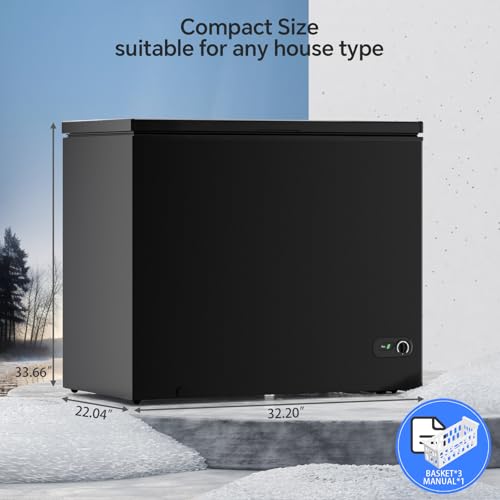
Midea 3.5 Cu.ft Compact Freezer

Strengths
- Convertible function
- LED interior light
- Garage-ready
- 48-hour freeze retention
- Adjustable legs
Trade-offs
- Higher price for size
- Slower cooling
- Plastic basket
This compact Midea punches above its weight by offering fridge-freezer conversion in a 3.5 cu ft footprint. That flexibility is rare at this size, making it ideal for small homes where space is tight but needs change. The LED light is a standout, so helpful in dark corners or garages, and the adjustable legs help level it on uneven floors.
It’s also garage-ready and holds temps for 48 hours during outages, just like its larger sibling. Owners appreciate the removable basket and solid build, though cooling isn’t the fastest. Compared to the budget 3.5 cu ft model, it’s pricier but delivers far more value for anyone who’ll use both modes.
Product photos
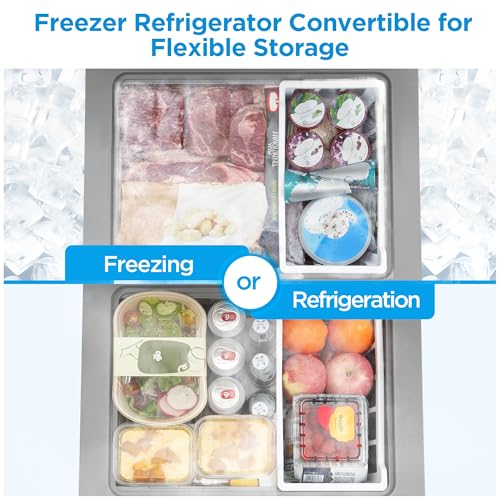
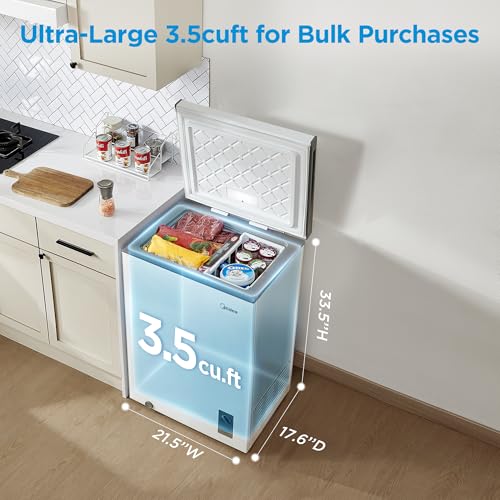
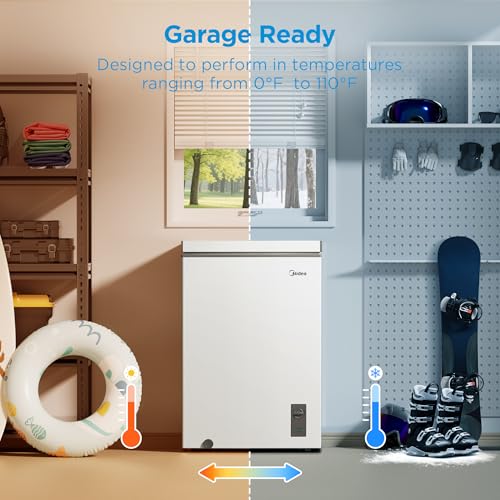
7.0 Cu Ft Energy Saving Chest Freezer
Strengths
- Energy efficient
- Quiet operation
- Removable basket
- Exterior drain
- Compact footprint
Trade-offs
- Basic thermostat range
- Plastic interior
- No power outage protection
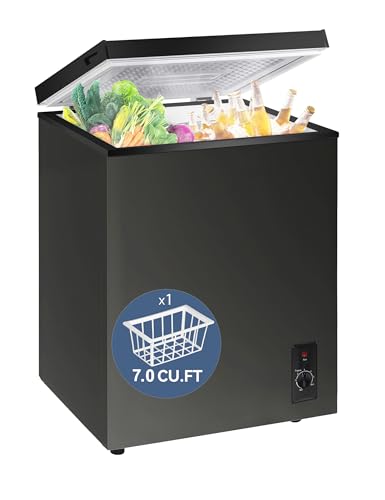
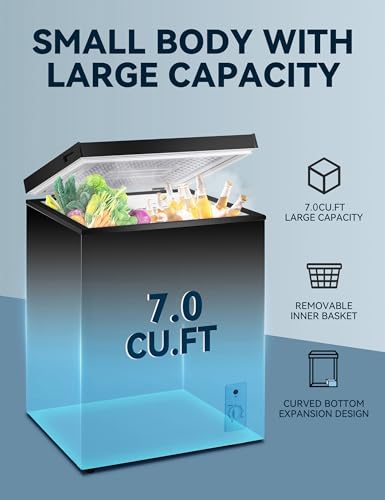
This 7.0 cu ft model hits a sweet spot for buyers who want decent capacity without blowing up their energy bill. On paper, the energy efficiency stands out, with owners reporting it runs at just over $0.04 per day, solid for a unit this size. The 6-setting thermostat gives enough control for most households, though it doesn’t go quite as cold as some higher-end models.
It’s frequently praised for quiet operation, which matters if you’re placing it in an apartment or near living spaces. The removable basket helps with organization, and the exterior drain makes defrosting less of a chore. Compared to pricier 7 cu ft freezers, this one delivers strong value, though the build feels more budget-oriented.
Product photos
BLACK+DECKER 2.0 Cu. Ft Freezer

Strengths
- True compact size
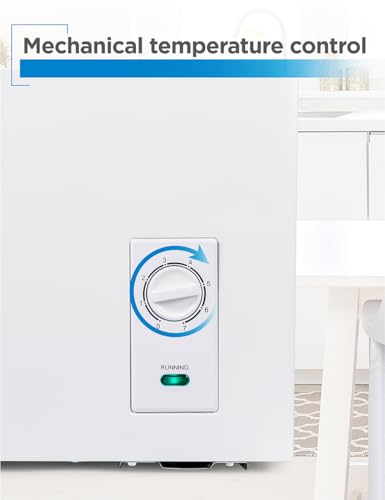
- Simple mechanical control
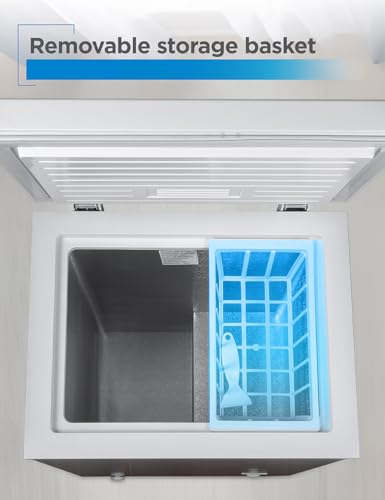
- Removable basket
- Lightweight design
- Manual defrost with drain
Trade-offs
- Very limited capacity
- No temperature range display
- Not garage-ready in extreme temps
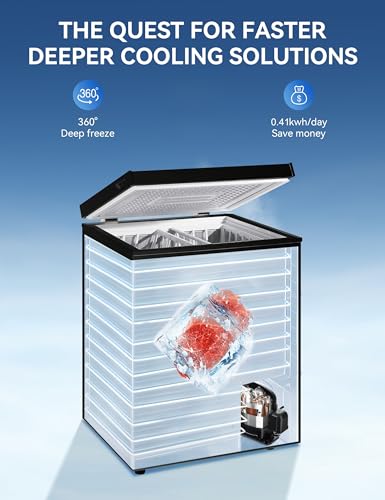
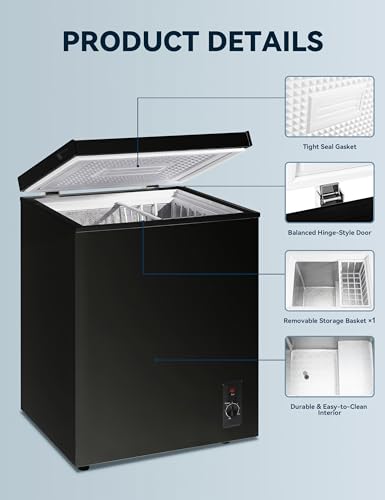
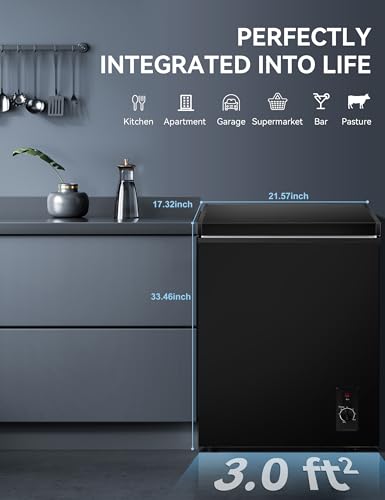
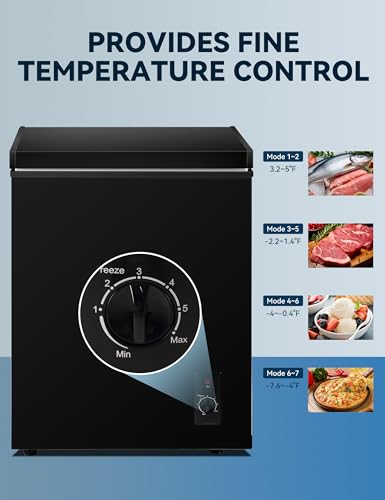
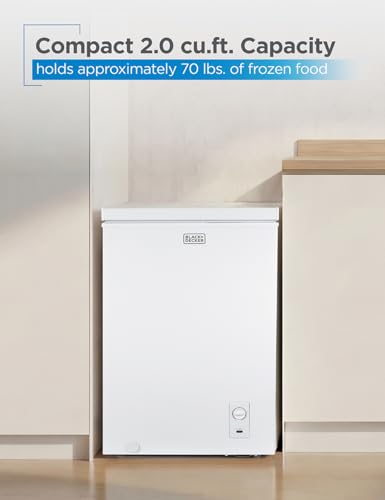
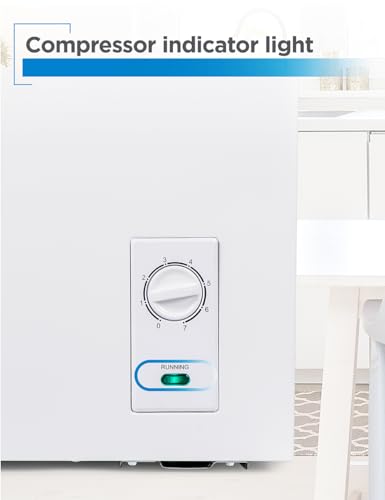
At 2.0 cu ft, this BLACK+DECKER is about as small as a chest freezer gets while still being useful. It’s clearly designed for minimalist storage needs, think a single person freezing leftovers, a couple keeping a few steaks on hand, or someone in a dorm or studio apartment. The mechanical thermostat is simple but effective, and the external power light is a small touch that adds convenience.
Owners consistently report it’s reliable for light use, though it’s not meant for long-term bulk storage. It holds about 70 lbs, which sounds decent but fills up fast if you’re freezing full-sized packages. Compared to other mini freezers, it’s competitively built, but lacks modern perks like convertible modes or LED lighting.
Product photos
How We Tested chest freezers
As someone who dedicates Food Keepy to helping people preserve food and organize their kitchens, I approached researching chest freezers by looking at a blend of published specifications, owner reviews, and expert opinions. Rather than a hands-on lab test, this is a research-led comparison of features and feedback. I compared models across capacity, temperature range, energy efficiency, and convenience features like baskets and defrost drains. To get a realistic picture, I weighed what current owners say about long-term reliability and ease of use alongside professional reviews.
For chest freezers, the most important factors are storage capacity and temperature consistency. A freezer needs to hold what you intend to freeze – whether that’s bulk purchases, garden harvests, or meal prepping ingredients – and it needs to maintain a reliably low temperature to prevent freezer burn and spoilage. Beyond that, features like convertible options and garage-ready designs significantly impact usability and broaden the appeal of a unit. Understanding these aspects is key to finding the right fit.
Specifications reliably tell you the dimensions and stated temperature range, but owner feedback reveals the real-world performance. I paid close attention to comments about noise levels, how well the temperature holds during power outages, and the durability of components like the baskets and hinges. For those considering outdoor placement, I also looked closely at information regarding garage ready chest freezers and their ability to function in varying temperatures. Finding a good balance between price, features, and reported reliability ultimately guided my recommendations, especially when comparing similar 7 cu ft chest freezers.
Choosing The Right chest freezers
Choosing the right chest freezer depends heavily on your needs and available space. It’s about more than just cubic feet; features like temperature control and energy efficiency play a big role.
A quality chest freezer prioritizes consistent temperature maintenance, efficient energy use, and durable construction. Look for adjustable thermostats, power outage protection, and a robust build, often indicated by an aluminum interior, to maximize food preservation and minimize long-term costs. Consider the environment where the freezer will be located, as some models are specifically “garage ready” and can operate in wider temperature ranges.
Capacity & Space Considerations
The size of a chest freezer is the most obvious factor, but don’t simply go for the largest option. Think about what you’ll be freezing and for how long. A family that regularly stocks up with bulk purchases or processes garden produce will need a significantly larger capacity than a single person or couple. Carefully measure the space where you plan to place the freezer, accounting for door swing and ventilation. Don’t forget to consider the weight when full – a 7 cu ft freezer packed with frozen food will be quite heavy!
Temperature Control & Consistency
Consistent temperature is paramount for preserving food quality and preventing freezer burn. While most chest freezers offer adjustable thermostats, the accuracy and responsiveness can vary. Look for models with multiple temperature settings (seven is common) and read owner reviews to gauge how well the freezer maintains a stable temperature. Some models even offer precise digital temperature displays, which can be beneficial if you’re storing items requiring specific freezing conditions. If you’re looking for more information on different types of freezers, check out these deep freezer reviews.
Features & Usability
Beyond size and temperature, several features can significantly impact usability. Removable baskets are a must-have for organization; they prevent items from getting lost at the bottom. A power-on indicator light is a simple but useful addition. For those prone to power outages, models with extended power outage protection (like the Midea convertible models offering up to 48 hours of retention) provide peace of mind. Consider also whether you’ll need a “garage ready” model, designed to withstand wider temperature fluctuations.
- A manual defrost drain is convenient, but requires periodic attention.
- Automatic defrost models eliminate this chore, but can be less energy efficient.
- Energy efficiency ratings (look for Energy Star certification) are important, especially if the freezer will run 24/7; a more efficient model will save you money over its lifespan.
A general rule of thumb is to budget approximately 1.5 cubic feet of freezer space per person in your household if you regularly freeze food.
Chest Freezers Compared
Here’s a comparison of key specifications for the chest freezers reviewed.
| Product Title | Capacity (Cu. Ft) | Convertible | Garage Ready | Temperature Settings | Power Outage Protection |
|---|---|---|---|---|---|
| Hamilton Beach 17 cu ft Chest Freezer | 17 | No | Yes | 7 | N/A |
| 3.5 Cu.Ft Small Chest Freezer | 3.5 | No | N/A | 7 | N/A |
| FRIGIDAIRE 7 Cu. Ft Chest Freezer | 7 | No | N/A | 7 | N/A |
| Midea 7.0 Cu.ft Convertible Freezer | 7 | Yes | Yes | N/A | 48 hours |
| Kismile 7.0 Cu Ft Chest Freezer | 7 | No | N/A | 7 | N/A |
| Midea 3.5 Cu.ft Compact Freezer | 3.5 | Yes | Yes | N/A | 48 hours |
| 7.0 Cu Ft Energy Saving Chest Freezer | 7 | No | N/A | 6 | N/A |
| BLACK+DECKER 2.0 Cu. Ft Freezer | 2.0 | No | N/A | Mechanical Dial | N/A |
Frequently Asked Questions
What temperature should I set my chest freezer to?
You should set your chest freezer to 0°F (-18°C) for optimal long-term food storage. This temperature effectively stops microbial growth and preserves food quality for extended periods.
Are all chest freezers suitable for a garage?
Not all are, but “garage-ready” chest freezers are designed to operate in wider temperature ranges. Standard models may struggle in very cold or hot garages, potentially impacting their performance and lifespan.
How often do I need to defrost a chest freezer?
Manual defrost chest freezers need defrosting when ice buildup reaches about 1/4 to 1/2 inch thick. Automatic defrost models eliminate this chore, but they typically use more energy.
What’s the benefit of a convertible chest freezer?
A convertible chest freezer can switch between freezer and refrigerator modes, offering flexibility for extra storage. This is especially useful for short-term storage of large items or during peak seasons like holidays, and it’s a great feature if you’re browsing small capacity chest freezers.
How can I best maximize space inside my new freezer?
Proper organization is key. Utilizing removable baskets, stacking items efficiently, and labeling contents can help you maximize chest freezer space. Planning how you’ll organize a chest freezer before stocking it will also help.
The Bottom Line
Buying a chest freezer often comes down to balancing upfront cost with long-term convenience. While many models will get the job done, the Hamilton Beach 17 cu ft Chest Freezer stands out as the strongest overall choice for most people. It offers a large capacity, garage-ready functionality, and a reliable reputation, a combination that’s hard to beat for long-term food storage.
For those with limited space or a tighter budget, the Midea 3.5 Cu.ft Compact Freezer is an excellent pick. If you need versatility, the Midea 7.0 Cu.ft Convertible Freezer’s refrigerator/freezer mode and extended power outage protection are incredibly valuable. And for those seeking truly compact chest freezers, the BLACK+DECKER 2.0 Cu. Ft Freezer is a good starting point.
Ultimately, the best chest freezer isn’t about the flashiest features or the lowest price alone. It’s about finding a model that consistently maintains a cold temperature, is appropriately sized for your needs, and fits reliably into your lifestyle. Prioritizing those fundamentals will give you years of dependable food preservation.
