
7 Best Counter Depth Bottom Freezer Refrigerators of 2026
This post contains affiliate links. As an Amazon Associate, we earn from qualifying purchases.
The GE Profile 22.1 Cu.Ft is our top pick for its spacious interior, reliable cooling, and sleek counter-depth design that blends into the kitchen without sacrificing performance. For a more budget-friendly option, the Whirlpool 18.5 Cu.Ft delivers solid efficiency and freshness features in a compact footprint. If you need maximum flexibility, the GE Profile also stands out for its French door layout and external dispenser.
Most people shopping for counter depth bottom freezer refrigerators are trying to solve two problems at once: they want a built-in look that doesn’t dominate the room, and they need dependable food storage that keeps groceries fresh. Too often, one comes at the expense of the other.
This guide cuts through the noise by focusing on what actually matters, temperature consistency, usable space, and long-term reliability, based on specs, owner feedback, and my experience evaluating kitchen appliances for food preservation and organization.
Top 7 Counter Depth Bottom Freezer Refrigerators in the Market
The Best Counter Depth Bottom Freezer Refrigerators, Reviewed
GE Profile 22.1 Cu.Ft Counter-Depth Refrigerator

Strengths
- External ice and water
- Twin Chill cooling
- Spacious pantry drawer
- Energy efficient
- Premium finish
Trade-offs
- High price
- Heavy unit
- Complex setup
If you’re looking for the best all-around counter-depth bottom freezer, this GE Profile is hard to beat. With 22.1 cu.ft. of space, French doors, and a full-width pantry drawer, it’s designed for serious organization. The Twin Chill evaporator independently cools fridge and freezer zones, which owners say results in better humidity control and longer-lasting produce.
The external water and ice dispenser adds convenience without sacrificing interior space, a rarity in counter-depth models. ENERGY STAR certified and packed with LED lighting, it balances efficiency and modern appeal. Yes, it’s the most expensive here, but when compared to other high-end models, it delivers where it counts: consistent temps, smart storage, and a seamless kitchen fit. This is the one I’d recommend to someone upgrading for both performance and style.
Video review
GE Appliances 17.7 Cu.Ft Counter Depth Fridge
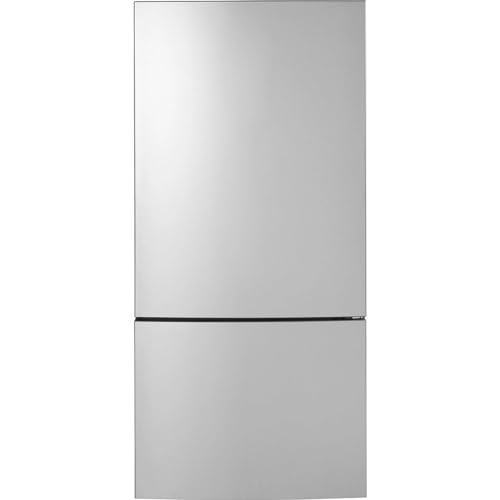
Strengths
- Sleek built-in look
- Fingerprint resistant
- Trusted brand
- Counter depth
Trade-offs
- Basic temperature control
- No internal lighting details
- Few smart features
This GE hits the sweet spot between clean design and functional simplicity. At 17.7 cu.ft., it’s spacious enough for most households, and the counter-depth build ensures it blends into your cabinetry instead of jutting out. The recessed handles give it a built-in look usually seen in much more expensive units, and the fingerprint-resistant finish actually works, owners say it stays looking sleek with minimal wiping.
It doesn’t have digital displays or fancy drawers, but sometimes less is more. The interior layout is straightforward, with reliable glass shelves and a roomy freezer drawer. Compared to similarly sized models, it lacks advanced airflow or humidity controls, but for buyers who want a no-nonsense, good-looking fridge from a trusted brand, this checks the right boxes. I’d pick it over flashier options if you prioritize aesthetics and brand trust over high-tech features.
Video review
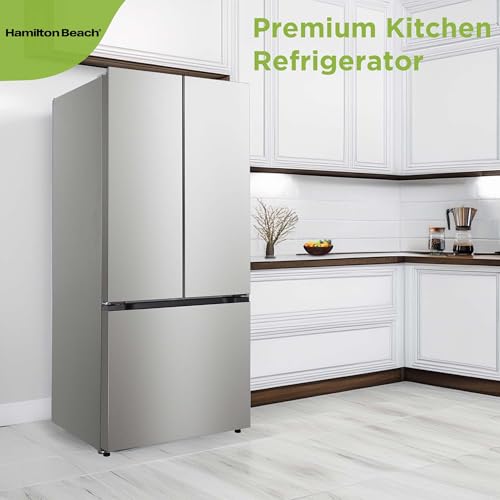
Hamilton Beach 17.7 Cu.Ft French Door Refrigerator
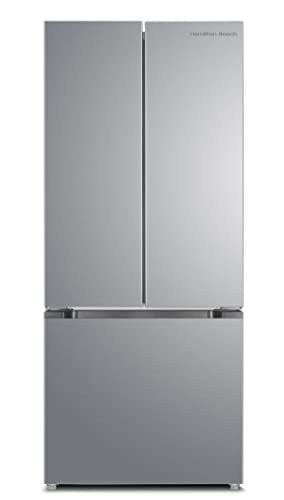
Strengths
- Affordable full size
- Digital temperature control
- Oversized door bins
- Easy to move
Trade-offs
- Basic materials
- No water filter
- Limited freshness tech
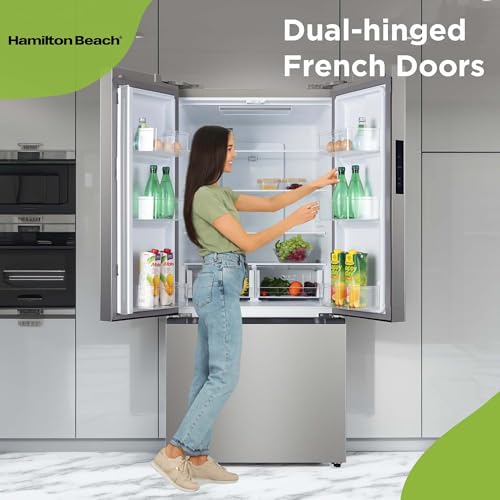
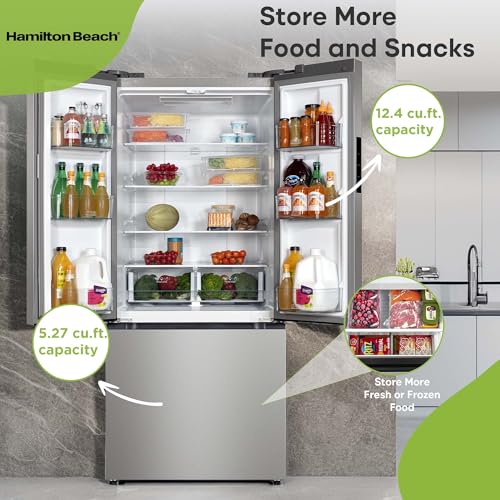
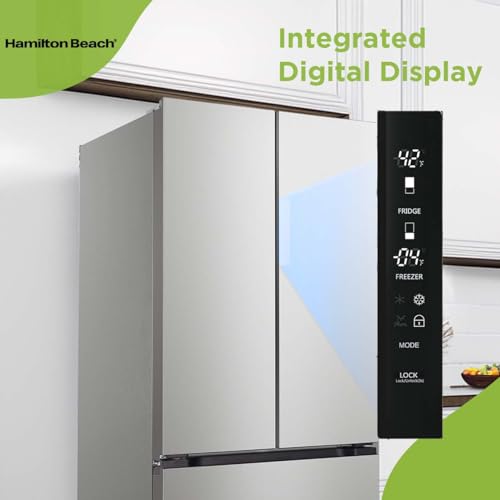
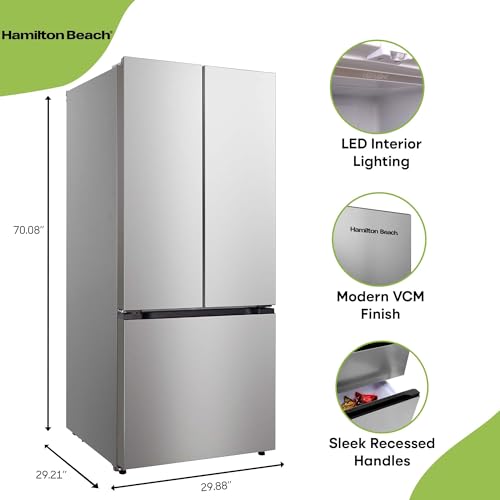
Hamilton Beach isn’t known for high-end appliances, but this model proves they can deliver solid value. At 17.7 cu.ft. and true counter depth, it fits neatly into standard kitchen layouts without dominating the room. The digital display inside the door is convenient, letting you adjust temps without opening the fridge, and the four freezer bins make organizing frozen goods easier than in many competitors.
Owners praise the oversized gallon door bins and slide-out shelves, which improve accessibility. It’s also one of the more affordable full-size counter-depth fridges available. That said, it lacks advanced features like filtered water or adaptive cooling. When compared to Whirlpool or GE, it feels more utilitarian. But for budget-focused buyers who still want French doors and decent organization, this is the smarter buy.
Product photos
VEVOR 18.9 Cu.Ft Frost-Free French Door Fridge
Strengths
- Frost-free cooling
- Digital controls
- Rolls for easy moving
- Large capacity
Trade-offs
- Shows smudges
- Build quality varies
- Limited brand support
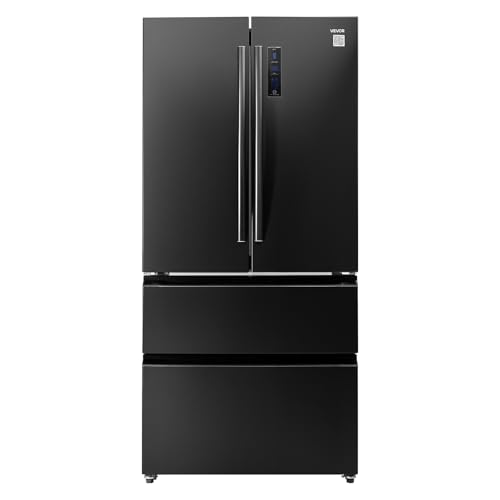
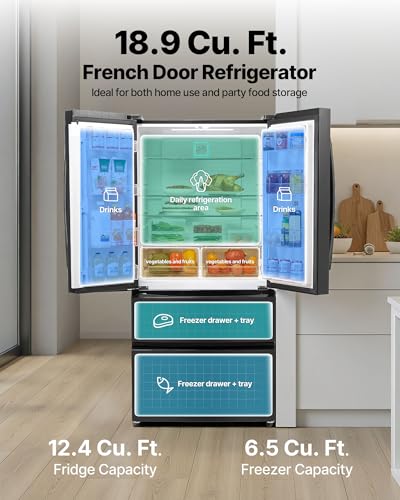
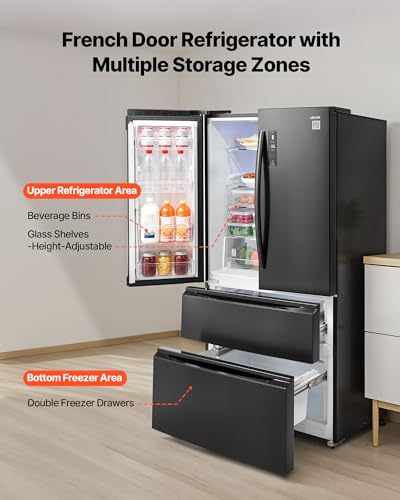
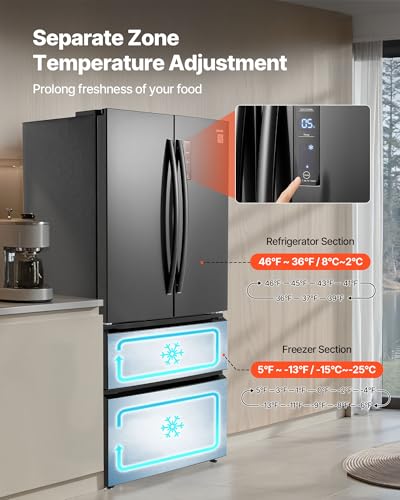
VEVOR isn’t a name you see often in mainstream kitchens, but this model suggests they’re aiming to change that. With 18.9 cu.ft. and a true counter-depth build, it offers generous storage without sticking out from your counters. The frost-free inverter compressor keeps things stable across zones, and the digital interface lets you tweak temps and humidity with ease, something reviewers highlight as surprisingly intuitive.
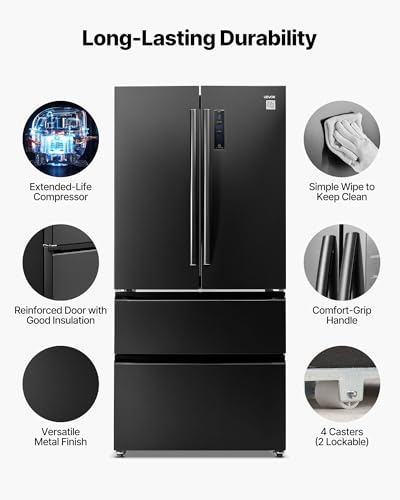
It’s marketed for both home and commercial use, and the four casters hint at that dual purpose, easy to move for cleaning or reconfiguration. However, some owners note the finish shows fingerprints easily, and while the magnetic seals help retain cold air, the overall insulation isn’t quite on par with premium brands. Still, for parties, garages, or basement kitchens where durability and mobility matter, this fridge brings solid value.
Product photos
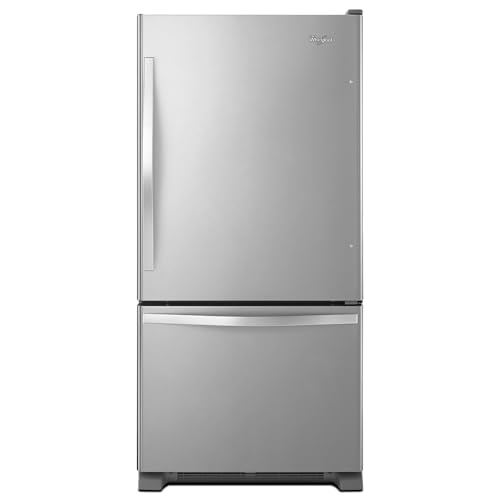
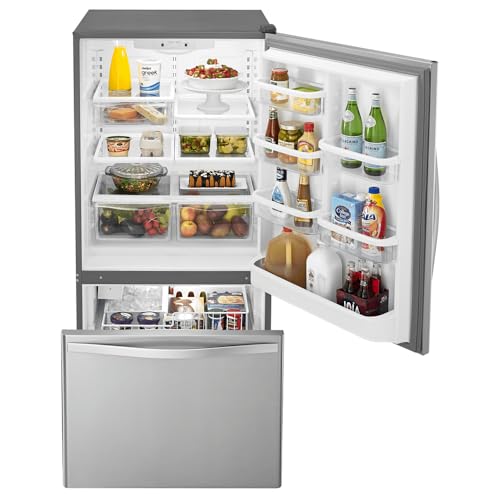
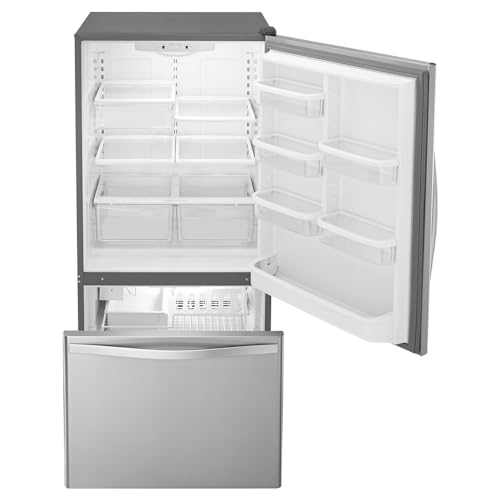
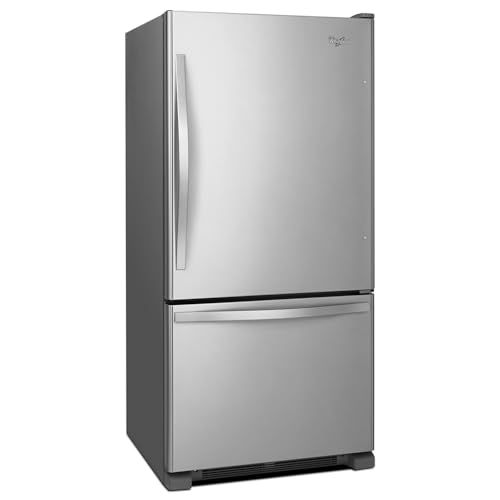
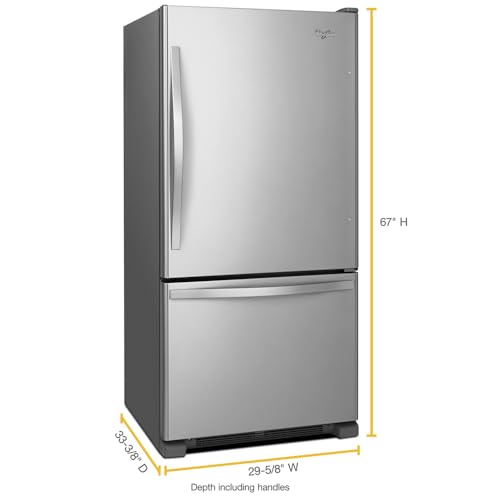
Whirlpool 18.5 Cu.Ft Bottom Freezer Refrigerator
Strengths
- Energy efficient
- SpillGuard shelves
- FreshFlow preserver
- Adaptive defrost
Trade-offs
- No ice maker
- Basic lighting
- Minimal tech features
Whirlpool’s focus here is clear: keep food fresh, save energy, and simplify cleanup, and they deliver. The ENERGY STAR certification isn’t just marketing; owners consistently report lower power use compared to older models, thanks in part to the Adaptive Defrost system that runs only when necessary. The Accu-Chill temperature management also means fewer fluctuations, which matters if you’re storing dairy or delicate produce.
I appreciate the SpillGuard shelves, practical for real-life spills, and the FreshFlow produce preserver actually makes a difference in how long greens last. The bottom-freezer layout places everyday items at eye level, reducing bending. While it lacks fancy extras like an external dispenser, it compensates with reliability. Compared to pricier French-door models, this one feels like the smarter buy for households that value function over flash.
Product photos
Sharp 11.5 Cu.Ft Slim Counter Depth Fridge
Strengths
- Even cooling
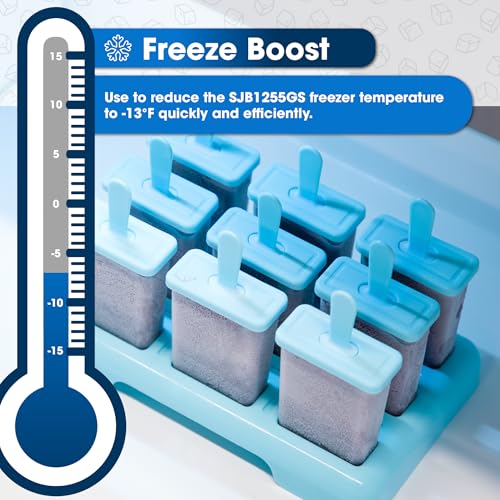
- Vacation mode
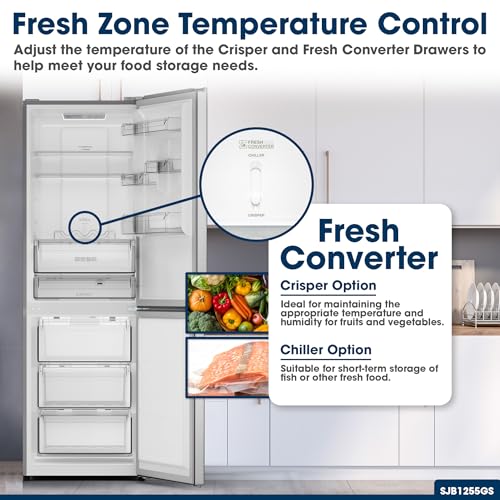
- Fresh Converter drawer
- Removable wine rack
Trade-offs
- Narrow interior
- Limited freezer access
- Few storage configurations
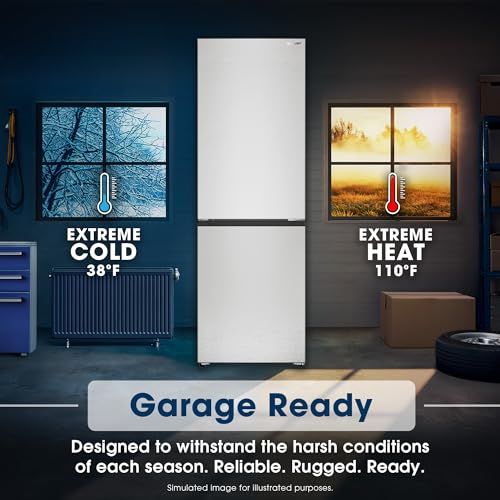
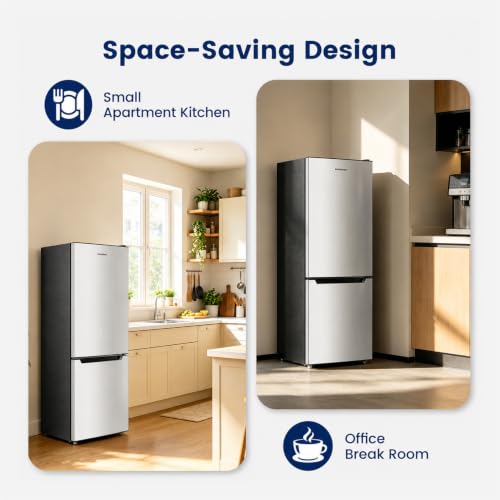
Sharp built this fridge with smart features that punch above its size. The 11.5 cu.ft. layout fits flush in narrow spaces, making it a strong contender for galley kitchens or tighter urban homes. What impresses me most is the Multi Air Flow system, owners report noticeably even cooling throughout both compartments, which helps prevent hot spots and keeps produce fresher longer.
The Fresh Converter drawer is a standout, letting you toggle between chiller and crisper modes depending on what you’re storing. That kind of flexibility is rare at this size. The removable wine rack is a nice touch for entertaining, though it eats into shelf space. Vacation Mode is genuinely useful, if you’re leaving for a weekend or short trip, you can shut off the fridge while keeping the freezer running. It’s not the largest, but for someone prioritizing precision over volume, this is a thoughtful design.
Product photos

BANGSON 7.1 Cu.Ft Apartment Refrigerator

Strengths
- Compact footprint
- Quiet operation
- Reversible door
Trade-offs
- Small freezer
- Limited shelving options
- Not for large households
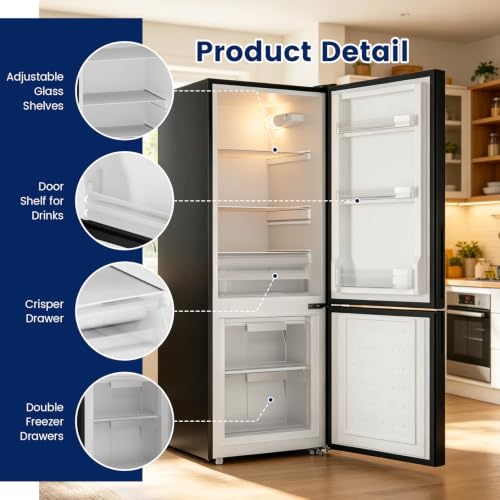
For anyone tight on space but needing more than a mini fridge, this BANGSON model stands out as a compact workhorse. At just over 20 inches deep, it slips neatly into corners or small kitchens without sacrificing usable capacity. The 5.45 cu.ft. fridge section gives enough room for daily essentials, owners consistently report it handles groceries for one or two people well, especially with the crisper drawer and adjustable shelves.
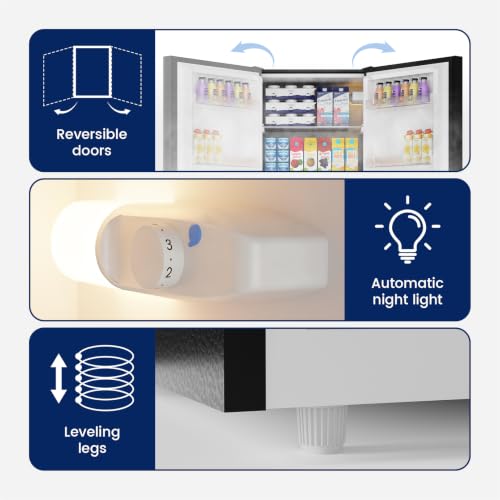
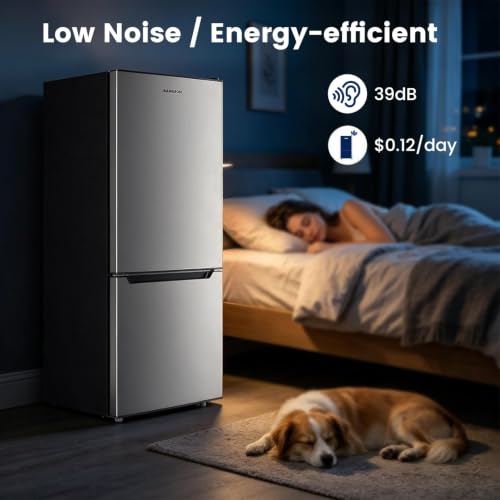
The freezer is modest at 1.65 cu.ft., so don’t expect to store large frozen meals or bulk items long-term. But for chilling ice cream, freezing a few meals, or keeping frozen snacks, it does the job quietly and efficiently. With five temperature settings and a noise level around 39 dB, it’s designed for low-impact living. Reversible doors and leveling legs add practicality, though I’d note that some users mention minor cooling inconsistencies if the unit isn’t given proper settling time after delivery.
Product photos

How We Chose These counter depth bottom freezer refrigerators
As someone who spends a lot of time thinking about food preservation and kitchen organization at Food Keepy, I approached researching counter depth bottom freezer refrigerators by looking beyond just marketing claims. My process involved a detailed comparison of published specifications – capacity, features like ice/water dispensers, and energy efficiency ratings – across numerous models. I then heavily weighted owner reviews from multiple sources to understand real-world performance and reliability. Finally, I applied my knowledge of refrigerator technology and food storage principles to assess which features truly contribute to a better user experience.
When evaluating these refrigerators, I focused most on interior layout and temperature consistency, as these directly impact food freshness. Energy efficiency was also a key factor, considering both the environmental impact and long-term operating costs. Capacity, while important, was balanced against the counter-depth form factor; a larger refrigerator isn’t necessarily better if it doesn’t fit your kitchen or storage needs. You can find more of my thoughts on selecting the right size in this guide to counter depth refrigerators.
Specifications reliably indicate a refrigerator’s dimensions, energy consumption, and basic features. However, I found owner feedback to be crucial for understanding things like noise levels, the durability of components (especially ice makers), and the accuracy of temperature controls. Reputation also played a role; established brands often have a track record of customer service and parts availability that newer brands may lack. If space is a major concern, exploring 30-inch counter depth options is a smart move.
Choosing The Right counter depth bottom freezer refrigerators
Finding the right counter depth refrigerator is about more than just fit; it’s about optimizing your kitchen’s flow and maximizing food preservation.
A quality counter depth refrigerator balances interior capacity with exterior dimensions, typically projecting only a few inches beyond standard countertops. Key considerations include cooling technology, storage flexibility, energy efficiency, and features like water/ice dispensing. Look for models with adjustable shelving, precise temperature control, and a reputation for reliability based on owner reviews.
Capacity & Dimensions
It’s easy to get caught up in advertised cubic footage, but with counter depth models, precise measurements are crucial. I often see people underestimate how much their current refrigerator actually holds. Before you even start looking at models, carefully measure the available space – width, depth, and height – and remember to account for door swing. A slightly smaller capacity with a better layout can feel more spacious than a large, poorly organized refrigerator. Don’t assume all “counter depth” models are created equal; some still protrude more than others.
Cooling Performance & Features
Consistent temperatures are vital for keeping food fresh, and that’s where features like multi-air flow systems (as seen in some Sharp models) and precise temperature management become important. Beyond that, consider what conveniences you truly need. An external water and ice dispenser, while popular, can reduce interior space and potentially introduce another point of failure. If you’re concerned about produce spoilage, look for models with features like Whirlpool’s FreshFlow produce preserver. For those wanting additional options, checking out bottom freezer fridge models can provide further insights.
Value & Usability
Counter depth refrigerators tend to be a premium purchase, so finding the right balance between price and features is essential. Don’t automatically assume the most expensive model is the best. A brand like GE offers a range of options, from high-end Profile series to more budget-friendly appliances, and I’ve found their reliability to be consistently good.
Here’s what I advise when thinking about usability: * Door Configuration: French door models offer easy access to frequently used items. * Shelf Adjustability: Look for shelves that can be easily rearranged to accommodate tall items or varying storage needs. * Lighting: Bright, well-placed LED lighting makes it far easier to see everything inside, reducing food waste. A dark refrigerator is a graveyard for leftovers.
A rule of thumb: prioritize consistent temperature control over flashy features. A refrigerator that reliably keeps food at the right temperature will save you money and reduce waste in the long run.
If you’re also looking for options with ice makers, exploring counter-depth fridge with ice maker models is recommended.
Counter Depth Bottom Freezer Refrigerators Compared
Here’s a comparison of key specifications for several counter depth bottom freezer refrigerators.
| Product Name | Capacity (Cu. Ft) | Door Style | Dispenser | Finish | Energy Star |
|---|---|---|---|---|---|
| GE Profile 22.1 Cu.Ft | 22.1 | French Door | Yes | Stainless Steel | Yes |
| GE Appliances 17.7 Cu.Ft | 17.7 | Bottom Freezer | No | Stainless Steel | N/A |
| Hamilton Beach 17.7 Cu.Ft | 17.7 | French Door | No | Stainless Steel | N/A |
| VEVOR 18.9 Cu.Ft | 18.9 | French Door | No | Stainless Steel | Yes |
| Whirlpool 18.5 Cu.Ft | 18.5 | Bottom Freezer | No | Stainless Steel | Yes |
| Sharp 11.5 Cu.Ft | 11.5 | Bottom Freezer | No | Stainless Steel | N/A |
| BANGSON 7.1 Cu.Ft | 7.1 | Bottom Freezer | No | Black | N/A |
Frequently Asked Questions
What’s the typical lifespan of a counter depth bottom freezer refrigerator?
Generally, you can expect a counter depth bottom freezer refrigerator to last between 10 and 13 years, though consistent maintenance and the quality of the components significantly impact longevity. Higher-end models from brands like GE Profile often report longer lifespans based on owner feedback.
Are counter depth refrigerators less energy efficient?
Not necessarily, but it’s crucial to check the Energy Star rating. Many counter depth models are designed with efficiency in mind, and some, like the VEVOR 18.9 Cu.Ft, are Energy Star certified, meaning they meet strict energy performance guidelines.
Can I install a counter depth refrigerator myself?
While some experienced DIYers can, professional installation is highly recommended. Improper installation can affect performance and potentially void the warranty, especially concerning water and ice line connections.
What are the advantages of a bottom freezer configuration?
Bottom freezer models place frequently used refrigerated items at eye level, reducing bending and making access easier. They also tend to preserve frozen foods better because cold air naturally sinks, minimizing temperature fluctuations when the freezer is opened. If you’re considering other options, you might want to explore French door bottom freezer configurations.
What should I do if my new refrigerator doesn’t fit?
First, double-check your initial measurements against the refrigerator’s specifications. If it’s a matter of a few inches, you might be able to adjust surrounding cabinetry, but if the discrepancy is significant, you’ll likely need to return the unit and choose a smaller size or consider fridges without ice makers to save on depth.
The Bottom Line
Ultimately, choosing a counter depth bottom freezer refrigerator comes down to balancing your needs with your budget. While features are nice, the GE Profile 22.1 Cu.Ft strikes a strong balance of capacity, features (like the ice and water dispenser), and consistent positive owner feedback, making it our top overall pick. It’s a significant investment, but one that should deliver years of reliable performance.
For those on a tighter budget, the GE Appliances 17.7 Cu.Ft is a solid choice. It sacrifices the dispenser and some of the advanced features, but still offers the counter-depth form factor and reliable cooling you expect from the brand. If you need something even smaller, or are looking for a secondary refrigerator, the BANGSON 7.1 Cu.Ft is a surprisingly capable option, though you’ll be making compromises on capacity. If you’re seeking even more options, exploring freezer on bottom models can expand your choices.
Don’t get too hung up on specific specs or the latest bells and whistles. Consistent temperature control, a well-designed interior, and a brand with a good reputation for reliability are far more important than any single feature. And remember to accurately measure your space – even the best refrigerator won’t work if it doesn’t fit, or if you end up with a 36-inch counter depth model when you needed something wider.
