
7 Best Counter Depth Refrigerators of 2026
This post contains affiliate links. As an Amazon Associate, we earn from qualifying purchases.
The GE PROFILE French Door Refrigerator is the best overall counter depth refrigerator, offering strong capacity and an internal water dispenser. For a budget-friendly option, the Hamilton Beach 17.7 cu ft Counter Depth model delivers solid value without sacrificing essential features.
Most people shopping for counter depth refrigerators want a clean, built-in look without losing too much storage space. But finding one that cools evenly, fits your kitchen layout, and won’t break the bank can be surprisingly tricky.
After comparing the field and weighing specs against owner feedback, I focused on models that balance depth, usable capacity, and reliable performance. This guide covers what actually matters, like compressor type, interior flexibility, and real-world reliability, so you can pick a fridge that works as hard as you do.
Top 6 Counter Depth Refrigerators in the Market
The Best Counter Depth Refrigerators, Reviewed
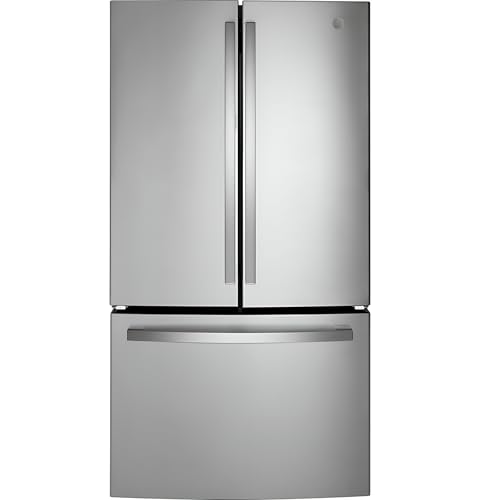
GE PROFILE French Door Refrigerator
Strengths
- Internal water dispenser
- Factory-installed icemaker
- Fingerprint resistant finish
Trade-offs
- Higher price point
- No smart features
This GE Profile is the one I’d pick if I were upgrading my own kitchen. With 21.9 cubic feet of space and a true counter depth design, it blends performance and aesthetics better than most. The internal water dispenser keeps the front sleek and smudge-free, a win for anyone who hates cleaning stainless steel, and the factory-installed icemaker with filtration is reliable, based on owner feedback.
It cools evenly, has great lighting, and fits flush with cabinets, which matters in open-concept spaces. While it costs more than others here, it’s the only one that truly feels premium across the board. For most serious home cooks, it’s the smarter buy.
Video review
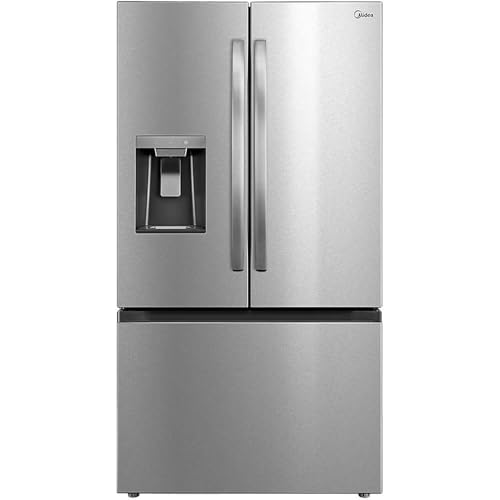
Midea 29.3 Cu. Ft. Smart Refrigerator
Strengths
- Dual ice makers
- Large 29.3 cu ft capacity
- Water and ice dispenser
Trade-offs
- Standard depth
- Not truly counter depth
- Bulkier footprint
This Midea packs an enormous 29.3 cubic feet of space, far more than any other counter depth model here, but it’s not actually counter depth. Despite being listed as such, its depth is standard, so it will stick out past your counters. That’s a critical detail if you’re planning a flush installation. Still, for families or those who meal prep in bulk, the capacity and dual ice makers are hard to ignore.
The smart features are a bonus, but in this category, cooling performance and layout matter more. Compared to the GE Profile, it offers more space and ice, but lacks the refined design and internal dispenser. I’d recommend it only if you need max capacity and don’t care about counter alignment.
Video review
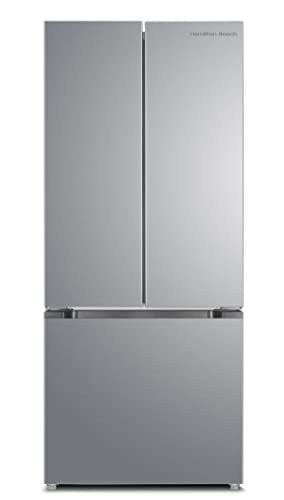
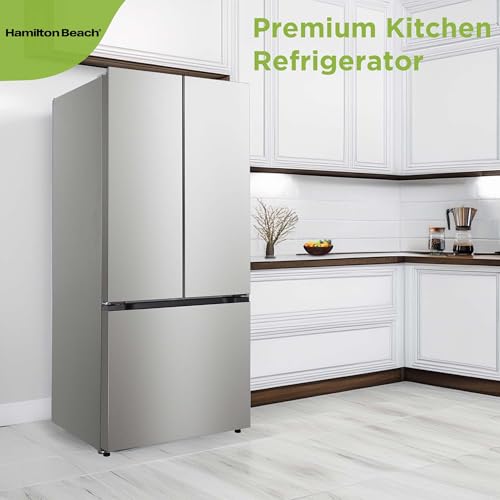
Hamilton Beach 17.7 cu ft Counter Depth
Strengths
- True counter depth
- Digital display control
- Pull-out freezer drawers
Trade-offs
- No water dispenser
- Interior bins less sturdy
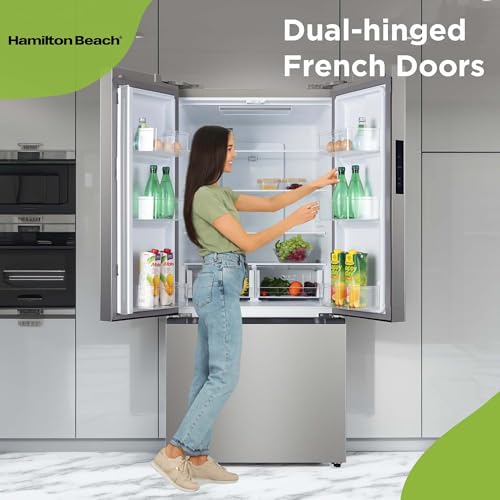
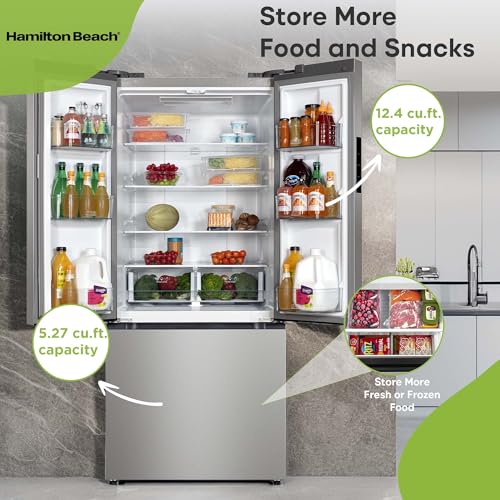
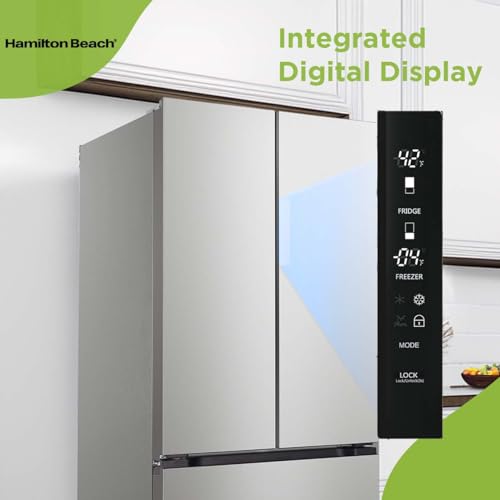
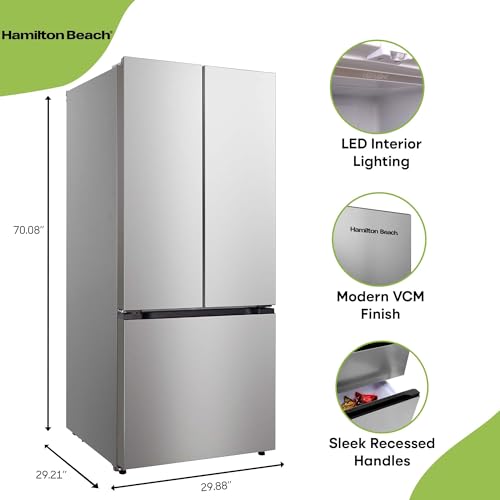
This Hamilton Beach model stands out by offering a true counter depth design with a french door layout at a surprisingly accessible price. At 17.7 cubic feet, it gives you more usable space than most compact models, and the three-door setup with pull-out freezer drawers is genuinely useful for organizing frozen items. I appreciate how the digital controls are placed inside the door, it saves space and keeps the front clean.
Owners consistently report it’s quiet and cools evenly, though some mention the bins aren’t as durable as pricier brands. Compared to the KoolMore or GE Profile models, it doesn’t have a water dispenser, but for the value, that’s a reasonable trade-off.
Product photos
KoolMore 18.5 cu ft French Door

Strengths
- Double crispers
- Counter depth design
- Adjustable glass shelves
Trade-offs
- No digital display
- Door bins less durable
KoolMore delivers a lot of fridge for the price with this 18.5 cubic foot counter depth model. The stainless-steel finish looks modern, and the double humidity-controlled crispers are a standout for keeping produce fresh, something I pay close attention to in my own kitchen. The double-flow cooling system promises even temperatures, and on paper, it should help reduce spoilage.
Compared to the Hamilton Beach model, it offers slightly more space and better build quality, though it lacks digital controls. Owners praise the deep freezer drawers, but some note the door bins feel a bit flimsy. It’s a strong contender if you want a budget-friendly counter depth fridge without sacrificing style.
Product photos


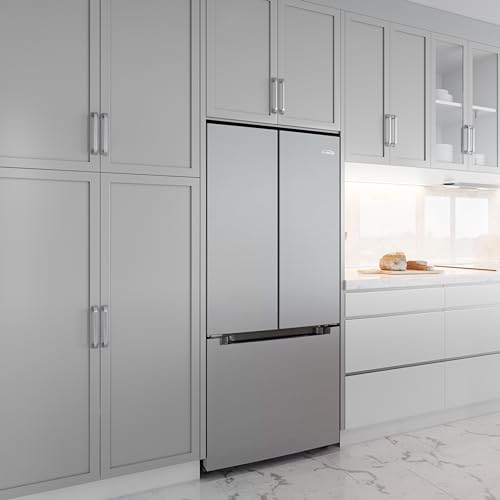
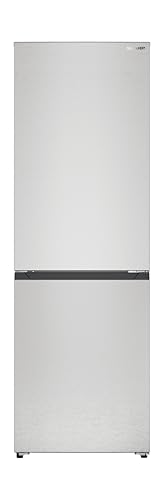
Sharp 11.5 cu ft 24-inch Refrigerator
Strengths
- Slim 24-inch width
- Fresh Converter drawer
- Vacation mode
Trade-offs
- Limited capacity
- No ice maker
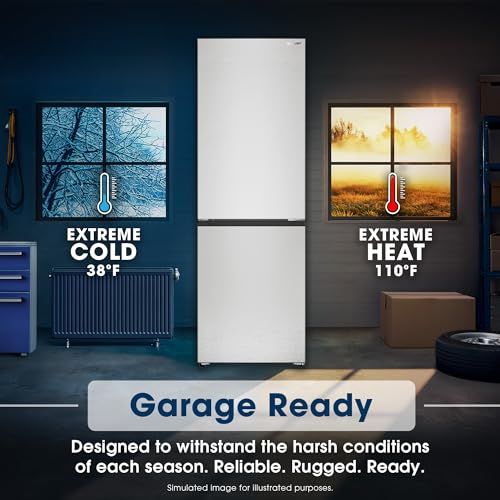
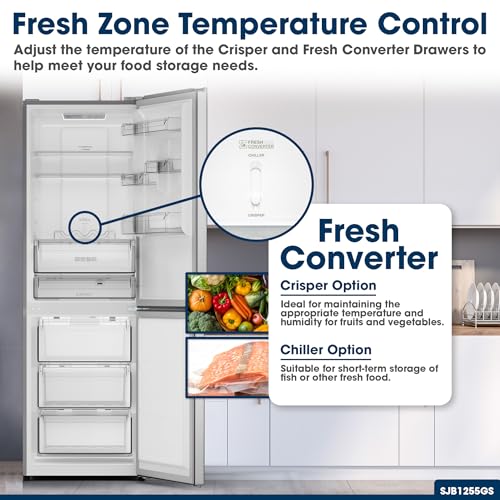
At just 24 inches wide, this Sharp fridge is a rare find for ultra-narrow spaces, think galley kitchens, pantry nooks, or studio apartments. The 11.5 cubic feet capacity is modest, but the interior is smartly designed with a removable wine rack and a Fresh Converter drawer that doubles as a chiller or crisper. That kind of flexibility is something I always look for when helping others organize their kitchens.
The multi-air flow system helps maintain even cooling, and vacation mode is a thoughtful touch for anyone who travels. Still, it’s not going to replace a full-size fridge. If you’re downsizing or need a secondary unit, this one shines.
Product photos

BLACK+DECKER 12.1 Cu. Ft. Top Mount

Strengths
- Spacious 12.1 cu ft
- Frost-free auto-defrost
- Energy Star certified
Trade-offs
- Basic interior layout
- No water or ice dispenser
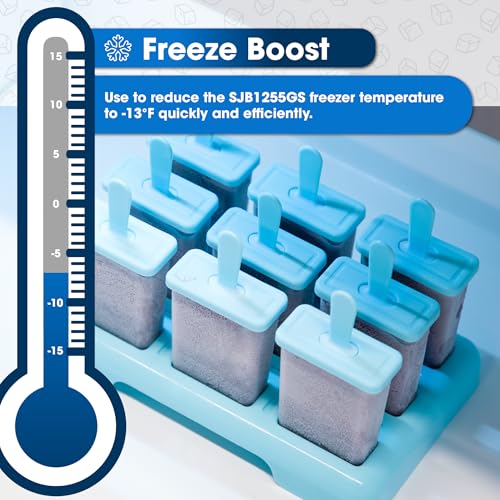
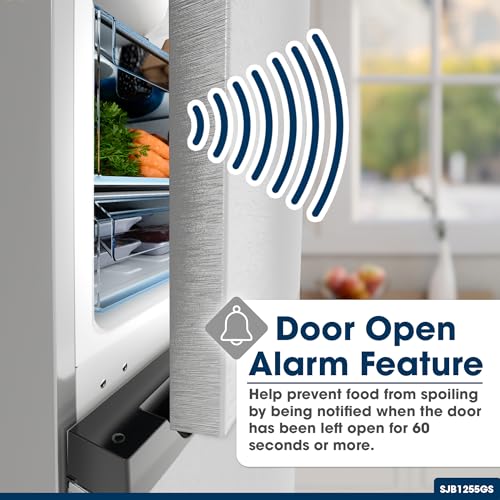
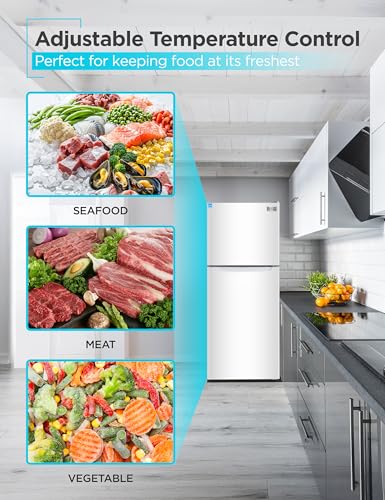
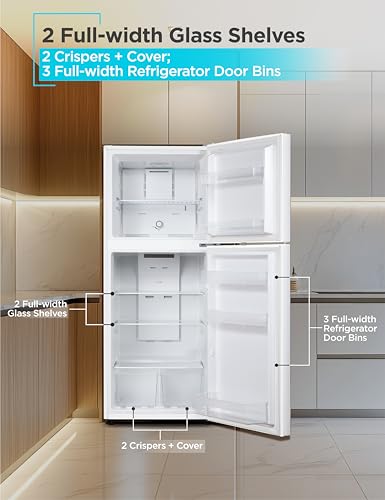
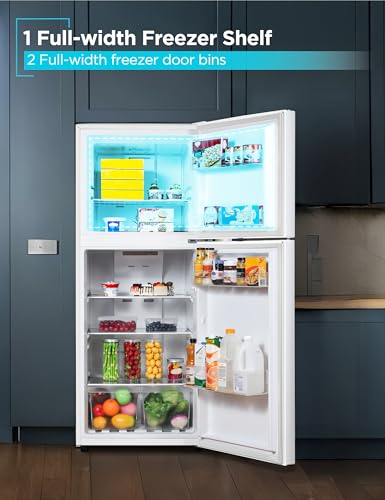
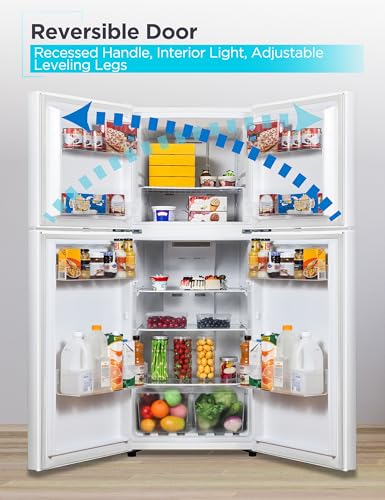
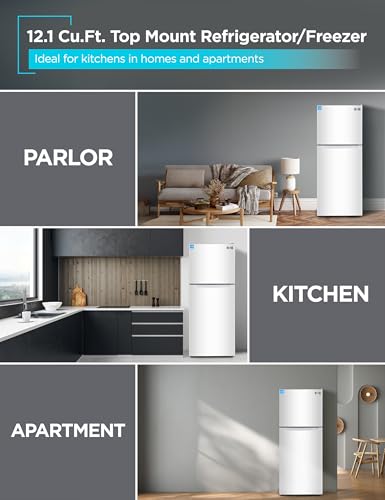
For a basic, no-frills fridge that won’t break the bank, this BLACK+DECKER model makes sense on paper. At 12.1 cubic feet, it’s compact but still offers a full top-mount freezer, a layout I still appreciate for its simplicity and accessibility. The frost-free auto-defrost is a solid perk at this price, and being Energy Star certified means it won’t spike your electric bill.
Still, this is clearly built for efficiency over elegance. It lacks the refined storage organization or lighting you’d find in higher-end models, and owners note the interior layout feels a bit dated. But if you’re outfitting a small kitchen, guest house, or apartment and need something reliable without extras, this one fits the bill.
Product photos
How We Chose These counter depth refrigerators
To recommend the best counter-depth refrigerators, I researched a range of models, comparing published specifications and features across brands. I then weighed owner reviews from major retailers against expert opinions found in appliance publications. My assessment focused on identifying refrigerators that balance performance, capacity, and features within the counter-depth form factor – a popular choice for modern kitchens. Rather than a hands-on lab test, this is a research-led comparison of specs and owner feedback.
For counter-depth refrigerators, consistent temperature control and usable storage space are key. A fridge that doesn’t maintain even cooling, or sacrifices too much capacity to achieve a slimmer profile, isn’t helpful. I also prioritized ice and water dispenser functionality, as these features are often desired, and a well-designed interior layout to maximize the space. You’ll find many options, but these factors truly decide which models stand out.
Specifications reliably reveal capacity, dimensions, and energy efficiency. However, owner reviews proved invaluable for understanding real-world performance– things like noise levels, the effectiveness of temperature controls, and the durability of ice makers. Reputation also played a role; established brands with a history of quality generally scored higher. If you’re also looking for counter-depth refrigerators 36 inches wide, we’ve covered those options extensively.
Choosing The Right counter depth refrigerators
Finding the right refrigerator involves more than just picking a finish that matches your kitchen.
A quality counter-depth refrigerator balances interior space with exterior dimensions, offering a streamlined look without sacrificing essential storage. Key considerations include compressor type for efficiency and noise, the flexibility of internal organization, and features like accurate temperature control to maximize food preservation. Prioritize models with good user reviews regarding reliability and consistent cooling.
Size and Capacity
It’s easy to get fixated on cubic footage, but a counter-depth model’s biggest appeal is its flush fit. Unlike standard-depth refrigerators that protrude several inches, these sit closer to your countertops. However, that shallower depth does mean less overall capacity. I often recommend carefully measuring your available space and realistically assessing your grocery shopping habits. If you regularly stock up for a large family or entertain frequently, you might find yourself compromising on capacity. For smaller households, or those who shop more often, a counter-depth fridge can be perfectly adequate. Consider if you truly need 25+ cubic feet, or if 18-20 will suffice.
Features and Dispensing Options
Beyond the basic cooling, features can significantly impact your daily experience. Internal water dispensers, like those found in the GE PROFILE models, are popular for their sleek appearance, eliminating the exterior bulk of a through-door dispenser. However, they take up valuable shelf space inside the refrigerator. If you frequently use ice and water, you’ll want to explore counter-depth refrigerators with ice maker to find a configuration that suits you. Don’t overlook seemingly small details like adjustable shelves and door bins – these maximize usability.
- A basic model (like the BLACK+DECKER) might offer only fixed shelves and limited door storage.
- Mid-range options (such as the Kenmore) will typically include adjustable shelves and some flexible door bins.
- Higher-end models often feature specialized zones (like temperature-controlled crispers in the KoolMore) and more extensive adjustability, allowing you to customize the layout to your exact needs.
Budget and Value
Counter-depth refrigerators span a wide price range. While you can find budget-friendly options (the Hamilton Beach is often cited as a good value), be realistic about what you’re sacrificing. Cheaper models might use less efficient compressors, have less robust temperature control, and lack the build quality of more expensive brands.
Don’t automatically assume a higher price tag means a better refrigerator. Focus on the features you will actually use, and read owner reviews to gauge long-term reliability.
For those looking for a more compact solution, exploring 30-inch counter-depth refrigerators might yield some excellent options, especially for smaller kitchens or apartments. Ultimately, the “best” refrigerator is the one that fits your budget, lifestyle, and kitchen space.
Counter Depth Refrigerators Compared
Here’s a comparison of key specifications for various counter depth refrigerators.
| Product Title | Capacity (cu. ft) | Door Style | Ice Maker | Water Dispenser | Depth (in) |
|---|---|---|---|---|---|
| GE PROFILE French Door Refrigerator | N/A | French Door | Factory-Installed | Internal | N/A |
| Midea 29.3 Cu. Ft. Smart Refrigerator | 29.3 | French Door | Dual | Yes | N/A |
| Hamilton Beach 17.7 cu ft Counter Depth | 17.7 | 3-Door | N/A | N/A | <30 |
| KoolMore 18.5 cu ft French Door | 18.5 | French Door | N/A | N/A | N/A |
| Kenmore 17.8 cu ft Bottom Freezer | 17.8 | Bottom Freezer | Yes | N/A | 31 |
| Sharp 11.5 cu ft 24-inch Refrigerator | 11.5 | Top Freezer | N/A | N/A | 24 |
| BLACK+DECKER 12.1 Cu. Ft. Top Mount | 12.1 | Top Freezer | N/A | N/A | N/A |
Frequently Asked Questions
What temperature should I set my new refrigerator to?
The ideal temperature is between 37°F and 40°F (3°C and 4°C). Maintaining this range slows bacterial growth and keeps food fresher for longer, and most models have settings to achieve this consistently.
Are counter-depth refrigerators more expensive to run?
Generally, no. Many newer counter-depth refrigerators are Energy Star certified, meaning they meet strict energy efficiency guidelines. However, older or less efficient models might consume more energy, so checking the EnergyGuide label is always a good idea.
What’s the difference between a French door and a bottom-freezer model?
French door models have two narrower refrigerator doors at the top and a freezer drawer below, offering wider access to refrigerated items. Bottom-freezer models have a full-width freezer drawer and a standard refrigerator door above; they often use space more efficiently, but may require bending to reach items at the back.
What should I do if the ice maker stops working?
First, verify the water line is connected and the water supply is turned on. If that isn’t the issue, check the freezer temperature – it needs to be cold enough to freeze water. If problems persist, consult the owner’s manual for troubleshooting steps or contact a service technician.
Where can I find counter-depth refrigerators with water dispenser that don’t take up too much space?
Internal water dispensers are a great option for those wanting to save space, as they don’t require a through-door dispenser. You can also explore shallow cabinet depth fridges if you have a particularly small kitchen and want to maximize every inch.
The Bottom Line
Choosing a counter-depth refrigerator often comes down to balancing how much you prioritize a streamlined look versus maximizing usable space. While larger models like the Midea 29.3 Cu. Ft. Smart Refrigerator offer impressive capacity, the GE PROFILE French Door Refrigerator strikes a strong balance between features, style, and a relatively efficient use of space, making it our overall pick.
For readers on a tighter budget, the Hamilton Beach 17.7 cu ft Counter Depth delivers a solid, no-frills refrigeration experience. Those needing a more specialized fit should explore options like 27-inch depth refrigerators or, if you have the space, some excellent top-rated 42-inch counter-depth fridges.
Ultimately, the cubic footage and fancy features matter less than consistent temperature control and a layout that works for your habits. A refrigerator’s job is to keep food fresh, and a well-built machine with thoughtful organization will do that far better than one loaded with conveniences you won’t use. Prioritize reliability and a design that minimizes food waste – that’s where you’ll see the biggest return on your investment.
