
8 Best Storage Boxes of 2026
This post contains affiliate links. As an Amazon Associate, we earn from qualifying purchases.
The IRIS USA 54 Qt Clear Bins are the overall best choice for durability and visibility, especially for long-term storage. For a budget-friendly option, the Amazon Basics Filing Boxes work well for light, short-term use, while the Lifewit Clothes Storage Bins offer great versatility for closets and frequently accessed items.
If you’ve ever opened a storage box only to find crushed contents or spent minutes searching for one item, you know how quickly disorganization can create frustration. As someone who researches storage solutions daily, I’ve seen how the wrong boxes lead to wasted space, damaged goods, and more clutter.
This guide cuts through the noise by focusing on real-world performance. I compared materials, load ratings, and user feedback to find boxes that actually hold up. Whether you’re storing clothes, pantry items, or moving supplies, these picks are based on what owners report matters most: strength, accessibility, and smart design.
Top 7 Storage Boxes in the Market
The Best Storage Boxes, Reviewed
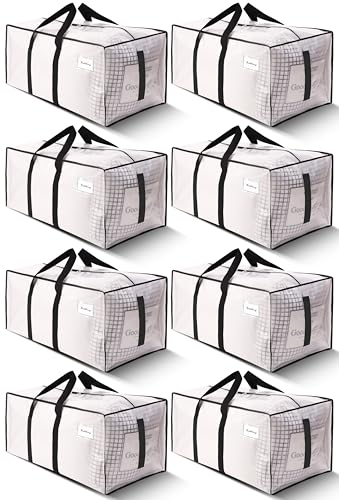
HOMESURE Heavy Duty Moving Bags
Strengths
- High weight capacity
- Water-resistant fabric
- Label-friendly pocket
Trade-offs
- Semi-transparent only
- Not fully rigid
These are the most versatile storage totes here, rated for 200 pounds, with wrap-around handles that actually distribute weight evenly. The semi-transparent fabric lets you peek inside, and the dual zippers are smooth even when packed tight.
Owners moving apartments or sending kids to college consistently praise how much one bag can hold without breaking. Compared to cardboard, they’re reusable and resist light moisture, ideal for moves in unpredictable weather. The tag pocket is a small touch, but it makes a big difference in real use.
Video review
IRIS USA 13 Qt Storage Bins

Strengths
- Nesting design
- See-through build
- Secure lid
Trade-offs
- Small capacity
- Limited weight capacity
These smaller clear bins are perfect for organizing craft supplies, pantry snacks, or game pieces. The tapered design means they nest when empty, saving space, a detail I appreciate in a crowded utility closet.
They’re not as large as the 54-quart version, but for everyday sorting, their size is more manageable. The pull handles are small but functional, and the clarity holds up over time. Compared to fabric bins, these win for visibility and longevity.
Video review
Lifewit Clothes Storage Bins

Strengths
- Large capacity
- Reinforced zipper
- Breathable fabric
Trade-offs
- No rigid structure
- Not waterproof
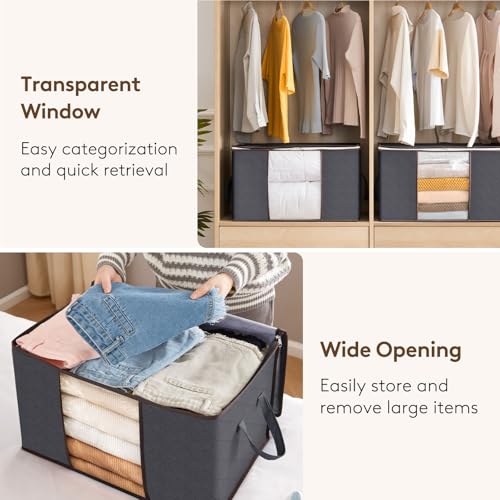
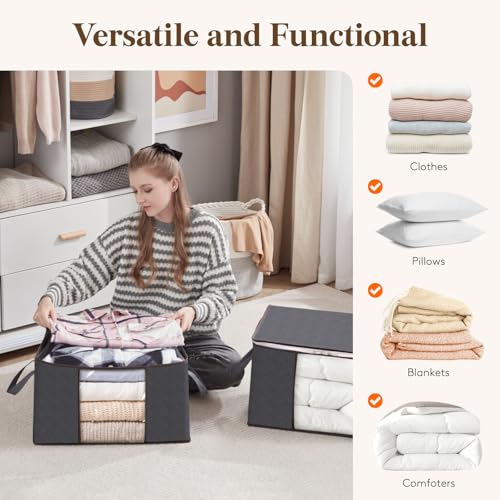
At 60 liters each, these are among the most practical foldable storage bags for bulky bedding or winter sweaters. The two-way zippers are a standout, owners note they don’t snag and open smoothly even when the bag is full. That, plus the reinforced seams, makes them feel more durable than most collapsible fabric bins in this price range.
Compared to basic zippered bags, these breathe better thanks to the non-woven fabric, which helps prevent mustiness. They’re not airtight, so don’t expect pest protection, but for seasonal rotation in a dry closet, they’re a solid choice.
Product photos


Amazon Basics Filing Boxes

Strengths
- High stacking strength
- Tape-free setup
- Recyclable material
Trade-offs
- Not moisture-resistant
- Limited reuse lifespan
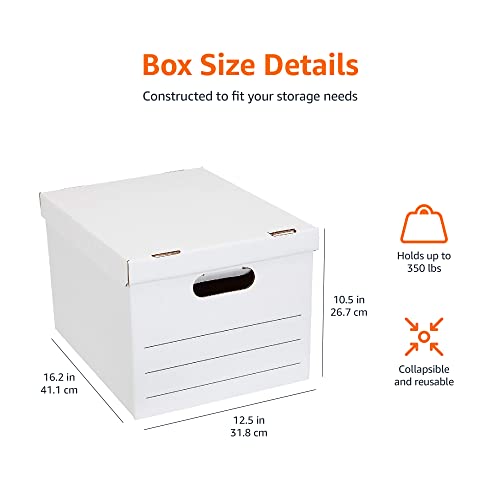
These are the workhorse of budget storage, nothing fancy, but the double-walled bottom gives them an edge over standard file boxes. With 20 included and tape-free assembly, they’re ideal for moving files or pantry overflow where you need volume without fuss.
They won’t last a decade, but for short-term document storage or organizing canned goods, the 450-pound stacking strength means they won’t buckle under moderate weight. Compared to plastic bins, they’re less durable but far cheaper and easier to recycle.
Product photos


Homsorout Fabric Bins with Window

Strengths
- Clear window
- Foldable design
- Sturdy handles
Trade-offs
- Cardboard support may weaken
- Limited stacking stability
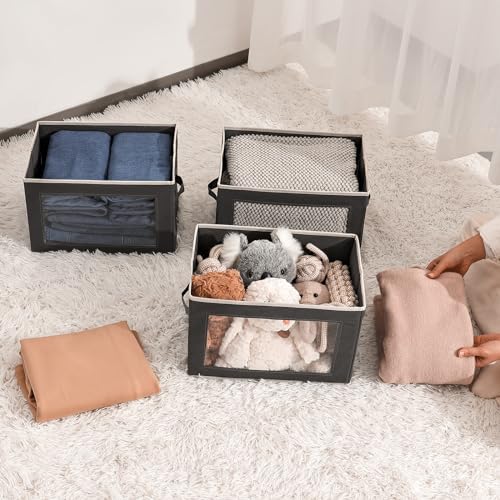
These fabric cubes stand out for closet use because of the clear front window, a small but smart feature that actually saves time when you’re grabbing socks or scarves. The non-woven fabric holds its shape decently, and the cardboard interior adds just enough structure without making them too rigid to fold.
I’d pick these over plain fabric bins for visible storage, especially in a shared closet where multiple people need to find things fast. They’re not built for heavy items like books long-term, but for lightweight folding clothes or seasonal accessories, owners consistently report they hold up well.
Product photos


IRIS USA 54 Qt Clear Bins
Strengths
- See-through design
- Secure stacking
- Durable plastic
Trade-offs
- Bulky when empty
- Heavy when full
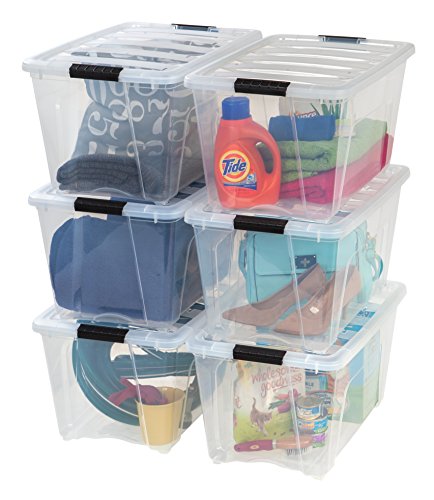
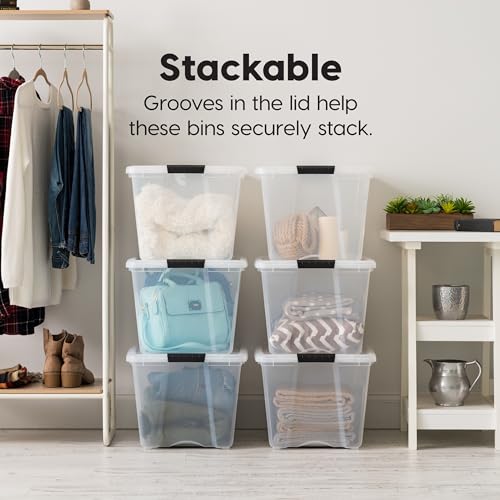
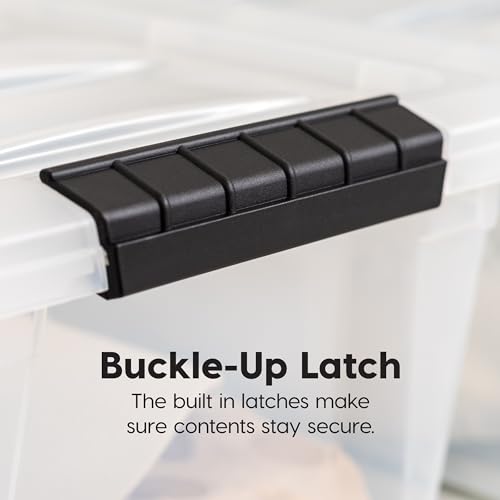
If you need to see what’s inside without lifting the lid, these clear 54-quart bins are the real deal. The locking lids keep dust out, and the BPA-free plastic feels thick enough to handle garage use. At this size, they’re ideal for holiday decor or off-season clothing you won’t touch for months.
I’d choose these over opaque bins any time visibility matters, like in a shared basement or playroom. They stack securely, and the pull handles make sliding them off shelves actually manageable. Made in the USA is a bonus, but not the main reason to buy.
Product photos


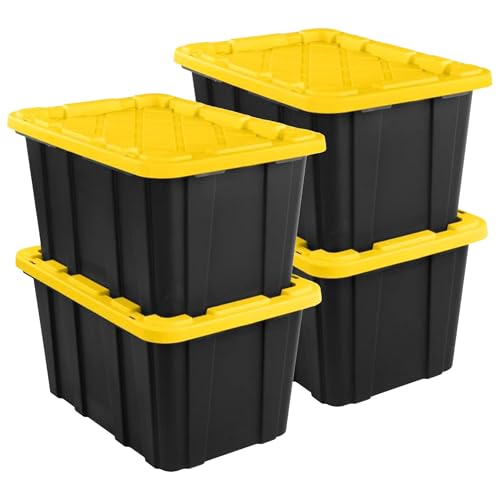
Sterilite 27 Gallon Industrial Tote
Strengths
- Heavy-duty construction
- Tie-down compatible
- High capacity
Trade-offs
- Bulky design
- Not stackable
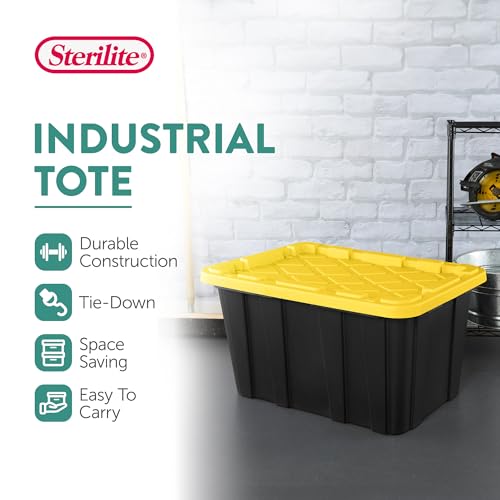
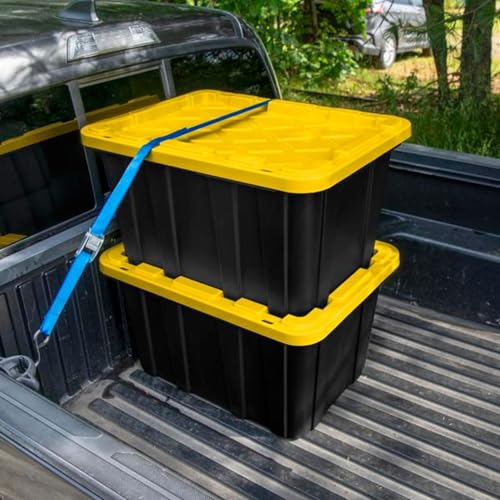
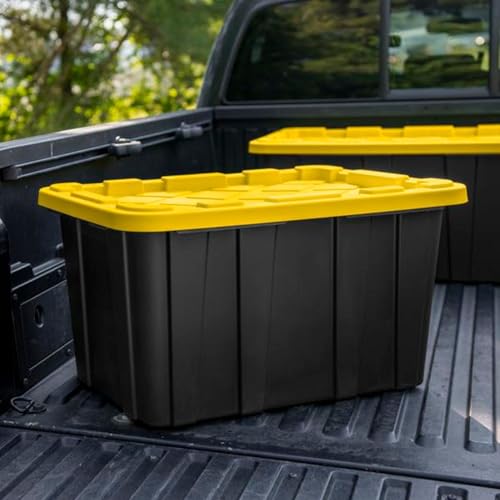
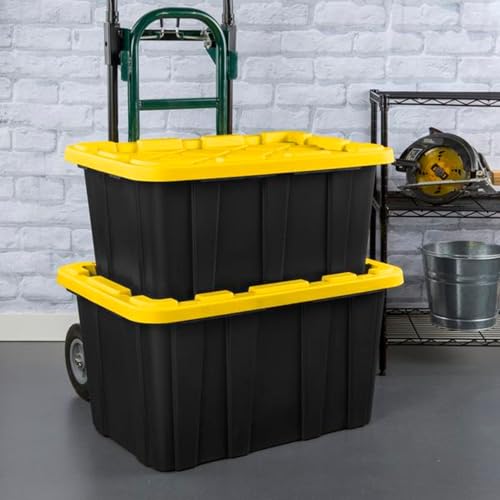
These totes are built for the kind of abuse most storage bins can’t handle, think power tools, camping gear, or heavy auto supplies. The channeled walls add rigidity, and the yellow lid with keyholes means you can strap it down in a truck bed or trailer.
They’re heavier than standard bins, but that’s the trade-off for durability. Compared to the IRIS bins, they’re larger and less stackable, but better for active use. Owners who use them for fishing trips or job sites say they hold up to drops and rough handling.
Product photos
How We Tested storage boxes
As the creator of Food Keepy, I spend a lot of time thinking about how people organize and preserve what they have. To determine the best storage boxes, I didn’t rely on personal use – rather, this is a research-led comparison of published specifications, features, and a careful weighing of owner and expert reviews. I looked at a wide range of options, then ranked them against criteria important for versatility, durability, and practical features like ease of stacking and visibility.
For storage boxes, the most important factors are ultimately strength and practicality. A box needs to reliably hold its contents without collapsing, and it needs to be easy to use – that means accessible, stackable, and ideally, allowing you to see what’s inside. We gave significant weight to load capacity claims, construction materials, and user reports on long-term durability, as flimsy boxes end up being a waste of money and space. Thinking about longer-term preservation, I also often recommend looking at options for airtight storage containers for more delicate items.
Specifications reliably indicate size and material, giving a basic understanding of a box’s potential. However, owner feedback was crucial for assessing real-world durability and usability. Reviews helped us understand how well the boxes hold up to repeated use, how easily lids secure, and whether the stated load capacities are accurate. We also considered expert opinions from organizing blogs and publications to get a broader perspective on quality and value, especially when comparing options for specialized storage like bread containers.
Choosing The Right storage boxes
Finding the right storage boxes isn’t just about finding something that holds stuff; it’s about creating a system that works with your space and habits. A well-chosen box can make all the difference in an organized home.
Effective storage solutions prioritize durability, accessibility, and space efficiency. Consider the intended use – long-term archival, frequent access, or relocation – and select materials and features accordingly. Look for robust construction, secure closures, and designs that maximize stackability or nestability to optimize available space. Prioritize clarity when possible to reduce searching.
Size and Capacity Considerations
It’s easy to underestimate how much space you actually need when choosing storage boxes. Don’t fall into the trap of buying a bunch of small boxes when a few larger ones would be more efficient. Think about what you’re storing. Bulky items like seasonal clothing or bedding demand larger capacity options (20+ gallons), while smaller items like craft supplies or office materials can be managed with smaller bins. Don’t forget to measure the space where you intend to store the boxes, both when full and when nested or collapsed.
Material and Durability
The material a storage box is made from is a huge factor in its longevity and suitability for your needs. Cardboard boxes, like the Amazon Basics Filing Boxes, are budget-friendly and work well for temporary storage or infrequent use. However, they’re susceptible to moisture and pests. Plastic bins, particularly those made in the USA like some from IRIS USA, offer better protection and are reusable, but can become brittle over time. Fabric bins, often found with convenient features like the ones in the Lifewit Clothes Storage Bins, are great for clothing because they allow for breathability.
Here’s what to consider when evaluating durability: * Construction: Look for reinforced seams or corners. * Weight Capacity: Check the manufacturer’s stated weight limit. Don’t assume a box can handle more than it’s rated for. * Material Thickness: Thicker plastic or heavier-duty fabric generally means a more durable box.
A good rule of thumb: invest in quality. Spending a little more upfront on durable boxes will save you money and frustration in the long run, as you won’t have to replace them as often.
Accessibility and Visibility
How easily you can access the contents of a storage box is crucial. Clear bins, such as the best clear bins from IRIS USA, are fantastic because you can instantly see what’s inside without having to rummage. If you opt for opaque bins, labeling is essential. Look for boxes with designated label areas (like the HOMESURE Heavy Duty Moving Bags) or be prepared to use a label maker. For frequently used items, choose boxes that are easy to stack and unstack, or those with handles for convenient carrying. Don’t overlook the simple convenience of a good lid; it keeps dust out and contents secure, and can prevent a cascade of items if a box is accidentally tipped. If you’re looking to organize your kitchen, consider also looking at cookie containers to keep your baked goods fresh.
Storage Boxes Compared
Here’s a comparison of key specifications for several popular storage box options.
| Product Name | Capacity | Dimensions (L x W x H) | Material | Stackable | Features |
|---|---|---|---|---|---|
| HOMESURE Heavy Duty Bags | 24 Gallon | N/A | Woven Fabric | No | Heavy Duty, Handles |
| IRIS USA 13 Qt Storage Bins | 13 Qt | 16.5″ x 11″ x 6.8″ | Plastic | Yes | Clear, Made in USA |
| Lifewit Clothes Storage Bins | 60 L | 21.6″ x 13.7″ x 12.4″ | Non-Woven Fabric | No | Clear Window |
| Amazon Basics Filing Boxes | Letter/Legal | 16.2″ x 12.5″ x 10.5″ | Cardboard | Yes | Collapsible |
| Homsorout Fabric Bins | 14.9″ x 9.8″ x 9.8″ | N/A | Fabric/Cardboard | Yes | Clear Window |
| IRIS USA 54 Qt Clear Bins | 54 Qt | 22″ x 16.5″ x 13″ | Plastic | Yes | Clear, Made in USA |
| Amazon Basics Fabric Cubes | N/A | N/A | Fabric | N/A | Collapsible |
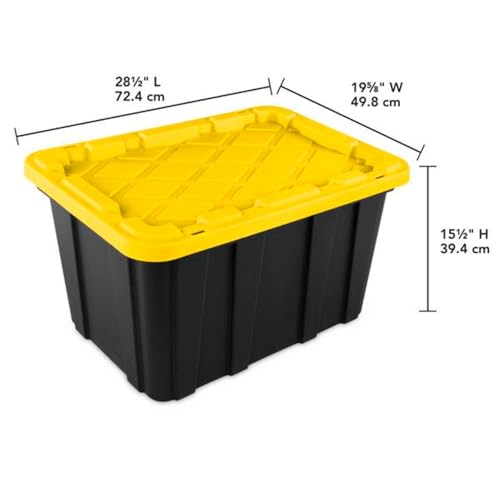
| Sterilite 27 Gallon Tote | 27 Gallon | 28.5″ x 19.6″ x 15.5″ | Plastic | Yes | Heavy Duty |
Frequently Asked Questions
What’s the biggest mistake people make when buying storage boxes?
People often underestimate the total volume they need to store, leading to too many boxes that are partially full. Calculating the cubic footage of your items and the available storage space will help you choose the right sizes and quantities.
Are plastic storage boxes truly better than cardboard for long-term storage?
Yes, plastic bins generally offer significantly better protection for long-term storage. Cardboard is vulnerable to moisture, pests, and crushing, while plastic provides a more durable and stable environment, though some plastics can become brittle with age.
How can I maximize space when stacking storage boxes?
Stackable boxes are essential, but consider the weight distribution. Place heavier items in lower boxes to prevent collapse and ensure the boxes are designed to interlock or have recessed lids for stability.
Should I invest in clear storage containers, even if they’re more expensive?
Clear containers are worth the extra cost if you frequently access the stored items. Being able to quickly identify contents saves time and prevents unnecessary rummaging, and it’s especially useful for seasonal decorations or items used infrequently. If you’re storing a lot of baked goods, you might also consider containers for baking supplies.
What’s the best way to store delicate items that could be damaged by plastic?
For fragile or sensitive items, consider fabric bins or boxes lined with acid-free paper. Alternatively, explore options like ceramic storage containers which offer a protective and aesthetically pleasing solution.
The Bottom Line
Ultimately, choosing storage boxes comes down to balancing upfront cost with long-term durability and convenience. While budget options like the Amazon Basics Filing Boxes have their place for temporary needs, I consistently find that investing in sturdier solutions – like the IRIS USA 54 Qt Clear Bins – pays off in the long run with less frequent replacement and a more reliable system. These bins offer a good mix of capacity, durability, and visibility, making them a solid all-around choice for many homes.
For specific needs, several other boxes stand out. If you’re prioritizing affordability for lighter items, the Amazon Basics Filing Boxes are a practical choice. Those needing breathable storage for clothing will appreciate the Lifewit Clothes Storage Bins. And for anyone concerned about material safety, exploring BPA-free containers is a smart move, particularly when storing items that might come into contact with food or children’s belongings – or consider the IRIS USA bins which are made in the USA.
Beyond specific features, remember that the best storage system isn’t about the boxes themselves, but about how you use them. Prioritize a consistent labeling system, regularly declutter, and choose boxes that fit your space and habits. A little planning upfront will make a big difference in maintaining an organized and functional home, and that’s what truly matters when considering storage boxes.
