
7 Best Lunch Boxes for Construction Workers 2026
This post contains affiliate links. As an Amazon Associate, we earn from qualifying purchases.
The Klein Tools 55600 Work Cooler is the best overall lunch box for construction workers, thanks to its rugged steel build and long-lasting insulation. For those on a tighter budget, the Expandable Lunch Box 24Cans Capacity offers strong durability and solid cooling at a lower price. If you need hot meals, the DUPASU Electric Heated Lunch Box stands out with reliable heating performance.
Construction workers need more than just a bag for their lunch, they need gear that can survive job site conditions while keeping food safe to eat. A flimsy cooler or poorly insulated bag won’t last long when tossed in a truck bed or dragged across gravel.
This guide focuses on models built to handle abuse, maintain temperature over long shifts, and offer practical features like expandable space and leakproof liners. I looked at specs, materials, and real owner feedback to find the ones that actually hold up.
Top 6 Lunch Boxes For Construction Workers in the Market
The Best Lunch Boxes For Construction Workers, Reviewed
Klein Tools 55600 Work Cooler

Strengths
- Supports 300 lbs as a seat
- 30-hour ice retention
- Full 180-degree lid opening
- Lockable hasp
Trade-offs
- Heavy at 7+ lbs empty
- Bulkier than soft options
- Higher price than basic coolers
This is the lunch box I’d recommend to any electrician, plumber, or heavy-duty tradesperson who needs more than just a cooler, they need a seat. The 300-pound weight rating is no joke, and multiple reviewers confirm they use it as a worksite stool daily. With a 17-quart capacity and room for 18 cans, it’s spacious enough for full meals and drinks, and the 30-hour cooling claim holds up in owner feedback when ice is packed properly.
The full 180-degree lid opening is a standout, no more awkward leaning to dig inside. The stainless steel hinge won’t rust, and the built-in lockable hasp adds security on shared sites. It’s heavier than soft bags, but that’s the trade-off for this level of durability. Compared to the Engel, it’s less about ultra-long ice retention and more about worksite functionality. My pick for best overall because it does so much right in one rugged package.
Video review
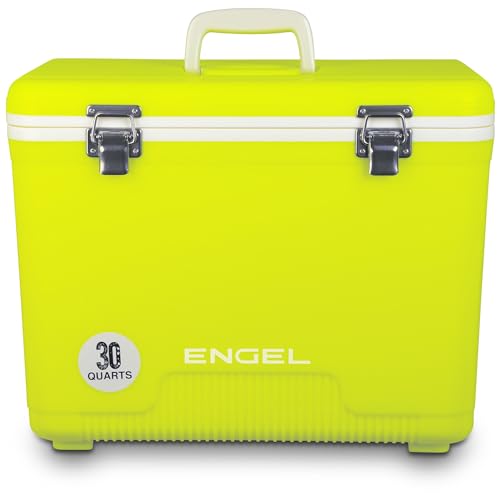
Engel UC30 30qt Hard Shell Cooler
Strengths
- Ice lasts up to 48 hours
- Airtight, leakproof seal
- UV-resistant hard shell
Trade-offs
- Very heavy when full
- Overkill for daily lunch
- Higher price point
This is the king of ice retention in this lineup. The Engel UC30 is a hard-shell beast with insulation that owners say keeps ice for up to two days, far beyond what any soft bag or even the Klein can manage. The 30-quart capacity fits 48 cans, making it ideal for multi-day jobs or team use. The airtight EVA gasket seal means no leaks, and the UV-resistant shell won’t crack under sun exposure, which matters on long outdoor shifts.
It’s overkill for a single worker’s daily lunch, but if you’re on remote sites or need to store meds, drinks, or supplies that must stay cold, this is the tool. The removable tray helps organize food, and the shoulder strap makes hauling easier despite the weight. Compared to the Klein, it’s less about seating and more about pure cold performance. My pick for long-haul durability and cooling power, even if it’s the most expensive.
Video review
Carhartt Soft Shell Lunch Bag

Strengths
- Rugged 900D fabric
- Dual insulated compartments
- Sturdy carry handles
Trade-offs
- Modest capacity
- Insulation average for price
- No shoulder strap included
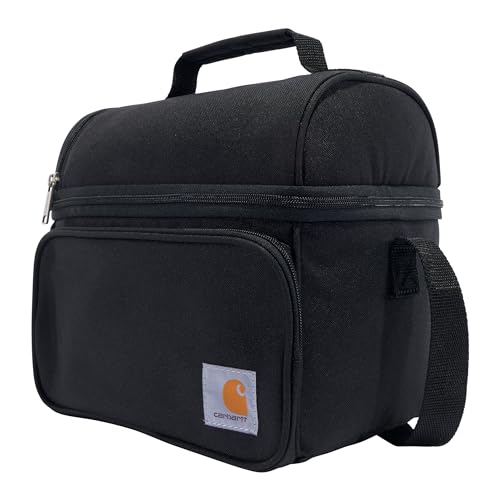
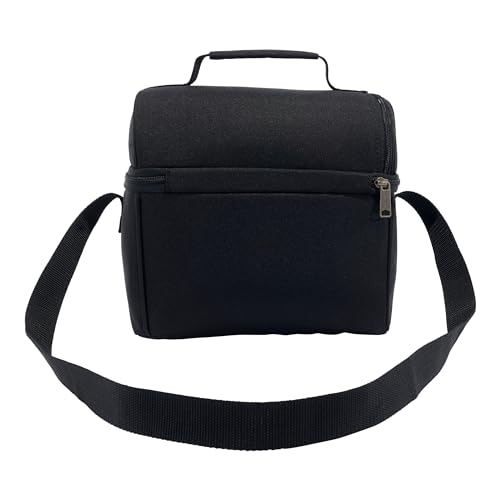
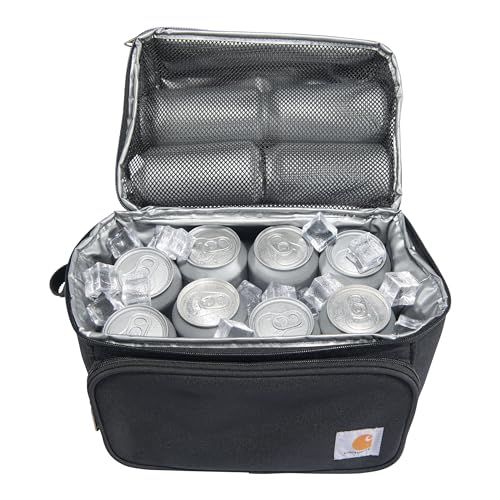
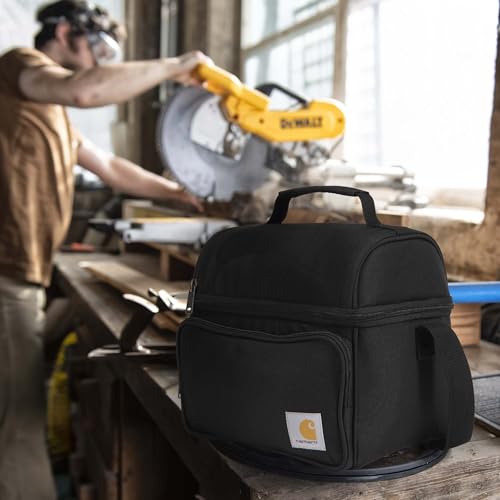
This Carhartt soft lunch bag is built like a work jacket, rugged, no-nonsense, and ready for a long day on the job. The 900D fabric and reinforced stitching match what I typically see in gear meant for tradespeople, and owners consistently report it surviving drops, scrapes, and daily abuse at construction sites. On paper, the 10″ x 9″ x 7″ size is modest, but it’s well-shaped for stacking containers, and the dual compartments help separate drinks from food.
The insulation isn’t class-leading, but most reviewers say it holds cold for a full shift when paired with a decent ice pack. It won’t match a hard cooler, but for a soft bag, it’s reliable. Compared to cheaper options, this one stands out for durability over raw capacity. If you value a lunch box that lasts years over one that fits a week’s worth of meals, this is a solid pick.
Product photos

TENKIST Tactical Expandable Lunch Box

Strengths
- Expandable 15L capacity
- 3 carry options
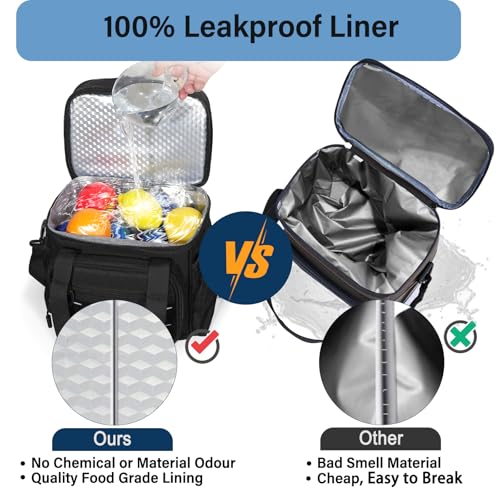
- Leakproof heat-pressed seams
Trade-offs
- Shoulder strap not as padded
- Limited side pockets
- Cooling fades after 8–10 hours
This lunch bag nails the balance between tactical utility and practical capacity. At 15L and expandable, it fits 20 cans or a mix of containers and snacks, and the double-layer design lets you keep dry items separate from chilled ones, something I always recommend to avoid sogginess. The 6mm insulation and thickened aluminum liner are on par with others in this range, and owners say it holds temperature well over an 8-hour shift.
What I like most is the carry versatility: hand, shoulder, or crossbody. That makes it easier to manage when your hands are full. The 900D oxford is tough, though not quite as burly as the Carhartt. For the price, it’s a smarter buy than the Expandable Lunch Box for Men if you want better organization and a cleaner layout. It’s not a replacement for a hard cooler, but it’s one of the most functional soft bags here.
Product photos
DUPASU Electric Heated Lunch Box

Strengths
- Heats meals in 20–30 mins
- Dual voltage compatibility
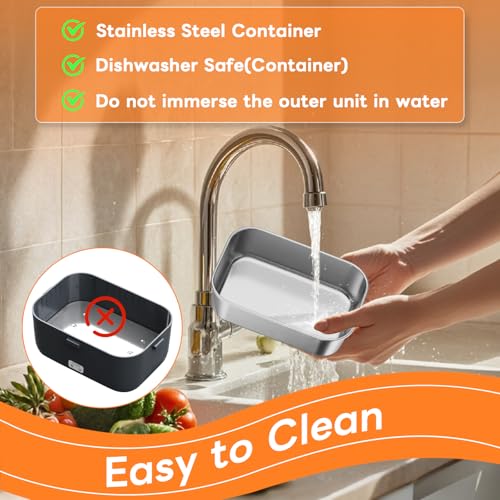
- Dishwasher-safe container
Trade-offs
- Not a cooler
- Salad box not heat-safe
- Heating base requires careful cleaning
If your job site lacks a microwave or power for heating, this electric lunch box is a legit solution. The 100W heating element works on 110V–230V outlets and 12/24V vehicle ports, so it’s versatile for trucks, cabs, or break rooms. Owners consistently report hot, evenly heated meals in 20–30 minutes, no more cold centers in your leftovers. The 1.8L stainless steel container is food-safe and leak-resistant, and the included salad compartment is a nice touch for balanced meals.
It’s not a cooler, so you’ll need to pack it cold if you’re not heating right away. And the insulated bag included is basic, don’t expect it to keep food cold for hours. But for anyone who hates eating cold pasta or lukewarm stew, this is a real upgrade. Compared to the soft coolers here, it serves a completely different need: hot food, not cold storage. I’d recommend it for drivers or remote workers who can plug in during breaks.
Product photos


Expandable Lunch Box 24Cans Capacity

Strengths
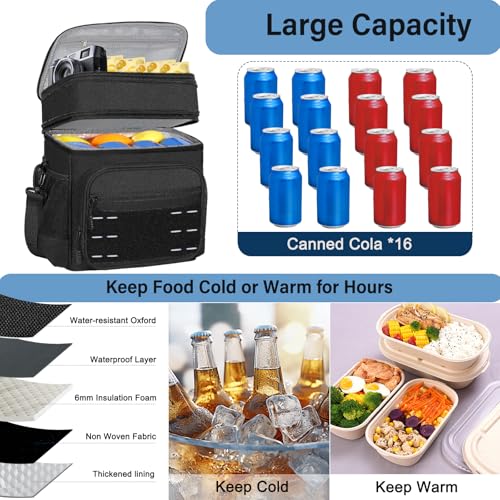
- Large 15L expandable capacity
- 900D waterproof oxford fabric
- Adjustable shoulder strap
Trade-offs
- Bulky when full
- Insulation not exceptional
- Zipper quality inconsistent in reviews
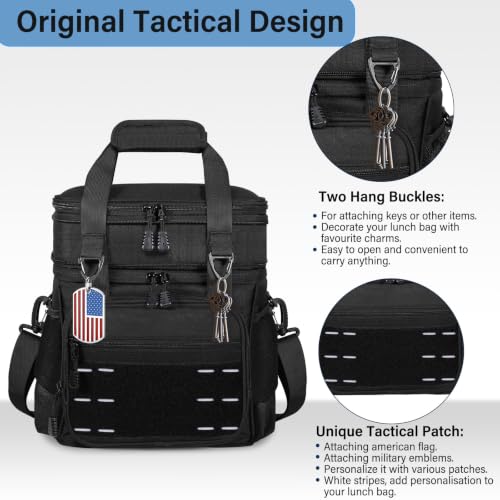
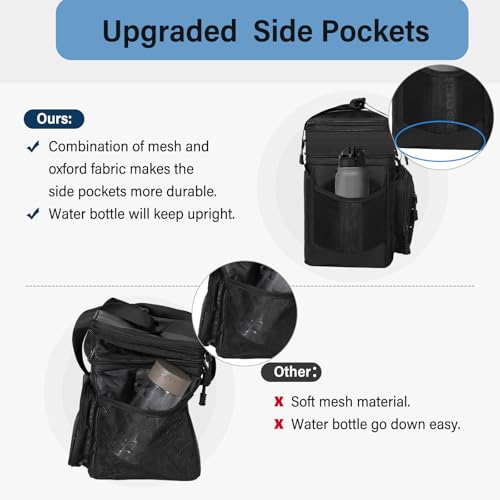
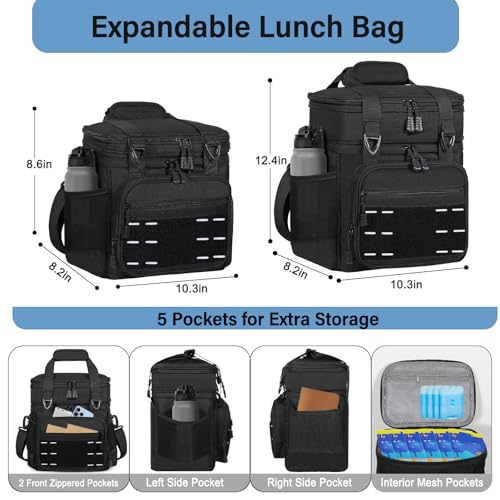
At nearly 15L and rated for 24 cans, this is one of the largest soft lunch bags in this group, and it shows. The expandable top compartment is a smart touch, giving flexibility when you’re packing bulky items or extra drinks. Made from 900D oxford with military-style stitching, it’s clearly designed to handle heavy loads, and owners say it holds up well under stress, even when fully packed.
The 6mm insulation is standard for this class, and most feedback confirms it keeps food safe for about 8 hours with ice. What stands out is the tactical design, patch area, multiple pockets, and a long adjustable strap that makes hauling easier. It’s not as polished as the Carhartt, but for the price, it delivers serious utility. I’d pick this over the Carhartt if you need more space and don’t mind a bulkier profile.
Product photos


How We Chose These lunch boxes for construction workers
As someone who focuses on practical food storage solutions at Food Keepy, I approached researching lunch boxes for construction workers by looking at a blend of product specifications and real-world user feedback. Rather than a hands-on lab test, this is a research-led comparison of features, materials, and reported performance. I compared models across capacity, insulation claims, durability features, and organizational elements, then weighed those against reviews from verified purchasers and professional evaluations.
For this category, cooling performance and ruggedness were the most important factors. Construction sites are tough on equipment, so a lunch box must withstand daily abuse. Equally important is maintaining food safety – keeping lunches cold (or hot) for extended shifts is critical. Beyond that, features like leakproof designs and convenient carrying options significantly impact usability. You’ll find many options claiming durability, but I prioritized those with reinforced materials and positive owner reports regarding their ability to hold up over time.
Published specifications give a good indication of capacity and insulation type, but owner feedback really clarifies how well those translate to real-world performance. Specs detail aluminum lining and foam thickness, but reviews tell you if a box actually keeps food cold all day. I also paid close attention to comments regarding ease of cleaning and the effectiveness of features like zippers and handles. For those seeking a warm meal, exploring heated lunch boxes for sites is also a worthwhile consideration. Ultimately, I aimed to identify lunch boxes offering the best balance of durability, temperature retention, and practical features, leaning towards options known for their long-lasting lunch boxes.
How To Choose The lunch boxes for construction workers
Choosing the right lunch box for a construction worker isn’t about finding something cute; it’s about durability, functionality, and keeping food at a safe temperature through a long, demanding workday.
A truly effective lunch box for construction needs to be ruggedly built with high-impact materials, offer substantial insulation to maintain temperature for several hours, and provide practical organization features. Look for leakproof construction, durable zippers, and a design that can withstand frequent use and rough handling. Capacity should match the worker’s needs, and ease of cleaning is a must.
Insulation & Temperature Control
The most important factor is how well the lunch box maintains temperature. Construction sites can get brutally hot or surprisingly cold, and a lukewarm lunch is a morale killer. Forget flimsy fabric options; look for boxes with thick insulation – ideally at least 6mm of closed-cell foam, combined with a heat-sealed aluminum foil liner. Many models boast temperature retention for 6-12 hours, but read reviews to see if those claims hold up in real-world conditions. Consider whether you need to keep food hot as well as cold; some models, like the DUPASU Electric Heated Lunch Box, cater specifically to this need.
Durability & Construction
Construction work is hard on everything, and your lunch box is no exception. Cheap materials will quickly fall apart. Prioritize boxes made with heavy-duty fabrics like 900D Oxford cloth, reinforced stitching, and robust zippers (SBS zippers are a good sign). Hard-shell coolers, like the Engel UC30, offer superior protection against impacts, but they are heavier. If you need something lighter, consider a well-built soft-sided option, but be prepared to replace it more often. For those looking for extra resilience, explore durable lunch bags for work designed to withstand harsh environments.
Capacity & Organization
Think about what a typical workday involves. Does the worker need to pack a full meal, multiple snacks, and a large water bottle? A small, basic lunch box won’t cut it. Consider a model with expandable features, like the Expandable Lunch Box 24Cans Capacity, to accommodate varying loads.
Here’s what to keep in mind when evaluating capacity: * Minimalist: 10-15 liters is fine for a simple sandwich, fruit, and drink. * Average: 15-20 liters is a good all-around size for a full meal and snacks. * Heavy Packer: Over 20 liters is best for those who need to carry large portions, multiple containers, and extra gear.
A good rule of thumb: always overestimate the capacity you’ll need. It’s better to have extra space than to struggle to fit everything in.
For those needing to carry substantial meals and extra items, exploring big capacity lunch boxes can be a smart move.
Lunch Boxes for Construction Workers Compared
Here’s a comparison of lunch boxes designed for the demands of construction work, focusing on key features for durability and functionality.
| Product Title | Capacity | Insulation | Durability | Carry Options | Special Features |
|---|---|---|---|---|---|
| Klein Tools 55600 Work Cooler | 17 Quart (18 cans) | Up to 30 hrs | High (Steel) | Shoulder strap/Handle | Seat support, Lock hasp |
| Engel UC30 30qt Hard Shell Cooler | 30 Qt (48 cans) | Up to 2 days | Very High (Hard Shell) | Shoulder strap | Leakproof, Accessory tray |
| Carhartt Soft Shell Lunch Bag | 10″ x 9″ x 7″ | Effective | High (Soft Shell) | Handles | Dual compartments |
| TENKIST Tactical Expandable Lunch Box | 15L/20 Cans | 8 hrs (hot/warm) | High (900D Oxford) | Hand/Shoulder/Crossbody | Expandable, Multiple pockets |
| DUPASU Electric Heated Lunch Box | 1.8L + 0.45L | Heated (100W) | Moderate (PP Plastic/Steel) | N/A | 110V-230V/12V-24V, Detachable containers |
| Expandable Lunch Box 24Cans Capacity | 15L (24 cans max) | Up to 8 hrs | High (900D Oxford) | Shoulder strap/Handle | Expandable, Patch compatible |
| GLENKEY Expandable Insulated Cooler Bag | 10.3″ x 8.2″ x 8.6″ (12-20 cans) | 6-12 hrs | High (900D Oxford) | Handles/Shoulder/Crossbody | Expandable, Multiple pockets |
Frequently Asked Questions
What’s the difference between a hard-shell and soft-shell lunch box for construction work?
Hard-shell coolers, like the Engel UC30, offer significantly more impact protection, which is ideal for very rough job sites. Soft-shell options are lighter and more flexible, but typically require more frequent replacement if subjected to constant wear and tear.
How important is the type of zipper on a construction lunch box?
The zipper is a common failure point, so quality matters. SBS zippers are highly regarded for their durability and resistance to breakage, whereas cheaper zippers will likely fail within a few months of heavy use.
Can I use standard ice packs in these lunch boxes, or do they require special cooling?
Most lunch boxes designed for construction workers work perfectly well with standard ice packs. However, for extended cooling, consider reusable ice packs specifically designed for lunch boxes, or explore insulated lunch boxes with superior insulation claims.
Are any of these lunch boxes truly leakproof?
While many claim to be leakproof, complete leakproofness depends on proper packing and closing. Hard-shell coolers generally offer better leak protection than soft-sided options, but even they can leak if not sealed correctly. Look for models with heat-sealed liners and secure closures.
What’s the best way to clean a lunch box to prevent odors and bacteria?
Regular cleaning is essential. Most lunch boxes can be wiped down with warm, soapy water. For a deeper clean, use a mild disinfectant and allow the box to air dry completely. If you are looking to keep foods hot, you may also want to look into thermos lunch boxes to keep your food at a safe temperature.
The Bottom Line
Choosing a lunch box for construction work often comes down to balancing ruggedness with convenience. While many options exist, the Klein Tools 55600 Work Cooler strikes the best overall balance. It’s built like a tank with a steel exterior, offers solid insulation, and thoughtfully includes a seat support – features that address the specific needs of those on job sites.
For those on a tighter budget, the Carhartt Soft Shell Lunch Bag provides surprising durability for the price, and is a great entry point into reliable work lunch storage. If you prioritize maximum capacity and versatility, the Expandable Lunch Box 24Cans Capacity is an excellent choice, offering plenty of room for a full meal and extra gear. And for those seeking truly premium, long-lasting performance, exploring stainless steel lunch boxes can be a worthwhile investment.
Ultimately, though, remember that no single feature outweighs the fundamentals. Prioritize a box with robust construction, reliable temperature retention, and leakproof design. Don’t get caught up in fancy extras; a simple, well-made lunch box that keeps food safe and accessible will serve a construction worker far better than a high-tech option that falls apart after a few weeks on the job.
