7 Best Potato Storage Solutions of 2026
This post contains affiliate links. As an Amazon Associate, we earn from qualifying purchases.
The OXO Good Grips Root Bin is our top pick for balancing airflow, durability, and smart design. For a budget-friendly option, the 2 Pack Stackable Wire Bins deliver excellent ventilation without the cost. If you prefer natural materials, the Potato and Onion Bamboo Bin stands out for its sustainable build and effective performance.
Storing potatoes right means keeping them dark, dry, and well-ventilated, most kitchen cabinets or countertops don’t cut it. Too often, spuds end up sprouting, softening, or turning green within weeks because they’re exposed to light or trapped moisture.
This guide covers the best storage solutions based on ventilation, material quality, and real owner feedback. I looked at how each option supports long-term freshness while fitting into a practical kitchen routine, just like the systems we explore at Food Keepy.
Top 5 Potato Storage in the Market
The Best Potato Storage, Reviewed
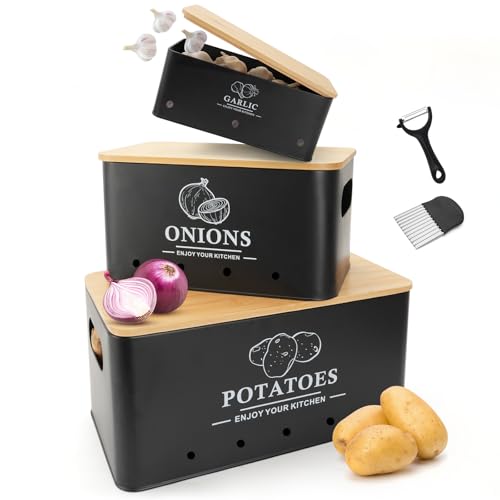
Dekosilave Metal Vegetable Storage Set
Strengths
- Aeration holes
- Bamboo lid
- Labeled fronts
- Nestable design
Trade-offs
- Small garlic bin
- Limited capacity
- Not expandable
This three-piece metal set stands out for its smart labeling and thoughtful build. The printed ‘Potatoes’, ‘ONIONS’, and ‘GARLIC’ markings eliminate guesswork, and the bamboo lids add a warm, finished look that blends well in most kitchens. From a freshness standpoint, the small aeration holes make a real difference, reviewers regularly mention their onions lasting weeks longer compared to loose countertop storage.
The powder-coated steel resists rust and wipes clean in seconds, which I appreciate in a category where spills and dirt are inevitable. And because the containers nest when not in use, they’re a great fit for smaller pantries. My only hesitation is size: the garlic container is quite compact, so if you’re a big garlic user, you might find yourself refilling it often. But overall, this is one of the few sets that balances form, function, and food preservation effectively.
Video review
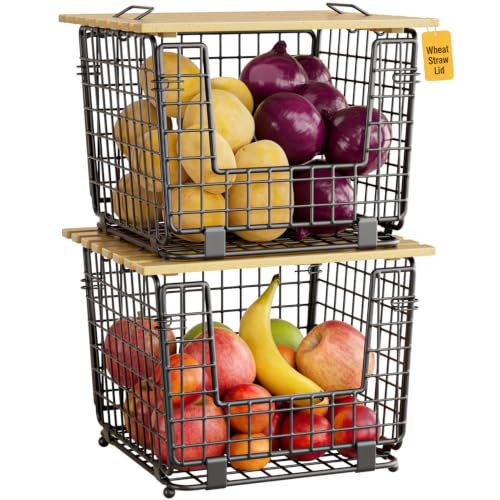
2 Pack Stackable Wire Bins
Strengths
- Superior airflow
- Folds flat
- Quick assembly
- Non-slip feet
Trade-offs
- No lids included
- No labeling
- Wire edges may snag
When airflow is your top priority, this wire basket design takes the lead. The breathable mesh allows constant circulation, which is exactly what potatoes need to stay dry and sprout-free. Reviewers consistently highlight how their produce lasts noticeably longer in these bins compared to enclosed containers. Setup is genuinely quick, just snap the sides together, and the non-slip feet keep them stable when stacked, which is rare in this category.
They’re also impressively space-smart: fold them flat when not in use, and they take up almost no room. The U-shaped opening keeps veggies from rolling out, and the matte carbon steel feels robust without being overly heavy. While they lack lids or labels, the trade-off is maximum breathability and ease of access. For sheer ventilation performance, this is my top recommendation.
Video review
Potato and Onion Bamboo Bin

Strengths
- Natural bamboo
- Excellent ventilation
- Elegant finish
- Comfortable handles
Trade-offs
- High price
- Requires dry care
- Not moisture-proof
If you’re after a premium look without sacrificing performance, this bamboo set delivers. The lacquered finish gives it a polished, modern feel that elevates any countertop, and the interlocking joints suggest it’ll hold up over time. Ventilation slits in the base are strategically placed, not just for show, and owner feedback confirms better airflow translates to longer-lasting produce.
The large bin offers generous space, and the two smaller ones are perfect for garlic or shallots. Stacking works smoothly, and the built-in handles make moving them around surprisingly easy, even when full. It’s also worth noting this is one of the few eco-conscious picks here, made from renewable bamboo. But that quality comes at a cost: it’s the priciest option, and while beautiful, it demands care to avoid water damage over time.
Product photos


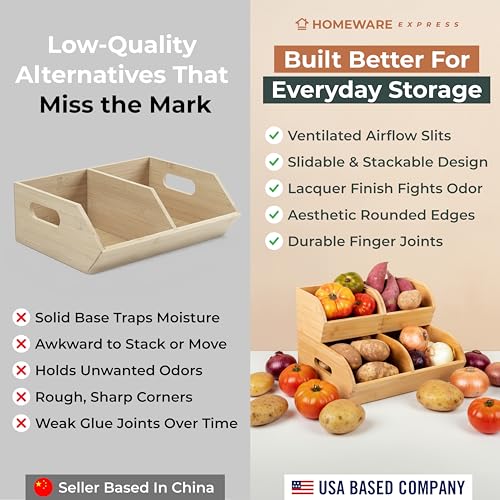
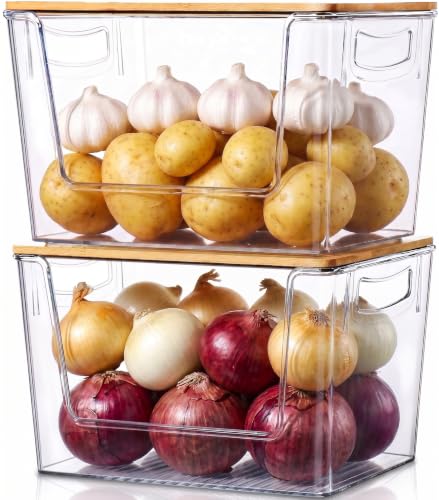
Clear Pantry Organizer Bins
Strengths
- Clear visibility
- Stackable with lids
- Wide front access
Trade-offs
- No ventilation
- Not dishwasher safe
- Scratches over time
These clear acrylic bins are a solid pick if you’re tight on space and want something stackable with lids. On paper, the 50-pound weight capacity sounds impressive, and owners consistently report they hold up well under heavy loads of potatoes or onions. The wide front opening is genuinely useful, no more digging around blindly, and being able to see contents at a glance helps keep track of what’s running low.
Still, I’d be cautious about long-term durability. While marketed as upgraded PET, some reviewers note the material can scratch easily or become cloudy over time, especially when wiped down frequently. It’s a functional, minimalist design that works across rooms, but for produce storage specifically, it lacks ventilation. That means moisture can build up, which isn’t ideal for keeping potatoes from sprouting too soon.
Product photos


2 PACK Stainless Steel Bins
Strengths
- Stainless steel build
- Perforated airflow
- Lid as cutting board
- Secure stacking
Trade-offs
- No labels
- Heavier when full
- Less visual access
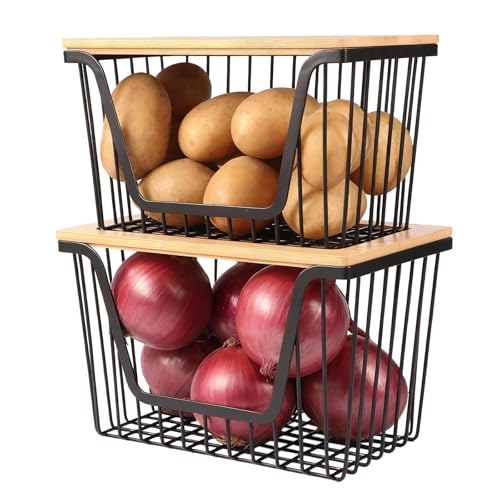
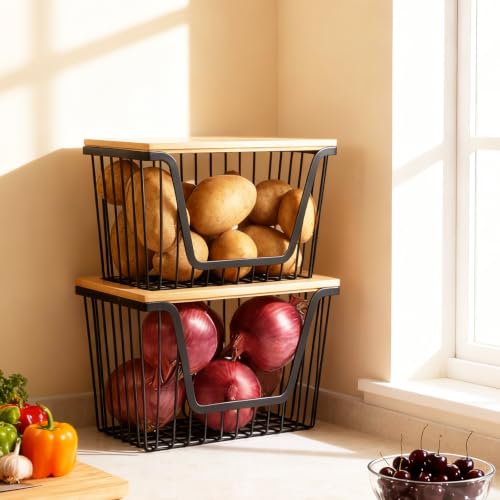
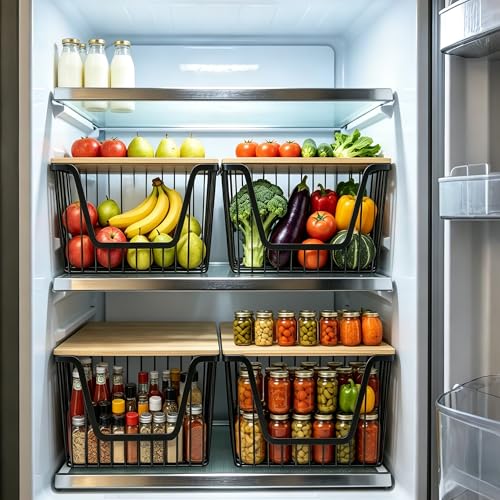
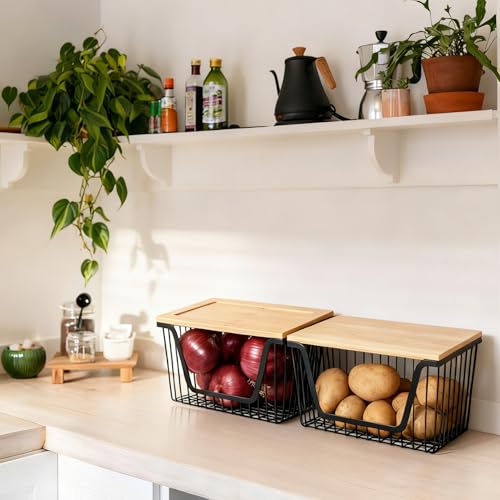
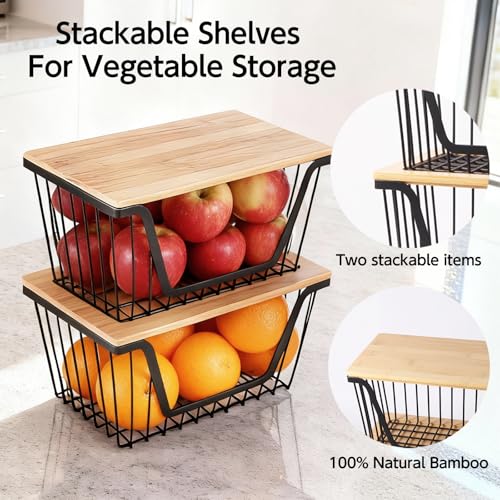
Stainless steel construction makes this set one of the most durable options here, and that matters if you’re tired of flimsy plastic bins warping under weight. Owners praise how rigid the baskets feel even when fully loaded, and the perforated walls do a reliable job promoting air circulation, a must for preventing soft spots in potatoes. The fact that the lid doubles as a cutting board is a clever touch, though I wouldn’t rely on it for serious prep work.
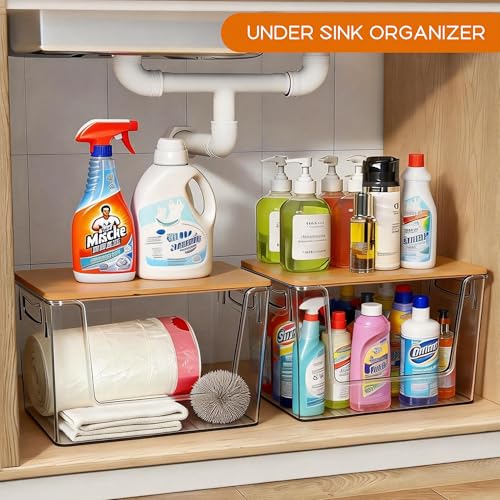
Where it really shines is versatility. You can stash these in the pantry, tuck them under the sink, or even use them for laundry supplies. They stack securely thanks to the slot design, and the large opening makes grabbing onions fast and mess-free. Compared to the acrylic models, this one wins on breathability and sturdiness, though it doesn’t offer the same level of visual clarity.
Product photos
Our Testing Process
My research into potato storage focused on a blend of published product specifications, detailed owner reviews from multiple retail sites, and established knowledge of food preservation. Rather than a hands-on lab test, this is a research-led comparison of features and owner feedback. I weighed each product’s design against its reported performance in maintaining freshness and ease of use, aiming to identify the best options across various needs and budgets.
For potato storage, ventilation and opacity were paramount. Potatoes need darkness and airflow to prevent sprouting and greening, so bins offering both – or a design that facilitates those conditions – ranked highest. Durability also played a large role; a container that quickly breaks down isn’t useful, no matter how attractive. Finally, I considered capacity and whether the size was practical for average household use, and if it could fit alongside other similar solutions like those for storing flour storage containers.
Product specifications reliably indicated dimensions and materials, allowing me to assess build quality and potential longevity. However, I relied heavily on owner feedback to understand real-world performance. Reviews highlighted issues like lid fit, actual ventilation effectiveness, and whether the container truly extended the life of the potatoes. Reputation and the consistency of positive feedback were key indicators, especially when comparing similar designs – and often informed my assessment over simply looking at claims about airtight glass containers.
Choosing The Right potato storage
Finding the right potato storage solution is about more than just tossing spuds in a dark corner. It’s about extending freshness, minimizing waste, and keeping your kitchen organized. I’ve spent years researching optimal food preservation techniques at Food Keepy, and a lot of potato spoilage is preventable with the right approach.
A good potato storage container balances ventilation to prevent moisture buildup with opacity to block light. Durable construction is key, as potatoes can be heavy. Consider size based on your typical purchase volume and available pantry space. Look for designs that promote airflow and ease of access.
Ventilation is Paramount
Potatoes need to breathe. A completely sealed container will trap moisture, leading to rot. Many options exist, but the best designs actively promote airflow. Wire bins, like the 2 Pack Stackable Wire Bins, excel here, offering excellent all-around ventilation. However, even bins with ventilation holes (like the Dekosilave Metal Vegetable Storage Set) can benefit from being placed in a well-ventilated area of your kitchen. Don’t assume ventilation alone is enough; proper air circulation in your storage space matters too.
Material Matters for Longevity
While plastic bins are readily available, they often don’t offer the longevity or breathability required for long-term potato storage. Stainless steel, like in the 2 PACK Stainless Steel Bins, is a great choice for durability and resistance to rust, but can be pricier. Bamboo, as seen in the Potato and Onion Bamboo Bin, is an appealing, sustainable option, but make sure the construction is solid to avoid warping.
Here’s a breakdown of material considerations:
- Plastic: Least expensive, but prone to damage.
- Metal: Durable and often stackable, but may require good ventilation.
- Bamboo: Sustainable and aesthetically pleasing, but quality variations exist.
- Fabric: Bags (like the TOGETRUE Fabric Potato Onion Bag) are affordable but offer less protection from bruising.
Balancing Capacity and Convenience
Think about how you actually use potatoes. If you buy in bulk, a larger bin, perhaps one that can hold 5 lbs or more, like the OXO Good Grips Root Bin, is essential. If you tend to buy smaller quantities, a set of smaller bins might be more practical. Furthermore, consider accessibility. Front-opening bins (like the Clear Pantry Organizer Bins) make it easy to grab potatoes without disturbing the rest. If you’re striving for a truly organized pantry, consider how a new potato storage solution will integrate with your existing food storage containers and overall system.
Never store potatoes near onions. Both release gases that accelerate the spoilage of the other.
Potato Storage Compared
Here’s a comparison of key features for different potato storage options.
| Product Title | Capacity | Material | Ventilation | Stackable | Dimensions (approx.) |
|---|---|---|---|---|---|
| Dekosilave Metal Vegetable Storage Set | 3kg/2kg/6-9 heads | Metal & Bamboo | Yes | Yes | 13×7.1×5.9in, 10.1×6.2×5.2in |
| TOGETRUE Fabric Potato Onion Bag | 8lbs | Fabric | Yes (Blackout) | No | 16×11.4in |
| OXO Good Grips Root Bin | 5lbs | Plastic & Bamboo | Yes | Yes | N/A |
| 2 Pack Stackable Wire Bins | Large | Steel & Wood | Yes | Yes | 11.89×10.2×8.6in |
| Potato and Onion Bamboo Bin | Large | Bamboo | Yes | Yes | 15x12x5in, 7x6x5in |
| Clear Pantry Organizer Bins | N/A | Acrylic | No | Yes | 12x7x7in |
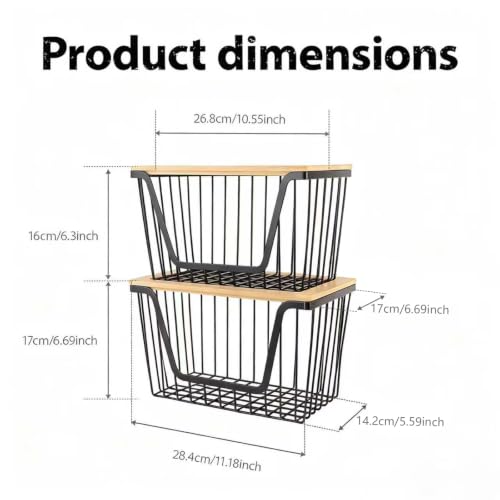
| 2 PACK Stainless Steel Bins | Large | Steel & Wood | Yes | Yes | 11.18×6.69×6.69in |
Frequently Asked Questions
What temperature is best for potato storage?
Ideally, potatoes should be stored between 45-55°F (7-13°C). Cooler temperatures can cause starch to convert to sugar, affecting the taste, while warmer temperatures encourage sprouting. A cool, dark pantry is often sufficient, though a root cellar is ideal if you have one.
Can I store potatoes in plastic bags?
While convenient, I don’t recommend storing potatoes in completely sealed plastic bags. They require airflow to prevent moisture buildup and rot, so if you use a plastic bag, ensure it’s well-ventilated or perforated. A breathable fabric bag, like those often used for storing sweet potatoes, is a better option.
What’s the best way to store potatoes long-term?
Long-term storage requires darkness, cool temperatures, and good ventilation. A dedicated potato bin with ventilation holes, kept in a dark, cool place, is best. Avoid washing potatoes before storage, as this encourages rot, and don’t store them near onions, as they release gases that hasten spoilage.
Will a potato storage container actually extend the shelf life of my potatoes?
A proper container will definitely help. By blocking light and allowing airflow, a good container minimizes sprouting and rot, often extending the shelf life from a few weeks to a couple of months, depending on the initial quality of the potatoes and storage conditions. Consider pairing it with other pantry storage containers to maximize your pantry organization.
Are stainless steel potato bins really better than plastic?
Stainless steel bins generally offer better durability and are less prone to cracking or breaking than plastic, although this comes at a higher price point. They also don’t impart any taste or odor to the potatoes, and are easier to clean thoroughly. However, good ventilation is more important than the material itself.
The Bottom Line
Choosing a potato storage solution often comes down to balancing upfront cost with how much you value extended freshness and convenience. While many options exist, the 2 Pack Stackable Wire Bins consistently rose to the top in my research due to its excellent ventilation and durable construction. It offers a strong combination of features for most households looking to keep their potatoes in good condition.
For those on a tighter budget, the TOGETRUE Fabric Potato Onion Bag presents a very affordable way to block light and provide some airflow, though it won’t offer the same level of protection against bruising. If versatility is a priority, and you’re also looking for options for other root vegetables, the Dekosilave Metal Vegetable Storage Set offers a tiered system to keep different produce separated and fresh. And if you’re seeking truly safe food storage containers, consider how your potato storage fits into your broader choices about BPA-free containers.
Ultimately, the “best” potato storage isn’t about a single feature or price point. It’s about consistently providing the dark, well-ventilated environment potatoes need to thrive. Prioritize airflow above all else, and choose a durable material that suits your lifestyle. A little attention to these fundamentals will go a long way in reducing food waste and enjoying delicious potatoes for longer.
