A Complete Guide on How to Store Eggs Long Term Safely
This post contains affiliate links. As an Amazon Associate, we earn from qualifying purchases.
To store eggs long term, keep raw shell eggs refrigerated at 40°F (4°C) or below for 3–5 weeks, freeze beaten eggs for up to a year, and avoid water glassing due to Salmonella risk. The USDA states eggs can maintain Grade A quality for 15 weeks under ideal refrigeration, but freezing requires adding salt or sugar to yolks to prevent gelling.
That 40°F threshold isn’t arbitrary. It’s the line where bacterial growth, specifically Salmonella enteritidis, slows to a near halt. Go a few degrees warmer, and the clock speeds up dramatically.
What follows is a breakdown of the three real paths: refrigeration for months, freezing for a year, and the one historic method that carries a documented public health warning. You’ll get the exact ratios for freezing, the timeline for quality loss, and the specific mistake that turns a cold egg into a bacterial sponge.
Key Takeaways
- Store raw eggs in their original carton on a refrigerator shelf, not the door, at 40°F (4°C) or below. They maintain quality for 3–5 weeks and can remain Grade A for up to 15 weeks.
- Freeze beaten eggs for long-term storage, but add 1/2 teaspoon of salt or 1 1/2 tablespoons of sugar per cup of whole eggs if freezing yolks to prevent a thick, gummy texture.
- Discard the “water glassing” method. University extension services explicitly warn against it because Salmonella can be inside the egg from the hen, and the lime solution does not kill it.
- Never leave refrigerated eggs out at room temperature for more than two hours. A cold egg will sweat, and moisture on the shell helps bacteria move inside.
- Hard-boiled eggs are one of the worst candidates for long-term storage. Their shelf life drops to just one week in the fridge, and they don’t freeze well.
The 40°F Rule and What It Actually Does
Your refrigerator’s job is to buy time. The USDA, FSIS, and every university extension service peg the safe zone at 40°F (4°C) or below. This isn’t just a suggestion; it’s the temperature that dramatically slows the growth of Salmonella enteritidis.
Eggs should be stored in their original carton on a back shelf in the refrigerator to insulate the eggs and reduce drastic temperature changes from opening the door of the refrigerator. USDA Agricultural Research Service
The carton matters. It buffers against temperature swings every time you open the door. The back shelf is the coldest, most stable spot. The door is the warmest, and it jostles. This is a core principle of long-term food storage: consistency beats convenience.
What happens above 40°F? Bacteria enter the exponential growth phase. A cold egg left out starts to sweat, and that moisture on the shell acts as a bridge for microbes. This “cold egg sweating” is why the two-hour rule exists. Leave a refrigerated egg on the counter for a three-hour baking project, and you’ve reset its safety clock.
The shelf life numbers are specific. Under ideal conditions, the USDA notes eggs can retain Grade A quality for 15 weeks. Real-world home refrigeration gives you a practical window of 3 to 5 weeks for raw shell eggs. For separated components, the clock runs faster: raw whites last 2–4 days, raw yolks just 2–4 days unless treated for freezing.
Where this goes sideways: Storing eggs in the refrigerator door. The temperature there can fluctuate by 5–10 degrees every time you open it. Over a week, that’s enough to degrade quality and shorten your usable shelf life by several days.
Freezing Eggs: The Step Everyone Skips
Freezing is the only universally recommended method for storing eggs beyond a few months. It’s straightforward but has one non-negotiable rule: never freeze eggs in their shells. The liquid inside expands and will crack the shell, creating a mess and an entry point for freezer-burn flavors.
The process is simple. Crack fresh eggs into a bowl, whisk them thoroughly until the yolks and whites are fully blended, and pour the mixture into freezer-safe containers. Ice cube trays work perfectly for portion control, one cube is roughly equivalent to one large egg.
The catch is with yolks. Frozen plain, egg yolks thicken into a gelatinous, unusable mass upon thawing. The USDA and the National Center for Home Food Preservation prescribe an additive to prevent this. For savory applications, add 1/2 teaspoon of salt per cup of whole eggs (about 4-5 eggs). For sweet applications, use 1 1/2 tablespoons of sugar or corn syrup per cup. Label the container with the additive used.
| Egg Component | Preparation for Freezing | Max Storage Time | Thawing & Use |
|---|---|---|---|
| Whole Eggs (beaten) | Add salt or sugar as above. | 12 months | Thaw overnight in fridge. Use in cooked dishes. |
| Egg Whites Only | No additive needed. | 12 months | Thaw in fridge. Ideal for meringues. |
| Egg Yolks Only | Must add salt or sugar. | 12 months | Thaw in fridge. Use promptly after thawing. |
Egg whites freeze beautifully alone, with no additives needed. They’re the easiest component for preserving eggs in bulk. Once frozen, use them within a year for best quality. Always thaw frozen eggs in the refrigerator, never at room temperature, and use them only in dishes that will be cooked thoroughly to 160°F.
The Water Glassing Debate
Water glassing, submerging unwashed eggs in a solution of pickling lime (calcium hydroxide) and water, is a century-old method that floods social media and homesteading channels. Proponents claim it preserves eggs for a year or more without refrigeration. The problem is the science has moved on, and the guidance has reversed.
The method hinges on the egg’s natural protective coating, called the bloom or cuticle. This coating seals the shell’s pores. The theory was that all bacteria contaminated the egg from the outside after laying. We now know Salmonella enteritidis can infect a hen’s ovaries and be inside the egg as it forms. The bloom is irrelevant if the enemy is already within.
The part nobody mentions: A 2016 Penn State study found small home flocks have a much higher incidence of Salmonella than large commercial operations. The very eggs considered ideal for water glassing, unwashed, from backyard chickens, are statistically more likely to carry the bacteria inside.
The USU Extension storing eggs safely guide is blunt: “This method is not considered safe, nor is it a recommended method to store eggs for the long term.” They cite the risk of the lime solution seeping through the shell and, critically, the fact that Salmonella is not killed by the alkaline environment. The bacteria simply lie dormant, ready to cause illness if the egg is undercooked or used raw.
If you choose to ignore this advisory, the risks are specific. A single cracked egg can contaminate the entire jar, turning the solution cloudy and foul. The eggs must be used only in fully cooked applications. For anyone not willing to bet their health on a pre-1900s understanding of microbiology, refrigeration and freezing are the only verified safe paths.
Storing Cooked Eggs: A Shorter Timeline
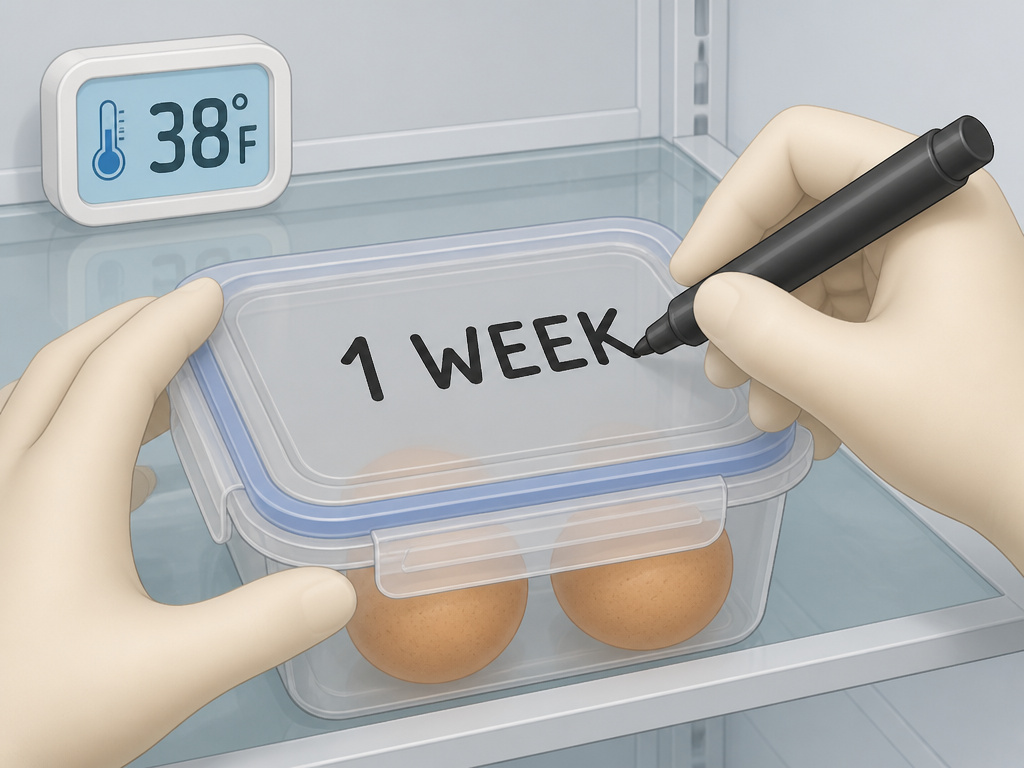
Cooking an egg changes its storage calculus completely. A hard-boiled egg, for example, has a shorter fridge life than a raw one, just one week. The cooking process removes some natural protective barriers and can introduce minor cracks, making it more susceptible to bacterial ingress.
The best way to store hard-boiled eggs is to leave them unpeeled. The shell acts as a barrier. Keep them in a sealed container in the fridge. For peeled boiled eggs, submerge them in water in a closed container to prevent drying and odor absorption; change the water every two days.
Scrambled, fried, or poached eggs should be treated like any cooked perishable. Cool them quickly, refrigerate in shallow containers within two hours of cooking, and consume within 3–4 days. They do not freeze well after cooking, becoming rubbery and watery upon reheating.
Common mistake: Storing hard-boiled eggs at room temperature for an Easter display or picnic. At room temperature, that one-week fridge shelf life collapses to a matter of hours in the temperature danger zone (40°F–140°F).
Quality vs. Safety: Reading the Signs
An egg can be safe to eat but poor in quality, and vice versa. Understanding the difference keeps you from wasting good food and stops you from eating a risky one.
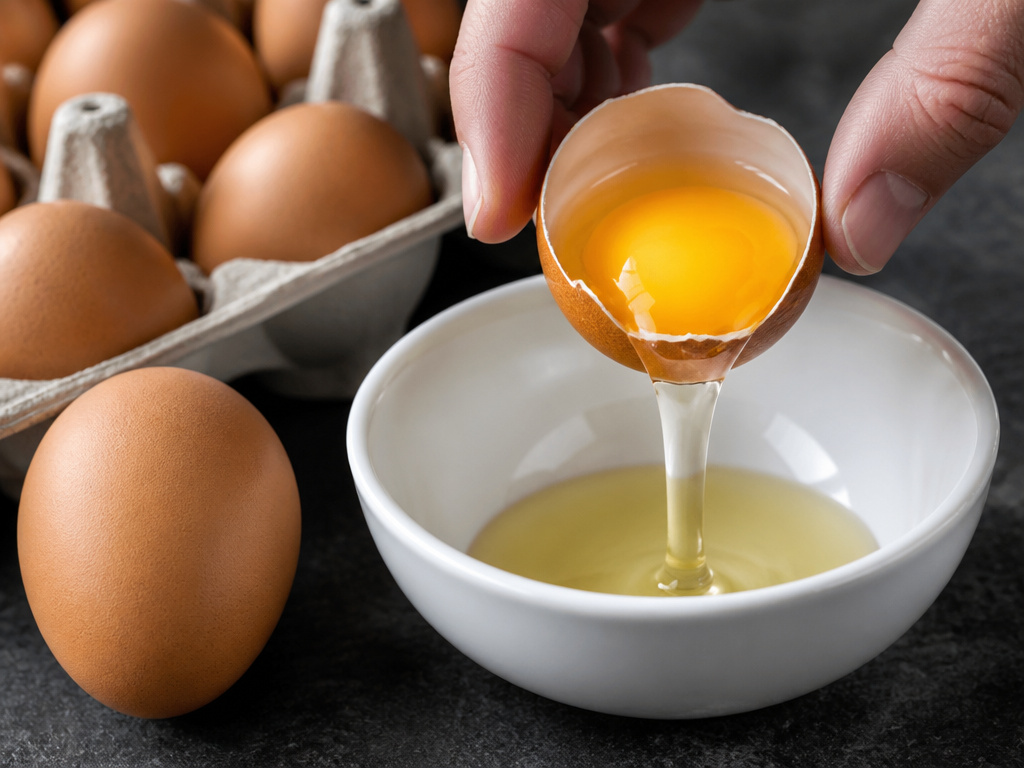
The float test is a quality indicator, not a safety test. A fresh egg sinks and lies flat. An older egg stands upright or floats because its air cell has enlarged as moisture evaporates through the shell. A floating egg might be perfectly safe but stale, with a watery white and a flattened yolk. Always crack a questionable egg into a separate bowl first.
A spoiled egg announces itself with a sulfurous, unmistakable odor upon cracking. Any green, pink, or iridescent discoloration in the white or yolk means discard it immediately. A red blood spot is not a sign of spoilage; it’s harmless and can be removed if desired.
Loss of quality over very long storage, even refrigerated, involves nutrient degradation, oxidative reactions, and sometimes a bitter taste. This is why the best practices for storing eggs focus on cold, consistent temperatures and using them within the recommended windows.
Frequently Asked Questions
Can you freeze eggs in the carton?
No. Never freeze eggs in their shells. The liquid expands and will crack the shells, creating a bacterial risk and a mess in your freezer. Always beat eggs thoroughly and freeze them in airtight containers.
How long do fresh eggs last unrefrigerated?
Store-bought, washed eggs should not be left out more than 2 hours. Unwashed farm-fresh eggs with the bloom intact can be kept at room temperature for 1–2 weeks in a cool, dry place, but their quality declines faster than refrigerated eggs. The USDA and FSIS shell eggs farm to table guidelines strongly recommend refrigeration for both safety and quality.
Is it safe to eat eggs after the expiration date?
The “best by” date is a quality guideline, not a safety expiration. If eggs have been continuously refrigerated, they are often safe to eat for 3–5 weeks after purchase. Perform the crack test: if it smells normal and looks clean, it’s likely fine for cooking.
Can I refrigerate eggs after they’ve been at room temperature?
Yes, but the clock has started. If eggs have been at room temperature for less than two hours, you can return them to the fridge. Their total shelf life will be slightly reduced. If unsure how long they’ve been out, it’s safer to discard them.
What’s the best container for freezing eggs?
Use airtight, freezer-safe containers like small deli cups, glass jars, or heavy-duty freezer bags. For individual portions, silicone ice cube trays work well; transfer the frozen cubes to a bag once solid to prevent freezer burn.
Before You Go
The safest long-term egg storage is a two-part system: use the refrigerator for eggs you’ll eat within a month, and the freezer for everything else. Forget water glassing. Its risks outweigh the nostalgia.
Remember the numbers: 40°F, 2 hours, 3–5 weeks for raw shells, 1 week for hard-boiled. Add salt or sugar to yolks before freezing. And always, always crack an old egg into a separate bowl first. Your nose is the final authority.
