
Stop Bugs in Flour: Essential Storage Guidelines and Methods
This post contains affiliate links. As an Amazon Associate, we earn from qualifying purchases.
Store flour to prevent bugs by sealing it in airtight glass, metal, or heavy plastic containers immediately after purchase, and aim to use your supply within two to four months. For long-term storage or to kill any existing eggs, freeze the flour at 0°F for at least four days.
That timeline is the ceiling before eggs already inside the bag have enough warm days to hatch and start the infestation you’re trying to avoid. Every bag of flour from the store is a potential carrier.
What follows is the mechanical breakdown: why cardboard and thin plastic fail, the exact temperatures that kill pests at each life stage, and the one cleaning method that doesn’t just move the problem around. This is about matching the physics of the insect to the materials on your shelf.
Key Takeaways
- Cardboard and thin plastic bags are useless barriers. Insects like sawtoothed grain beetles can chew right through them. Switch to airtight glass, metal, or thick, food-grade plastic containers with locking lids the day you bring flour home.
- The freezer is your most reliable tool. A four-day stay at 0°F kills eggs, larvae, and adults. For flour you use infrequently, permanent freezer storage is the only guaranteed method.
- Vacuum your pantry shelves; don’t just wipe them. Wiping flour dust and crumbs creates a paste that lodges deeper into cracks, providing a perfect food source for stray pests to rebuild their population.
- Consume opened flour within 2-4 months. This is the safe window before any undetected eggs can develop into a visible infestation in typical pantry conditions.
- Bay leaves and other herbal deterrents are unproven. Rely on physical barriers (airtight containers) and cold temperatures instead of folklore.
Why Flour Attracts Bugs in the First Place
Flour is ground endosperm. It’s pure, powdered food. For insects like the confused flour beetle or the Indian meal moth, a bag of flour is a concentrated calorie bomb, a ready-made nursery, and a shelter all in one.
The problem starts long before the bag reaches your shelf. Insects can infest grains at the farm, in transport, or in the warehouse. Female beetles lay tiny, sticky eggs directly on kernels or inside seams of packaging. You buy the flour, you bring the eggs home. They don’t need an open bag to get in. They’re already there.
The most common insects infesting food in the home are in the orders Lepidoptera (moths) and Coleoptera (beetles). Adult moths and adult beetles are easy to distinguish from one another, but their similar-looking larvae are a little more difficult to identify.
Warmth accelerates everything. In a 70°F pantry, some beetle life cycles can complete in as little as three to four weeks. A single female red flour beetle can lay 300-400 eggs in her lifetime, which can be over two years. The math gets ugly fast.
Where this goes sideways: Assuming a sealed bag from the store is safe. The seal keeps flour in, not microscopic eggs out. The infestation clock starts ticking the day the flour is milled and packed.
The Container That Actually Works (And Two That Don’t)
Your container choice is your first and most important line of defense. It’s a simple filter: keep adults out, contain any larvae inside, and block the scent of food.
The guidance from the UC IPM pantry pest management is blunt: store food in containers with tight-fitting lids, not plastic bags. Let’s translate that into materials you can trust.
| Container Type | How It Works | Why It Fails If You Skip This |
|---|---|---|
| Glass / Metal | Impermeable barrier. No odors escape, no jaws can chew through. | Glass can break if dropped; metal can dent and compromise the lid seal. |
| Heavy Plastic (e.g., Polypropylene) | Lightweight, durable, and airtight with a locking gasket. | Cheap, thin plastic (like reused deli containers) is brittle and cracks, creating micro-gaps. |
| Original Bag (Paper/Cardboard) | None. It’s just a temporary holder. | Beetles can chew through paper and cardboard in hours. It offers zero protection. |
| Thin Plastic Bag (Grocery Bag) | None. It’s slightly better than paper. | Larvae can bore through standard plastic bags. It’s not a barrier, just a delay. |
For most home kitchens, a heavy plastic container with a locking lid and silicone gasket is the practical winner. Brands like OXO Good Grips and Rubbermaid Brilliance are built for this. They’re lighter than glass, they seal reliably, and they stack.
Glass containers, like those from Pyrex or Anchor Hocking, are the gold standard for impermeability. They’re perfect for long-term storage of specialty flours you use once a season. Just make sure the lid has a robust clamp or screw-top mechanism.
Common mistake: Transferring flour to a decorative ceramic canister with a loose-fitting lid. The gap might be only a millimeter, but that’s a highway for tiny beetles. If you can smell the flour, so can the bugs.
The moment you open a new bag of flour, pour it directly into your chosen airtight vessel. Don’t wait until tomorrow. That’s how a stray moth flying past gets a free lunch and lays the next generation inside your pantry.
The Freezer Is Your Best Friend (And How to Use It)
Cold doesn’t just slow pests down; it kills them. This is your nuclear option for both prevention and salvage. The UMN Extension pantry pest guide provides the exact thresholds: 0°F for at least four days, or 130°F for at least 30 minutes.
Freezing is safer and more practical than baking. Here’s the protocol.
For New Flour (Prevention):
- Take the entire, unopened bag from the store and place it directly in the freezer.
- Leave it for a full four days. This ensures the cold penetrates to the center of the bag, killing any eggs.
- Remove, let it come to room temperature (to prevent condensation), then transfer to your airtight container.
For Flour You Suspect (Salvage):
- If you see a few bugs or webbing, seal the flour in a freezer bag.
- Freeze it for four days.
- Sift the flour through a fine mesh strainer to remove dead insects and debris.
- Return the sifted flour to an airtight container. The freezing process does not affect baking quality.
Worth knowing before you start: Your freezer must be at 0°F or below. The freezer compartment of a refrigerator often only gets to 10-20°F, which is insufficient. Use a standalone deep freezer or confirm your freezer’s temperature with a thermometer.
For bakers who go through flour slowly, permanent freezer storage is the only foolproof method. Keep your airtight container of bread flour or rye flour right in the freezer. It will last for years without quality loss or risk of infestation.
The 2-4 Month Rule: Why Timing Is Everything
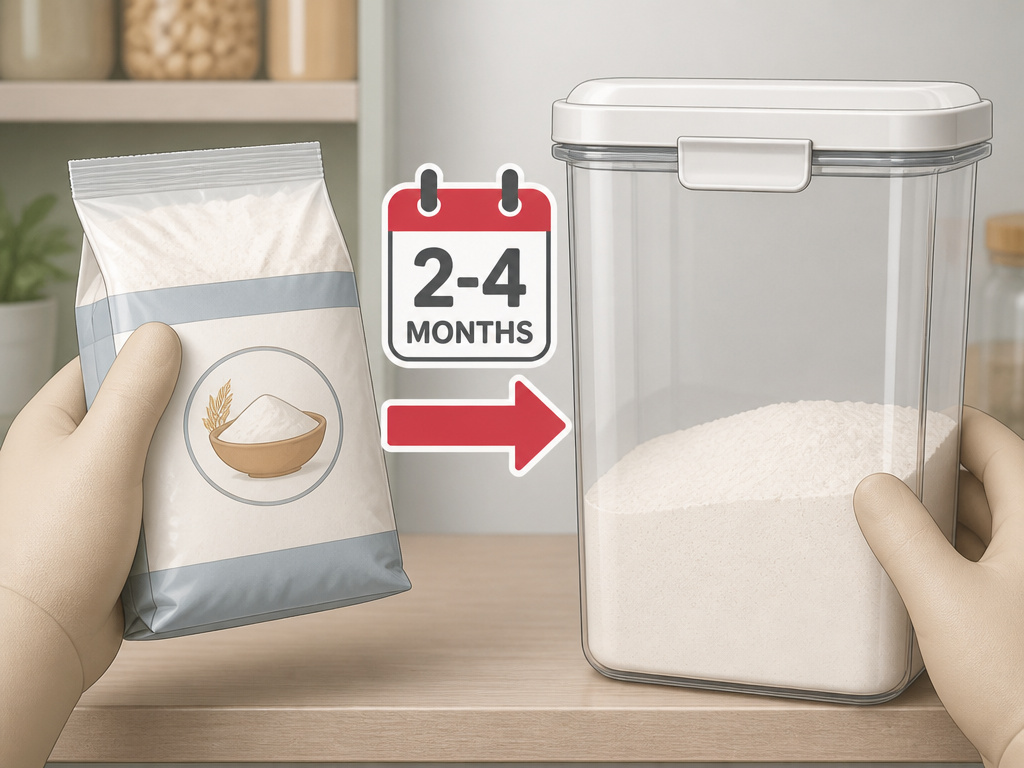
Even in a perfect container, flour doesn’t last forever. The stored food insect identification resources point to a simple rule: buy dried foods in quantities you’ll use within two to four months.
This is about risk management. If an egg survived the milling process, packaging, and your freezing treatment, it will hatch given enough time in a warm pantry.The 2-4 month window is shorter than the development time for most pantry pests at cool room temperatures.
| Flour Type | Typical Use Pace | Recommended Max Pantry Time (Airtight Container) |
|---|---|---|
| All-Purpose / Bread Flour | High (Weekly baking) | 4 months |
| Whole Wheat / Rye Flour | Medium (Monthly baking) | 2-3 months (higher oil content) |
| Specialty Flour (e.g., Almond, Coconut) | Low (Occasional use) | Store in freezer indefinitely |
If your baking schedule is unpredictable, lean toward the two-month mark. Buy a five-pound bag instead of twenty-five. The extra trip to the store is cheaper than throwing out a contaminated bin.
The short version: Match your purchase size to your actual consumption rate. A half-full container sitting for eight months is an incubation chamber.
How to Clean a Pantry After an Infestation
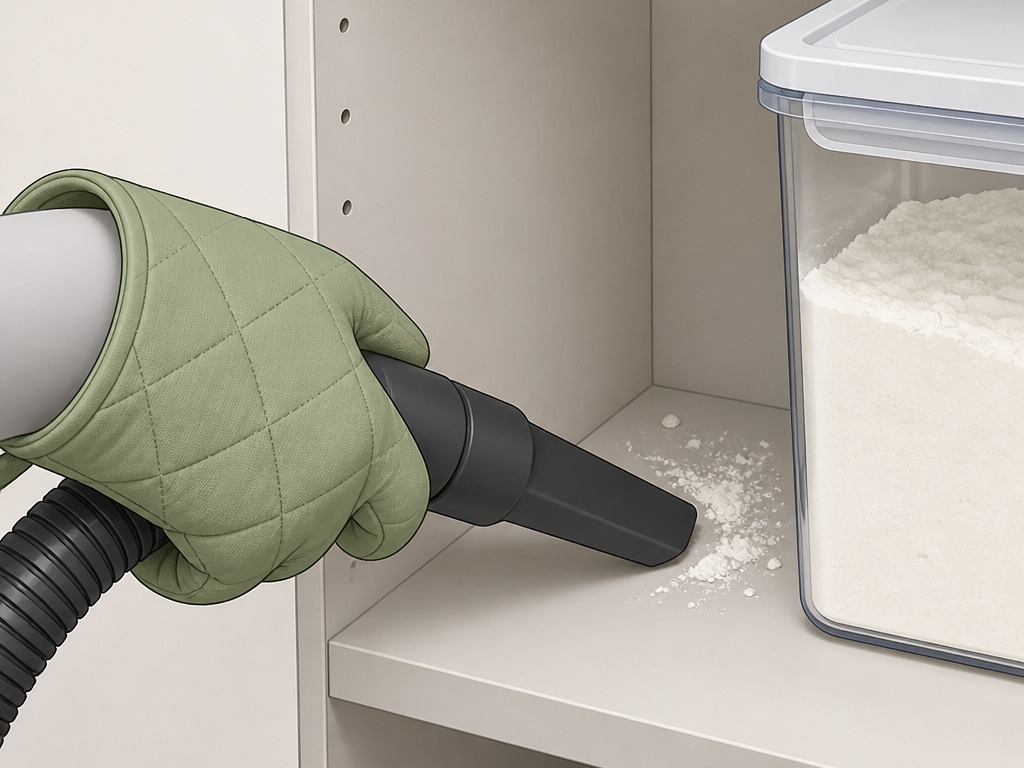
Finding bugs means you’re cleaning two things: the food and the space. The goal is to remove every speck of food residue, which is fuel for survivors.
Step 1: Remove and Quarantine All Food.
Empty the entire pantry. Inspect every single package, not just the flour. Look for tiny holes, webbing, or beetles crawling in seams. Infested items go into a sealed plastic bag for disposal outside immediately.
Step 2: Vacuum, Don’t Wipe.
This is critical. As the Virginia Tech extension notes, wiping cabinets down may make a paste of flour that is very difficult to remove fully. Use the vacuum cleaner hose with a crevice tool to suck flour dust and crumbs from every corner, shelf peg hole, and molding crack.
Step 3: Wash with Soap and Water.
After vacuuming, wash shelves and walls with warm, soapy water. This removes oily residues and any remaining scent trails.
Step 4: Dry Thoroughly Before Restocking.
Let the pantry air out completely. Moisture favors pest development. Once dry, restock only with food in sealed, airtight containers.
Skip this if: You think a quick spray of insecticide is a good idea. Insecticides aren’t recommended for pantry pests by the UC ANR home pest publication. The chemicals can contaminate food surfaces and are ineffective against eggs hidden in cracks. Physical cleaning and exclusion work.
Frequently Asked Questions
Can you still use flour if it has bugs?
Yes, but only after killing the infestation. Freeze the flour for at least four days at 0°F, then sift it thoroughly to remove insects, webbing, and droppings. Cooking or baking the flour afterwards will destroy any remaining microbes. However, if the infestation is heavy or the flour smells off, discard it.
Do bay leaves in flour keep bugs away?
There is no scientific evidence that bay leaves repel flour bugs. The myth persists, but insects are not deterred by the scent. Rely on proven methods: airtight containers and freezing.
What is the best container for flour storage?
The best container is an airtight one made of glass, metal, or thick, food-grade plastic. Look for a lid with a silicone gasket and a locking mechanism. Our top pick for everyday use is a heavy plastic container like the OXO Pop Container.
How long can flour last in the freezer?
Flour can last indefinitely in the freezer when stored in an airtight container. The cold prevents rancidity and kills any pest life cycles. For best quality, use within two years, but it will remain safe from bugs forever.
Are bugs in flour harmful to eat?
Accidentally ingesting a small number of pantry pests is not known to cause illness. However, they contaminate food with hairs, droppings, and webbing, which can irritate the mouth and stomach. More critically, they can introduce microbes that lead to spoilage or, in warm, humid conditions, potentially produce harmful mycotoxins.
Before You Go
Flour bugs are a nuisance, not a mystery. They follow the food. Your job is to break the chain with a combination of physics and timing.
Start with the container. Make it airtight, make it solid. Move any flour you won’t use within a couple of months into the freezer. Vacuum your shelves, don’t just wipe them. And match your purchase size to your actual baking habit—smaller bags used quickly beat giant sacks that linger.
The one thing to buy today is a set of proper airtight containers. Everything else is a workaround.
