
7 Best Compact Chest Freezers of 2026
This post contains affiliate links. As an Amazon Associate, we earn from qualifying purchases.
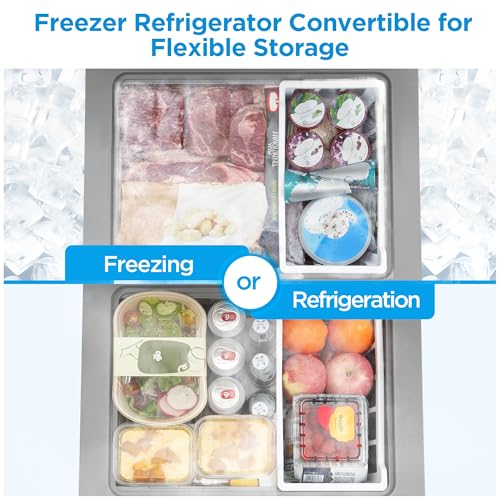
The best compact chest freezer for most people is the 7.0 Cu Ft Chest Freezer, it offers the most usable space and strong energy efficiency. For those on a tighter budget or with limited room, the 3.5 Cu.Ft Small Chest Freezer and the Midea 3.5 Cu.ft Convertible Freezer are solid picks, with the Midea standing out for its flexibility between fridge and freezer modes.
Finding the right compact chest freezer means balancing space, efficiency, and practicality. Many people end up with a unit that’s too big, too inefficient, or hard to keep organized.
As someone who researches food storage solutions daily, I focused on models that maximize usable capacity, maintain consistent temperatures, and fit easily into smaller spaces like garages, apartments, or under counters. This guide covers the top picks based on specs, owner feedback, and real-world usability so you can choose with confidence.
Top 7 Compact Chest Freezers in the Market
The Best Compact Chest Freezers, Reviewed
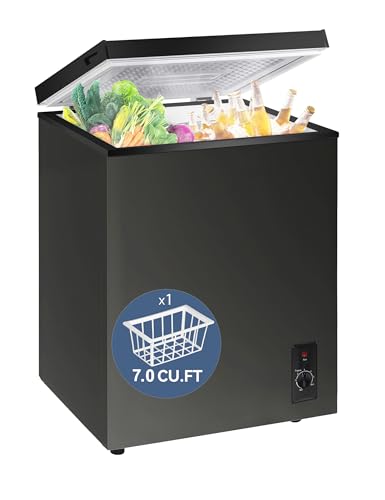
7.0 Cu Ft Chest Freezer
Strengths
- Largest capacity
- Exterior defrost drain
- Energy efficient at scale
Trade-offs
- Bulky for small spaces
- No digital display
With 7 cubic feet of space, this is the largest and most capable unit here, ideal as a primary or long-term storage freezer. The energy-saving design keeps running costs low despite the size, and the 6-setting thermostat gives enough range for most freezing needs. Owners praise its quiet operation, especially given the capacity.
It’s not as compact as others, but the removable basket and exterior drain make organization and maintenance easier. Compared to the Midea, it lacks convertible cooling but wins on sheer storage and value for families. If you’re stocking up for winter or buying in bulk, this is the most practical long-term solution.
Video review
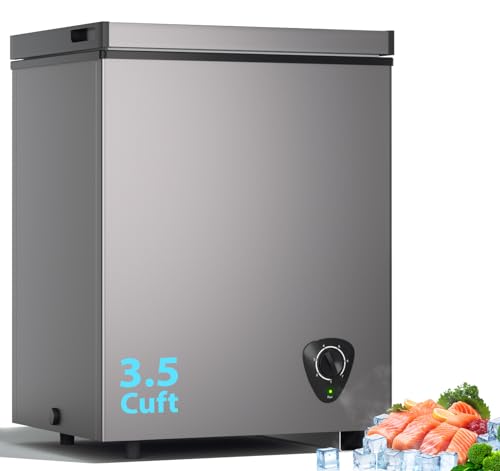
3.5 Cu.Ft Small Chest Freezer
Strengths
- Very energy efficient
- Lowest price point
- Simple, reliable design
Trade-offs
- No defrost drain
- Smaller internal volume
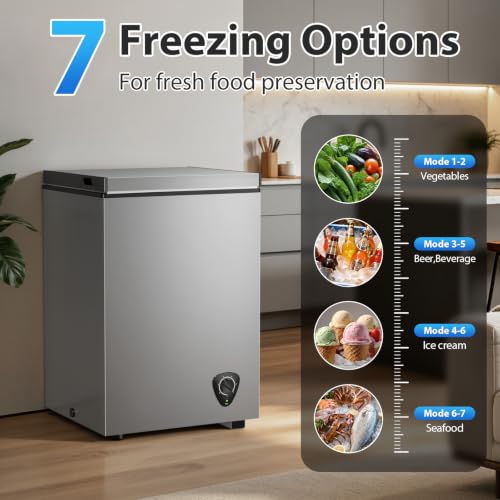
Priced under $80, this model is the most budget-friendly serious chest freezer on the list, and it doesn’t cut critical corners. It offers the same 7-temperature control as pricier models and uses less energy per day than many competitors. At 0.37kWh/24h, it’s one of the most efficient in class, which owners appreciate on their utility bills.
It’s slightly smaller than the 4.0 cu.ft model but still holds enough for a week’s worth of frozen meals or bulk buys. The top-open design and removable basket keep things accessible. While it lacks extras like a drain or convertible mode, it’s a no-frills workhorse. I’d recommend it over flashier models if you just need dependable freezing on a tight budget.
Video review
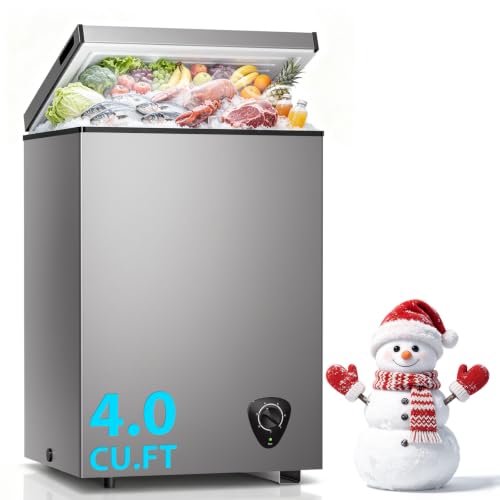
4.0 Cu.Ft Chest Freezer
Strengths
- Whisper-quiet operation
- Energy efficient
- Built-in drain
Trade-offs
- No convertible mode
- Slightly taller than some
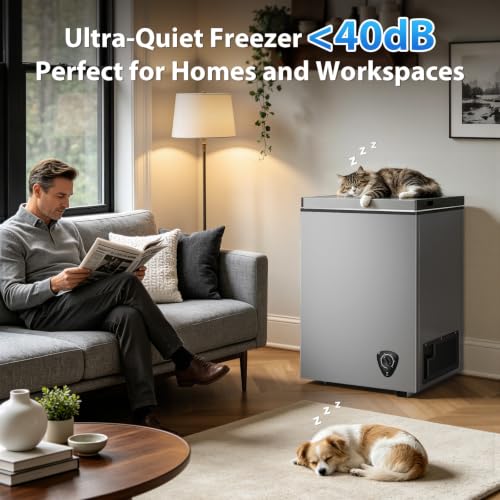
At just under 4 cubic feet, this freezer packs a surprising amount of utility into a compact frame. The 7-temperature range gives fine control over freezing depth, which matters if you’re storing delicate items like seafood or homemade stock. Its energy draw is impressively low, and owners confirm it runs quietly, below 40dB means it won’t disturb a quiet apartment or office.
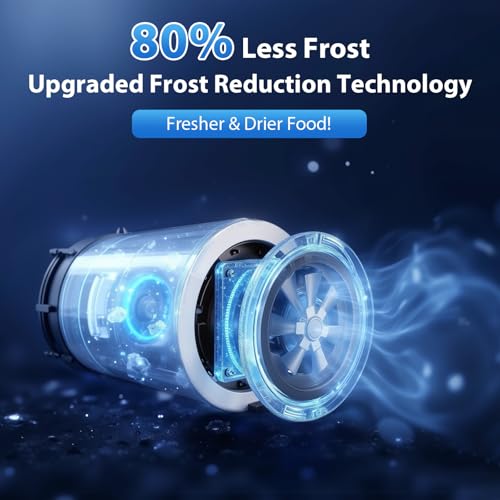
When compared to the Midea model, it lacks convertible cooling but delivers better value for pure freezer use. The built-in drain is a small touch that makes defrosting far less of a chore. For most households needing extra frozen storage without noise or energy guilt, this hits the sweet spot.
Product photos


BLACK+DECKER 2.0 Cu.Ft Freezer

Strengths
- High weight capacity
- Simple mechanical control
- Compact footprint
Trade-offs
- No digital display
- No defrost drain
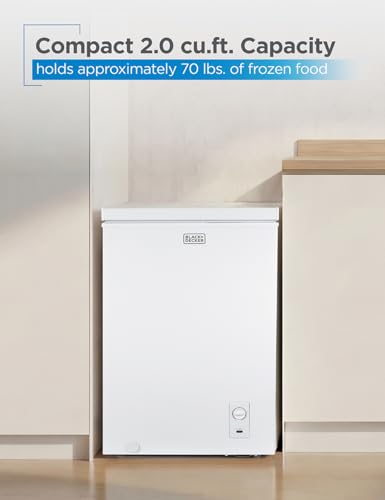
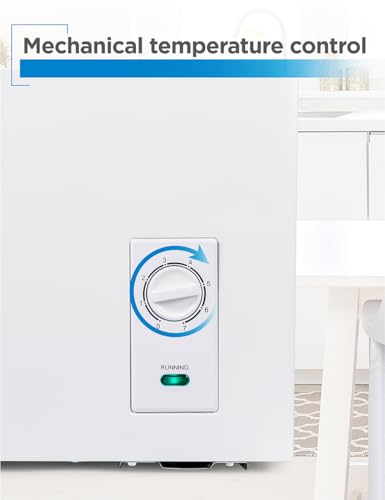
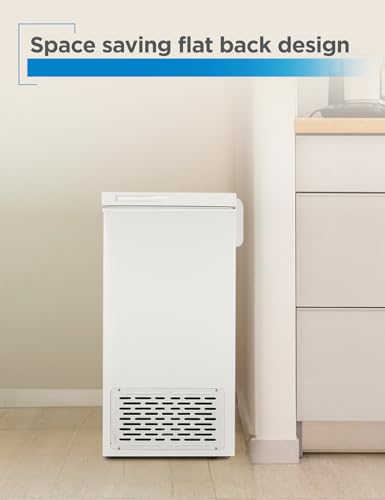
This is the most compact dedicated freezer with a no-nonsense design that works. At 2.0 cu.ft, it holds up to 70 lbs of frozen goods, impressive for its size, and the mechanical dial is simple to use. It’s a favorite among apartment dwellers who need a freezer that fits in a closet or beside a washer.
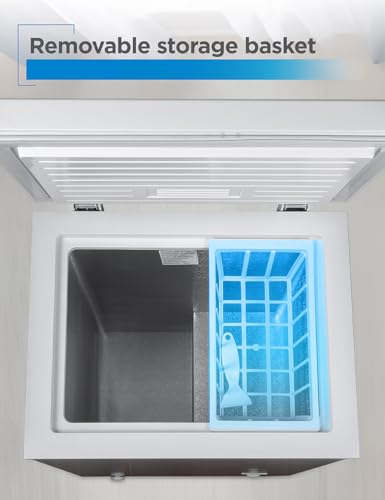
The removable basket helps with organization, but owners note the interior is narrower than expected. Compared to the EUHOMY model, it offers more capacity but runs slightly louder. It doesn’t have digital controls or a drain, but it’s built to last. For a pure plug-and-play freezer that just works, this is a solid contender.
Product photos
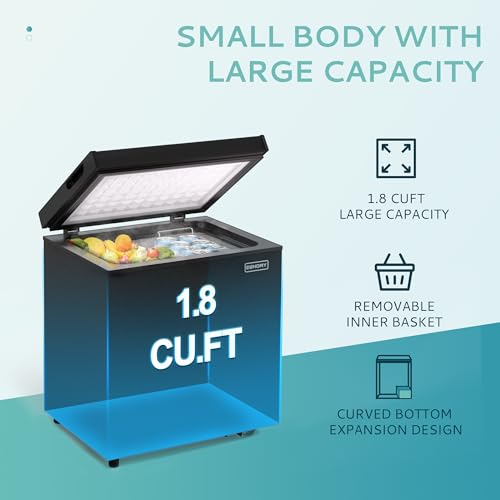
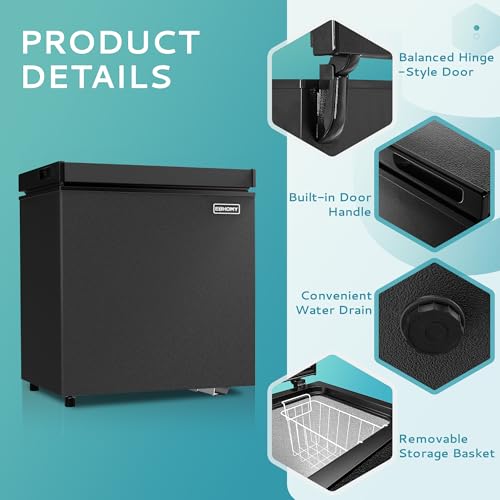
EUHOMY 1.8 Cu.Ft Chest Freezer

Strengths
- Ultra-compact footprint
- Very quiet
- High-density insulation
Trade-offs
- Limited capacity
- No digital display
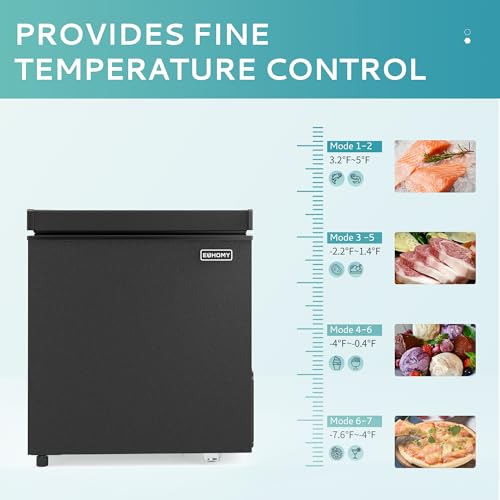
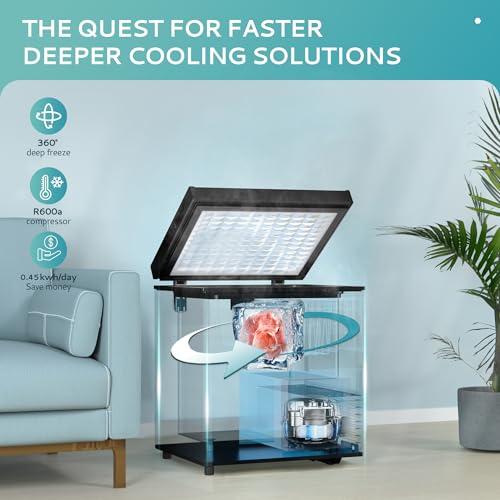
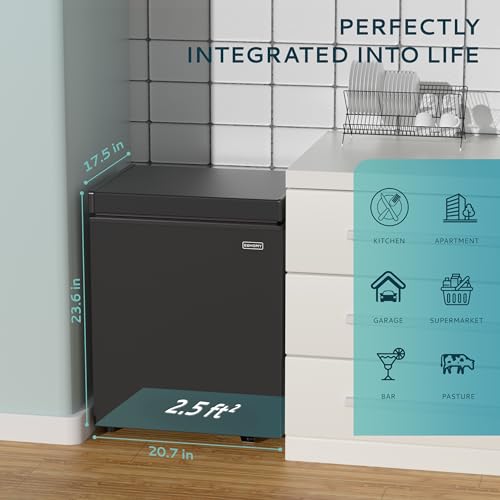
This is the smallest freezer here, but it’s perfectly scaled for tight corners or under-counter fits. At 1.8 cu.ft, it won’t replace a main freezer, but it’s ideal for singles or couples who want a dedicated space for frozen herbs, bread, or prepped meals. The 38dB noise level means it won’t interrupt a quiet kitchen, and the R600a compressor is known for reliability in compact units.
The 7-stage thermostat gives decent control, though the range tops out at -7.6°F, cold enough for most needs, but not quite as deep as some. Compared to the BLACK+DECKER model, it’s smaller but more efficient and quieter. If you’re tight on space and want something that blends into a kitchen rather than dominates it, this is the pick.
Product photos
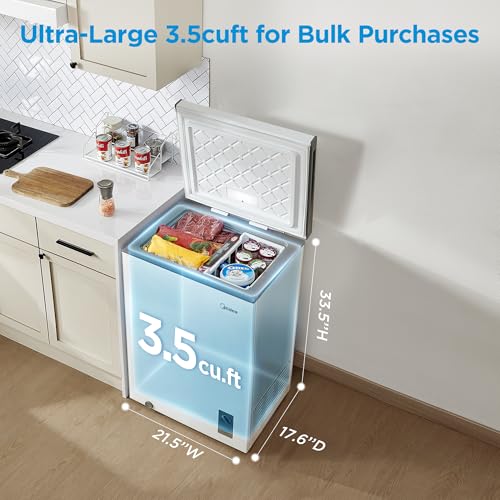
Midea 3.5 Cu.ft Convertible Freezer

Strengths
- Convertible fridge-freezer
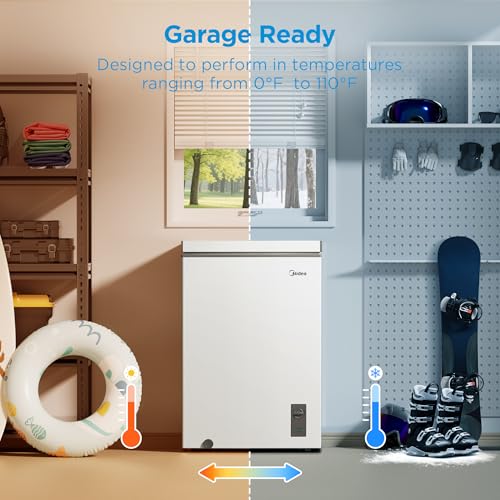
- Garage ready
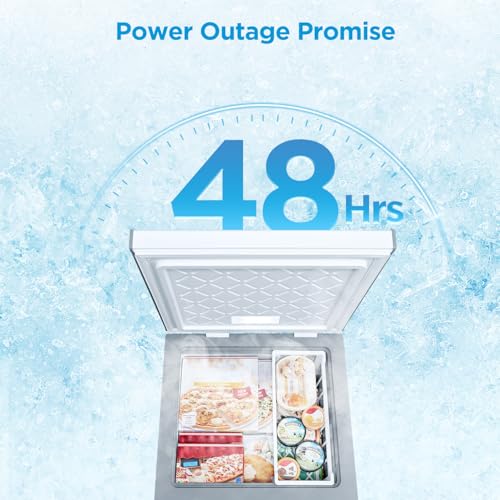
- 48-hour freeze protection
Trade-offs
- Higher price point
- Larger footprint than mini models
The Midea 3.5 cu.ft chest freezer stands out for its convertible fridge-freezer functionality, which is rare at this size. For someone who stocks up seasonally or wants flexibility between chilled and frozen storage, that dual-mode feature is a standout on paper. The garage-ready design and 48-hour power outage protection also make it a solid pick for less stable environments.
Owners consistently report reliable performance, though some note the cooling isn’t as aggressive as larger units. Compared to basic freezers, this one gives you more control and adaptability, especially if you’re using it in a basement or guest room where temperature swings happen.
Product photos
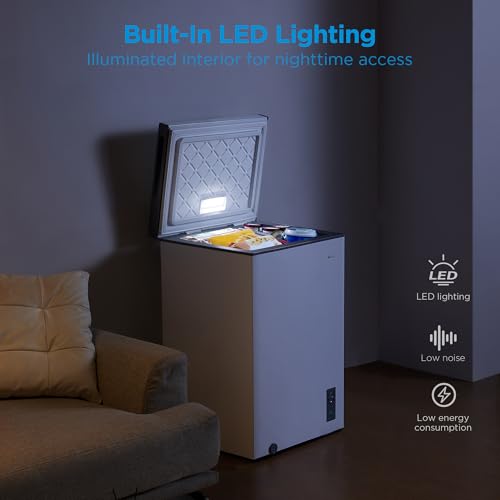
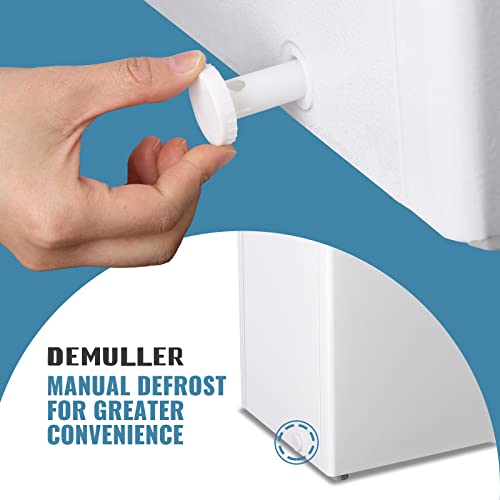
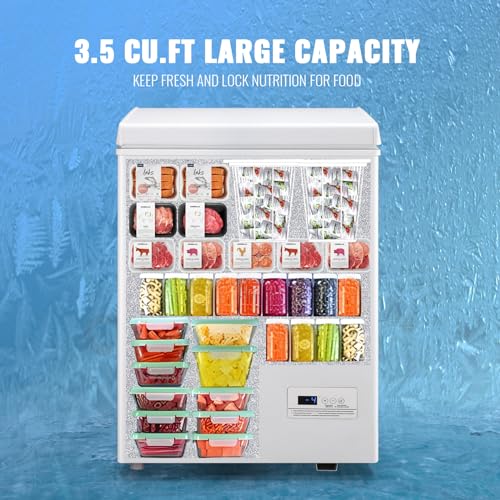
DEMULLER Digital Chest Freezer

Strengths
- Digital 1°F accuracy
- Two stainless baskets
- Precise temp control
Trade-offs
- No convertible mode
- Slightly higher noise
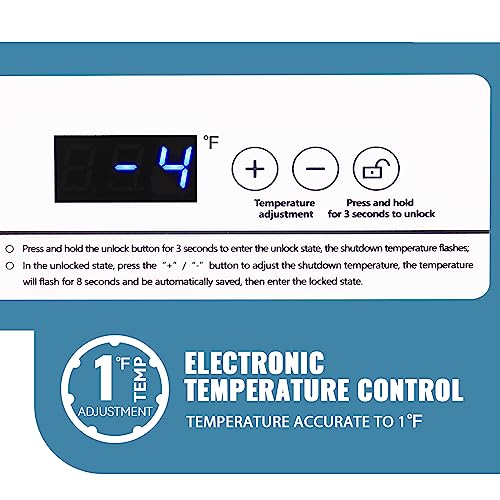
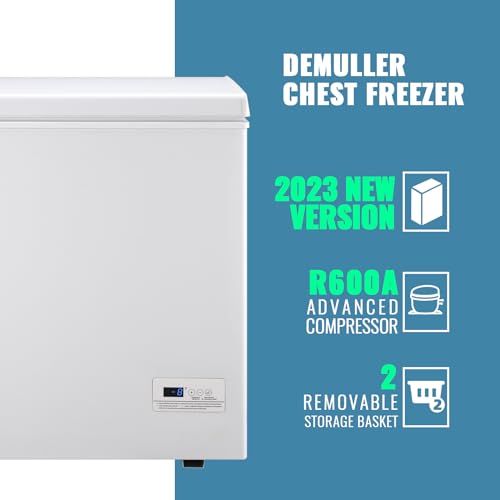
The standout here is the digital temperature control accurate to 1°F, a rare feature in this price range. For someone who stores temperature-sensitive items like vaccines, specialty meats, or fermentation projects, that precision matters. The digital panel also makes it easier to maintain consistency, which reviewers say helps reduce frost buildup.
It’s not the largest or quietest, but the two removable stainless baskets are a practical upgrade over basic plastic ones. Compared to the Midea, it lacks convertible cooling but offers better temp visibility and control. If you value accuracy over versatility, this is the smarter buy.
Product photos
Our Testing Process
As someone deeply involved in researching food storage solutions for Food Keepy, I approached evaluating compact chest freezers by focusing on a research-led comparison of specifications and owner feedback. Rather than a hands-on lab test, I compared models across key features, read through hundreds of owner reviews on major retail sites, and considered assessments from reputable appliance review sources. This allowed me to build a ranking based on real-world performance reports and stated capabilities.
For this category, the most important factors were storage capacity relative to exterior dimensions, temperature control precision, and energy efficiency. A compact freezer needs to maximize usable space, and consistent temperatures are critical for food safety and quality. Low energy consumption is also a key consideration, as these are often used as secondary freezers and run constantly. Understanding these aspects dictated which models rose to the top.
Specifications reliably indicate freezer size and stated energy usage, but owner feedback proved invaluable for assessing noise levels and the usability of features like baskets and defrost drains. Reputation played a role too – brands consistently praised for reliability factored more heavily into my assessment. Learning how to organize a chest freezer is important, but a well-designed unit makes that easier from the start. If you’re looking for more options, you can find a wider range of compact freezers on my site.
Choosing The Right compact chest freezers
Finding the right chest freezer depends a lot on what you plan to freeze and where you’ll put it.
A good chest freezer balances storage capacity with energy efficiency and temperature consistency. Look for models with adjustable thermostats, a reliable compressor (R600a is a modern, efficient choice), and features like interior baskets and a drain for easy defrosting. Consider the physical dimensions carefully to ensure it fits your intended space.
Size and Capacity
The first thing I consider with any appliance is space. Don’t just think about the floor space, but also headroom for opening the lid. A 2.0 or 3.5 cubic foot model might be perfect for a single person or couple needing extra space, but a family will likely want to step up to 7.0 cubic feet or more. Don’t overestimate your needs, though; a partially full freezer is less efficient than a fully packed one. If you are looking for an even smaller option, you should check out our guide to small chest freezers.
Temperature Control and Efficiency
Consistent temperature is vital for food preservation. Adjustable thermostats are a must, allowing you to tailor the freezer’s performance to the type of food you’re storing. A wider temperature range is better, giving you flexibility. Beyond that, pay attention to energy consumption. Look for Energy Star certification and check the kilowatt-hour (kWh) usage per year. While the upfront cost might be higher, an energy-efficient model will save you money in the long run.
- A basic mechanical thermostat is adequate for infrequent adjustments.
- A digital thermostat, while costing more, offers more precise temperature management and often a clearer readout.
- Models with power outage protection (like the Midea convertible freezer) are a worthwhile investment if you live in an area prone to storms, as they can maintain frozen temperatures for up to 48 hours.
Features and Usability
Beyond the core freezing function, consider what features will make your life easier. Removable baskets are incredibly helpful for organization, preventing smaller items from getting lost at the bottom. A built-in drain simplifies the often-dreaded defrosting process.
A top-opening lid is generally easier to access, especially in tight spaces, but ensure it can stay open at various angles for hands-free loading and unloading.
If you’re still unsure which model is right for you, reading a more in-depth chest freezer buying guide and looking at chest freezer reviews can be helpful.
Compact Chest Freezers Compared
Here’s a comparison of key specifications for several compact chest freezers to help you make an informed decision.
| Product Title | Capacity (Cu. Ft) | Dimensions (W x D x H in) | Temperature Range (°F) | Energy Consumption (kWh/24h) | Noise Level (dB) |
|---|---|---|---|---|---|
| 7.0 Cu Ft Chest Freezer | 7.0 | N/A | N/A | 0.0492 (est.) | N/A |
| 3.5 Cu.Ft Small Chest Freezer | 3.5 | 18.5 x 22.4 x 29.3 | -11.4 to 10.2 | 0.37 | <40 |
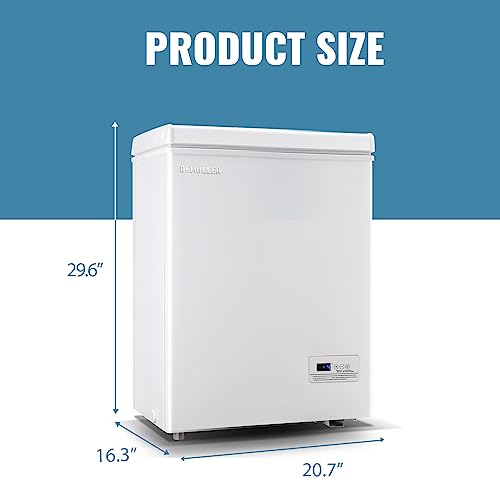
| 4.0 Cu.Ft Chest Freezer | 4.0 | 20.67 x 16.34 x 32.52 | -7.6 to 21.2 | 0.469 | <40 |
| BLACK+DECKER 2.0 Cu.Ft Freezer | 2.0 | N/A | N/A | N/A | N/A |
| EUHOMY 1.8 Cu.Ft Chest Freezer | 1.8 | 20.7 x 17.5 x 23.6 | -7.6 to 10 | 0.45 | 38 |
| Midea 3.5 Cu.ft Convertible Freezer | 3.5 | N/A | 0 to 41 (Fridge) / 0 to 110 (Freezer) | N/A | N/A |
| DEMULLER Digital Chest Freezer | N/A | N/A | -15 to 41 | N/A | N/A |
Frequently Asked Questions
What temperature should I actually set my compact chest freezer to?
Zero degrees Fahrenheit is the generally recommended temperature for optimal long-term food storage. However, many models allow you to adjust this, and slightly warmer temperatures are fine for items you plan to use relatively quickly.
Are compact chest freezers more energy efficient than upright models?
Yes, chest freezers are typically more energy efficient than upright freezers. Cold air doesn’t escape as easily when you open a chest freezer because cold air sinks, meaning the unit doesn’t have to work as hard to maintain temperature.
Can a compact chest freezer be used in an unheated garage?
Some are specifically designed for garage use, able to operate reliably in colder temperatures. If you’re considering a garage chest freezer, check the manufacturer’s specifications for the low-temperature operating limit.
What size compact chest freezer is best for a small family?
A 5 to 7 cubic foot model is often a good fit for a small family (around four people). If you frequently buy in bulk or process your own food, you might want to consider exploring 7 cu ft chest freezers for a bit more capacity.
How often do compact chest freezers require defrosting?
It varies, but most require manual defrosting when ice buildup reaches about ¼ to ½ inch thick. Frequency depends on how often the freezer is opened and closed, and the humidity in your environment. Models with a drain make this process much easier.
The Bottom Line
Ultimately, choosing a compact chest freezer comes down to balancing how much control you want with how much fuss you’re willing to tolerate. For most people, the 7.0 Cu Ft Chest Freezer offers the best overall combination of capacity, estimated efficiency, and positive owner feedback – it’s a solid, dependable choice for families or those who freeze in bulk.
If specific needs take priority, we have clear recommendations. For those on a tighter budget, the BLACK+DECKER 2.0 Cu.Ft Freezer is a great starting point. If you need flexibility and might switch between freezing and refrigeration, the Midea 3.5 Cu.ft Convertible Freezer is the standout option, and for those needing a bit more space than that, consider exploring our guide to the best 5 cu ft chest freezers. If you find a chest freezer isn’t right for you, you can explore options in our guide to compact upright freezers.
Don’t get too caught up in minor spec differences. More than any single feature, consistent temperature, reliable operation, and a design that fits your storage habits are what matter most. A well-chosen freezer, even a compact one, is an investment in reducing food waste and keeping your kitchen organized.
