
8 Best Compact Freezers of 2026
This post contains affiliate links. As an Amazon Associate, we earn from qualifying purchases.
The Midea 3.5 Cu.Ft Convertible Freezer stands out as the best overall compact freezer, offering reliable performance and flexible temperature control. For those on a tighter budget, the 3.5 Cu.Ft Chest Freezer Gray delivers solid basics without frills. If you need more space, the Bodacious 5.0 Cu.Ft Quiet Freezer provides excellent capacity while staying energy efficient.
Many people struggle to find a freezer that fits their space without sacrificing performance or draining electricity. You don’t want something so loud it disrupts your home, or so inconsistent it risks your food quality.
In this guide, I compared top models based on real owner feedback, specs, and practical needs like size, noise, and temperature reliability. These picks balance smart design with dependable freezing, key for anyone looking to store food longer and reduce waste.
Top 8 Compact Freezers in the Market
The Best Compact Freezers, Reviewed
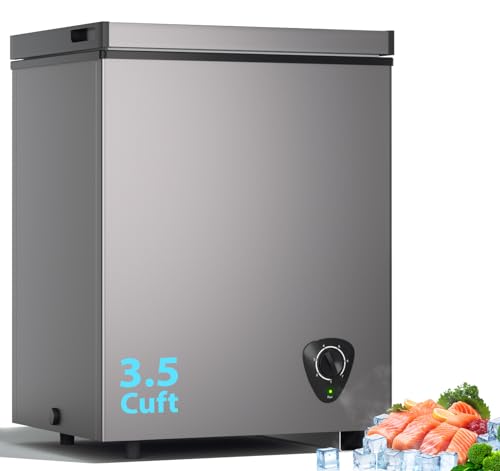
3.5 Cu.Ft Chest Freezer Gray
Strengths
- Extremely energy efficient
- Very quiet operation
- Seven temp settings
Trade-offs
- Build quality feels lightweight
- No door lock
- Basic exterior finish
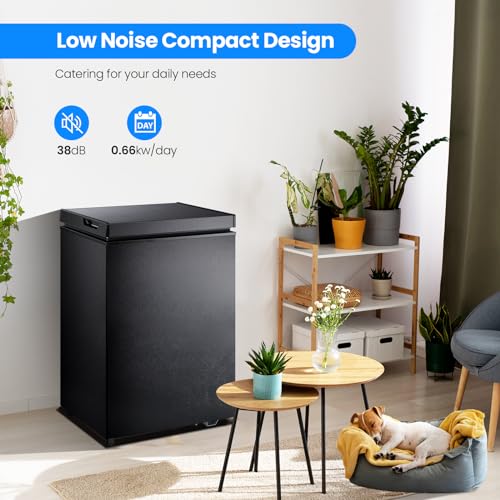
Priced surprisingly low for what it offers, this 3.5 cu. ft. chest freezer punches above its weight. Seven temperature settings give precise control, and owners praise how quietly it runs, below 40dB is genuinely whisper-quiet. At just 0.37kWh/24h, it’s one of the most energy-efficient models here, making it perfect for all-day operation in living areas. The top-opening design maximizes cold retention, and the removable basket simplifies access.
Compared to the Bodacious or Kismile, it matches their capacity while costing far less. It lacks a lock or convertible function, but for most home users, those aren’t dealbreakers. My recommendation? This is the smarter buy over pricier names unless you need specialty features.
Video review
BLACK+DECKER 2.0 Cu.Ft Freezer

Strengths
- Affordable
- Removable basket
- Mechanical temp control
Trade-offs
- Manual defrost only
- No interior light
- Basic insulation performance
For those needing basic extra freeze space without overspending, the BLACK+DECKER BCFK206 delivers on fundamentals. With 2.0 cu. ft. of capacity and a simple mechanical dial, it’s built for straightforward cold storage, no frills, no surprises. Owners consistently report it holds temperature well in stable environments like basements or kitchens, though it’s strictly manual defrost, which means occasional downtime for cleaning.
It won’t win design points, but the removable basket helps with organization, and the external temp control is a small convenience you don’t always get at this price. Compared to pricier models, it lacks modern touches like LED lighting or energy-smart compressors, but for budget-focused buyers who want reliability over features, this one makes sense.
Video review
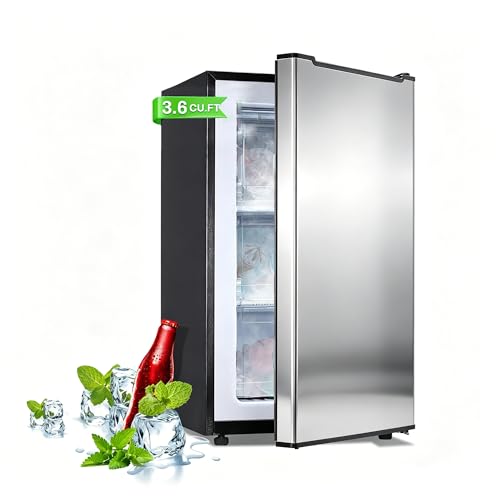
Maine 3.6 Cu.Ft Upright Freezer
Strengths
- Reversible door
- Quiet operation
- Sleek stainless finish
Trade-offs
- Only 3 temp settings
- Slower cooldown after opening
- No fast freeze feature
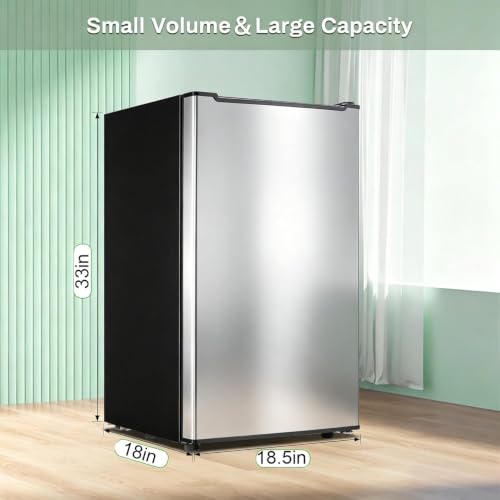
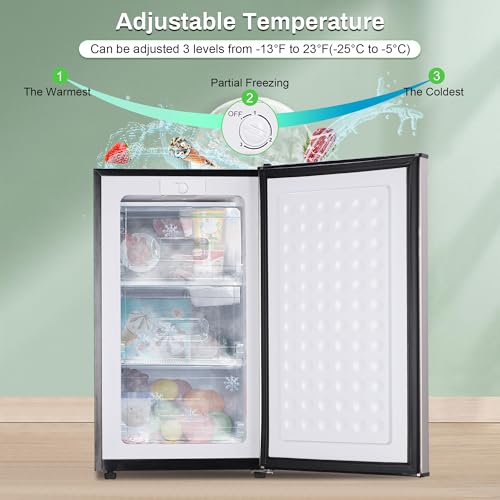
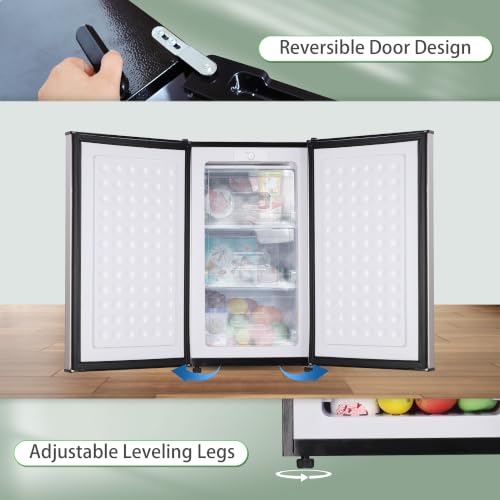
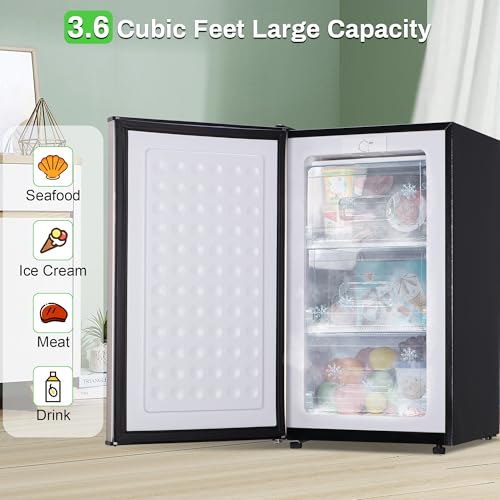
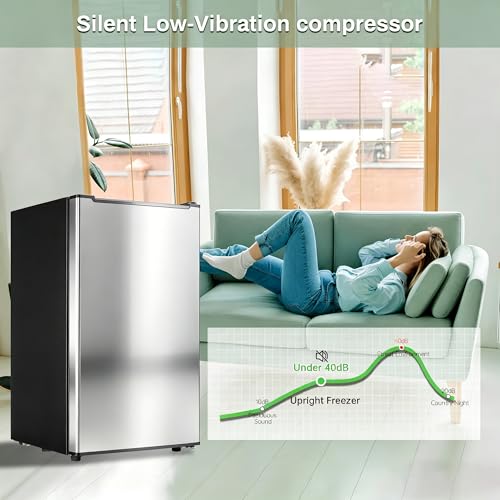
Upright convenience meets decent capacity in the Maine 3.6 cu. ft. model, which stands out for its reversible stainless door and flush-back design, ideal for fitting into narrow spaces. The three-position thermostat isn’t as precise as seven-setting dials, but it covers a broad range from -13°F to 23°F, enough for most frozen goods. At 40 dB, it’s as quiet as most chest models, which is impressive for an upright.
Owners appreciate the easy-clean interior and adjustable feet, though some note it takes longer to cool down after opening. Against the Whynter or EUHOMY, it offers more space and better organization. For those who prefer upright access over top-loading, this is the best-balanced option.
Product photos
Kismile 3.2 Cu.Ft Chest Freezer
Strengths
- Dual removable baskets
- Hinge-assisted door
- Decent cooling range
Trade-offs
- Higher energy consumption
- Noisy compared to peers
- No garage rating
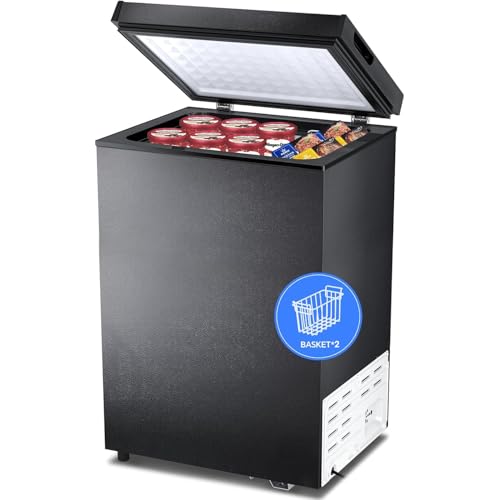
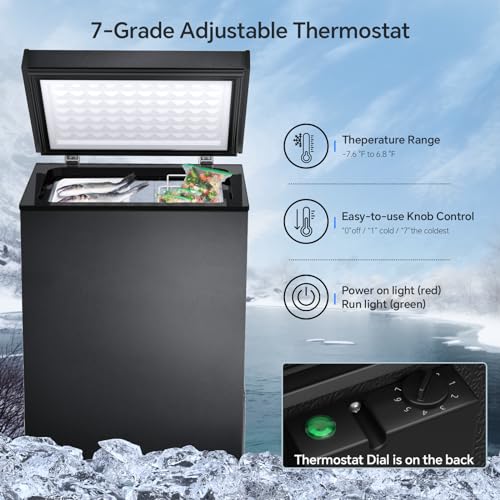
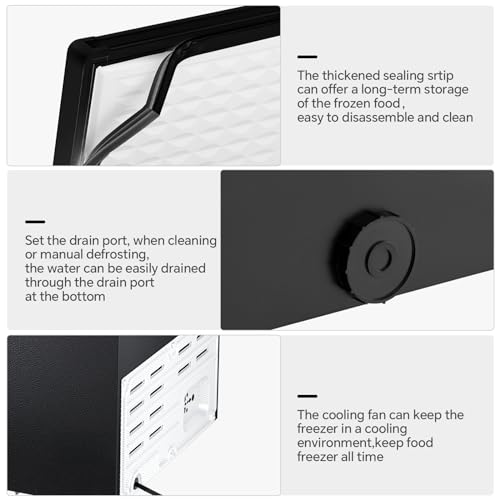
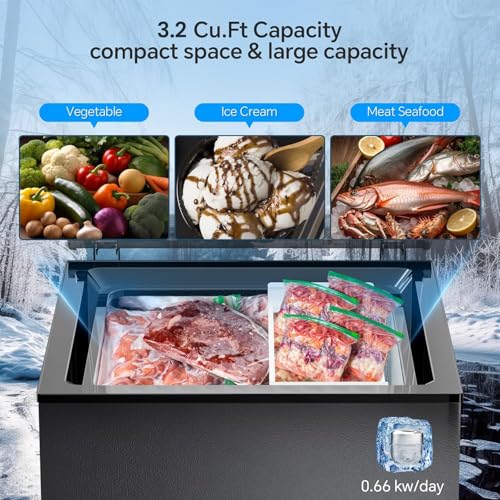
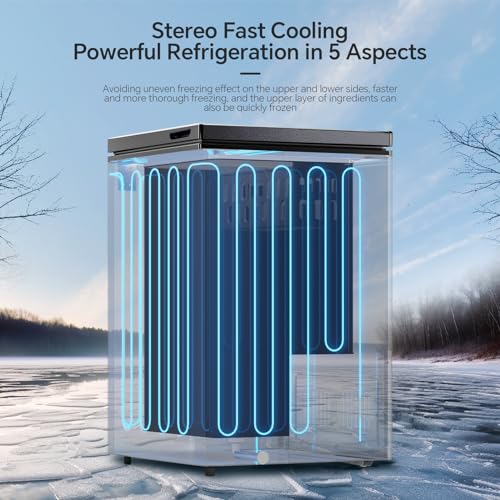
The Kismile hits a familiar note: mid-sized chest freezer, 7-level thermostat, and a promise of quiet, energy-conscious operation. At 0.68kWh/day, it’s less efficient than the gray 3.5 cu. ft. model or Bodacious, but owners say it cools reliably and holds steady in normal room temps. The dual baskets are a plus for organizing smaller items like frozen herbs or baby food.
Its hinge-style door stays open at an angle, which helps during loading, a small but appreciated detail. Still, when stacked against the Midea or the budget gray model, it’s harder to justify at this price. Same capacity, higher energy draw, and no standout perks. I’d only recommend it if you specifically want two baskets and a sturdier hinge mechanism.
Product photos
Whynter 2.1 Cu.Ft Stainless Freezer
Strengths
- Built-in lock and keys
- Upright, space-saving design
- Slide-out shelf
Trade-offs
- Noisy compressor
- Limited temp range
- Not garage ready
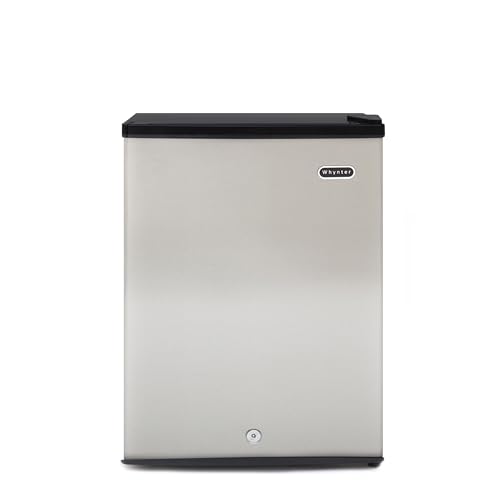
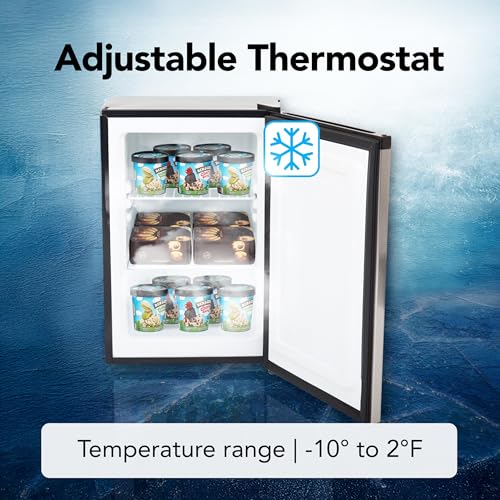
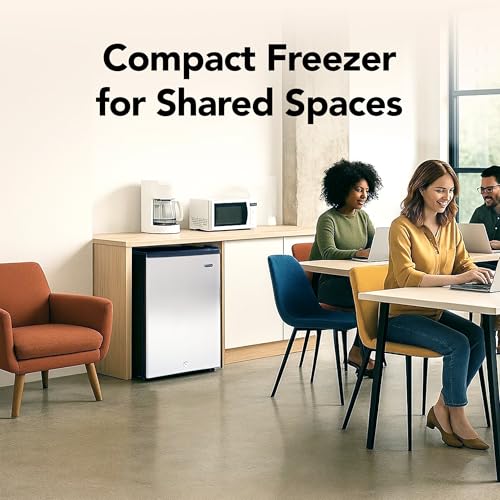
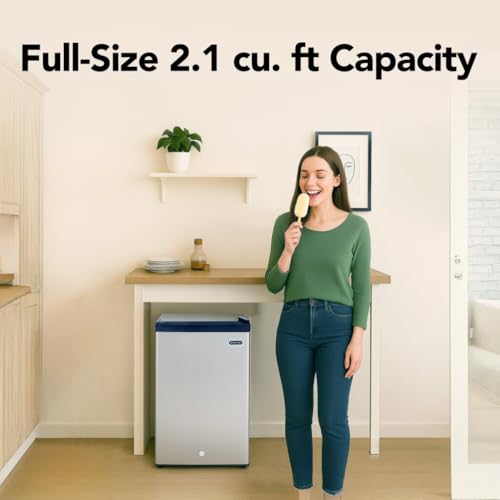
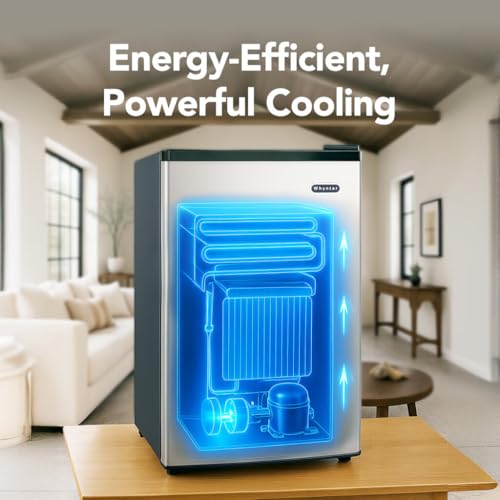
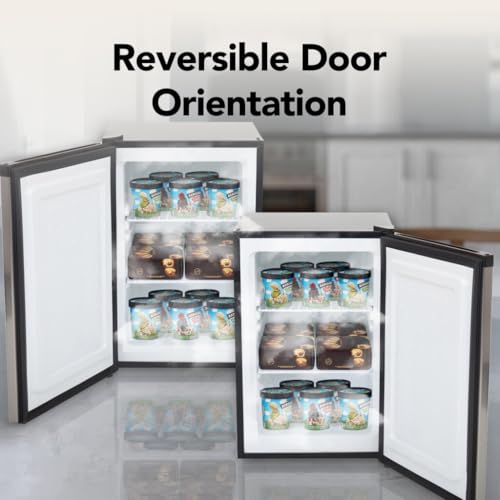
If security is a priority, say, for storing breast milk, medications, or valuable ingredients in a shared space, the Whynter upright stands alone with its cylinder lock and two included keys. The stainless steel build gives it a clean look, and the recessed handle keeps it sleek enough for office or kitchen placement. Its 2.1 cu. ft. size is modest, but the slide-out wire shelf improves access compared to chest models.
Temperature control is limited to a narrow mechanical range, and it’s not especially energy efficient. Still, when locked storage matters more than capacity or running costs, I’d pick this over open-access models like the Midea or BLACK+DECKER. Just know it’s louder than chest freezers and best kept in dry, temperate areas.
Product photos
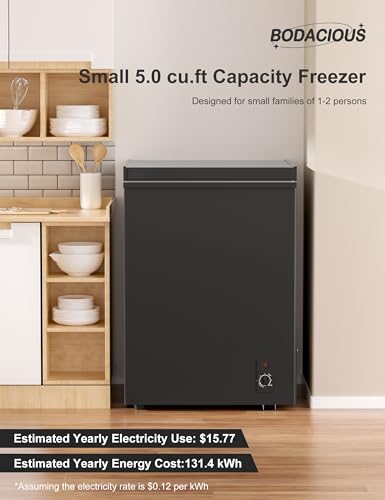
Bodacious 5.0 Cu.Ft Quiet Freezer

Strengths
- Largest capacity
- Ultra quiet
- Fast freeze function
Trade-offs
- No convertible mode
- Heavy once full
- No interior light
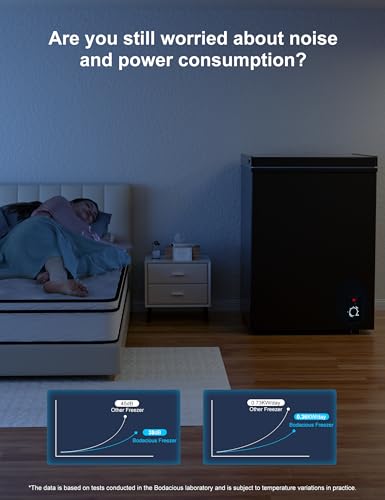
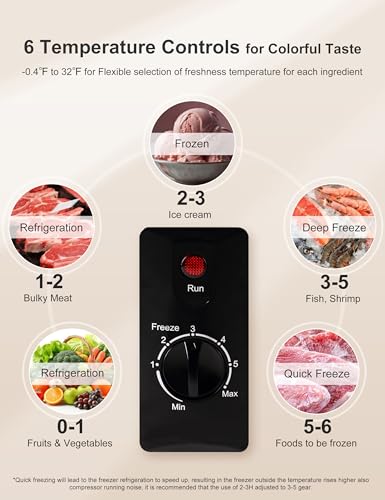
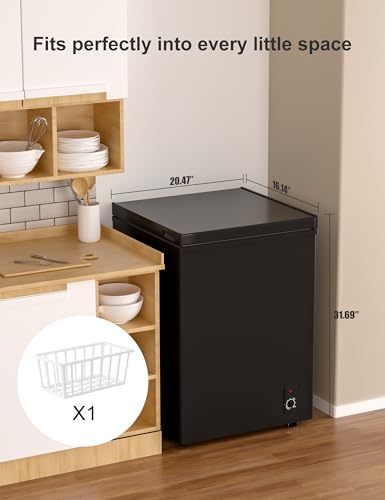
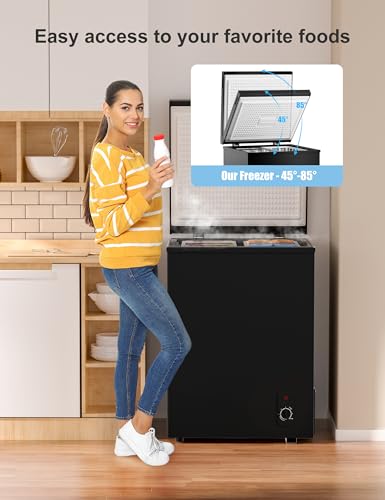
At 5.0 cu. ft., this is the largest-capacity model here, and still compact enough for tight spaces. That makes it a strong contender for families or small businesses needing to freeze large batches. The fast freeze function is a real perk for preserving fresh meat or seafood quickly, and owners confirm it cools down faster than average. Paired with ultra-quiet operation (under 40dB) and impressively low power use (0.36kWh/day), it’s built for efficiency and peace.
It doesn’t convert like the Midea or lock like the Whynter, but for pure freeze performance and daily usability, it hits a sweet spot. Compared to the Kismile or Maine models, it offers more space and quieter running. I’d recommend it for anyone who values long-term reliability and low noise over fancy extras.
Product photos
EUHOMY 1.1 Cu.Ft Mini Freezer
Strengths
- Smallest footprint
- Reversible door
- Food-safe interior
Trade-offs
- Very limited capacity
- No lock
- Minimal shelving
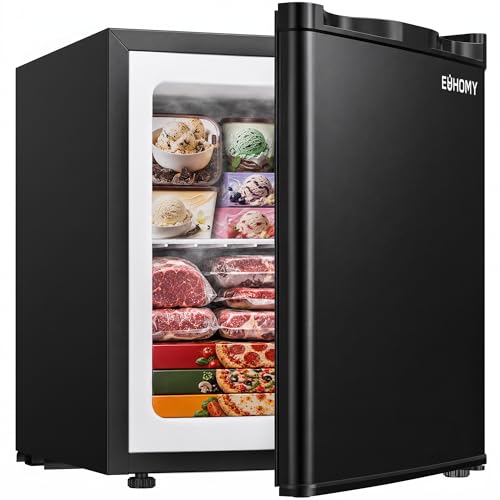
Sometimes you just need a little extra freeze space without committing to a bulky unit, and that’s exactly what the EUHOMY delivers. At 1.1 cu. ft., it’s the smallest here, but its upright design and reversible door make it incredibly flexible for tight corners, under counters, or dorm rooms. The food-grade liner is a thoughtful touch for health-conscious users, and the 7-grade thermostat allows fine-tuned control.
It’s not meant for bulk storage, obviously. But for singles, couples, or those keeping medication or small ingredient batches frozen, it’s hard to beat. Compared to the Whynter, it’s quieter and more compact, though less secure. If minimal footprint is your top priority, this is the one.
Product photos
Midea 3.5 Cu.Ft Convertible Freezer

Strengths
- Convertible cooling mode
- Garage ready
- Power outage protection
Trade-offs
- Higher energy use
- Noticeable compressor noise
- Heavier than similar models
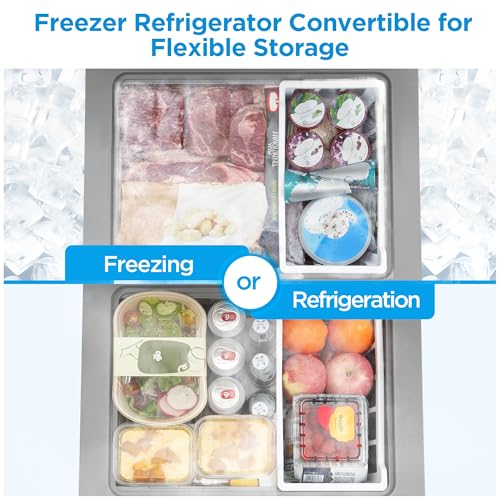
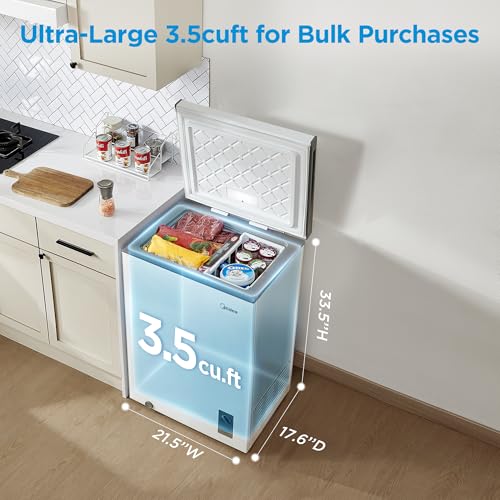
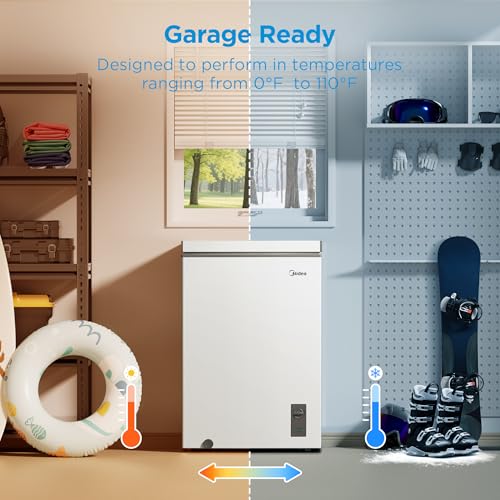
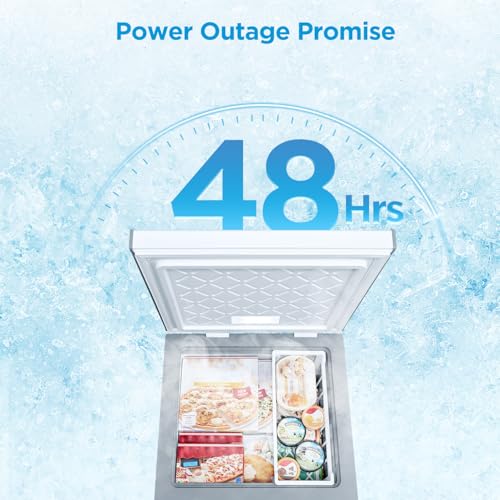
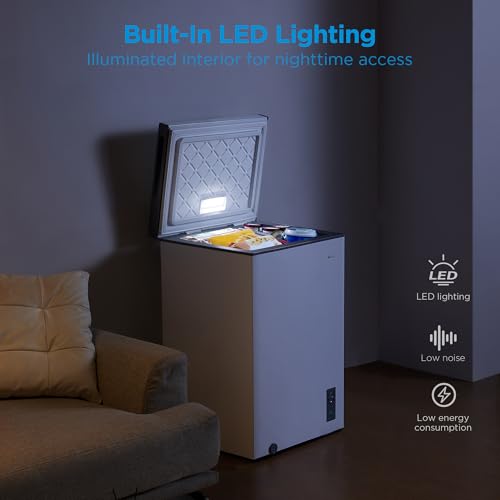
The Midea stands out because it can switch between fridge and freezer modes, a rare flexibility most compact units don’t offer. On paper, that makes it incredibly useful for seasonal needs, like chilling drinks in summer and freezing bulk meat in winter. It’s also ‘garage ready’ with a wide operating range, so it handles unheated spaces better than many competitors. Reviewers note it holds cold well during power outages, thanks to solid insulation that keeps items frozen up to 48 hours.
It’s not the quietest or most efficient model, but the adjustable legs and removable basket add practicality. Against the Kismile or Bodacious models, it trades some noise and energy savings for versatility. If your storage needs shift often, this adaptability might be worth the slight efficiency trade-off.
Product photos
How We Chose These compact freezers
Rather than a hands-on lab test, my research for these recommendations was a detailed comparison of published specifications and features across numerous models. I weighed owner reviews from major retailers alongside expert opinions found in appliance reviews, focusing on consistent feedback regarding performance and reliability. As the creator of Food Keepy, I approached this with a focus on practical storage solutions and long-term food preservation – qualities I know my readers value.
For compact freezers, I prioritized storage capacity relative to exterior dimensions, temperature consistency, and energy efficiency. These factors directly impact how much food you can realistically store in a limited space, how well it will be preserved, and the ongoing operating costs. A quiet operation was also key, as many people intend to place these units in living areas or near bedrooms. Finding the right balance between these elements was crucial.
Specifications reliably indicate capacity and temperature range, but I leaned heavily on owner feedback to assess real-world performance and durability. Reports of consistent freezing, ease of temperature adjustment, and noise levels were particularly influential. Reputation also played a role; brands known for appliance quality generally received more weight. You can find more information on related options in our guide to compact chest freezers and even larger capacity options like 7 cu ft upright freezers.
How To Choose The compact freezers
Choosing the right freezer can significantly impact how you manage food and reduce waste.
A good freezer balances storage capacity with energy efficiency, temperature consistency, and ease of use. Buyers should carefully consider the available space, the types of food they intend to freeze, and features like adjustable temperature controls and defrost mechanisms. Look for models with good insulation to minimize energy consumption and reliable temperature maintenance to protect food quality.
Size and Capacity
The first step is honestly assessing your needs. Don’t fall into the trap of thinking “bigger is always better.” A cavernous freezer will waste energy and space if it’s mostly empty. Think about what you’ll be freezing. If it’s primarily short-term storage for ready-made meals, a smaller unit will work. For bulk purchases and long-term preservation of meat or produce, you’ll need more capacity. Consider whether you need something to supplement your existing refrigerator freezer, or a standalone unit. If you’re tight on space, exploring options like compact upright freezers can be a smart move.
Temperature Control and Consistency
Maintaining a consistently low temperature is critical for food safety and quality. Fluctuations can lead to freezer burn and spoilage, negating the benefits of freezing. Look for models with adjustable temperature settings, allowing you to tailor the cooling to the specific items you’re storing. Digital controls generally offer greater precision than mechanical dials. Some freezers, like the Midea 3.5 Cu.Ft Convertible Freezer, even let you switch between freezer and refrigerator modes, offering versatility.
- A basic mechanical thermostat might suffice for occasional use.
- Digital controls provide more accurate and consistent temperature management, which is essential for long-term storage of sensitive items.
- Models with power outage protection are a worthwhile investment, as they can maintain frozen temperatures for up to 48 hours, safeguarding your food supply during short-term disruptions.
Style and Usability
Chest freezers generally offer more storage space for the same exterior dimensions, but they can be less convenient to organize. Upright freezers, on the other hand, are easier to access and organize, resembling a refrigerator. However, they tend to be less energy efficient. If you need something substantial but have limited room, consider 5 cu ft chest freezers as a good balance.
A practical rule of thumb: always measure your available space before you start shopping, and add a few inches for ventilation.
Compact Freezers Compared
Here’s a comparison of key specifications for several compact freezers to help you make an informed decision.
| Product Name | Capacity (Cu. Ft) | Temperature Range (°F) | Defrost Type | Door Type | Noise Level (dB) |
|---|---|---|---|---|---|
| 3.5 Cu.Ft Chest Freezer Gray | 3.5 | -11.4 to 10.2 | Manual | Chest | <40 |
| BLACK+DECKER 2.0 Cu.Ft Freezer | 2.0 | N/A | Manual | Chest | N/A |
| Maine 3.6 Cu.Ft Upright Freezer | 3.6 | 23 to -13 | N/A | Upright | <40 |
| Kismile 3.2 Cu.Ft Chest Freezer | 3.2 | 6.8 to -7.6 | Manual | Chest | <40 |
| Whynter 2.1 Cu.Ft Stainless Freezer | 2.1 | -10 to 2 | N/A | Upright | N/A |
| Bodacious 5.0 Cu.Ft Quiet Freezer | 5.0 | N/A | N/A | Chest | <40 |
| EUHOMY 1.1 Cu.Ft Mini Freezer | 1.1 | -7.6 to 6.8 | N/A | Upright | N/A |
| Midea 3.5 Cu.Ft Convertible Freezer | 3.5 | 0 to 110 (Freezer) | N/A | Chest | N/A |
Frequently Asked Questions
What temperature should I actually set my compact freezer to?
Zero degrees Fahrenheit is the ideal temperature for optimal long-term food preservation. Maintaining this temperature slows enzyme activity and prevents freezer burn, although many models will have a range of -10 to 0°F to accommodate different food types.
Are compact freezers energy efficient?
Generally, compact freezers are more energy efficient than standard-sized freezers due to their smaller capacity. However, upright models tend to use slightly more energy than chest freezers because cold air escapes when the door is opened; look for Energy Star certified options for the best efficiency.
Can a compact freezer replace a full-size freezer entirely?
It depends on your needs. If you primarily use a freezer for supplemental storage or have a small household, a compact freezer can be sufficient. However, if you regularly freeze large quantities of food, you’ll likely still benefit from a larger, full-size freezer or exploring options like best mini deep freezers.
What’s the difference between a manual and frost-free defrost?
Manual defrost freezers require you to periodically turn off the unit and scrape away ice buildup, which is more labor-intensive but generally more energy efficient. Frost-free models automatically remove frost, but can consume more energy and sometimes have temperature fluctuations during the defrost cycle.
Should I choose a chest or upright compact freezer?
Chest freezers typically offer more storage space for the same external dimensions and retain cold air better when opened, making them generally more efficient. Upright freezers are easier to organize and access, similar to a refrigerator, but may not be the best choice if space is at a premium or you’re focused on maximizing energy savings when considering freezers for home.
The Bottom Line
Choosing a compact freezer often comes down to balancing how much space you have with how much you want to freeze – and how much you’re willing to spend. For the broadest appeal and a good mix of capacity and features, I recommend the Midea 3.5 Cu.Ft Convertible Freezer. Its flexibility to switch between freezer and refrigerator modes is a real asset, and it consistently receives positive feedback for its performance.
If you’re on a tighter budget, the BLACK+DECKER 2.0 Cu.Ft Freezer is a solid pick. For those needing upright convenience in a smaller package, the Whynter 2.1 Cu.Ft Stainless Freezer offers a stylish and accessible option. And for readers looking at even smaller options, our guide to mini freezers has more details.
Ultimately, the best compact freezer isn’t about the flashiest features or the lowest price. It’s about finding a unit that reliably maintains a consistent temperature, fits your space, and meets your actual storage needs. Don’t get caught up in specs; focus on consistent temperature control and build quality – those are the hallmarks of a long-lasting appliance and a well-stocked freezer. You can find more guidance in our overall freezer buying guide.
