
8 Best Containers for Salt of 2026
This post contains affiliate links. As an Amazon Associate, we earn from qualifying purchases.
The KIBAGA Ceramic Salt Cellar is our top pick for its excellent moisture protection and classic look, while the Timtopno Bamboo Salt Cellar Set offers a budget-friendly option with smart one-handed rotation. For those who want adjustable flow, the Verdental Adjustable Glass Shakers stand out as the most versatile choice.
Salt clumps when exposed to air, and reaching for a poorly designed container mid-recipe can slow you down. After comparing the field and reviewing owner feedback, I focused on what actually matters: keeping salt dry, allowing quick access, and fitting well into real kitchen routines.
This guide covers the best containers based on material performance, lid function, and everyday practicality, all chosen through research, not personal testing. We looked at how each design handles humidity, how easy it is to use with one hand, and whether it delivers lasting value.
Top 8 Containers For Salt in the Market
The Best Containers For Salt, Reviewed
ThougrLyh Acacia Wood Salt Cellar
Strengths
- Glow-in-the-dark label
- Built-in spoon
- Magnetic swivel lid
Trade-offs
- Acacia still needs care
- Not dishwasher safe
- Engraved label only
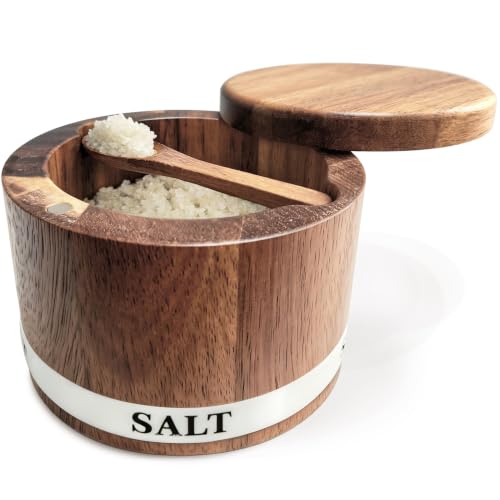
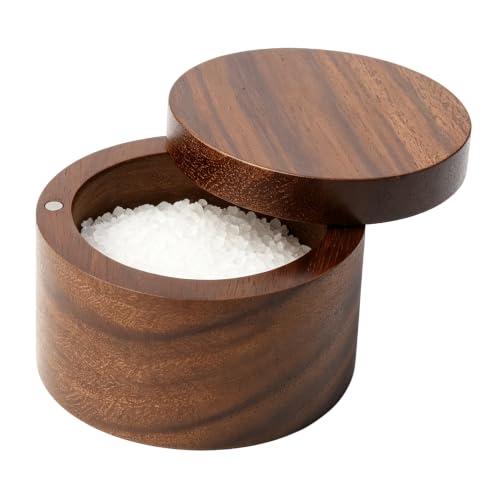
This might be the most thoughtfully designed acacia wood salt cellar here. It combines a built-in bamboo spoon with a magnetic 360° swivel lid, two features that solve real pain points. The spoon tucks neatly inside, staying clean and always at hand, while the glow-in-the-dark ‘SALT’ label is surprisingly helpful during evening cooking or outdoor meals. Owners love that it’s practical without sacrificing style.
The wood grain is warm and consistent, and unlike glued bamboo, acacia is naturally more water-resistant. At 6 oz, it strikes a balance between refill frequency and counter space. While it doesn’t match ceramic for moisture blocking, it’s the best-rounded option if you want convenience, visibility, and a touch of innovation. My pick for overall usability.
Video review
KIBAGA Ceramic Salt Cellar
Strengths
- Excellent moisture barrier
- Dishwasher safe
- Stylish matte finish
Trade-offs
- Heavier than wood
- Ceramic can chip if dropped
- Slightly bulky footprint
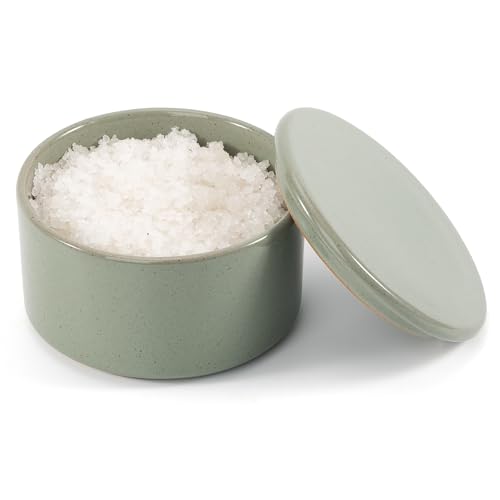
Ceramic wins for moisture protection, and this KIBAGA model proves why. Its dense, non-porous body blocks humidity better than wood or bamboo, making it ideal in damp climates or near stovetops where steam builds up. The lid seals snugly, and owners report their flaky salts stay free-flowing for weeks. Plus, being dishwasher- and freezer-safe means cleanup isn’t a chore, rare for salt cellars.
It’s also one of the prettier options here, with a speckled sage finish that blends into modern and rustic kitchens alike. The 7.5 oz capacity gives you room to work without constant refills. While heavier than wood or glass, that adds stability. If you’ve ever dealt with clumped salt after a humid week, this is the fix.
Video review
Timtopno Bamboo Salt Cellar Set

Strengths
- Includes 2 containers
- Built-in spoon slots
- Good value bundle
Trade-offs
- Glued bamboo
- Spoons can loosen over time
- Not for wet environments
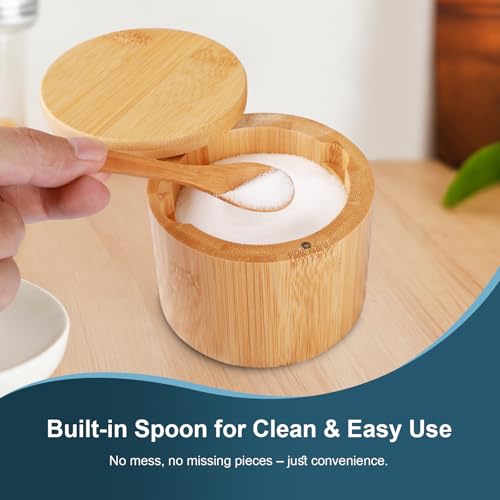
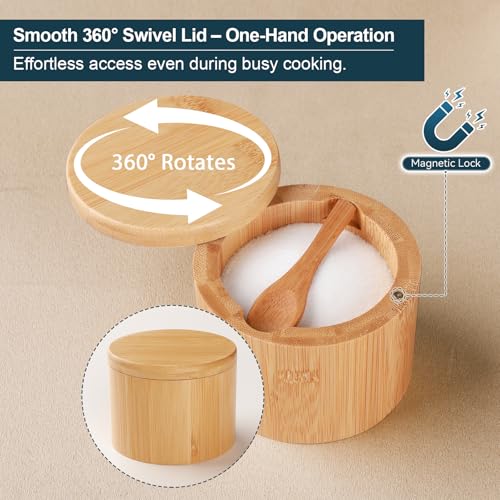
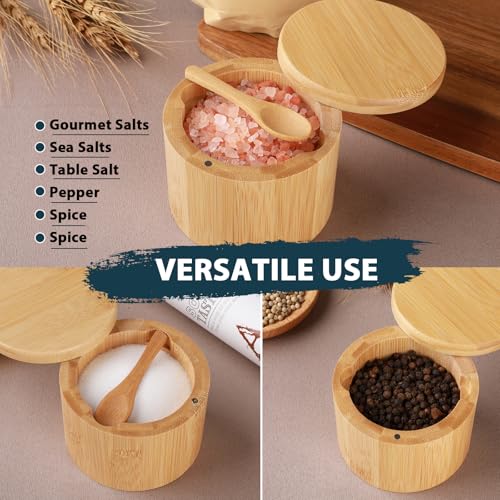
Having two matching containers with built-in spoons solves a real kitchen annoyance: stray spoons and messy lids. This set stands out because both units include a dedicated slot for the spoon, keeping it hygienic and off the counter. The magnetic swivel lid works just as smoothly as in pricier models, and since you get salt and pepper (or two salts) pre-organized, it streamlines meal prep.
At this price, it’s a strong value, even if the bamboo is glued like most in this class, owners say the finish feels thick and resilient. The 6 oz size fits standard counterside use, though not ideal for big-batch cooking. For new homeowners or gift givers, this combo beats buying singles separately. My recommendation? Use one for kosher salt, one for finishing flakes.
Product photos


ZOVANO Glue-Free Acacia Cellar
Strengths
- Glue-free wood build
- Unique wood grain
- Strong magnetic lid
Trade-offs
- Smaller capacity
- Hand wash only
- No built-in spoon
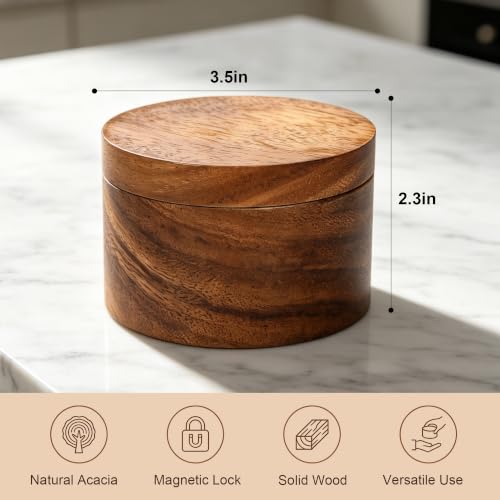
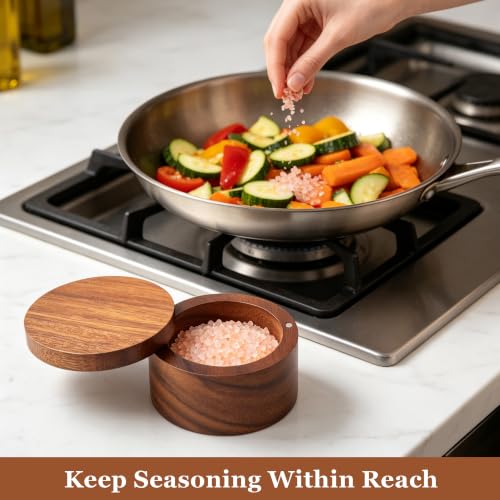
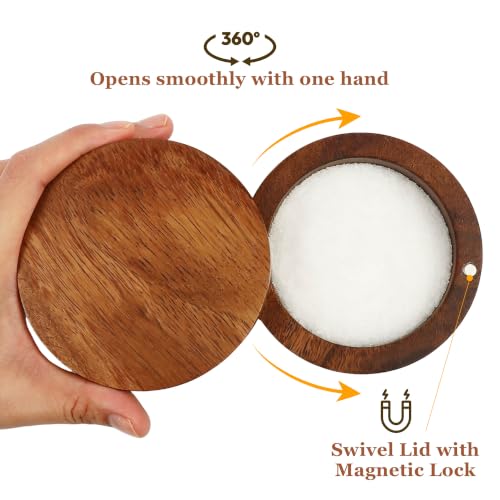
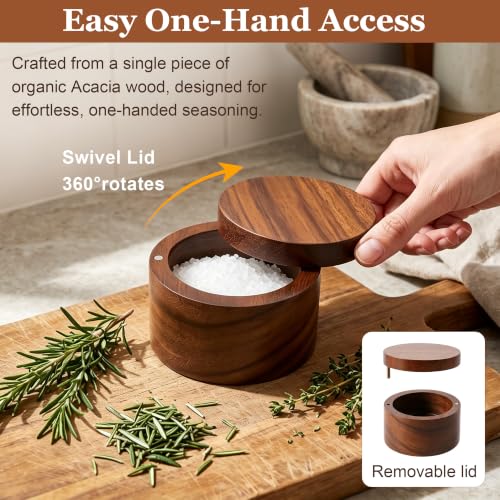
This one gets the material right. Crafted from a single piece of acacia wood without glue, it eliminates a real concern I have with many wooden salt containers, chemical leaching from adhesives. That makes it a cleaner, safer choice for long-term salt storage, especially in humid kitchens. The grain is consistently praised by owners for its richness, and because no two pieces are alike, it feels like a small luxury on the counter.
The magnetic lid is strong and lifts cleanly, though a few users mention it can attract dust over time. At 6 oz, it holds enough for a household of two, but larger families may refill more often than they’d like. Compared to glued bamboo models, this is the smarter buy if purity and longevity matter to you. I’d recommend it over similar-looking but less thoughtful designs.
Product photos
karmiero Bamboo Salt Container
Strengths
- Smooth swivel lid
- Natural bamboo look
- One-hand access
Trade-offs
- Glued construction
- Not dishwasher safe
- Limited capacity
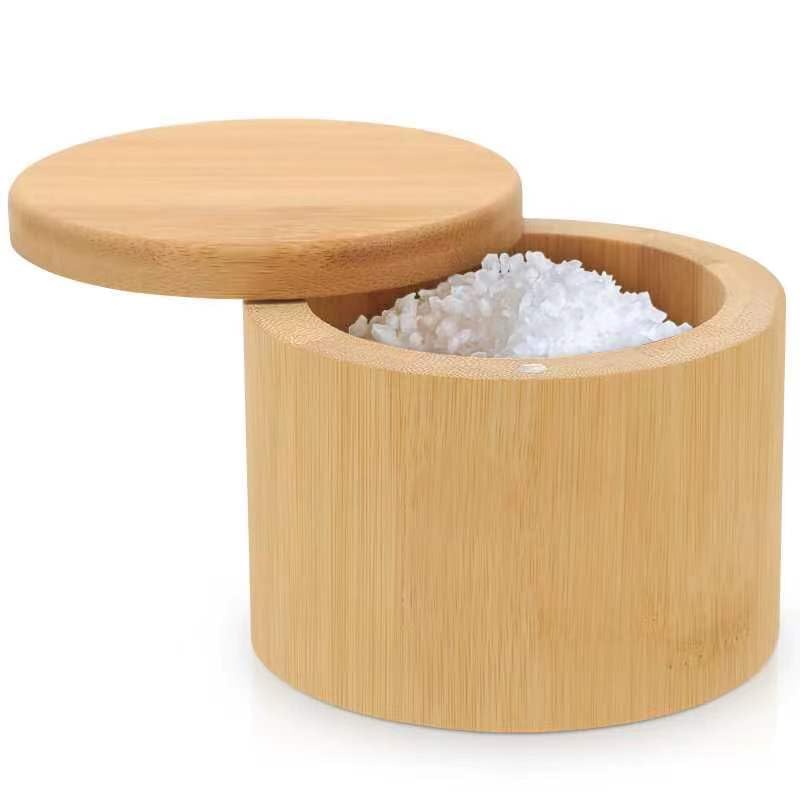
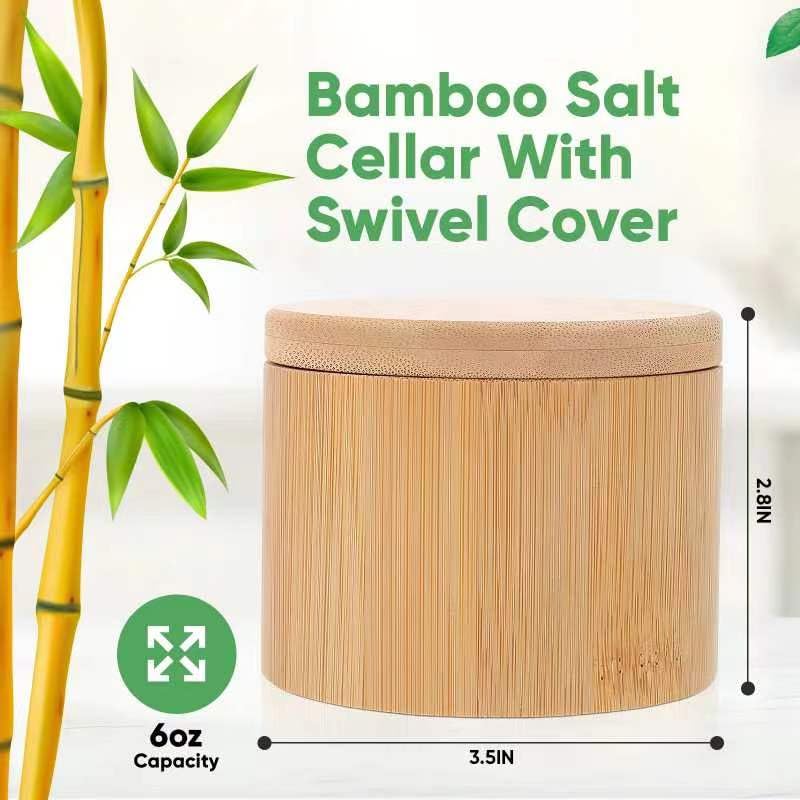
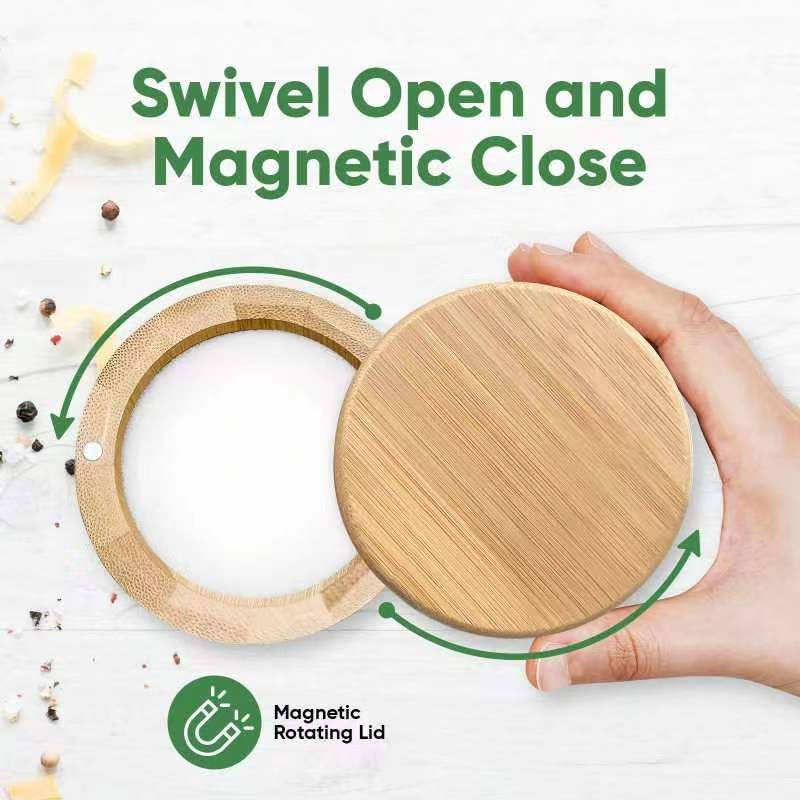
For a budget pick, this bamboo salt cellar delivers where it counts. The 360° swivel lid with magnetic closure works smoothly, letting you open it one-handed while cooking, a real plus when your fingers are messy. Owners consistently report the bamboo feels solid and looks better than expected for the price, adding warmth to the countertop without looking cheap.
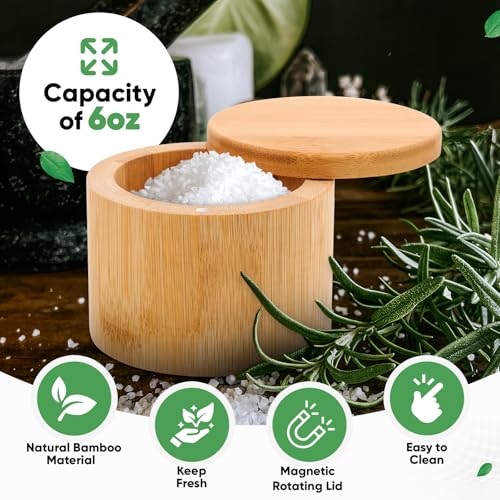
The 6 oz capacity suits daily use, though it won’t stretch far if you’re seasoning heavily or cooking for more than two. Since it’s made from glued bamboo, I’d be cautious about long-term moisture exposure, some reviewers note slight warping over time if wiped with a soaking wet cloth. Still, as a basic, attractive salt holder that keeps contents dry and within reach, it punches above its weight.
Product photos
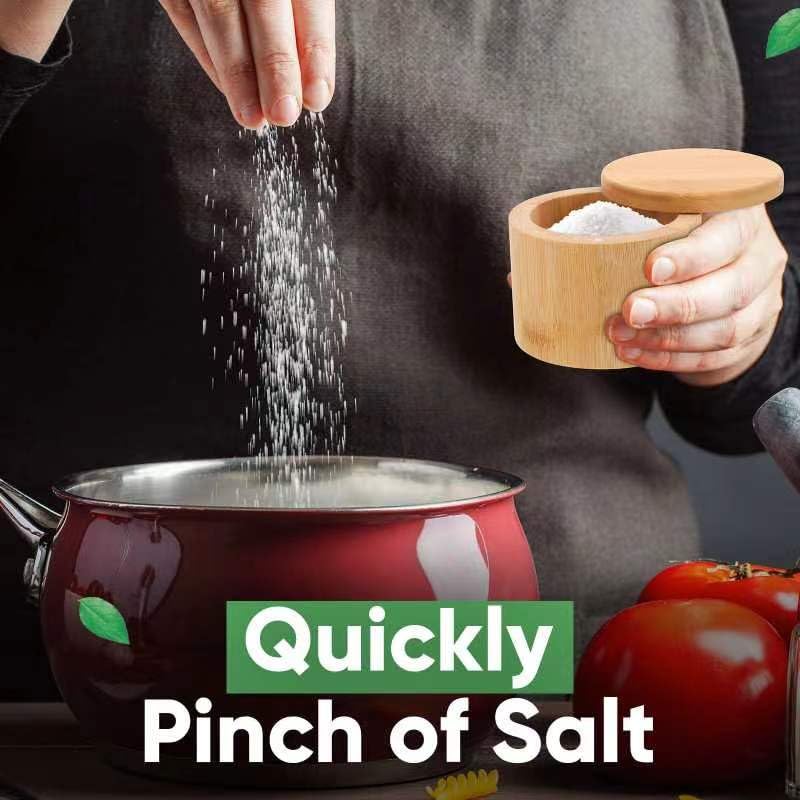
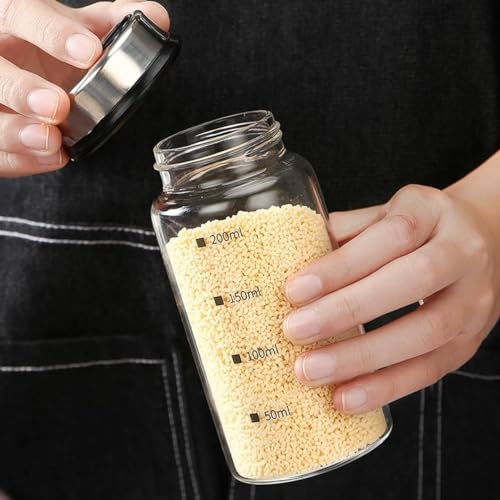
Verdental Adjustable Glass Shakers

Strengths
- Adjustable pour settings
- Clear refill monitoring
- Slip-resistant base
Trade-offs
- Plastic lid parts
- Label tags may peel
- Narrow for coarse salts
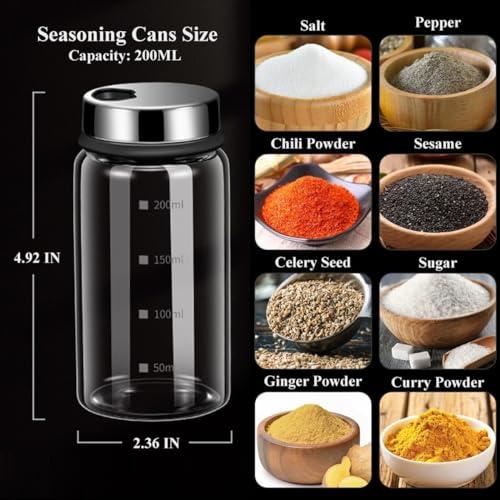
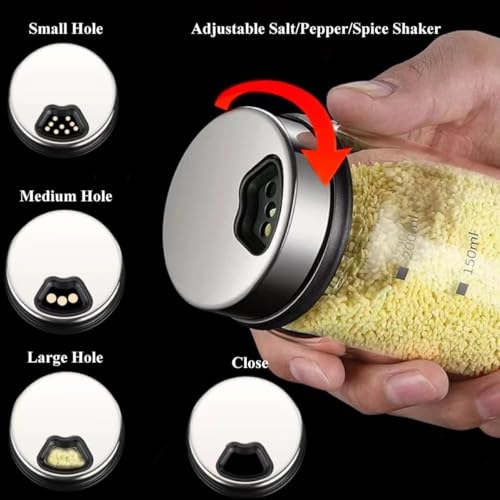
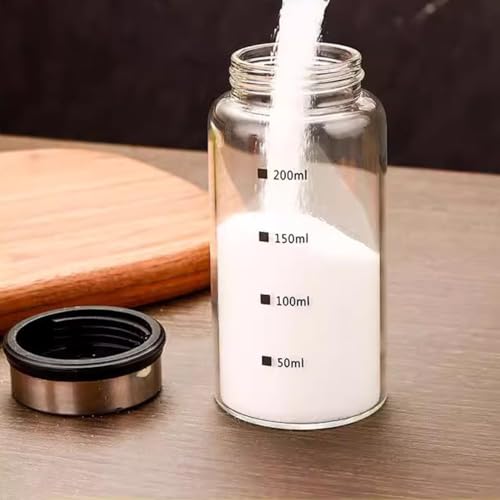
If you care about control over how much salt you dispense, this shaker stands out. The adjustable outlet holes, fine, medium, coarse, are genuinely useful, especially if you switch between fine table salt and chunkier sea flakes. On paper, the lead-free glass is a smart choice: clear enough to see salt levels, and inert so it won’t react or absorb odors. The silicone base keeps it steady, which matters when you’re shaking with one hand mid-stir.
Reviewers note the plastic components in the lid feel a bit lightweight compared to all-metal alternatives, but durability hasn’t been a widespread issue. It’s not the prettiest option on display, but for function-first kitchens where precision matters, it earns its place. I’d pick this over fixed-hole shakers if you hate clogging or want versatility across spices.
Product photos

KooK Pressed Glass Salt Cellar

Strengths
- Large 10 oz capacity
- Durable embossed glass
- See-through design
Trade-offs
- No magnetic lid
- Bulky footprint
- Lid not one-hand friendly
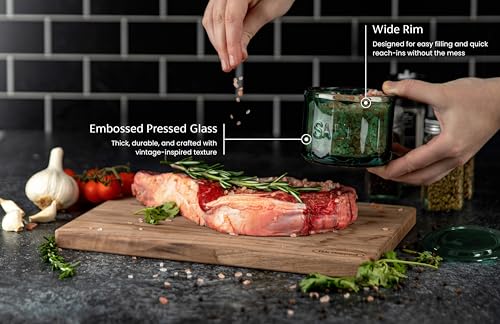
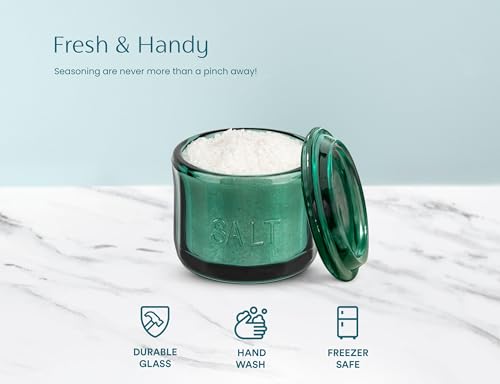
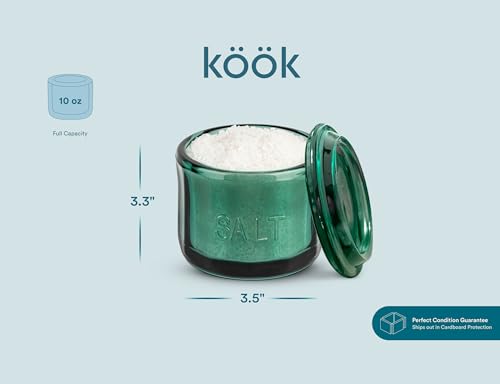
When you need volume, this 10 oz glass cellar is hard to beat. Its generous size means fewer refills, ideal if you cook frequently or keep it beside the stove for constant access. The embossed pressed glass feels substantial, not fragile, and the green tint adds a quiet elegance without hiding what’s inside. Being able to see salt levels at a glance is a small but meaningful convenience.
The flat lid sits securely but isn’t magnetic or rotating, so you’ll need two hands to open it while stirring. Some owners mention it takes up noticeable space, so it’s best for larger counters. Still, for storing bulk salt, sugar, or even coffee beans, it’s one of the most practical glass options available. I’d choose this over smaller models if counter real estate isn’t tight.
Product photos

MARBLOUS KRAFTS Marble Salt Box

Strengths
- Naturally cool surface
- Moisture-proof stone
- One-of-a-kind appearance
Trade-offs
- Small capacity
- Heavy for size
- Fragile if dropped
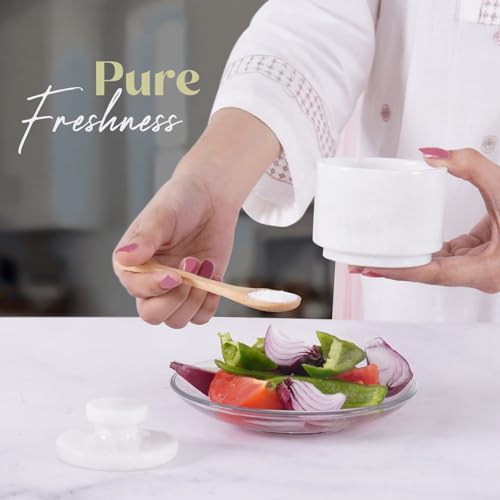
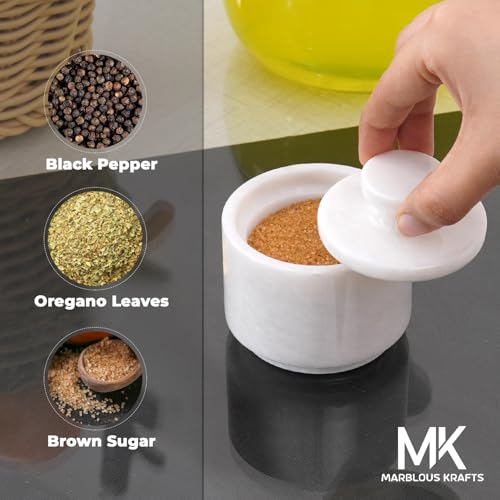
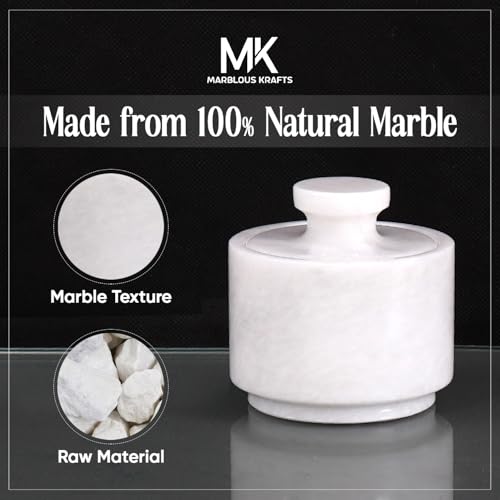
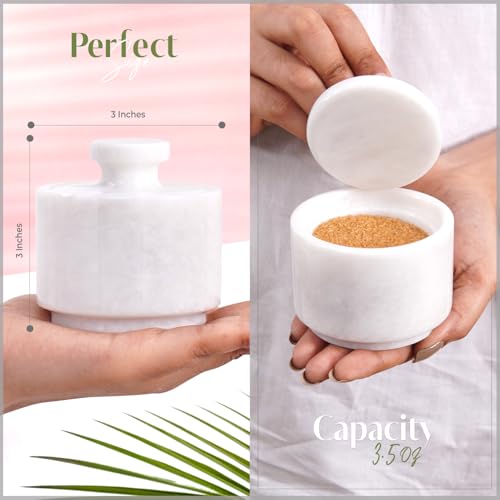
Marble is a standout material for temperature stability and moisture resistance, and this little stone box shows off those benefits beautifully. It stays cool to the touch, which helps preserve salt integrity, and the polished surface resists staining and absorbs zero humidity. Each piece has unique veining, so it doubles as a subtle centerpiece, reviewers often say theirs became a conversation starter.
At 3.5 oz, it’s best for finishing salts rather than daily cooking use, you’ll refill often if you’re salting pasta water regularly. And while marble is tough, it can crack if knocked hard. But for elegance and performance, it’s unmatched. I’d place this next to the dinner table for flaky sea salt, not by the stove.
Product photos

How We Evaluated containers for salt
I approached researching containers for salt by comparing published specifications and features across numerous options. I then weighed owner reviews from major retailers alongside expert opinions found in cooking and home goods publications. My assessment relied on a combination of category knowledge – understanding what features truly matter for salt storage – and applying clear criteria for ranking, focused on freshness preservation, ease of use, and overall value. Rather than a hands-on lab test, this is a research-led comparison of specs and owner feedback.
For salt containers, the most important factors are undoubtedly moisture protection and ease of access. Salt is hygroscopic, meaning it readily absorbs moisture from the air, leading to clumping and impacting flavor. Therefore, a tight-fitting lid is paramount. Equally crucial is one-handed operation; cooks need to be able to easily dispense salt while actively preparing food. Durability and material quality also weighed heavily, as these impact longevity and potential leaching of flavors.
Product specifications reliably indicate capacity and dimensions, helping to assess if a container suits typical usage. However, I heavily relied on owner feedback to gauge real-world performance regarding lid seal effectiveness and durability. Reputations for brands known for quality glassware or bamboo construction, for example, informed my assessment, as did comments about ease of cleaning and any reported issues with the magnetic or swivel mechanisms. For those concerned about plastics, exploring BPA-free storage options is always a good idea, and often connects to a wider search for overall quality airtight containers.
How To Pick The Right containers for salt
Finding the right container for salt isn’t just about aesthetics; it’s about preserving flavor and making cooking more convenient. You’d be surprised how much moisture and even light can impact the quality of your salt over time.
A quality salt container protects against humidity, prevents clumping, and offers easy access during cooking. Consider the material – ceramic, wood, glass, or stainless steel – and whether features like adjustable flow or built-in spoons align with your cooking style. Capacity needs vary, but a container that’s frequently empty isn’t helpful either.
Material Matters
The material of your salt container significantly impacts how well it preserves your salt’s texture and flavor. While acacia wood looks lovely, as seen in options like the ThougrLyh Acacia Wood Salt Cellar, it’s more susceptible to absorbing ambient moisture than, say, ceramic. Ceramic containers, such as the KIBAGA Ceramic Salt Cellar, offer a good balance of moisture protection and aesthetic appeal. Stainless steel is another excellent choice, resisting corrosion and maintaining salt’s dryness, but isn’t always the most visually appealing. Ultimately, think about your kitchen’s humidity and how often you replenish your salt.
Lid Design and Access
How easily you can access the salt while cooking is crucial. A fiddly lid can be a real frustration mid-recipe. Many containers, like the Timtopno Bamboo Salt Cellar Set, feature rotating lids for one-handed operation, which is incredibly useful when your hands are messy. Others, such as the Verdental Adjustable Glass Shakers, offer adjustable flow, giving you control over the amount of salt dispensed.
Here’s what to consider when evaluating lid designs:
- Simplicity: A simple lift-off lid is fine for casual use.
- One-handed operation: Rotating or magnetic lids are ideal for busy cooks.
- Air-tight seal: Important if you’re concerned about moisture, especially with flaky sea salt. A truly airtight seal isn’t always necessary; some prefer a little airflow to prevent caking.
Remember, a container that’s inconvenient to use will likely end up unused.
Capacity and Value
Consider how much salt you use and the container’s overall value. A small, decorative marble salt box like the MARBLOUS KRAFTS Marble Salt Box might be perfect for finishing salt, but impractical for everyday cooking salt. Larger capacity containers, such as the KooK Pressed Glass Salt Cellar, require less frequent refills. If you’re looking to outfit your entire spice rack, a set, like the Timtopno Bamboo Salt Cellar Set, can be a more economical choice. Don’t overlook how well a container fits into your existing kitchen aesthetic; spending a little more for something you enjoy looking at can make cooking more pleasurable. If you’re concerned about organization beyond just salt, exploring other best containers can be a good next step. And learning how to store salt properly will ensure your investment stays fresh.
Containers for Salt Compared
Here’s a comparison of key specifications for various salt containers to help you choose the right one.
| Product Name | Capacity (oz) | Material | Lid Type | Built-in Spoon | Adjustable Flow |
|---|---|---|---|---|---|
| ThougrLyh Acacia Wood Salt Cellar | 6 | Acacia Wood | Swivel (Magnetic) | Yes | No |
| KIBAGA Ceramic Salt Cellar | 7.5 | Ceramic | Standard | No | No |
| Timtopno Bamboo Salt Cellar Set | 6 (x2) | Bamboo | Rotating | Yes (x2) | No |
| ZOVANO Glue-Free Acacia Cellar | N/A | Acacia Wood | Removable | No | No |
| karmiero Bamboo Salt Container | 6 | Bamboo | Rotating (Magnetic) | No | No |
| Verdental Adjustable Glass Shakers | 7 | Glass | Rotating | No | Yes |
| KooK Pressed Glass Salt Cellar | 10 | Glass | Standard | No | No |
| MARBLOUS KRAFTS Marble Salt Box | 3.5 | Marble | Standard | No | No |
Frequently Asked Questions
What salt container material is best for humid environments?
Glass containers are generally the best choice for humid environments, as they don’t absorb moisture like wood or ceramic. While acacia wood looks appealing, it’s more prone to clumping in damp kitchens, making glass a more practical option.
Can I use a salt container for other spices?
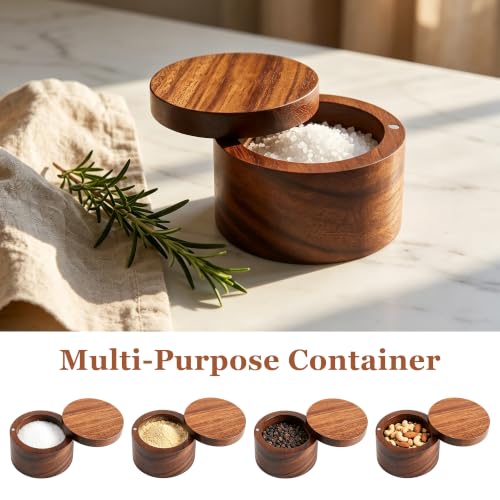
Yes, absolutely. Many of these containers are versatile enough to hold other dry spices, though dedicated spice jars with smaller openings may offer better control for dispensing. You might also explore airtight glass containers for a wider range of spice storage options.
Are magnetic lids on salt containers truly more convenient?
Magnetic lids offer a secure closure and allow for quick, one-handed access to salt, which is especially helpful while cooking. However, the strength of the magnet varies between brands, so owner reviews regarding ease of use are helpful to consider.
What capacity salt container should I choose for everyday use?
A capacity of 7 to 10 ounces is usually sufficient for everyday cooking salt, minimizing how often you refill it. If you frequently use finishing salts, a smaller container (around 3-6 ounces) dedicated to those might be a good addition.
Can I put a salt container in the freezer to prevent clumping?
While it might seem counterintuitive, freezing salt isn’t generally recommended. The rapid temperature changes can actually worsen clumping and potentially damage some container materials. Instead, focus on using a well-sealed container and consider freezer-safe containers for any spices you might want to keep long-term.
The Bottom Line
Choosing a salt container often comes down to balancing convenience with the level of preservation you require. While a simple, open container might suffice for frequently used table salt, protecting finer salts and finishing varieties demands a more airtight solution. For overall performance and ease of use, I believe the Verdental Adjustable Glass Shakers strike the best balance; the adjustable flow is a real asset for cooks, and the glass construction won’t impart flavors.
If you’re on a tighter budget, the Timtopno Bamboo Salt Cellar Set offers excellent value, providing two convenient rotating-lid containers. For those prioritizing aesthetics and a touch of natural warmth, the ThougrLyh Acacia Wood Salt Cellar is a beautiful choice, though you’ll want to be mindful of humidity. And if you’re looking to upgrade other areas of your kitchen, exploring quality ceramic containers can elevate your organization and food preservation overall.
Ultimately, the “best” container isn’t about a single feature, but about safeguarding your salt from moisture and making it readily accessible when you’re cooking. Prioritize a tightly sealing lid and a design that fits your cooking style. Don’t get too caught up in material trends or fancy features, a simple, well-made container will always outperform a complex one that doesn’t address the fundamentals of keeping salt dry and within easy reach.
