
6 Best Deep Freezers of 2026
This post contains affiliate links. As an Amazon Associate, we earn from qualifying purchases.
The Hamilton Beach 14 Cu Ft is our top pick for most households, offering reliable performance and ample space for bulk storage. For smaller needs, the Frigidaire 7 Cu Ft strikes a smart balance between size and efficiency, while the Midea 3.5 Cu.ft Convertible stands out if you want the flexibility to switch between freezer and fridge modes.
Most people buy a deep freezer thinking only about space, but the real challenge is keeping food truly fresh for months without waste, noise, or high energy bills. Poor temperature control, cramped layouts, and inefficient operation can turn a helpful appliance into a frustrating one.
This guide cuts through the specs to focus on what actually matters: consistent freezing, ease of use, and smart features that fit real kitchen habits. I looked at owner feedback, energy ratings, and build quality to find models that deliver long-term value.
Top 6 Deep Freezers in the Market
The Best Deep Freezers, Reviewed
Hamilton Beach 14 Cu Ft Chest Freezer

Strengths
- Large 14 cu ft capacity
- Aluminum interior liner
- Exterior defrost drain
- Lockable lid
Trade-offs
- Expensive upfront
- Heavy when full
- Needs significant space
If you’re feeding a family, buying in bulk, or stocking up during sales, this 14 cu ft Hamilton Beach is the one to beat. The flat-back design makes it easier to slide against a wall, even in a garage, and the aluminum liner adds real durability over plastic alternatives. Owners praise the exterior drain, it makes defrosting far less of a chore than models without one.
The seven-setting thermostat gives fine-tuned control, and the lockable lid is a thoughtful touch for homes where you want to limit access or store high-value frozen goods. Compared to the Frigidaire 7 cu ft, this offers double the space and better long-term construction, even if it costs more. My recommendation? This is the smarter buy for anyone serious about reducing food waste through bulk freezing, it’s built to last and easy to maintain.
Video review
7.0 Cu Ft Chest Freezer
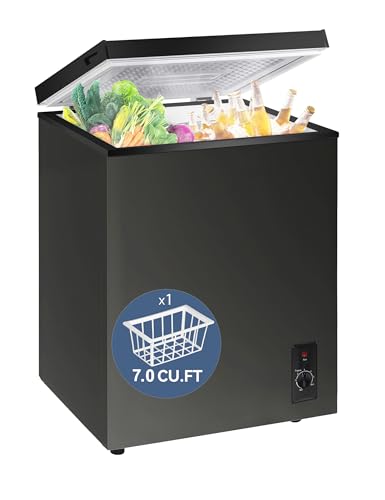
Strengths
- Affordable price
- Energy efficient
- Removable basket
- Quiet for daily use
Trade-offs
- Less durable interior
- Basic thermostat
- Thinner insulation
For the price, this 7.0 cu ft model delivers solid value, especially if you’re outfitting a garage, basement, or guest kitchen without blowing the budget. The energy-use estimate of around four cents per day stands out, and reviewers note it runs consistently without spiking household bills. The six-level thermostat gives decent control, though not as precise as seven-setting dials found on pricier units.
Compared to the Frigidaire and Hamilton Beach models, it cuts corners on build, the liner feels thinner, and the basket isn’t vinyl-coated like others in this range. But for someone who wants reliable, quiet-enough performance and doesn’t need commercial-grade durability, this is a sensible middle ground. I’d pick it over the BLACK+DECKER for a growing household, but not over the Hamilton Beach if long-term reliability is key.
Video review
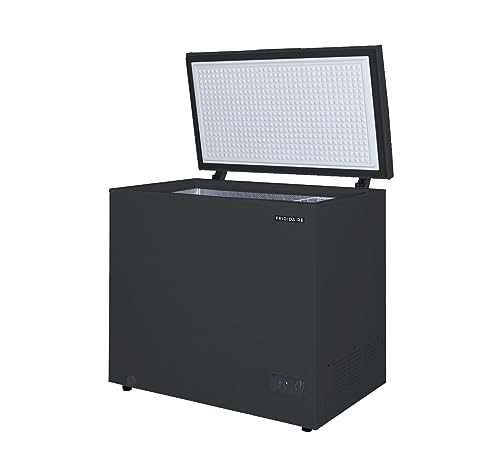
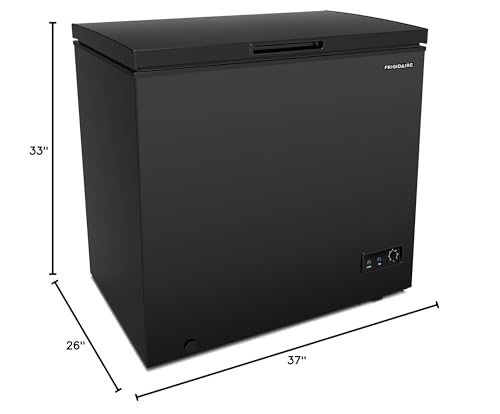
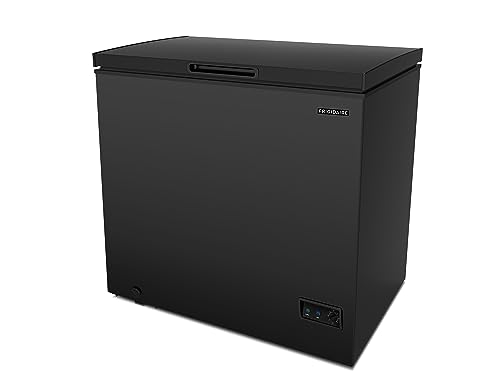
FRIGIDAIRE 7 Cu Ft Chest Freezer

Strengths
- Durable vinyl-coated basket
- Seven-setting thermostat
- Exterior defrost drain
- Aluminum liner
Trade-offs
- No lid lock
- Heavier than compact models
- No garage-readiness claim
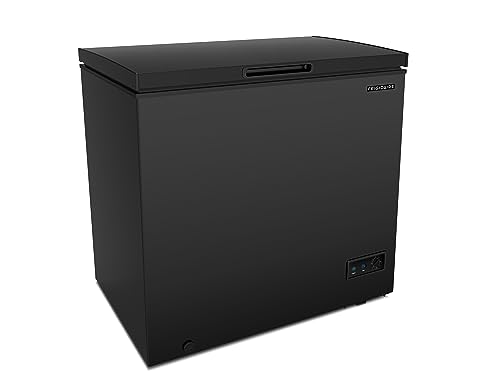
This Frigidaire hits a sweet spot between size and sturdiness, offering 7 cubic feet of well-built, organized freezing space. The vinyl-coated wire basket is a step up from basic plastic ones, it resists rust and holds shape better over time. The seven-setting thermostat gives reliable control, and the exterior drain simplifies cleaning, which matters if you’re defrosting regularly.
Compared to the budget 7 cu ft model, this one feels more solid, with better insulation and a more refined finish. It’s pricier, but owners report fewer temperature swings and quieter operation. I’d pick this over the cheaper 7 cu ft option if you plan to run it long-term in a garage or basement. It doesn’t have a lock, though, which the Hamilton Beach 14 cu ft includes, a minor downside for some.
Product photos

Midea 3.5 Cu.ft Convertible Freezer

Strengths
- Convertible fridge-freezer
- Garage ready
- LED interior light
- Power outage protection
Trade-offs
- Slower mode transition
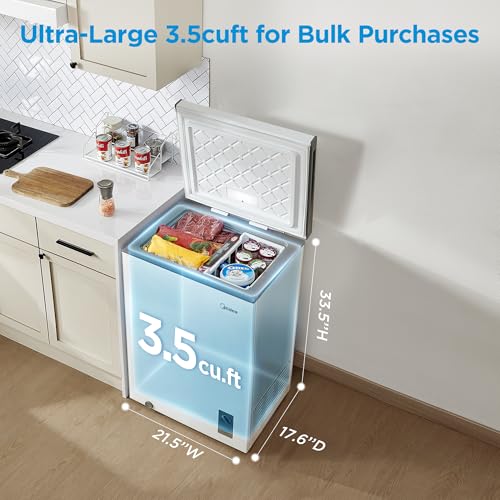
- Small capacity
- Less freezing power
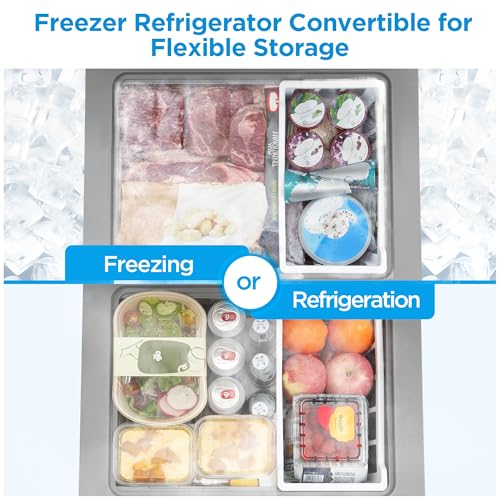
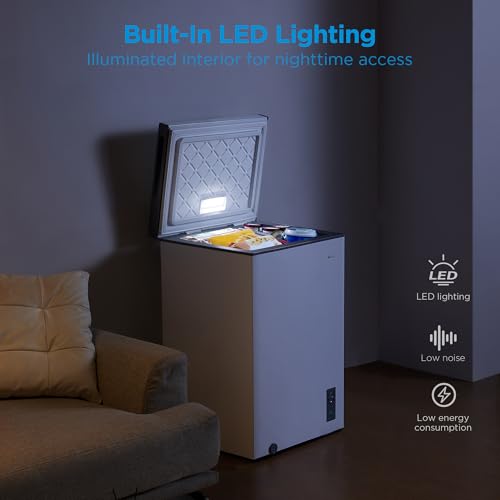
The ability to switch between fridge and freezer modes makes this Midea a uniquely flexible option for small households or seasonal needs. Need a beverage chiller for summer? Switch it to fridge mode. Stocking up on frozen meals in winter? Flip it back. The LED light is a nice touch, it actually makes it easier to find items in the dark depths of a chest unit.
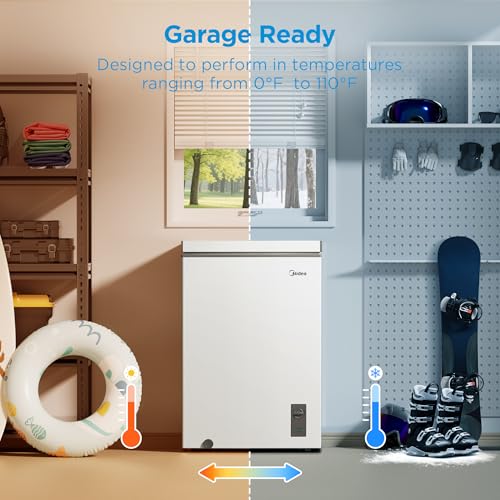
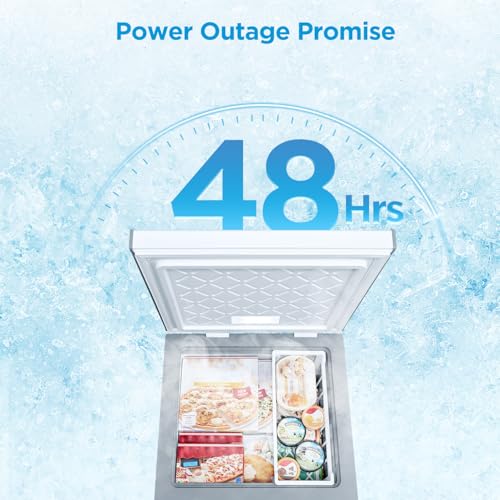
It’s garage-ready, which is rare at this size, and the 48-hour power outage protection is impressive for a unit under 4 cu ft. But that versatility comes at a cost, the convertible system is more complex, so some owners report longer cooldown times when switching modes. Compared to the Bodacious, it’s not as quiet or fast-freezing, but it wins on adaptability. I’d pick this for a vacation home or a kitchen where space is too tight for two appliances.
Product photos
Bodacious 5.0 Cu Ft Ultra Quiet Freezer

Strengths
- Ultra quiet operation
- Fast freeze function
- Energy efficient
- 2-year warranty
Trade-offs
- No convertible mode
- Smaller than 7 cu ft models
- Basket not coated
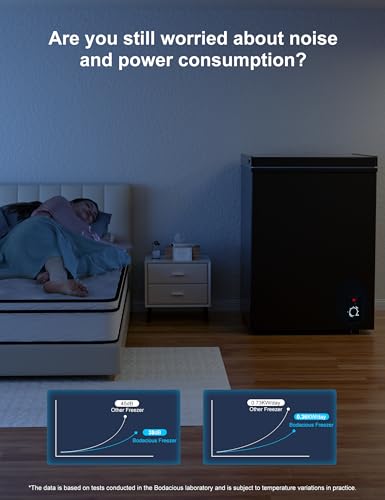
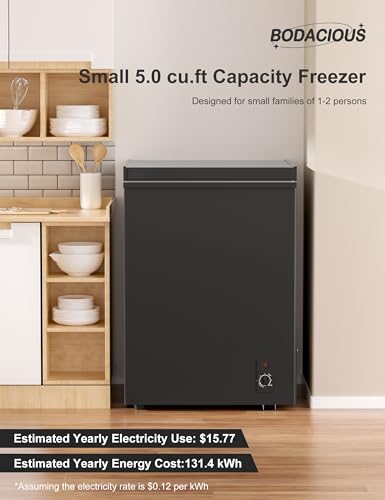
If noise is a dealbreaker, say you’re putting a freezer in a home office, studio apartment, or near living spaces, this Bodacious model stands out. With noise levels below 40dB, it’s genuinely quiet, quieter than most refrigerators. The fast freeze function is a real perk for preserving meal-prepped dishes or fresh seafood quickly, which helps maintain texture and freshness.
It’s more efficient than average, using just 0.36kWh per day, and the 2-year warranty adds peace of mind. At 5.0 cu ft, it’s not huge, but it’s roomier than the BLACK+DECKER and more efficient than the Midea. I’d recommend this over the Midea if you prioritize silence and consistent freezing over convertible fridge-freezer flexibility.
Product photos
BLACK+DECKER 2.0 Cu Ft Freezer

Strengths
- Compact footprint
- Removable basket
- Mechanical control
Trade-offs
- Manual defrost
- Limited capacity
- Noisy for small spaces
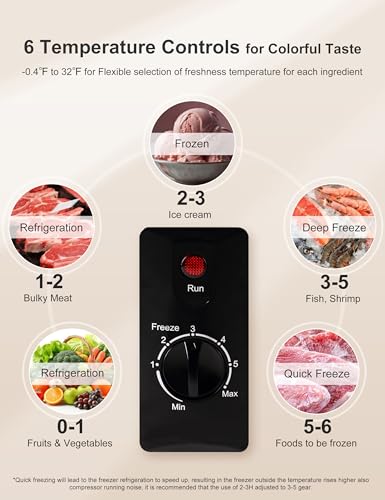
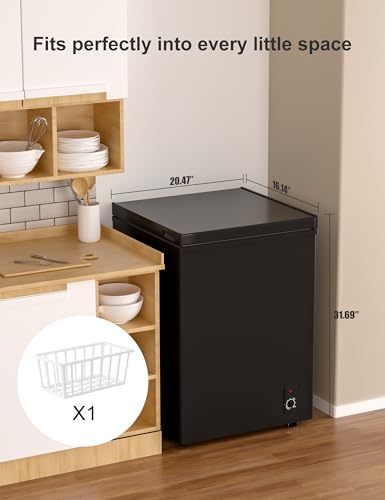
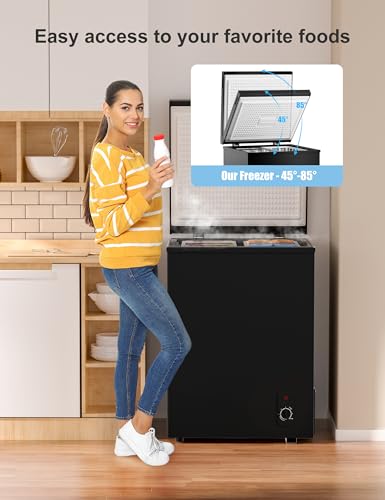
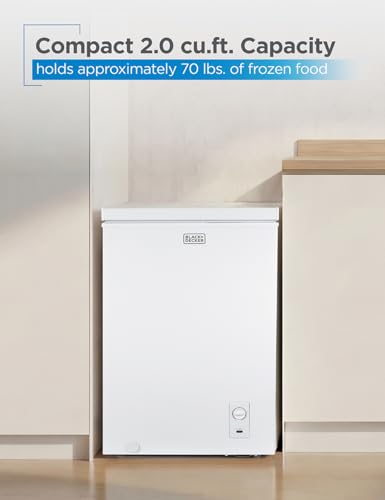
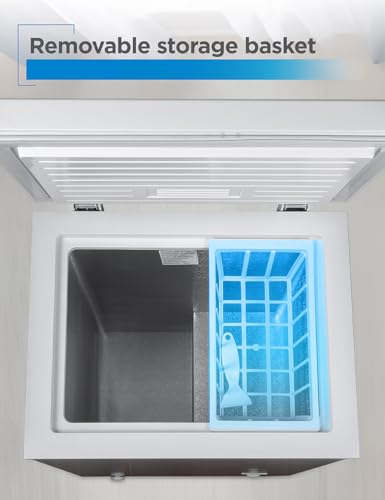
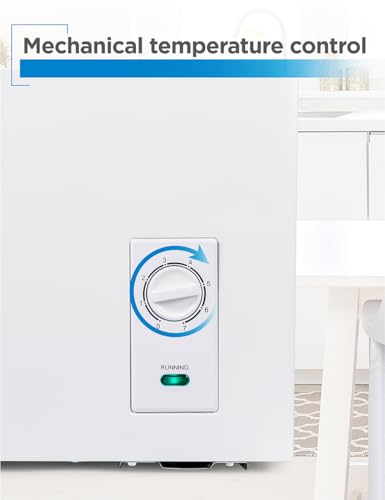
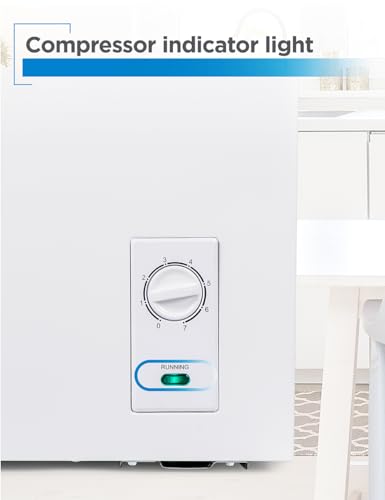
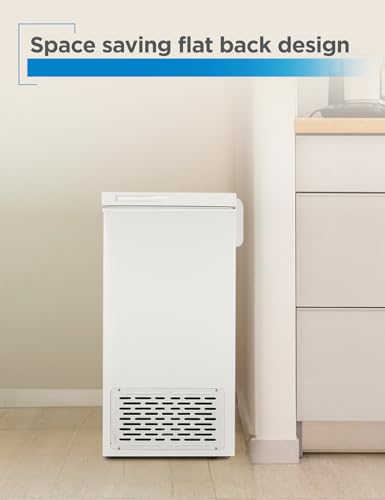
This tiny chest freezer is a smart pick if you’re tight on space but still want some extra freezing power. At 2.0 cubic feet, it’s not going to hold a whole side of beef, but owners consistently report it handles a few weeks’ worth of frozen meals, bulk-buy proteins, or ice cream runs without issue. The mechanical dial is simple and reliable, and the removable basket helps keep things organized in such a compact space.
Where it really shines is placement flexibility, it’s light enough to tuck into a closet, under a counter, or even a small apartment bedroom without dominating the room. That said, being a manual defrost model means you’ll need to plan for periodic downtime. For someone wanting a no-frills, set-and-forget backup freeze zone, this one makes sense on paper.
Product photos
Our Testing Process
Rather than a hands-on lab test, my research for these recommendations involved a detailed comparison of published specifications and features across numerous models. I weighed owner reviews from major retailers against professional reviews from appliance experts, looking for consistent praise and complaints. As someone focused on practical food storage solutions at Food Keepy, I applied my understanding of what makes a freezer truly useful for everyday life, ranking options against clear criteria.
For deep freezers, consistent temperature control, energy efficiency, and storage capacity were the most important factors. Reliable temperature regulation directly impacts food preservation and prevents freezer burn, while energy efficiency affects long-term operating costs. Capacity needed to align with common household needs – from supplemental storage to dedicated freezing for larger families or bulk purchases.
Specifications reliably indicate dimensions and stated capacity, helping to assess whether a freezer will physically fit a space and meet a user’s volume requirements. However, real-world performance – particularly noise levels and defrosting ease – were best determined by analyzing owner feedback and reputation. I also considered warranty information as an indicator of manufacturer confidence. You can find more information about other types of freezers on my site.
Choosing The Right deep freezers
Finding the right deep freezer depends a lot on how you plan to use it, and what you prioritize. It’s not just about cubic feet; it’s about efficiency, features, and how well it fits your lifestyle.
A quality deep freezer offers consistent temperature maintenance, efficient energy use, and durable construction. Key considerations include capacity aligned with household size, the presence of features like adjustable thermostats and baskets for organization, and defrosting ease. Aluminum interior liners generally indicate better build quality, while power outage protection is a bonus for food security.
Capacity and Space
The size of the deep freezer is the most obvious factor, but don’t just go big. Think about what you’ll be freezing. A family that regularly stocks up on bulk meat purchases will need a much larger unit than someone primarily using it for backup storage or freezing garden produce. For smaller households or limited spaces, exploring small deep freezers is a smart move. Consider where you’ll place the freezer, too. Chest freezers generally require more floor space than upright models, so measure carefully.
- A 5-7 cubic foot freezer is often sufficient for individuals or couples.
- 7-14 cubic feet suits small to medium families who meal prep or buy in bulk occasionally.
- 14+ cubic feet is ideal for large families, hunters, or those who consistently stock up on significant quantities of frozen goods – and have the space to accommodate it.
Temperature Control & Efficiency
Consistent temperature is paramount. Fluctuations can lead to freezer burn and food spoilage, defeating the purpose of freezing in the first place. Look for models with adjustable thermostats, allowing you to fine-tune the temperature based on what you’re storing. A six or seven-setting thermostat provides more precision than fewer options. Beyond that, energy efficiency is crucial, as these appliances run constantly. Pay attention to the estimated annual energy consumption (often listed in kWh) and consider models with energy-saving technology. The Bodacious model, for example, highlights its low power consumption, which can translate to savings over time. For a more detailed look at options, you might want to browse some chest freezer reviews.
A freezer consistently holding 0°F (-18°C) is your goal. Don’t assume a lower temperature is better; it can actually strain the compressor and increase energy use.
Features and Convenience
Beyond the basics, certain features can significantly improve the user experience. Removable baskets, like those found in the Hamilton Beach and Frigidaire models, are incredibly helpful for organization. An exterior defrost drain makes maintenance much easier. Some freezers, like the Midea convertible model, offer the flexibility to operate as both a freezer and a refrigerator, which can be useful depending on seasonal needs. And if you live in an area prone to power outages, a model with power outage protection – capable of holding frozen items for 24-48 hours – is a wise investment. If you’re concerned about noise levels, especially if the freezer will be located near living spaces, researching compact freezer options with quiet operation is worthwhile.
Deep Freezers Compared
Here’s a comparison of key specifications for the deep freezers discussed.
| Product Name | Capacity (Cu Ft) | Temperature Settings | Defrost Type | Noise Level | Power Outage Protection |
|---|---|---|---|---|---|
| Hamilton Beach 14 Cu Ft | 14 | 7 | Exterior | N/A | N/A |
| 7.0 Cu Ft Chest Freezer | 7.0 | 6 | Exterior | Quiet | N/A |
| FRIGIDAIRE 7 Cu Ft | 7.0 | 7 | Exterior | N/A | N/A |
| Midea 3.5 Cu.ft Convertible | 3.5 | N/A | N/A | N/A | 48 hours |
| Bodacious 5.0 Cu Ft | 5.0 | N/A | N/A | <40dB | N/A |
| BLACK+DECKER 2.0 Cu Ft | 2.0 | Mechanical Dial | Manual | N/A | N/A |
Frequently Asked Questions
What temperature should I actually set my deep freezer to?
A consistent 0°F (-18°C) is the ideal temperature for long-term food preservation. Setting it colder than that won’t necessarily protect your food better and can actually shorten the lifespan of the compressor.
How much electricity does a deep freezer use on average?
Deep freezer energy consumption varies, but expect to use between 200-800 kWh annually. Checking the Energy Guide label on any model you’re considering will give you a more precise estimate for that specific unit.
Are all “frost-free” deep freezers truly maintenance-free?
While frost-free models reduce the need for manual defrosting, they still require occasional cleaning. You may still encounter some frost buildup, and the automatic defrost cycle can sometimes lead to a little freezer burn on food surfaces if not properly packaged.
What’s the difference between a chest freezer and an upright freezer, beyond the door style?
Chest freezers generally maintain temperature more consistently during power outages due to cold air sinking, and are often more energy efficient. Upright freezers offer easier organization and take up less floor space, which is helpful when exploring mini deep freezers.
What should I do if I experience a power outage and want to protect my frozen food?
If your model doesn’t have power outage protection, avoid opening the freezer door. A full freezer will stay frozen for approximately 48 hours, while a half-full freezer will hold for about 24, but this depends on ambient temperature and how well it’s sealed. Understanding what is a deep freezer and its insulation helps determine its holding time.
The Bottom Line
Ultimately, choosing a deep freezer comes down to balancing upfront cost with long-term convenience and capacity. While many models offer similar core functionality, the Hamilton Beach 14 Cu Ft stands out as the strongest all-around pick – its large capacity, adjustable temperature settings, and exterior defrost drain provide a compelling combination of features for most households.
For those on a tighter budget, or needing a secondary unit for supplemental storage, the BLACK+DECKER 2.0 Cu Ft is an excellent choice. If you’re short on space, or need a unit that can pull double-duty, the Midea 3.5 Cu.ft Convertible offers impressive versatility. And if you’re looking for a freezer to keep in the garage, be sure to check out some garage deep freezers for models built to withstand temperature fluctuations.
Don’t get too caught up in chasing the highest cubic foot count or the most bells and whistles. Consistent temperature, energy efficiency, and a layout that works for your freezing habits are far more important than any single specification. A well-maintained freezer, even a smaller one, will preserve your food better and save you money in the long run.
