
8 Best Small Deep Freezers of 2026
This post contains affiliate links. As an Amazon Associate, we earn from qualifying purchases.
The Frigidaire 5.0 Cu.Ft Garage Freezer is the best overall small deep freezer for families and bulk storage, thanks to its reliable performance and garage-ready design. For tighter budgets, the 3.5 Cu.Ft Mini Deep Freezer delivers solid capacity and efficiency at a lower price, while the Midea 3.5 Cu.ft Convertible Freezer offers unmatched versatility with its fridge-to-freezer function.
Finding the right small deep freezer means balancing space, energy use, and real-world usability, especially if you’re working with limited room or storing large batches of food. Too often, people buy based on size alone, only to find the unit guzzles electricity, can’t maintain a steady temperature, or wastes space with poor internal design.
This guide cuts through the noise. I focused on models with strong owner feedback, reliable specs, and features that actually matter, like adjustable thermostats, low energy draw, and practical organization. These picks are based on a deep explore product data and user experiences, helping you choose a freezer that fits your kitchen habits and keeps food safely frozen for months.
Top 8 Small Deep Freezers in the Market
The Best Small Deep Freezers, Reviewed
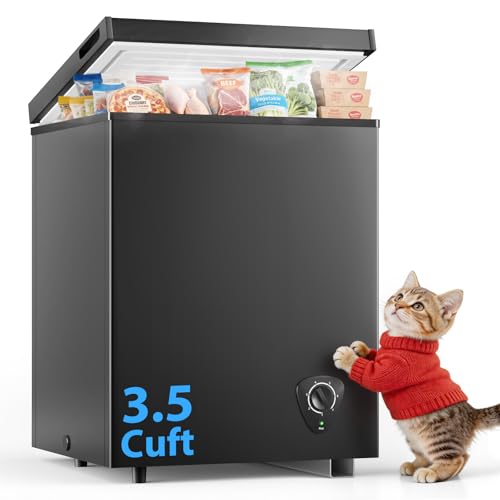
3.5 Cu.Ft Mini Deep Freezer
Strengths
- Built-in wheels
- Energy efficient
- Very quiet
Trade-offs
- No convertible mode
- No interior light
- Plastic construction
This model stands out by combining several top-tier traits: 3.5 cu.ft of space, ultra-quiet operation (under 40dB), and exceptional energy efficiency at just 0.37kWh per day. It also includes two wheels, a rare feature that makes repositioning much easier, especially once it’s full. The temp range is wide, reaching -11.4°F, so it handles deep freezing with confidence.
Compared to others in this list, it strikes the best overall balance. It doesn’t convert like the Midea or offer 5.0 cu.ft like the Frigidaire, but for most households, it delivers what matters most: reliable freezing, quiet running, energy savings, and mobility. Owners consistently rate it highly for ease of use and value.
Video review
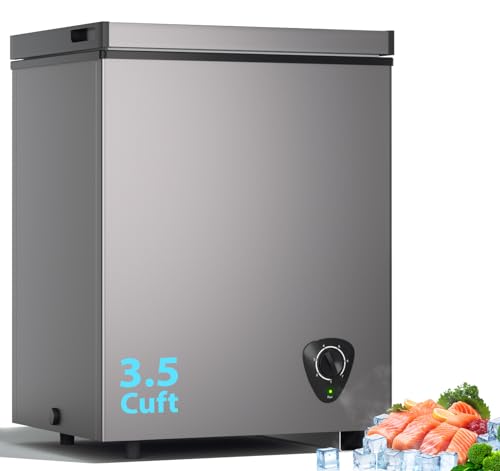
3.5 Cu.Ft Small Chest Freezer
Strengths
- Very energy efficient
- Low operating noise
- Affordable price
Trade-offs
- No mobility features
- Plastic interior
- No LED lighting
This 3.5 cu.ft model is one of the most affordable in the mid-size category, and surprisingly efficient. It uses only 0.37kWh per day, which beats even some smaller units. The temperature range dips to -11.4°F, making it capable of true deep freezing for long-term storage. Its compact dimensions fit easily in tight spots, yet it holds enough for a couple or small family’s rotating stock.
Owners praise how quiet it runs, below 40dB, and the removable basket helps keep things organized. It lacks wheels or a convertible mode, but for basic, energy-smart freezing, it delivers. Compared to the similarly sized Midea, it doesn’t offer fridge conversion, but it costs far less and uses less power.
Video review
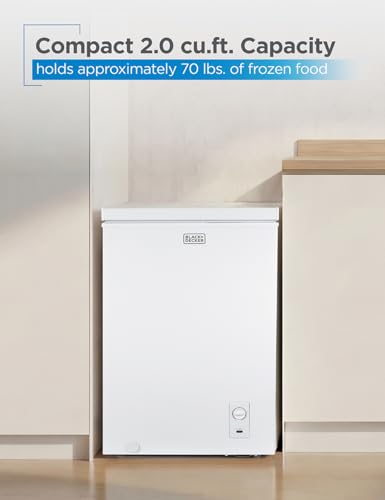
BLACK+DECKER 2.0 Cu.Ft Freezer

Strengths
- Compact and lightweight
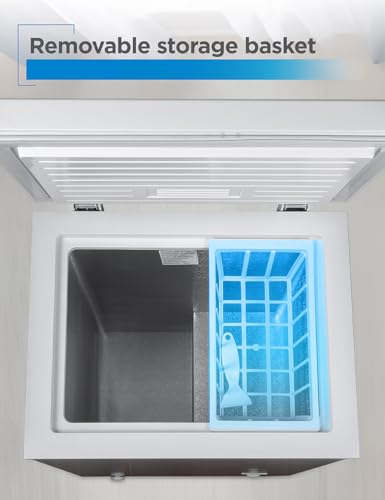
- Removable basket
- Simple mechanical control
Trade-offs
- Manual defrost required
- Louder than some rivals
- Limited capacity
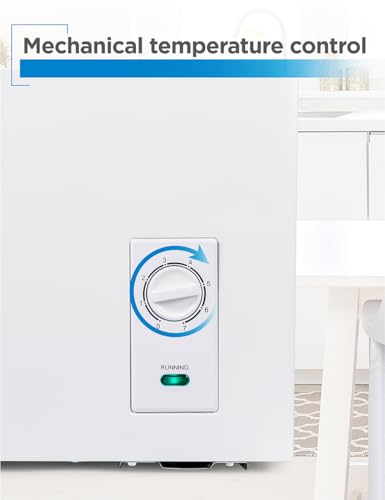
This BLACK+DECKER model is the definition of no-frills reliability. At 2.0 cu.ft, it’s small but holds up to 70 lbs of frozen goods, which is impressive for its footprint. The mechanical temperature dial is simple and effective, letting you adjust without opening the lid, a small touch I appreciate in everyday appliances. It’s clearly built for tight spaces where you just need dependable backup freezing.
Reviewers note it’s easy to defrost thanks to the accessible drain, though manual defrosting will be needed regularly if used heavily. Compared to pricier models, it lacks smart features or ultra-low noise ratings, but it does the core job well. For a dorm, tiny kitchen, or secondary freeze spot, it’s hard to beat the straightforward utility.
Product photos
Kismile 3.2 Cu.Ft Chest Freezer
Strengths
- Dual storage baskets
- Stable hinge door
- Good internal layout
Trade-offs
- Higher energy consumption
- Louder than average
- No mobility wheels
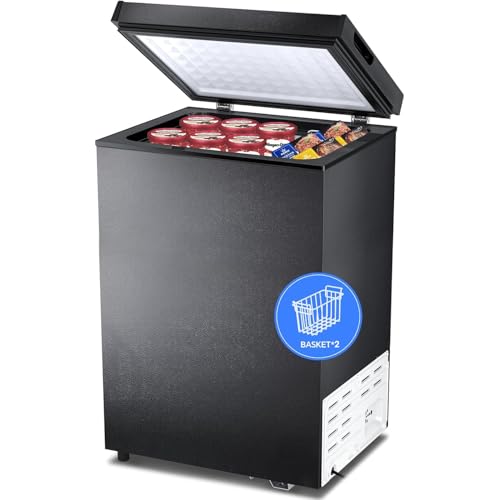
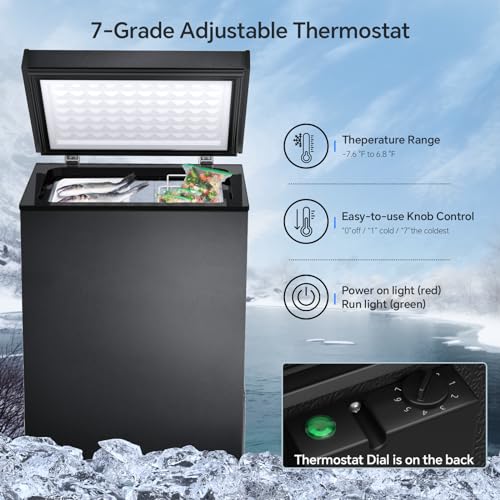
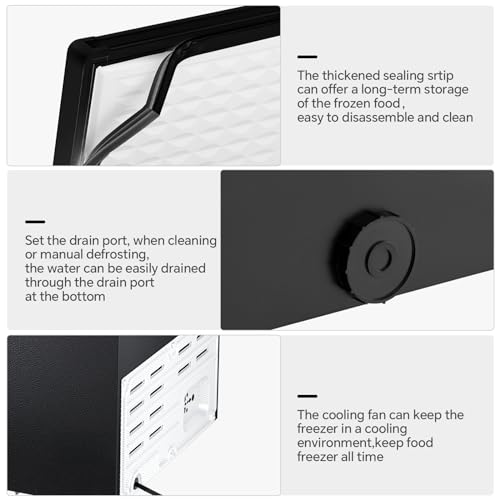
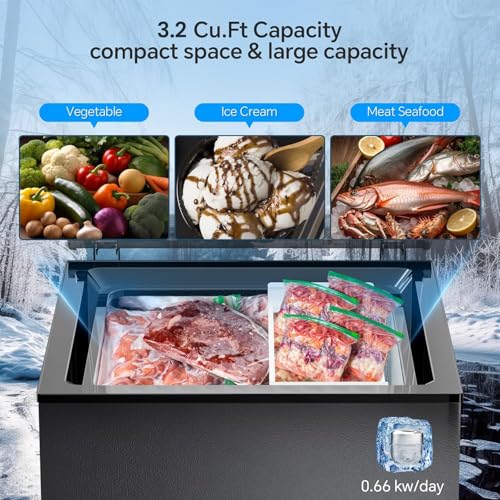
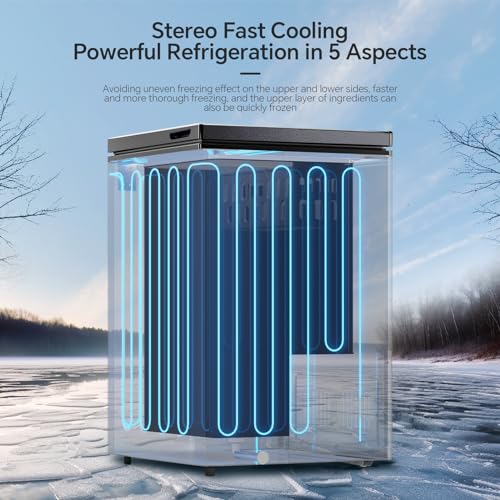
The Kismile 3.2 cu.ft freezer splits the difference in size and comes with two baskets, unusual at this level, which helps separate items like meat and veggies. The hinge-style door that stays open at 45–90° is genuinely useful, freeing up your hands when loading or unloading. Temperature control goes down to -7.6°F, solid for most household needs, though not the coldest available.
However, it uses more energy than rivals, 0.68kWh/day, making it less efficient despite a similar capacity. Some owners note the noise is noticeable in quiet rooms. Compared to the 3.5 cu.ft budget models, it’s pricier and thirstier on power, but the dual baskets and stable door add convenience worth considering.
Product photos
Midea 3.5 Cu.ft Convertible Freezer

Strengths
- Convertible design
- Garage ready
- LED interior light
Trade-offs
- Higher price point
- Slightly heavier build
- Less max capacity than larger models
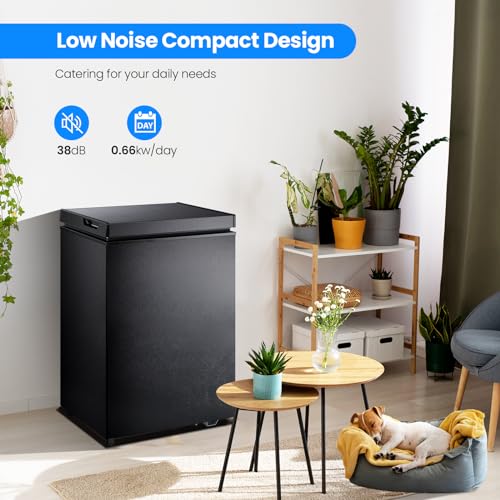
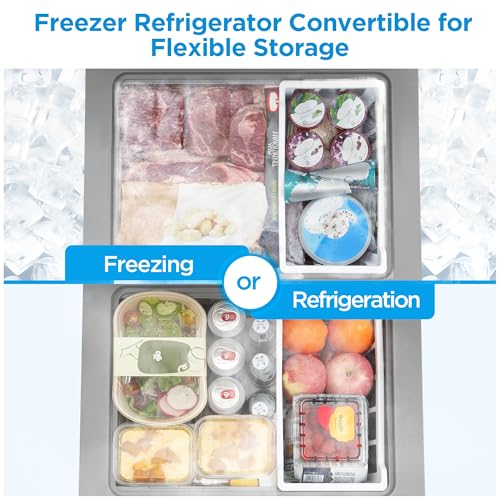
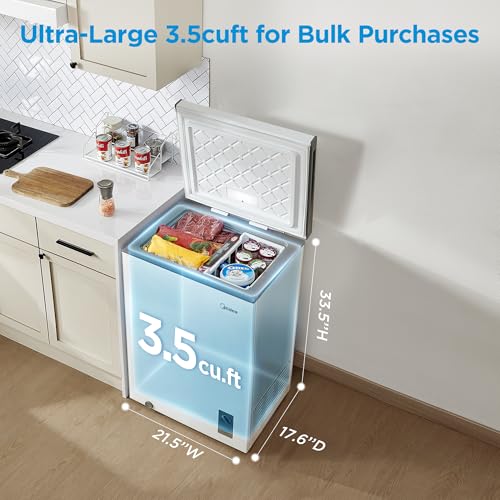
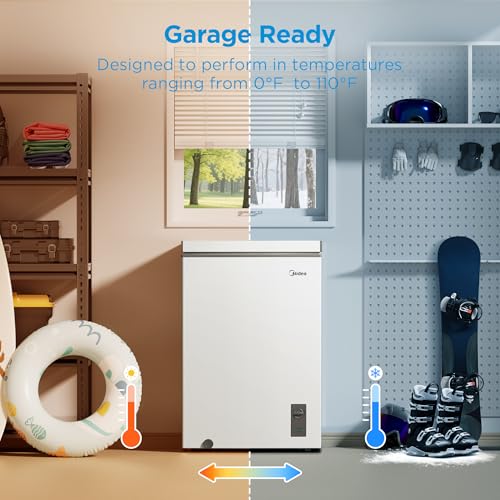
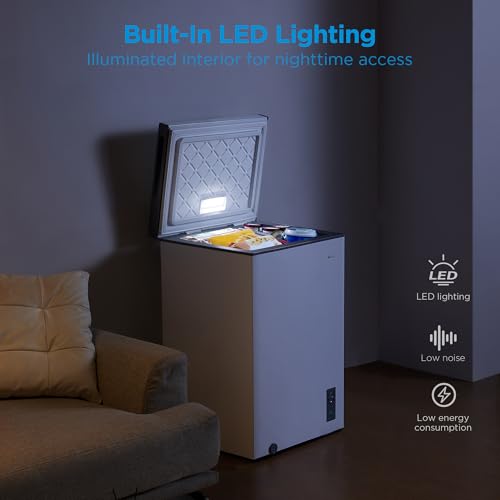
The Midea 3.5 cu.ft unit stands out for one big reason: it’s convertible. You can switch it from freezer to fridge mode depending on your current storage needs, which is rare in this size class. For someone managing seasonal food hauls or rotating bulk buys, that flexibility is a real advantage. It’s also garage-ready, tested to run in temps as low as 0°F, so it won’t struggle in unheated spaces.
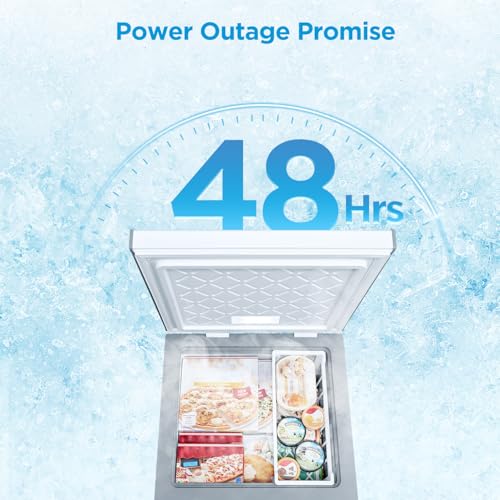
Owners consistently report the LED light and removable basket make organization easier, and the 48-hour power outage protection adds peace of mind during storms. While it doesn’t have the largest capacity here, the ability to adapt its function makes it ideal for dynamic households. Compared to basic freezers, this one offers smarter long-term utility.
Product photos
4.0 Cu.Ft Adjustable Deep Freezer
Strengths
- High capacity in small footprint
- Energy efficient
- Whisper quiet
Trade-offs
- No convertible mode
- Basic exterior finish
- No mobility aids
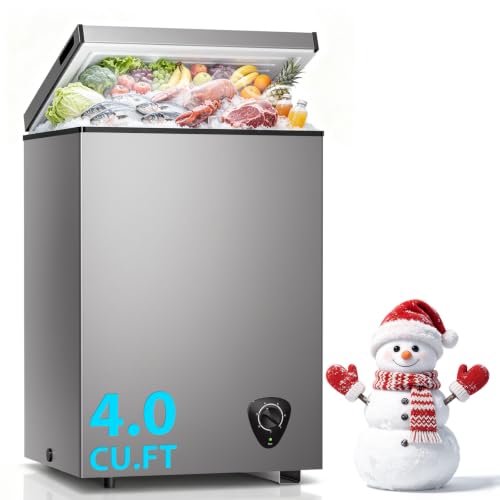
At 4.0 cu.ft, this freezer hits a sweet spot between size and efficiency. On paper, it offers more usable space than nearly every other model here except the Frigidaire, yet maintains a compact width. The adjustable thermostat covers a wide range, from -7.6°F to 21.2°F, making it adaptable for different climates or storage types. Owners highlight how easy it is to clean thanks to the bottom drain, and many mention the near-silent operation as a plus in shared living areas.
It’s also the most energy-efficient high-capacity option listed, using just 0.469kWh per day. Compared to the Midea, it lacks convertible cooling modes, but for pure freezing performance and value, it’s stronger. The lack of wheels might be a downside when full, but the trade-off is lower cost and solid build.
Product photos


EUHOMY 1.8 Cu.Ft Mini Freezer

Strengths
- Ultra compact footprint
- Low noise operation
- Precise temp control
Trade-offs
- Very limited capacity
- Only one small basket
- Not expandable
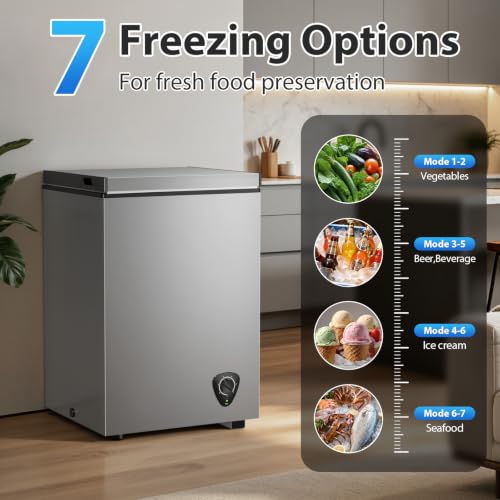
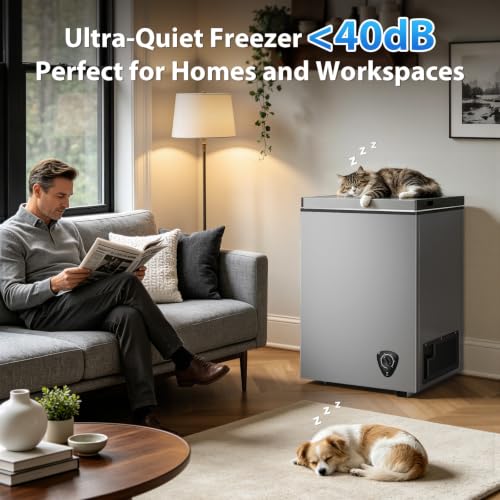
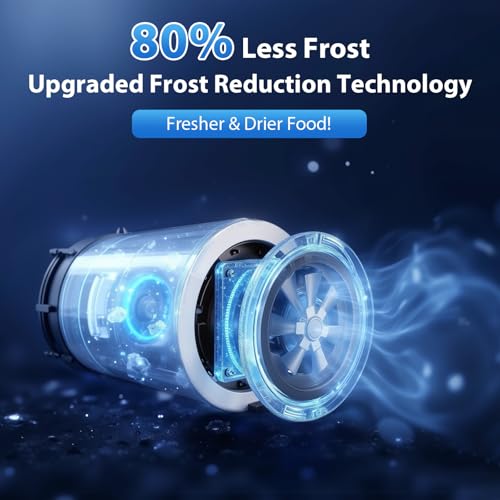
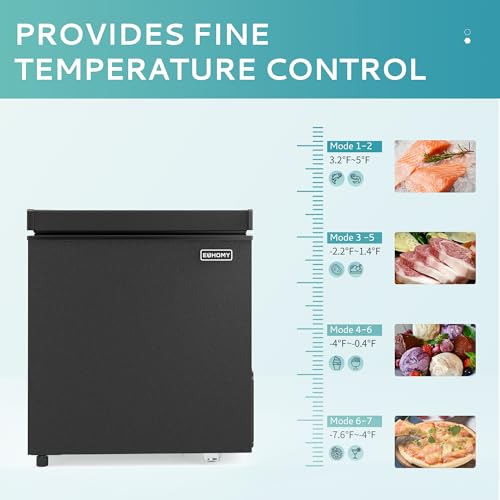
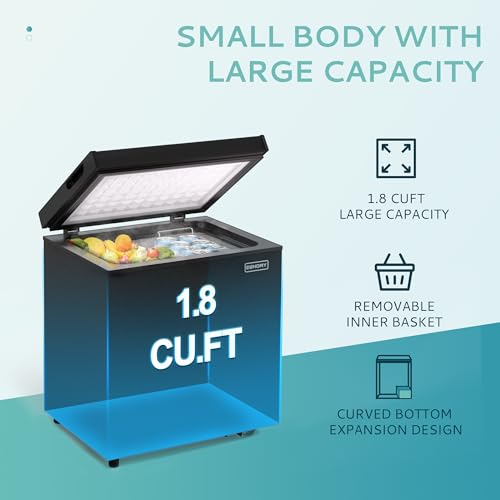
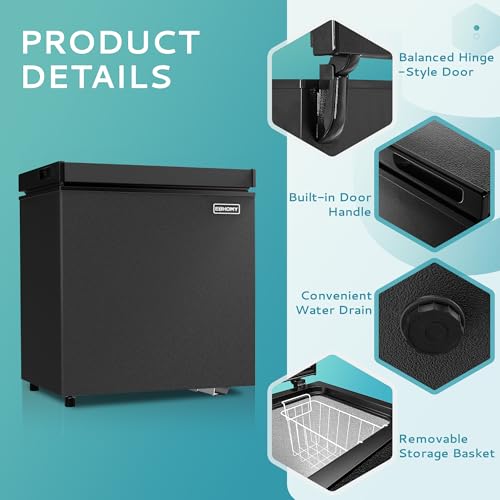
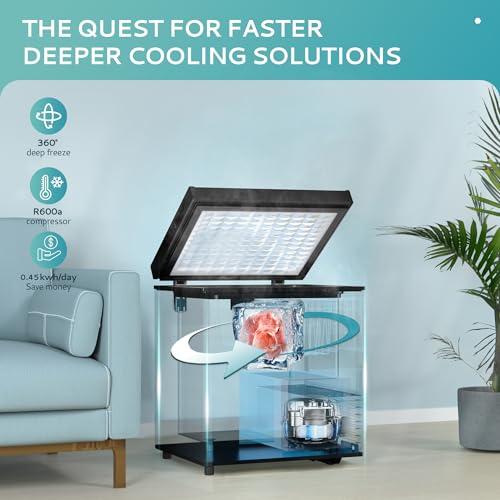
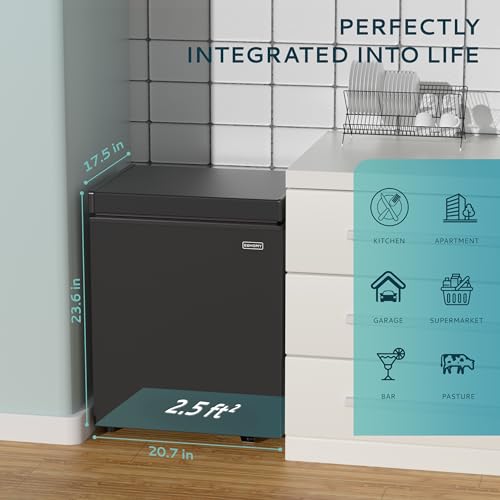
If space is extremely limited, the EUHOMY 1.8 cu.ft model earns attention. It fits into corners or under counters most freezers can’t, yet still manages to hold around 40 lbs of food. The 7-stage thermostat gives precise control down to -7.6°F, which is critical for safely storing raw meats or seafood long-term. Its daily energy draw is low, and owners confirm it runs quietly, under 38dB, so it won’t disrupt a bedroom or office.
The hover-open door is a thoughtful touch, staying propped at usable angles. But its size means you’ll sacrifice storage volume. When compared to 3.5+ cu.ft units, this one is less practical for meal preppers or families. Still, for a studio apartment or personal use, it delivers solid performance in a tiny shell.
Product photos
FRIGIDAIRE 5.0 Cu.Ft Garage Freezer

Strengths
- Largest capacity
- Durable aluminum liner
- Garage ready
Trade-offs
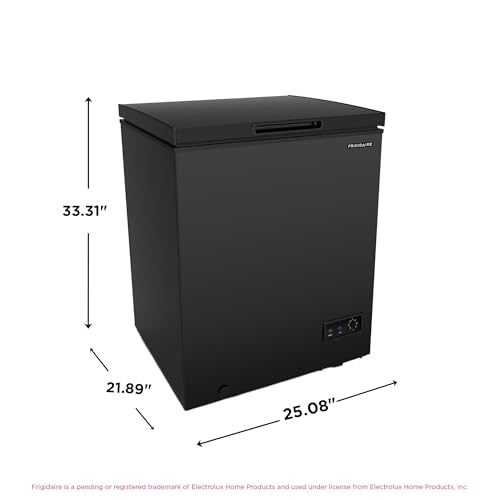
- Bulky for small rooms
- Higher energy use
- Pricier than alternatives
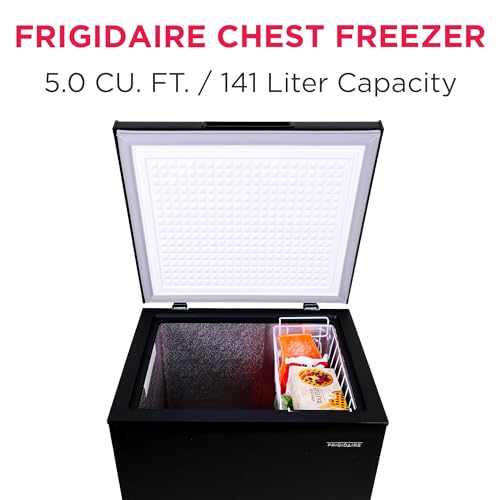
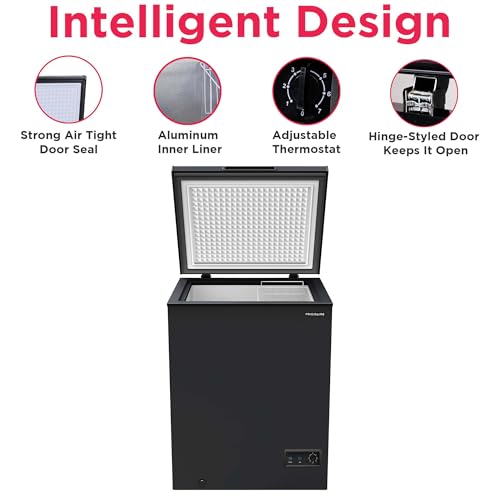
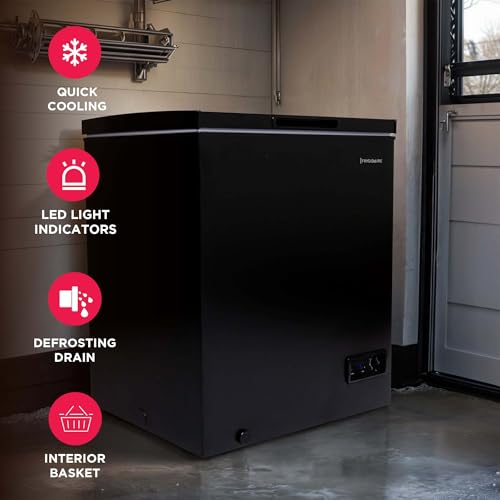
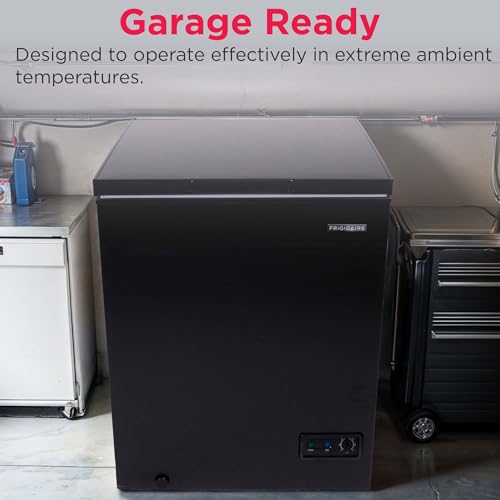
With 5.0 cu.ft of space, the Frigidaire is the largest in this group, and built like it. The aluminum interior liner stands out; it’s more durable than plastic and better at retaining cold, which matters in fluctuating environments like garages. It’s explicitly marketed as garage-ready, and owner feedback confirms it performs reliably even in colder unconditioned spaces. That makes it a top pick over cheaper models that may struggle with ambient extremes.
It has a standard 7-setting thermostat and includes a vinyl-coated basket that resists rust. While it’s not the quietest, it’s sturdily constructed and made for long-term use. Compared to budget 3.5 cu.ft units, it offers significantly more space and better materials. If you’re stocking up on bulk meat or prepping months ahead, this one pays off.
Product photos
How We Picked These small deep freezers
As someone who dedicates Food Keepy to helping people maximize food storage and minimize waste, I approached researching small deep freezers with a focus on practical usability and long-term value. Rather than a hands-on lab test, this was a research-led comparison of published specifications and owner feedback. I compared models across a range of retailers, weighing features against reported performance and reliability. Expert reviews from appliance-focused sites were also considered, but ultimately, owner experiences carried significant weight.
For small deep freezers, three factors stood out as most crucial: temperature control, energy efficiency, and usable capacity. Consistent, adjustable temperature is vital for preserving food quality, while a low energy consumption rating helps keep running costs down. Finally, the listed cubic footage doesn’t always translate to practical space – internal layout and basket inclusion heavily influence how much you can actually fit inside, which is key when considering small chest freezers.
Specifications reliably indicate dimensions, temperature ranges, and energy usage. However, owner reviews provided crucial insight into real-world noise levels, the effectiveness of temperature controls, and the durability of components. Reputation, based on consistent positive or negative feedback, heavily influenced my assessment. I also looked for features addressing common pain points, such as defrosting ease and the practicality of included baskets, often best understood through user experience reported in reviews and comparisons with other best small chest freezers. If you’re also looking for more options in general, our guide to best compact freezers can help you with buying advice for small freezers too.
How To Pick The Right small deep freezers
Finding the right deep freezer isn’t just about capacity; it’s about matching the appliance to your lifestyle and space. A well-chosen unit can significantly reduce food waste and provide convenient frozen storage.
A good deep freezer balances storage volume with energy efficiency, temperature consistency, and user-friendly features like adjustable thermostats and interior organization. Prioritize models designed for the intended environment (garage vs. interior) and consider defrosting methods for long-term maintenance. Look for units with good insulation to minimize energy consumption and maintain stable temperatures during power fluctuations.
Size and Capacity
The first thing to consider is how much frozen food you realistically need to store. Don’t fall into the trap of buying too large a unit if you’re only a single person or couple. A 2.0 to 3.5 cubic foot model might be sufficient, while a family actively freezing meals could benefit from 4.0 cubic feet or more. Remember to account for the physical dimensions too. Many small deep freezers are designed for tight spaces, but always measure your intended location before purchasing.
- A smaller 1.8 cu. ft. freezer is great for supplementing a standard refrigerator freezer, ideal for ice cream or frequently used frozen items.
- A 3.5 cu. ft. model strikes a balance, offering decent capacity without overwhelming a small apartment or garage.
- Larger 5.0 cu. ft. units are best for bulk buying, preserving garden harvests, or families who rely heavily on frozen meals – but they require significantly more floor space.
Temperature Control & Efficiency
Consistent temperature is critical for food safety and quality. Look for models with adjustable thermostats, offering at least seven settings. This allows you to tailor the temperature to the type of food you’re storing; for example, a slightly warmer setting for ice cream prevents it from becoming rock solid, while a colder setting is best for long-term meat storage. Energy efficiency is also a key consideration, especially if the unit will be running 24/7. Many modern models boast low energy consumption (under 0.5 kWh/day) and efficient compressors.
Don’t assume all “energy efficient” freezers are created equal. Check the EnergyGuide label for the estimated annual energy cost before making a decision.
Features and Usability
Beyond the basics, consider features that will make your life easier. Removable baskets are incredibly helpful for organizing smaller items and preventing them from getting lost at the bottom of the freezer. A top-opening door design is generally more energy-efficient than a side-opening one, as cold air doesn’t escape as easily when you access items. If you’re considering a garage freezer, specifically look for models advertised as “garage ready” – these are designed to withstand wider temperature fluctuations. If you’re looking for more information, checking out reviews for compact chest freezers can be a great place to start.
Small Deep Freezers Compared
Here’s a comparison of key specifications for the small deep freezers described.
| Product Title | Capacity (Cu. Ft) | Temperature Range (°F) | Power Consumption (kWh/24h) | Noise Level (dB) | Removable Basket | Convertible |
|---|---|---|---|---|---|---|
| 3.5 Cu.Ft Mini Deep Freezer | 3.5 | -11.4 to 10.2 | 0.37 | <40 | Yes | No |
| 3.5 Cu.Ft Small Chest Freezer | 3.5 | -11.4 to 10.2 | 0.37 | <40 | Yes | No |
| BLACK+DECKER 2.0 Cu.Ft Freezer | 2.0 | N/A | N/A | N/A | Yes | No |
| Kismile 3.2 Cu.Ft Chest Freezer | 3.2 | 6.8 to -7.6 | 0.68 | <40 | Yes | No |
| Midea 3.5 Cu.ft Convertible Freezer | 3.5 | 0 to 110 | N/A | N/A | Yes | Yes |
| 4.0 Cu.Ft Adjustable Deep Freezer | 4.0 | -7.6 to 21.2 | 0.469 | <40 | Yes | No |
| EUHOMY 1.8 Cu.Ft Mini Freezer | 1.8 | -7.6 to 10 | 0.45 | 38 | Yes | No |
| FRIGIDAIRE 5.0 Cu.Ft Garage Freezer | 5.0 | N/A | N/A | N/A | Yes | No |
Frequently Asked Questions
What temperature should I set my small deep freezer to?
The ideal temperature is 0°F (-18°C) for long-term storage of most foods. However, slightly warmer settings (around 5°F to 10°F) can prevent ice cream from becoming too hard, while still keeping it frozen.
Are small deep freezers energy efficient?
Many newer models are designed to be quite efficient, using less than 0.5 kWh per day. Look for Energy Star certified models and check the EnergyGuide label for estimated annual costs, as efficiency varies between units.
What’s the difference between a chest freezer and a small upright freezer?
Chest freezers generally maintain temperature better during power outages and are more energy efficient, but small upright freezers offer easier organization due to their shelves. Upright models also take up less floor space, which is helpful in tighter areas.
Can a small deep freezer be kept in an unheated garage?
Some are specifically designed for garage use and can operate in wider temperature ranges. Always check the product specifications to confirm it’s “garage ready” before placing it in an unheated space.
Where can I find more information on choosing between different types of freezers?
For a broader understanding of your options, our guide to best deep freezers covers both chest and upright freezers, and provides detailed [buying advice for deep freezers].
The Bottom Line
Choosing a small deep freezer often comes down to balancing upfront cost with long-term convenience. While several models offer adequate freezing power, the 3.5 Cu.Ft Mini Deep Freezer consistently stands out as the best overall choice, offering a good balance of capacity, efficiency, and positive owner feedback. It’s a solid performer that won’t break the bank, and it addresses the core needs of most households looking to expand their frozen storage.
For those on a tighter budget, the BLACK+DECKER 2.0 Cu.Ft Freezer is a compelling option. If versatility is a priority, and you appreciate the ability to switch between freezer and refrigerator settings, the Midea 3.5 Cu.ft Convertible Freezer is a smart pick. However, if you need serious capacity for bulk buying or preserving large harvests, the FRIGIDAIRE 5.0 Cu.Ft Garage Freezer is the way to go, though it does require more space.
Ultimately, the specifications on a freezer are less critical than consistent temperature control and a well-designed interior. Prioritize models with adjustable thermostats and removable baskets – these features will have a far greater impact on your day-to-day experience than a few extra cubic feet or a marginally lower energy consumption rating. Don’t forget to explore our guide to best small freezers for more options and advice.
