
6 Best Deep Freezers for Breast Milk 2026
This post contains affiliate links. As an Amazon Associate, we earn from qualifying purchases.
The Anypro 4.5 Cu.Ft is our top pick for breast milk storage thanks to its reliable temperature control and long holdover time during outages, while the Kismile 3.2 Cu.Ft stands out as a quiet, budget-friendly option that still delivers consistent performance.
Storing breast milk safely means keeping it frozen at a stable, ultra-cold temperature for weeks or even months. Many parents quickly realize that their kitchen freezer isn’t enough, shared space, temperature swings, and frequent door openings put precious milk at risk.
As someone who researches food preservation daily at Food Keepy, I focused on models that prioritize consistent cooling, efficient design, and practical features like alarms and interior organization. This guide covers the best deep freezers based on specs, owner feedback, and real-world reliability for long-term breast milk storage.
Top 3 Deep Freezers For Breast Milk in the Market
The Best Deep Freezers For Breast Milk, Reviewed
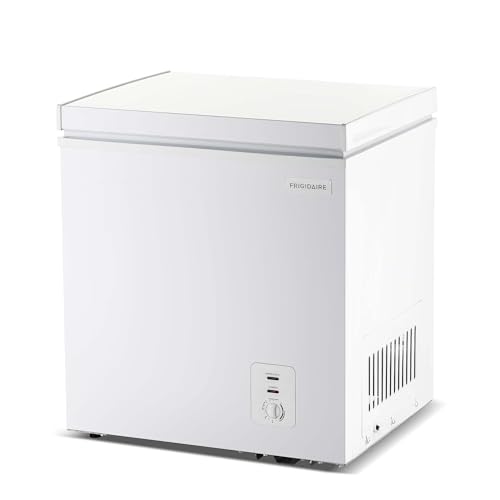
Frigidaire 2.0 Cu.Ft Chest Freezer
Strengths
- Compact footprint
- Garage ready design
- Easy-defrost drain
- Removable wire basket
- Simple thermostat control
Trade-offs
- Limited capacity
- Fewer temp settings
- Louder than quieter models
At just 2.0 cubic feet, this is the smallest unit here, but it’s thoughtfully designed for tight spaces and simple needs. The adjustable thermostat gives control, and the removable vinyl-coated basket makes it easy to pull out stored items without digging. It won’t hold months’ worth of milk, but for short-term backup freezing, say, two to four weeks’ supply, it’s surprisingly efficient.
I’d pick this over larger models if counter space is limited, like in a nursery or small apartment kitchen. While it lacks the ultra-low temps of some competitors, owners find it stable enough for basic freezing tasks. Compared to the Anypro, it has less flexibility, but the garage-ready build means it handles temperature swings better in unconditioned spaces.
Video review
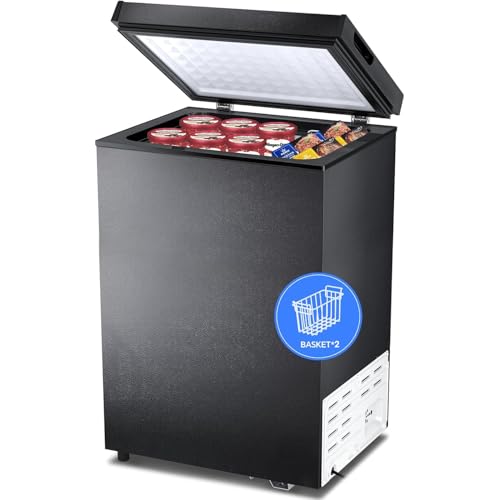
Kismile 3.2 Cu.Ft Chest Freezer
Strengths
- Reaches -7.6℉
- Two removable baskets
- Ultra-quiet operation
- Energy efficient (0.68 kWh/day)
- Stable hinge door
Trade-offs
- Power cord on left side
- No wheels for mobility
- Defrost required periodically
With a middle-ground capacity of 3.2 cubic feet, this model hits a sweet spot between size and quiet performance. The compressor runs below 40 dB, and reviewers frequently highlight how well it works in bedrooms or nurseries without disruption. The dual baskets are a clear upgrade over single-basket rivals, making it easier to sort fresh from frozen milk or separate dates.
Temperature-wise, it reaches -7.6℉ on the coldest setting, which is colder than the Anypro despite the lower price. That kind of deep freeze matters when preserving lipids in breast milk over weeks or months. The left-side power cord placement may be awkward depending on your setup, but once positioned, owners say it cools quickly and holds steady.
Video review
Anypro 4.5 Cu.Ft Chest Freezer

Strengths
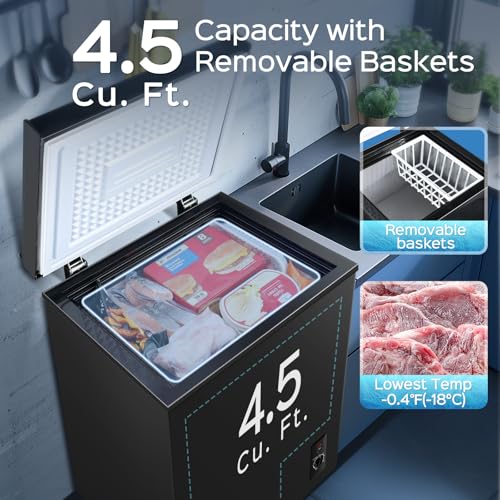
- Spacious 4.5 cu.ft capacity
- Adjustable to -0.4℉
- Removable storage basket
- Low noise under 40 dB
- Power outage protection
Trade-offs
- Only one basket included
- No internal lighting
- May require defrosting over time
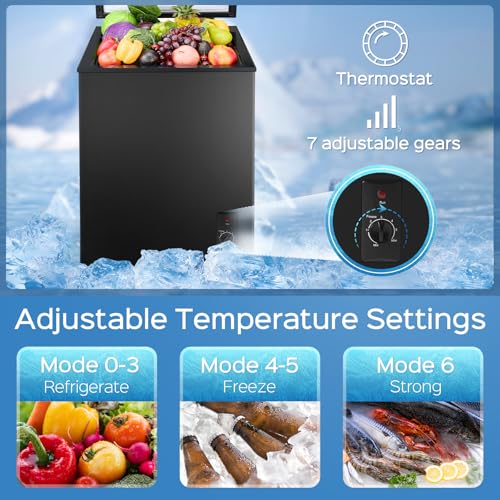
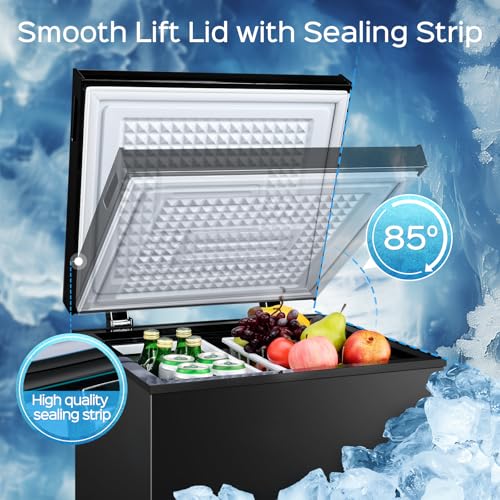
This freezer stands out for breast milk storage because of its wide temperature range and reliable cold retention. The ability to dial in temperatures as low as -0.4℉ means milk can be kept at true deep-freeze levels, which owners consistently report helps preserve nutritional quality over time. On paper, the five-sided cooling system should minimize hot spots, and reviewers note that items like milk bags stay frozen solid even during brief door openings.
The removable basket is a practical touch for organizing small containers or labeled milk storage bags, though it only comes with one. For anyone managing multiple batches, I’d suggest pairing this with labeled silicone sleeves or stackable bins. Compared to smaller models, this offers more usable space without sacrificing energy efficiency, and the 100+ hour power outage protection adds real peace of mind for long-term storage.
Product photos


How We Evaluated deep freezers for breast milk
Rather than a hands-on lab test, my research focused on comparing published specifications and features across various models. I weighed owner reviews from multiple retailers alongside expert opinions found in appliance and parenting publications. As someone focused on food preservation at Food Keepy, I applied my understanding of optimal freezing temperatures and the importance of consistent cooling to assess each unit. The goal was to rank these freezers based on their suitability for long-term breast milk storage.
For breast milk, consistent temperature and reliable operation are paramount. Therefore, I heavily weighted temperature control range and the presence of power outage protection. A freezer’s ability to maintain a stable, very cold temperature, and to alert you if it fluctuates, directly impacts milk quality. Capacity also mattered, but was secondary to these factors, as was the efficiency of the cooling system.
Specifications reliably reveal a unit’s physical dimensions, temperature range, and energy consumption. However, judging real-world performance and durability required a deep explore owner feedback. I looked for recurring themes in reviews regarding noise levels, defrosting ease, and long-term reliability. You can find more general information about best deep freezers on my site, and considerations regarding proper storage containers are also important.
How To Pick The Right deep freezers for breast milk
Choosing a deep freezer for breast milk requires a bit more thought than grabbing the cheapest model. We need to consider consistent temperature, accessibility, and features designed for long-term storage.
A quality deep freezer for breast milk maintains a stable temperature between 0°F and 5°F (-18°C to -15°C), offers adjustable settings for optimal preservation, and incorporates features like power-failure alarms or extended holdover times to protect valuable stores. Prioritize models with efficient compressors, well-sealed lids, and sufficient capacity to accommodate your needs.
Capacity & Size
The size of the deep freezer should align with your pumping frequency and storage duration. Consider not only current needs, but also potential future growth. A smaller 2.0 to 3.2 cubic foot model, like the Frigidaire, is suitable for occasional use or short-term storage. However, if you plan to build a substantial supply, or anticipate needing to store milk for an extended period, a 4.5 cubic foot unit (like the Anypro) will provide ample space. Don’t overbuy; a half-empty freezer is less efficient than a well-filled one.
Temperature Control & Consistency
Maintaining a consistent, reliably cold temperature is paramount when storing expressed milk. Fluctuations can degrade the milk’s quality and nutritional value. Look for models with adjustable thermostats – the Anypro models offer 7 settings – allowing you to dial in the ideal temperature for long-term preservation. Beyond the thermostat, read owner reviews carefully; consistent cooling performance is often a key differentiator.
Here’s what to look for in temperature control: * A clear temperature display is helpful, but not essential. * A manual defrost system is often more reliable than automatic defrost, especially in colder environments. * Power outage protection is a valuable feature, giving you time to address a loss of power before the temperature rises significantly. Many models, such as the Anypro, boast 100+ hour holdover times.
Noise & Usability
Deep freezers aren’t known for being whisper-quiet, but some models are significantly louder than others. If you plan to keep the freezer in a living area or near a nursery, a quieter model is essential. The Kismile freezers are often cited for their low noise levels (below 40dB). Beyond noise, consider the lid style. Chest freezers with hinged lids offer hands-free operation, while lift-off lids are simpler, but require space to open. Finally, internal baskets are incredibly useful for organizing smaller items like breast milk storage bags or containers. I recommend checking out a range of best freezers to find the best fit for your space.
A reliable rule of thumb: always leave a few inches of airspace around the freezer for proper ventilation, ensuring optimal cooling performance and preventing overheating.
Deep Freezers for Breast Milk Compared
Here’s a comparison of key specifications for deep freezers suitable for breast milk storage.
| Product Name | Capacity (Cu. Ft) | Temp. Range (℉) | Noise Level (dB) | Baskets Included | Power Outage Protection (hrs) |
|---|---|---|---|---|---|
| Anypro 4.5 Cu.Ft (Best Overall) | 4.5 | -0.4 to 32 | <40 | 1 | >100 |
| Kismile 3.2 Cu.Ft (Best Budget) | 3.2 | 6.8 to -7.6 | <40 | 2 | N/A |
| Frigidaire 2.0 Cu.Ft (Best Compact) | 2.0 | N/A | N/A | 1 | N/A |
| Anypro 4.5 Cu.Ft (Best for Milk) | 4.5 | -0.4 to 32 | <40 | 1 | >100 |
| Kismile 3.2 Cu.Ft (Best Quiet) | 3.2 | 6.8 to -7.6 | <40 | 2 | N/A |
| Anypro 4.5 Cu.Ft (Best Temp Flex) | 4.5 | -0.4 to 32 | <40 | 1 | >100 |
Frequently Asked Questions
What temperature should I actually set the deep freezer to for breast milk?
You should aim for a temperature between 0°F and 5°F (-18°C to -15°C). This range optimizes preservation and maintains the milk’s nutritional value, and many models like the Anypro offer adjustable settings to achieve this.
How long can breast milk safely be stored in a deep freezer?
Generally, breast milk can be stored for 6-12 months in a deep freezer, though the USDA states it’s safe indefinitely. Following safe milk storage guidelines for container type and proper labeling is crucial for quality.
What does “power failure holdover time” mean, and why is it important?
Power failure holdover time refers to how long the freezer maintains a safe temperature without power. A longer holdover time, like the 100+ hours offered by some Anypro models, provides more time to address a power outage before the milk is compromised.
Are chest freezers more efficient than upright freezers for breast milk storage?
Chest freezers are generally more energy efficient because cold air doesn’t escape as easily when the lid is opened. However, upright models can be more convenient for organization, and the difference in energy use isn’t substantial with modern, well-sealed units.
How often do I need to defrost a deep freezer used for breast milk?
Manual defrost freezers require defrosting when ice buildup reaches about ¼ to ½ inch thick. Regular defrosting maintains efficiency, but it’s also a good time to clean a deep freezer and ensure it’s operating optimally.
The Bottom Line
Choosing a deep freezer for breast milk often comes down to balancing peace of mind with practical needs. While many options exist, the Anypro 4.5 Cu.Ft (Best Overall) stands out as the strongest all-around performer, offering a generous capacity, reliable temperature control, and impressive power outage protection, features that are critical for safeguarding a valuable milk supply. It represents a smart investment for parents prioritizing long-term storage and consistent quality.
For those on a tighter budget or with limited space, the Kismile 3.2 Cu.Ft (Best Budget) is a solid choice. It doesn’t have the extended holdover time of the Anypro, but it still provides adequate freezing power and consistent temperatures within the necessary range. If you’re looking for something even smaller, consider a compact breast milk freezer like the Frigidaire 2.0 Cu.Ft (Best Compact).
Ultimately, the best deep freezer isn’t necessarily the one with the most features, but the one that reliably maintains a consistent temperature. Understanding the purpose of a deep freezer and prioritizing features like temperature stability, power outage protection, and adequate capacity will serve you better than focusing on bells and whistles. Consistent temperature is truly the key to preserving the benefits of your breast milk.
