
8 Best Bottom Freezer Refrigerators of 2026
This post contains affiliate links. As an Amazon Associate, we earn from qualifying purchases.
The Kenmore 22.3 cu.ft Bottom Freezer is our top pick for overall performance and capacity, with the Kenmore 17.8 cu.ft Counter Depth Fridge as the best choice for smaller, streamlined kitchens, and the Hamilton Beach 17.7 cu ft offering solid value for budget-focused buyers.
Most people don’t realize how much a refrigerator’s layout affects daily habits, especially when it comes to reaching for frozen items or keeping fresh food from spoiling too soon. Poor temperature control, cramped storage, and awkward organization can turn a new appliance into a frustration.
In this guide, I’m sharing which bottom-freezer refrigerators stand out based on specs, owner feedback, and real-world usability. We evaluated cooling performance, build quality, and smart design choices that help reduce waste and keep groceries accessible.
Top 6 Refrigerators With Freezer On Bottom in the Market
The Best Refrigerators With Freezer On Bottom, Reviewed
Kenmore 17.8 cu.ft Counter Depth Fridge

Strengths
- True counter-depth design
- Inverter compressor
- Quiet operation
- Eco Mode
- Full-width glass shelves
Trade-offs
- Smaller freezer capacity
- No digital display
- Less brand serviceability in rural areas
If you’re chasing a clean, integrated kitchen look without sacrificing bottom-freezer practicality, this Kenmore is one of the few that delivers. At 31 inches deep, it’s genuinely counter-depth, so it won’t jut out awkwardly from your cabinetry, ideal for open-plan spaces or smaller kitchens where every inch counts. The inverter compressor is a standout: reviewers note how quiet it runs and how consistently it maintains temps, which is crucial for long-term food freshness.
The five clear bins and gallon crisper make organizing produce and dairy easy, and the ice maker is a solid perk at this size. It doesn’t have Whirlpool’s ethylene-absorbing tech, but the Eco Mode and LED lighting help keep energy use low. Compared to the Hamilton Beach French door model, it’s less flashy but more refined in build and cooling performance. It’s the kind of fridge that disappears into your kitchen, until you open it and realize how well it works.
Video review
Hamilton Beach 17.7 cu ft French Door

Strengths
- French door design
- Digital display
- Pull-out freezer drawers
- Counter-depth profile
- Gallon door bins
Trade-offs
- No inverter compressor
- Plastic drawer glides
- Lower build premium
This Hamilton Beach is a rare find: a French door fridge with a bottom freezer drawer at a price that doesn’t break the bank. The three-door layout splits the fridge into two sides, making it easier to organize by category, dairy on one side, drinks on the other, for example. The digital display inside the door is convenient for quick temp tweaks without opening it, and the pull-out freezer drawers offer better visibility than a single deep bin.
Owners appreciate the gallon-size door bins and slide-out shelves, though some note the plastic drawer rails don’t feel as durable as pricier brands. It’s slightly shallower than standard fridges, so it fits better in tighter spaces. Against the Kenmore, it offers more modern convenience but less cooling refinement, the compressor isn’t inverter-driven, so it can be a bit noisier during cycles. Still, for the value, it’s hard to beat if you want French door style without the luxury price.
Video review
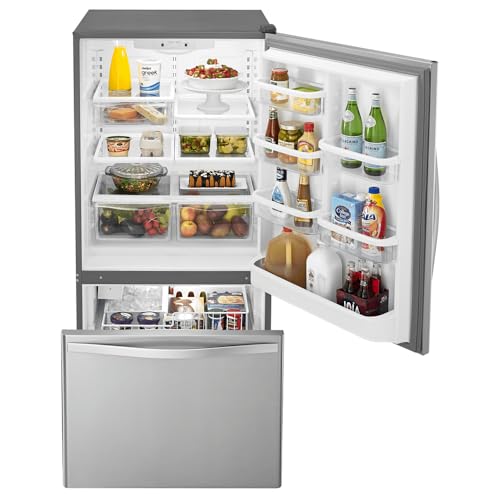
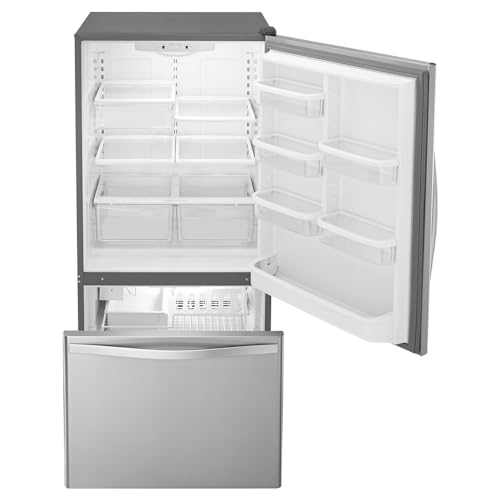
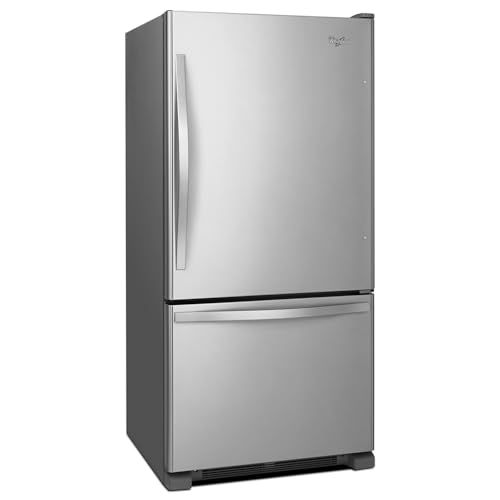
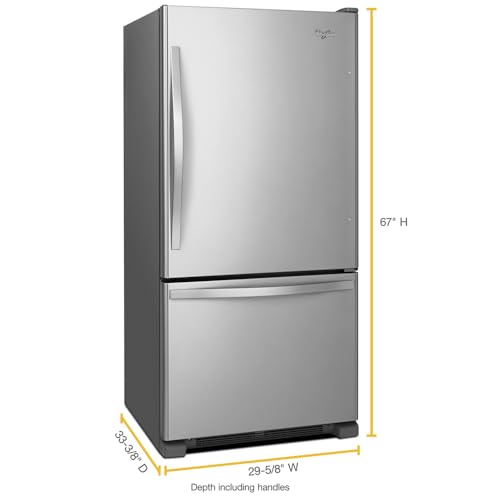
Whirlpool 18.5 Cu.Ft Stainless Steel

Strengths
- SpillGuard shelves
- FreshFlow produce preserver
- ENERGY STAR certified
- Accu-Chill temperature control
- Factory ice maker
Trade-offs
- No counter-depth option
- Basic freezer organization
- Limited shelving adjustability
This Whirlpool hits the sweet spot for buyers who want a full-size bottom-freezer fridge with strong freshness tech and energy efficiency. The FreshFlow produce preserver stands out, it’s not just marketing fluff. Owners consistently report noticeably longer-lasting greens and berries, which aligns with what we know about ethylene absorption. That, combined with the Accu-Chill temperature management, means fewer temperature swings and better overall food preservation.
The SpillGuard shelves are a small but meaningful win for real kitchen life. They actually work as intended, containing drips from jars or containers, and the glass surface wipes clean fast. While it lacks some of the premium storage flexibility of French door models, it’s a no-nonsense, well-built fridge that prioritizes function over flash. Compared to the Kenmore counter-depth option, it’s deeper and less built-in looking, but offers more usable fridge space and a more proven track record.
Product photos
Upstreman 7.1 Cu.Ft Apartment Fridge
Strengths
- Eye-level fridge access
- 5 temp settings
- Quiet operation
- Reversible door
- Energy efficient
Trade-offs
- Plastic interior trim
- Basic crisper performance
- No ice maker
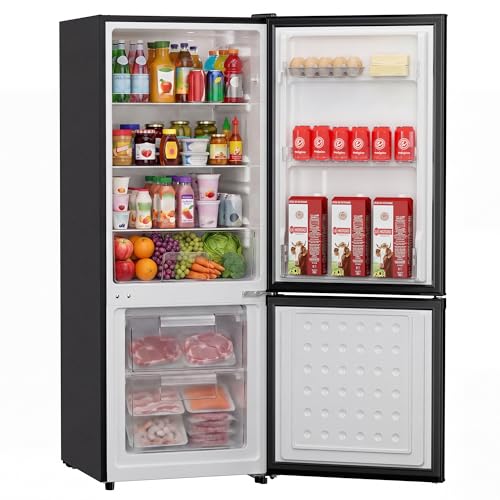
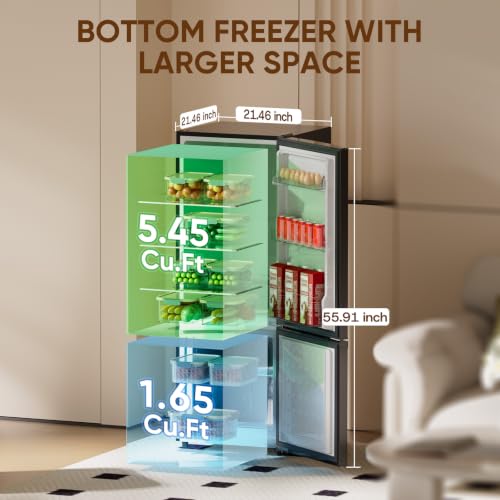
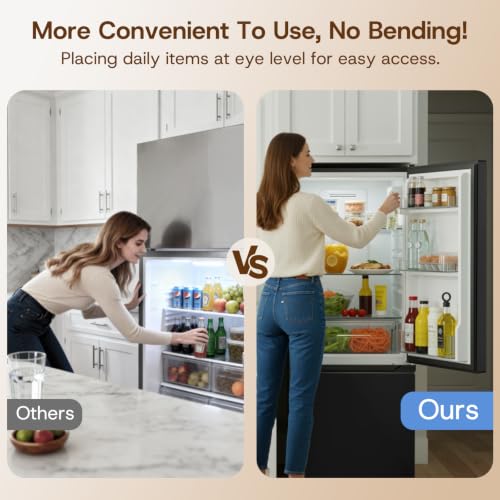
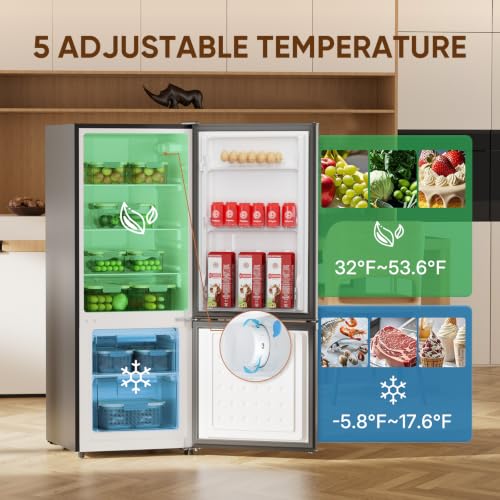
At just over $390, the Upstreman packs a surprising amount of smart design into a mid-size footprint. The 7.1 cu. ft. layout puts fresh food at eye level and the freezer at waist height, which is a real back-saver when lifting heavy frozen items. The five temperature settings let you fine-tune cooling for different needs, say, colder drinks in summer or energy-saving mode when you’re away.
It’s not built like a full-size fridge, but for an apartment, dorm, or secondary kitchen, it’s more than capable. The 39dB noise level means it won’t disrupt sleep, and the reversible door adds flexibility in tight spaces. Compared to the Anypro compact model, it offers nearly double the capacity and a more practical shelf layout. While it lacks advanced freshness features, it’s a no-frills workhorse that does the basics well. I’d recommend it over smaller models for anyone needing real fridge utility without a full footprint.
Product photos

Anypro 4.0 Cu.Ft Dorm Fridge

Strengths
- 7 temp settings
- Quiet operation
- Dual freezer drawers
- LED lighting
- Reversible door
Trade-offs
- Very limited capacity
- Shallow shelves
- No crisper humidity control
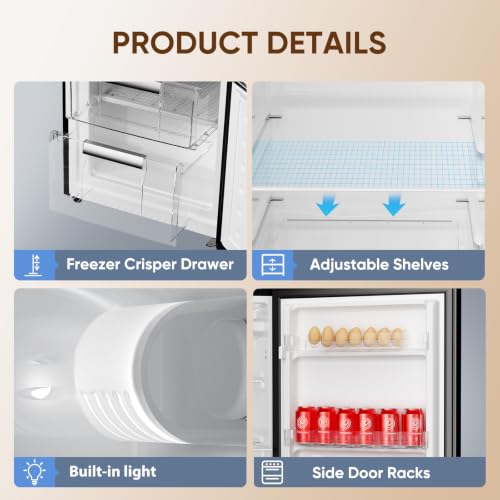
The Anypro is about as compact as a fridge gets while still offering a usable freezer. At 4.0 cu. ft., it’s best for single occupants, students, or office break rooms where space is tight. The 7 temperature settings are a standout for a fridge this small, letting you dial in the exact chill you want, useful if you’re storing meds or sensitive ingredients. The dual drawers in the freezer help keep frozen items separated, reducing odor transfer.
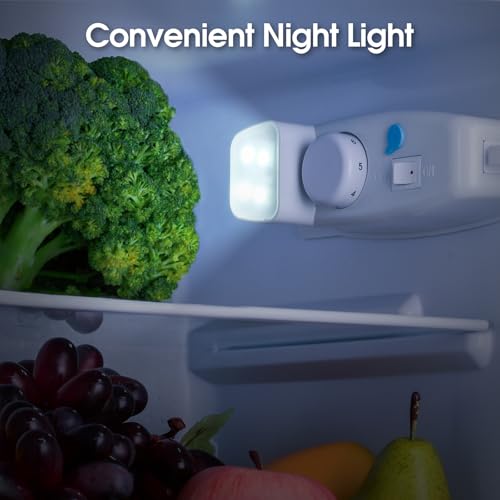
It’s impressively quiet, under 40 dB, and the LED light and leveling feet add a touch of thoughtfulness. But don’t expect miracles: the fridge compartment is narrow, and the shelves aren’t adjustable beyond two positions. Compared to the Hamilton Beach 9.2 cu. ft. model, it’s half the size and far less practical for actual cooking. But for a bedroom or tiny apartment where you just need milk, snacks, and a few frozen meals, it’s a solid, affordable plug-and-play option.
Product photos


Hamilton Beach 9.2 cu ft Fridge

Strengths
- 9.2 cu. ft. capacity
- Removable glass shelves
- Bottom freezer access
- Crisper drawer
- Sleek stainless finish
Trade-offs
- No temperature display
- Noisy on startup
- Limited freezer space
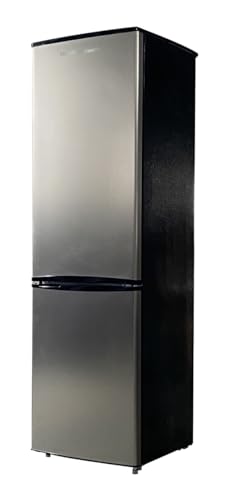
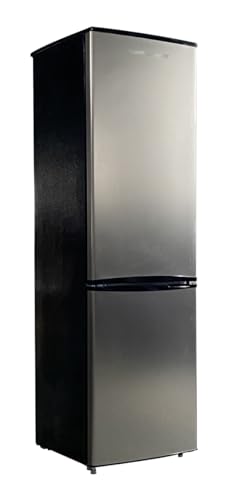
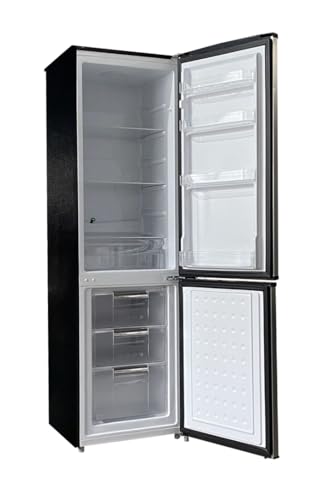
This 9.2 cu. ft. Hamilton Beach is a smart pick for tight spaces where every inch matters. The bottom freezer placement makes fresh food easy to reach, which is a big win in dorms or galley kitchens. It’s deeper than the Upstreman and Anypro models, giving it more usable shelf space without bloating the footprint. The removable glass shelves are easy to wipe down, and the crystal crisper does a decent job keeping produce crisp for a few extra days.
It doesn’t have digital controls or fancy cooling tech, but it’s reliable for basic storage. The door rack fits standard cans, and the three-section freezer helps with organization. Compared to the Anypro, it’s larger and better suited for actual cooking, not just snacks and drinks. While it won’t replace a full kitchen fridge, it’s one of the few compact models that feels like a real appliance, not a mini-fridge compromise.
Product photos

How We Chose These refrigerators with freezer on bottom
Rather than a hands-on lab test, our assessment of refrigerators with freezer on bottom is a research-led comparison of published specifications, owner reviews, and expert opinions. I focused on models across a range of sizes and price points, carefully weighing features and reported reliability. We looked at data from major appliance retailers, manufacturer websites, and publications like Consumer Reports and Good Housekeeping, paying close attention to frequently mentioned pros and cons in owner feedback.
For this category, storage capacity and temperature consistency were the most heavily weighted factors. A refrigerator’s ability to maintain stable temperatures directly impacts food preservation, and that’s paramount. Equally important is how well the refrigerator fits into modern kitchens – many consumers prioritize features like counter-depth designs, and easy-to-organize layouts. Understanding these priorities shaped our recommendations.
Specifications reliably indicate storage volume, energy efficiency, and basic features like ice maker capacity. However, owner feedback proved crucial for assessing real-world performance – particularly regarding noise levels, long-term durability, and the effectiveness of features like produce preservation systems. We also considered reputation; brands consistently praised for reliability were given greater consideration, and you can learn more about the basics of a freezer on my site. For those seeking a flush fit, we also referenced our guide to counter-depth bottom freezers.
What To Look For In refrigerators with freezer on bottom
Finding the right refrigerator with a bottom freezer requires more thought than just picking a finish. We need to consider how you actually use a fridge, and what features will genuinely improve your kitchen life.
A quality bottom-freezer refrigerator balances consistent temperature control with flexible storage options. Look for models with inverter compressors for energy efficiency and quieter operation. Prioritize adjustable shelving and well-designed crisper drawers to maximize usable space and minimize food waste. Consider the long-term cost of ownership, including energy consumption and potential repair needs.
Capacity & Dimensions
Don’t just look at the total cubic footage. Think about how you shop and what you typically store. A family that buys mostly fresh produce will benefit from a larger refrigerator section with ample crisper drawers, while someone who stocks up on frozen foods will need a more substantial freezer. Measure your space carefully, paying attention not only to width and depth, but also to door swing. Counter-depth models, like the Kenmore 17.8 cu.ft Counter Depth Fridge, can create a sleek, built-in look, but they sacrifice some interior space. If you’re tight on space, exploring small refrigerators with freezer might be a better fit.
Cooling Technology & Efficiency
Inverter compressors are a significant upgrade over traditional compressors. They adjust cooling output based on need, resulting in more consistent temperatures (which keeps food fresher longer) and reduced energy consumption. Look for ENERGY STAR certification; these models meet strict efficiency guidelines. Beyond the compressor, consider features like spill-proof shelves (found in the Whirlpool 18.5 Cu.Ft Stainless Steel) and produce preservation systems like FreshFlow, which can help minimize waste.
- Temperature Consistency: A consistent temperature prevents freezer burn and keeps produce from spoiling prematurely. Inverter compressors excel here.
- Energy Savings: ENERGY STAR models can save hundreds of dollars over the appliance’s lifespan. It’s a long-term investment.
- Humidity Control: Dedicated crisper drawers with humidity control are essential for extending the life of fruits and vegetables. This is more useful than simply having a large crisper drawer.
Don’t underestimate the value of a consistent temperature. A fridge that fluctuates wildly will lead to food spoilage and wasted money.
Features & Usability
Beyond the basics, consider features that will genuinely simplify your life. Built-in ice makers are convenient, but they can also reduce usable freezer space. Digital temperature controls offer precise adjustments, but are they necessary for your lifestyle? If you’re looking for a model with an ice maker, researching refrigerators with ice makers can help you narrow down your choices. Don’t pay for features you won’t use. For those looking for excellent value, it’s worth considering models like the Hamilton Beach 17.7 cu ft French Door, which offers good features at a competitive price. If you’re on a budget, you might even find a suitable option among compact refrigerators.
Refrigerators with Freezer on Bottom Compared
Here’s a comparison of key specifications for bottom-freezer refrigerators to help you choose the right model.
| Product Title | Capacity (cu. ft) | Depth (in) | Ice Maker | Energy Star | Freezer Type |
|---|---|---|---|---|---|
| Kenmore 22.3 cu.ft Bottom Freezer | 22.3 | N/A | Yes | Yes | Three-Tier |
| Commercial Cool 18.9 Cu.Ft | 18.9 | N/A | N/A | N/A | Two Drawers |
| Kenmore 17.8 cu.ft Counter Depth | 17.8 | N/A | Yes | Yes | Three-Tier |
| Hamilton Beach 17.7 cu ft | 17.7 | <30 | N/A | N/A | Two Drawers |
| Whirlpool 18.5 Cu.Ft | 18.5 | N/A | Yes | Yes | Bottom Drawer |
| Upstreman 7.1 Cu.Ft | 7.1 | 21.46 | N/A | N/A | Bottom Freezer |
| Anypro 4.0 Cu.Ft | 4.0 | 16.7 | N/A | N/A | Two Drawers |
| Hamilton Beach 9.2 cu ft | 9.2 | N/A | N/A | N/A | Bottom Compartment |
Frequently Asked Questions
What’s the typical lifespan of a bottom-freezer refrigerator?
Generally, a well-maintained bottom-freezer refrigerator will last between 10 and 13 years. Consistent cleaning and proper ventilation contribute to longevity, and choosing a reputable brand often indicates better build quality.
Are bottom-freezer refrigerators more energy-efficient than top-freezer models?
Bottom-freezer models are often slightly less energy-efficient than top-freezer refrigerators, but the difference is narrowing with advancements in compressor technology. Look for ENERGY STAR certified models to minimize energy consumption regardless of configuration.
How much space do I really need between the refrigerator and the wall?
You typically need at least 2.5 inches of clearance on the sides and top, and 1 inch in the back, for proper ventilation. Some models, particularly counter-depth units, may have slightly different requirements, so always check the manufacturer’s specifications.
What do I do if my freezer is icing up quickly?
Rapid ice buildup in the freezer is often caused by a faulty door seal, but can also indicate issues with the defrost system. Checking the door seal for gaps is a good first step, and if that doesn’t resolve the problem, you might need to consult a repair technician or review our steps to defrost a freezer.
Are French door bottom freezers a good alternative?
Yes, French door bottom freezers offer wider freezer access and a more modern aesthetic. They generally come at a higher price point, and the split freezer doors may slightly reduce energy efficiency compared to a single-door bottom freezer.
The Bottom Line
Choosing a refrigerator with a freezer on the bottom often comes down to balancing upfront cost with long-term convenience and consistent performance. While features are appealing, the Kenmore 22.3 cu.ft Bottom Freezer stands out as the strongest all-around pick, offering a generous capacity, ENERGY STAR certification, and a well-regarded three-tier freezer organization system – all features owners consistently praise.
For those seeking specific solutions, the Hamilton Beach 17.7 cu ft is a fantastic value if you’re prioritizing affordability without sacrificing essential functionality. If you prefer a sleek, built-in look and don’t mind a slightly smaller interior, the Kenmore 17.8 cu.ft Counter Depth Fridge is a great choice. And for those who prefer refrigerators without ice makers, there are excellent models without built-in ice makers available.
Ultimately, the best refrigerator isn’t about the flashiest features or the highest price tag. It’s about finding a model that consistently maintains a stable temperature, offers flexible storage to minimize food waste, and fits comfortably within your kitchen space and budget. Understanding the principles of freezer operation and prioritizing those fundamentals will serve you far better than chasing the latest trends.
