
7 Best Retro Refrigerators of 2026
This post contains affiliate links. As an Amazon Associate, we earn from qualifying purchases.
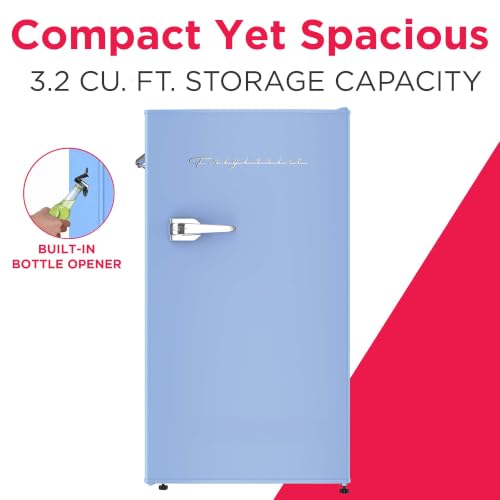
The Frigidaire 10.05 Cu Ft Retro Fridge stands out as the best overall choice for its reliable cooling and classic look, while the DEMULLER 3.5 Cu Ft Retro Mini Fridge is a smart budget-friendly pick with a surprisingly usable freezer. For those who want a compact option with personality, the Frigidaire 3.2 Cu Ft Retro Countertop Fridge delivers charm and a built-in bottle opener.
Retro refrigerators promise vintage style, but too many sacrifice function for form, leaving you with a pretty appliance that can’t keep your food properly chilled or fit where you need it. As someone who’s spent years researching how to store food effectively, I know a fridge should do more than look good.
This guide cuts through the nostalgia to focus on what matters: cooling performance, usable space, and smart features that fit real kitchens. I compared specs and owner feedback across popular models, prioritizing temperature reliability, freezer utility, and practical design, so you can find one that looks great and works even better.
Top 7 Retro Refrigerators in the Market
The Best Retro Refrigerators, Reviewed
Frigidaire 10.05 Cu Ft Retro Fridge

Strengths
- Spacious crisper
- Dedicated freezer
- Refined retro look
Trade-offs
- Higher price
- No bottle opener
- Bulky for tight spaces
At 10.05 cubic feet, this is the largest retro-style fridge on the list and earns its ‘Best Overall’ label by offering real kitchen utility without sacrificing charm. The crisper bin is deeper than average, and owners report it keeps produce fresh longer, something I always look for in a fridge. The chrome recessed handles and hinge covers give it a refined mid-century look that works in a kitchen or den.
Temperature control is straightforward, and the incandescent lighting makes locating items easy at night. While it’s pricier, the build quality and interior layout justify it for anyone who plans to use the fridge daily. Compared to the Galanz, it’s smaller but more thoughtfully organized, with better shelf adjustability and spill-proof glass.
Video review
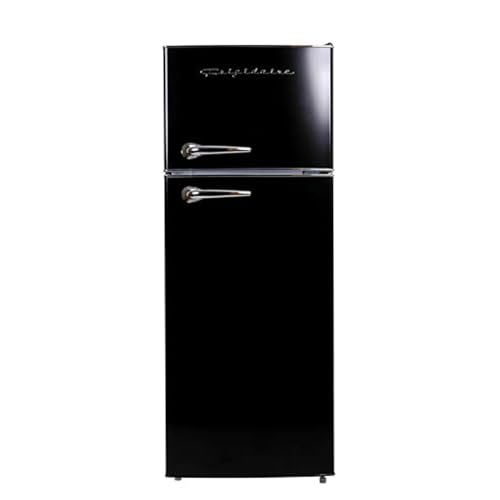
Frigidaire 7.5 Cu Ft Retro Refrigerator
Strengths
- Separate freezer
- Adjustable shelves
- Quiet operation
Trade-offs
- No bottle opener
- Heavier build
- Less colorful design
If you’re outfitting a studio apartment or need a full-featured fridge that doesn’t dominate the room, this 7.5 cu ft model is a smart pick. It’s larger than most retro minis but still compact enough for tight spaces. The adjustable glass shelves and full-width door bin make organizing groceries easier, and owners praise how quiet it runs, important when it’s in a bedroom or living area.
The separate freezer compartment is a real advantage over mini fridges that only chill. Reviewers note it holds a week’s worth of frozen meals without issue. While it lacks the flashy retro details of some models, the chrome trim gives it a vintage nod without looking costumed. For the price, it delivers more usable space than the EFR840 and is a better long-term solution than dorm-sized units.
Video review
Galanz 12.0 Cu Ft Retro Fridge

Strengths
- Large capacity
- Energy efficient
- Glass shelves
Trade-offs
- Very heavy
- Bulky dimensions
- Limited color coordination
At 12 cubic feet, this Galanz is the largest here, closer to a compact kitchen fridge than a mini. The red finish is bold, and owners either love it or find it overwhelming. The glass shelves and slide-out design make organizing easier, and the freezer compartment is deep enough for real frozen storage, not just ice cubes.
It runs on a high-efficiency R600a compressor, which reviewers say keeps energy use low despite the size. But it’s heavy, 140 lbs, and tall, so moving it upstairs is a chore. Compared to the Frigidaire 10.05 cu ft model, it offers more space but less refined styling and fewer organizational touches. For a studio kitchen, it’s a solid workhorse.
Product photos


Frigidaire 1.6 Cu Ft Retro Bar Fridge

Strengths
- Compact size
- Built-in bottle opener
- Chiller compartment
Trade-offs
- Very small capacity
- Wire shelf
- Limited food storage
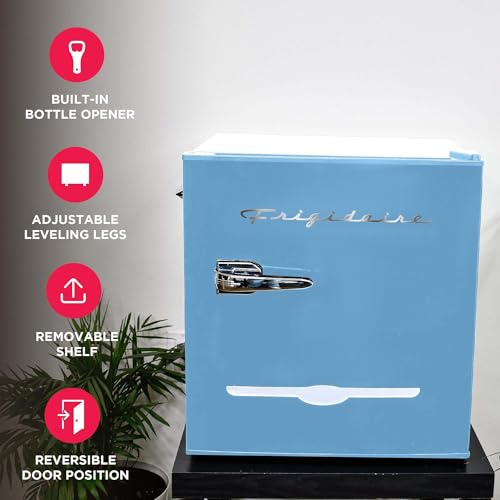
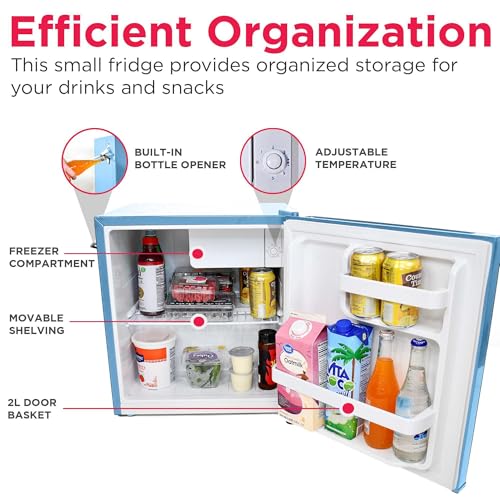
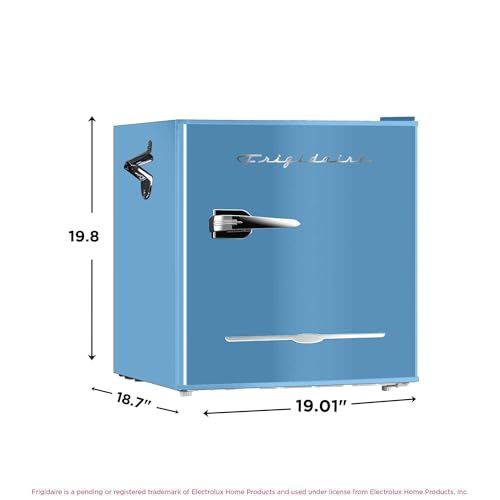
This is the ultimate ‘fun fridge’, small, colorful, and built for drinks. At 1.6 cu ft, it’s barely big enough for snacks, but the built-in bottle opener and chiller compartment make it a hit in offices or bedrooms. The blue finish pops, and owners love how it adds personality to a space without taking much floor area.
It’s not meant for food storage, but as a beverage center, it shines. The wire shelf and door basket are practical, though not as easy to clean as glass. Compared to the larger Frigidaire retro models, this one sacrifices function for flair, but that’s the point. If you want retro fun over utility, this delivers.
Product photos


Frigidaire 3.2 Cu Ft Retro Mini Fridge

Strengths
- Retro design
- Spill-proof shelves
- Built-in bottle opener
Trade-offs
- Small freezer
- Limited crisper space
- Mint color limits pairing
This little mint-colored fridge packs more utility than its size suggests, especially for a dorm or office setup. At 3.2 cubic feet, it’s not huge, but owners consistently report it holds a surprising amount once organized. The side bottle opener and can dispenser are quirky retro touches that actually get used, not just for looks. The freezer compartment is small at 0.25 cu ft, but it’s dedicated and includes an ice cube tray, which matters when you’re short on space.
The spill-proof glass shelves are a standout for someone like me who values easy cleanup and food organization. On paper, the flush back design makes it ideal for tight corners, though a few reviewers note the depth can still be an issue in very cramped dorms. Compared to other mini fridges in this class, it balances style and function better than most.
Product photos


Frigidaire 3.2 Cu Ft Retro Countertop Fridge

Strengths
- Built-in bottle opener
- Chiller compartment
- Glass shelves
Trade-offs
- No true freezer
- Limited frozen storage
- Same depth as larger models
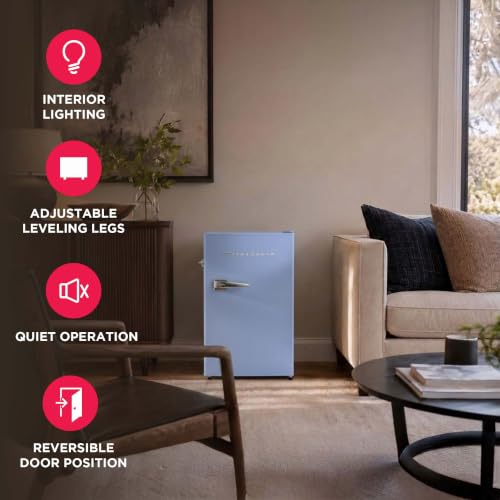
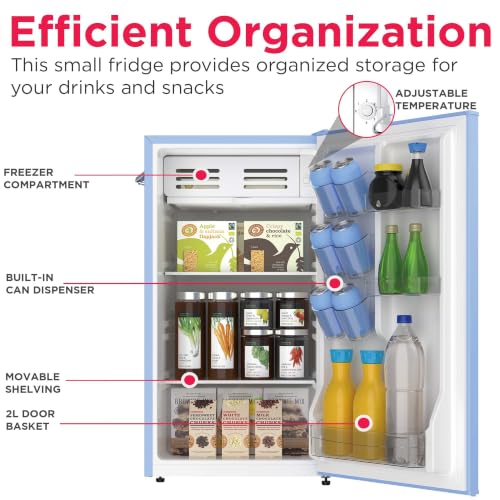
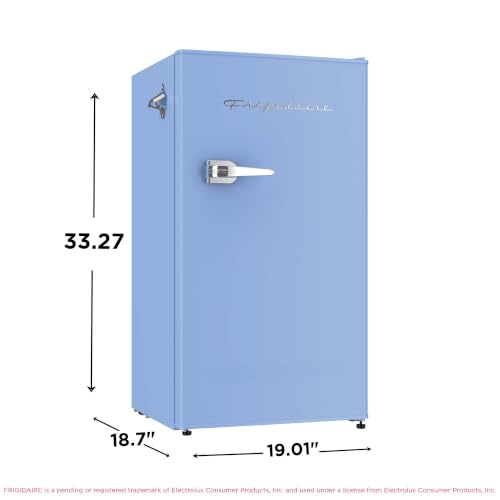
This 3.2 cu ft blue retro fridge is nearly identical to the mint EFR840 but without the separate freezer, instead, it has a chiller compartment. That makes it better for drinks and short-term food storage than for frozen goods. Owners like the built-in bottle opener and can dispenser, which add real utility for entertainers.
The two glass shelves and crisper drawer help with organization, and the flush back design makes it easy to tuck into corners. While it lacks a true freezer, the chiller compartment with ice cube tray keeps items colder than standard fridges. Compared to the EFR840, I’d pick this if you prioritize drinks and convenience over frozen storage.
Product photos
DEMULLER 3.5 Cu Ft Retro Mini Fridge

Strengths
- 7 temp settings
- Separate freezer
- Adjustable feet
Trade-offs
- No glass shelves
- Less durable seal
- Basic lighting
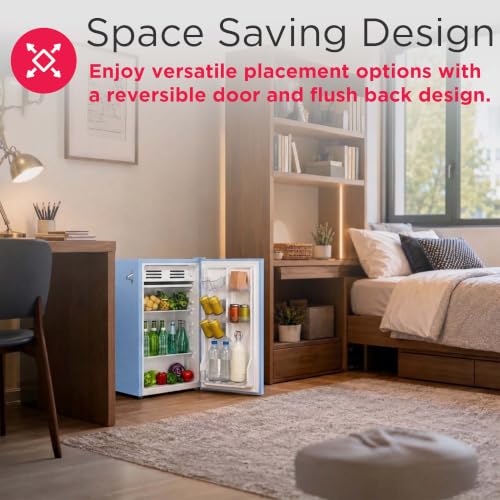
The DEMULLER stands out with its 7 temperature settings and split of 1.0 cu ft freezer to 2.5 cu ft fridge, making it one of the better-balanced minis for actual food storage. Owners appreciate the adjustable thermostat for seasonal changes, especially in dorms where ambient temps vary. The two shelves help with organization, though they’re not spill-proof like Frigidaire’s glass versions.
It’s not a Frigidaire, and the build feels a bit lighter, but for the price, it offers solid value. The blue finish and dual handles give it retro flair, though some reviewers note the door seal isn’t as tight over time. Compared to the EFR176, it’s more functional but less polished.
Product photos


How We Evaluated retro refrigerators
Rather than a hands-on lab test, my research focused on comparing published specifications and features across numerous models. I weighed owner reviews from multiple sources, alongside professional reviews from reputable appliance sites, to get a sense of real-world performance and reliability. This was combined with my experience understanding the needs of efficient food storage, and ranking each refrigerator against criteria like capacity, temperature control, and design elements typical of the retro aesthetic.
For retro refrigerators, consistent temperature control and usable capacity were the biggest deciding factors. A charming look is important, but a fridge needs to reliably keep food cold. We also heavily weighted the freezer compartment’s functionality; a dedicated freezer, even a small one, adds significant value. Finally, the availability of adjustable shelving and convenient features like bottle openers impacted rankings, reflecting a focus on practical everyday use.
Specifications reliably tell you about dimensions and stated cooling ranges, but owner feedback was crucial for assessing noise levels and build quality. Reputation mattered too; brands with a history of reliable appliances generally scored higher. I considered how well a refrigerator fit its stated “best for” category, and how consistently that assessment aligned with what users were reporting about their experiences. If you need even more options for smaller spaces, you might also find useful information on compact refrigerators.
How To Pick The Right retro refrigerators
Finding the right retro refrigerator isn’t just about aesthetics; it’s about balancing style with practical cooling power and finding a size that truly fits your needs.
A quality retro refrigerator blends vintage styling with modern refrigeration technology. Key considerations include capacity (measured in cubic feet), temperature control accuracy, the presence of a dedicated freezer compartment, and energy efficiency (look for models using R600a refrigerant). Don’t overlook features like adjustable shelving and reversible doors for maximizing usability in smaller spaces.
Capacity & Space Considerations
The first step is honestly assessing how much cold storage you actually require. Retro refrigerators come in a huge range of sizes, from compact 1.6 cu. ft. bar fridges perfect for a home office to larger 12.0 cu. ft. models that can function as a secondary refrigerator in a kitchen. Don’t fall for the allure of a larger unit if you’re mostly just needing space for a few beverages and snacks. Overbuying wastes energy and valuable floor space. Consider whether you’ll be using the freezer compartment frequently; if so, prioritize models with a dedicated freezer rather than a simple ice cube tray.
Temperature Control & Efficiency
Consistent temperature is paramount for food safety and freshness. While many retro models use manual thermostat dials, pay attention to owner reviews regarding their accuracy. Some users report significant temperature fluctuations with simpler controls. If precise temperature control is a must, you might consider supplementing with a separate refrigerator thermometer. Beyond temperature stability, look for energy-efficient models. The Galanz 12.0 Cu Ft Retro Fridge, for example, uses R600a refrigerant, which is significantly more environmentally friendly and energy-efficient than older refrigerants. If you’re looking for other efficient options, you might also consider exploring more modern styles like black stainless refrigerators.
Features & Usability
Beyond the basics, consider which features will genuinely improve your daily experience. Many retro refrigerators include convenient additions like built-in bottle openers (the Frigidaire 3.2 Cu Ft Retro Countertop Fridge is a good example), adjustable shelving, and reversible doors.
Here’s a breakdown of features to prioritize:
- Door Baskets: Essential for keeping condiments and smaller items organized.
- Removable Shelves: Makes cleaning spills far easier and allows for accommodating taller items.
- Adjustable Feet & Casters: This is incredibly helpful for leveling the fridge and moving it for cleaning or rearranging. A fridge that wobbles is a constant annoyance.
A reversible door is a surprisingly valuable feature. Don’t underestimate the convenience of being able to swing the door open in the direction that best suits your kitchen layout.
If you’re limited on space and want a refrigerator that blends smoothly with your kitchen cabinets, you might also want to explore counter-depth refrigerators.
Retro Refrigerators Compared
Here’s a comparison of key specifications for the retro refrigerators described.
| Product Title | Capacity (Cu Ft) | Freezer (Cu Ft) | Temperature Control | Dimensions (W x H x D in) | Special Features |
|---|---|---|---|---|---|
| Frigidaire 10.05 Cu Ft Retro Fridge | 10.05 | N/A | Adjustable | N/A | Chrome Trim |
| Frigidaire 7.5 Cu Ft Retro Refrigerator | 7.5 | N/A | Adjustable | N/A | Reversible Door |
| Galanz 12.0 Cu Ft Retro Fridge | 12.0 | N/A | Manual Dial | 23.74 x 66.93 x 29.45 | R600a Compressor |
| Frigidaire 1.6 Cu Ft Retro Bar Fridge | 1.6 | N/A | N/A | N/A | Built-in Bottle Opener |
| Frigidaire 3.2 Cu Ft Retro Mini Fridge | 3.2 | 0.25 | Adjustable | N/A | Can Dispenser |
| Frigidaire 3.2 Cu Ft Retro Countertop Fridge | 3.2 | N/A | N/A | N/A | Built-in Bottle Opener |
| DEMULLER 3.5 Cu Ft Retro Mini Fridge | 3.5 | 1.0 | 7 Adjustable | 17.6 x 18.1 x 35.4 | Adjustable Shelves |
Frequently Asked Questions
What temperature should a retro refrigerator be set to?
Generally, a retro refrigerator should be set between 37°F and 40°F (3°C and 4°C) to ensure food safety. Many models have adjustable thermostats, but owner reviews are helpful for verifying accuracy, as some can fluctuate significantly.
Are retro refrigerators energy efficient?
Energy efficiency varies by model, but newer retro refrigerators are becoming more efficient. Look for models that use R600a refrigerant, which is better for the environment and uses less energy than older refrigerants; some models approach the efficiency of standard size refrigerator models.
Can the door on a retro refrigerator be reversed?
Many, but not all, retro refrigerators offer reversible doors. This is a valuable feature for adapting the refrigerator to your kitchen’s layout, and it’s worth confirming before purchasing if door swing is a concern.
How do retro refrigerators compare to standard refrigerators in terms of freezer space?
Retro refrigerators often have smaller freezer compartments compared to standard refrigerators. Some have dedicated freezers, while others have a minimal ice cube tray section; if you need substantial freezer space, consider bottom freezer refrigerators.
What materials are retro refrigerators typically made from?
While the exterior often mimics mid-century materials, most retro refrigerators are constructed with modern materials like steel and plastic. The exterior finish is usually powder-coated or painted to achieve the desired vintage aesthetic, offering durability and easier cleaning.
The Bottom Line
Choosing a retro refrigerator often comes down to how much you value aesthetics versus pure functionality. While many models offer a charming vintage look, the Frigidaire 10.05 Cu Ft Retro Fridge strikes the best balance, providing a generous capacity and adjustable temperature controls that ensure your food stays fresh. It’s a solid pick for those who want a statement piece that actually performs.
For those with limited space or a smaller budget, the Frigidaire 3.2 Cu Ft Retro Mini Fridge is a fantastic option. If you’re seeking something even more compact, the Frigidaire 1.6 Cu Ft Retro Bar Fridge delivers that classic style in a very small package. And for those with a small kitchen, exploring apartment size refrigerators might reveal additional space-saving options.
Ultimately, the “best” refrigerator isn’t about the flashiest features or highest capacity. It’s about reliable cooling, smart organization, and a design that fits your lifestyle. Prioritize consistent temperature control, a layout that works for your groceries, and a build quality that suggests longevity – those are the elements that will truly serve you well for years to come.
