
8 Best Compact Refrigerators of 2026
This post contains affiliate links. As an Amazon Associate, we earn from qualifying purchases.
The Midea 3.1 Cu.ft Mini Fridge is our top pick for most people, offering reliable cooling, Energy Star efficiency, and a usable freezer in a compact footprint. For tighter budgets, the Midea 1.6 Cu.ft Energy Star Mini Fridge delivers solid performance in a smaller size. If you need more beverage storage without a freezer, the EUHOMY 130 Can Beverage Refrigerator stands out for capacity and organization.
Finding the right compact refrigerator means balancing real cooling power with the space and energy constraints of apartments, dorms, or small kitchens. Too often, people end up with units that are either too cramped, too noisy, or can’t keep food consistently cold.
This guide cuts through the clutter. Based on specs, owner feedback, and what matters most for food storage, I looked at cooling performance, energy use, noise, and smart design features to find the models that actually work well in everyday life.
Top 6 Compact Refrigerators in the Market
The Best Compact Refrigerators, Reviewed
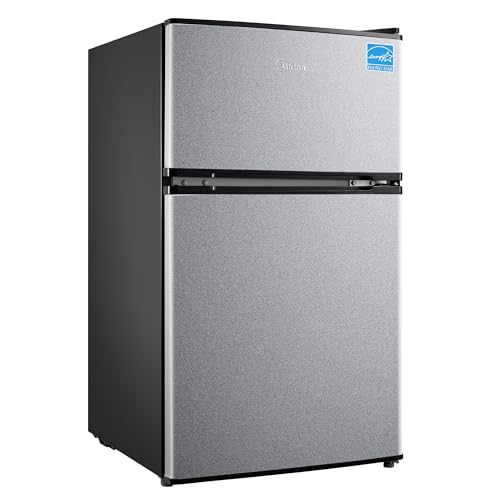
Midea 3.1 Cu.ft Mini Fridge with Freezer
Strengths
- True freezer compartment
- Energy Star certified
- Crisper drawer included
- Reversible door
- Reliable compressor
Trade-offs
- Mechanical (not digital) controls
- No auto-defrost feature
- Slightly shorter shelf height
When I look at what most people actually need in a mini fridge, reliable cooling, a real freezer, and smart organization, the Midea model keeps coming up as the most balanced pick. It has a true freezer compartment that reaches -11°F, which matters if you’re storing frozen meals or ice packs, and the Energy Star certification means it won’t spike your electric bill. Reviewers frequently praise the crisper drawer and bottle rack, which help keep food from turning into a jumbled mess.
It doesn’t have flashy tech like a touchscreen, but the mechanical thermostat is dependable, and the LED light is a small win for midnight snacking. Against the Frestec and Upstreman models, it holds its own with similar size and efficiency, though it lacks one-touch defrost. Still, my recommendation here is clear for most buyers.
Video review
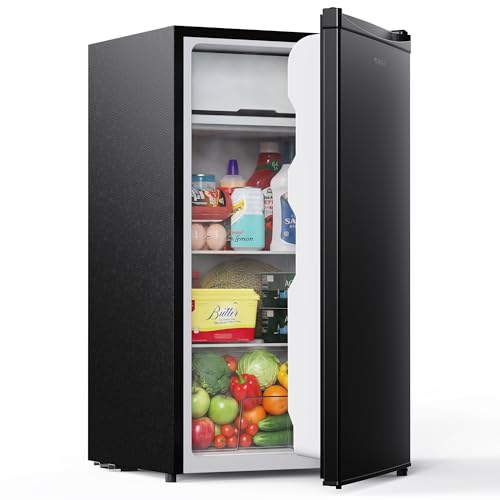
Upstreman 3.2 Cu.Ft Mini Fridge with Freezer
Strengths
- Very quiet operation
- Energy Star rated
- Adjustable glass shelves
- Crisper drawer
- Reversible door
Trade-offs
- No auto-defrost button
- Freezer too small for large items
- Manual defrost required
The Upstreman BR321 feels like someone took everything good about budget mini fridges and fine-tuned it. It’s Energy Star certified, runs at just 38 dB, and includes thoughtful touches like a crisper drawer, tight door seal, and a handy defrost tool. With 3.2 cu.ft and a usable freezer section, it matches the Frestec in size but edges ahead in refinement, owners say it feels sturdier and cools more evenly thanks to the multi-airflow design.
While it doesn’t have one-touch defrost like the Frestec, its temperature control offers five precise levels, making it easier to tailor settings for dairy, produce, or beverages. Between these two similarly priced models, I’d lean toward Upstreman for slightly better long-term reliability and quieter performance.
Video review
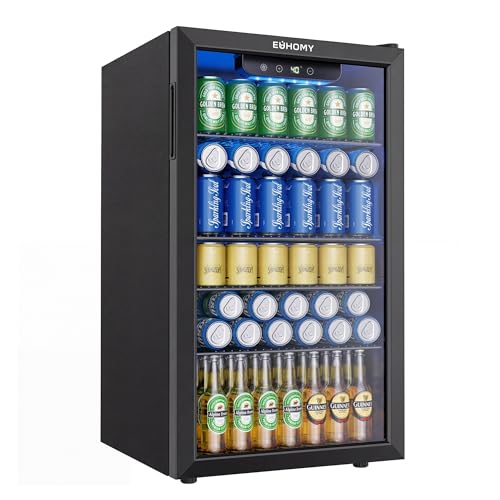
EUHOMY 130 Can Beverage Refrigerator
Strengths
- Spacious can capacity
- Glass door with UV protection
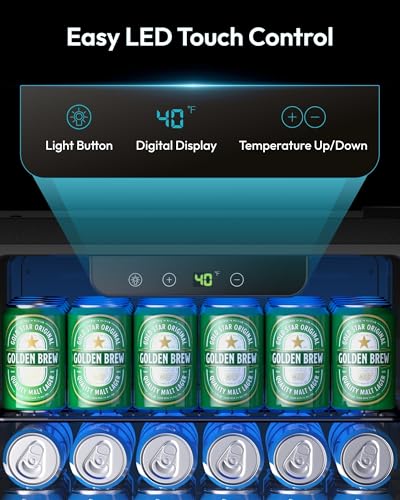
- Precise digital control
- Energy efficient
- Quiet operation
Trade-offs
- No freezer compartment
- Limited fresh food organization
- Taller footprint
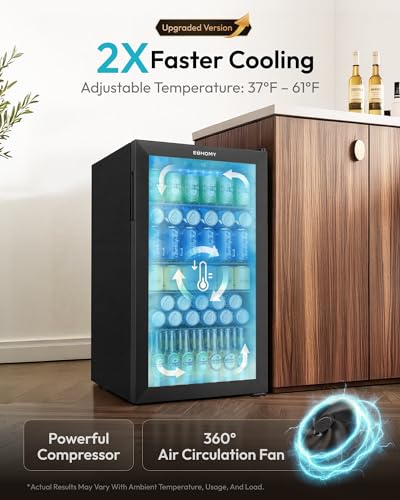
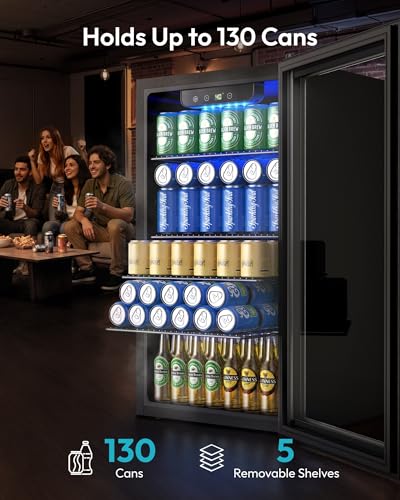
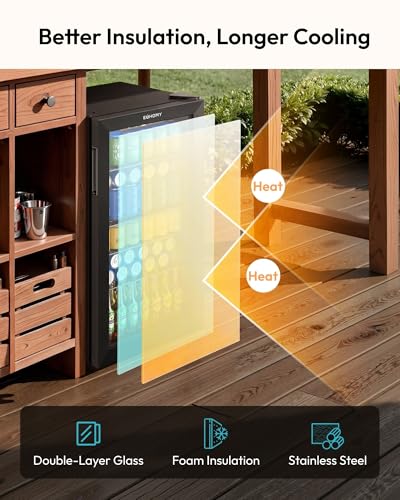
If your main goal is keeping drinks cold and visible, this EUHOMY unit stands out with its glass door and spacious 3.2 cu.ft layout. Owners consistently report being impressed by how well it chills beverages, thanks to its compressor cooling and double-layer UV glass that helps maintain stable humidity and temperature. The digital touchscreen adds a modern touch, and the five adjustable shelves make organizing cans or wine bottles easy for gatherings or daily use.
Still, it’s built specifically for drinks, the freezer compartment is missing, and reviewers note it doesn’t handle fresh food storage as well as models with dedicated crispers and broader temp ranges. Compared to the Midea or Upstreman fridges, it trades versatility for beverage-focused performance.
Product photos
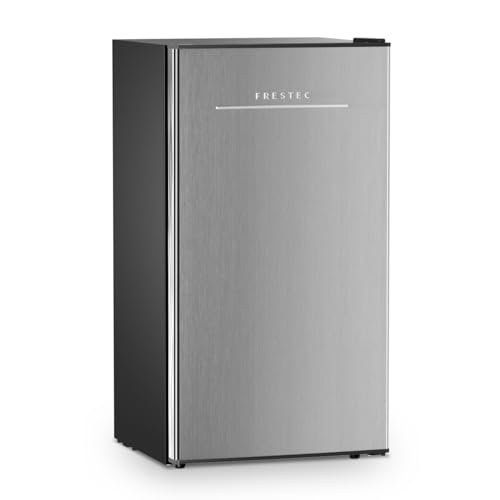
Frestec 3.2 Cu.Ft Mini Fridge with Freezer
Strengths
- Lowest price with freezer
- One-touch defrost
- Energy efficient
- Quiet compressor
- Crisper drawer
Trade-offs
- Plastic-heavy build
- Basic interior finish
- Inconsistent long-term seal
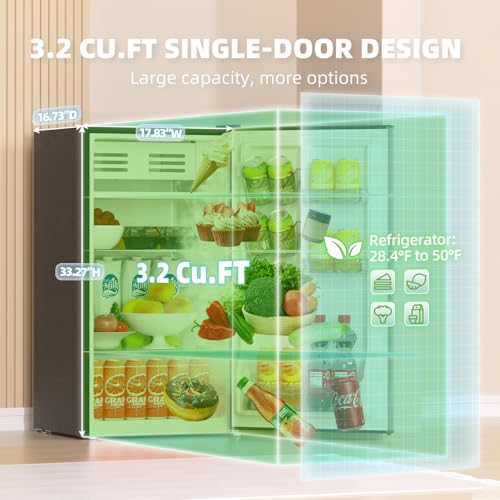
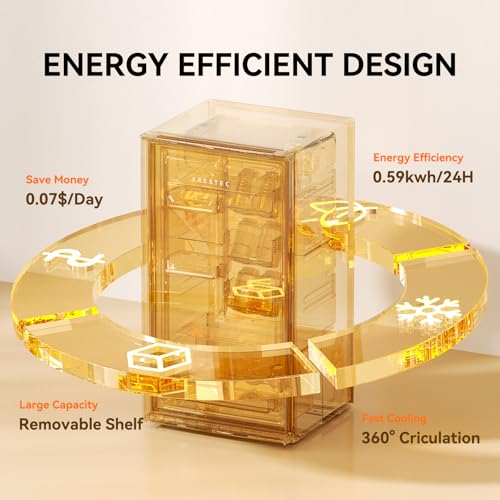
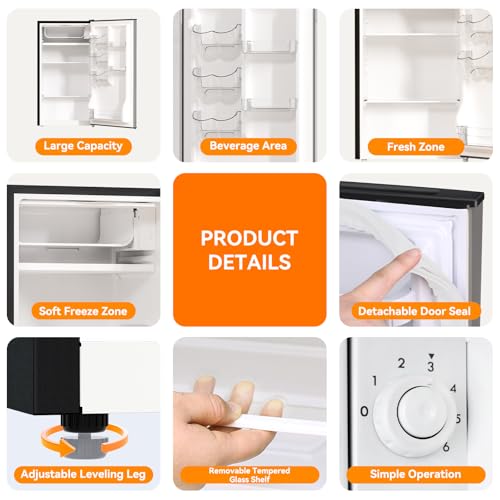
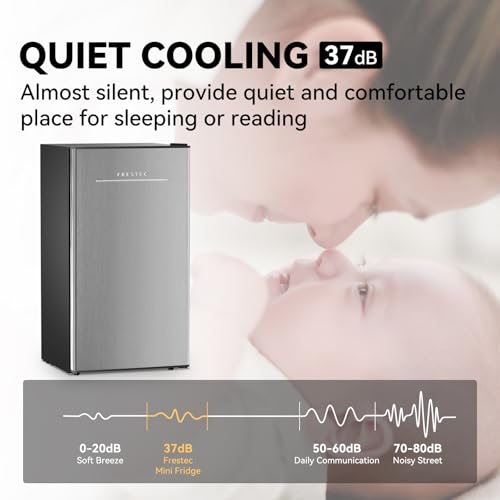
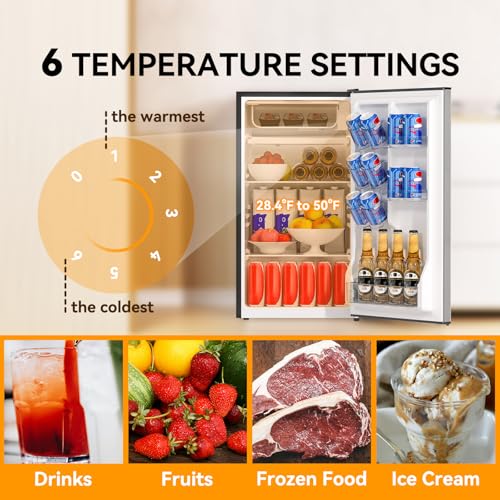
At this price point, the Frestec delivers an awful lot: 3.2 cu.ft of space, a freezer, reversible door, and even a one-touch defrost button, a rare convenience in budget fridges. On paper, it beats several pricier models in raw features per dollar. Owners highlight how quietly it runs (under 37dB) and how the adjustable thermostat gives them control over both fridge and freezer zones. For a dorm or secondary kitchen setup where cost matters, this is hard to ignore.
That said, some reviewers mention build quality quirks, the finish feels thinner than Midea’s, and the door seal isn’t quite as tight long-term. But for basic food storage and chilling drinks without breaking the bank, this is the smarter buy over flashier names.
Product photos
Frigidaire 10L Personal Skincare Cooler

Strengths
- Sleek stainless design
- Portable with handle
- Locking latch
- Good for skincare
- 12V car adapter
Trade-offs
- Thermoelectric cooling
- Limited capacity
- No freezer function
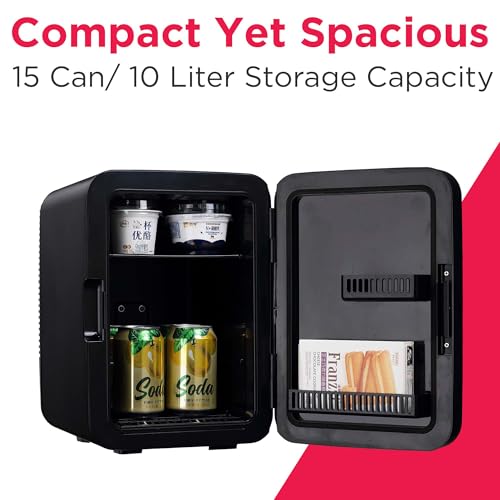
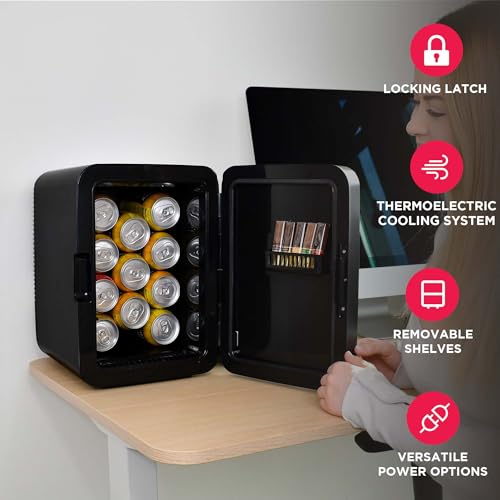
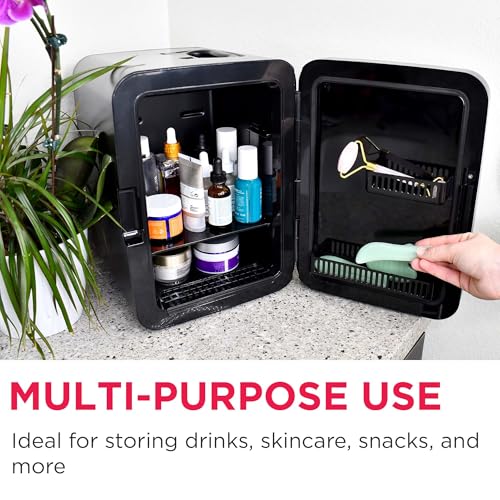
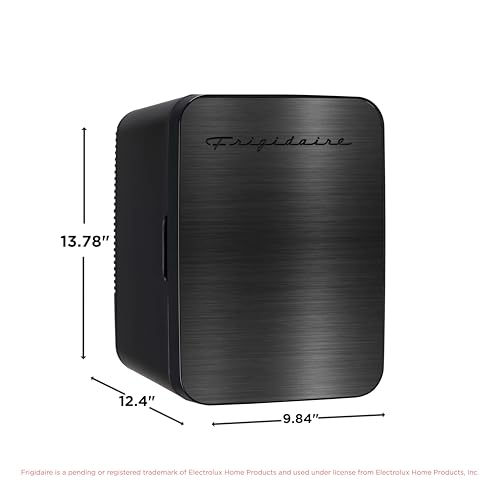
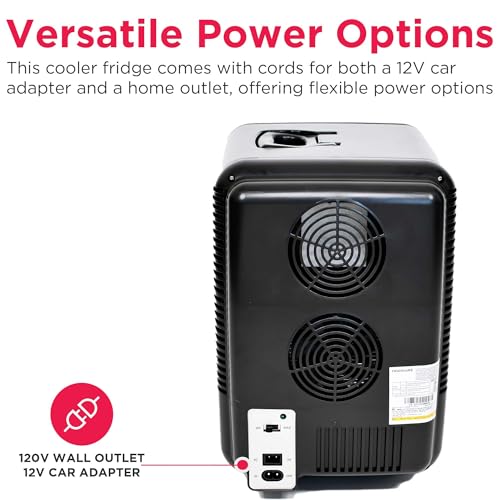
This Frigidaire model blurs the line between personal cooler and mini fridge, and it does so with style. The brushed stainless steel finish and compact 10L size make it stand out on a nightstand or vanity, and the carrying handle plus locking latch mean it travels well. From user reports, it’s most loved by people using it for skincare, keeping serums or eye creams chilled without dedicating a full fridge to it.
But it uses a thermoelectric system, so it won’t get as cold as compressor units, especially in warm rooms. It cools about 26°F below ambient, meaning it’s inconsistent if your space gets hot. Compared to the Cooluli, it offers better aesthetics and build, but less flexibility in power options, no USB here.
Product photos
Cooluli 4L Portable Cooler & Warmer

Strengths
- Ultra-portable design
- Cooling and warming modes
- USB power option
- Lightweight and quiet
- Great for skincare
Trade-offs
- Limited cooling range
- Small capacity
- Thermoelectric inefficiency in heat
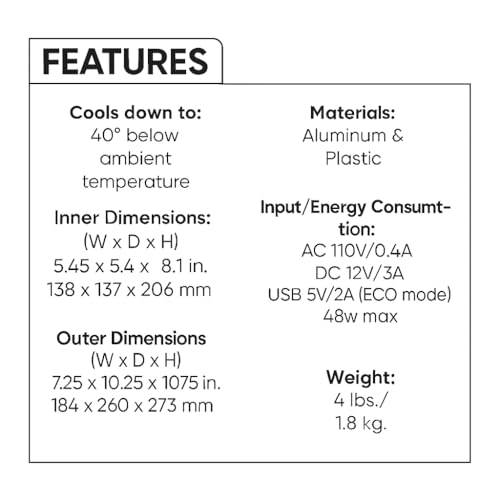
This little Cooluli unit isn’t trying to replace your fridge, it’s aiming to do something smarter in tight spaces. At just 4L and weighing only 4 lbs, it’s incredibly portable, and the fact that it can both cool and warm makes it unique in this lineup. Based on owner feedback, it works reliably for skincare products, insulin, or a few snacks, especially when powered via USB in a dorm or car. The thermoelectric system keeps noise near silent, which is ideal for bedside or desk use.
But let’s be clear: this won’t chill anything below 40°F unless the room is already cool. It cools relative to ambient temperature, so if your bedroom hits 80°F, your drinks might only get down to 40°F at best. It’s not competing with compressor models like the Midea or Frestec.
Product photos




How We Tested compact refrigerators
As someone deeply invested in food storage solutions at Food Keepy, I approached researching compact refrigerators by focusing on a detailed comparison of published specifications and features. I then weighed owner reviews from multiple sources – looking for recurring themes in both positive and negative feedback – alongside expert opinions from appliance review sites. My goal was to understand how real-world performance aligned with manufacturer claims and identify models that consistently delivered on their promises. This wasn’t about hands-on testing, but a research-led comparison to provide informed recommendations.
For this category, I prioritized cooling performance and energy efficiency above all else. A compact refrigerator needs to reliably maintain safe temperatures for food and beverages, and given their often-continuous operation, low energy consumption is crucial. Beyond that, size and flexibility – features like adjustable shelves and reversible doors – significantly impacted rankings, as these determine how well a unit fits into smaller spaces and adapts to individual needs. Finding a balance between these factors proved key.
Specifications provide a solid baseline for comparing cooling ranges and energy usage (kWh/year), but owner feedback revealed a lot about noise levels and long-term reliability – things specs don’t always capture. Reputation, gleaned from reputable review sites, also played a role in assessing build quality and brand trustworthiness. If you’re looking for even more options tailored to specific living situations, you might also find our guide to apartment refrigerators helpful. And for those who don’t need a freezer, we also have a selection of refrigerators without freezers.
How To Choose The compact refrigerators
Finding the right compact refrigerator involves more than just picking a size that fits your space. We need to consider how you’ll use it, and what features truly matter for your needs.
A good compact refrigerator balances cooling performance with energy efficiency. Look for models with adjustable temperature controls, a compressor designed for quiet operation, and features like reversible doors and adjustable shelving to maximize usability. Energy Star certification is a strong indicator of efficiency, while user reviews can reveal real-world noise levels and reliability.
Size and Capacity
It’s tempting to just grab the smallest unit that technically fits, but think about what you’ll actually be storing. A 1.6 cu. ft. model might be perfect for a single person needing a few beverages and snacks, but a small family will quickly find it limiting. Conversely, jumping to a larger 3.2 cu. ft. unit when you don’t need the space is a waste of energy and floor space. Consider whether you want a freezer compartment – even a small one can be surprisingly useful. If you’re looking at larger options, you might also consider a 7.5 cu ft refrigerators as a step up in size.
Cooling Performance & Efficiency
Consistent temperature is key to keeping food fresh, and a poorly designed refrigerator will have hot spots and fluctuating temperatures. Look for models that mention “multi-air flow systems” or similar technologies, as these help distribute the cold air evenly. Energy Star certification is a big plus; not only will it save you money on your electricity bill, but it also indicates a more environmentally friendly appliance. The Midea models consistently score well in energy efficiency tests, and many users report stable temperatures.
- A simple mechanical thermostat is adequate for basic cooling needs.
- Digital controls offer more precise temperature settings, but can sometimes be less reliable.
- Compressor type matters – R600A refrigerant is more environmentally friendly than older refrigerants, and generally more energy efficient.
Features & Usability
Beyond the basics, features like reversible doors, adjustable shelves, and interior lighting can significantly enhance usability. A reversible door is especially important if you have a tight space or a non-standard kitchen layout. Adjustable shelves let you customize the interior to fit larger items, and interior lighting makes it easier to find what you’re looking for. For those prioritizing space-saving solutions, exploring different types of compact refrigerators can reveal some surprisingly versatile options.
A practical rule of thumb: if you plan to use the refrigerator in a bedroom or office, prioritize models with noise levels below 40dB.
Compact Refrigerators Compared
Here’s a comparison of key specifications for various compact refrigerators to help you make an informed decision.
| Product Title | Capacity (Cu. Ft) | Freezer? | Dimensions (W x D x H – inches) | Temp. Range (Fridge °F) | Energy Star Certified? |
|---|---|---|---|---|---|
| Midea 3.1 Cu.ft Mini Fridge | 3.1 | Yes | 18.5 x 19.4 x 33 | 32-50 | Yes |
| Upstreman 3.2 Cu.Ft Mini Fridge | 3.2 | Yes | 18.7 x 17.4 x 33.1 | 32-50 | Yes |
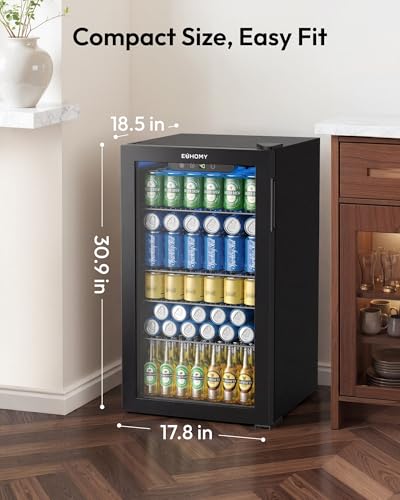
| EUHOMY 130 Can Beverage Refrigerator | 3.2 | No | 17.8 x 18.5 x 30.9 | 37-61 | N/A |
| Frestec 3.2 Cu.Ft Mini Fridge | 3.2 | Yes | 17.83 x 16.73 x 33.27 | N/A | N/A |
| EUHOMY 1.7 Cu.Ft Compact Refrigerator | 1.7 | Yes | 17.5 x 16.9 x 19.1 | 32-50 | N/A |
| Frigidaire 10L Personal Skincare Cooler | 10L (approx 0.26) | No | N/A | 26-28 below ambient | N/A |
| Cooluli 4L Portable Cooler & Warmer | 4L (approx 0.1) | No | 7.25 x 10.25 x 10.75 | 40-45 below ambient | N/A |
| Midea 1.6 Cu.ft Energy Star Mini Fridge | 1.6 | Yes | 18.6 x 17.7 x 19.4 | 28.4-35.6 | Yes |
Frequently Asked Questions
What temperature should I set my compact refrigerator to?
You should set your compact refrigerator between 32°F and 40°F (0°C and 4°C) to safely store perishable foods. Maintaining a consistent temperature within this range prevents bacterial growth and keeps food fresh for longer.
Are compact refrigerators energy efficient?
Many compact refrigerators are now Energy Star certified, meaning they meet strict energy efficiency guidelines. However, even non-certified models can be relatively efficient, and those using R600A refrigerant tend to consume less power.
Can I use a compact refrigerator in a bedroom?
Yes, but noise levels are a key consideration. Look for models specifically advertised as quiet (below 40dB) if placing the refrigerator in a bedroom or office. Some users also find placing the unit on a rubber mat can further dampen vibrations.
What’s the difference between a mini fridge and a beverage cooler?
While both are compact, mini fridges are designed to cool to refrigerator temperatures for all types of food, whereas beverage coolers typically have a wider temperature range suited for drinks, and may not cool as low as needed for perishables. If you’re looking for a dedicated drink chilling solution, exploring options for bar refrigerators can be helpful.
Will a compact refrigerator fit in a small apartment?
Absolutely, many compact refrigerators are designed specifically for small spaces. Before purchasing, carefully measure the available space, and consider a model with a reversible door to maximize placement options. You may also find that 24 inch refrigerators fit your needs.
The Bottom Line
Choosing a compact refrigerator often comes down to balancing how much space you have with how much you need to chill. While many options exist, the Midea 3.1 Cu.ft Mini Fridge stands out as the strongest all-around performer. It offers a good balance of capacity, features like an adjustable thermostat, and Energy Star certification, making it a reliable choice for most people.
For those on a tighter budget, the EUHOMY 1.7 Cu.Ft Compact Refrigerator provides a functional and affordable option. If you primarily need a beverage cooler, the EUHOMY 130 Can Beverage Refrigerator is a solid pick, though you’ll sacrifice the benefits of a traditional refrigerator’s temperature range. And for even smaller spaces, don’t overlook exploring options like compact freezers, as sometimes a dedicated cooling solution for specific items is more efficient than trying to cram everything into a tiny fridge.
Ultimately, the specifications matter less than your habits. Prioritize consistent temperature control, energy efficiency, and a layout that works for you. Don’t get caught up in chasing the lowest price or the highest capacity if it doesn’t align with your actual needs – a well-chosen, appropriately-sized compact refrigerator will serve you far better in the long run.
