How Can I Preserve Eggplant | The 11-Day Shelf Life Method
This post contains affiliate links. As an Amazon Associate, we earn from qualifying purchases.
You can preserve eggplant by matching three things: storage temperature (10-12°C / 50-54°F), relative humidity (90-95%), and the right preservation method for your intended use. A 2024 study using evaporative cooling and proper packaging extended average shelf life to 11 days with only 3.86% weight loss. For long-term storage, freezing, canning, and drying are your most reliable options.
That 11-day figure is the measured outcome from a controlled experiment (labeled CPS1) that paired evaporative cooling with insulated packaging, holding temperature at 16°C and humidity at 93%. The second setup in the same study, with slightly warmer air, dropped shelf life to 8 days.The gap between those two results is the entire argument for precision.
What follows is a breakdown of the three environmental controls, then the five practical methods to put them to work, from a simple fridge setup to putting up jars for the pantry. By the end, you’ll know exactly which step you can skip and which one will ruin a whole batch if you get it wrong.
Key Takeaways
- Store fresh eggplant at 10-12°C (50-54°F) with 90-95% humidity. Going below 10°C triggers chilling injury, surface pitting and bronzing, within 6-8 days at 5°C.
- Japanese varieties lose water three times faster than American types. They demand perfect humidity or they’ll shrivel in days.
- Never use dry ice in modified atmosphere packaging. Research shows it promotes chilling injury at 4°C within three days, even when combined with ethylene blockers.
- For long-term storage, roast and puree eggplant before freezing to sidestep texture destruction. Raw freezing turns flesh spongy and waterlogged.
- Acidify eggplant properly for safe canning. Follow a research-tested recipe from a source like the UC ANR guide, as eggplant is a low-acid vegetable.
The Three Non-Negotiables for Fresh Storage
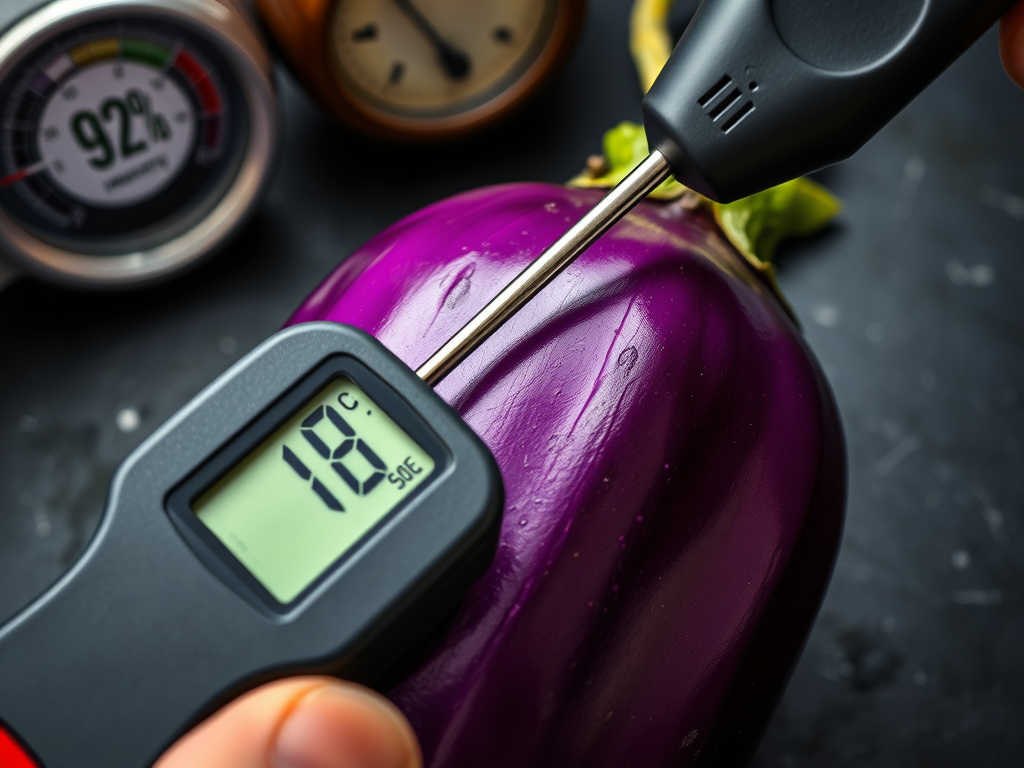
Getting a week or more from a fresh harvest depends on hitting three physical specs that slow down respiration and water loss without crossing the line into cold damage.
Precool eggplants to 10°C (50°F) immediately after harvest. Maintain a storage temperature of 10-12°C (50-54°F) and 90-95% relative humidity. Chilling injury, characterized by surface pitting, seed browning, and internal decay, occurs when fruit is held below 10°C. At 5°C (41°F), injury manifests in 6-8 days.
1. Temperature: The 10°C Line in the Sand
Eggplant is a subtropical fruit. Its cells start to break down when stored too cold, a condition called chilling injury. The damage isn’t always visible immediately, it often shows up after you move the fruit back to room temperature.
Where this goes sideways: Storing below 10°C to reduce weight loss. The trade-off is chilling injury that appears as sunken pits and bronze stains on the skin after several days, rendering the fruit unmarketable and mushy inside.
The threshold is absolute, but the timeline varies by cultivar. Research on ‘Lucía’ eggplants showed they could handle 0°C for only 5 days before quality fell apart. Most home refrigerators hover around 4°C. That’s a full 6 degrees below the safe zone. This is why the crisper drawer alone often fails.
2. Humidity: 90-95% Is Not a Suggestion
Eggplant skin is like a sponge. It transpires water rapidly, especially through the large calyx (stem cap). Low humidity turns a firm, glossy fruit into a wrinkled, rubbery one in short order.
Japanese and other long, thin varieties are the most vulnerable. Their higher surface-area-to-volume ratio means they lose moisture three times faster than a large American globe eggplant. If you’re growing ‘Ichiban’ or ‘Ping Tung’, humidity control isn’t optional.
3. Airflow & Gas: The Invisible Levers
Respiration is the engine of decay. You can slow it by managing the air around the fruit. The two advanced levers are modified atmosphere packaging (MAP) and ethylene blocking.
| Treatment | Mechanism | Effect on Eggplant at 4-8°C | Risk |
|---|---|---|---|
| 1-MCP (1.0 µL·L⁻¹) | Blocks ethylene receptors | Delays surface bronzing, maintains firmness for 10+ days. | Less effective at very low temps (1°C). |
| CO₂ Absorber | Removes respiration CO₂ | Prevents internal & external chilling injury for 6-15 days in MAP. | Must be paired with proper O₂ permeability. |
| Dry Ice (as CO₂ source) | Rapidly floods package with CO₂ | Promotes chilling injury. Symptoms appear in 3 days. | Never use. Study shows it overrides 1-MCP benefits. |
The dry ice finding is critical. It’s a common home hack to add CO₂. The research from the Journal of Bio-Environment Control is clear: it backfires catastrophically at low temperatures.
TL;DR: Your fridge’s crisper is too cold and too dry. For short-term fresh storage, you need a cooler spot like a basement or a dedicated cellar set above 10°C, with the fruit kept in a perforated plastic bag to trap humidity.
How to Preserve Eggplant Long-Term: 5 Methods Compared
Once you move beyond fresh storage, the goal shifts from slowing decay to stopping it. Each method below creates a different end product.
| Method | Best For | Shelf Life | Texture Outcome | Key Prep Step |
|---|---|---|---|---|
| Freezing (Roasted/Pureed) | Dips, spreads, soups. | 10-12 months. | Creamy, smooth. | Roast until charred, scoop pulp. |
| Freezing (Raw Prepped) | Stir-fries, stews. | 8-10 months. | Soft, absorbs sauce. | Salt, drain, blanch or fry. |
| Water Bath Canning | Sauces, caponata, ratatouille. | 12+ months. | Tender, integrated. | Must acidify with lemon juice, vinegar, or tomatoes. |
| Dehydrating | Eggplant chips, jerky, powder. | 6-12 months. | Chewy (jerky) or crisp (chips). | Slice uniformly thin (<1/4″). |
| Pickling (Fridge) | Quick condiment. | 3-4 weeks. | Firm-tender. | Salt cure to draw out water first. |
Method 1: Freezing (The Texture Trade-Off)
Freezing is the most accessible long-term method, but it’s also where most people fail first. Water inside the plant’s cells expands when it freezes, rupturing cell walls. That’s why thawed raw eggplant turns into a watery, spongy mess.
The workaround is to cook it first. Change the texture on your terms before it hits the freezer.
- For Baba Ganoush or Soup Base: Roast whole eggplants at 425°F until the skin is charred and the interior collapses. Scoop out the pulp, puree with garlic, lemon, and tahini, then freeze in airtight containers.
- For Prepped “Ready-to-Cook” Cubes: This is a two-step process. First, salt the cubed eggplant and let it drain in a colander for 30 minutes to pull out bitter juices and some water. Rinse and pat dry. Then, either blanch in boiling water for 4 minutes or pan-fry until lightly browned. Spread on a tray to freeze solid, then bag.
I learned the texture lesson the hard way. I once froze raw ‘Ichiban’ slices for future parmigiana. After thawing, they released a pool of water that made the breading slide off and turned the dish into a steamed, soggy bake. Now I either roast and puree or take the time to salt and pre-cook.
Method 2: Canning (The Safety Imperative)
Eggplant is a low-acid vegetable. This means it provides the perfect conditions for botulism toxin to develop if canned incorrectly. You cannot safely can plain eggplant in a water bath.
You must use a tested recipe that adds sufficient acid. The UC ANR preservation guide provides these recipes, like a roasted eggplant and pepper puttanesca sauce. It includes precise acidification with vinegar and processing times that change with your altitude.
Follow the altitude chart exactly. For their roasted eggplant sauce, processing time ranges from 45 minutes at sea level to 70 minutes above 8,000 feet. Guesswork here concerns safety.
Method 3: Drying (Dehydrator or Oven)
Drying removes the water that microbes need to grow. You can make chewy jerky or crisp chips.
- For Jerky: Slice eggplant lengthwise into 1/8-inch thick strips. Marinate in a mixture of soy sauce, smoked paprika, garlic powder, and a touch of maple syrup for 2-4 hours. Dehydrate at 135°F for 6-8 hours until pliable but not brittle.
- For Chips: Slice into uniform 1/8-inch rounds. Toss lightly with oil and salt. Dehydrate at 125°F for 8-10 hours until completely crisp. Store in an airtight container with a silica gel packet to prevent rehydration.
Dried eggplant is also a secret weapon for powder. Grind the chips into a fine dust. Use it to thicken and flavor stews or as a dry rub component.
Method 4: Pickling (Quick & Cold)
Pickling is more for flavor and short-term extension than years of storage. A quick fridge pickle preserves a small batch for a few weeks.
The key step is salting. Toss slices or cubes with kosher salt (about 1 tsp per pound) and let them weep in a colander for an hour. Rinse and squeeze out the excess brine. This prevents the final product from being diluted and soggy. Pack into jars with a hot brine of vinegar, water, sugar, and spices like coriander and chili flake. Refrigerate after cooling.
Method 5: Advanced Storage: Coatings & MAP
This is the pro-tier, drawing directly from postharvest quality research. Edible coatings create a semi-permeable barrier that slows water loss and respiration.
A beeswax coating optimized at 4.6% concentration can significantly reduce weight loss in cold storage. At home, you can mimic this by very lightly brushing eggplants with melted food-grade beeswax or using a commercial vegetable wax spray before storing them in your controlled environment.
For true modified atmosphere packaging, you need specially perforated bags. The goal is to create a low-oxygen, high-carbon-dioxide environment that slows ripening. Remember the rule: use a CO₂ absorber, not dry ice.
Troubleshooting: Why Did My Eggplant Go Bad?
Sometimes, you follow the steps and it still fails. Here’s a diagnostic chart.
| Symptom | Likely Cause | Timeframe | Fix for Next Time |
|---|---|---|---|
| Sunken, brown pits on skin. | Chilling injury. Storage below 10°C. | Appears after 3-8 days, often upon warming. | Store at 10-12°C. Use a thermometer. |
| White or grey fuzzy mold. | Botrytis decay. High humidity without airflow. | 5-10 days in storage. | Ensure packaging has micro-perforations. Don’t store wet fruit. |
| Shriveling, rubbery texture. | Excess water loss. Humidity too low. | 3-5 days, faster with Japanese varieties. | Store in perforated plastic bag or high-humidity drawer. |
| Soggy, discolored flesh after thawing. | Raw freezing. Cell rupture. | Immediate upon thawing. | Always cook or blanch before freezing. |
| Fermented or “off” smell in jar. | Insufficient acid or processing time. | Weeks or months after canning. | Only use tested acidified recipes. Verify altitude-adjusted process time. |
Frequently Asked Questions
Can you freeze eggplant without blanching?
You can, but you shouldn’t if you care about texture. Freezing raw eggplant causes severe cell wall damage from ice crystals. The thawed product will be watery, spongy, and best suited only for pureed soups where texture is irrelevant. Blanching or pre-cooking sets the structure and delivers a far better result.
How long does fresh eggplant last in the refrigerator?
In a typical home fridge at 4°C, eggplant begins to show chilling injury within a week. For best quality, aim to use it within 5-7 days. To extend that, store it in the warmest part of your fridge (often the door) inside a perforated plastic bag to buffer the cold and maintain humidity.
What is the best way to store eggplant after cutting?
Wrap the cut surface tightly with plastic wrap, pressing it directly onto the flesh to exclude air. Place the wrapped piece in an airtight container in the refrigerator. Use it within 2-3 days, as oxidation and moisture loss accelerate dramatically once the protective skin is broken.
Is it safe to can eggplant by itself?
No. Plain, pureed, or cubed eggplant is a low-acid food. Canning it in a water bath without added acid creates a risk of botulism. You must use a pressure canner for plain eggplant or, more commonly, follow a tested recipe for eggplant sauces, relishes, or pickles that includes sufficient vinegar, lemon juice, or tomatoes to make the product safe for water bath canning.
Why did my dehydrated eggplant chips get chewy instead of crisp?
They retained too much moisture. Either the slices were too thick, the drying time was insufficient, or the storage environment is humid. For crisp chips, slices must be uniformly thin (1/8 inch), dried until they snap, and stored in an absolutely airtight container with a oxygen absorber or silica gel packet.
Before You Go
Preserving eggplant comes down to a choice: are you buying days or months? For a week-long extension, commandeer a cool, humid spot above 50°F and treat the fruit gently. For the long haul, apply heat or acid, roast and freeze for dips, or follow a science-backed canning recipe for the pantry. Skip the dry ice. Remember the 10°C line. And if your garden floods you with the slender Japanese types, move them to the front of the processing queue. Their clock ticks three times faster.
