How to Preserve Fruit | The 3-Tier System That Stops Waste
This post contains affiliate links. As an Amazon Associate, we earn from qualifying purchases.
To preserve fruit, control three variables: temperature, humidity, and ethylene exposure. Refrigeration at 32–38°F in perforated plastic bags extends shelf life for most berries and stone fruit by 7 days to 5 months. Freezing at 0°F or lower stops biological activity for 8–12 months. Canning in a water bath or pressure canner creates a sterile seal for year-plus storage, but requires strict adherence to tested recipes to prevent botulism.
That’s the direct answer. The real work is matching the right method to the fruit you have, the time you have, and the texture you want to keep. A peach frozen whole turns to mush; a peach sliced and packed in syrup holds its shape. Blueberries tossed straight into a solid bag mold in three days; the same berries in a perforated bag with a dry paper towel last a week and a half.
What follows is the three-tier system, refrigeration for short-term, freezing for months, canning for years, built on data from university extension services. You’ll get the specific temperatures that prevent chilling injury, the humidity levels that keep apples crisp but make onions rot, and the one gas you must manage to stop everything from spoiling early.
Key Takeaways
- Refrigeration isn’t one setting. Most fruit needs 32°F and 90–95% humidity, but bananas, citrus, and melons suffer chilling injury below 50°F. Use your fridge’s crisper drawer and perforated bags.
- Ethylene gas is a silent spoiler. Apples, pears, and stone fruit emit this ripening hormone. It causes bitterness and softening in nearby lettuce, carrots, and most vegetables. Store them in separate drawers.
- Freezing is about preparation, not just cold. Berries freeze well raw on a tray. Peaches and apples need an ascorbic acid dip or syrup pack to prevent browning. Always use airtight, moisture-proof packaging.
- Canning safety is non-negotiable. Only use recipes from USDA, National Center for Home Food Preservation, or university extensions. Acidic fruits (berries, peaches) can use a water bath canner; low-acid fruits (figs, tomatoes) require a pressure canner.
- Check your fruit before you store it. A single moldy berry or bruised peach will spread spoilage through the entire container. Sort, and use damaged fruit immediately.
The Three Core Preservation Methods
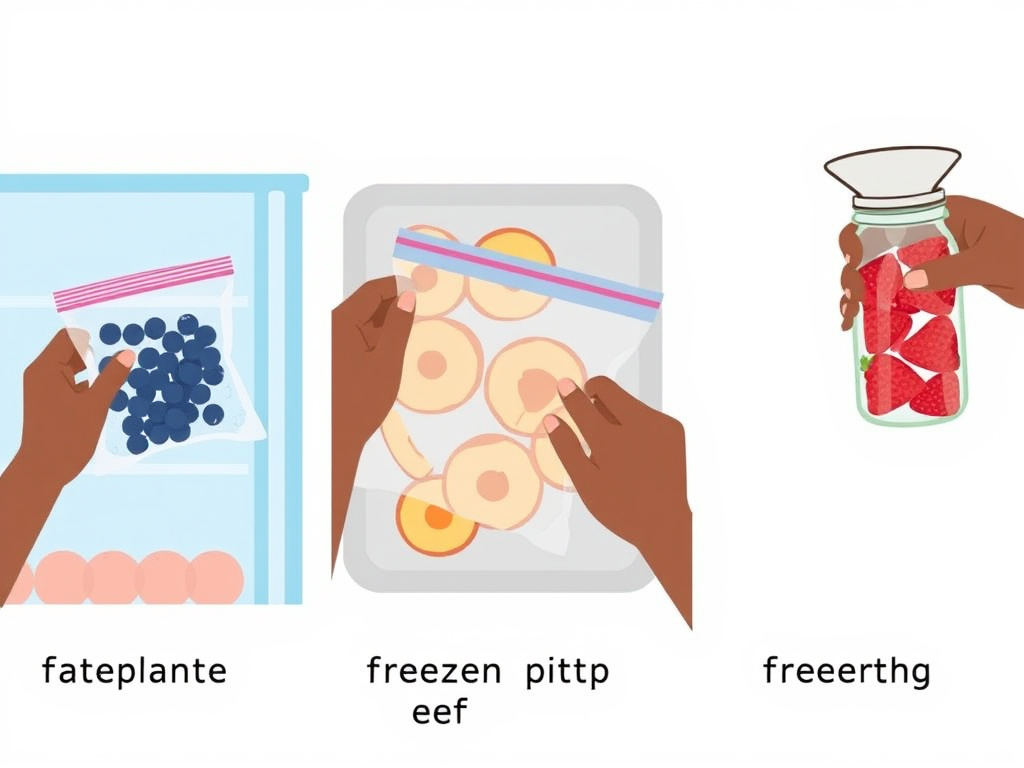
You have three proven paths: cool it for a week, freeze it for a year, or can it indefinitely. The choice hinges on how soon you’ll eat it and how much of the original texture you need to keep.
Refrigeration at 32–38°F in perforated plastic bags maintains 90–95% relative humidity, slowing respiration and microbial growth. Freezing at 0°F or lower halts enzyme activity and prevents pathogen growth. Canning using a validated thermal process destroys spoilage organisms and creates a vacuum seal.
Short-Term: Refrigeration (Days to Months)
This is your default for most fresh fruit. The goal is to slow down the fruit’s own metabolism and the microbes on its surface. It’s not a pause button, it’s a slow-motion setting.
The University of Wisconsin-Madison Extension provides the definitive chart. These numbers aren’t estimates; they’re the result of decades of postharvest physiology research.
| Fruit | Optimal Temp (°F) | Max Shelf Life (Refrigerated) |
|---|---|---|
| Apples | 32–38 | 1–8 months |
| Blueberries | 32 | 7–10 days |
| Peaches & Nectarines | 32 | 2–3 weeks |
| Raspberries & Strawberries | 32 | 7–10 days |
| Sweet Cherries | 32 | 2–3 weeks |
| Pears | 32 | 2–5 months |
The tool you need is a perforated plastic bag. A solid bag traps too much moisture and promotes mold. A perforated bag maintains the 90–95% relative humidity that the University of Tennessee Extension identifies as ideal for most fruit. You can make one by poking 8-10 holes in a standard produce bag.
For berries, add a dry paper towel to the container. It absorbs condensate that would otherwise drip back onto the fruit. Sort them first. One moldy berry contaminates the whole pint within 48 hours.
Common mistake: Washing fruit before refrigerating it. The added moisture accelerates spoilage and creates a perfect environment for mold spores. Wash fruit just before you eat it.
Some fruit fights the cold. Bananas, citrus, melons, and pineapples are tropical. Storing them below 50°F causes chilling injury, pitting, internal browning, and a failure to ripen properly. Let these ripen on the counter, then move them to the fridge only if you need to delay the end for a day or two.
Medium-Term: Freezing (8–12 Months)
Freezing is the most forgiving long-term method for the home cook. It stops the clock on spoilage. At 0°F, bacterial and fungal growth ceases. Enzymatic browning continues, but you can block it.
The NDSU fruit selection guide states frozen fruit maintains top quality for 8 to 12 months at 0°F or lower. Your freezer’s dial might say it’s at 0°F, but only a standalone thermometer confirms it. A freezer running at 10°F cuts that storage life in half.
The method changes with the fruit’s density and water content.
- Berries (blueberries, raspberries): Spread in a single layer on a parchment-lined baking sheet. Freeze solid (2-3 hours), then transfer to an airtight container or vacuum-sealed bag. This “tray freezing” prevents them from clumping into a solid block.
- Stone fruit (peaches, plums): Peel, slice, and treat with an anti-browning solution. A quick dip in a mix of 1 tablespoon lemon juice (or commercial ascorbic acid) to 1 cup water is sufficient. Pat dry, then tray freeze.
- Apples and pears: These are best frozen as pie-ready slices. Toss slices in a sugar or syrup pack (1 part sugar to 4 parts fruit) to protect texture and color before packing.
Your packaging is your final guard. Use heavy-duty freezer bags, pressing out all air, or vacuum-seal. Regular storage bags are too permeable; they allow freezer burn, those dry, grayish patches, within a month or two.
Long-Term: Canning (1+ Years)
Canning is a science of heat, acidity, and seals. It’s the only method here that truly preserves fruit at room temperature. You are not just sealing the jar; you are processing it at a high enough temperature for a long enough time to destroy Clostridium botulinum spores.
There are two machines, and the fruit’s acidity decides which one you use.
| Method | How It Works | Fruit It Preserves |
|---|---|---|
| Water Bath Canning | Jars are submerged in boiling water (212°F). The heat kills molds, yeasts, and some bacteria in high-acid environments. | High-acid fruits: Berries, peaches, apricots, apples, rhubarb. |
| Pressure Canning | Jars are processed in a pressurized vessel reaching 240°F or higher. This temperature destroys botulism spores. | Low-acid fruits: Figs, tomatoes (must be acidified), fruit purees. |
Where this goes sideways: Using an old family recipe without verifying its safety. Acidity levels in fruit can vary. Only use recipes from the National Center for Home Food Preservation, the USDA, or university extensions like the UW Extension fruit storage guide. These recipes have been laboratory-tested for correct processing times and acid levels.
The basic steps are universal: prepare your fruit, pack it into hot sterilized jars, cover with a boiling hot syrup or juice, leave the correct headspace, wipe the rim, apply the lid and band, process for the exact time listed, then let the jars cool to form a vacuum seal. If the lid pops up and down, the seal failed. Refrigerate that jar and use it within a week.
The Science of Spoilage (And How to Stop It)
Preservation isn’t magic. It’s the systematic disruption of the natural processes that make fruit rot. You are fighting four enemies.
1. Ethylene Gas: The Ripening Hormone
Apples, pears, avocados, and stone fruits are “climacteric.” They produce ethylene gas, a plant hormone that triggers ripening, and then over-ripening and decay. This gas is also a potent weapon; one overripe apple in a bowl can speed the demise of the entire bunch.
More critically, ethylene doesn’t just affect fruit. It causes carrots to become bitter, lettuce to yellow and soften, and broccoli to yellow prematurely. The NDSU fruit selection guide explicitly advises storing fruits and vegetables in separate refrigerator drawers.
If you want to ripen a hard avocado or peach faster, use ethylene to your advantage. Place it in a paper bag with an apple or banana. The trapped gas concentrates, speeding up the process. Once ripe, remove it from the bag and refrigerate to slow things back down.
2. Water Loss vs. Mold Growth
This is the humidity balancing act. A fruit is mostly water. If the air around it is too dry, it loses moisture through its skin (transpiration) and becomes shriveled and rubbery. This is why the refrigerator’s general compartment is terrible for produce, it’s a dry, circulating desert.
The solution is high humidity (90-95%), but that brings the opposite risk: condensation and mold. A perforated plastic bag solves both. It keeps the microclimate humid while allowing just enough air exchange to prevent moisture from pooling. This is the technique endorsed by the University of Wisconsin and Tennessee extensions.
Root crops like onions and garlic are the exception. They need dry conditions (65-75% humidity). Storing them at fruit-level humidity makes them sprout and rot. Keep them in a mesh bag in a cool, dark pantry, away from your potatoes (which they can flavor).
3. Enzymatic Browning
When you cut an apple or peach, enzymes (polyphenol oxidase) react with oxygen, turning the flesh brown. It’s not rotten, just oxidized. Refrigeration slows this reaction. Freezing or canning stops it, but only if you intervene first.
Acid denatures the enzyme. That’s why lemon juice, citric acid, or a commercial ascorbic acid powder (like Fruit-Fresh) work. For canning, the syrup or juice you use is often acidified. For freezing, a quick dip is enough. Blanching, a brief boil, destroys the enzymes entirely, which is why it’s a standard step before freezing vegetables, but it’s too harsh for delicate fruit textures.
4. Microbial Attack: Bacteria, Yeast, and Mold
These are everywhere. Refrigeration slows their growth to a crawl. Freezing puts them in stasis. Canning is designed to destroy them. Your first line of defense, however, is always sorting.
A bruised spot is a breach in the fruit’s natural defenses. Mold spores enter there and spread invisible threads (mycelium) through the surrounding flesh. One soft strawberry can spoil the whole clamshell in two days. Always sort your fruit before any preservation step. Use damaged fruit immediately in jam, sauce, or a smoothie.
Choosing Your Method: A Decision Guide
Your fruit’s characteristics, your timeframe, and your intended use point to the right technique. This isn’t a guess.
| Scenario | Best Method | Reason & Tip |
|---|---|---|
| A large flat of peak-season strawberries | Freeze (tray method) | Captures flavor at its best for year-round use in baking and smoothies. |
| A weekly haul of apples from the grocery store | Refrigerate (perforated bag) | Maintains crisp, fresh-eating quality for up to 2 months at 32°F. |
| A tree overloaded with peaches | Canning (water bath) | Preserves the classic “peach in syrup” texture for pies and desserts off-season. |
| A few overripe bananas | Freeze (peeled, whole) | Saves them for future banana bread. Texture is irrelevant once mashed. |
| Fresh herbs like mint or lemon balm | Freeze (in ice cubes) | Flavor is preserved in oil or water cubes, while refrigeration wilts them. |
For specific fruits, our site has deep dives. The principles for preserving tomatoes hinge on acidification for safe canning. The technique for freezing avocados is all about preventing oxidation with lime juice. And the best way to store dehydrated fruit is in airtight containers with oxygen absorbers.
If you want one answer for most common fruit: freeze it. It’s the safest, most flexible method that locks in flavor with the least technical risk. Canning is for the dedicated. Refrigeration is for what you’ll eat this month.
Frequently Asked Questions
Can you preserve fruit without sugar?
Yes. For freezing, you can use plain water packs or unsweetened juices. For canning, you can use water or unsweetened juice, but you must follow a tested “no-sugar-added” recipe from an authority like the National Center for Home Food Preservation. Sugar is a preservative that helps retain color and texture, but it is not the primary safety agent, heat processing is.
How do you know if frozen fruit has gone bad?
Freezer burn is a quality issue, not a safety one. It appears as dry, leathery, grayish patches. The fruit is safe to eat but will have an off-texture and taste. Spoilage in the freezer is rare if it’s kept at 0°F, but if the fruit was contaminated before freezing or thawed and refrozen, you might see ice crystals matted with fruit juice in the bag, a sign of cell rupture and potential quality loss.
What’s the oldest canned fruit you should eat?
Properly canned fruit stored in a cool, dark place is safe to eat indefinitely, as the botulism toxin cannot form in the sterile, sealed environment. However, quality degrades. The NDSU Extension recommends using it within one year for top quality. After several years, color, texture, and flavor fade significantly. Always inspect the jar before opening: the lid should be concave and sealed, with no rust, and the contents should look and smell normal.
Why did my refrigerated grapes get moldy so fast?
Grapes are often stored in solid plastic clamshells that trap moisture. They also have a high surface area and thin skins. The solution is to transfer them to a perforated bag or a container lined with a dry paper towel immediately after purchase. This absorbs excess humidity and extends their life from 3-4 days to over a week.
Is it safe to can fruit in an oven or dishwasher?
No. These are dangerous, untested methods. Ovens do not heat the contents of the jar evenly or to a high enough temperature to guarantee destruction of botulism spores. Dishwashers do not reach or maintain boiling temperatures for a sustained time. Only use a water bath canner or a pressure canner following validated guidelines.
The Bottom Line
Preserving fruit is a series of controlled compromises. You trade perfect fresh texture for extended shelf life. Refrigeration buys you days or months by slowing decay. Freezing buys you a year by stopping it. Canning buys you years by destroying the agents of decay.
The data from extension services gives you the guardrails: 32°F for berries, 0°F for frozen storage, and validated recipes for canning. Your job is to manage the variables they can’t control for you, sorting out the one moldy berry, using a perforated bag instead of a solid one, and keeping your ethylene producers away from your sensitive greens.
Start with what spoils fastest. Tray-freeze your berries. Refrigerate your stone fruit in the right humidity. Can your surplus when you have a full afternoon. Each method is a tool, and now you know which one to pick up first.
