How to Preserve Eggs | 3 Methods That Actually Work
This post contains affiliate links. As an Amazon Associate, we earn from qualifying purchases.
To preserve eggs, you have three proven paths: refrigeration at 40°F (4.4°C) for 3-5 weeks, freezing scrambled eggs for up to 6 months, or the controversial water glassing method for unwashed farm eggs. The USDA and university extensions agree that immediate refrigeration is the safest, most effective method for maintaining both safety and quality.
That 40°F threshold isn’t arbitrary. It’s the line where Salmonella enteritidis bacteria slow to a crawl. Eggs are perishable protein, not shelf-stable pantry items, and treating them like the former is how people get sick. The methods that follow aren’t just about making eggs last; they’re about stopping bacterial growth before it starts.
What follows: the exact temperature and timeline for refrigerator storage, a step-by-step for freezing scrambled eggs that avoids graininess, and a blunt look at water glassing, why most experts warn against it, and the single scenario where it might apply.
Key Takeaways
- Refrigerate eggs at 40°F (4.4°C) or below immediately. They maintain Grade A quality for up to 15 weeks, but for safety, plan to use them within 3-5 weeks.
- Never store eggs in the refrigerator door. Temperature fluctuations from opening the door jar the eggs and reduce shelf life.
- Freezing works best for scrambled whole eggs or separated whites. Add 1½ tablespoons of sugar or corn syrup per cup of beaten eggs to prevent yolks from turning gummy.
- Water glassing (storing unwashed eggs in limewater) is not recommended by food safety experts. Salmonella can be inside the egg from the hen and is not killed by this method.
- Hard-boiled eggs spoil faster than raw ones. Refrigerate them and use within one week; they do not freeze successfully.
The Refrigerator: Your First and Best Tool
Forget room temperature. The U.S. Approach to egg storage is built on one non-negotiable: cold. The USDA’s Agricultural Research Service notes that eggs can maintain Grade A quality after 15 weeks of consistent refrigeration. That’s your quality ceiling. Your safety floor is much shorter.
How Long Can You Store Eggs in the Refrigerator?
Raw eggs in their shell last 3 to 5 weeks in a fridge set at 40°F. This timeline comes straight from federal food safety guidelines. The clock starts when you get them home, not from the pack date.
Common mistake: Storing eggs in the refrigerator door. The door is the warmest part of the fridge and experiences the most temperature swings. Every time you open it, the eggs get jarred and briefly warmed, which accelerates quality decline and can encourage bacterial movement if condensation forms.
Here’s what happens to different egg products if you follow, or ignore, the 40°F rule:
| Egg Product | Refrigerated Shelf Life (at 40°F) | What Goes Wrong If Stored Wrong |
|---|---|---|
| Raw Shell Eggs | 3 to 5 weeks | Salmonella bacteria multiply if left above 40°F for >2 hours; quality (yolk firmness, white clarity) declines. |
| Raw Egg Whites | 2 to 4 days | They thin out and lose their structural integrity for foaming. |
| Raw Egg Yolks | 2 to 4 days | Yolks develop a rubbery skin and thicken, becoming difficult to incorporate. |
| Hard-Boiled Eggs | 1 week | The yolk develops a green-gray ring and a sulfurous smell; the white becomes rubbery. |
| Liquid Egg Substitutes | 10 days (unopened) | Separation occurs, and off-flavors develop. |
The single most effective thing you can do for basic egg storage is to keep the original carton. That cardboard insulates against temperature shifts and prevents the eggs from absorbing strong odors from other foods like onions or fish. It also blocks light, which can degrade nutrients.
Method 1: Freezing Eggs (The Practical Choice)
Freezing is your best bet for long-term storage of eggs you’ve already cracked. It’s a fundamental food preservation technique that works because ice crystals halt all microbial activity. Whole eggs, whites, and yolks all freeze, but they each need a different approach.
Freezing Whole Eggs (Scrambled)
You can’t freeze eggs in their shell. The liquid expands and cracks the shell, making a mess and a safety hazard. The right way is to scramble them first.
What you’ll need:
- A bowl and whisk (or blender)
- A silicone muffin tin or ice cube tray
- Freezer bags
- Sugar or light corn syrup (optional, for texture)
Step-by-step:
- Crack your eggs into a bowl. For every cup of raw, beaten eggs (about 5 large eggs), add 1½ tablespoons of sugar or light corn syrup. This is critical. The sugar interferes with the yolk proteins’ ability to bind too tightly during freezing, preventing the thawed eggs from turning grainy and gummy. Skip this if you’re freezing for savory dishes, but accept the texture change.
- Beat the eggs gently until just combined. Over-beating incorporates too much air and can affect texture.
- Pour the mixture into the compartments of a silicone muffin tin. Each compartment holds roughly the equivalent of one large egg.
- Freeze until solid (about 4-6 hours).
- Pop the frozen egg discs out and transfer them to a labeled freezer bag. Squeeze out excess air and seal.
- Store for up to 6 months.
Where this goes sideways: Thawing frozen eggs at room temperature. The outer layer enters the temperature danger zone (40°F–140°F) while the core is still frozen, giving bacteria a head start. Always thaw overnight in the refrigerator.
Freezing Egg Whites and Yolks Separately
This is the solution for recipes that call for only one part. It’s a key method for preserving egg whites or dealing with leftover yolks.
- Egg Whites: Pour them directly into an ice cube tray or a small container. They freeze perfectly without any additives. Thaw in the fridge.
- Egg Yolks: This is trickier. Yolks thicken into a gelatinous, unusable mass when frozen plain. To prevent this, for every 4 yolks, beat in a pinch of salt (if for savory dishes) or 1½ teaspoons of sugar (if for baking). Freeze in small containers.
The one rule for all frozen eggs: never refreeze them once thawed. The temperature abuse degrades quality and increases safety risks.
Method 2: Water Glassing (And Why It’s Risky)
Water glassing involves submerging clean, unwashed eggs in a solution of hydrated lime (calcium hydroxide) and water. Proponents claim it preserves eggs for a year without refrigeration. The Utah State University research on this method is unequivocal: it is not considered safe.
The problem is Salmonella enteritidis. Research shows this bacteria can contaminate an egg as it’s formed inside the hen. The limewater solution cannot penetrate the shell to kill it. You are essentially pickling an egg that might already be contaminated.
Worth knowing before you start: The limewater creates a high-pH environment that seals the eggshell’s pores, theoretically preventing new bacteria from entering and slowing internal decomposition. It does nothing to pathogens already inside.
If you choose to ignore the warnings and try this method for unwashed eggs from a trusted, small flock, here is the unsafe procedure:
- Use only perfect, uncracked, unwashed eggs. The natural “bloom” must be intact.
- Make a solution of 1 ounce (by weight) of food-grade hydrated lime per quart of filtered, chlorine-free water. Stir well.
- Gently place eggs pointy-side down in a clean, food-grade glass jar.
- Pour the limewater solution over the eggs until they are fully submerged.
- Seal the jar with an airtight lid and store it in a cool, dark, and stable place (like a basement). Do not move it.
Why most people fail at water glassing: They use washed or store-bought eggs, they crack one during loading and spoil the entire batch, or they store the jar where it gets jostled. A cracked egg in the solution rots and can contaminate every other egg in the jar.
Method 3: Preserving Cooked Eggs
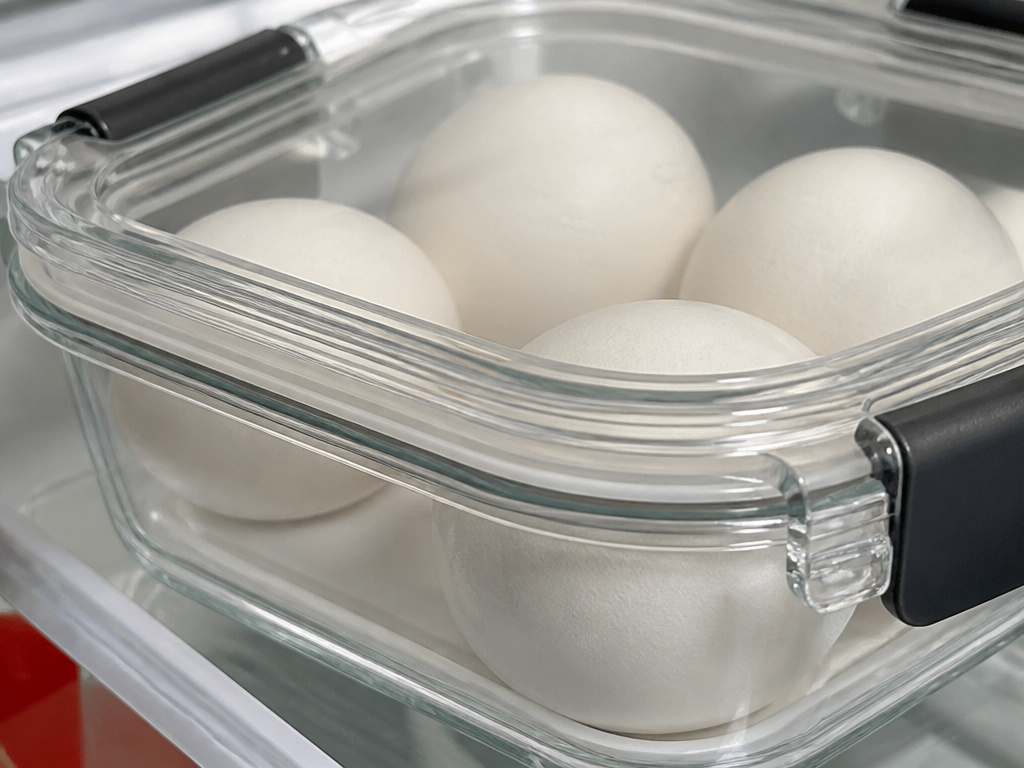
Cooked eggs have a completely different shelf life than raw ones. The cooking process removes some natural protections and introduces moisture, making them more perishable.
Storing Hard-Boiled Eggs
A hard-boiled egg is a race against time. Peel it, and the clock ticks faster. For preserving boiled eggs, follow this rule: refrigerate in a sealed container and consume within one week. The peel is your best friend for keeping hard-boiled eggs fresh; leave it on until you’re ready to eat.
The part nobody mentions: Hard-boiled eggs smell. The sulfur compounds released during cooking will permeate your fridge if the eggs aren’t in a tightly sealed container. Use a dedicated glass container with a snap lid.
For storing peeled eggs, cover them completely with cold water in a container. Change the water every two days. This minimizes the rubbery texture and off-odors. They will not freeze well, the whites turn leathery and watery.
What Not to Do: Oil Coating and Dehydration
You might read about rubbing eggs with mineral oil or dehydrating scrambled eggs into powder. The USDA egg storage PDF is clear: refrigeration is key regardless of washing status. Oil coating is an unreliable method for modern, washed eggs. Dehydrating eggs at home requires precise, high heat to reach a safe moisture level; most home dehydrators cannot do this safely, risking bacterial survival.
Frequently Asked Questions
Can you freeze eggs in their shells?
No. The liquid inside expands when frozen, which will crack the shell. This creates an entry point for bacteria and makes a mess. Always crack and beat eggs before freezing.
How can you tell if an egg is still good?
Perform the float test. Place the egg in a bowl of cold water. A very fresh egg will lie flat on the bottom. An egg that tilts upwards or stands on one end is older but may still be safe. An egg that floats is likely bad and should be discarded. Always crack questionable eggs into a separate bowl first to check for off-odors or discoloration.
Why do other countries store eggs at room temperature?
Some European countries vaccinate hens against Salmonella and do not wash the eggs’ protective “bloom” off. The U.S. Relies on washing and immediate refrigeration. A comprehensive study by USDA ARS food technologist Deana Jones compared both approaches and concluded the U.S. Method (refrigeration) is most effective for safety and quality.
Can you preserve egg yolks alone?
Yes, but they require special treatment. Beat in salt or sugar before freezing to prevent them from becoming thick and gelatinous. Plain frozen egg yolks are virtually unusable.
Is it safe to water glass store-bought eggs?
Absolutely not. Store-bought eggs in the U.S. Are washed, which removes the natural bloom. The limewater solution cannot properly seal a washed shell, and the eggs may already have been refrigerated, making them unsuitable for the method. This is a fast track to spoilage.
Before You Go
Your default pick for preserving eggs should always be immediate, consistent refrigeration at 40°F. It’s the method backed by every major food safety authority, from the USDA egg safety guidelines to university extensions. Freezing scrambled eggs is your next best, most versatile option for long-term long-term egg storage.
View water glassing as a historical curiosity, not a practical plan. The risks, specifically, the inability to kill internal Salmonella, outweigh the potential reward for almost every home user. Your goal isn’t just to make eggs last; it’s to make them last safely.
