
Can You Put a Deep Freezer Outside for Permanent Storage?
This post contains affiliate links. As an Amazon Associate, we earn from qualifying purchases.
You can put a deep freezer outside only if it’s explicitly rated for outdoor or “garage-ready” use, and even then, only within a specific ambient temperature range printed in its manual. A standard indoor freezer will fail in cold weather because its compressor stops cycling, letting internal temperatures rise until your food thaws.
That failure isn’t random. It’s a predictable mechanical stop built into the unit to protect itself. The compressor senses the cold outdoor air through its condenser coils and assumes its job is done, so it shuts down. Your freezer stops freezing.
What follows is a breakdown of the three specs that decide this, drawn straight from manufacturer service manuals most articles don’t cite. We’ll cover the hidden failure mode, the exact temperature thresholds that matter, and which models are built to beat the cold.
Key Takeaways
- A standard deep freezer fails outdoors because its compressor stops running below about 45°F (7°C), letting internal temps climb.
- Look for the ambient temperature range on the spec sheet; an outdoor-rated unit like the Danby DAR044A1SSO works down to 45°F, while lab freezers like the Thermo Scientific RDE series require a minimum of 59°F.
- Garage-ready or outdoor-rated models have a compressor heater or a different refrigerant cycle to operate in cold conditions.
- Weather resistance is not waterproofing; an outdoor unit needs a covered, level surface and proper electrical protection.
- The warranty on most indoor units is voided if installed in an unconditioned space like a garage or shed.
The One Failure Mode That Thaws Your Food
It sounds backwards. You put a freezer in a cold space, and it stops freezing. The food thaws. This isn’t a defect; it’s the appliance working as designed for an indoor climate.
The compressor senses ambient temperature through its condenser coils. When the air around it drops below the unit’s rated minimum, often around 45°F (7°C), the system assumes the cabinet is already cold enough. It stops the cooling cycle to prevent damage from overworking in thick, cold refrigerant oil. The internal temperature then drifts upward, following the ambient air, and everything inside slowly defrosts.
I learned this the hard way. A freezer we moved to an unheated garage ran fine through the fall. Come December, with outdoor temps dipping into the 30s, packages in the top started getting soft. The motor seemed quiet, too quiet. A repair tech asked one question over the phone: “Is the space heated?” The answer was no. He diagnosed it in seconds: the compressor wasn’t cycling on because it was too cold outside. The fix was a compressor heater kit, a band-aid for a unit never meant to be there.
The consequence is specific and time-bound. In a week of 40°F nights, the internal temperature can climb from -10°F to well above 32°F. You lose a full stock of food, and the repeated freeze-thaw cycles stress the sealed system, leading to a much earlier total failure.
Garage-Ready vs. Standard: The Specs That Matter
The difference between a freezer that survives outside and one that dies there is in the manual, under “Installation Environment” or “Ambient Temperature Range.” This is the single most important spec to check.
| Freezer Type / Model | Rated Minimum Ambient Temp | Rated Maximum Ambient Temp | Key Constraint |
|---|---|---|---|
| Standard Indoor Freezer | ~45°F (7°C) | ~110°F (43°C) | Fails below min temp; compressor stops. |
| Danby DAR044A1SSO (Outdoor) | 45°F (7°C) | Not stated; avoid direct sun | Weather-resistant, not waterproof. |
| Thermo Scientific RDE Series | 59°F (15°C) | 90°F (32°C) | Lab-grade, indoor only; 60% max humidity. |
| Dometic DE/EA Series (Outdoor) | 50°F (10°C) | 100.4°F (38°C) | Built for mobile outdoor use (e.g., RV, patio). |
| Garage-Ready Models | As low as -15°F (-26°C) | 110°F (43°C) | Contains compressor heater; wider operational band. |
The Dometic manual is explicit: its DE 15F and EA 24F models are for “mobile outdoor built-in” use, with an operating range of 50°F to 100°F. Conversely, the manual for the Thermo Scientific -40°C Ultra-Low Temperature Freezers states they are for “indoor use only” and require an ambient between 59°F and 90°F. Putting a $10,000 lab freezer in a garage voids its warranty and breaks it.
Where this goes sideways: Assuming “freezer” equals “cold appliance” and missing the ambient spec. The compressor doesn’t know you’re in Minnesota; it only knows the air around its coils is 30°F, which is below its minimum. It shuts off. Your venison is room-temperature by morning.
Why Temperature Extremes Break More Than the Compressor
Cold is the obvious killer. Heat is the silent one. Prolonged exposure to direct sunlight or a poorly ventilated shed can bake a freezer’s exterior, overworking the condenser.
Common mistake: Placing a freezer in a sunny corner of a shed or against a sun-baked wall. The Danby outdoor compact refrigerator manual warns that “prolonged exposure to extreme heat or direct sunlight may adversely affect performance.” The exterior absorbs heat, the compressor runs non-stop to shed it, and energy consumption spikes. In extreme cases, the overload protection trips, shutting the unit down completely.
The mechanical reason is straightforward. The condenser coils need to dissipate heat. If the surrounding air is already hot, they can’t. The system pressure builds, the compressor labors, and efficiency plummets. You might hear it running constantly on a summer afternoon. That’s the sound of a shortened lifespan.
Humidity and precipitation bring a third set of problems. While an outdoor-rated unit like the Danby is “weather resistant,” its manual clarifies it is “not waterproof.” This distinction matters.
- Condensation: In humid climates, moisture condenses on cold surfaces. On an outdoor unit, this can seep into electrical components.
- Corrosion: Over time, moisture accelerates rust on hinges, latches, and the cabinet itself.
- Electrical Hazards: All outdoor installations require a GFCI (Ground Fault Circuit Interrupter) outlet. The Maxx Cold Select Undercounter Freezer manual stresses that the unit “must be properly grounded” and to “have the wall outlet and circuit checked by a qualified electrician.”
For a secure installation that manages these risks, the principles of a proper garage installation apply directly to any outdoor setting.
How to Prep an Outdoor Space for a Freezer
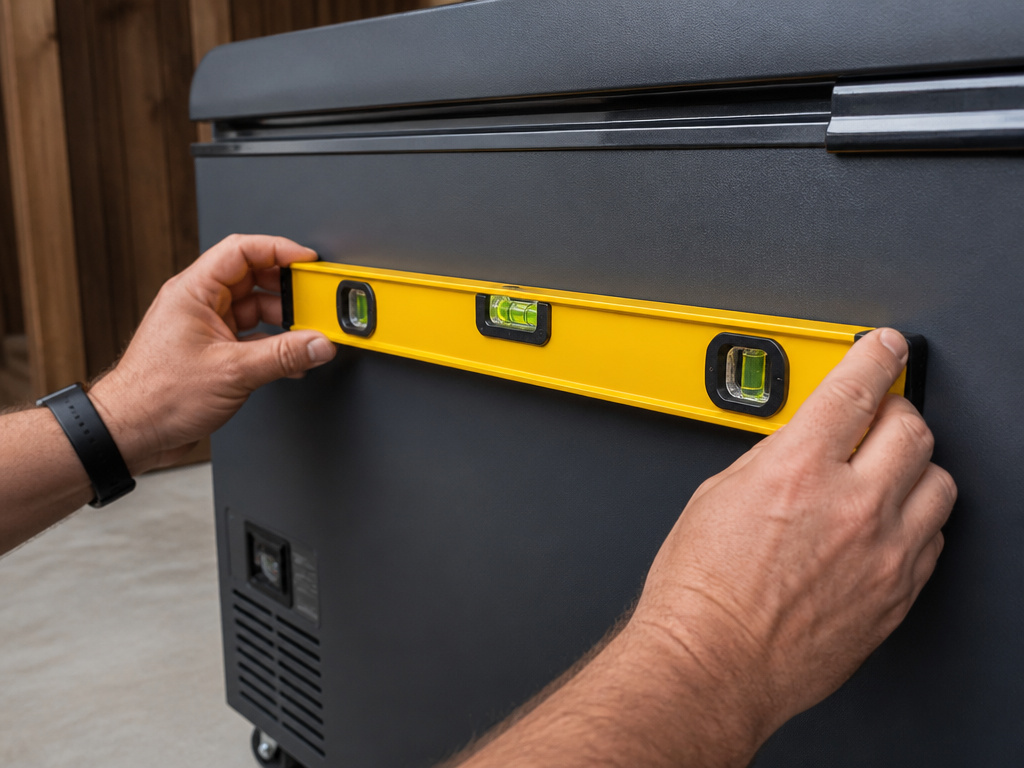
You have a garage-ready or outdoor-rated model. The space still needs work. This isn’t just about clearing a spot; it’s about creating a stable microclimate.
1. Choose a Covered, Level Surface.
The spot must be under a roof, eave, or awning, never directly exposed to rain or snow. A level concrete pad is ideal. Use the unit’s adjustable feet to ensure it’s perfectly level. An unlevel freezer strains the compressor and can prevent doors from sealing.
2. Ensure Massive Airflow.
Manufacturers specify clearance for a reason. The Danby requires 5 inches on the back, sides, and top. The Thermo Scientific lab units need 8 inches on top and sides, 6 inches in back. This isn’t optional. Blocking these vents traps heat around the condenser, which is how you cook the compressor. This rule is just as critical for a chest freezer in a shed.
3. Upgrade the Electrical.
This is the step DIYers skip, and it’s the one that causes fires or shocks. * Use a dedicated outlet on its own circuit. * The outlet must be a GFCI type. * Never use an extension cord. Every manual consulted, from Danby to Maxx Cold, prohibits them. They overheat and undervolt the compressor.
4. Consider a Thermal Buffer.
In zones with extreme temperature swings, an insulated shed is far better than an open carport. The insulation smooths out the highs and lows, keeping the ambient temperature within the unit’s operating band longer. For a freezer destined for such a space, understanding garage-ready features is essential.
The Real Cost of Using the Wrong Freezer Outside
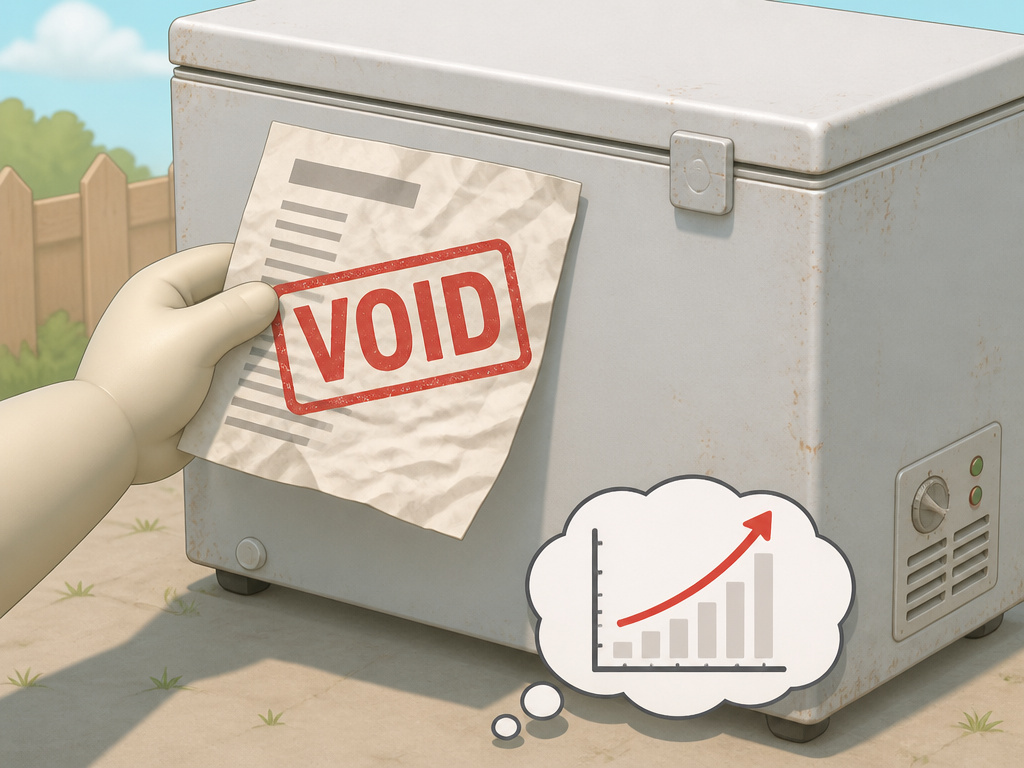
It’s not just spoiled food. The financial and functional hits compound quickly.
Voided Warranty.
This is the first and biggest cost. The warranty section of the Thermo Scientific manual is typical: it covers defects for indoor use within the specified ambient range. Installing it in an unconditioned garage or shed is an explicit violation. A $500 repair is now out-of-pocket.
Sky-High Energy Bills.
A standard freezer in a hot space runs constantly. In a cold space, it might cycle oddly or run a defrost heater more often. Both waste power. You’re paying to slowly destroy an appliance.
Premature Total Failure.
Compressors are designed for a certain number of start-stop cycles under specific conditions. Operating outside those conditions causes undue stress. The unit might last two years instead of ten. When it’s time to replace it, you’ll be shopping for one from a list of best garage freezers designed for the job.
The bottom line: using an indoor freezer outdoors is a short-term solution with a long-term bill attached. It transforms a reliable deep freezer into a problematic liability.
What to Buy If You Need Freezer Space Outdoors
Skip the gamble. Buy a unit engineered for the environment from the start. Here’s how to decode the labels and marketing.
Look for “Garage-Ready” or “Outdoor Rated.”
These aren’t just marketing terms. They indicate the inclusion of a compressor heater or a refrigerant cycle that functions in cold air. Brands like Frigidaire, GE, and Whirlpool have specific garage-ready lines. Their spec sheets will list an extended ambient temperature range, often as low as -15°F.
Trust the Manual, Not the Sales Page.
Before you buy, find the PDF of the product manual online. Search for “ambient temperature” or “installation environment.” That number is the truth. The sales page might say “great for garages,” but the manual holds the legal specs.
Prioritize Known Outdoor Models.
For a dedicated outdoor spot like a patio, consider models literally built for it. The Danby DAR044A1SSO Outdoor Compact Refrigerator is one example, rated down to 45°F. The Dometic DE series is built into outdoor kitchens and RVs. For a garage, a garage-ready chest freezer from a major appliance brand is the default choice for most households. It offers the widest temperature tolerance. If you’re comparing types, our guide to upright deep freezers includes which models carry the garage-ready designation.
If your project involves modifying a unit, like turning a chest freezer into a cold plunge, you must also address sealing a freezer to prevent water damage, a separate and critical challenge.
Frequently Asked Questions
Can a deep freezer be left in an unheated garage?
Yes, but only if it is specifically designed as a “garage-ready” model. A standard deep freezer will malfunction when garage temperatures fall below approximately 45°F (7°C), as its compressor will stop cycling. Always verify the minimum ambient temperature in the product’s manual before installing it.
What temperature is too cold for a freezer?
Standard freezer’s compressor is designed to operate within a specific ambient range, typically starting around 45°F (7°C). If the surrounding air gets colder than this threshold, the compressor may not turn on, causing the internal temperature to rise. Garage-ready models are engineered to operate at much colder ambient temperatures, sometimes as low as -15°F (-26°C).
Do you need a special freezer for the garage?
Yes, you need a garage-ready or outdoor-rated freezer. These models contain a crucial component, often a compressor heater, that allows them to operate correctly in the wide temperature swings typical of garages and sheds. Using a standard indoor freezer in a garage will likely void the warranty and lead to premature failure.
Will a freezer work in a shed?
It can, but the shed must provide a stable, dry, and level environment, and you must use a garage-ready freezer. The shed should be insulated to mitigate extreme temperature swings, and the freezer must have proper electrical service (a dedicated GFCI outlet). Review our guide on freezer in a shed installation for detailed steps.
How do I know if my freezer is garage-ready?
Check the owner’s manual or product specifications for an “ambient temperature range.” If the listed minimum temperature is at or below 0°F (-18°C), it is likely garage-ready. Also, look for explicit phrasing like “garage-ready,” “all-season,” or “outdoor” in the model name or description from the manufacturer.
What happens if a freezer gets too hot outside?
If a freezer is placed in direct sunlight or a poorly ventilated hot space, its condenser cannot dissipate heat efficiently. The compressor will run continuously, drastically increasing energy consumption and the risk of overheating. This sustained stress can trigger thermal overload protection, shutting the unit down, and significantly shorten its lifespan.
The Bottom Line
Putting a deep freezer outside is a question of matching the appliance’s engineered limits to your environment’s reality. The manual holds the answer, specifically, the ambient temperature range on the spec sheet. A standard freezer belongs indoors. For a garage, shed, or patio, you need a unit built for the job.
Invest in a garage-ready model from the start. The upfront cost is higher, but it’s cheaper than replacing spoiled food, paying for repairs not covered by warranty, and buying a new freezer in three years. Place it on a level, covered surface with generous clearance, and never compromise on proper GFCI electrical service. Your freezer isn’t just an appliance you buy; it’s one you install correctly.
