
How Did People Store Meat Before Fridges: Ancient Methods
This post contains affiliate links. As an Amazon Associate, we earn from qualifying purchases.
People stored meat before fridges by using six core methods: drying, salting, smoking, fermenting, cool storage (cellars, iceboxes), and potted preservation with fats. These techniques worked by removing moisture, introducing antimicrobial agents, or maintaining a consistently cool temperature to halt bacterial growth.
The real answer isn’t just a list of techniques. It’s a timeline game against spoilage, played with the physics of water, chemistry, and simple engineering. Each method attacks a different variable bacteria need to thrive.
What follows is a breakdown of the six methods, the specific science behind why each one works, and the surprising archaeological evidence, like 11,000-year-old mammoth meat preserved in ponds, that shows just how effective they were. You’ll see the difference between a method that gives you weeks (salting) and one that gives you months (smoking plus salting).
Key Takeaways
- Salt and smoke are a powerful duo. Salting draws out moisture; smoking deposits antimicrobial compounds on the surface. Combined, they can preserve large cuts for months.
- Temperature is the silent partner. Even a simple meat safe hung in a cool, shaded breeze could extend freshness by days, buying time for other preservation.
- Anaerobic environments are a wildcard. Submerging meat in cold, low-oxygen water (like a pond or bog) allows Lactobacilli bacteria to ferment it, preserving it for months, a method verified with modern deer and horse meat.
- Drying is the most universal but requires perfect conditions. Stripped thin and exposed to constant dry air, meat becomes jerky, shelf-stable for months. Humidity ruins it in days.
- Iceboxes were precision tools. A well-insulated icebox with a large block of ice in a top compartment could maintain a compartment temperature near 0°C (32°F), mimicking a modern refrigerator for short-term storage.
The 6 Core Methods of Pre-Refrigeration Meat Storage
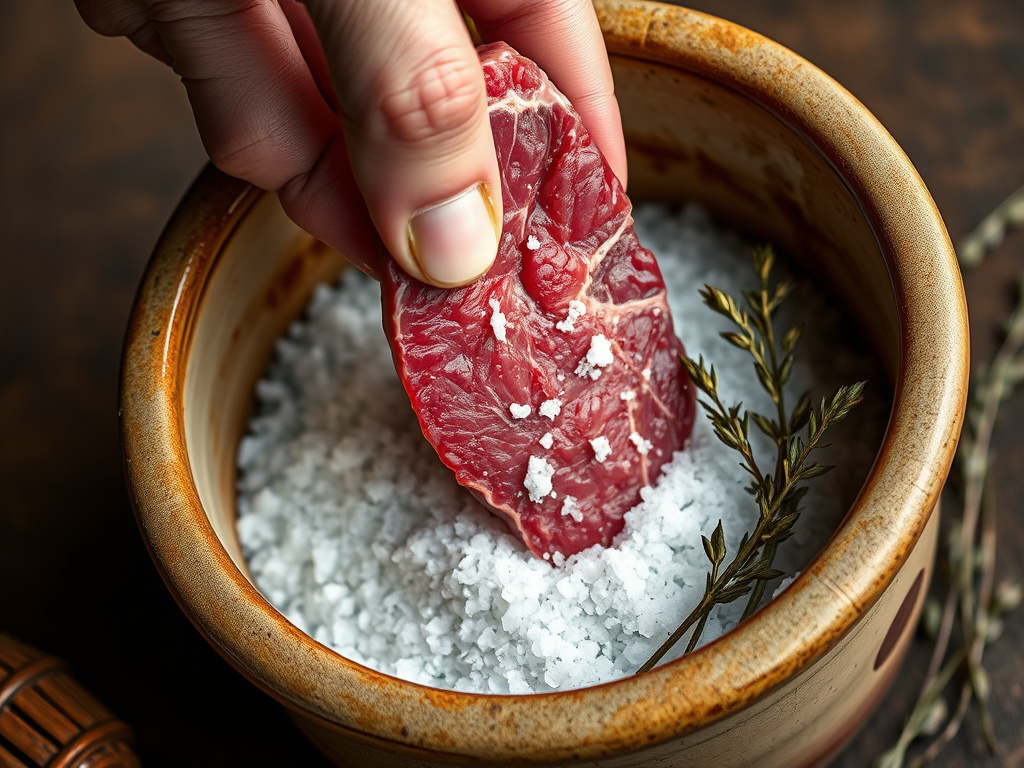
Forget the idea of a single “best” method. Pre-industrial storage was about matching the technique to the meat, the climate, and the needed shelf life. The goal was always to disrupt the conditions bacteria need: moisture, moderate temperature, oxygen, and a neutral pH.
The effectiveness spectrum ranged from days to over a year. This table maps the primary methods to their mechanism and realistic shelf life.
| Preservation Method | How It Works | Typical Shelf Life (Pre-Industrial) |
|---|---|---|
| Cool Storage (Cellar/Meat Safe) | Lowers temperature to slow bacterial growth. | Days to a few weeks. |
| Salting (Dry or Brine) | Draws moisture out via osmosis, creating a high-salt environment bacteria cannot tolerate. | Weeks to months. |
| Drying/Jerking | Removes water content entirely, leaving no medium for microbial life. | Months to a year+. |
| Smoking | Deposits antimicrobial phenols and acids on the meat’s surface while also drying it. | Months (especially when combined with salting). |
| Fermentation (e.g., Pond/Bog) | Lactobacilli bacteria produce lactic acid, lowering pH and preserving tissue in cool, low-oxygen environments. | Months, potentially through a winter season. |
| Potted / Confit | Seals cooked meat in a layer of fat (lard, tallow, butter), creating an airtight, anaerobic barrier. | Weeks to months in a cool place. |
The FAO meat preservation manual notes that while drying creates shelf-stable meat, long-term storage requires protection from humidity and oxygen. Traditional wraps like linen fail here; modern vacuum sealing in laminated films is the technological answer to an ancient problem.
Each method has a failure point you can see, smell, or taste. Salted meat not fully submerged in brine will grow mold at the air interface. Jerky stored in a damp cellar will soften and spoil within a week. Knowing these limits dictated everything from butchering season to household architecture.
Drying: Removing the Water Entirely
Bacteria need water. Remove it, and you stop the spoilage process completely. This is the principle behind jerky and biltong.
The process is simple in theory but exacting in practice. Meat is sliced into thin, uniform strips to maximize surface area. It’s then exposed to a constant flow of dry, warm air, sun, wind, or the ambient heat of a smokehouse. The result is a tough, chewy product that can last for months or even years in a dry environment.
Where this goes sideways: Drying meat in a humid climate. Without consistent low humidity, the meat surface never fully dehydrates. It becomes a leathery casing trapping moisture inside, where bacteria flourish unseen. The batch will sour within a week.
The Britannica meat preservation entry confirms drying is one of the most common methods, precisely because it targets the fundamental requirement for microbial life. The key was always controlling the environment after the fact. Storing jerky in a sealed crock or, as the FAO manual suggests, a simple polyethylene bag kept atmospheric moisture from rehydrating it and undoing all the work.
Salting and Brining: The Osmotic Attack
Salt doesn’t just add flavor; it’s a desiccant. When applied to meat, it creates a hypertonic environment. Water inside the muscle cells is drawn out through the cell membranes into the surrounding salt, a process called osmosis. This reduces the water activity (aw), a specific measurement of available water for microbes, below the level where most bacteria can survive.
There were two main approaches: * Dry Curing: Rubbing large granules of salt (and often saltpetre for color and added preservation) directly onto meat cuts. The meat was then packed in more salt in barrels. * Brining: Submerging meat, especially larger cuts like hams, in a saturated saltwater solution. This was often done in stoneware crocks stored in a cool cellar.
The method of salting meat was particularly crucial for pork in colonial America. Its higher fat content aided preservation, and the plentiful salt supply made it a viable, large-scale technique. Every part of the pig, once salted, could be stored for the lean months.
Smoking: Not Just for Flavor
Smoking is rarely used alone. It’s the finishing step for salted or dried meat. The real preservation power comes from the cocktail of compounds in wood smoke, phenols, acids, and formaldehyde, that have antimicrobial and antioxidant properties.
These compounds settle on the meat’s surface, creating a barrier against new microbial contamination and slowing fat oxidation (rancidity). Simultaneously, the gentle heat and airflow of the smokehouse continue the drying process started by salting.
The traditional smokehouse design was clever. A fire was built not inside the chamber but outside, with the smoke channeled through a buried flue several feet long. As the smoke traveled through the cool earth, its temperature dropped significantly. By the time it reached the meat chamber, it was cool smoke, ideal for preservation, not cooking. This prevented the fat from rendering out and kept the meat in a state of suspended animation.
Fermentation and Anaerobic Environments
This is the most counterintuitive method. Instead of fighting bacteria, you recruit a specific, friendly type. The story of the Michigan mammoth illustrates it perfectly.
Over 11,000 years ago, hunters submerged large pieces of mammoth meat in cold, shallow ponds. Researcher Daniel Fisher’s experiments with deer and horse meat show why this worked. The cold water slowed spoilage, but the real hero was Lactobacilli, bacteria naturally present in the environment. In the low-oxygen (anaerobic) conditions, these bacteria fermented the meat, producing lactic acid. This acid preserved the muscle tissue, much like it preserves sauerkraut or yogurt. The meat remained edible for months, even through to the following summer.
A similar principle was behind bog butter in Northern Europe. Dairy products were buried in the cold, acidic, oxygen-poor peat of bogs, where they would chemically transform and remain preserved for years. These methods weren’t anomalies; they were calculated uses of a specific ecological niche for preserving meat in the wild.
Cool Storage: Cellars, Iceboxes, and Meat Safes
Before mechanical refrigeration, “cool” was a relative term, but even a slight temperature drop buys critical time. This was the domain of root cellars, iceboxes, and meat safes.
A root cellar leverages the earth’s thermal mass. Several feet underground, temperatures remain stable and cool year-round, often between 7-13°C (45-55°F). This was enough to store salted meats, potted goods, and even fresh vegetables for extended periods.
The icebox was a more advanced appliance. As described by the National Park Service icebox article, it was an insulated wooden cabinet lined with tin or zinc and packed with straw, sawdust, or cork. A large block of ice in a top compartment cooled the air, which naturally circulated down to the food shelves below. A drip pan caught meltwater. A well-maintained icebox could keep an interior temperature close to 0°C (32°F), allowing for short-term storage of fresh meats and dairy.
The humble meat safe was the simplest tool. It was a wooden cupboard with sides made of fine wire mesh, allowing air circulation while keeping flies out. Its power came from placement: hung outside a window or on a shaded north-facing wall where it could catch a cool breeze. This alone could extend the life of fresh meat by a day or two in temperate weather.
Potted Meat and Confit: The Fat Seal
This method cooks the meat first, then seals it away from air. Cooked meat is packed tightly into crocks or jars, and then covered completely with rendered fat (like lard or tallow), butter, or sometimes broth. As the fat cools and solidifies, it creates an airtight, anaerobic seal that prevents new bacteria from entering.
Common in European traditions for preserving waterfowl like duck (confit) or smaller cuts of pork, this method provided ready-to-eat preserved meat that could last for months in a cool cellar. The fat itself, now infused with meat flavors, could be used for cooking.
Why Butchering Season Was Autumn and Winter
You didn’t preserve meat whenever you felt like it. The calendar dictated the process. Large animals like pigs and cows were almost exclusively butchered in the fall or early winter. The reason is straightforward: temperature control.
In an era without refrigeration, a hog butchered in a humid Virginia summer would spoil in mere days despite any preservation efforts. The cold ambient air of late autumn acted as a giant, natural walk-in cooler, giving families the crucial window of time, often just a few days, to process hundreds of pounds of meat through salting, smoking, and rendering.
Smaller game and chickens were consumed fresh year-round because they could be eaten in one or two meals. The principles of food storage for a homestead were built around this seasonal glut. You preserved in the cold months to eat through the warm ones.
How Long Could Meat Actually Last?
The timelines weren’t guesses; they were hard-earned knowledge. Failure meant hunger or sickness. * Fresh Meat in a Meat Safe/Cool Cellar: 1-3 days, depending on outdoor temperature. * Salted Meat in Brine (Cool Cellar): 3-6 months. Larger cuts like hams could last longer. * Smoked & Salted Meat (Smokehouse then sack): 6-12 months. The combination was the gold standard for long-term storage. * Fully Dried Jerky (Dry storage): 1 year or more, provided it was kept dry. * Potted Meat under Fat (Cool Cellar): 2-4 months.
Contrast this with modern, refrigerator-based timelines from Kansas State University: ground meat lasts 1-2 days, beef cuts 3-4 days, and raw poultry 1-2 days at proper temperatures. The old methods traded immediate convenience for extraordinary shelf life.
Frequently Asked Questions
How did ancient people discover these preservation methods?
Most techniques were likely discovered through a combination of accident and observation. For example, meat left near a salt lick or in a salty tide pool might have stayed edible longer, leading to intentional salting. Early humans observed that meat dried quickly in certain arid environments and did not spoil, establishing the practice of making jerky.
Was any meat preserved without using salt or smoke?
Yes, one notable method was fermentation through submersion in cold, anaerobic water like a bog or deep pond. This environment encourages friendly bacteria to produce lactic acid, which preserves the meat. Archaeological finds, such as bog butter and fermented seafood in various cultures, demonstrate this “wild fermentation” process.
Did people ever combine these methods for better results?
Absolutely, combining methods was common and highly effective. A typical process involved first salting meat to draw out moisture and then smoking it to add a protective layer of antimicrobial compounds. This combination could preserve large cuts like hams and sides of bacon for many months, far longer than either method alone.
How reliable were iceboxes compared to modern refrigerators?
Iceboxes were effective but far less reliable and consistent. Their performance depended entirely on a steady supply of harvested ice, which could be compromised in a warm spell or due to poor insulation. They could mimic a fridge’s cool temperature for short-term storage but lacked precise humidity and temperature control, making long-term preservation risky.
The Bottom Line
Pre-refrigeration meat storage wasn’t about magic. It was applied food science using water activity, pH, and temperature. People combined methods, salting then smoking, or fermenting then drying, to build layered defenses against spoilage.
The takeaway for a modern kitchen isn’t that we should abandon our fridges. It’s understanding that these techniques still work. Making your own jerky, curing a slab of bacon, or even preserving meat with a vacuum sealer are direct descendants of these ancient practices. They connect us to the fundamental battle against decay, a battle won for millennia with salt, smoke, and ingenuity.
