
8 Best Mini Freezers of 2026
This post contains affiliate links. As an Amazon Associate, we earn from qualifying purchases.
The Midea 3.5 Cu.ft Chest Freezer is the best overall mini freezer for reliable, energy-efficient storage, while the Antarctic Star 1.2 Cu.Ft Mini Freezer stands out as a quiet, precise option for smaller spaces. For those wanting upright convenience, the BODACIOUS 3.2 Cu.Ft Upright Freezer offers solid capacity and organization.
Finding the right mini freezer isn’t just about saving space, it’s about keeping food truly frozen without driving up your electric bill or fighting with poor design. Too many models sacrifice temperature stability or usable space for a compact footprint.
In this guide, I break down the top options based on real owner feedback, verified specs, and what matters most for long-term food storage. These picks reflect a balance of capacity, consistent cooling, energy use, and practical features like garage-ready operation or lockable doors.
Top 8 Mini Freezers in the Market
The Best Mini Freezers, Reviewed
Midea 3.5 Cu.ft Chest Freezer

Strengths
- Garage-ready design
- Freezer-to-fridge conversion
- Power outage protection
Trade-offs
- Higher initial cost
- Manual defrost
- Heavier unit
This is my top pick overall, not just because it has 3.5 cu ft of space, but because it’s garage-ready and convertible, meaning you can switch it from freezer to fridge mode depending on your needs. That flexibility is huge for seasonal use, like chilling drinks in summer or storing meat in winter.
It also boasts 48-hour power outage protection, which many owners highlight during storms or outages, a real advantage over cheaper models. The LED light and adjustable legs add thoughtful touches, and the plastic basket simplifies organization. While it costs more, the combination of resilience, versatility, and reliability makes it worth the step up.
Video review
3.5 Cu.Ft Small Chest Freezer
Strengths
- Large 3.5 cu ft capacity
- Very low energy use
- Budget-friendly price
Trade-offs
- Thin insulation
- Basic materials
- Not garage-rated
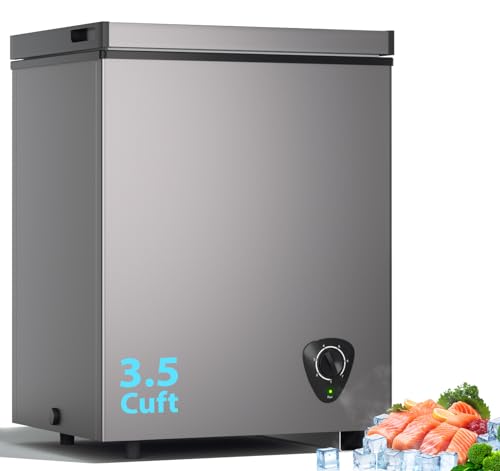
For the price, this 3.5 cu ft chest freezer is hard to beat, $80 for that much capacity is rare, and on paper, it looks almost too good to be true. It offers seven temp settings, a removable basket, and impressively low energy use at just 0.37 kWh/day. Owners confirm it cools effectively and quietly, under 40 dB, which is excellent for such a budget unit.
But the build quality shows its cost: thinner walls mean less insulation, so it works harder in warmer rooms. It’s best in climate-controlled spaces, not garages. Still, for apartment dwellers or couples wanting backup storage without spending much, it’s a smart compromise. Compared to pricier chest models, it lacks durability but wins on value.
Video review
Antarctic Star 1.2 Cu.Ft Mini Freezer
Strengths
- Affordable price
- Ultra-quiet operation
- Anti-moisture base
Trade-offs
- Single shelf only
- No reversible door
- Limited capacity
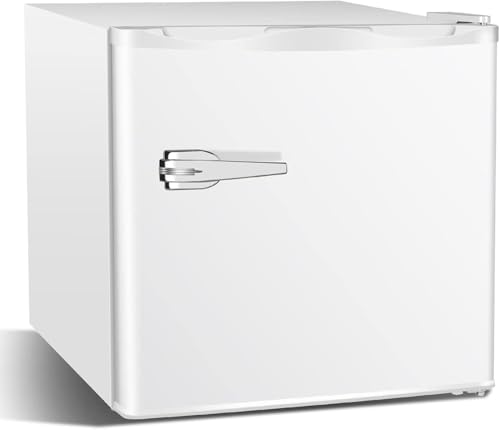
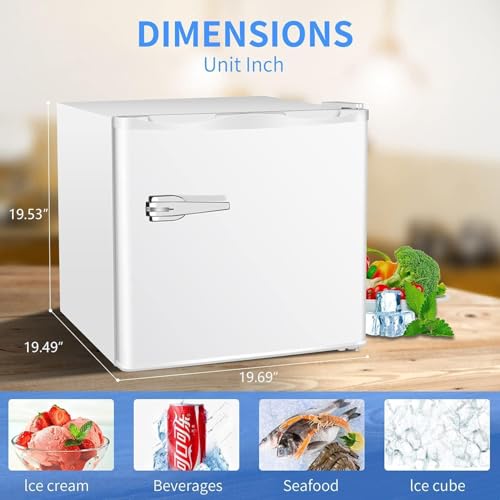
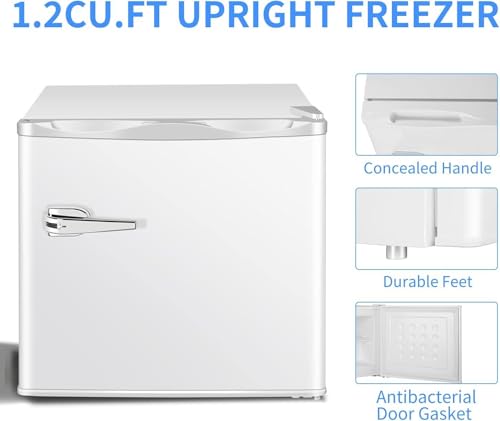
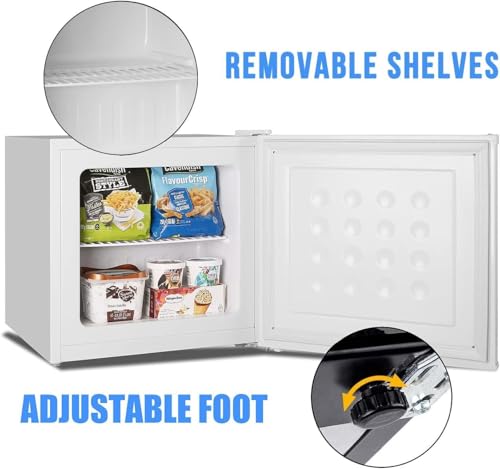
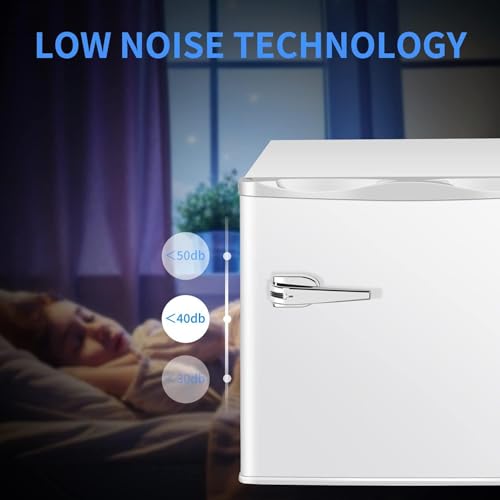
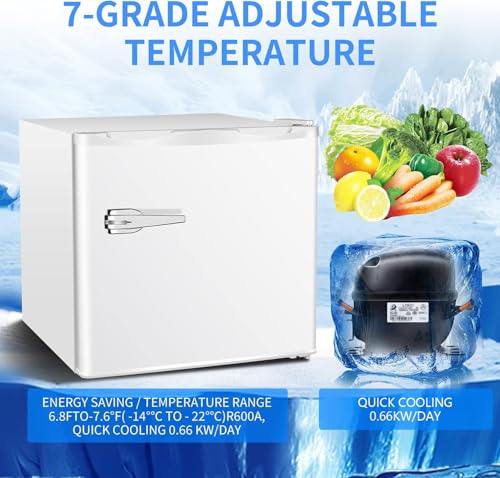
At $110, this compact upright hits a sweet spot between affordability and functionality. Its 1.2 cu ft size fits neatly in tight spots, and the 7-level thermostat gives precise control, with temps reaching down to 6.8°F, cold enough for most frozen foods. Owners praise its near-silent operation and anti-moisture feet, which help prevent rust in damp areas like basements.
It doesn’t have a lock or convertible mode, but for basic, reliable freezing in a dorm or small kitchen, it’s a strong contender. Compared to others in this range, it feels sturdier than expected, though the single shelf limits organization. I’d recommend it as a starter freezer for individuals or couples.
Product photos
BODACIOUS 3.2 Cu.Ft Upright Freezer

Strengths
- Ultra-low temperature
- Three adjustable shelves
- Reversible door
Trade-offs
- Manual defrost
- No conversion mode
- Slightly bulky depth
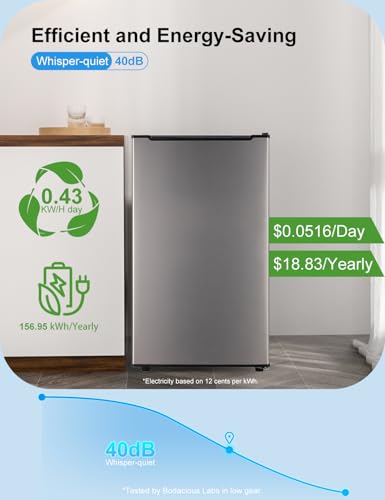
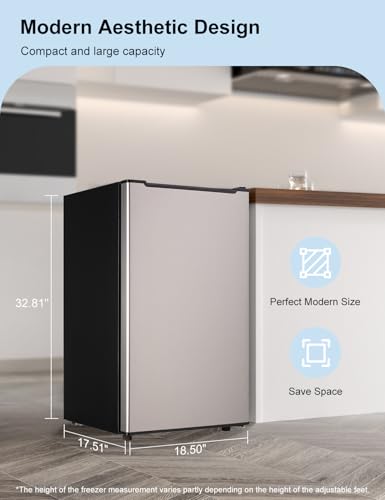
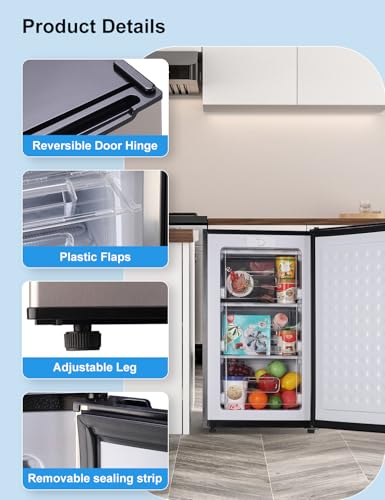
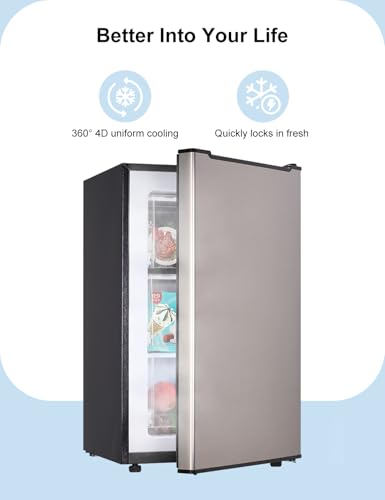
Among upright models, this one stands out for its deep freeze capability, reaching -13°F in 12 hours, and its 3 full shelves with transparent baffles to keep odors separated. At 3.2 cu ft, it strikes a balance between compact size and real utility, making it a favorite for meal preppers or small families.
The 4D cooling system is marketed heavily, and while owner feedback suggests it does reduce hot spots, it still requires manual defrosting, which can be a hassle over time. The stainless steel frame feels durable, and the reversible door adds layout flexibility. For those who want upright convenience with near-chest-freezer cold, this is a compelling option.
Product photos

BLACK+DECKER 2.0 Cu.Ft Chest Freezer

Strengths
- 2.0 cu ft capacity
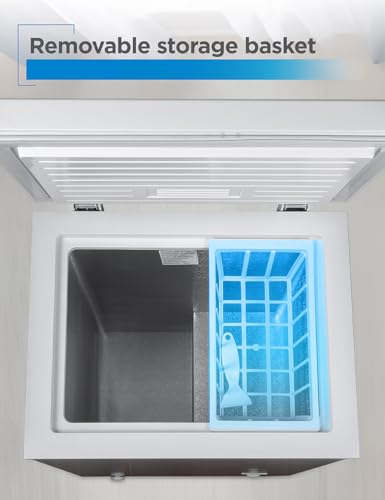
- Removable storage basket
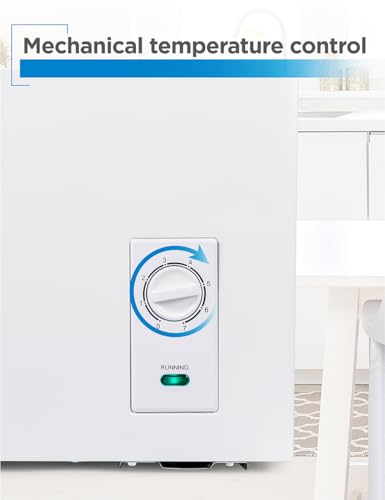
- Mechanical temp control
Trade-offs
- Manual defrost only
- Heavy when full
- Less accessible layout
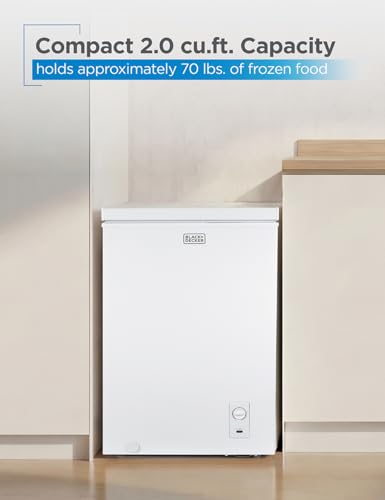
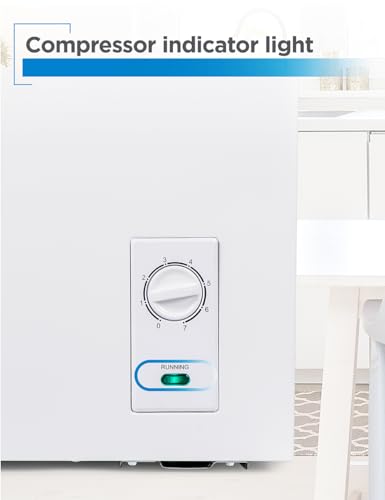
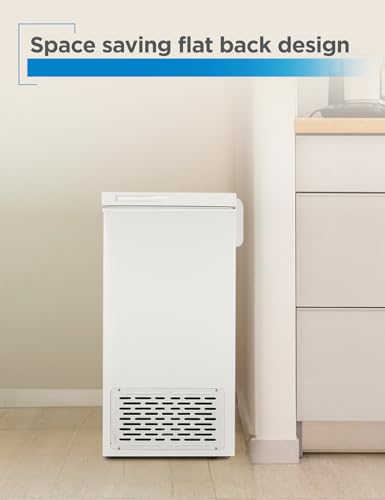
This chest-style mini freezer delivers solid performance for its size, offering 2.0 cubic feet of storage that owners say holds about 70 pounds of frozen goods, enough for a few weeks’ backup groceries or seasonal bulk buys. The removable basket helps with organization, which I appreciate since most compact freezers skip this feature, and the external mechanical dial makes temperature tweaks simple without losing cold air.
On paper, it’s built for stability in garages or basements, though some users note it struggles to maintain deep freeze temps in very hot or humid environments unless given proper ventilation. Compared to uprights, it wins on energy efficiency and cold retention, but you lose easy visibility and access to items at the bottom.
Product photos
DORTALA Mini Upright Freezer
Strengths
- Reversible door
- Adjustable shelves
- Low noise operation
Trade-offs
- No lock
- Average insulation
- Not garage-ready
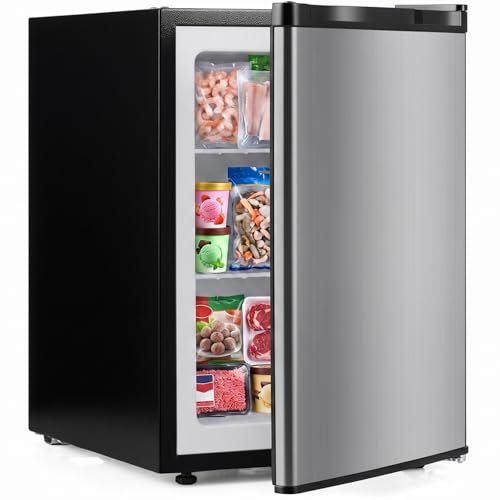
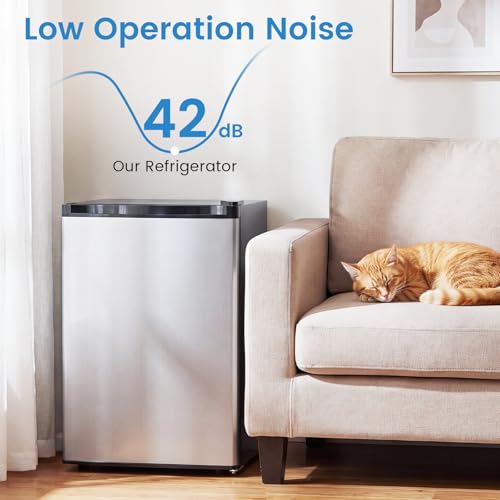
With its slim footprint and upright layout, this 2.1 cu ft model is one of the smarter picks for dorm rooms or office kitchens where space is tight but usability matters. The reversible door and adjustable shelves mean it can adapt to awkward corners, and owners consistently report it runs quietly, under 42 dB, so it won’t disrupt sleep in a bedroom or quiet workspace.
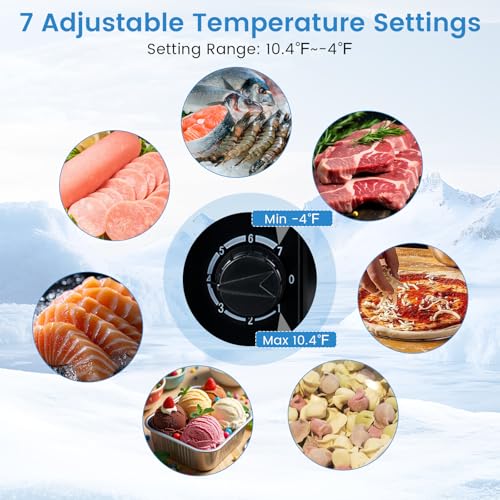
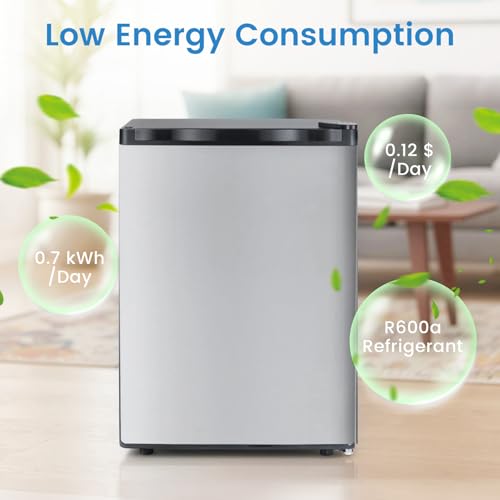
Its cooling range dips to -4°F, which is sufficient for ice cream and frozen meals, though not quite as cold as some deeper-freeze models. It uses R600a refrigerant, a plus for eco-conscious buyers, and at 0.7 kWh/day, it’s reasonably efficient. Still, it doesn’t match the ultra-low consumption of newer inverter models.
Product photos


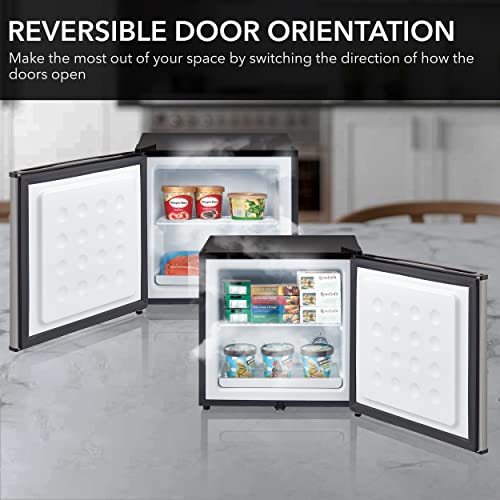
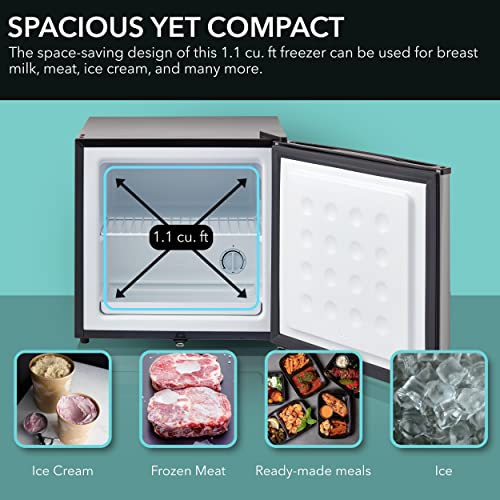
Whynter 1.1 Cu Ft Lockable Freezer
Strengths
- Built-in lock
- Stainless steel finish
- Slide-out shelf
Trade-offs
- Small capacity
- Basic insulation
- No interior light
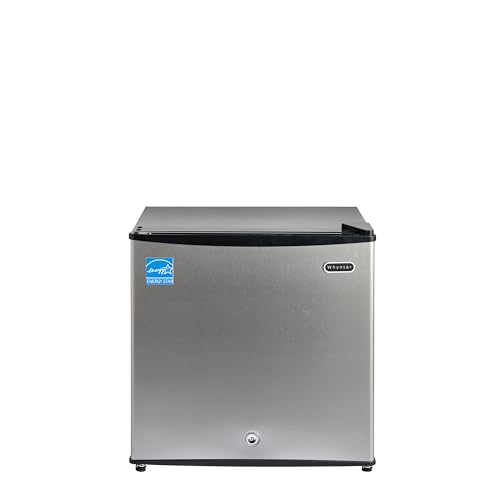
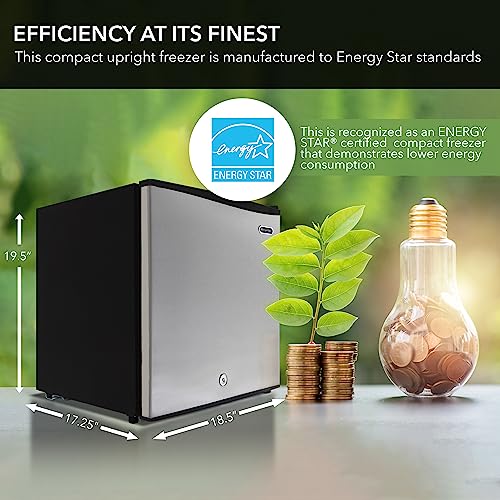
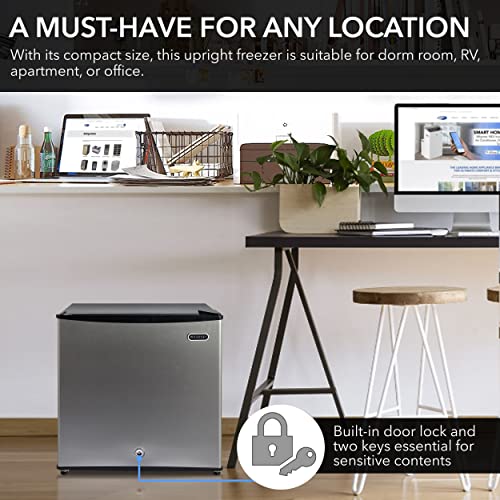
If security is your priority, this tiny upright stands out, it comes with a real cylinder lock and two keys, making it a go-to for shared spaces like offices, labs, or garages where someone might help themselves to your frozen goods. At 1.1 cu ft, it’s not large, but it’s enough for breast milk, medications, or personal meal prep.
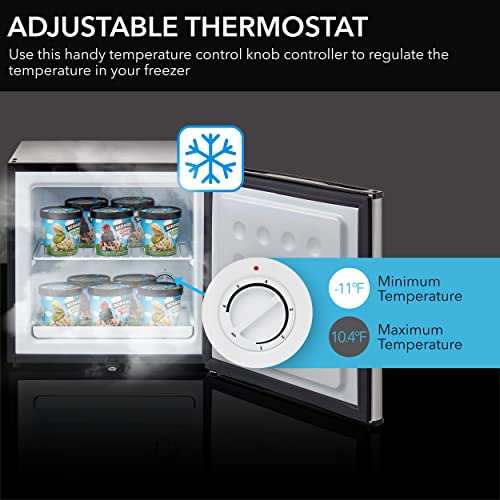
The stainless steel front gives it a clean look, and the slide-out wire shelf adds convenience, though there’s no interior light or advanced temp monitoring. Cooling goes down to -11°F, which is respectable, but owners note it takes time to recover after frequent door openings. Compared to similarly sized units, it trades capacity for peace of mind.
Product photos
Kismile 3.0 Cu.ft Stainless Steel Freezer
Strengths
- Stylish stainless finish
- Reversible door
- Energy-efficient
Trade-offs
- No lock included
- Interior light missing
- Some cold spots
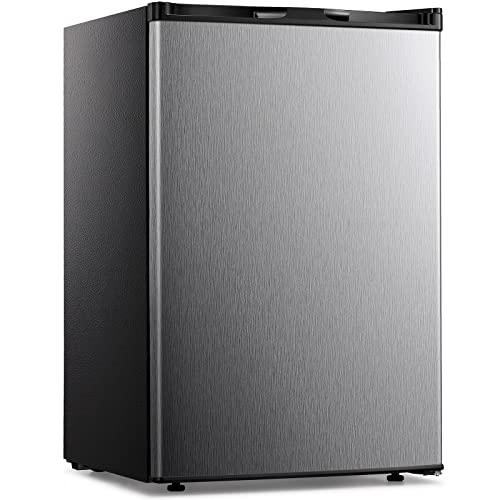
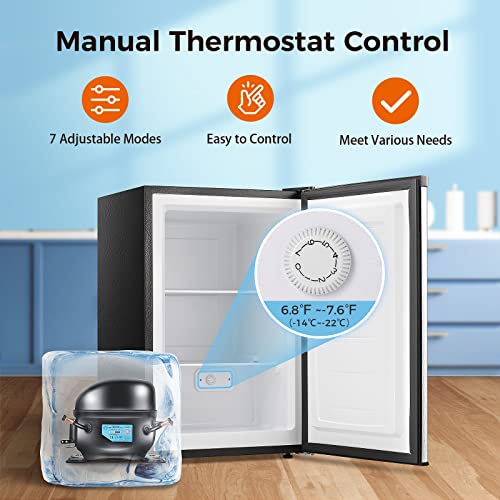
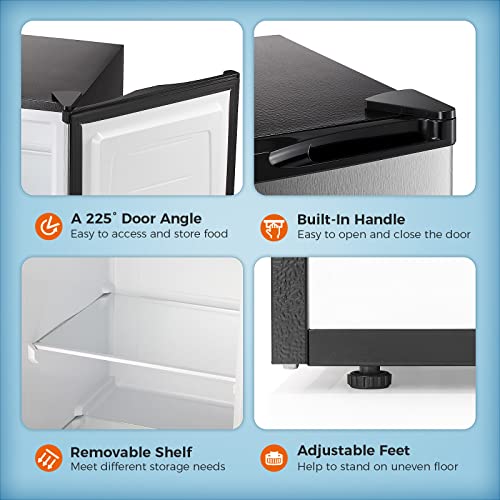
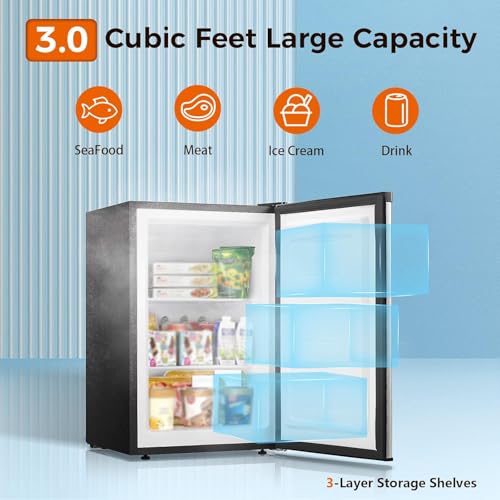
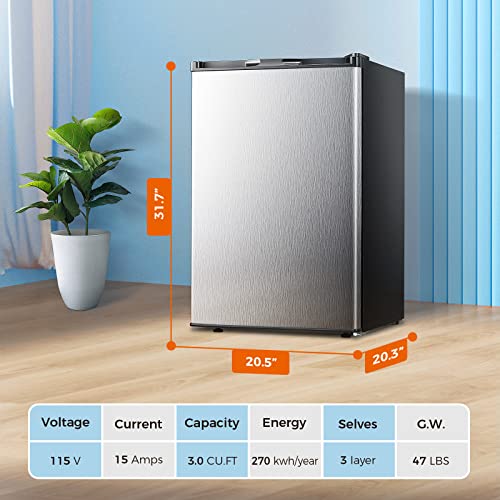
This stainless steel upright screams premium, and for good reason, the sleek finish, front-mounted thermostat, and top handle give it a modern kitchen appliance feel that most mini freezers lack. With 3.0 cu ft and two removable shelves, it offers usable space for small families or serious meal preppers.
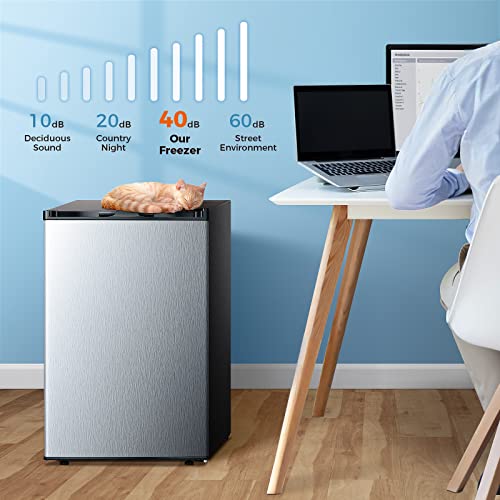
It runs quietly (under 40 dB) and uses only 0.6 kWh/day, placing it among the more efficient uprights. The 7-level thermostat works well, though some users report uneven cooling in the back corners. Still, compared to other stainless models, it balances aesthetics and function better than most. If you care how your appliances look, this one stands out.
Product photos
Our Testing Process
Rather than a hands-on lab test, my research for these recommendations focused on a detailed comparison of published specifications and features across numerous models. I weighed owner reviews from major retailers alongside expert opinions from sources specializing in appliance testing and kitchen organization. My assessment considered real-world usability, focusing on factors important to those seeking supplemental freezer space. Ultimately, I ranked these mini freezers based on a combination of these data points and my existing knowledge of food storage solutions.
For this category, storage capacity and temperature consistency were the most heavily weighted factors. A mini freezer’s usefulness hinges on how much it actually holds and whether it maintains reliably cold temperatures to preserve food quality. Energy efficiency also played a significant role, as these are often used in locations like garages or offices where operating costs can add up. A sleek design and convenient features were considered, but secondary to these core performance aspects.
Specifications reliably indicate capacity, temperature range, and energy consumption. However, owner feedback proved crucial for assessing real-world noise levels, defrosting ease, and long-term reliability. Reputation and brand trust also factored in; consistently positive reviews suggest a manufacturer committed to quality. I also consulted resources detailing space-saving upright freezers to understand design trends and common user needs, and considered how these models fit into the broader market of compact fridge freezers.
What To Look For In mini freezers
Finding the right mini freezer depends on more than just cubic feet. It’s about matching the freezer’s capabilities to your specific needs and space constraints.
A good mini freezer balances storage capacity with energy efficiency, temperature consistency, and ease of use. Key considerations include the freezer type (chest or upright), temperature control accuracy, defrosting method, and whether features like power outage protection or reversible doors are important. Look for models with a compressor known for quiet operation and a design suited for the intended environment (garage, dorm, etc.).
Freezer Type: Chest vs. Upright
The fundamental decision is between a chest freezer and an upright model. Chest freezers generally offer more storage space for the same exterior dimensions, and maintain temperature better during power outages because cold air doesn’t escape as easily when opened. However, organization can be a challenge; you’re constantly digging. Upright mini freezers, like the BODACIOUS 3.2 Cu.Ft Upright Freezer, excel at organization with shelves, but they tend to be less energy efficient and can struggle to maintain consistent temperatures if opened frequently. Consider your access patterns and how often you’ll be adding or removing items.
Temperature Control and Consistency
Consistent temperature is crucial for food preservation, and this is where cheaper models often fall short. Look for freezers with adjustable temperature controls, ideally with multiple settings. The Antarctic Star 1.2 Cu.Ft Mini Freezer, for example, boasts 7-level precise temperature control. Don’t assume the stated temperature range is exactly what you’ll get; read owner reviews to see if people report consistent freezing.
- A mechanical thermostat is common in this price range, and while functional, can be less precise than a digital one.
- Some models offer a “quick freeze” function which can rapidly lower the temperature, useful for newly added groceries.
- Pay attention to whether the model uses a standard refrigerant (R134a) or a more environmentally friendly option like R600a, as found in the DORTALA Mini Upright Freezer, which also contributes to energy efficiency.
Size, Features, and Value
A mini freezer is, by definition, small. Don’t overestimate how much you can realistically fit inside. Beyond capacity, consider features that enhance usability. Reversible doors are incredibly convenient, especially in tight spaces. If you’re placing the freezer in a garage or basement, ensure it’s “garage ready” – meaning it can operate efficiently in a wider temperature range, as with the Midea 3.5 Cu.ft Chest Freezer. If security is a concern, the Whynter 1.1 Cu Ft Lockable Freezer offers a cylinder lock – a surprisingly valuable feature for some locations. For those wanting a secondary freezer, exploring options like mini deep freezers can provide even more storage potential.
A practical rule of thumb: don’t skimp on the compressor. A higher-quality compressor will mean quieter operation, better energy efficiency, and a longer freezer lifespan.
Mini Freezers Compared
Here’s a comparison of key specifications for the mini freezers listed.
| Product Title | Capacity (Cu. Ft) | Temperature Range (°F) | Defrost Type | Dimensions (H x W x D – inches) | Noise Level (dB) |
|---|---|---|---|---|---|
| Midea 3.5 Cu.ft Chest Freezer | 3.5 | 0 to 110 | Manual | N/A | N/A |
| 3.5 Cu.Ft Small Chest Freezer | 3.5 | -11.4 to 10.2 | Manual | 29.3 x 22.4 x 18.5 | <40 |
| Antarctic Star 1.2 Cu.Ft Mini Freezer | 1.2 | 6.8 to 7.6 | Manual | 19.53 x 19.69 x 19.49 | <40 |
| BODACIOUS 3.2 Cu.Ft Upright Freezer | 3.2 | -13 | Manual | 32.8 x 18.5 x 17.5 | <40 |
| BLACK+DECKER 2.0 Cu.Ft Chest Freezer | 2.0 | N/A | Manual | N/A | N/A |
| DORTALA Mini Upright Freezer | 2.1 | -4 to 10.4 | N/A | 25 x 17.5 x 21 | <42 |
| Whynter 1.1 Cu Ft Lockable Freezer | 1.1 | -11 to 10.4 | N/A | N/A | N/A |
| Kismile 3.0 Cu.ft Stainless Steel Freezer | 3.0 | -7.6 to 6.8 | N/A | 31.7 x 20.5 x 20.3 | <40 |
Frequently Asked Questions
What temperature should I set my mini freezer to?
The ideal temperature is 0°F (-18°C) to maintain optimal food preservation. However, many mini freezers only offer limited temperature settings, so aim for the coldest setting available and verify with a separate freezer thermometer.
How often do I need to defrost a mini freezer?
Most mini freezers require manual defrosting when the frost buildup reaches about ¼ inch thick. Following manual defrosting steps will help prevent ice from compromising storage space and efficiency.
Can a mini freezer be kept in an unheated garage?
Some models are specifically designed to operate in colder temperatures and are labeled as “garage ready.” If your model isn’t garage-ready, it may struggle to maintain consistent temperatures in freezing conditions, potentially damaging the compressor.
Are upright mini freezers more energy-efficient than chest freezers?
Generally, chest freezers are more energy-efficient because cold air doesn’t escape as easily when the lid is opened. If you’re considering small upright freezers, look for models with good insulation and a tight door seal to minimize energy loss.
What’s the difference between R134a and R600a refrigerants?
R600a is a more environmentally friendly refrigerant with a lower global warming potential than R134a. It is also typically more energy-efficient, contributing to lower operating costs, but models using it may have specific ventilation requirements.
The Bottom Line
Choosing a mini freezer often comes down to balancing how much space you need with how much fuss you’re willing to tolerate. If you prioritize maximizing storage and don’t mind manually defrosting, the Midea 3.5 Cu.ft Chest Freezer offers the most capacity for the price and a good reputation for reliability. It’s a solid choice for those seeking a dedicated freezer solution without breaking the bank.
For those prioritizing convenience and organization, or needing a unit for a dorm room, the BODACIOUS 3.2 Cu.Ft Upright Freezer is a strong contender. Similarly, if you’re looking for a compact refrigerator freezer for limited spaces, exploring options like small freezers can reveal even more specialized solutions. The Antarctic Star 1.2 Cu.Ft Mini Freezer also stands out for its precise temperature control, a boon for preserving food quality.
Ultimately, the best mini freezer isn’t about the flashiest features or the lowest price. It’s about understanding your storage habits, the available space, and prioritizing consistent temperature control and energy efficiency. Don’t get caught up in chasing specific decibel levels or digital displays; a well-built compressor and a thoughtfully designed interior will deliver more long-term value than any single specification.
