
6 Best Garage Freezers of 2026
This post contains affiliate links. As an Amazon Associate, we earn from qualifying purchases.
The ICEVIVAL 11 Cu.Ft Upright Freezer stands out as the best overall garage freezer for its reliable performance, garage-ready design, and smart features. For a more budget-friendly option, the Hamilton Beach 14 cu ft Chest Freezer offers excellent capacity and durability. If you prefer upright convenience without overspending, the Midea 7.1 Cu.ft Upright Freezer is a solid choice.
Garages are tough environments for appliances, temperatures swing from freezing in winter to sweltering in summer, and most standard freezers can’t keep up. That’s why picking a unit built to handle those extremes matters more than just size or style.
As someone who’s spent years researching how to store food safely and efficiently, I focused this guide on models proven to maintain consistent temperatures, resist frost, and last in real-world conditions. These picks are based on specs, owner feedback, and what actually matters when your freezer lives outside the kitchen.
Top 6 Garage Freezers in the Market
The Best Garage Freezers, Reviewed
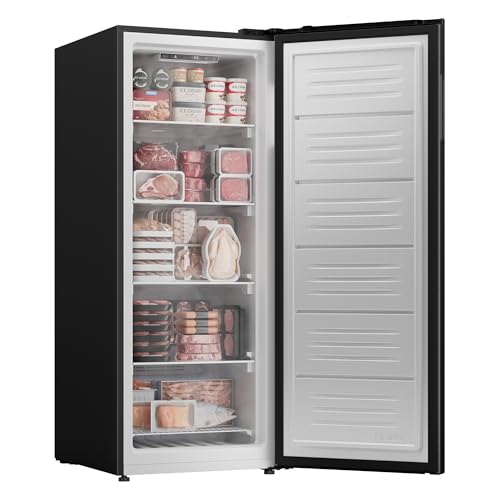
ICEVIVAL 11 Cu.Ft Upright Freezer
Strengths
- Convertible modes
- Frost-free operation
- Spacious 11 cu.ft. interior
Trade-offs
- Higher price point
- Larger footprint
- Not as energy efficient as chest models
This upright stands out in the garage freezer game because it’s not just a freezer. The ability to switch between fridge, subzero, and fast freeze modes gives it serious versatility that most dedicated freezers don’t offer. On paper, the 11 cu.ft. layout with four removable glass shelves makes organizing bulk buys or meal-prepped containers much easier than digging through a chest model. Owners consistently report the frost-free system actually works as promised, no chiseling ice after months of use, which is a major win for anyone tired of seasonal defrost marathons.
The Fast Freeze setting at -18°F is a smart feature for preserving texture in fresh meat or homemade stock, and reviewers note the compressor recovers temperature quickly even after door openings. It’s built to handle garage temps, but its real edge is adaptability: you could use it as a party fridge in summer and a deep freeze in winter. Compared to the Midea, it offers more space and finer control, though it costs more.
Video review
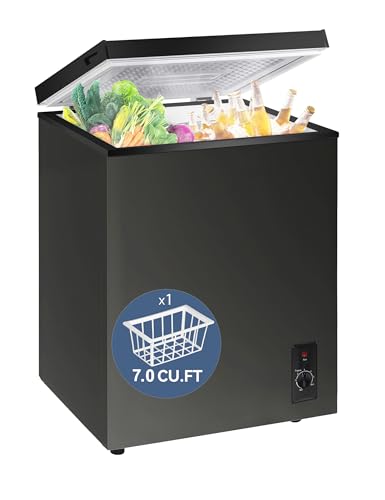
7.0 Cu Ft Chest Freezer
Strengths
- Very affordable
- Low running cost
- Quiet performance
Trade-offs
- Basic temperature dial
- No lock on lid
- Plastic basket feels flimsy
At this price, the value is hard to ignore. For under $250, you get a full-size chest freezer with solid energy efficiency, around $0.05 per day to run, and quiet operation that won’t disturb nearby rooms. The 6-setting thermostat offers basic but effective control, and the removable basket helps separate items without adding clutter. What stands out in owner feedback is how well it performs in unheated garages, maintaining stable temps even in winter lows.
It lacks premium touches like a lock or digital display, but it covers the essentials: durable build, exterior drain, and low noise. Compared to the Kismile, it’s slightly less refined but nearly $120 cheaper. If you’re setting up your first deep freeze or need overflow storage without breaking the bank, this model delivers exactly what it promises.
Video review
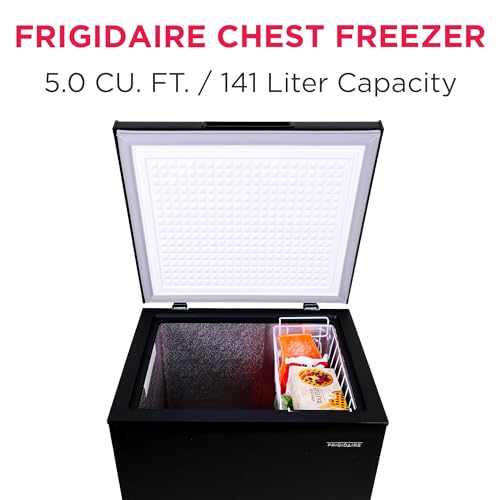
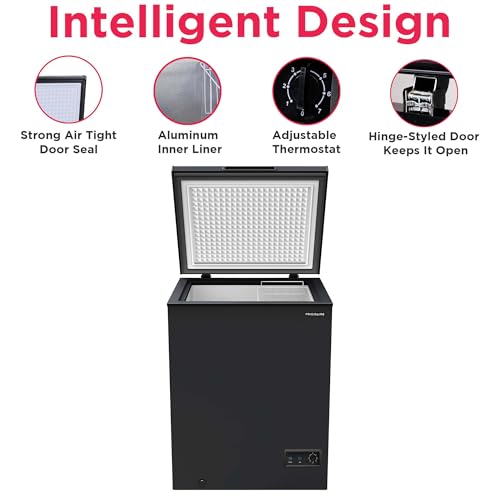
FRIGIDAIRE 5.0 Cu.Ft Chest Freezer

Strengths
- Compact and lightweight
- Simple, reliable controls
- Aluminum interior
Trade-offs
- Limited capacity
- Only one basket
- Manual defrost
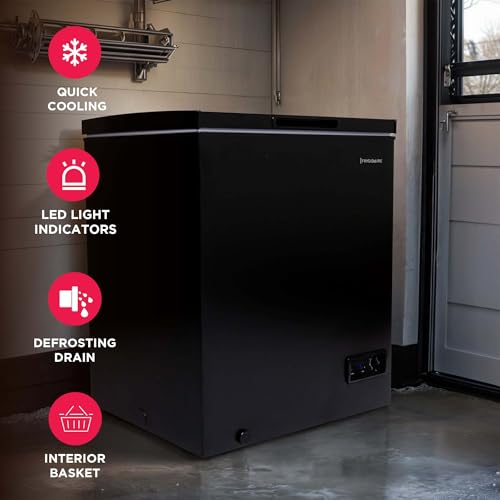
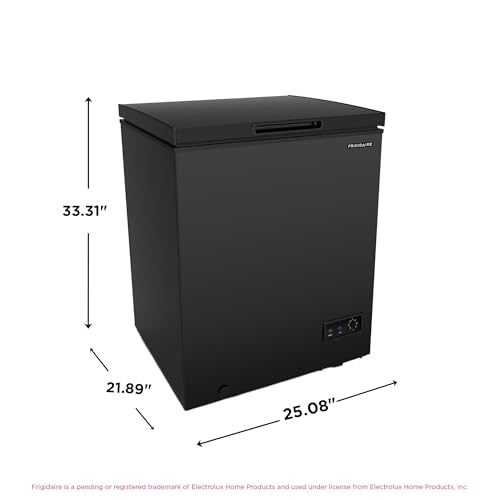
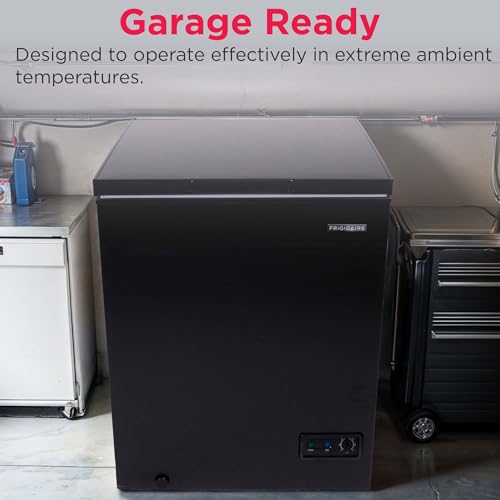
Sometimes you just need a small, no-nonsense freezer, and this Frigidaire delivers. At 5.0 cu.ft., it’s compact enough for tight corners, dorms, or under-counter setups, yet still holds a surprising amount of frozen goods. The single removable basket keeps small items from vanishing, and the seven-setting thermostat gives enough range for most needs. It’s garage ready, so it handles temperature swings without issue, and the aluminum liner resists dents better than plastic alternatives.
It’s not meant to replace a primary freezer, but as a supplemental unit, it shines. Compared to the larger Hamilton Beach, it’s far more portable and easier to manage solo. For someone with limited space or a modest storage need, this is a clean, functional pick. I’d choose it over bigger models if I only needed extra room for ice cream, frozen veggies, or backup meds.
Product photos
Hamilton Beach 14 cu ft Chest Freezer

Strengths
- Massive 14 cu.ft. capacity
- Energy efficient
- Lockable lid
Trade-offs
- Heavy once full
- Harder to organize
- Manual defrost only
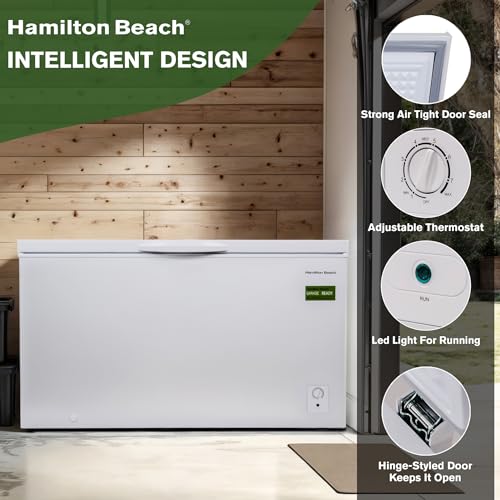
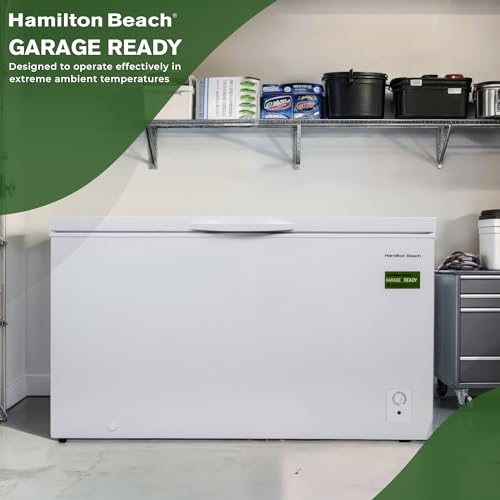
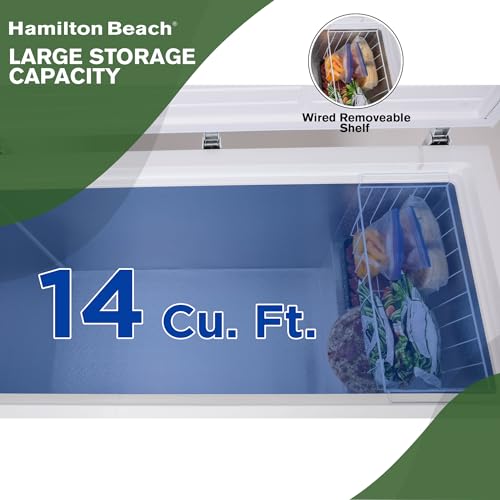
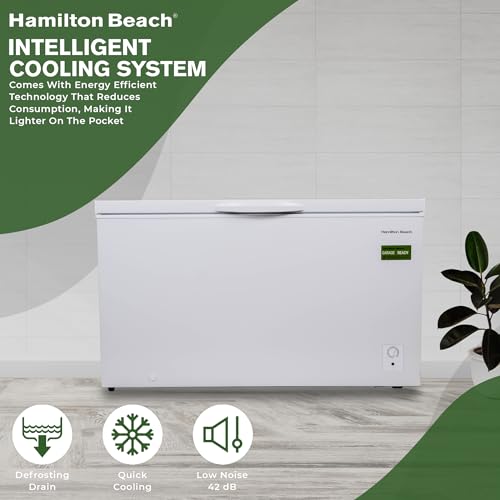
When you’re feeding a big family or stocking up after warehouse runs, this Hamilton Beach chest freezer earns its keep. Fourteen cubic feet is serious volume, enough to hold an entire side of beef or months’ worth of frozen meals. The flat-back design helps it fit flush against a wall, which matters in crowded garages, and the external drain simplifies defrosting when the time comes. Owners appreciate the heavy-duty aluminum liner and the fact that the lockable lid adds security, especially in shared or outdoor spaces.
It’s a traditional chest style, so you lose the upright ease of shelf access, but you gain better cold retention and lower energy use. The seven-setting thermostat gives decent control, though it’s not digital. Compared to smaller chests like the Frigidaire, this one is clearly built for long-term storage rather than occasional use. My recommendation? This is the smarter buy if you prioritize capacity and durability over quick grabs.
Product photos

Midea 7.1 Cu.ft Upright Freezer
Strengths
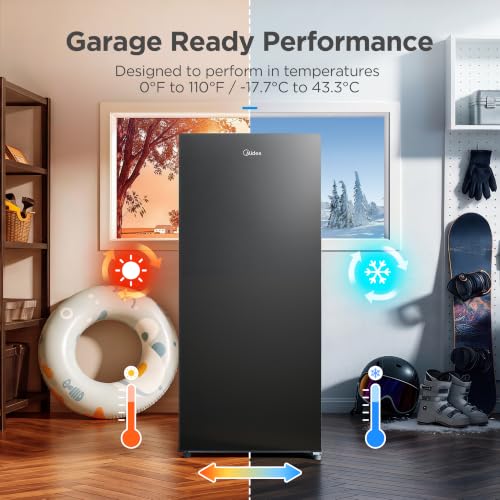
- Garage ready down to 0°F
- Easy fridge-freezer toggle
- Reversible door
Trade-offs
- Smaller capacity
- No fast freeze mode
- Glass shelves can be fragile
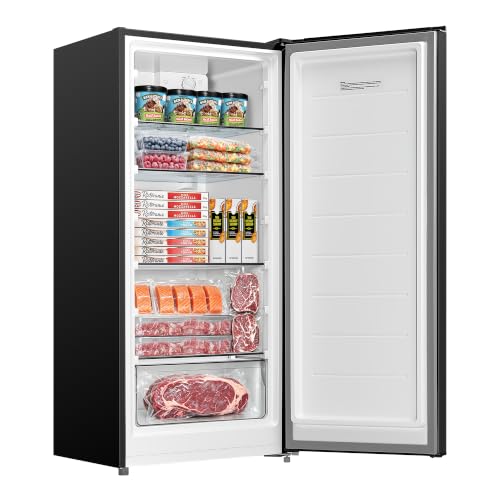
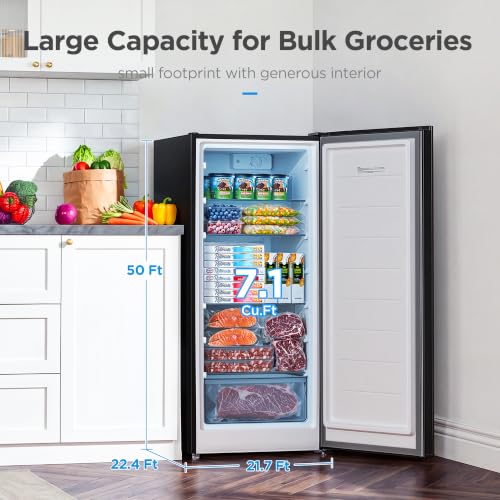
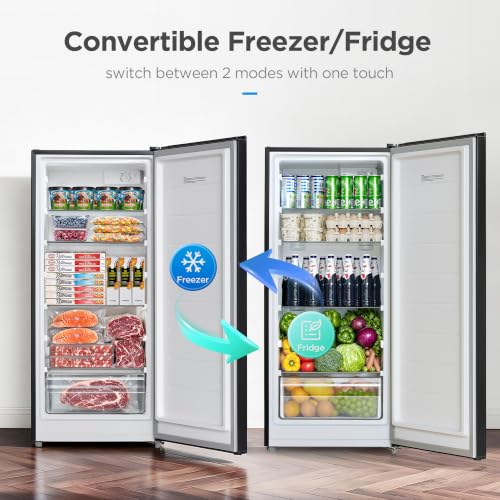
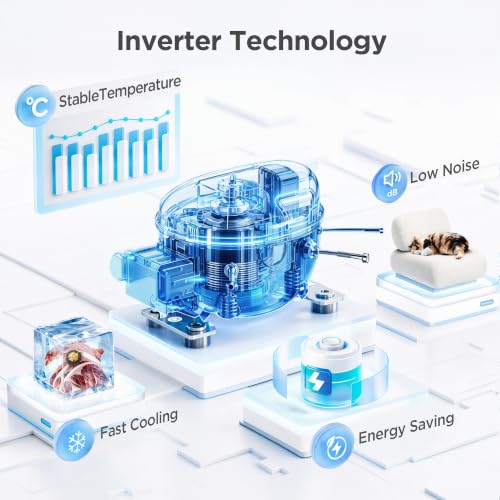
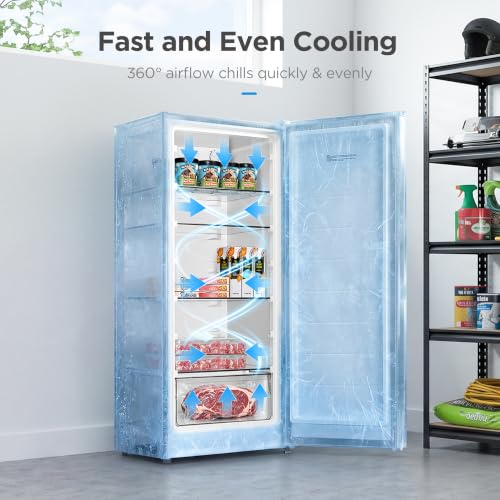
If you need reliable garage-ready performance without overcommitting on size or cost, this Midea hits a sweet spot. Its 7.1 cu.ft. capacity is enough for a family’s backup stash, and the one-touch conversion between fridge and freezer mode is genuinely useful, especially if you’re using it seasonally or for entertaining. The 360° cooling system delivers even temperatures fast, and owners confirm it stabilizes quickly even in cold garages where other units struggle below freezing.
It doesn’t have the bells and whistles of the ICEVIVAL, but it’s simpler and more focused. The reversible door adds installation flexibility, and the compact upright design fits neatly in tighter spaces. Against chest models like the Hamilton Beach, it trades some energy efficiency for easier access and better visibility. I’d pick this over larger uprights if you value convenience and consistent performance in extreme temps.
Product photos
Kismile 7.0 Cu.Ft Chest Freezer

Strengths
- Three storage baskets
- Precise 7-level control
- Stays open at 45–90°
Trade-offs
- Higher price for chest class
- Black finish shows scratches
- Slightly louder than claimed
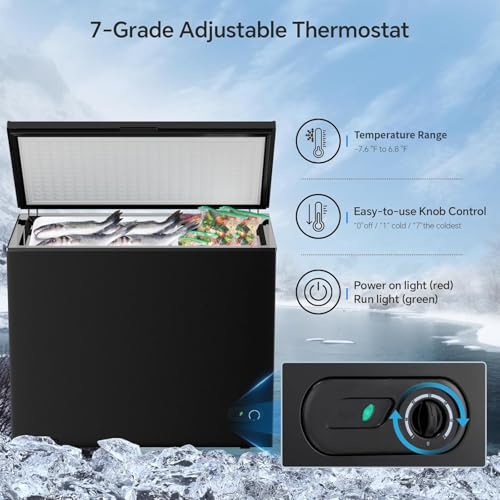
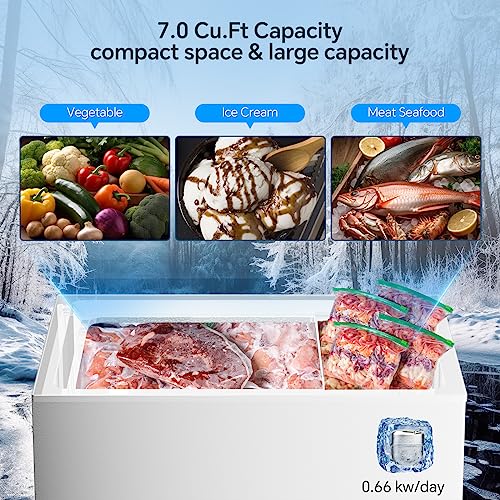
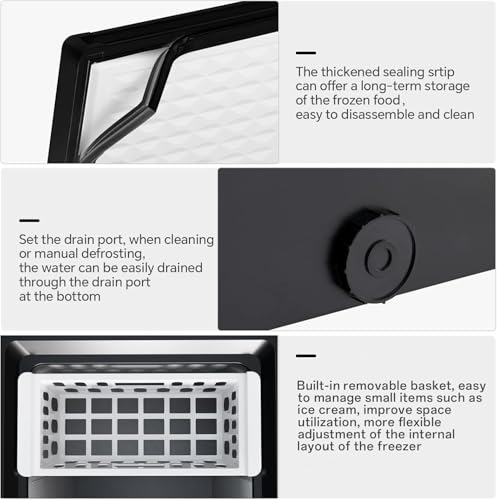
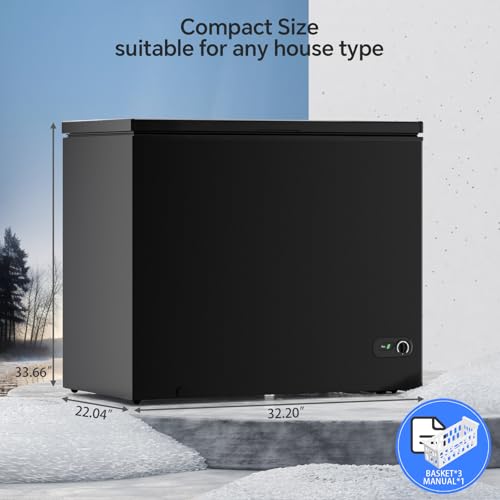
What sets the Kismile apart is organization. With three hanging wire baskets instead of one, it turns the usual chest freezer chaos into something manageable. You can separate meats from snacks or designate a section for breast milk without losing visibility. The 7-grade thermostat gives finer tuning than most analog models, letting you dial in the exact freeze level for sensitive items. At 38 dB, it’s among the quieter chest units, and owners note the hinge keeps the door steady at any angle, handy when loading heavy trays.
It’s pricier than the budget B0DF1BGSL7, but you’re paying for thoughtful details that make daily use smoother. Against the Frigidaire, it offers more capacity and better basket utility. I’d recommend it for organized households or parents who need reliable, accessible freezing without constant rummaging.
Product photos

Our Testing Process
My research process for identifying strong garage freezers centered on comparing published specifications and features across numerous models. I then weighed owner reviews from major retailers alongside expert opinions from appliance review sites. As someone dedicated to practical food storage solutions at Food Keepy, I applied my understanding of temperature consistency, energy efficiency, and long-term reliability to rank these freezers against key criteria. Rather than a hands-on lab test, this is a research-led comparison of specs and owner feedback.
For garage freezers, consistent temperature performance and the ability to operate in a wider temperature range are paramount. I prioritized models with adjustable thermostats and, crucially, those specifically marketed as “garage ready” – meaning they can function reliably in both hot and cold extremes. Storage capacity and organization features were also heavily weighted, as maximizing space and ease of access are vital for most users.
Specifications reliably indicate capacity, temperature range, and energy consumption. However, I placed significant value on owner feedback regarding actual temperature consistency, noise levels, and long-term durability. Reputation, particularly regarding a brand’s history of producing reliable freezers, also played a role. Understanding the nuances of garage-ready freezers helped me differentiate between models built to last and those best suited for more temperate environments. I also looked at models like those in our guide to garage upright freezers to understand the differences in design.
What To Look For In garage freezers
Choosing the right freezer for your garage or supplemental storage isn’t just about capacity. It’s about matching the type of freezer to how you actually use it, and understanding the trade-offs between upfront cost, energy consumption, and convenience.
A good freezer maintains a consistent temperature, even when fully loaded or exposed to fluctuating garage temperatures. Look for models with robust insulation, efficient compressors, and features like temperature alarms or garage-ready certifications. Prioritize frost-free operation if convenience is key, but understand it often comes at a cost in energy efficiency.
Size and Capacity
Determining the right size is the first step. Don’t just think about how much you freeze now; consider potential future needs. A family that regularly buys meat in bulk, or enjoys preserving garden produce, will quickly outgrow a smaller unit. However, a larger freezer running mostly empty wastes energy. Consider the physical space available, too. Chest freezers generally offer more storage per square foot than upright models, but require more bending and digging. For those needing extra space, explore options like the best deep freezers for garages.
Freezer Type: Chest vs. Upright
The classic debate. Chest freezers excel at maintaining temperature during power outages (frozen food stays safe longer due to cold air sinking) and are generally more energy-efficient. Upright freezers, however, offer much better organization. You can see everything at a glance, and accessing items is far easier. If you’re prone to forgetting what you’ve frozen, an upright model is a good choice.
Here’s how to think about upright versus chest: * Budget: Chest freezers are typically less expensive upfront. * Accessibility: Uprights make finding items much easier. * Space & Ergonomics: Chests need floor space, while uprights need height and can be difficult for some to load/unload.
Don’t rule out convertible models either. They offer the flexibility of switching between freezer and refrigerator modes, which is handy for overflow storage during parties or seasonal changes.
Features and Efficiency
Beyond size and style, features matter. Frost-free operation is a huge convenience, eliminating manual defrosting, but it does impact energy consumption. Adjustable thermostats are essential for optimizing storage conditions for different food types. A power-on indicator light is a simple but useful feature. And if you’re placing the freezer in an unheated garage, specifically look for “garage-ready” models engineered to operate reliably in a wider temperature range. If you’re considering an upright model for your garage, you’ll want to check out top stand-up freezer garage picks.
A freezer running in a garage needs to be able to handle temperature swings. Don’t assume a standard kitchen freezer will perform well in those conditions.
Garage Freezers Compared
Here’s a comparison of key specifications for several garage freezers to help you make an informed decision.
| Product Title | Capacity (Cu. Ft) | Type | Temperature Modes | Frost-Free | Adjustable Thermostat |
|---|---|---|---|---|---|
| ICEVIVAL 11 Cu.Ft Upright Freezer | 11.0 | Upright | 4 | Yes | Yes |
| 7.0 Cu Ft Chest Freezer | 7.0 | Chest | N/A | N/A | 6 |
| FRIGIDAIRE 5.0 Cu.Ft Chest Freezer | 5.0 | Chest | N/A | N/A | 7 |
| Hamilton Beach 14 cu ft Chest Freezer | 14.0 | Chest | N/A | N/A | 7 |
| Midea 7.1 Cu.ft Upright Freezer | 7.1 | Upright | 2 | N/A | N/A |
| Kismile 7.0 Cu.Ft Chest Freezer | 7.0 | Chest | N/A | N/A | 7 |
Frequently Asked Questions
What temperature range should I expect from a garage freezer?
Most garage freezers maintain temperatures between -10°F and 0°F, but this varies by model. A wider operating range is crucial for garages, as some freezers struggle in extreme heat or cold; checking freezer performance in cold garages is a good idea before purchasing.
How much does a garage freezer typically increase my electricity bill?
Expect to add roughly $30 to $100 per year to your electricity bill, depending on the size and efficiency of the freezer and your local energy rates. Frost-free models tend to use more energy than manual defrost freezers, though the convenience may be worth the cost.
Are chest freezers really more efficient than upright freezers?
Yes, chest freezers generally use less energy because cold air doesn’t escape as easily when the lid is opened. However, the difference in efficiency is shrinking with newer, more insulated upright models, and the convenience of an upright may outweigh the small energy savings for many people.
What size freezer do I need for a family of four?
A family of four generally needs between 10 and 20 cubic feet of freezer space; however, this depends heavily on your eating habits. If you buy meat in bulk or preserve a lot of produce, you’ll likely need a larger capacity, and exploring small garage freezers might be a good starting point.
Can a standard kitchen freezer be used in a garage?
While it can be done, it’s not usually recommended. Standard freezers aren’t designed to handle the temperature fluctuations of a garage, and may not operate efficiently or reliably. Look for models specifically labeled as “garage ready” to ensure consistent performance.
The Bottom Line
Choosing a garage freezer really comes down to balancing initial cost with long-term convenience and how much you value easy access. While a basic chest freezer will get the job done, the ICEVIVAL 11 Cu.Ft Upright Freezer strikes a strong balance for most people – offering a good capacity, frost-free operation, and adjustable temperature settings to keep your frozen goods in top condition.
For those on a tighter budget, the 7.0 Cu Ft Chest Freezer represents excellent value. If space is at a premium, or you tend to freeze a lot of oddly-shaped items, the Midea 7.1 Cu.ft Upright Freezer is a good alternative. And if you’re looking for more information about whether a freezer is right for your garage, check out our freezer in garage guide.
Ultimately, the most important things aren’t the number of features or the specific temperature range. Prioritize a model designed for garage use, pay attention to owner feedback about consistent temperature control, and remember that proper organization will save you money and reduce food waste – no matter which freezer you choose. Don’t forget to explore garage-ready chest freezer options when making your final decision.
