Can You Preserve Lettuce? The 32°F Rule for Doubling Shelf Life
This post contains affiliate links. As an Amazon Associate, we earn from qualifying purchases.
Yes, you can preserve lettuce for weeks, not days. The key is matching three specific conditions: a temperature as close to 32°F (0°C) as possible, relative humidity above 90%, and zero exposure to ethylene gas from fruits like apples or bananas. At 41°F, lettuce loses a week of shelf life. At 32°F, crisphead types can last up to four weeks.
That gap between 32°F and your refrigerator’s default setting is where most home storage fails. Your fridge likely runs between 35°F and 40°F, a range that accelerates water loss, yellowing, and decay.
What follows is the breakdown of those three conditions, the science behind them, and the step-by-step methods that pull shelf life from one week to four. We’ll cover whole heads, pre-cut greens, and the one mistake that turns lettuce slimy overnight.
Key Takeaways
- Lettuce held at 32°F (0°C) lasts up to four weeks; at 41°F, shelf life drops to three weeks.
- Ethylene gas from produce like apples, bananas, and tomatoes triggers rapid decay and russet spotting, store lettuce separately.
- Freezing damage occurs just below 32°F (-0.2°C to -0.4°C), causing translucent, slimy leaves upon thawing.
- For cut lettuce, removing all surface moisture is non-negotiable; a salad spinner beats paper towels.
- The best home method is an unsealed container or bag with a dry paper towel, not a damp one.
The 32°F Rule That Doubles Shelf Life
Most refrigerator crisper drawers hover around 37°F. That’s five degrees too warm. According to the Rutgers NJAES FS1268 document, lettuce held at 32°F can be stored for up to four weeks. At 41°F, storage life falls to three weeks. The seven-day difference is a function of respiration rate, every 9°F rise roughly doubles the plant’s metabolic activity, burning through sugars and moisture that keep leaves crisp.
The 32°F target isn’t just ideal; it’s the threshold. Iceberg lettuce freezes at 31.3°F (-0.4°C); Romaine and leaf types freeze at 31.7°F (-0.2°C). Storing at 32°F walks that line, maximizing shelf life without crossing into freeze damage.
Your first move is to check your refrigerator’s actual temperature with a standalone thermometer. Adjust the thermostat or use the coldest part of the fridge, usually the back of the bottom shelf. This single change has a bigger impact on your food preservation efforts than any container or hack.
Why Humidity Matters Just as Much
Temperature slows decay, but humidity prevents wilting. Lettuce is 95% water. In low humidity, that water evaporates through the leaves, leading to limp, rubbery textures. The FAO post-harvest management report notes that wilting and yellowing are primary causes of post-harvest loss.
| Lettuce Type | Optimal Relative Humidity | Consequence of Low Humidity |
|---|---|---|
| Crisphead (Iceberg) | 95-100% | Dry, brown leaf edges within days |
| Romaine | >95% | Rapid yellowing, loss of crispness |
| Looseleaf | 90-95% | Wilting, accelerated decay |
Crisper drawers work by creating a sealed, humid microclimate. If yours is broken or absent, a plastic bag left slightly open or a container with ventilation holes can replicate the effect. The goal is high humidity without condensation, which leads to the slimy decay you’re trying to avoid.
The Silent Killer: Ethylene Gas and How to Avoid It
You can nail temperature and humidity and still lose lettuce in a week. The culprit is often ethylene, a natural plant-ripening hormone. Common kitchen items are high ethylene producers.
Common mistake: Storing lettuce in the same drawer as apples or avocados. Ethylene exposure triggers russet spotting, small, tan-brown spots on the midribs, and accelerates yellowing. The damage is irreversible.
The GCCA lettuce storage manual explicitly warns against storing lettuce with apples, pears, cantaloupes, peaches, or honeydew. Even internal combustion engines (like a gas-powered forklift in a warehouse) produce ethylene. In your kitchen, the rule is simple: lettuce gets its own drawer or sealed container.
High-Ethylene Produce to Isolate:
- Apples
- Bananas
- Tomatoes
- Avocados
- Stone fruits (peaches, plums)
- Melons
If separate storage is impossible, consider an ethylene absorber like a BluApple pod. They’re a workaround, not a solution. Physical separation is free and 100% effective.
Step-by-Step Home Preservation Methods
Forget the damp paper towel. It introduces the very moisture that promotes bacterial growth. The goal is a dry, humid environment. Here is the sequence for different lettuce forms.
For Whole, Unwashed Heads
This method is for Romaine, Iceberg, or Butterhead lettuce bought whole.
- Keep the core intact. Do not trim it. The core is the plant’s hydration lifeline.
- Wrap loosely in a single dry paper towel. This absorbs any incidental moisture from the fridge, not from the lettuce.
- Place the head in a perforated plastic produce bag or a loosely sealed reusable bag. Do not seal it airtight. The bag holds humidity; the openings allow minimal gas exchange.
- Store in the coldest part of the refrigerator, away from the door and high-ethylene producers.
A whole head treated this way can last three weeks. Check the paper towel weekly; if it’s damp, replace it.
For Washed, Cut, or Torn Lettuce
Pre-cut greens and salad mixes are the most perishable. Their cut edges leak moisture and nutrients, feeding microbes.
- Wash in very cold water. If your tap isn’t cold, add ice. This firms up the leaves and removes field soil.
- Dry aggressively. A salad spinner is non-negotiable. Spin in batches until no water flies out. Residual water is the enemy of crispness.
- Line a storage container with a dry paper towel. Place the dried lettuce inside.
- Top with another dry paper towel. Do not seal the lid completely. Snap on one side or leave a corner open.
- Store upside down. This positions any remaining moisture to drain away from the leaves and into the bottom towel.
This setup mirrors the principles of storage containers designed for greens, creating a high-humidity, low-moisture microenvironment. Pre-cut lettuce stored this way stays crisp for 7-10 days.
Why These Methods Work: The Science of Decay
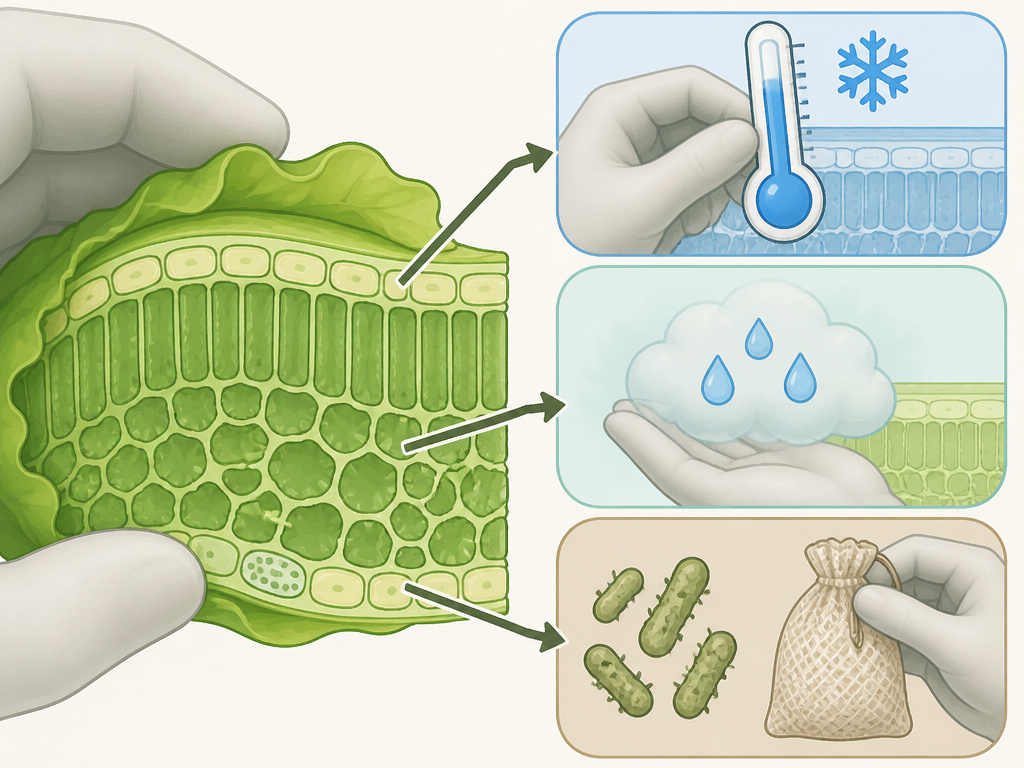 Lettuce spoils through three mechanical pathways: respiration, transpiration, and microbial growth. The methods above directly interrupt each one.
Respiration is the plant’s metabolism. Cold temperatures (32°F) slow it to a near halt, preserving sugars and starches. Transpiration is water loss through the leaves. High humidity (90-95% RH) saturates the air, so water stays in the leaf cells. Microbial growth (bacteria and fungi) requires free water. Aggressive drying and breathable storage prevent condensation, starving the microbes.
This is the same logic behind commercial preserving vegetables techniques like hydrocooling, a rapid ice-water bath that lowers the core temperature to slow respiration without adding soak-time moisture. At home, the cold wash and spinner achieve a similar, if less dramatic, effect.
Common Problems and Exact Fixes
Even with perfect technique, issues arise. Here’s how to diagnose and correct them.
| Problem | Likely Cause | Immediate Fix & Prevention |
|---|---|---|
| Slimy, translucent leaves | Freezing damage or prolonged condensation. | Lettuce froze (likely at the back of an overcold fridge). Discard. Store at 32°F, not below. |
| Brown or rusty spots on ribs | Ethylene exposure (russet spotting). | Isolate lettuce from ethylene producers. Affected leaves are safe to eat but trim for appearance. |
| Wilting, rubbery texture | Low humidity and water loss. | Re-crisp in an ice bath for 15 minutes. Store with a humidity source (open water container) in crisper. |
| Pink discoloration on midribs | “Pink rib,” a disorder in over-mature heads stored too long. | Use lettuce within 2 weeks. Avoid storing very dense, hard heads for extended periods. |
| Overall yellowing | High temperature, low humidity, or age. | Too warm. Check fridge temp. Yellowed outer leaves are often still usable if firm. |
If your lettuce is wilting, an ice-water bath can often resurrect it. Submerge the leaves for 10-15 minutes. The cells rehydrate, often restoring crispness. Dry thoroughly before returning to storage.
Frequently Asked Questions
Can you freeze lettuce to preserve it?
No. Lettuce has a water content of about 96%. When frozen, the water inside the plant cells expands, rupturing the cell walls. Upon thawing, the structure collapses, resulting in a mushy, slimy texture suitable only for cooked applications like soup or stock, not salads.
How long does lettuce last in the refrigerator?
It depends entirely on the starting temperature and storage method. A whole head of Iceberg stored at 32°F in high humidity can last 3-4 weeks. The same head stored at 41°F on a shelf may last only 10-14 days. Pre-washed, cut lettuce in a sealed bag typically lasts 5-7 days.
Does washing lettuce before storage make it go bad faster?
Yes, if you don’t dry it completely. Washing introduces the free water that bacteria and fungi need to grow. If you wash before storage, you must dry the leaves thoroughly with a salad spinner and absorbent towels. The safest method is to store unwashed and wash just before eating.
What is the best container for storing lettuce?
The best container is breathable. Glass or plastic containers with a vented lid or left slightly unsealed are ideal. Avoid completely airtight containers, as they trap ethylene and can promote condensation. Our guide on the best containers for lettuce explores specific models that manage humidity well.
Why does bagged salad mix go slimy so quickly?
Bagged salad is often pre-washed and retains trace moisture. It’s also commonly packaged in a modified atmosphere that, once opened, is replaced by ambient air. The combination of cut surfaces, residual moisture, and new oxygen accelerates microbial decay. Transferring it to a breathable container with a dry paper towel immediately after opening can extend its life by several days.
Can these methods work for other leafy greens?
Absolutely. The principles of cold, humid, and ethylene-free storage apply to spinach, kale, arugula, and herbs. Greens with more delicate structures, like spinach, may have shorter shelf lives. For specific guides, see our articles on preserving basil and preserving vegetables.
Before You Go
Preserving lettuce isn’t about a single magic trick. It’s a system: cold (32°F), humid (90%+), and isolated. Ignore one leg, and the shelf life collapses.
Start with a refrigerator thermometer. Move your lettuce to the coldest spot, away from apples and bananas. For cut greens, invest in a good salad spinner and use dry towels in a vented container. This approach turns a weekly grocery item into a three-week staple, cutting down on waste and last-minute store runs. The difference isn’t subtle, it’s the gap between crisp greens and a slimy bag in the back of the fridge.
