Your Guide on How to Preserve Basil for Maximum Shelf Life
This post contains affiliate links. As an Amazon Associate, we earn from qualifying purchases.
To preserve basil, store it at 12–15°C in a sealed bag with >90% humidity. That is the single most important rule. Storing basil below 12°C causes chilling injury, leaves blacken in as little as one day at 0°C. For long-term preservation, freezing whole leaves or making basil oil retains flavor better than drying, which dramatically changes the herb’s character.
The 12–15°C range is the threshold from a 2023 Frontiers in Plant Science review that separates marketable basil from blackened, inedible leaves. Your kitchen counter or a wine fridge often hits this zone; your standard refrigerator at 4°C does not.This mismatch between common practice and plant physiology is why most refrigerated basil turns slimy or spotted within a week. The guide below walks the four proven paths: short-term fresh storage, freezing, oil infusion, and drying, with the science that explains why each works or fails.
What follows: the exact temperature and humidity specs that stop chilling injury, a comparison of four long-term methods, the one step nobody skips before freezing, and the drying mistake that ruins flavor.
Key Takeaways
- Basil is a cold-sensitive tropical herb. Store it between 12–15°C with >90% relative humidity to avoid chilling injury, which can blacken leaves in one day at 0°C.
- For long-term storage, freezing whole leaves in a single layer on a tray before bagging preserves the most fresh flavor. Drying changes the flavor profile dramatically.
- Always blanch basil for 10–15 seconds before freezing or making oil to lock in vibrant green color and deactivate enzymes that cause browning.
- Low-density polyethylene (LDPE) bags create a beneficial microclimate that maintains humidity and slows decay better than plastic containers or paper towels.
- Chilling injury is cumulative. A few hours in a cold car, then a night in the fridge, then a day in the crisper adds up to visible damage by day three.
The Cold-Sensitive Herb Rule
Your refrigerator is the enemy of fresh basil. This isn’t hyperbole. Basil originates from tropical regions, and its cells lack the adaptation to handle cold. A 2023 Frontiers in Plant Science review defines the danger zone: temperatures below 12°C cause injury, and below 10°C induces severe, often total, damage. At 0°C, leaves can blacken from necrosis in 24 hours.
Before you start: Chilling injury is irreversible. Once the leaf tissue shows black or water-soaked spots, the basil is no longer marketable and loses its fresh aroma. The damage is cumulative, so even a short stint in a cold car can start the clock.
Why does this happen? Cold temperatures disrupt the plant’s cell membranes and metabolic processes. Enzymatic activity slows in a destructive, not preservative, way. The herb’s signature volatile compounds, linalool, eucalyptol, plummet. You lose the flavor you’re trying to save.
The optimal storage band is 12–15°C with over 90% relative humidity. This tight range minimizes microbial growth while avoiding the cold shock that turns leaves black. For most homes, this means not the fridge. A cool pantry shelf, a basement corner, or a dedicated wine fridge set to 13°C works. The Rutgers NJAES food safety guide confirms this, listing 55°F (12.8°C) as the ideal storage temperature.
If you must refrigerate basil briefly, replicate the humidity of its ideal climate. The best tool for this is a simple low-density polyethylene (LDPE) bag. A study in the PubMed Central research article on packaging found that 20g of ‘Genovese’ basil in an LDPE bag at 5°C retained better biochemical quality than basil on open trays at ambient temperature. The bag creates a modified atmosphere, slowing water loss and decay.
| Storage Location | Temperature | Risk | Expected Shelf Life |
|---|---|---|---|
| Ideal (wine fridge/cool pantry) | 12–15°C | Low chilling injury | 10–14 days |
| Refrigerator Crisper | 4–7°C | High chilling injury, black spots | 3–7 days |
| Kitchen Counter (in water) | 20–25°C | Wilting, faster microbial growth | x5–7 days |
| Freezer (after blanching) | -18°C | No chilling injury, flavor well-preserved | 8–12 months |
Short-Term Fresh Storage
You have a bunch of basil from the market. You need it to last the week. The goal is to mimic the 12–15°C, >90% RH environment as closely as possible without specialized gear.
Treat basil like cut flowers. Trim the stems and place the bunch in a jar with an inch of water. Leave it on a cool counter away from direct sun. Change the water every two days. This method keeps the plant tissue hydrated and can even encourage rooting, giving you a new plant. It leverages the plant’s own vascular system to maintain turgor and freshness far better than any towel wrap.
For fridge storage, a compromise if your counter is too warm, the LDPE bag is your best bet. Pat the leaves dry if they are wet, place them loosely in a plastic produce bag, and squeeze out most of the air before sealing. Do not wrap tightly in a paper towel; it wicks away the crucial humidity basil needs. The bag’s micro-environment will maintain a higher humidity level, slowing dehydration.
Where this goes sideways: Storing basil in the fridge door. The temperature fluctuates every time you open it, cycling the herb through warmer and colder air. This thermal stress accelerates chilling injury. You’ll see blackened leaf edges within four days.
The NDSU Extension publication on basil handling recommends washing basil only if it’s sandy, and doing so just before use. Trapped moisture in storage encourages fungal decay. If you must wash first, use a salad spinner and then let the leaves air-dry completely on a towel before bagging.
This approach to storing herbs is similar for cilantro and parsley, though those herbs are slightly more cold-tolerant. The principle of high humidity and minimal cold shock applies across most soft herbs.
Freezing Basil
Freezing is the long-term method that best preserves basil’s fresh, green character. Drying alters the volatile oil profile, turning the bright, anise-like notes into a dull, tea-like flavor. Freezing suspends that change.
The enemy of frozen basil is a solid, opaque block of green ice. You need to preserve individual leaves. Here’s the sequence that works.
- Blanch. Bring a pot of water to a rolling boil. Submerge the basil leaves for 10–15 seconds only. This step deactivates the enzymes that cause browning and loss of color during frozen storage.
- Shock. Immediately plunge the blanched leaves into a bowl of ice water. This stops the cooking process and locks in the vibrant green.
- Dry. Gently pat the leaves dry with a clean kitchen towel or use a salad spinner. Excess water will form ice crystals that rupture cell walls, leading to mush.
- Flash-Freeze. Spread the leaves in a single, non-touching layer on a parchment-lined baking sheet. Freeze for 1–2 hours until rock-hard.
- Package. Transfer the frozen leaves to a heavy-duty freezer bag or vacuum-seal bag. Remove as much air as possible and label with the date.
This method gives you loose-leaf frozen basil you can scoop by the tablespoon. The leaves will be dark green and fragile, but the flavor remains remarkably close to fresh for use in cooked dishes like soups, sauces, and stews.
Common mistake: Skipping the blanching step. Un-blanched basil turns a murky brown-black in the freezer within a month. The flavor becomes hay-like. The 15-second blanch is non-negotiable for color and flavor retention.
You can also freeze basil in oil. Purée blanched leaves with a neutral oil (like grapeseed) until smooth, then freeze the mixture in ice cube trays. Once frozen, pop the cubes into a bag. This is essentially a ready-made pesto base, perfect for tossing into a hot pan.
Preserving Basil in Oil
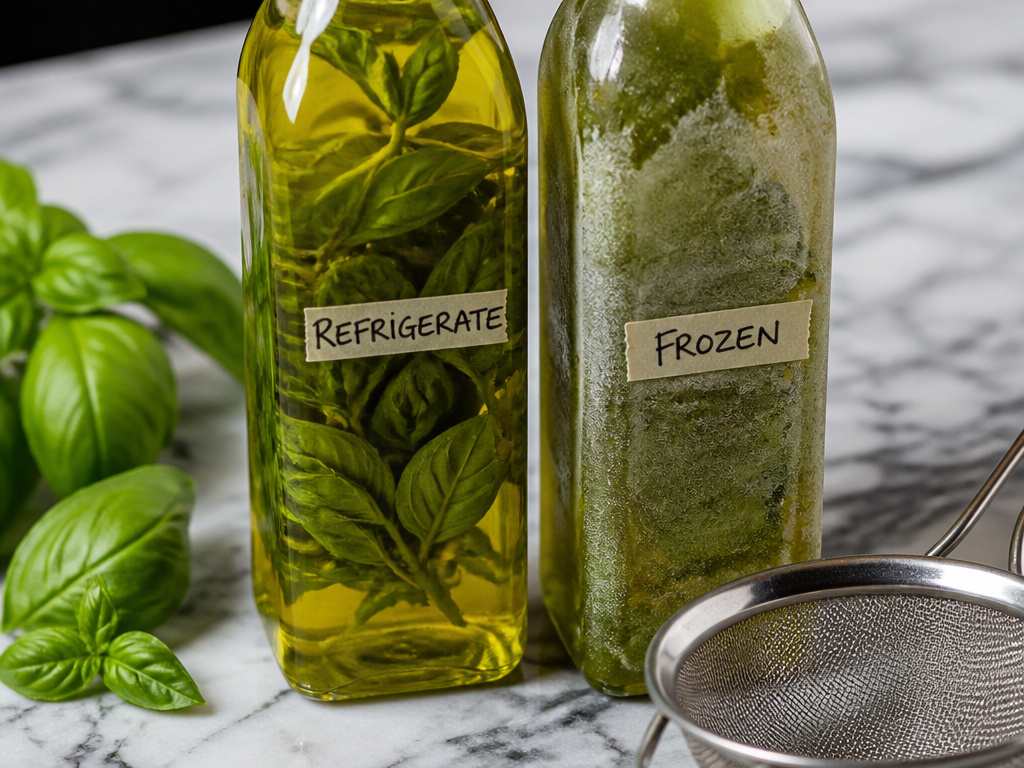 Infusing oil with basil captures its essence in a stable, shelf-stable medium. This is not simply stuffing leaves into a bottle. Proper technique prevents botulism risk and maximizes flavor extraction.
There are two safe paths: a finished, refrigerated product used within a week, or a frozen product stored for months.
For a refrigerated infusion: Gently warm a cup of olive oil over low heat until just warm to the touch (about 40°C/104°F). Add a handful of clean, dry basil leaves. Steep off the heat for 1–2 hours, then strain. Pour the infused oil into a clean bottle and store it in the refrigerator. Use it within 5–7 days. The cold storage inhibits bacterial growth.
For a frozen infusion: Follow the blanching and purée method described in the freezing section. The heat from blanching destroys surface bacteria, and the frozen state keeps the product safe. This is the recommended method for long-term preserved garlic or herb oils.
Never store fresh, raw basil submerged in oil at room temperature. The low-acid, anaerobic environment is a potential breeding ground for Clostridium botulinum. The freezer is your safety net.
The flavor of basil oil is intense and floral. Use it as a finishing oil for pasta, pizza, or grilled vegetables. A teaspoon stirred into mayonnaise or vinaigrette lifts the entire sauce. This technique is a cornerstone of preserving food, turning a perishable herb into a concentrated pantry staple.
Drying Basil
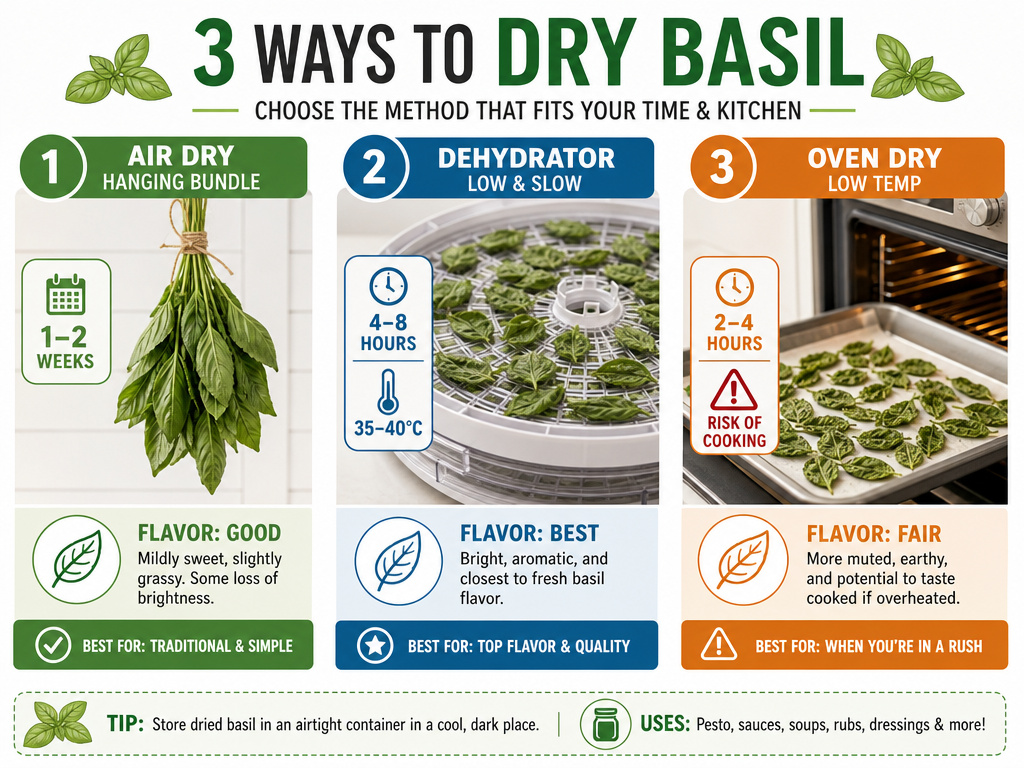 Drying is the most traditional but most flavor-altering preservation method. The heat and air exposure drive off the delicate volatile oils, leaving behind the more stable, earthy compounds. Dried basil tastes different from fresh, it’s a distinct ingredient.
If you choose to dry, do it correctly to preserve as much quality as possible.
Air-Drying: Tie small bunches of basil with string and hang them upside down in a warm, dark, well-ventilated area. Darkness is critical; light degrades chlorophyll and flavor. This process takes 1–2 weeks. Once the leaves crumble easily, strip them from the stems and store in an airtight jar in a dark cupboard.
Dehydrator Method: This is faster and more consistent. Spread leaves in a single layer on dehydrator trays. Dry at 35–40°C (95–104°F) for 4–8 hours, until brittle. Low temperature is key to preserving some aroma.
Oven Method (Least Ideal): Spread leaves on a parchment-lined baking sheet. Set your oven to its lowest possible temperature (ideally under 50°C/122°F) with the door slightly ajar. Check every 30 minutes. This method risks cooking the herbs, which dulls flavor.
| Drying Method | Time | Temperature | Flavor Outcome |
|---|---|---|---|
| Air-Drying | 1–2 weeks | Ambient (20–25°C) | Most traditional, earthy flavor |
| Dehydrator | 4–8 hours | 35–40°C | Best retention of color & some aroma |
| Oven | 2–4 hours | Varies (often too hot) | Highest risk of cooked, bitter notes |
Once dried, crumble the leaves as you need them. Pre-crumbling all at once exposes more surface area to air, speeding up flavor loss. Store the whole dried leaves in an airtight container instead.
Remember, dried basil is a different ingredient suited for long-cooked tomato sauces, meat rubs, and bread doughs. For a bright basil hit, you must use frozen or fresh.
Comparing Your Four Main Options
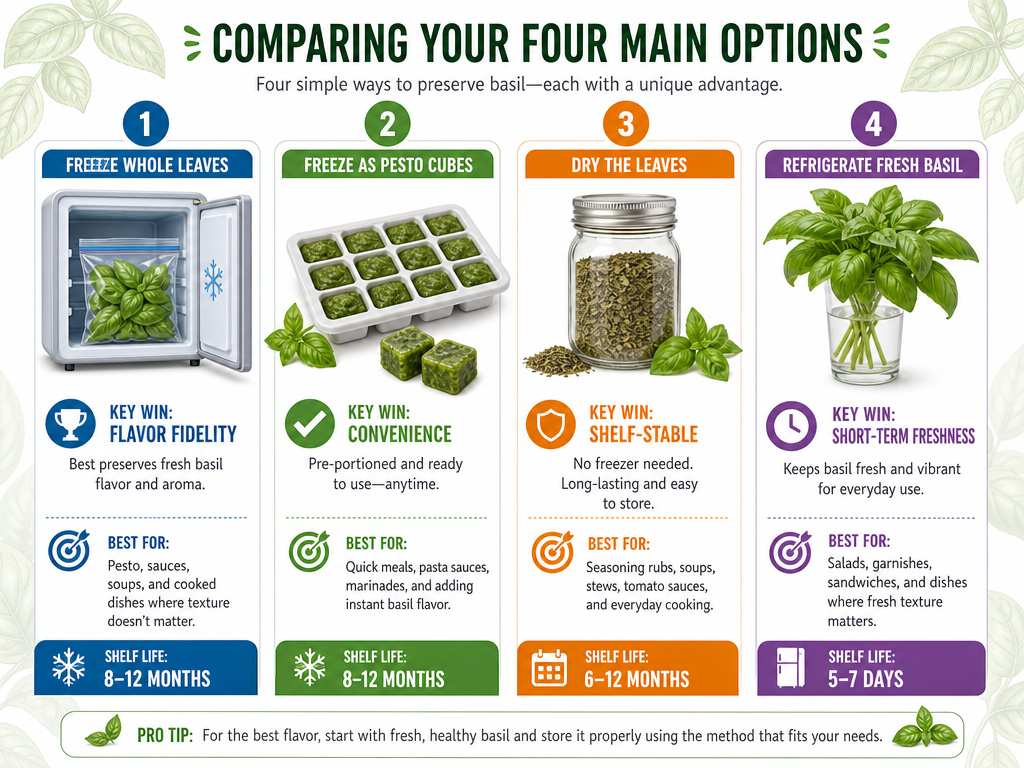 You have a large harvest. Which method should you choose? The answer depends on what you cook and how much freezer space you have.
Freezing (Whole Leaves) wins for versatility and flavor fidelity. The blanched, flash-frozen leaves work in any cooked application where fresh basil would go, pesto, soups, sauces. They fail in raw applications like salads, as they become limp upon thawing. Requires freezer space.
Freezing (Basil Oil Cubes) wins for convenience and concentrated flavor. The pre-made purée is a instant sauce base. It’s perfect for busy cooks. It only works in oil-based or cooked dishes. Requires freezer space.
Drying wins for shelf-stability and space efficiency. A jar of dried basil sits in your pantry for a year. It is best for adding an herbal background note to dishes that simmer for hours, like a pot of chili or beans. It loses the bright top notes.
Refrigerated Fresh Storage is a bridge technique to extend a bunch’s life for a week or two while you plan your preservation method. It is essential knowledge for reducing waste after a market trip.
The choice often comes down to freezer real estate. If you have it, freeze. If you don’t, dry. Most home gardeners end up doing a mix: drying two-thirds of the harvest for winter stews, and freezing one-third for summer pasta sauces in February.
Frequently Asked Questions
Can you preserve basil in salt?
Yes, layering fresh basil leaves with coarse salt in a jar is an ancient method. The salt draws out moisture and creates an inhospitable environment for microbes. The leaves will wilt and darken, but the salt becomes intensely flavored. Use the basil-salt mixture as a seasoning rub for meats or to finish roasted vegetables. The leaves themselves are not typically eaten. This is a niche method, similar to preserving lemons in salt.
Does washing basil before storing hurt it?
Yes, if you don’t dry it thoroughly. Water left on leaves encourages decay and fungal growth. Wash basil only if it’s visibly dirty, and do so just before you use it. If you must wash before storage, use a salad spinner and then spread the leaves on a towel to air-dry completely before bagging. The Field to Fork basil guide from NDSU emphasizes this point.
Why did my frozen basil turn black?
You skipped the blanching step. Enzymatic activity continues in the freezer, albeit slowly, leading to oxidation and browning. Blanching with boiling water for 10–15 seconds deactivates those enzymes. It is the single most important step for preserving color and fresh flavor in frozen vegetables and herbs.
How long does preserved basil last?
Timelines vary by method. Frozen basil (blanched) lasts 8–12 months. Basil oil cubes last 6–8 months. Dried basil stored in an airtight container in a dark pantry lasts 1–2 years, though flavor diminishes after the first year. Basil stored in salt can last over a year. Refrigerated fresh basil, when stored correctly at 12–15°C, lasts 10–14 days.
Is it safe to preserve basil in olive oil at room temperature?
No. Submerging fresh, low-acid herbs like basil in oil at room temperature creates a risk of botulism. The safe methods are to refrigerate the infused oil and use it within a week, or to freeze it. For a room-stable herb oil, the herbs must be either dried, acidified, or commercially processed with strict controls. This safety principle also applies to garlic in oil.
The Bottom Line
Preserving basil breaks one common rule: the refrigerator is not your friend. Target 12–15°C with high humidity for short-term freshness using a plastic bag on a cool counter or in a specialized fridge.
For the long haul, freeze it. Blanch for 15 seconds, shock in ice water, dry thoroughly, and flash-freeze the leaves individually. You’ll capture the summer flavor for winter soups and sauces. Drying is your space-saving, pantry-friendly fallback, but accept that the flavor will be different, earthier, for long simmers.
The science is clear on the cold sensitivity. Respect the plant’s tropical origins, and you’ll stop throwing away blackened bags of herbs. Start with the temperature, then choose your method based on your kitchen and your cooking.
