Does Brown Sugar Expire? Understanding Its True Shelf Life
This post contains affiliate links. As an Amazon Associate, we earn from qualifying purchases.
Brown sugar does have a shelf life, a manufacturer-recommended one of 2 years for quality, but it does not spoil or become unsafe. The only failure is hardening, caused solely by improper storage conditions: temperature swings above 75°F, humidity over 70%, or overly dry, cold air.
That official 2-year window comes straight from sugar producers like Michigan Sugar Company. It’s a quality guarantee, not a safety cutoff. Your brown sugar is still edible decades later if you can break it apart. The real question isn’t expiration. It’s what your storage environment does to the sugar’s texture within months.
What follows: the exact temperature and humidity numbers from factory spec sheets, the one storage mistake that turns sugar into a brick, and the methods that actually work to soften it again, plus the single method a food safety expert warned could risk botulism.
Key Takeaways
- Manufacturers stamp a 2-year shelf life on consumer brown sugar for peak quality, but the sugar remains safe indefinitely.
- Hardening is the only failure, triggered exclusively by storage outside 60–75°F and 70% relative humidity.
- Never refrigerate brown sugar. The fridge’s humidity gradient can create wet pockets and accelerate crystallization.
- Vacuum-sealing moist brown sugar is a documented botulism risk because it creates an anaerobic environment for spore growth.
- For long-term softness, use a terracotta sugar saver or a marshmallow inside an airtight container, not bread or apple slices.
What is the Official Shelf Life of Brown Sugar?
The printed shelf life on a bag of brown sugar is a quality promise from the maker, not a safety expiration. For consumer-grade brown sugar, that promise is 2 years when stored between 60 to 75°F with a maximum 70% relative humidity.
Michigan Sugar Company’s official shelf-life document lists a 2-year life for “Consumer Brown Sugar” under specific storage conditions. Industrial dark brown sugar, with more molasses, carries a shorter 3-month shelf life due to its higher moisture content and tendency to harden faster.
This 2-year figure is consistent across major refiners. Domino Sugar and C&H Sugar also recommend using brown sugar within two years of purchase for maximum flavor. The timeline shortens dramatically for industrial products. The same manufacturer notes industrial dark brown sugar has a 3-month shelf life, and industrial light brown sugar gets 6 months. The difference is moisture content and packaging, not safety.
The academic perspective from Utah State University Extension agrees on the principle but uses different language. They state commercial sugars have an indefinite shelf life due to microbial resistance, but assign a “best-if-used by” date of approximately 2 years for quality concerns like lumpiness. The two sources don’t conflict. One is a factory guarantee; the other is a food science fact.
Bottom line: The 2-year date is your assurance of perfect texture and flavor. Ignore it, and you still have usable sugar, just possibly a very hard brick of it.
Why Brown Sugar Hardens (It’s Not Age)
Brown sugar doesn’t spoil. It seizes up. The mechanism is simple: the thin coating of molasses that gives brown sugar its color and moisture loses or absorbs water from the air. When the surrounding air is too dry or too cold, the moisture evaporates from the sugar crystals. They then fuse together into a solid mass.
The manufacturer is explicit about the cause. Michigan Sugar Company states: “The only reason they turn hard is due to improper storage conditions (large fluctuations in temperature combined with large changes in relative humidity).” They add that brown sugar can also become hard due to very dry storage conditions or very cold temperatures.
This means a pantry next to an oven, a sunlit counter, or an unheated garage in winter are all failure zones. The sugar isn’t going bad. It’s undergoing a physical change you can reverse.
| Storage Condition | Effect on Brown Sugar | Timeline to Hardening |
|---|---|---|
| Hot & Humid (>75°F, >70% RH) | Absorbs moisture, can become clumpy or even liquefy in spots. | Weeks to months |
| Cold & Dry (<60°F, low RH) | Loses moisture rapidly, crystals fuse into a hard block. | 1-3 months |
| Temperature Swings (e.g., pantry by oven) | Repeated expansion/contraction of moisture causes crystal locking. | Often within 2 months |
| Ideal (60-75°F, <70% RH) | Maintains soft, pliable texture. | Remains soft for years |
The takeaway is direct. If your brown sugar is hard, your storage environment failed the spec. The sugar didn’t expire.
How Do You Store Brown Sugar to Last? (The Conditions That Matter)
You need an airtight barrier and a stable climate. The container is your first defense against humidity swings; the storage location is your second.
Start with the vessel. The flimsy paper bag it comes in is useless for long-term storage. Transfer the sugar to a heavy-duty, airtight container. Glass jars with clamp lids, like Kilner jars, or food-grade plastic containers with silicone gaskets, such as those from OXO, work perfectly. The goal is to seal the sugar’s own moisture in and keep external humidity out.
Location is next. Find a cool, dry, and dark pantry shelf away from heat sources. The ideal is that 60–75°F band with consistent humidity. Avoid places like above the refrigerator, next to the stove, or under a sink.
Common mistake: Storing brown sugar in the refrigerator. Both Domino and C&H Sugar advise against it. The fridge is a humid environment with cold walls. Sugar is hygroscopic, it pulls moisture from the air. This can create wet pockets on the sugar nearest the container walls while the core dries out, leading to uneven crystallization and faster hardening.
For very dry climates or for storage beyond two years, freezing is a manufacturer-approved option. Domino Sugar recommends thawing frozen sugar for two to three hours before use. If ice crystals form, stir the sugar gently as it thaws to distribute moisture. Do not vacuum seal. A YouTube creator specializing in food preservation correctly highlighted the risk: vacuum-sealing moist brown sugar creates an anaerobic environment where Clostridium botulinum spores can grow, a serious food safety hazard. Use a freezer bag or airtight container instead.
For everyday softness, add a terracotta sugar saver. Soak the porous disc for 20 minutes, blot it dry, and bury it in the sugar. It slowly releases humidity, keeping the sugar pliable for 3 to 6 months. A fresh marshmallow works on the same principle, its moisture migrates into the sugar over 24 hours. Replace it every few months. Skip the apple slice or bread methods; they introduce mold risk and stop working as soon as you remove them.
Brown Sugar vs. Other Sugars: Shelf Life Compared
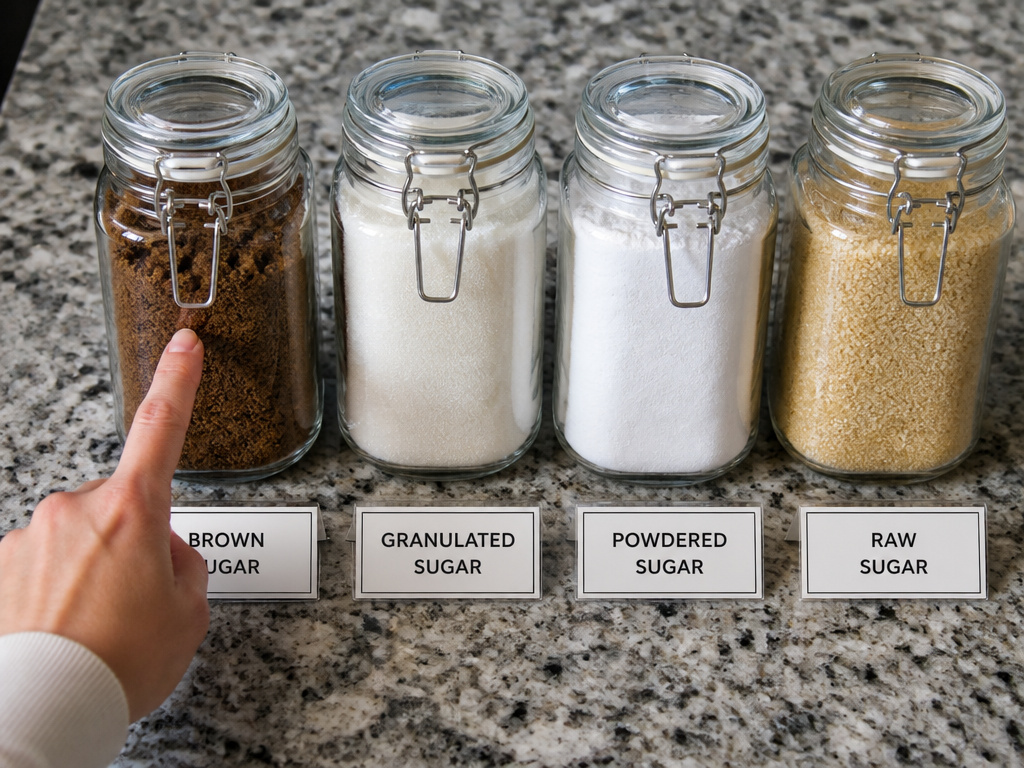
All dry sugars share the same microbial safety, they don’t support growth. Where they differ is in moisture content and how that affects their “usable life” texture.
Granulated white sugar is the benchmark for stability. With almost no inherent moisture, it’s less reactive to humidity. Michigan Sugar Company also gives it a 2-year shelf life, but notes it can last indefinitely in good conditions. The shelf life of sugar is a topic of its own, hinging on this dryness.
Powdered (confectioner’s) sugar contains about 3% cornstarch to prevent caking. This starch can absorb odors and moisture more readily, leading to lumping. Manufacturers like C&H recommend using it within 2 years.
Raw sugars (like turbinado or demerara) and unfiltered honeys have shorter quality windows. As the Utah State University food preservation research notes, these less-refined products contain more impurities and moisture, which can encourage crystallization or flavor changes sooner.
| Sugar Type | Official Shelf Life (Quality) | Primary Failure Mode | Key Storage Note | | :— | :— | :— | | Consumer Brown Sugar | 2 years | Hardening from moisture loss | Airtight container is mandatory. | | Granulated White Sugar | 2 years (indefinite in practice) | Clumping from humidity | Less sensitive, but still needs a sealed container for sugar. | | Powdered Sugar | 2 years | Lump formation from starch absorbing moisture | Keep in a cool, dry place; never refrigerate. | | Liquid Sucrose / Syrups | 30 days | Crystallization from heat or freezing | Store at steady, cool room temperature. |
The pattern is clear. The more moisture a sugar product has, the more vigilant your storage methods need to be. Brown sugar sits at the most delicate end of the dry sugar spectrum.
How to Soften Hard Brown Sugar (The Methods That Work)
You can restore hardened sugar. The principle is to reintroduce moisture evenly, without creating a soggy mess or hot spots.
For immediate use, the oven method is fastest. Preheat your oven to 250°F, then turn it off. Place the hardened sugar in an oven-proof dish, cover it with a damp (not dripping) cloth, and put it in the warm oven. Check every 5 minutes. The sugar will soften from the outside in. Use it immediately, as it will re-harden as it cools. Caution: the sugar will be very hot.
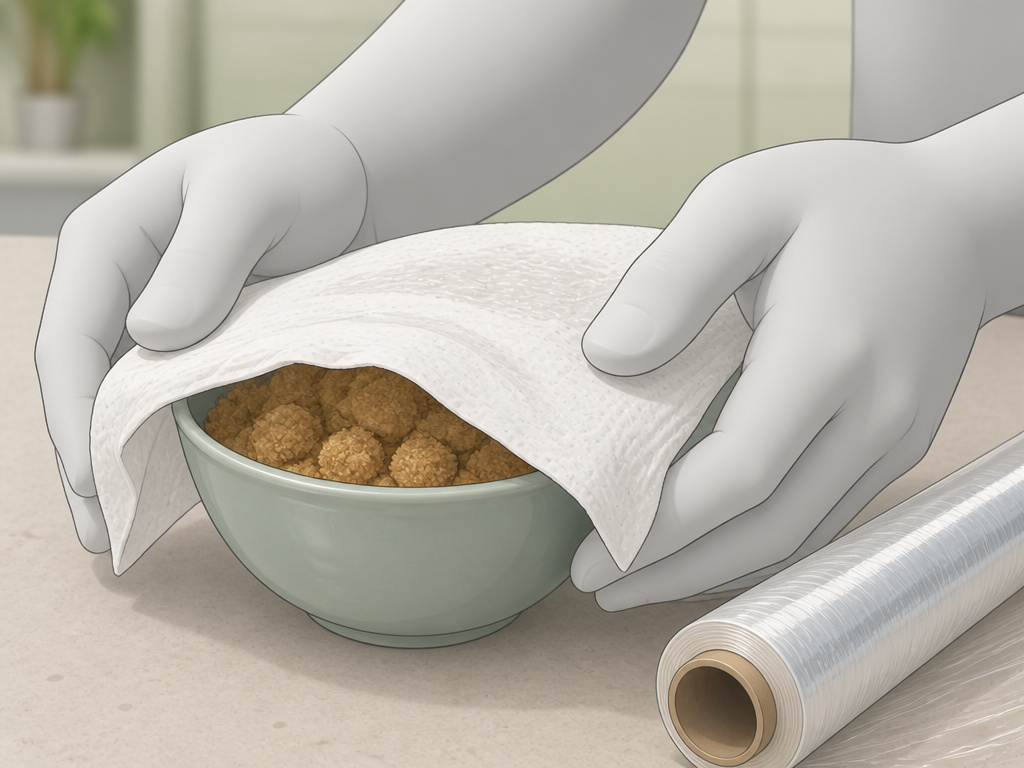
For a slower, set-and-forget approach, use the terra cotta disc or a marshmallow as described earlier. If you don’t have those, place the sugar in a bowl and cover it with a damp paper towel, then seal the whole bowl with plastic wrap. Leave it for 8-12 hours. The moisture from the towel will slowly permeate the block.
For a small amount, you can chip off what you need and microwave it. Put the sugar in a microwave-safe bowl, cover with a damp paper towel, and heat on high in 20-second bursts, breaking it up with a fork between intervals.
Where this goes sideways: Adding liquid water directly to the sugar. You’ll get a wet crust and a dry core. The goal is humid air, not direct contact with water.
Once soft, transfer the sugar to a proper airtight brown sugar container with a saver disc to prevent it from happening again. The cycle of hardening and softening degrades the sugar’s quality over time, making it grainier.
Frequently Asked Questions
Can you use brown sugar after it hardens?
Yes, absolutely. Hardened brown sugar is still perfectly safe to eat. Once you soften it using heat or a moisture source, it will perform exactly the same in recipes. The molasses flavor remains intact.
Does brown sugar go bad or mold?
Brown sugar does not mold under normal pantry conditions. Its low water activity and high sugar concentration prevent microbial growth. The only visual change you might see is extreme hardening or, in very humid storage, the formation of dense, rock-like clumps.
Is it okay to freeze brown sugar?
Yes, freezing is recommended by manufacturers like Domino Sugar for long-term storage, especially in dry climates. Use a freezer-safe bag or airtight container. Thaw at room temperature for 2-3 hours before use and stir gently if any ice crystals have formed to redistribute moisture.
Why did my brown sugar turn into a rock in the bag?
This is a classic sign of storage in a cold, dry, or fluctuating environment. The paper bag offers no protection, so the sugar’s moisture quickly equalizes with the dry air around it. The crystals lock together. Transferring sugar to a best airtight container for pantry staples from the moment you open it prevents this.
The Bottom Line
Brown sugar’s shelf life is a story of texture, not safety. Manufacturers give you a 2-year window for guaranteed quality, but the sugar itself never spoils. Your entire strategy boils down to controlling moisture loss.
Seal it in an airtight container. Keep it in a cool, stable spot in your pantry. If it hardens, gently reintroduce humidity with a terracotta saver or a brief stint in a warm oven. Avoid the refrigerator and never vacuum-seal it.
That’s the real answer to shelf life. It’s not about a date on a bag. It’s about giving the sugar a consistent home so it’s ready when you are.
