How to Store Breast Milk | The Rules That Keep Milk Safe
This post contains affiliate links. As an Amazon Associate, we earn from qualifying purchases.
Store expressed breast milk in a clean container and follow a strict timeline based on temperature: four hours at room temperature (77°F/25°C or cooler), four days in the refrigerator (39°F/4°C or below), and up to twelve months in a standard freezer (0°F/-18°C). For longest quality, freeze milk within 24 hours of expression and place containers at the back of the appliance, away from the door.
That timeline is the consensus, but it’s built on two layers most guides skip. The first is the clock that starts ticking the second milk leaves the breast — a clock measured in bacterial growth and fat breakdown. The second is the physical reality of your specific fridge or freezer, which is almost certainly warmer than its dial claims.
What follows is not just the official chart. It’s the mechanics behind each rule, the gear that makes following them possible, and the specific mistakes that turn a freezer stash from an asset into a liability.
Key Takeaways
- Freeze milk within 24 hours of expression for the best quality, even though it’s safe in the fridge for four days.
- Auto-defrost freezers are banned for storage in licensed milk banks because the warming cycles degrade milk; they’re a poor choice for home storage too.
- Once thawed, milk is only good for 24 hours in the fridge, not 48 hours like fresh milk. The thawing process kick-starts bacterial activity.
- Free fatty acids build up in frozen milk over time, causing a soapy or metallic taste some babies reject. Scalding milk before freezing deactivates the lipase enzyme responsible.
- Your fridge thermometer is probably wrong. For true safety, use an NIST-certified or calibrated thermometer and check it daily.
The Four-Tier Storage Clock (Room Temp, Fridge, Freezer, Thawed)
Forget a single rule. Breast milk storage works on a sliding scale of temperature versus time, and each drop has a shelf life that shrinks as it gets warmer.
The CDC breast milk storage guidelines and the AAP milk storage guidelines agree on the core windows. But those windows assume your appliances hit their target temperatures, which many don’t.
| Storage Location | Temperature | Safe Duration for Healthy Term Infants | Critical Limitation |
|---|---|---|---|
| Room Temperature | ≤ 77°F (25°C) | 4 hours | Starts the moment milk is expressed. |
| Refrigerator | ≤ 39°F (4°C) | 4 days | Place at the back, never in the door. |
| Freezer (within a fridge) | 0°F (-18°C) | 6 months | Quality declines noticeably after 3 months. |
| Deep Freezer (standalone) | -4°F (-20°C) | 12 months | The AAP milk storage guidelines note this is for quality, not safety. |
| Thawed (in fridge) | ≤ 39°F (4°C) | 24 hours | The clock resets after thawing; do not refreeze. |
Common mistake: Storing thawed milk for the full four-day refrigerator window. Thawing ice crystals damages milk fat globules and releases nutrients that bacteria can use, so the 24-hour rule is stricter than for fresh milk.
The four-day fridge rule is a ceiling, not a target. A PMC study on cold storage effects tracking home practices found milk sat in fridges for an average of 1.8 days, but the range stretched to six. That last day is a gamble on your fridge’s true temperature.
Why the Fridge Door is a No-Go Zone
Your refrigerator door is the warmest part of the appliance, with temperatures fluctuating every time you open it. This isn’t just about a few degrees. It’s about creating a zone where bacterial growth can restart in spurts.
Place every bottle or bag flat against the back wall, where the temperature is most stable. If you’re using a best breast milk storage system with trays or organizers, ensure those are also at the rear.
Containers Matter More Than You Think
The container isn’t just a vessel. It’s a barrier against contamination, a preserver of nutrients, and a physical structure that must survive freezing without cracking.
Glass and hard, BPA-free plastic are the gold standards for fridge storage. They’re non-porous, easy to clean, and don’t leach. For freezing, dedicated storage bags from Medela or Lansinoh win for space efficiency, but they have a trade-off.
Plastic bags are permeable. Over months in the freezer, they allow very slow moisture loss, which can lead to freezer burn and a concentration of fats. This is one reason the AAP milk storage guidelines note that raw milk has better biology than frozen—intact fat globules matter.
Where this goes sideways: Using any container not rated for food storage. Old takeout containers, thin plastic bottles, or bags not designed for freezing can leach chemicals or rupture. Stick with products labeled for breast milk.
- For daily fridge use: Glass or hard plastic bottles. They’re sturdy, reusable, and you can see the milk.
- For building a freezer stash: Pre-sterilized breast milk bags. Lay them flat to freeze into thin bricks that thaw quickly and stack neatly.
- For combining pumping sessions: A large, clean storage containers like a Mason jar. Cool new milk in the fridge before adding it to already-chilled milk.
- For travel: An insulated bag with a frozen ice pack. Milk stays safe for 24 hours in a quality cooler.
The New York State milk storage regulations for licensed milk banks mandate pre-sterilized, leak-proof containers. At home, you don’t need sterile gear, but you do need impeccably clean. Wash in hot, soapy water and air-dry thoroughly.
The Freezer: Your Long-Term Bank (With Fine Print)
A freezer is not a pause button. It’s a slow-motion degradation chamber for fats and bacteria. The NCBI evidence summary on storage found immunological properties can diminish after four weeks at -20°C (-4°F). Another study noted that after six months at that temperature, the bacterial microbiome becomes dominated by just two species, a sign of significant change even if the milk is technically safe.
| Freezer Type | Ideal Temperature | Maximum Storage (Quality) | Key Consideration |
|---|---|---|---|
| Fridge-Freezer Combo | 0°F to 10°F (-18°C to -12°C) | 3–6 months | Door openings cause frequent temperature swings. |
| Standalone Upright Freezer | -4°F to 0°F (-20°C to -18°C) | 6–12 months | More consistent than a combo unit. |
| Chest Deep Freezer | -4°F or colder (-20°C or below) | 12+ months | Best for long-term storage; holds temperature best. |
The single biggest home freezer mistake is using the door shelf. It’s the warmest spot, subject to the most fluctuation. Store milk at the back, bottom of the freezer.
The part nobody mentions: Freezers with automatic defrost cycles are prohibited for human milk storage under the official state collection and storage rules. The periodic warming to melt frost can partially thaw milk, degrading its quality over time. For a dedicated stash, a deep freezers without auto-defrost is best.
The Soapy Milk Problem (And the Fix)
Some frozen milk develops a soapy or metallic taste after a few weeks. Babies may reject it. This isn’t spoilage. It’s free fatty acid buildup caused by the lipase enzyme, which remains active even at freezing temperatures.
The solution isn’t to discard the milk. It’s to scald it before freezing. 1. Heat freshly expressed milk in a clean pan until small bubbles form around the edge (around 180°F/82°C). Do not boil. 2. Immediately place the pan in an ice bath to stop the cooking. 3. Once cool, transfer to a storage container and freeze. Scalding deactivates the lipase. It does alter some beneficial components, but a baby who drinks scalded milk gets more nutrition than one who refuses the soapy-taste milk altogether.
Thawing and Using: The Final Countdown
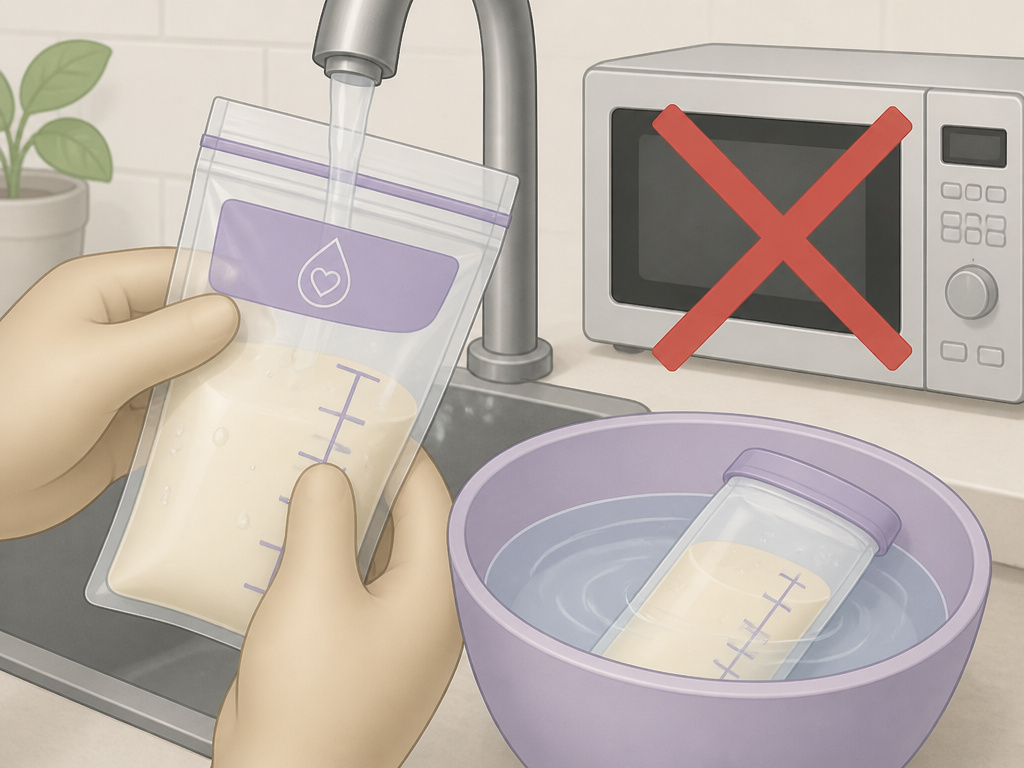 How you thaw breast milk matters as much as how you froze it. There are three safe methods, and one absolute never.
Safe Methods:
- In the refrigerator: This is the slowest but safest method. Place the frozen container in the fridge. It can take 12 hours or more to thaw completely. Once liquid, the 24-hour clock starts.
- Under cool, then warm, running water: Hold the sealed container under cool running water until the ice melts, then switch to warm water to bring it to feeding temperature.
- In a bowl of warm water: Place the sealed container in a bowl of warm water, changing the water every 10-15 minutes until thawed and warm.
The Absolute Never: Do not use a microwave. Microwaves heat unevenly, creating hot spots that can scald a baby’s mouth and destroy precious nutrients and antibodies.
Worth knowing before you start: Never refreeze thawed milk. The thawing process damages the milk’s structure and increases bacterial load. Refreezing concentrates that risk.
Once milk is thawed, gently swirl it to mix the separated fat back in. Do not shake vigorously, as that can damage some of milk’s living components. Use it within 24 hours, and discard any leftover milk from a feeding after two hours.
Why Your Appliance Thermometer is Lying
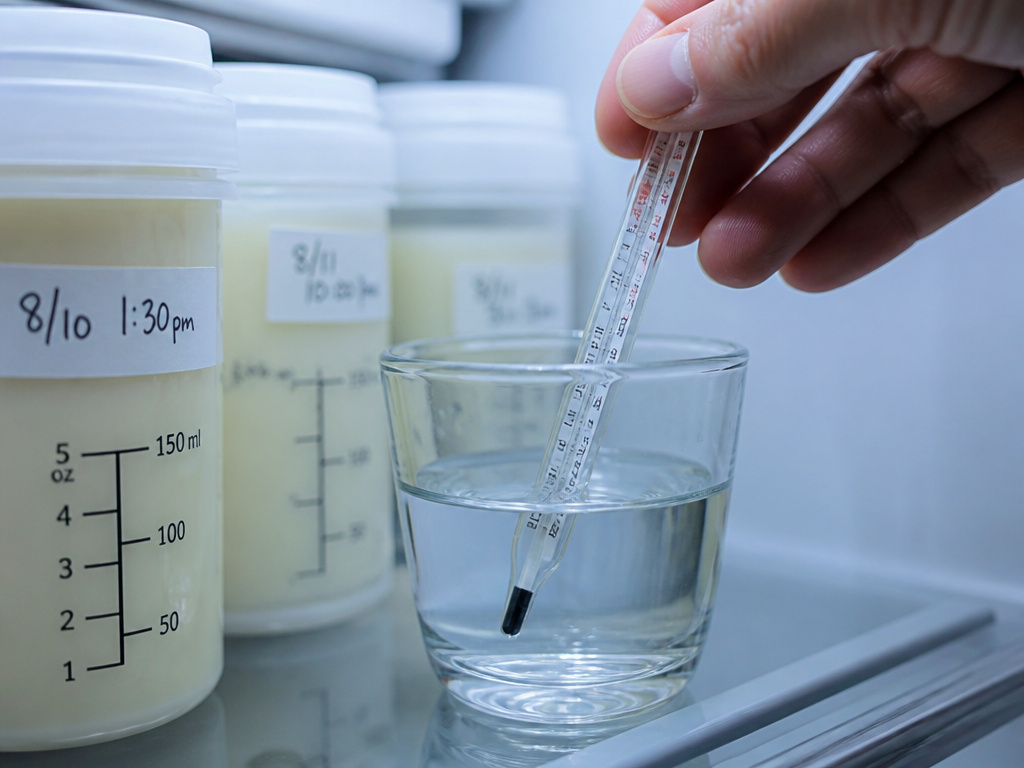 You set your fridge to 37°F. The built-in display says 37°F. It’s probably 42°F. Most appliance thermometers are not precision instruments, and their accuracy drifts over time.
The NY health department regulatory code for milk banks requires a thermometer calibrated annually against an NIST-certified standard. You don’t need that level of rigor, but you do need a standalone thermometer you trust.
Place a simple glass or digital thermometer in a glass of water at the back of your fridge. Check it after 24 hours. That’s the real temperature your milk is experiencing. Do the same for your freezer. This one step eliminates the guesswork behind every storage guideline.
For long-term storage in a freezers for milk, consider a mini freezers dedicated just to milk. It won’t be opened for pizza or ice cream, so the temperature stays rock-solid.
Frequently Asked Questions
Can I mix milk from different pumping sessions?
Yes, but cool the new milk in the refrigerator first before adding it to already chilled milk. Combining warm and cold milk can raise the temperature of the stored batch into the danger zone. Always label with the date of the oldest milk in the batch.
How full should I fill a storage bag?
Leave about an inch of space at the top. Milk expands as it freezes, and overfilled bags will burst at the seams. For most bags, this means filling to about 4 ounces, not the full 6-ounce capacity.
Does milk stored in the back of the freezer last longer than milk in the door?
Yes, significantly. The back of the freezer maintains the most consistent, coldest temperature. The door is the warmest area and experiences the widest temperature swings every time you open it, accelerating quality loss.
What if my baby doesn’t finish a bottle?
Leftover milk that has touched your baby’s mouth should be used within two hours. Saliva introduces bacteria, which then multiply in the nutrient-rich milk. Do not save it for a later feeding or refreeze it.
Are non-toxic bags worth the extra cost?
If you are building a large freezer stash intended to last many months, yes. Standard polyethylene bags are food-safe, but some BPA-free bags use thicker, more durable plastics that are less permeable and may better preserve fats and vitamins over very long storage.
The Bottom Line
Breast milk storage isn’t a single rule. It’s a system of clean containers, known temperatures, and strict clocks. The official guidelines give you the safe boundaries. The real work happens in the details: a calibrated thermometer, a dedicated freezer shelf, and the discipline to thaw only what you’ll use in a day.
The goal isn’t just safety. It’s preserving the living, complex food you worked to provide. That means respecting the timeline, trusting your tools, and never assuming your appliances are telling you the truth. Check the temperature yourself. Your milk—and your baby—will taste the difference.
