A Guide on How to Safely Thaw Breast Milk from Your Freezer
This post contains affiliate links. As an Amazon Associate, we earn from qualifying purchases.
Thaw breast milk from the freezer using one of three safe methods: in the refrigerator overnight, under lukewarm running water, or in a bowl of warm water. The milk is completely thawed when no ice crystals remain. Once fully thawed, it must be used within 24 hours if kept in the refrigerator, or within 2 hours if left at room temperature. Never thaw milk at room temperature, refreeze it, or use a microwave.
That 24-hour clock starts the moment the last ice crystal melts, not when you take the bag out of the freezer. Most guides state the rule but blur the starting point. The difference is a full feeding lost to the sink.
What follows is the mechanics behind each method, the storage timelines that actually matter, and the two mistakes that turn safe milk risky before the bottle even warms.
Key Takeaways
- The safest thawing methods are the refrigerator (4–24 hours), lukewarm running water, or a warm water bath. Never use a microwave or thaw at room temperature.
- Thawed breast milk stored in the refrigerator must be used within 24 hours of being completely thawed. This timer starts when the last ice crystal disappears.
- Once warmed for a feeding, any leftover milk must be used within 2 hours or discarded. It cannot be reheated or refrozen.
- Use BPA-free storage bags or containers and leave about an inch of space for expansion when freezing. Label everything with the date.
- If your frozen milk develops a soapy or metallic smell due to high lipase, you can scald it before freezing to prevent the flavor change.
The Three Safe Thawing Methods
Your goal is to bring the milk from frozen to liquid without encouraging bacterial growth or damaging its nutrients. Speed isn’t the priority; safety is.
The CDC official handling recommendations and the USDA official thawing recommendations agree on the core three. Each fits a different schedule.
Place the frozen container in the refrigerator for 4 to 24 hours until fully liquid. For quicker thawing, hold it under lukewarm running water or submerge it in a bowl of warm water, gently swirling until thawed. The milk is ready when no ice crystals remain.
In the Refrigerator (The Set-and-Forget)
This is the gold standard for planned use. Move the frozen milk from the freezer to the fridge the night before you need it. * Timeline: This takes 4 to 24 hours, depending on the volume. A 3-ounce bag might thaw in 4-6 hours; a 6-ounce bottle can take 12 or more. * Why it works: Thawing at a consistent, cold temperature (40°F or below) keeps bacterial growth at a near standstill. It gives you the longest possible window to use the milk after it’s ready. * The part nobody mentions: Your fridge must be at 40°F or colder. Use a fridge thermometer. A fridge that runs warm cuts your safe storage time in half.
Under Lukewarm Running Water (The Quick Middle Ground)
This is for when you need milk sooner but want to control the temperature carefully. * How to: Keep the sealed container in its storage bag to prevent water contamination. Hold it under a gentle stream of lukewarm water. Never use hot water. * Why it works: Moving water transfers heat more efficiently than still water, thawing the milk faster. The lukewarm temperature is warm enough to melt ice but not so hot that it damages the milk’s live components. * Step consequence: If you use water that’s too hot, you risk degrading antibodies and enzymes near the container’s edges while the center is still frozen.
In a Bowl of Warm Water (The Controlled Bath)
This method offers a good balance between speed and hands-off time. * How to: Fill a bowl or large cup with warm water. Submerge the sealed container. Swirl it gently every few minutes. As the water cools, add a little more warm water to maintain temperature. * Timeline: A typical 4-ounce serving thaws in about 15-20 minutes. * Where this goes sideways: Letting the container sit in cooled-down water for an extended period. The milk enters the “danger zone” (between 40°F and 140°F) where bacteria can multiply. Thaw it, then feed or refrigerate immediately.
What Never to Do: The Microwave and Room Temperature
Two methods are banned by every major health authority for concrete reasons.
Never use a microwave. It creates dangerous “hot spots” that can scald your baby’s mouth, even if the bottle feels cool on the outside. The uneven heat also destroys valuable immunological proteins and fats. The damage is instant and irreversible.
Never thaw at room temperature. Some guidelines say fresh milk can sit out for 4 hours, but that rule does not apply to frozen milk. Thawing is a slow process. A frozen bag left on the counter spends hours in the temperature danger zone as it slowly melts, giving bacteria a long window to grow. The Australian Breastfeeding Association and the City of Toronto are explicit: “Never thaw at room temperature.”
Thawed Milk Storage Timelines
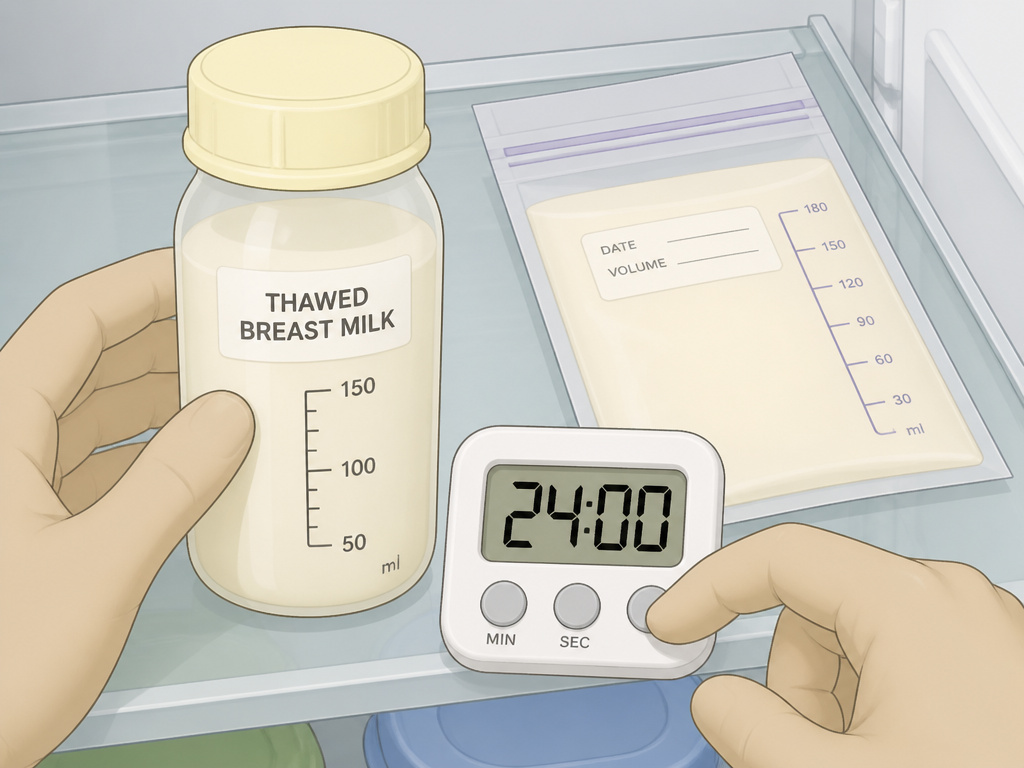 This is where most confusion lives. The clock starts at “completely thawed,” not “removed from freezer.”
| Storage Location | Safe Use Duration | Critical Detail |
|---|---|---|
| Refrigerator (40°F or below) | 24 hours | Timer starts when the last ice crystal melts. Milk thawed in the fridge counts from that moment. |
| Room Temperature (up to 77°F) | 2 hours | For thawed milk only. Begins once milk reaches room temp or after warming for a feed. |
| After Feeding Begins | Discard within 2 hours | Baby’s saliva introduces bacteria into the bottle. The countdown starts at the beginning of the feeding. |
The HealthyChildren.org official storage page notes that milk thawed in the fridge is best used within 24 hours but may be safe for 48-72 hours. That’s a conservative guideline for home use. For absolute safety, especially with premature or immunocompromised infants, stick to the 24-hour rule.
Worth knowing before you start: If your freezer loses power and frozen milk partially thaws but still has ice crystals and feels cold, you can refreeze it. If it’s fully thawed and above 40°F, discard it. When in doubt, throw it out.
Handling Edge Cases and Common Problems
 Real life doesn’t follow the manual. Here’s how to handle the wrinkles.
The “Soapy Smell” Problem (High Lipase)
Some breast milk contains higher levels of an enzyme called lipase. After freezing and thawing, this milk can smell soapy, metallic, or sour. It is safe and nutritious, but some babies refuse it. * The fix: If this happens consistently, scald your milk before freezing. Heat it gently on the stove until tiny bubbles form at the edges (about 180°F), hold it there for 2 minutes, then quickly cool it in an ice bath before freezing. This deactivates the lipase. * The trade-off: Scalding may reduce some beneficial properties, but fed milk is better than discarded milk.
Unexpected Thawing (Freezer Failure or Travel)
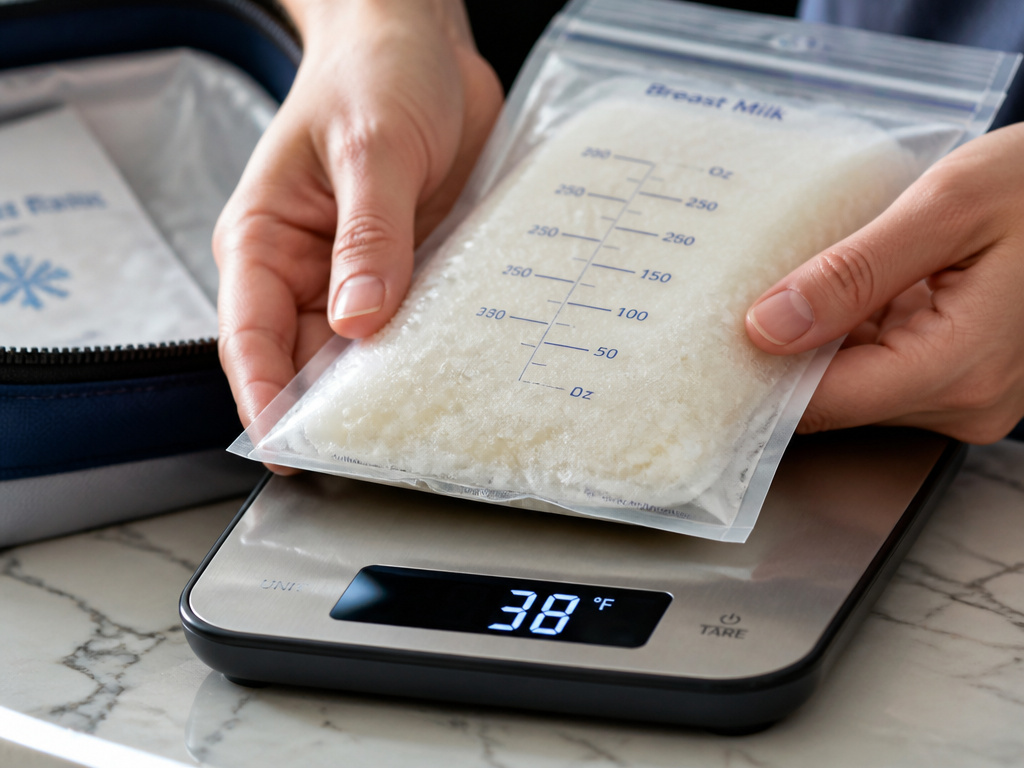
If your frozen milk thaws unexpectedly in a cooler or during a power outage, the temperature it reached decides its fate. * If it still has ice crystals and feels as cold as refrigerator temperature, you can refreeze it or use it within 24 hours. * If it’s completely thawed and has been above 40°F for more than 2 hours, you must discard it. The Canadian Journal of Infection Control guidelines for healthcare facilities are strict on this point for a reason.
Choosing Your Storage Gear
Your containers matter. Use BPA-free bags designed for breast milk or freezer-safe containers like tempered glass or food-grade plastic. Leave an inch of space for expansion. Double-bagging or using a dedicated freezer container within your main freezer prevents accidental thawing from temperature fluctuations.
For long-term stockpiling, a deep freezer that maintains -4°F is better than a fridge-freezer combo. The colder, stable temperature extends safe storage up to 12 months. If space is tight, a mini freezer dedicated to milk ensures your stash stays frozen solid.
Preparing and Feeding Thawed Milk
Once the milk is thawed, the final steps are about safe serving.
- Gently mix the milk. Breast milk separates into layers when stored. Swirl the container to remix the fat. Do not shake vigorously.
- Warm it if desired. Stand the sealed container in a bowl of warm water for a few minutes. Test the temperature by dropping a few drops on your wrist. It should feel warm, not hot.
- Feed immediately. Offer the bottle. Once your baby’s mouth touches the nipple, the 2-hour countdown begins.
- Discard leftovers. Do not save half-finished bottles. Bacteria from your baby’s mouth multiply quickly in the nutrient-rich milk.
TL;DR: Thaw in the fridge for tomorrow’s feed, in water for today’s. The 24-hour fridge clock starts at complete thaw. Never microwave. Smelly milk might need scalding next time.
Frequently Asked Questions
Can I refreeze thawed breast milk?
No. Do not refreeze breast milk once it has thawed. The freezing and thawing process can break down milk’s protective components and increase the risk of bacterial growth if it’s refrozen after being in the liquid state.
How can I tell if thawed breast milk has gone bad?
Spoiled breast milk often has a distinct sour or unpleasant odor, unlike the soapy smell of high lipase. It may also look clumpy or separated in a way that doesn’t re-mix when swirled. When in doubt, trust your nose and err on the side of caution.
Why does my thawed milk have little fat globules or look separated?
This is normal. Breast milk separates into a fatty layer on top and a watery layer below. Gently swirl the container to mix it back together. Avoid shaking, as it can break down some of the proteins.
Is it safe to thaw breast milk directly in a bottle warmer?
Only if the warmer is specifically designed for breast milk and uses a water bath or gentle warming method. Many bottle warmers get too hot, too fast. Check the manufacturer’s instructions. The warm water bath method gives you more control.
Can I combine freshly expressed milk with thawed milk?
Yes, but cool the fresh milk in the refrigerator first. Never add warm fresh milk to already thawed cold milk, as it can raise the temperature of the thawed portion into the danger zone. Once combined, the mixture should be used within 24 hours.
Before You Go
Thawing breast milk is a simple process ruled by a few non-negotiable timers. The refrigerator method is safest, the water methods are fastest, and the microwave is off the table. Your most important tool is a label: write the date you expressed and the date it thawed.
Your storage containers and freezer bags are your first line of defense. Investing in quality BPA-free bags and knowing your freezer’s actual temperature turns guidelines into reliable routine. When the inevitable hiccup happens—a weird smell, a freezer failure—you now have the rules to make a safe call.
