The Answer: Can I Microwave a Plastic Container Safely?
This post contains affiliate links. As an Amazon Associate, we earn from qualifying purchases.
You can microwave a plastic container only if it is specifically designed and certified for repeated microwave use, and even then, you must follow strict conditions. The “microwave safe” label often only guarantees the container won’t melt, not that chemicals won’t leach into your food. Research shows microwaving increases chemical migration, with one study finding a 400% increase in substances leaching from a polypropylene cup after cumulative exposure passed 8 minutes at 540 watts.
That 540-watt threshold is the line between a quick reheat and a measurable chemical transfer. It comes from a peer-reviewed study that timed the migration of volatile substances into food simulants. The label on the bottom of your container tells you about its structure, not its chemistry.
What follows is a breakdown of the three things that actually matter: the material’s FDA clearance status, the manufacturer’s stated heat resistance, and the cumulative exposure time that triggers leaching. We’ll walk through the specs that separate a Sistema container from a margarine tub, and the one copolyester with a specific FDA food-contact clearance.
Key Takeaways
- “Microwave safe” is not a chemical safety guarantee. It often means the plastic won’t warp or melt at typical microwave temperatures, but it can still contain and leach chemicals like BPA or phthalates unless explicitly labeled free of them.
- Cumulative heat exposure drives chemical migration. A 2003 study found that microwaving a yellow polypropylene cup for over 8 minutes at 540 watts increased global migration of substances by 400%. Short, low-power reheats are less risky than long cook times.
- Never reuse single-use containers. Containers from microwavable meals, takeout foam clamshells, and margarine tubs are designed for one-time use. Repeated heating breaks them down, increasing leaching and fire risk.
- Fatty foods accelerate leaching. Oils and fats pull chemicals from plastic more readily than watery foods. Reheating spaghetti sauce or curry poses a higher risk than reheating soup.
- For repeated use, look for specific FDA clearances. Materials like Eastman Tritan copolyester have FDA clearance for repeated food contact at temperatures up to 100°C (212°F) under FCN No. 1041. Most generic plastics do not have this specific endorsement.
The 540-Watt Study That Quantified the Risk
Most warnings about microwaving plastic are vague. “Chemicals can leach.” “It might be harmful.” A 2003 study published in the European Journal of Plasticity and Automation gave that risk a number, a power setting, and a timeline.
Researchers used a 540-watt microwave, with power calibrated to the ASTM F-1317-90 standard. They tested common packaging: a yellow polypropylene cup (175 cm³), a white polystyrene cup, and a polypropylene food container. Each was filled with a food simulant, acetic acid, ethanol, or olive oil, stored for 10 days at 5°C to mimic a refrigerator, then microwaved in repeated 30-second cycles.
The global migration of volatile substances from the yellow polypropylene cup into olive oil increased by 400%. This distinct increase occurred when the cumulative microwave exposure time exceeded 4-8 minutes at 540 W output power.
The results were not subtle. The worst offender was the yellow polypropylene cup with olive oil. The migration spike happened after the 8-minute mark. This tells you two things. First, the container material matters. Second, the total time the plastic is subjected to microwave energy is a critical factor. A 2-minute reheat is in a different category than an 8-minute cook.
The study’s final line is a blunt directive: “plastic packages intended for single use and not designed for microwaving should not be used for repeated heating of foods in microwave ovens.” This isn’t a guess. It’s a measured result.
Why Oil and Fat Are the Problem
The study used olive oil as a simulant for a reason. Chemicals like phthalates and BPA are lipophilic, they dissolve in fat, not water. When you reheat a fatty food like leftover curry, roast meat with juices, or cheesy pasta, those fats act as a solvent, pulling chemicals from the plastic matrix more efficiently than a watery soup would.
This is why the American Academy of Pediatrics specifically warns against using plastic containers with recycling codes 3 (phthalates), 6 (polystyrene), and 7 (can contain BPA) for food. The risk is higher for the foods kids often eat.
| Food Type | Risk Level for Chemical Leaching | Why It Matters |
|---|---|---|
| Olive oil, butter, fatty meats | High | Fats dissolve and carry chemicals like phthalates. |
| Tomato-based sauces, cheese | Medium-High | Acids and fats combine to accelerate breakdown. |
| Soups, broths, steamed vegetables | Medium-Low | Water-based, but heat still drives some migration. |
| Dry bread, crackers | Low | Minimal fat or moisture to facilitate transfer. |
What Does “Microwave Safe” Really Mean?
The microwave-safe label on a plastic container only means it won’t melt or warp under normal microwave heating conditions. It does not guarantee the plastic is free of chemicals that can migrate into food, nor does it certify the material for repeated use.
This is the core disconnect. As a toxicologist quoted in a Scienceline article put it, “Even if a plastic container is labeled microwave safe, it simply means that it won’t melt.” The label is about structural integrity during the heating process, not chemical inertness.
Manufacturers test containers to meet basic FDA standards for food contact, but the “microwave safe” symbol is often self-certified. There is no universal, independent testing regime for long-term chemical migration under repeated microwave heating. This is why the University of Illinois Extension microwave guide stresses using only containers designed for the microwave and warns against reusing single-use containers.
The Manufacturer Specs Everyone Skips
Your microwave oven manual has specific rules that most people never read. They are not suggestions.
- Miele states: “Plastic containers must be heat resistant to a minimum of 110 °C.” If your container isn’t rated for that temperature, it shouldn’t go in a Miele microwave. Their manual also warns that unsuitable plastics “can be badly damaged and cause damage to the appliance.”
- Panasonic explicitly says the “water test” (heating water in a container to see if the container gets hot) “cannot be used for plastic containers.” This common hack is invalid for plastic.
- Sistema says its KLIP IT PLUS containers can reheat pre-cooked foods without the lid. The lid can warp and create dangerous steam pressure.
These specs exist because manufacturers know their ovens’ power profiles and hotspot patterns. Ignoring them voids warranties and creates fire hazards. Single-use plastics like foam and thin margarine tubs can actually ignite.
Common mistake: Reusing a takeout container or microwavable meal tray. These are designed for one heating cycle. The plastic degrades rapidly on the second use, and leaching increases. You’ll smell a faint chemical odor before you see any melting.
Which Plastics Are Actually Cleared for Microwave Use?
Not all plastics are equal. The FDA clears specific materials and formulations for food contact, sometimes with temperature limits. A generic “microwave safe” stamp is not the same as a specific FDA Food Contact Notification (FCN).
| Material / Brand | Key Specification | Best Use | Risk If Misused |
|---|---|---|---|
| Eastman Tritan copolyester | FDA clearance under FCN No. 1041 for repeated use up to 100°C (212°F). | Repeated microwaving of leftovers, water bottles. | Manufacturer must design article to meet clearance; not all Tritan products are equal. |
| Sistema KLIP IT PLUS | Manufacturer states microwave-safe for reheating (without lid). Dishwasher safe (top rack). | Reheating pre-cooked foods, storing leftovers. | Lid can warp from steam pressure; high-fat/sugar foods can stain or melt container. |
| Polypropylene (#5) | Generally heat-resistant. Common in “microwave safe” containers. | Short reheats (<3 mins), storing cold foods. | Long cook times (>8 mins) can increase migration, especially with fatty foods. |
| Polystyrene (#6 / Foam) | Not microwave safe. | None. Takeout containers only. | Melts, can ignite, leaches styrene (a possible carcinogen). |
| PVC (#3) | Contains phthalates. Never microwave. | None. | Leaches endocrine-disrupting chemicals rapidly when heated. |
The standout material here is Eastman Tritan copolyester. Eastman’s technical document states it has “obtained clearance from the United States Food and Drug Administration (FDA) for use of Tritan copolyesters in repeated use food contact articles… at temperatures up to and including 100°C (212°F).” This clearance is based on 21 CFR 174.5(d)(5) and described in FCN No. 1041.
That’s a specific regulatory path, not a marketing claim. It means the material has been evaluated for repeated food contact at microwave temperatures. However, the document also notes the final article’s design matters, the manufacturer of your container must have used the material appropriately.
For the rest of us, the recycling code is a quick filter. Codes 1, 2, 4, and 5 are generally safer choices. Code 5 (polypropylene) is what you’ll find on many microwave-safe containers. But as the 540-watt study showed, even polypropylene has its limits.
The Glass and Ceramic Alternative
When in doubt, transfer. The safest practice is to move food from any plastic container to a glass or ceramic plate or bowl before microwaving. This eliminates the material risk entirely.
Glass doesn’t leach chemicals, doesn’t warp, and can handle high temperatures. The only caution is thermal shock, don’t take a glass container from the freezer and put it directly into a hot microwave. That can crack it. For that process, you need to understand the specific risks of freezing glass.
This is also why knowing freezer-safe container materials is part of the same safety loop. You store in a proper container, then reheat in a proper dish.
Step-by-Step: How to Microwave Plastic Safely (When You Must)
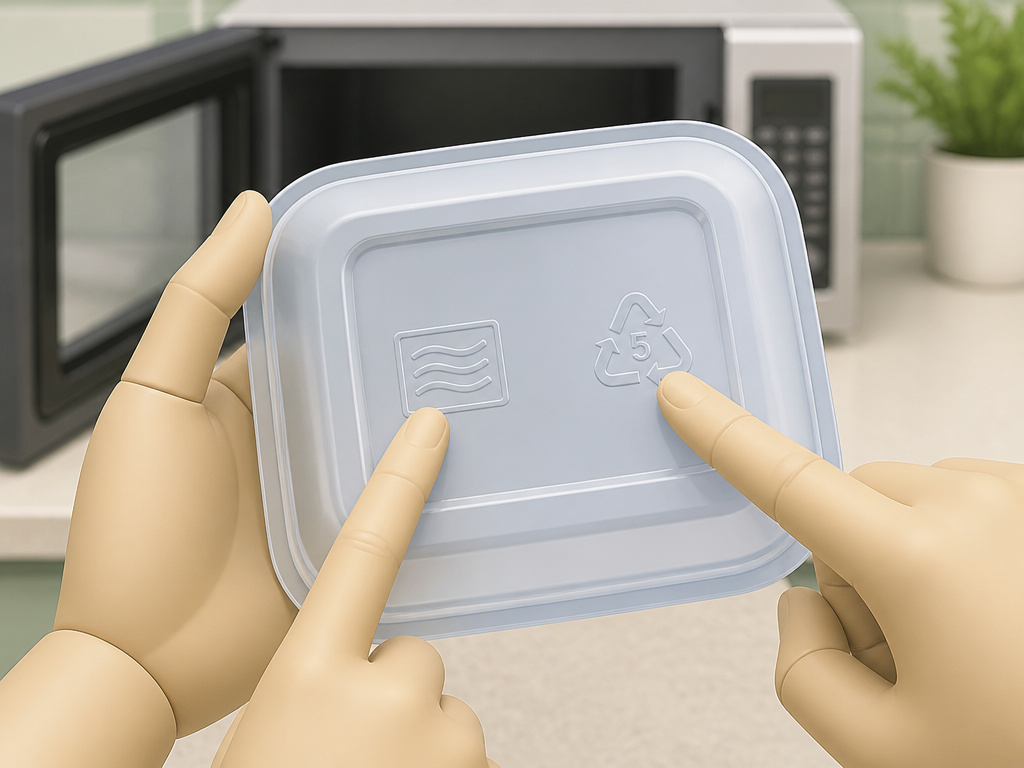
Sometimes you’re in a rush, or the container is all you have. If you must microwave plastic, this sequence minimizes risk.
- Check the label and code. Look for the microwave-safe symbol (wavy lines) and the recycling number. If it’s #3, #6, #7 (unless marked BPA-free), or has no label, stop. Transfer the food.
- Remove the lid. Always microwave without the lid. Steam pressure can warp lids, cause dangerous bursts, or trap heat and raise the container’s temperature beyond its rating. Use a microwave-safe plate or paper towel as a loose cover.
- Inspect for damage. Cracks, scratches, and cloudiness indicate the plastic is degrading. Damaged plastic leaches chemicals more readily. Throw it away.
- Use medium power, short time. Set your microwave to 50-70% power. Heat in 1-minute intervals, stirring in between. This avoids localized hot spots that can distort the plastic and accelerate leaching. Never run it for a single 5-minute blast.
- Let it stand after heating. After the microwave beeps, let the container sit in the oven for 30-60 seconds. This allows temperature to equalize and reduces the chance of burning yourself when you grab it.
- Wash by hand, not dishwasher. The dishwasher’s high heat and detergents degrade plastic over time. Hand wash with mild soap and a soft cloth to extend its life and reduce chemical breakdown.
Where this goes sideways: Microwaving a “microwave safe” container with the lid clipped on. The Sistema guide, the Miele manual, and the Panasonic manual all explicitly warn against this. The steam has no vent, pressure builds, and the lid can violently pop off or the container can distort. It happens within 2-3 minutes on high power.
Following these steps doesn’t make plastic perfectly safe. It reduces the known risk factors: time, temperature, and physical stress. For daily reheating, glass remains the only zero-risk option.
Frequently Asked Questions
Are plastic containers that say “microwave safe” really safe?
They are safe from melting or warping under normal use. They are not necessarily safe from chemical migration. The label addresses structural integrity, not chemical content. Unless the container also states it is “BPA-free” or “phthalate-free,” assume it may contain those chemicals, which heat can drive into your food.
What is the safest plastic container for microwaving?
The safest are those made from materials with specific FDA clearances for repeated microwave use, like Eastman Tritan copolyester (under FCN No. 1041). In practice, look for name-brand containers like Sistema that are explicitly labeled for microwave reheating (without the lid) and are made from polypropylene (#5).
Can you microwave plastic takeout containers?
No. Most takeout containers are polystyrene foam (#6) or thin polypropylene designed for single use. They are not meant for reheating. The risks of microwaving plastic bags and films are similar, the material is too thin and heats unevenly, risking melting and chemical transfer. Always transfer takeout to a glass or ceramic dish.
Does microwaving plastic cause cancer?
The direct link between microwaving plastic and cancer in humans is not proven, as long-term controlled studies are ethically impossible. However, we know microwaving increases the migration of chemicals like styrene (from polystyrene) and BPA, which are classified as possible carcinogens or endocrine disruptors. Health organizations like the American Academy of Pediatrics recommend avoiding microwaving plastics to minimize exposure to these substances.
How can I tell if a plastic container is microwave safe?
Look for three things: the universal microwave-safe symbol (wavy lines), a recycling code of #5 (polypropylene), and explicit manufacturer instructions. Check the bottom of the container. If it only says “plastic” or has no symbol, assume it is not safe. Also, check your appliance manual; Miele requires plastics to withstand 110°C, for example.
Is it safe to put plastic in the dishwasher if it’s microwave safe?
Not necessarily. The dishwasher uses hotter, sustained heat and harsh detergents that can degrade plastic faster than microwave cycling. Many “microwave safe” containers are not dishwasher safe, or are only safe on the top rack. Dishwashing can cause cracks and cloudiness, which then makes the container riskier for microwaving. Hand washing is always the gentler option for cleaning plastic containers.
Before You Go
Microwaving plastic is a game of reducing known risks, not eliminating them. The “microwave safe” label is a starting point, not a free pass. The science shows chemical migration increases with time and fat content, with measurable spikes after 8 minutes at 540 watts.
Your safest path is simple: use glass or ceramic for reheating. Reserve microwave-safe plastic containers like Sistema or Tritan-based products for short, medium-power reheats of non-fatty foods, always with the lid off. Never reuse takeout containers, margarine tubs, or meal trays.
The manuals from Miele, Panasonic, and Sistema aren’t just paperwork. They are the manufacturer’s boundaries for safe operation. Ignoring them turns a convenience appliance into a source of chemical exposure and physical hazard. Your food deserves a clean reheat, not a side of polymer breakdown.
