
How to Store Flour | The 60% Humidity Line That Spoils It
This post contains affiliate links. As an Amazon Associate, we earn from qualifying purchases.
To store flour and keep it fresh, move it into an airtight container immediately and keep it in a cool, dry pantry below 60% humidity. For long-term storage or whole grain flours, use the freezer. The refrigerator introduces condensation and odor risks, so most experts advise against it.
That 60% humidity line is the pivot point. Above it, flour absorbs moisture, clumps, and invites mold. Below it, the starches stay dry and the fats in whole grains oxidize slowly. This is a physical boundary, not a suggestion.
What follows: the three storage locations ranked by outcome, the container swap that stops pests cold, and the one adjustment you make for yeast bread when pulling flour from the freezer.
Key Takeaways
- Flour goes bad from three things: moisture (humidity over 60%), heat (over 70°F), and oxygen exposure. An airtight container in a cool, dry pantry addresses all three.
- The freezer is the best long-term storage for any flour, especially whole grain, nut, or coconut flours. It halts oxidation and kills any pest eggs in four days.
- Avoid the refrigerator for primary storage. The environment is humid, and pulling a cold container into a warm kitchen causes condensation inside your flour every time you open it.
- Inspect pantry-stored flour for pests every two months. Look for fine silk webbing, tiny beetles, or clumps that don’t break apart with a whisk.
- Let flour come to room temperature before baking, especially for yeast recipes. Cold flour slows fermentation and can throw off your dough’s rise time by an hour.
The Three Enemies of Fresh Flour
Flour spoils in predictable ways. You are fighting moisture, heat, and oxygen.
Moisture is the fastest actor. When the relative humidity in your cupboard drifts above 60%, flour begins to absorb water from the air. The starch granules swell, stick together, and form hard clumps. Given enough time and humidity, mold spores find a home. This is why a paper bag is a temporary vessel, it’s porous.
Heat accelerates the oxidation of the natural oils present in all flour, especially in whole grain varieties. The fats turn rancid. The smell shifts from neutral grain to something like wet cardboard or old nuts. A steady temperature between 50°F and 70°F (10°C–21°C) dramatically slows this process.
Oxygen is the constant background agent. Every exposure to air gives those oils another chance to oxidize. An open bag on the counter is a countdown clock.
Flour stored in a paper bag in a humid kitchen (>60% RH) will show clumping within two weeks. In a warm climate (kitchen temps >75°F), whole grain flour will smell rancid in under three months.
The right storage method is simply a barrier against these three. Your location (pantry, freezer, fridge) chooses which enemy you prioritize defeating.
The Pantry vs. Freezer vs. Fridge Trade-Off
Your kitchen has three candidate spots. Each wins on one front and loses on another.
| Storage Location | Best For | Primary Risk | Use Case |
|---|---|---|---|
| Cool, Dry Pantry | Daily-use all-purpose flour | Humidity spikes, pest infestation | White flours used within 6–12 months |
| Freezer | Long-term storage, whole grain/flours | Condensation if thawed improperly | Any flour you won’t use in <6 months; pest kill |
| Refrigerator | Short-term in very warm climates | Moisture absorption, odor transfer, condensation | Last resort when pantry exceeds 70°F consistently |
The pantry is the convenient choice. It works if your kitchen stays consistently below 70°F and 60% humidity. The MU Extension flour storage guide confirms this range as optimal. Most modern homes can manage this, but cabinets next to ovens or dishwashers often can’t.
The freezer wins for preservation. The sub-zero temperature stops all chemical degradation and biological activity. According to an Ask Extension flour freezing FAQ, this is the recommended method for storing flour for “several years.” It also serves as a quarantine: four days at 0°F kills any weevil or moth eggs that hitched a ride from the mill.
Where this goes sideways: Using the fridge as a default. Frank Tegethoff of King Arthur Baking Company is blunt: “I’m not a fan of keeping flour under refrigeration, the environment is usually far too high in humidity.” You introduce moisture every time you pull a cold container into warm air to scoop.
The fridge is a compromise for a specific problem, a persistently hot kitchen. If your pantry regularly hits 80°F in summer, the fridge’s 40°F is safer than the cabinet, but you must use an absolutely airtight container and accept that your flour may pick up odors.
The Container Swap That Stops Pests
The bag your flour came in is for transport, not storage. Paper bags breathe. Plastic pouches are often thin and not fully airtight once opened.
You need a barrier that seals. The goal is to keep moisture out and aromas in, you don’t want your biscuit flour tasting like yesterday’s garlic powder.
Glass or heavy-duty plastic containers with clamp or screw-down lids are the standard. They’re impervious, easy to clean, and block light. A 1-gallon container fits a standard 5-pound bag of all-purpose flour almost exactly. For larger batches, food-grade buckets with gasket seals work.
I typically decant flour into sealed food storage containers. If I’m leaving flour in its bag, I place the whole bag inside a resealable freezer bag and squeeze the air out before sealing. . Dan Langan, pastry instructor
The act of transferring serves another purpose: inspection. As you pour, look for any movement in the flour, tiny dark beetles or pale larvae. Look for silk threads, the calling card of pantry moths. Finding nothing means you start clean. Finding something means you treat the entire container and its neighbors.
This is your first line of defense in a comprehensive strategy to prevent bugs in your dry goods.
How Long Does Flour Actually Last?
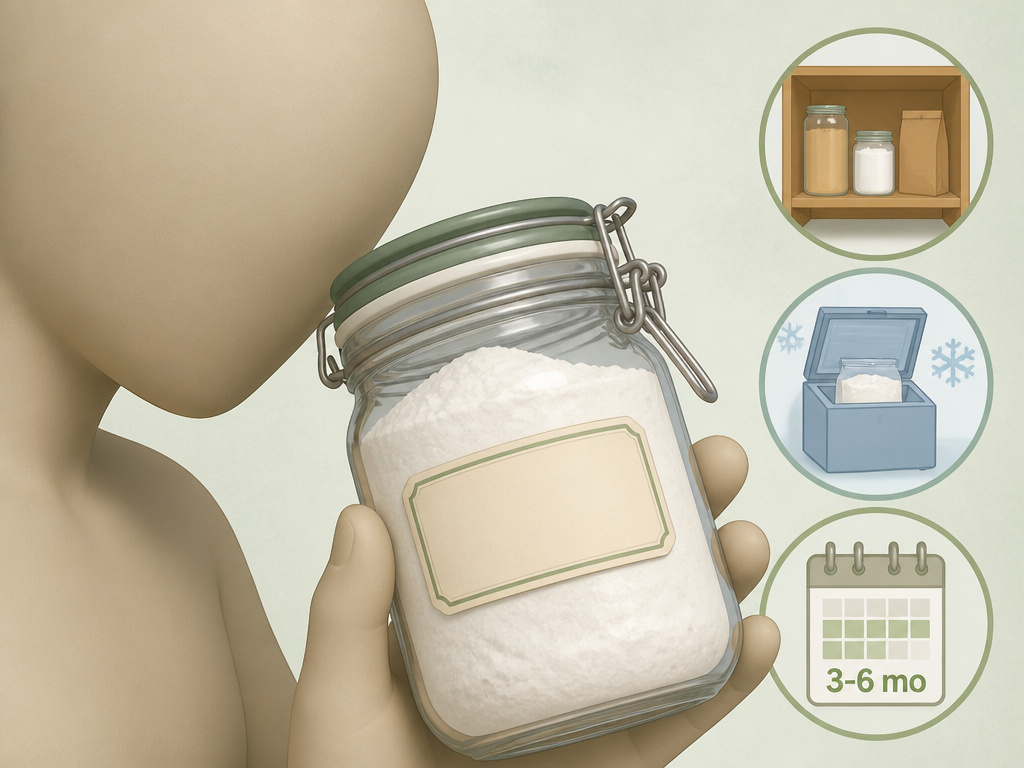 Shelf life is a spectrum set by the flour’s fat content and your storage conditions.
- All-purpose/Refined White Flour: 12–18 months in an airtight pantry container. It can last years in the freezer with no quality loss.
- Whole Grain Flour (whole wheat, rye): 3–6 months in the pantry. 6–12+ months in the freezer.
- Nut & Coconut Flours: 4–6 months in the pantry. These are the most volatile and almost demand freezer storage.
These timelines assume ideal conditions. Real kitchens shorten them. The only reliable test is the sniff test. Fresh flour smells neutral, like grain. Rancid flour smells sour, musty, or like play-doh. If it smells off, it will taste off in your bake.
TL;DR: White flour is forgiving. Whole grain flour is perishable. When in doubt, freeze it.
The Edge Cases That Break the Rules
 Most advice works for most people. These scenarios don’t fit the mold.
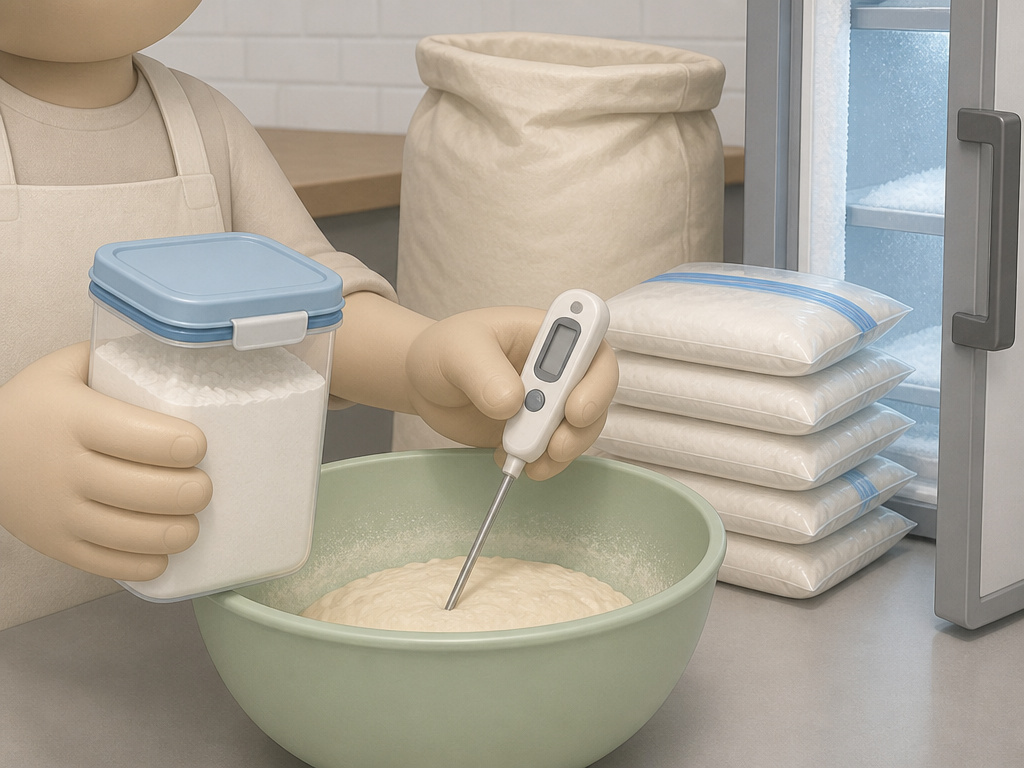
You bake yeast bread with freezer-stored flour. Cold flour chills your mixing water and slows yeast activation. If your recipe assumes room-temperature ingredients, your rise can stall. The fix: calculate your desired dough temperature and warm your water accordingly, or simply let the sealed container of flour sit on the counter for a few hours before you bake.
You live in a tropical or very humid climate. The “cool, dry pantry” may not exist. Here, the freezer serves as your primary pantry for both long-term storage and daily-use flour.It’s a hassle, but it beats throwing out clumped, moldy flour every season.
You buy flour in 25- or 50-pound sacks. You won’t use it fast enough for pantry storage. The method is to divide. Portion the flour into family-sized amounts, seal each in a freezer bag, remove as much air as possible, and store all the bags in a larger, airtight tub in the freezer. Take out one bag at a time.
These are the situations where generic “use an airtight container” advice fails. The principle holds, but the application shifts.
Step-by-Step: Storing a New Bag of Flour
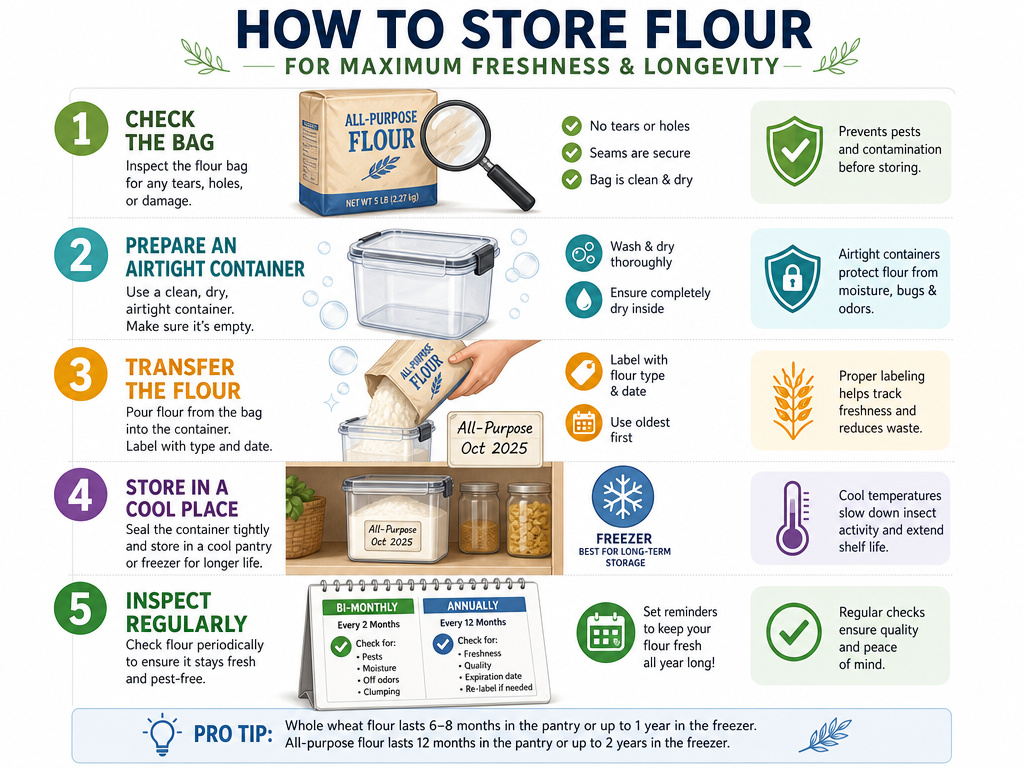 Follow this sequence when you bring flour home. It takes five minutes and sets you up for months of freshness.
- Inspect the bag. Before opening, check the exterior for any small holes or tears. A breach means pests could already be inside.
- Prepare your container. Clean your chosen airtight container with hot, soapy water and dry it thoroughly. Any residual moisture will transfer to the flour.
- Transfer and label. Pour the flour into the container. Cut out the brand name and expiration date from the bag and tape it to the container, or write the date and type of flour on a label.
- Seal and place. Close the lid firmly. Place it in your chosen storage location, pantry for short-term, freezer for long-term.
- Set a inspection reminder. For pantry-stored flour, mark your calendar to check for pests every two months. For freezer flour, you can inspect annually.
Skipping step 3 (labeling) leads to confusion six months later. Is this bread flour or all-purpose? Is it still good? Labeling removes the guesswork.
Frequently Asked Questions
Can I store flour in its original bag?
You can, but you shouldn’t for long. Paper bags are not moisture-proof. Resealable plastic pouches are better, but the seals often fail after a few openings. For any flour you plan to keep more than a month, transfer it to a dedicated container for flour and sugar.
Does freezing flour kill bugs?
Yes. Four full days at 0°F (-18°C) kills all stages of common pantry pests, eggs, larvae, and adults. Freezing is the most reliable non-chemical method for freezing flour long-term and ensuring it’s pest-free.
How can I tell if flour has gone bad?
Use your senses. Look: Discoloration or visible mold. Feel: Hard clumps that don’t break apart with vigorous whisking. Smell: A sour, musty, or chemical odor instead of a clean, neutral grain smell. If any of these are present, compost the flour.
What’s the best container for a 5 lb bag of flour?
1-gallon capacity container is perfect. Look for one with a wide mouth for easy scooping and a lid that seals with a clamp or screw-top. Many containers designed for a 5 lb bag are marketed specifically for this purpose.
Is it okay to store flour and sugar together?
In the same cupboard, yes. In the same container, no. They have different moisture contents and can cross-contaminate. Sugar can harden, and flour can clump. Keep them in separate, labeled airtight containers for baking staples.
The Bottom Line
Flour storage is a direct response to the environment you put it in. Grab an airtight container, glass or thick plastic, and use it.For the flour you bake with weekly, the pantry is fine if it’s cool and dry. For everything else, especially whole grains, the freezer is your best friend.
The refrigerator is a last resort for hot kitchens. The paper bag is a temporary holder. Your nose is the final judge.
Start with the container. The rest is just choosing the right room.
