
Can You Store Flour in the Freezer? Here’s How & Why You Should
This post contains affiliate links. As an Amazon Associate, we earn from qualifying purchases.
You can store flour in the freezer, and for whole-grain, nut, and specialty flours, you should. Freezing at 0°F halts the lipid oxidation that causes rancidity, extending shelf life for years. For all-purpose flour, freezing preserves it with no taste or performance loss, provided you bring it fully to room temperature before baking.
The catch is in that last clause. Cold flour behaves differently in a recipe than flour at pantry temperature, and skipping the warming step is how a batch of cookies turns into dense bricks. The science is clear: the enemy is oxygen and warmth, not cold.
What follows: the two flours that demand freezer storage, the one storage method experts argue over, and the simple 30-minute fix that separates a successful bake from a disappointing one.
Key Takeaways
- Freezing is non-negotiable for whole-grain, nut, and gluten-free flours; their higher oil content turns rancid within months at room temperature.
- All-purpose flour can be frozen indefinitely with no quality loss, but America’s Test Kitchen found using it cold yields denser, chewier baked goods.
- The critical step is bringing frozen flour to room temperature before use, spread it thin on a baking sheet for 30 minutes.
- Airtight, moisture-proof packaging is mandatory; a permeable bag or a humid fridge introduces more problems than it solves.
- Refrigerator storage is contested; a King Arthur Baking expert warns against it due to condensation risk, though some extension services suggest it for short-term storage.
The Science Behind Freezing Flour
Flour doesn’t spoil from bacteria. It degrades from chemical reactions, primarily lipid oxidation. The fats and oils naturally present in the grain’s germ react with oxygen, producing off-flavors and odors, that “play-doh” or stale-nut smell. Whole-grain flours have more germ, so they oxidize faster.
Freezing flour to 0°F (-18°C) dramatically slows lipid oxidation and enzymatic activity, preserving its initial baking properties for years. This is why a peer-reviewed study tracking flour over 30 months found quality was maintained at -20°C, while ambient-stored flour showed significant decline.
Cold is a preservative. It doesn’t improve flour, but it presses pause on the processes that ruin it. This is why the Wheat Foods Council states all-purpose and bread flour can be stored indefinitely in the freezer. The clock on rancidity stops.
The packaging matters as much as the temperature. That same study noted that even at -20°C, flour in permeable bags lost water content stability compared to flour in sealed, watertight containers. Your freezer is dry, but it’s not a vacuum. Without a proper barrier, the flour will still slowly exchange moisture with the freezer air, which can affect consistency.
Bottom line: Freezing works because it stops chemistry. Your goal is to create a cold, oxygen-free, dry environment.
Which Flours Must Go in the Freezer?
Not all flours benefit equally from the deep freeze. Your decision tree starts with the flour’s fat content.
| Flour Type | Freezer Needed? | Why | Pantry Shelf Life |
|---|---|---|---|
| Whole Wheat / Rye | Yes | High germ oil content oxidizes quickly at room temperature. | 3–6 months |
| Nut Flour (Almond, etc.) | Yes | Nut oils are highly volatile and turn rancid. | 1–3 months |
| Gluten-Free (Garbanzo, Quinoa) | Yes | Often contains added stabilizers or fats that degrade. | 3–6 months |
| All-Purpose / Bread | Optional | Low oil content; freezes perfectly for long-term storage without quality loss. | 1+ year |
| Cake / Pastry | Optional | Similar to all-purpose; freezing prevents clumping and insect issues. | 1+ year |
Whole-grain and nut flours are mandatory freezer citizens. Dan Langan, a professional pastry instructor, states the freezer is optimal for these. Frank Tegethoff of King Arthur Baking Company is blunt: whole-grain flours are better stored in the freezer to protect the volatile oils in the germ. If your kitchen gets hot in summer, even all-purpose flour is a freezer candidate.
Where this goes sideways: Storing high-fat flour in a pantry cupboard over summer. The rancidity isn’t always a strong smell at first, it manifests as a flat, bitter aftertaste in your baked goods that you might blame on the recipe.
For the everyday baker with a 5-pound bag of all-purpose, freezing is about convenience and pest prevention, not spoilage. It’s a perfect solution for buying in bulk or for storing flour you use only occasionally.
The Step You Cannot Skip: Warming Frozen Flour
This is the part every guide mentions and most home bakers ignore, to their regret. Flour temperature directly impacts hydration and rise.
America’s Test Kitchen ran the test. They froze all-purpose flour for weeks, warmed it to room temperature, and baked. Tasters found cakes, brownies, and cookies identical to those made with pantry flour. Then they baked with flour straight from the freezer. The cold flour inhibited rise, yielding denser, chewier baked goods.
The reason is physical. Cold flour chills the liquid in your recipe (water, milk, eggs). This slows the activation of leavening agents like baking powder or yeast, and it can cause fats like butter to firm up unevenly. The dough or batter doesn’t achieve the same aeration.
To quickly bring flour to room temperature:
- Take the needed amount from your freezer container.
- Spread it in a thin, even layer on a baking sheet.
- Let it sit on the counter for about 30 minutes.
That’s it. Don’t microwave it, you risk partial cooking and moisture hotspots. The thin layer maximizes surface area for even warming. This step is as important as using airtight flour containers in the first place.
Your Freezer Storage Options Compared
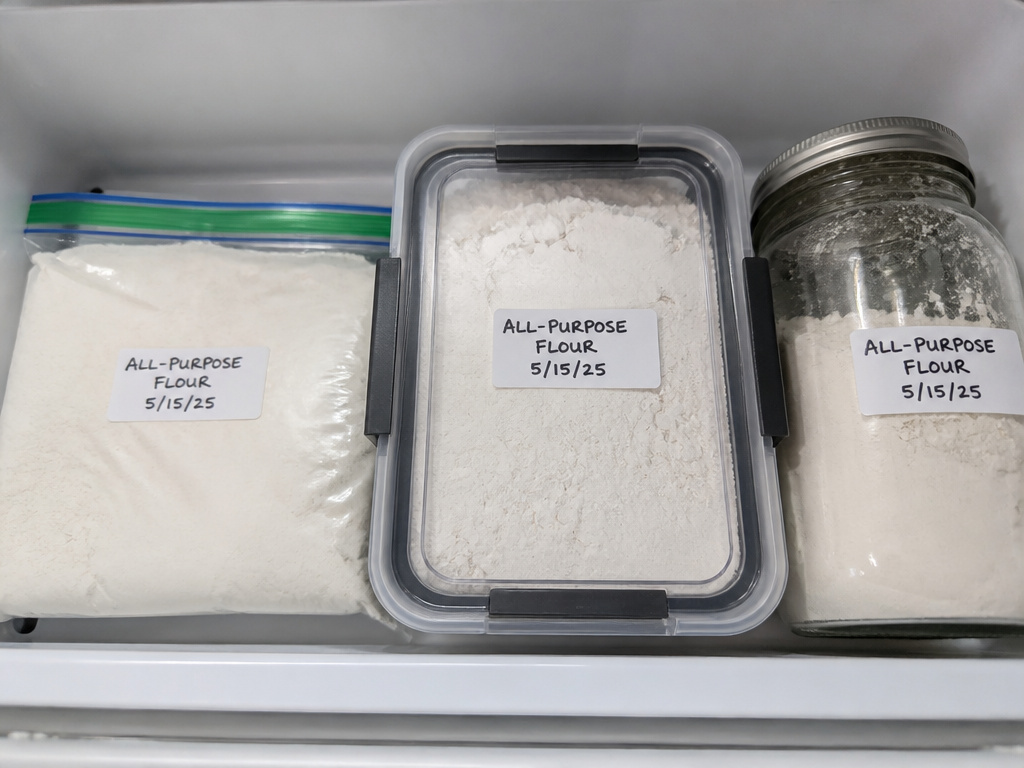 You have three viable paths for cold flour storage. The best choice depends on how often you bake and what you’re storing.
Freezer Bags (The Space-Saver)
- Best for: Long-term storage of bulk flour, especially if freezer space is tight.
- The Move: Double-bag your flour in quality freezer bags. Squeeze out all excess air before sealing. For an even better barrier, vacuum sealing prevents freezer burn and oxidation perfectly.
- Risk: Bags can be punctured. Label them clearly so you’re not guessing between almond flour and bread flour six months later.
Airtight Plastic Containers (The Daily Driver)
- Best for: Flours you use regularly. Easy to scoop from, stackable, and secure.
- The Move: Choose freezer-safe containers made from polypropylene (PP #5) or similar. Ensure the lid has a silicone gasket for a true seal. OXO Pop Containers or Rubbermaid Brilliance are typical examples.
- Risk: If the container isn’t truly airtight, it’s no better than a bag. The seal is everything.
Glass Jars (The Pantry-Freezer Bridge)
- Best for: Small batches, nut flours, or if you prefer glass.
- The Move: Use wide-mouth jars, leave ample headspace (at least an inch), and ensure you understand the risks of freezing glass. Thermal shock can crack glass, so never take a jar from the freezer and place it directly in warm water.
- Risk: Highest potential for breakage and weight. Ideal for portions you’ll use within a few months.
The common thread is an airtight moisture barrier. A paper bag tossed in the freezer is a recipe for freezer-freshened flour that still tastes off.
Step-by-Step Guide to Freezing Flour
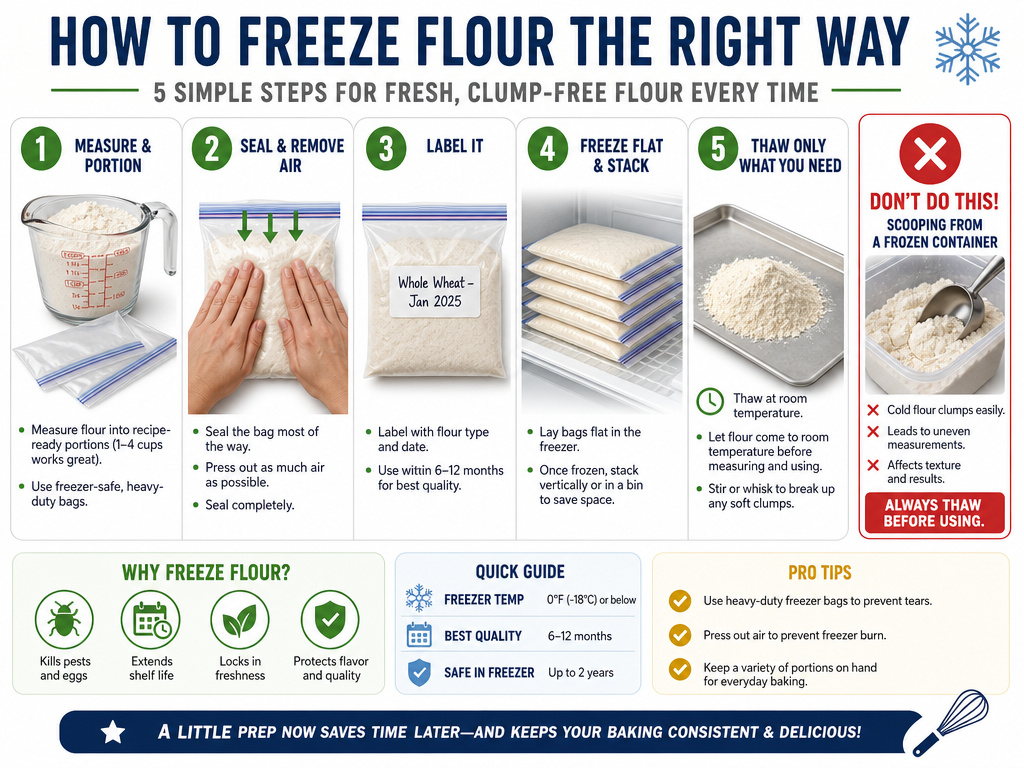 Follow this sequence to freeze flour correctly. Skipping step two is how you end up with a frozen brick of flour you have to chip apart.
- Portion It (Optional but Smart). If you bake in specific quantities, portion your flour first. Measure 4-cup batches (about 1 pound) into separate bags or small containers. This avoids repeatedly warming and re-freezing a giant container.
- Pack It Airtight. Transfer flour to your chosen vessel. For bags, press out all air and seal. For containers, fill to about 90% capacity, tap to settle, then seal the lid.
- Label Everything. Use a permanent marker to write the flour type and date. “Whole Wheat – Jan 2025” is perfect. You will forget.
- Freeze It Flat. Lay bags flat to freeze; they’ll stack like books later. Place containers where they won’t be tipped over.
- Thaw Before Use. When you need flour, take out a portion, let it warm on a sheet pan for 30 minutes, then use as normal. Return the main container to the freezer immediately.
Common mistake: Scooping flour directly from a frozen container, then returning it. This introduces warm, moist air into the container each time, leading to condensation and ice crystals inside your flour, the very moisture you’re trying to avoid.
Why the Refrigerator is a Worse Idea
Many sources, including some university extension pages, suggest the refrigerator as a short-term option. The logic seems sound: it’s cool. But baking experts push back forcefully.
Frank Tegethoff from King Arthur Baking Company states plainly: “I’m not a fan of keeping flour under refrigeration, the environment is usually far too high in humidity, and the opportunity for introducing even more moisture due to condensation while measuring makes this a less than ideal storage space.”
Your fridge cycles through temperature changes. Every time you open the door, warm, humid air rushes in. This moisture can condense on the surface of your flour container and, worse, inside it when you open it to scoop. That moisture accelerates spoilage and clumping. For preventing bugs, the freezer is more effective, as cold temperatures kill insect eggs. The MU Extension flour storage guide acknowledges freezer storage as the gold standard for long-term preservation.
If you must use the fridge, treat it as a very short-term holding pen, a month or two at most. And your container must be impeccably airtight.
Frequently Asked Questions
Does freezing flour kill bugs?
Yes, freezing flour at 0°F for at least 72 hours will kill any insect eggs (like pantry moth or weevil eggs) present. This is a highly effective method for preventing bugs in flour you’ve bought in bulk. After freezing, store the flour in an airtight container to prevent re-infestation.
Can frozen flour get freezer burn?
It can, but it’s uncommon because flour is dry. Freezer burn occurs when water sublimates from the food. In flour, it would manifest as dry, discolored patches. Using airtight freezer storage virtually eliminates this risk.
How long does flour last in the freezer?
For all-purpose, bread, and other refined white flours, the shelf life is effectively indefinite when frozen airtight. For whole-grain and nut flours, aim to use them within 1-2 years for best quality, though they may remain safe longer. The nutritional value degrades very slowly in the cold.
Can I freeze flour in its original bag?
Only if the original bag is a thick, resealable plastic pouch. Paper bags are designed for transport, not storage. They are permeable to air and moisture. Always transfer flour from a paper bag to an airtight container or freezer bag before freezing.
Does freezing affect gluten development?
No. Freezing does not damage gluten proteins. The performance issue comes solely from flour temperature at the time of mixing. Fully warmed frozen flour will behave identically to fresh flour in your dough.
Before You Go
Freezing flour is a simple, powerful tool. It turns a perishable ingredient into a stable pantry staple. The rules are straightforward: freeze the high-fat flours, freeze all-purpose if you want long-term insurance, and always, always, warm it up before you bake.
For most home bakers, the winning combo is an airtight container in the freezer for whole-grain flours and a cool, dark pantry for the all-purpose you use weekly. That setup covers 90% of scenarios without overcomplicating your routine. Just remember the sheet pan and the 30-minute wait. Your cakes will thank you.
