Microwave a Plastic Bag? The 3 Things You Must Check First
This post contains affiliate links. As an Amazon Associate, we earn from qualifying purchases.
You can put a plastic bag in the microwave only if it is explicitly labeled as microwave-safe. Most standard plastic grocery bags, bread bags, and produce bags are not safe for microwaving. They can melt, leach chemicals into your food, or catch fire, especially if they contain metal twist-ties or are completely sealed.
That label is the starting line, not the finish. A bag marked microwave-safe has passed a basic heat-resistance test, but it doesn’t mean you can walk away. The real risk is what happens when steam has nowhere to go, or when a hidden piece of metal arcs inside your oven.
What follows: how to read the symbols manufacturers actually use, a three-step physical test you can run on any bag before risking it, and the one mistake with twist-ties that turns a reheated meal into a fire drill.
Key Takeaways
- Look for the microwave-safe symbol (a squiggly line over a dish) or the words “microwave safe” printed on the bag. No symbol means assume it’s not safe.
- Always pierce or vent the bag before microwaving. Sealed bags trap steam, which can cause the bag to burst and spray hot food or ignite.
- Remove all metal, including twist-ties. The thin wire inside a plastic-coated twist-tie can arc and spark, potentially starting a fire inside the microwave.
- Use lower power settings (50% or less) for longer times when reheating in plastic. High, concentrated heat is what warps bags and accelerates chemical leaching.
- When in doubt, transfer to a glass or ceramic dish. It adds 10 seconds to your prep and eliminates the guesswork and risk entirely.
The 3-Step Microwave Safety Test
Don’t trust a symbol you can’t find. If a bag lacks a clear microwave-safe label, you can perform a quick physical check before subjecting your lunch, and your appliance, to high heat.
First, feel the bag’s thickness and texture. Thin, crinkly plastic like a standard grocery bag will melt at standard microwave temperatures within 30 seconds. Polyethylene bags, common for produce and bread, have a melting point around 105–115°C (221–239°F), which a microwave can reach in under a minute on high power.
Second, look for any metal. This isn’t just about foil liners. Many plastic bread bags and freezer bags use a thin, plastic-coated wire twist-tie. That wire is a conductor. In a microwave’s alternating electric field, it can act like a miniature antenna, creating sparks strong enough to ignite the plastic or paper around it. The Electrolux manual for model OB6SM171DB states plainly: “Do not use plastic or metal ties, as they may melt or catch fire due to the metal arcing.”
Common mistake: Assuming a plastic-coated twist-tie is safe. The coating is for your hands, not for microwave insulation. The metal core heats instantly and can arc through the plastic.
Third, do a 10-second test with an empty bag. Place the empty bag on a microwave-safe plate and run the oven on high for 10 seconds. If the bag warms slightly but holds its shape, it might be okay for very short, low-power reheating. If it shrinks, warps, or feels hot to the touch, it fails. This test mirrors the ovenware check in the Bosch HMB57152UC manual: heat the item empty for 30–60 seconds; if it becomes hot, it’s unsuitable.
Microwave-Safe vs. Heat-Resistant: A Labeling Gap
A bag marked “microwave-safe” has been tested to withstand microwave temperatures without melting or releasing chemicals above a certain threshold. However, “heat-resistant” is a different, vaguer standard. A Miele manual specifies that plastic containers must be “heat resistant to a minimum of 110 °C” for microwave use, but that’s for rigid containers, not bags.
The gap is where people get burned, literally. A bag might be heat-resistant enough for a warm dishwasher top rack (around 60–70°C) but will fail catastrophically at the 100°C+ temperatures generated by steaming food inside a microwave. The steam inside the bag is often hotter than the boiling water that made it.
| Label | What It Means | Risk If You Assume |
|---|---|---|
| Microwave-Safe | Tested to not melt, warp, or leach chemicals above safe limits under microwave conditions. | Lowest risk for short, supervised use. |
| Heat-Resistant | Can withstand dry heat up to a certain temperature (e.g., 110°C). Not necessarily tested with steam or microwave radiation. | Bag may melt or leach chemicals when exposed to steam inside a microwave. |
| No Label | Not tested for microwave use. Assume it is not safe. | High risk of melting, chemical leaching, or fire. |
The only label that matters for microwaving is “microwave-safe.” If you don’t see those words or the squiggly-line symbol, the default answer is no.
The Twist-Tie Fire Hazard
This is the part nobody mentions until they smell smoke. That innocent little twist-tie on a bread bag or a bag of frozen vegetables is a two-part hazard.
The wire inside is almost always steel or aluminum, both excellent conductors of electricity. In a microwave, the oven emits waves that cause water molecules to vibrate, but they also induce electrical currents in metals. A thin, coiled wire like the one in a twist-tie can become a miniature antenna, concentrating this energy. This creates sparks (arcing) that reach thousands of degrees Celsius in milliseconds, hot enough to ignite the plastic bag, any paper labeling, or food particles.
Manufacturers know this. The Bosch manual for models HMV3054U and HMV3054C instructs: “Remove wire twist-ties from paper or plastic bags before placing the bag in the appliance.” It’s not a suggestion; it’s a warning based on the physics of what happens inside the cavity.
The plastic coating on the tie offers zero protection. It melts almost instantly under the intense, localized heat of an electrical arc. What you’re left with is a naked, red-hot wire touching your food and the interior of your microwave.
Before you start: Always remove twist-ties and any metal clips or ties from bags before microwaving. If the bag can’t be closed without one, use a microwave-safe rubber band or simply fold the open end over.
Which Plastic Bags Are Actually Safe?
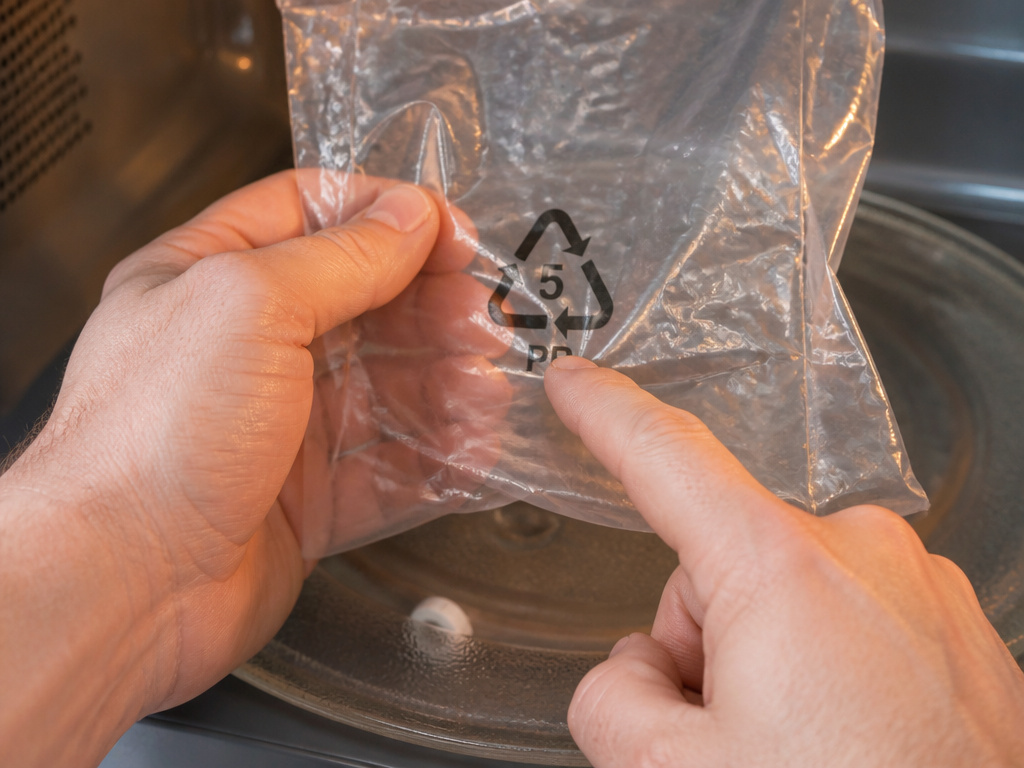
You need to match the plastic type with the task. The resin identification code (the number inside the chasing arrows) is a starting point, but it’s not a microwave safety guide.
- Polypropylene (PP – #5): This is the most common plastic for microwave-safe reusable containers and some specific microwave steaming bags. It has a high melting point (around 160°C) and is generally considered safe for microwave use if labeled as such. Ziploc’s “Endurables” and similar reusable bags are often made from PP.
- Polyethylene Terephthalate (PET or PETE – #1): This is your standard water bottle and some thin plastic clamshells. It is not microwave-safe. It can warp at temperatures as low as 70°C and may leach antimony, a heavy metal catalyst used in its production.
- High-Density Polyethylene (HDPE – #2) & Low-Density Polyethylene (LDPE – #4): These are used for most grocery bags, bread bags, and produce bags. They are not designed for microwave heat and will soften and melt. LDPE has a melting point around 105–115°C.
The safest approach is to ignore the number and look for the explicit label. Brands that manufacture bags for microwave use, like Ziploc with its specific “Microwave Steam Bags,” design them from PP and test them extensively.
The Chemical Leaching Timeline
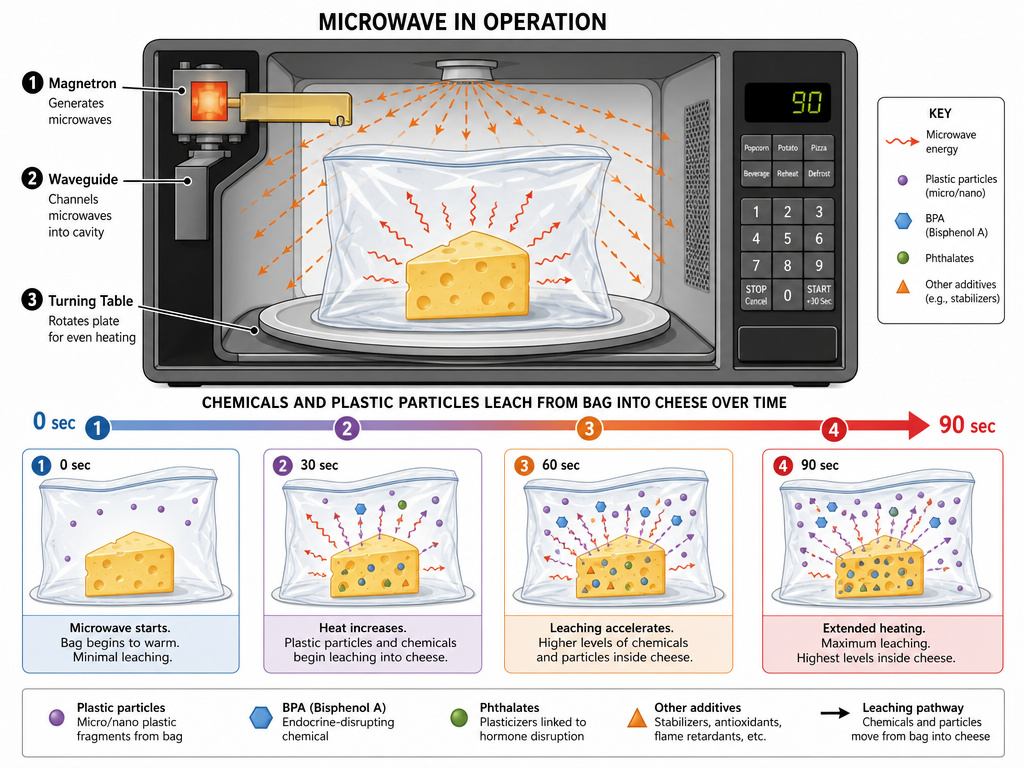
When you microwave food in a non-safe plastic bag, you’re not just risking a meltdown. You’re inviting a chemical migration party. Plasticizers like phthalates and BPA (or its modern replacements like BPS) are not chemically bonded to the plastic polymer; they’re mixed in to make it flexible.
Heat acts as a catalyst. A 2023 study highlighted in environmental health journals found that microwaving plastic food containers, even those labeled microwave-safe, for just three minutes could release billions of microplastics and nanoplastic particles into the food. The heat essentially shakes these additives loose.
The timeline isn’t slow. Chemical leaching begins in seconds, accelerating as the plastic heats up. Fatty foods like cheeses, meats, and buttery sauces absorb these chemicals more readily than dry foods. So that 90-second cheese melt in a bread bag? It’s a double problem: the bag is likely to melt and it’s leaching phthalates into the oily cheese.
If you must use a plastic bag, stick to microwave-safe steamer bags designed for vegetables, which use steam to cook food without the plastic directly contacting oily surfaces. For anything else, the transfer to a glass or ceramic dish is non-negotiable.
How to Safely Microwave with a Bag (If You Must)

Sometimes, you’re reheating something that comes in its own microwave-safe steamer bag, like frozen vegetables. Here’s the procedure to follow without turning your kitchen into a hazard zone.
- Verify the label. Check for the words “microwave-safe” or the symbol. If it’s a store-bought steamer bag, the instructions will explicitly state it’s for microwave use.
- Vent the bag. This is the most critical step. Use a knife or scissors to cut a small slit in the top of the bag, or leave a corner of the seal open. This allows steam to escape. The Electrolux manual warns: “Freezer/roasting bags must be pierced to let steam escape.” A sealed bag will balloon and potentially burst.
- Place on a microwave-safe plate. Never microwave a bag by itself. Place it on a plate or in a shallow bowl to catch any leaks or spills if the bag splits.
- Use medium or low power. High power (100%) creates intense, localized hot spots that are more likely to melt the bag. Setting your microwave to 50–70% power and adding a bit more time heats the food more evenly and gently.
- Stay nearby. Don’t walk away. Watch through the window for any signs of smoking, sparking, or the bag ballooning excessively.
- Handle with care. Use oven mitts to remove the plate. The bag and the released steam will be extremely hot. Open the bag away from your face to avoid a steam burn.
The One Bag You Should Never Microwave
The standard HDPE/LDPE grocery bag is an absolute no-go. It’s too thin, has no heat stability, and is almost always contaminated with inks, adhesives, and recycled plastic residues of unknown origin.
But the runner-up for most dangerous is the brown paper bag from a takeout restaurant. Many people think paper is safe. It is not. The glue used in the seams can contain synthetic compounds that melt. The ink can off-gas. Most damningly, the Bosch manual explicitly warns: “Do not use paper towels which contain nylon or synthetic fibers. Heated synthetics could melt and cause paper to ignite.” Many paper bags are made from recycled paper containing these exact synthetic fibers.
The fast-food wrapper with a shiny, metallic interior is another common culprit. That shiny layer is often a thin film of aluminum. It will spark and potentially ignite the paper in seconds.
TL;DR: When reheating takeout, always take it out of the bag or wrapper and place it on a microwave-safe plate.
Frequently Asked Questions
Can you microwave Ziploc bags?
Regular Ziploc storage bags (the ones without the “microwave-safe” label) are made from LDPE (#4) and are not designed for microwave use. They can melt. Ziploc does make specific Microwave Steam Bags that are polypropylene-based and labeled for microwave use. Always follow the venting instructions on the package.
Is it safe to microwave frozen vegetables in the bag?
Yes, but only if the bag is explicitly labeled as a microwave steamer bag. These are designed to withstand the heat and include venting instructions. If the frozen vegetable bag is just a plain plastic bag with no microwave instructions, transfer the contents to a microwave-safe bowl, add a tablespoon of water, and cover with a microwave-safe lid or plate.
What happens if you accidentally microwave a plastic bag?
If it was a very short burst (5-10 seconds), you might get away with just a softened or warped bag. Check the food for any melted plastic debris or off-putting chemical smell, if present, discard it. If you saw sparks or smoke, unplug the microwave immediately and let it air out thoroughly. Inspect the interior for any scorch marks or melted plastic; you may need to clean it before safe use. If the microwave seems damaged, stop using it.
Can you microwave a plastic bag to seal it?
No. This is a common DIY hack for vacuum sealing, but it is unsafe. The plastic can melt unevenly, fail to seal, and leach chemicals into your food. Use a proper vacuum sealer or water displacement method with bags designed for that purpose.
How can you tell if a plastic bag is microwave safe?
Look for the microwave-safe symbol (wavy lines over a dish) or the explicit text “microwave safe” printed on the bag or its packaging. If you see a #5 PP symbol and it’s a thick, purpose-made steamer bag, it’s likely safe. If there’s no label, assume it is not safe.
Before You Go
The rule is simpler than the chemistry behind it: if the bag doesn’t say “microwave-safe,” it doesn’t go in the microwave. The three-second convenience isn’t worth the risk of melted plastic in your food, a chemical aftertaste, or an electrical fire in your appliance.
Your move is almost always to transfer the food to a glass or ceramic dish. For steaming vegetables, a Pyrex bowl with a vented lid works every time without the single-use plastic. For the one bag that is designed for the job, a labeled microwave steamer bag, vent it, put it on a plate, use lower power, and watch it like a hawk. That’s the line between a quick reheat and a call to the fire department.
