
What Is a Dry Bag | The 3 Parts That Decide If It Leaks
This post contains affiliate links. As an Amazon Associate, we earn from qualifying purchases.
A dry bag is a flexible waterproof container that seals water out through a combination of coated fabric, welded or taped seams, and a roll-top or zippered closure. The most common type is a cylindrical sack with a roll-top closure you fold over at least three times and clip shut. Its job is to keep sensitive items dry during activities like kayaking, camping, or hiking in wet conditions.
That coated fabric is the first line of defense, but a perfect fabric still leaks if the seams are stitched with needle holes or the closure isn’t rolled tight enough. The bag is only as waterproof as its weakest point, which is why two bags both sold as “dry bags” can perform worlds apart in a downpour.
What follows is a breakdown of the three parts that actually matter, the four performance tiers you’re buying into, and the single most common user mistake that lets water in every time.
Key Takeaways
- Waterproofness is a spectrum, not a binary. A bag’s rating depends on its fabric coating, seam sealing method (welded beats stitched), and closure integrity.
- The IP64 rating on a bag like the ORTLIEB Dry-Bag means it’s dust-tight and protected against splashing water from all directions, including temporary immersion up to 1 meter for 30 minutes.
- An under-rolled top is the most frequent reason a good dry bag fails. Three complete rolls are the minimum; four are safer for rough conditions.
- For floating safety in open water, leave some air inside the bag before sealing it. For compressing bulky items like a sleeping bag, squeeze all the air out.
- Abrasion is a major killer. Rubbing against a kayak hull or bike rack for hours can wear through even thick fabric. Keep sharp objects wrapped and separate.
The 3 Parts That Make a Bag Waterproof (and the One That Fails First)
Forget the marketing. A dry bag keeps water out because of three specific construction choices. If any one is weak, the bag leaks.
The base material is usually a nylon or polyester scrim coated with a waterproof layer like PVC or TPU (thermoplastic polyurethane). The coating is the actual barrier; the fabric gives it tear resistance. Thicker, higher-denier fabrics like the 840-denier nylon used in Watershed’s Kryptothane® are tougher but heavier. This fabric forms the wall, but walls need joints.
A dry bag’s seams are fused by 27.12 MHz high-frequency welding, creating a continuous join with no needle holes. This method removes the failure point stitched seams carry by design.
Stitched seams are the standard weak point. Every needle hole is a potential leak, which is why manufacturers tape over them with a waterproof sealant. Welded seams fuse the coated layers directly with heat or radio-frequency energy, leaving no holes at all. A welded seam is the single biggest indicator of a bag built for submersion, not just rain.
The closure is the only intentional opening. The roll-top is most common: you fold the open end over itself at least three times and clip the buckle. Each fold adds a layer of water-resistant pressure. Some models use a waterproof zipper, like the Watershed ZipDry, for quicker access. Both work only if used correctly.
The fabric could be flawless and the seams welded, but if you only roll the top twice, water pressure will find its way in. That’s the failure order for most leaks.
How to Use a Dry Bag Correctly
Using one wrong is easier than using it right. The process seems simple, pack, roll, clip, but each step has a consequence.
Start by packing soft items first against the bottom and sides. Place hard or sharp objects in the middle, wrapped in clothing or a towel. Don’t overfill it. Leave about a hand’s width of empty fabric at the top for a proper roll.
Now, the critical step. Press down on the packed items to push out as much air as possible. Some air is fine if you need the bag to float, but for compression, get it all out.
The part nobody mentions: Roll the top away from you, not toward you. Rolling toward your body creates a loose funnel that traps air and defeats the seal.
Grab the opening and make the first fold over, pressing it flat. Do it again. And again. Three complete rolls is the bare minimum for a seal that holds. For heavy rain or potential submersion, go for four. Finally, clip the buckle across the roll. The clip isn’t the seal; it just holds the rolled layers tightly together.
If you’re on open water, a kayak, canoe, or SUP, leave about 25% of the bag’s volume as air. It will float if it goes overboard. In a backpack or for compressing a sleeping bag, squeeze every bit of air out before the final roll.
Choosing a Dry Bag: The Four Tiers
Not all dry bags are built for the same job. You can sort them into four practical tiers based on what they’ll actually survive.
| Tier | Best For | Construction Tell | What It Won’t Survive |
|---|---|---|---|
| Ultralight / Pack Liner | Inside a backpack, fair weather hiking | Thin nylon, taped seams, simple clip | Abrasion, punctures, sustained pressure |
| General Use | Kayaking, camping, bike touring in mixed conditions | Medium-weight coated fabric, taped or welded seams, sturdy buckle | Whitewater, sharp rocks, heavy abrasion |
| Expedition / Heavy Duty | Whitewater, canyoning, extended trips | Thick PVC or TPU coating, welded seams, reinforced base | Extreme pressure (deep submersion) |
| Submersion / Diving | SCUBA, surface swimming, gear transport | Welded seams, waterproof zipper, pressure-rated valves | Nothing short of a puncture |
The ORTLIEB Dry-Bag Heavy Duty sits in the expedition tier. Its PD350 PVC-coated polyester fabric and welded seams are built for abrasion resistance, which is the real killer for bags rubbed against kayak hulls or bike racks for hours. The ORTLIEB warranty backs that for five years.
For the submersion tier, look at bags like the Watershed ZipDry. They’re tested down to 300 feet and use a waterproof zipper instead of a roll-top. That zipper needs maintenance, though. The manufacturer recommends lubricating it every couple of months, or sooner in hot, arid climates, and cleaning it immediately if it gets sand or dirt in the teeth.
What Does “Waterproof” Actually Mean? Decoding IP Ratings
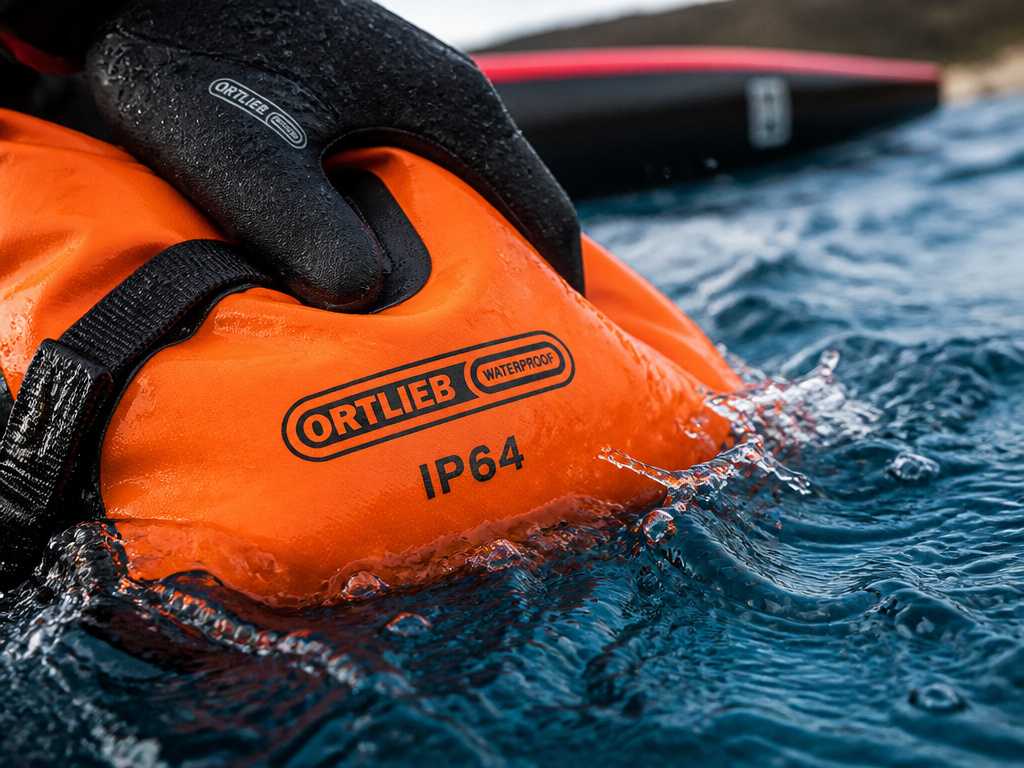
A bag labeled “waterproof” without a rating is marketing. A bag with an IP rating is a spec.
The IP Code (Ingress Protection) is an international standard. The ORTLIEB Dry-Bag carries an IP64 rating. The first digit (6) means it’s dust-tight, no dust gets in. The second digit (4) means it’s protected against water splashed from any direction.
It also handles temporary immersion. The “4” rating includes protection against water jets, but ORTLIEB’s product page specifies it’s protected against temporary immersion up to 1 meter for 30 minutes. That’s not for diving. It’s for a capsized kayak or a sudden wave.
A bag with no IP rating might keep your clothes dry in a drizzle. An IP64 bag will keep them dry in a storm while strapped to a raft. The difference is whether you’re planning for a nuisance or a genuine hazard.
Common Dry Bag Mistakes (and How to Avoid Them)
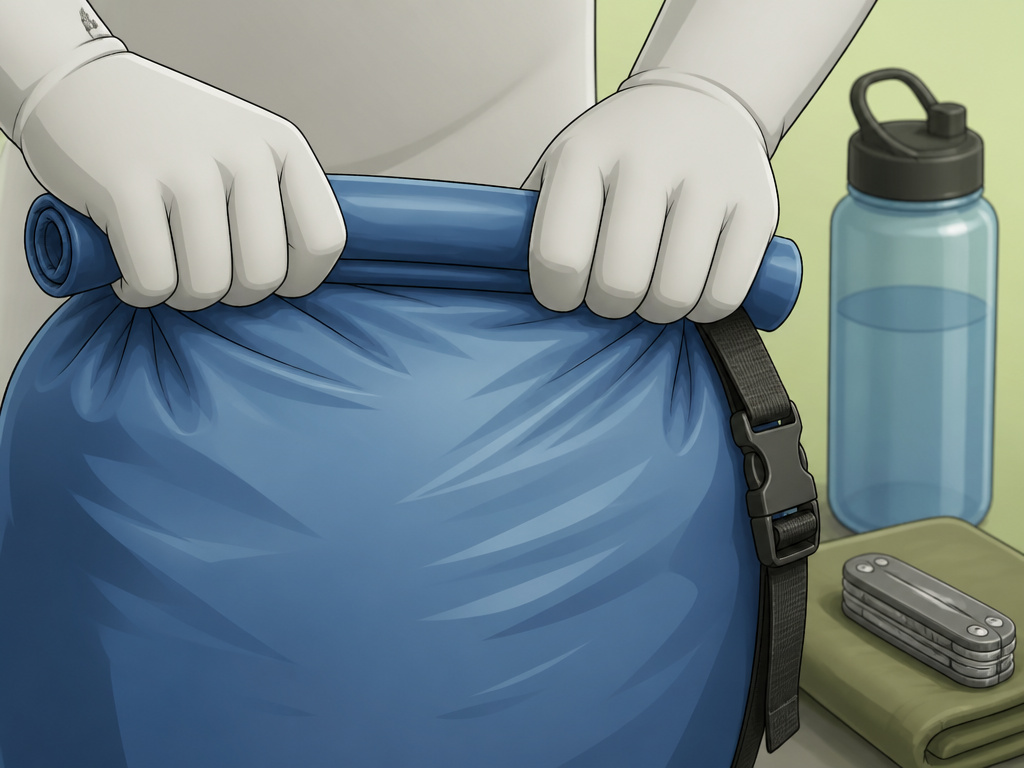
Most dry bag failures trace back to a handful of predictable errors. Knowing them is cheaper than replacing a waterlogged phone.
Overstuffing the bag. This strains the seams and makes a proper roll impossible. The top can’t seal if the fabric is taut. If you can’t get three clean rolls, take something out.
Rolling the top loosely. Two rolls might feel secure until water pressure finds the gap. Three is the minimum. Four is better for rough conditions. The roll creates the seal; the buckle just holds it.
Ignoring abrasion. Fabric rubbing against a hard surface for hours will wear through. Keep the bag inside a pack or use a protective sleeve if it’s lashed to a kayak or bike rack.
Storing sharp objects inside unwrapped. A multitool, tent stake, or carabiner can puncture the lining from the inside. Wrap them in a cloth or put them in a separate hard case.
Assuming a mend is as good as new. While many brands offer repair services, a patched area is a permanent weak point. Jasper Winn, quoted in an Advnture article, notes there’s always a question mark over the reliability of a mend. For a critical bag, replacement is often smarter than repair.
Dry Bags vs. Other Waterproof Storage
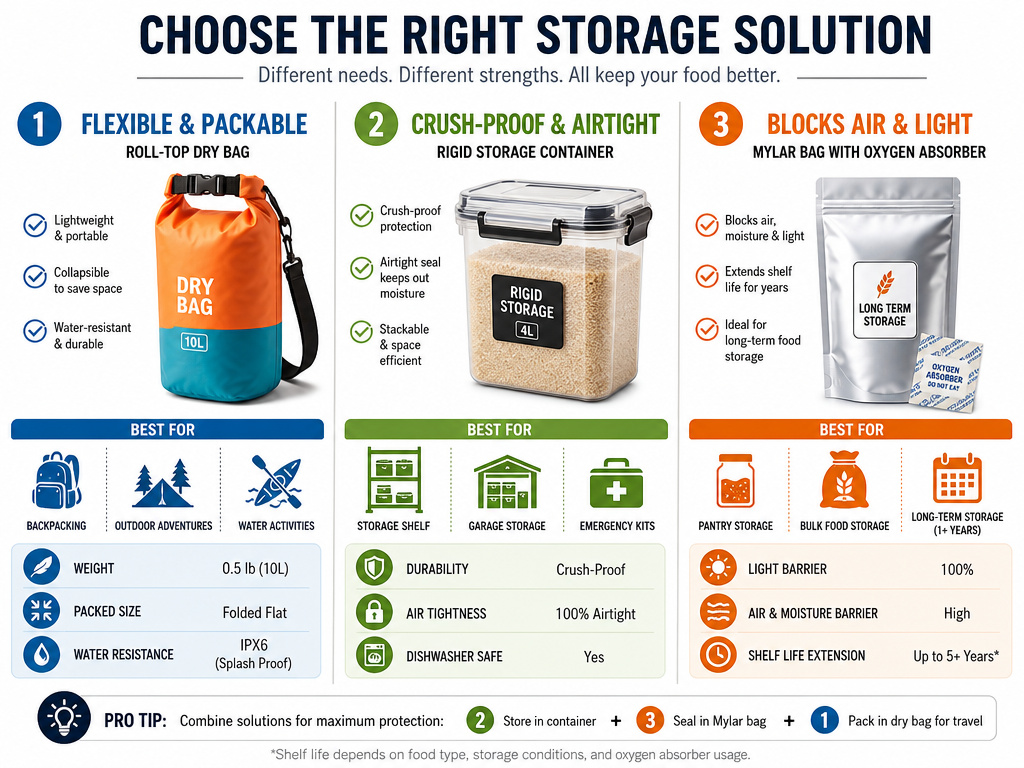
A dry bag is a tool for a specific job. It’s not the only way to keep things dry.
Dry bags vs. waterproof containers: Rigid containers are crush-proof and often airtight, making them ideal for long-term storage of dry goods or electronics that can’t handle any pressure. A dry bag is flexible, packable, and lighter, but offers no crush protection.
Dry bags vs. Mylar bags: Mylar bags are for blocking air and light, not for physical submersion. They’re fantastic for storing dry food like rice or beans with an oxygen absorber, but a single pinprick ruins the barrier. A dry bag can withstand abrasion and pressure but isn’t air-tight enough for long-term food preservation.
Dry bags vs. freezer bags: A freezer bag is a cheap, single-use moisture barrier for inside a lunchbox. It has no abrasion resistance, no secure closure beyond a zip-top, and no structural integrity. It’s a disposable liner, not field gear.
The choice comes down to the threat. Is it a brief splash or a total soaking? Is the item crushable? Are you carrying it or storing it? Match the protection to the actual risk.
Maintenance and Repair: Making a Dry Bag Last
A good dry bag should last for years, but only if you maintain it. Neglect shortens its life dramatically.
After every trip, especially in saltwater, rinse the bag inside and out with fresh water. Let it dry completely before storing it, open and unrolled. Storing it damp, especially folded, invites mold and degrades the coating.
Inspect the seams and fabric for wear, especially if you’ve dragged it over rocks or sand. Pay attention to the roll-top area, where constant folding stresses the material.
For bags with a ZipDry closure, follow the manufacturer’s lubrication schedule. Every couple of months, or after exposure to sand, clean the zipper teeth with water and apply a silicone-based lubricant. A gritty zipper will fail when you need it most.
Worth knowing before you start: ORTLIEB keeps spare parts available for at least ten years after a model is discontinued. That means a buckle or strap can usually be replaced, extending the bag’s life long after you buy it.
Most punctures or small tears can be patched with a repair kit from the manufacturer. Clean the area with rubbing alcohol, apply the patch, and let it cure fully. The mend will hold, but it becomes the new weakest point. For a bag you rely on in serious conditions, a professional repair or replacement is the safer bet.
Frequently Asked Questions
What’s the difference between a dry bag and a dry sack?
Nothing. The terms are interchangeable. “Dry sack” is sometimes used for simpler, lighter bags, but there’s no formal distinction. Both describe a flexible, waterproof container with a sealed closure.
Can a dry bag sink?
Yes, if it’s fully compressed with no air inside. If you squeeze all the air out for packing, it will sink if dropped in water. For marine use, leave some air in before sealing to ensure it floats.
How do I clean a dry bag?
Use lukewarm water and a mild soap. Never use harsh detergents, bleach, or machine wash it. Rinse thoroughly and hang it to dry completely, inside and out, before storing.
Are dry bags airtight?
No. They are watertight, not airtight. Air can still slowly permeate the fabric, and the closure isn’t designed to hold pressure. For true airtight storage, you need a rigid container with a gasketed seal.
Can I use a dry bag for food storage?
For short-term trips, yes. For long-term food storage, no. Dry bags aren’t airtight or rodent-proof. Use dedicated food storage containers or Mylar bags with oxygen absorbers for pantry goods.
Before You Go
A dry bag is a simple concept made complicated by its own success. Every brand calls its product waterproof, but the real difference is in the fabric denier, the seam welding, and the roll count you actually use. For casual day hikes, a lightweight bag with taped seams is fine. For a week on a river, you want welded seams and a heavy-duty base. The bag doesn’t know your plans, you have to match it.
Remember the three-roll minimum. Check the IP rating if you’re buying for more than a drizzle. And keep the sand out of the zipper.
