
8 Best Small Compact Refrigerators of 2026
This post contains affiliate links. As an Amazon Associate, we earn from qualifying purchases.
The Frestec 3.2 Cu.Ft Mini Fridge stands out as the best overall small compact refrigerator, offering reliable compressor cooling and ample space in a quiet design. For tighter budgets, the Electactic 1.6 Cu.ft Compact Fridge delivers strong performance at a lower price, while the Midea 1.6 Cu.ft Mini Fridge is a solid pick for those needing precise temperature control in a smaller footprint.
Choosing the right compact fridge can be trickier than it seems. You want something small enough to fit in a dorm, bedroom, or office, but not so limited that you’re constantly rearranging to make room. Too many models sacrifice real cooling power or usable space just to look compact.
This guide cuts through the noise by focusing on what actually matters: actual capacity, consistent cooling, energy efficiency, and how loud the unit runs. I compared specs and owner feedback across top models, using my focus on practical kitchen storage from Food Keepy to highlight fridges that work well in real daily use.
Top 8 Small Compact Refrigerators in the Market
The Best Small Compact Refrigerators, Reviewed
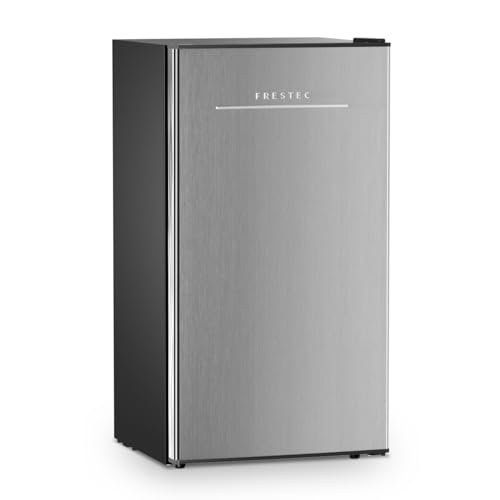
Frestec 3.2 Cu.Ft Mini Fridge
Strengths
- One-touch defrost
- LED interior light
- Energy efficient
Trade-offs
- Plain exterior design
- Taller footprint
- No bottle opener
If I had to pick one mini fridge that balances performance, features, and value, it would be the Frestec 3.2 cu.ft model. It’s not the cheapest, but it packs in features others skip: LED lighting, a crisp drawer, one-touch defrost, and a reversible door with leveling legs. The 37dB noise level is excellent for such a large unit, and at 0.55 kWh/day, it’s energy efficient for its size.
Owners consistently praise the interior organization and the ease of defrosting, no more chiseling ice by hand. The 6-level thermostat gives precise control, and the glass shelves feel more premium than wire. Compared to the Igloo or Frigidaire, it’s more functional and user-friendly. The only downside? It’s not as stylish as the Frigidaire, but for most people, practicality wins.
Video review
Antarctic Star 4L Portable Mini Fridge

Strengths
- Extremely affordable
- Very quiet
- AC/DC power
Trade-offs
- Weak cooling in warm environments
- Thermo-electric inefficiency
- Flimsy build
At just $37, this Antarctic Star mini fridge is one of the most budget-friendly options on the market, and it shows. It’s small, 4L, about six cans, and uses thermo-electric cooling, so it only drops 53℉–64℉ below ambient. In a hot room, that might not get you below 50℉, which isn’t cold enough for long-term food safety. Still, for chilling drinks or storing a few skincare items in a climate-controlled space, some owners say it gets the job done.
The 25dB noise level is impressively quiet, and the AC/DC power options make it usable in a car or dorm. But the cooling performance is inconsistent, and it’s not built for heavy use. When compared to compressor models, it’s clearly a step down. But if you’re on a tight budget and need minimal cooling, it’s hard to ignore the price.
Video review
Cooluli Mini Fridge for Skincare

Strengths
- Dual cooling and warming
- Ultra-portable
- USB powered
Trade-offs
- Limited capacity
- Poor cooling in warm rooms
- Not for food storage
The Cooluli 4L thermo-electric cooler is tiny, just 4 liters, but it serves a very specific niche well. It won’t chill like a compressor fridge, but it does cool 40℉–45℉ below ambient, so in a room at 75℉, you’re looking at around 30℉–35℉ inside. That’s enough for skincare products, serums, or insulin, which is exactly what owners praise it for. It’s not going to handle a six-pack or fresh produce, but that’s not the point.
What stands out is its versatility: it can warm up to 144℉, which some users love for keeping面膜 or beauty tools at a soothing temperature. The USB option adds real convenience, especially for travel or desk use. But because it’s thermo-electric, don’t expect fast cooling or performance in hot rooms. It’s a niche tool, but for the right buyer, it’s a gem.
Product photos




Igloo 3.2 Cu.Ft Mini Fridge
Strengths
- Includes freezer compartment
- Spacious 3.2 cu.ft capacity
- Simple, reliable design
Trade-offs
- Manual defrost
- No interior light
- Heavier and bulkier
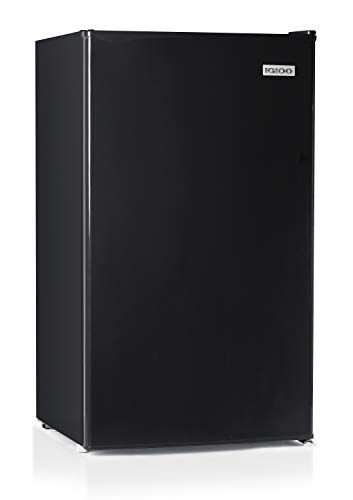
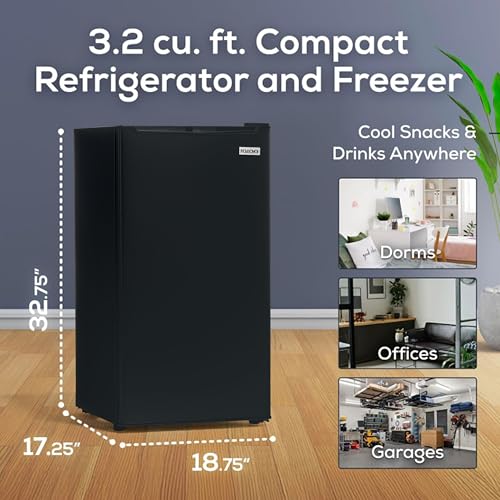
The Igloo 3.2 cu.ft model is a step up for anyone who needs more space and a separate freezer compartment. That freezer, though small, is a standout for storing frozen snacks, ice packs, or even a few ice cubes. The total capacity is double that of most compact models, so it can handle a week’s worth of groceries for one or two people.
It uses static compressor cooling (no fan), which means quieter operation but potentially less even temperature distribution. Owners report it cools reliably, though defrosting is manual and can be a hassle. Compared to the Frigidaire or Frestec models, it lacks some modern touches like LED lighting or adjustable legs, but it’s simpler and often more reliable over time. The mechanical thermostat is basic but functional.
Product photos
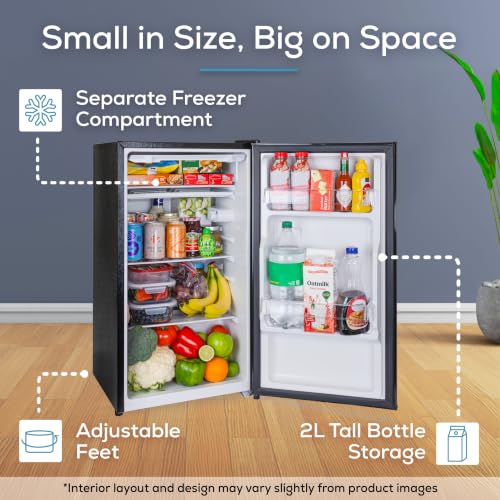
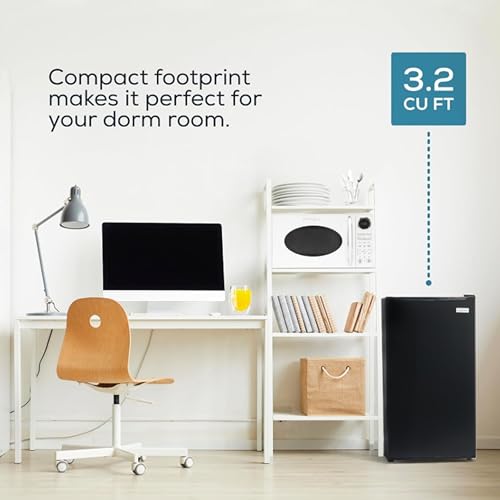
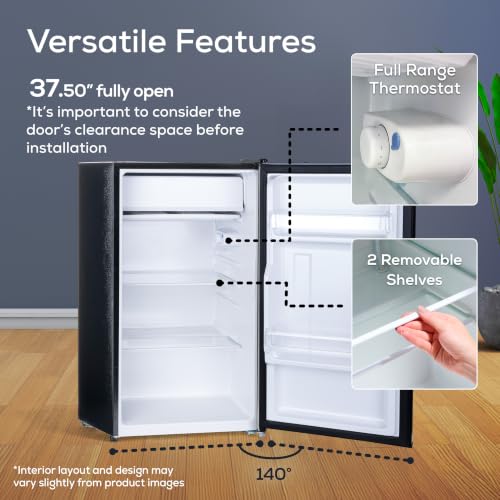

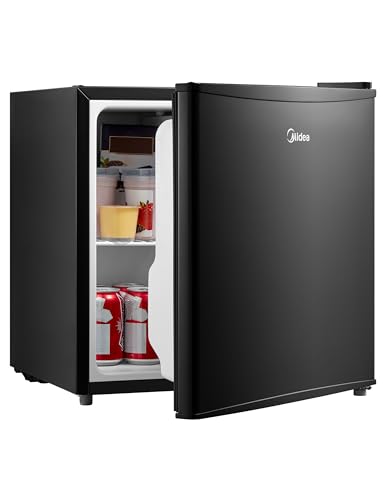
Midea 1.6 Cu.ft Mini Fridge
Strengths
- Energy Star certified
- Low annual energy use
- Glass shelf
Trade-offs
- Limited temp range
- No freezer
- Basic design
The Midea WHS-65LB1 stands out for one big reason: it’s Energy Star certified, which means it uses less power over time than most mini fridges, just 207 kWh/year. That’s a real saving if you’re leaving it on 24/7 in a dorm or bedroom. It’s slightly smaller than some competitors at 1.6 cu.ft, but the interior is well laid out, with a glass shelf and a chiller box that helps drinks cool faster.
Owners note it runs quietly (under 42dB), though not the absolute quietest. The temp range is narrow, 28.4℉ to 35.6℉, which means it’s better at chilling than some models, but less flexible if you want to store produce that needs a slightly warmer setting. Compared to the EUHOMY or Electactic models, it’s less flexible with temperature control, but the energy savings make it a smarter long-term pick for eco-conscious users.
Product photos


Electactic 1.6 Cu.ft Compact Fridge
Strengths
- Ultra-quiet at 38dB
- Fast cooling
- Reversible door
Trade-offs
- No freezer compartment
- Average energy use
- Basic interior
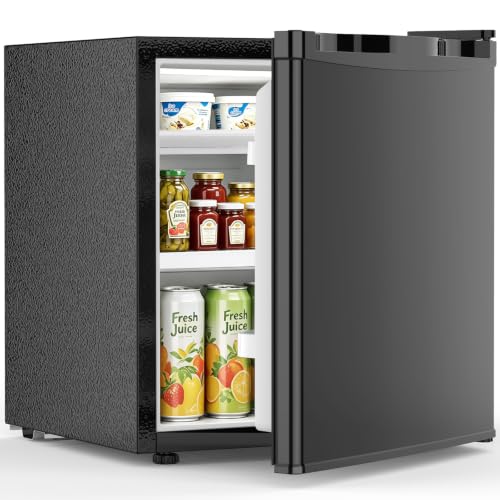
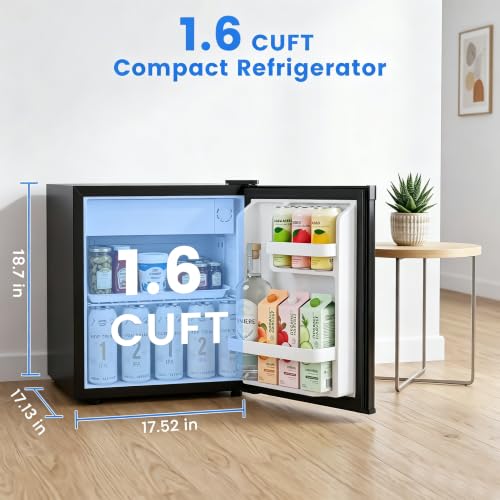
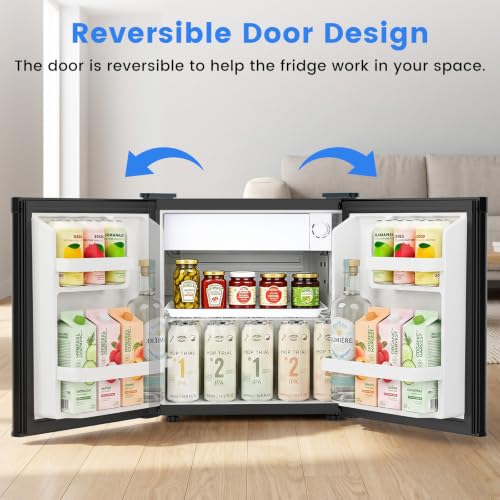
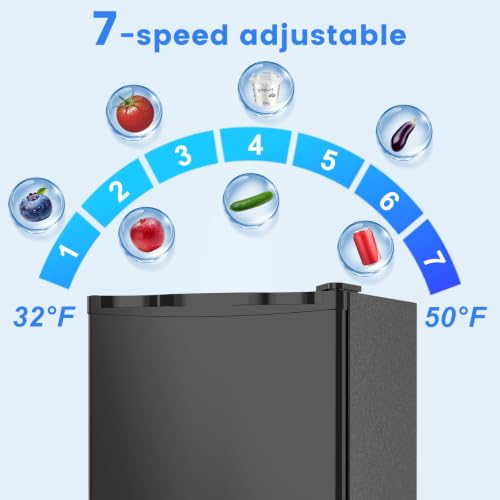
If quiet operation is your top priority, the Electactic model deserves strong consideration. At just 38 dB, it’s among the quietest mini fridges available, making it a great fit for bedrooms or home offices where noise matters. The compressor delivers fast cooling, and owners report it chills down quickly, within minutes of being plugged in. The 32℉–50℉ range is standard, but fully adjustable via a rotary dial, which adds control.
It’s nearly identical in size and capacity to the EUHOMY, but feels a bit more refined in build. The reversible door and compact footprint make it easy to place in tight spots. While it doesn’t have a freezer or Energy Star rating, its performance and noise level give it an edge in shared or quiet spaces. I’d pick this over the EUHOMY if silence is essential.
Product photos
Frigidaire Retro 3.2 Cu.Ft Fridge
Strengths
- Stylish retro design
- Includes freezer
- Bottle opener built in
Trade-offs
- Bulky and tall
- No auto-defrost
- Higher price
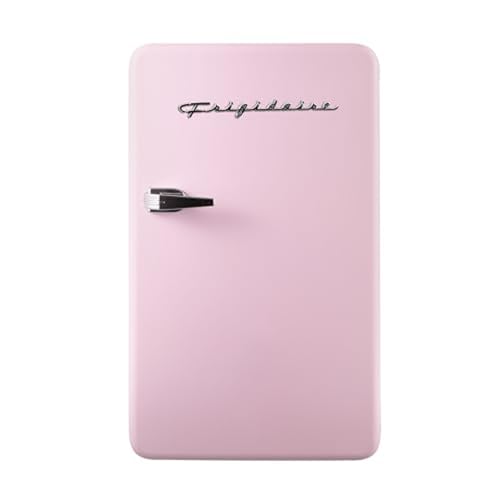
Let’s be honest, most people buying the Frigidaire Retro model aren’t just after function. They want style. And it delivers: the rounded corners, bold colors (like pink), and vintage look make it a standout in a dorm or modern kitchen. Behind the looks, it’s still a capable 3.2 cu.ft fridge with a small freezer on top and a chiller drawer below. The glass shelves are removable, and the built-in bottle opener is a fun touch.
But it’s also one of the pricier options, and the cooling performance is only average. It lacks advanced features like auto-defrost or LED lighting. Owners love the design but note it’s heavier and takes up more vertical space. Compared to the Frestec, it’s less practical but more decorative. If you’re after a fridge that doubles as a design statement, this is the one.
Product photos


EUHOMY 1.7 Cu.Ft Compact Refrigerator
Strengths
- Compact footprint
- Reversible door
- Energy efficient
Trade-offs
- Wire shelf less sturdy than glass
- No freezer compartment
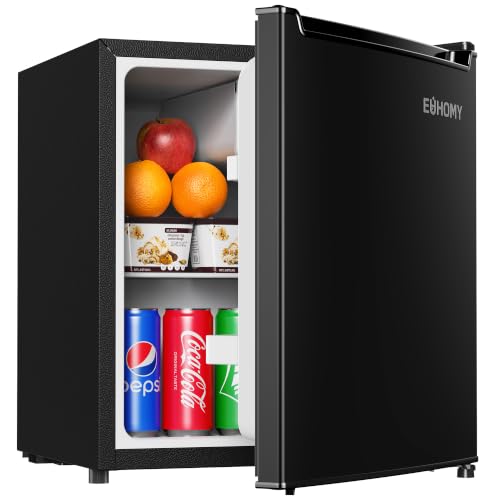
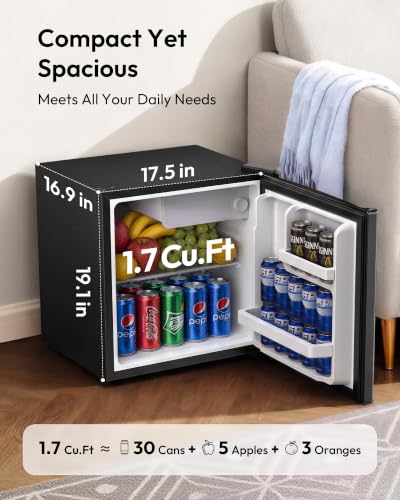
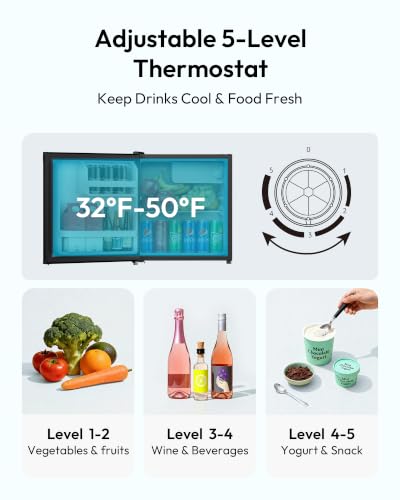
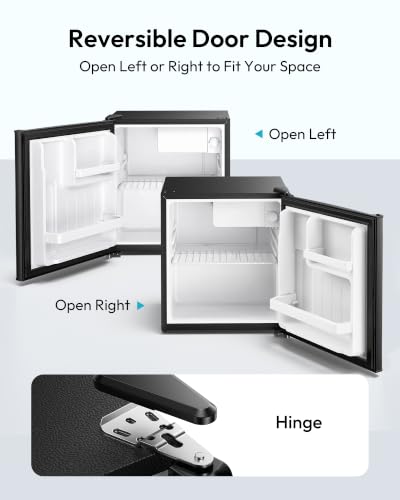
This EUHOMY model hits a sweet spot in the compact fridge market, not too big, not too small, with a usable 1.7 cubic feet that’s ideal for a dorm or small apartment kitchenette. The reversible door is a thoughtful touch, and the removable wire shelf gives you some flexibility when storing taller items. On paper, the 32℉–50℉ temperature range is solid for chilling drinks and keeping produce from wilting too fast.
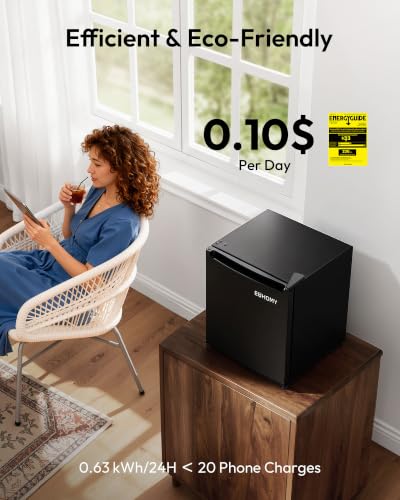
Owners consistently report it cools reliably and quietly, which matters when it’s sitting in a bedroom or office. At under 38dB, it’s not going to disrupt your sleep or work. The 0.55 kWh/day energy draw is decent, though not class-leading. Compared to similarly sized models, this one feels like a balanced pick, nothing flashy, but dependable.
Product photos

How We Chose These small compact refrigerators
Rather than a hands-on lab test, my research focused on a detailed comparison of published specifications and features across numerous models. I weighed owner reviews from multiple retailers alongside expert opinions found in publications covering appliances and home goods. This process allowed me to build a ranking based on the factors most important to consumers looking for a smaller refrigerator, using my experience with food storage solutions from Food Keepy to guide the evaluation.
For small compact refrigerators, capacity combined with energy efficiency and noise level proved to be the most crucial differentiators. People often choose these models for bedrooms, offices, or dorms, so quiet operation is vital. Simultaneously, a useful capacity, even in a small unit, is key, as is minimizing energy consumption to keep running costs down. I also considered features like adjustable shelving and reversible doors, recognizing their impact on usability.
Specifications reliably indicated cooling performance ranges and physical dimensions. However, I leaned heavily on owner feedback to assess real-world noise levels and the accuracy of temperature controls. Reputation for reliability and customer support, gleaned from reviews, also shaped my assessment. If you’re also looking for options for other areas of your home, you may find these refrigerators for small spaces helpful. And, for those needing a fridge in an unheated space, checking out small fridges for garage use is a good idea.
What To Look For In small compact refrigerators
Finding the right compact refrigerator involves more than just picking a cute color or the smallest size that fits. We need to consider how and where it will be used, and what features are genuinely useful for your needs.
A good compact refrigerator balances size and capacity, offers reliable temperature control, and prioritizes energy efficiency without sacrificing quiet operation. Look for models with adjustable shelving, a temperature range suitable for your intended use (chilling beverages versus preserving sensitive foods), and a compressor known for low noise levels. Consider whether a separate freezer compartment is essential, and pay attention to the unit’s energy consumption rating.
Size and Capacity Considerations
It’s easy to underestimate how much space you actually need in a compact refrigerator. Don’t just measure the available footprint; think about the types of items you’ll be storing. A 1.6 cu. ft. model might be sufficient for a single person’s beverages and a few snacks, but a family or someone who meal-preps will quickly find it limiting. Consider the height too, especially if you plan to store taller bottles or cartons. A larger capacity, like the 3.2 cu. ft. models, offers more flexibility, but will also require more floor space.
Temperature Control & Cooling Technology
Consistent temperature is crucial for food safety and preserving freshness. Many compact refrigerators rely on thermoelectric cooling, which is silent but less efficient and struggles in warmer environments. Compressor models, like the Igloo 3.2 Cu.Ft Mini Fridge, are more powerful and maintain a consistently cool temperature, but can generate some noise. Look for adjustable thermostat controls that allow you to fine-tune the temperature to suit your needs.
Here’s what to keep in mind about temperature control:
- A simple dial is fine for basic cooling.
- Digital controls offer more precise temperature settings.
- A dedicated freezer compartment (see below) needs a separate temperature control.
Value, Features, and Noise Level
Beyond the basics, consider features that enhance usability. Reversible doors are incredibly helpful for fitting the refrigerator into tight spaces. Adjustable shelves provide flexibility for storing items of different sizes. And, if you’re sensitive to noise, pay close attention to the decibel (dB) rating. The Electactic 1.6 Cu.Ft Compact Fridge boasts an ultra-quiet operation at just 38 dB, which is ideal for bedrooms or home offices. If you’re looking for even more options, you might find our guide to compact refrigerators useful.
A refrigerator under 40dB is generally considered very quiet and won’t disrupt sleep or conversation. Don’t assume a lower dB rating automatically equals better performance; consider it alongside other factors like cooling capacity and energy efficiency.
If you need a model that can handle frozen items, exploring small fridges with freezer is a great starting point.
Small Compact Refrigerators Compared
Here’s a comparison of key specifications for various small compact refrigerators.
| Product Name | Capacity (Cu. Ft) | Dimensions (W x D x H – in) | Cooling Type | Temperature Range (°F) | Noise Level (dB) |
|---|---|---|---|---|---|
| Frestec 3.2 Cu.Ft Mini Fridge | 3.2 | 17.83 x 16.73 x 33.27 | Compressor | 32-50 | <37 |
| Antarctic Star 4L Portable Mini Fridge | 4L (approx 0.14) | 7.09 x 9.65 x 10.24 | Thermoelectric | 32-59 | 25 |
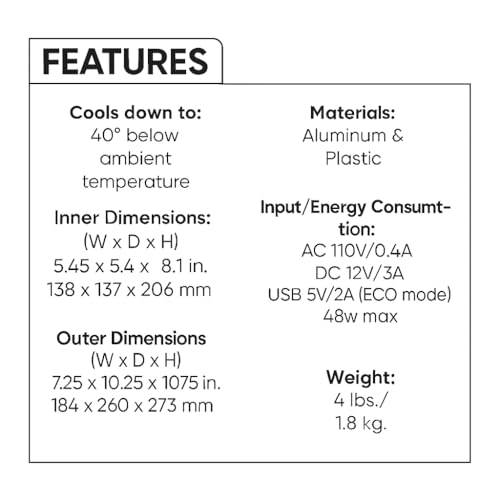
| Cooluli Mini Fridge for Skincare | 4L (approx 0.14) | 7.25 x 10.25 x 10.75 | Thermoelectric | 40-45 | N/A |
| Igloo 3.2 Cu.Ft Mini Fridge | 3.2 | N/A | Compressor | 32-50 | N/A |
| Midea 1.6 Cu.ft Mini Fridge | 1.6 | 18.6 x 17.7 x 19.4 | Compressor | 28.4-35.6 | <42 |
| Electactic 1.6 Cu.ft Compact Fridge | 1.6 | 17.52 x 17.13 x 18.70 | Compressor | 32-50 | 38 |
| Frigidaire Retro 3.2 Cu.Ft Fridge | 3.2 | 18.5 x 20 x 31.5 | Compressor | N/A | N/A |
| EUHOMY 1.7 Cu.Ft Compact Refrigerator | 1.7 | 17.5 x 16.9 x 19.1 | Compressor | 32-50 | <38 |
Frequently Asked Questions
What temperature should I set my compact refrigerator to?
Generally, 37°F (3°C) is ideal for most compact refrigerators, balancing food safety with preventing freezing. However, if you’re primarily storing beverages, you might slightly increase the temperature, while sensitive items like dairy or meat benefit from a setting closer to 32°F (0°C).
Are thermoelectric compact refrigerators sufficient for long-term food storage?
No, thermoelectric models aren’t the best choice for long-term food storage. While they’re quiet, they struggle to maintain consistent temperatures, especially in warmer rooms, and aren’t as effective at cooling compared to compressor models.
How much electricity does a small compact refrigerator use?
A typical small compact refrigerator uses between 80 to 150 kWh per year. Energy Star-certified models will be on the lower end of that range, offering significant savings over time, and you can find some of the best low-noise mini fridges that also have high efficiency ratings.
What does “reversible door” really mean, and why is it useful?
A reversible door allows you to change which side the door swings from, providing flexibility in placement. This is particularly helpful if you have a tight space or want the refrigerator to open away from a wall or other obstruction, and it’s a common feature among top compact fridges.
Are compact refrigerators reliable, or do they break down frequently?
Reliability varies by brand and model, but compressor-based compact refrigerators generally have a longer lifespan than thermoelectric models. Reading owner reviews is crucial, as they often reveal potential issues with temperature consistency or compressor noise, and can help you select one of the highly-rated compact refrigerators available.
The Bottom Line
Choosing a small compact refrigerator often comes down to balancing how much space you’re willing to dedicate against how much cooling power you truly require. For the best overall combination of capacity, efficiency, and quiet operation, the Frestec 3.2 Cu.Ft Mini Fridge stands out. It provides ample space without being overly bulky and consistently receives positive feedback regarding its performance.
If you’re working with a particularly tight budget or simply need something very small for a single person’s use, the Electactic 1.6 Cu.Ft Compact Fridge is an excellent choice. And for students heading off to college, exploring dorm refrigerators is a smart move – you’ll find models designed specifically for the unique needs of dorm life. Alternatively, if you’re dealing with a small kitchen refrigerators situation, a compact model can be a lifesaver.
Ultimately, the numbers on a spec sheet are less important than considering your actual needs. Focus on a model with a reliable compressor, adjustable shelving to maximize usable space, and a noise level that won’t disrupt your environment. Prioritizing these fundamentals will ensure you end up with a small refrigerator that truly serves you well for years to come.
