9 Best Composting Containers of 2026
This post contains affiliate links. As an Amazon Associate, we earn from qualifying purchases.
The Maygrove 53-Gallon Dual Chamber Compost Tumbler is our top pick for most households, offering smart design and reliable performance. If you’re watching your budget, the Redmon 65-Gallon Bin delivers solid value, while the Epica 1.3-Gallon Stainless Steel Kitchen Bin is ideal for small-space composting with minimal odor.
Composting shouldn’t mean wrestling with a smelly, awkward bin or giving up because it’s too slow. Many people start strong but quit when the process feels messy or inefficient. After comparing the field and reviewing owner feedback, I focused on models that make composting manageable and consistent, because the best container is the one you’ll actually use.
This guide breaks down what really matters: capacity for your household size, how easy it is to turn and aerate, and whether the materials hold up season after season. We looked at specs, durability claims, and real-world reports on assembly and stability to find dependable options across different needs and spaces.
Top 9 Composting Containers in the Market
The Best Composting Containers, Reviewed
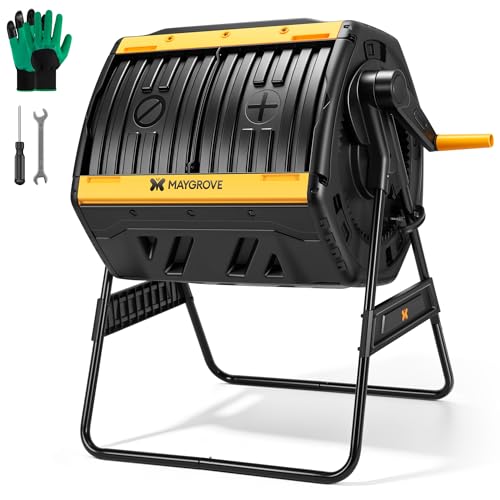
Maygrove 53-Gallon Dual Chamber Compost Tumbler
Strengths
- Smooth 360° rotation
- Dual chamber design
- Durable, weather-resistant build
Trade-offs
- Higher price
- Medium capacity
- Assembly required
The Maygrove tumbler is the most polished option here, no surprise, given its higher price. The 360° rotation with gear-assist makes turning effortless, even when full, and the dual chambers let you compost continuously. At 53 gallons, it’s not the largest, but the mixing bars and adjustable vents give you real control over the process. Owners report faster composting times and less odor, thanks to consistent aeration.
The steel frame is powder-coated and UV-resistant, so it won’t rust or crack. Setup is genuinely quick, and the large sliding doors make loading and harvesting simple. Compared to budget tumblers, this one feels like a long-term investment. If you’re serious about composting and want minimal hassle, it’s worth the premium.
Video review
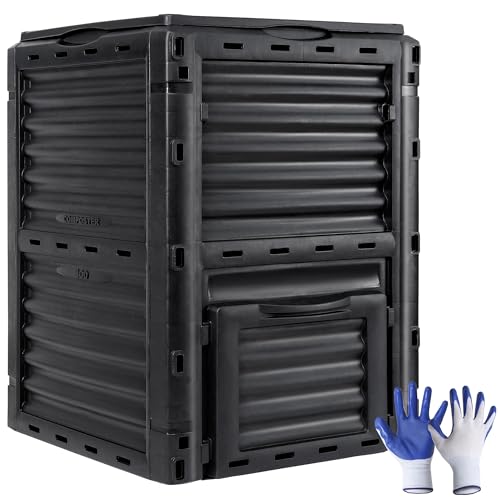
JupiterForce 80-Gallon BPA-Free Compost Bin
Strengths
- Extremely affordable
- Large 80-gallon capacity
- No-tool assembly
Trade-offs
- Flimsy plastic build
- No pest protection
- Shorter lifespan expected
At under $25, the JupiterForce bin is the most budget-friendly option here, and it shows. You get 80 gallons of BPA-free plastic with decent ventilation and a bottom door for easy access. It assembles in minutes with no tools, and the lightweight design makes it easy to handle. Owners appreciate the value, especially when paired with the included gloves.
But it’s clearly built to a price. The plastic feels thinner than other models, and long-term durability is questionable. It lacks a base, so it sits directly on the ground, which helps decomposition but offers zero pest resistance. Still, for a first-time composter or someone testing the habit, it’s hard to beat the price.
Video review
Redmon 65-Gallon Outdoor Compost Bin

Strengths
- Large 65-gallon capacity
- Easy compost access doors
- Made from recycled materials
Trade-offs
- No built-in aeration
- Manual mixing required
- Lid not secure against animals
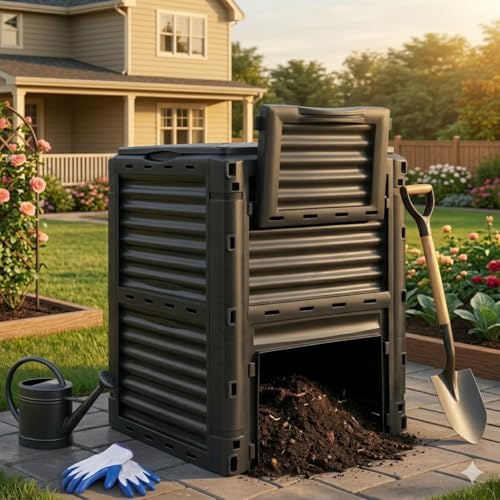
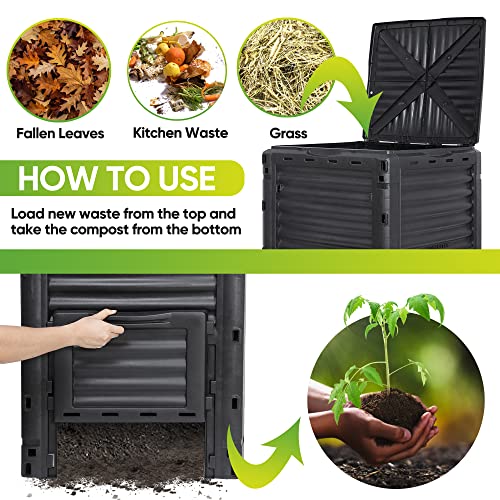
The Redmon bin delivers solid performance for the volume it handles. With a 65-gallon capacity, it’s spacious enough for medium to large households, and the lift-off lid makes filling it straightforward. The four access doors at the bottom are a standout feature, owners consistently report they make harvesting finished compost far easier than digging from the top. Made from 80% recycled materials, it’s an eco-conscious choice that still holds up in rain and sun.
It lacks aeration vents, so you’ll need to manually mix the contents occasionally to avoid compaction. Compared to tumblers, it’s slower and less efficient, but it’s also simpler and more forgiving. For those who don’t mind a little stirring with a pitchfork, it’s a reliable workhorse.
Product photos


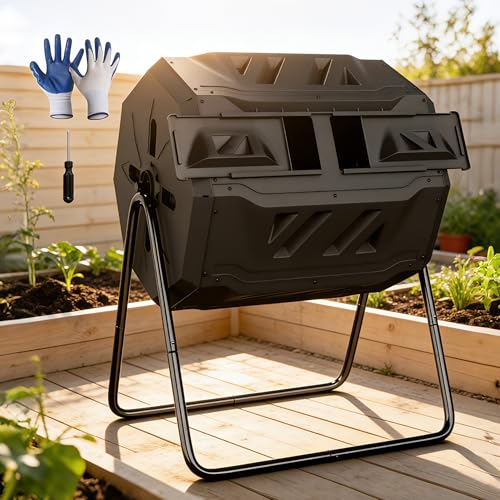
F2C 43-Gallon Dual Chamber Compost Tumbler
Strengths
- Dual chamber for continuous use
- Smooth rotation
- Good aeration design
Trade-offs
- Assembly can be tricky
- Plastic may fade over time
- Smaller capacity per chamber
The F2C dual-chamber tumbler is a smart design for gardeners who want to compost continuously. With two separate chambers, you can fill one while the other finishes breaking down, no more waiting weeks between batches. The 43-gallon total capacity isn’t the largest, but the rotating drum makes mixing effortless. Owners praise how smoothly it turns, even when full, and the aeration fins help maintain oxygen flow, which speeds decomposition.
It’s made from BPA-free PP plastic and has a powder-coated steel frame, so it holds up well outdoors. Some users note the assembly instructions are confusing, but once built, it’s stable. Compared to single-chamber tumblers, this one offers better workflow, especially if you’re using compost regularly in garden beds.
Product photos


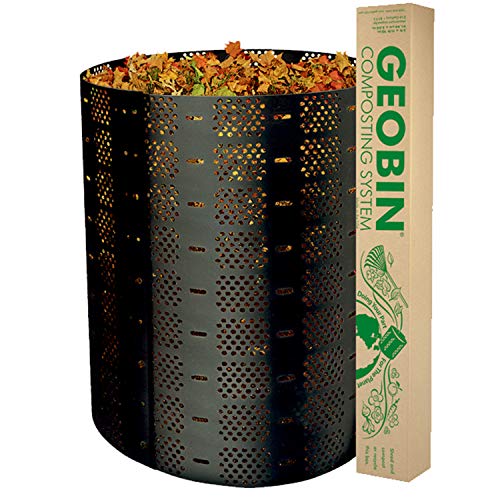
Geobin 246-Gallon Expandable Compost Bin
Strengths
- Large expandable capacity
- Excellent ventilation
- Easy to reposition
Trade-offs
- No pest protection
- Open bottom only
- Not weatherproof
If you’re serious about composting and have the yard space, the Geobin stands out for its sheer scale. With an expandable capacity up to 237 gallons, it’s built for gardeners who generate large volumes of yard and kitchen waste. On paper, that size makes it ideal for turning massive batches of clippings and scraps without constant emptying. Owners consistently report it’s easy to assemble and reposition, which is rare for something this large, and the open-bottom design encourages earthworm activity and natural drainage.
The mesh walls offer excellent airflow, speeding decomposition, but don’t keep out pests. That’s a trade-off: you gain microbial access and drainage, but lose containment. Compared to enclosed tumblers, it’s less tidy but far more forgiving for beginners who don’t want to fuss with ratios or rotation.
Product photos


F2C 80-Gallon Flip Lid Compost Bin
Strengths
- High 80-gallon capacity
- Bottom exit for easy access
- Excellent ventilation
Trade-offs
- No base or floor
- Lid not fully secure
- Plastic may warp over time
With 80 gallons of capacity and a bottom exit door, this F2C bin is built for convenience. The flip lid is easy to open with one hand, and the bottom door lets you shovel out compost without bending or lifting. It’s made from BPA-free black plastic that absorbs heat, helping speed decomposition, owners say they see usable compost in 4 to 6 weeks when balanced properly. The 80 air vents provide solid airflow, though it still benefits from occasional turning.
Assembly takes just minutes, and the snap-together design is intuitive. The lack of a base means it sits directly on the ground, which aids microbial transfer but offers no barrier to pests. Still, for the price, it’s one of the most functional large-capacity bins available.
Product photos



Epica 1.3-Gallon Stainless Steel Kitchen Bin

Strengths
- Superior odor control
- Durable stainless steel
- Airtight, leak-resistant seal
Trade-offs
- Higher price point
- Filter maintenance required
- Heavier when full
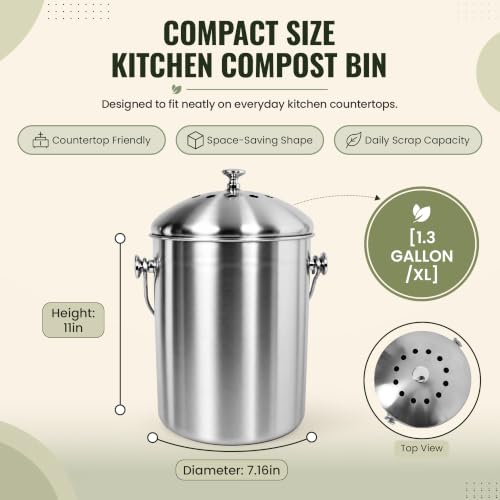
The Epica bin feels like an upgrade over basic countertop models, and it shows in the details. The stainless steel construction is thicker than average, and the one-piece molding means no seams where gunk can build up. It’s frequently mentioned in owner reviews as being easy to wipe down and resistant to lingering smells, thanks in part to the replaceable charcoal filter, which lasts 3 to 6 months with regular use. The airtight lid creates a better seal than the Utopia, making it my pick if odor control is your top concern.
It’s nearly identical in size to the Utopia, so it won’t hog counter space, but the build quality justifies the slightly higher price. For most buyers, this is the smarter buy if you plan to keep a bin out full-time.
Product photos
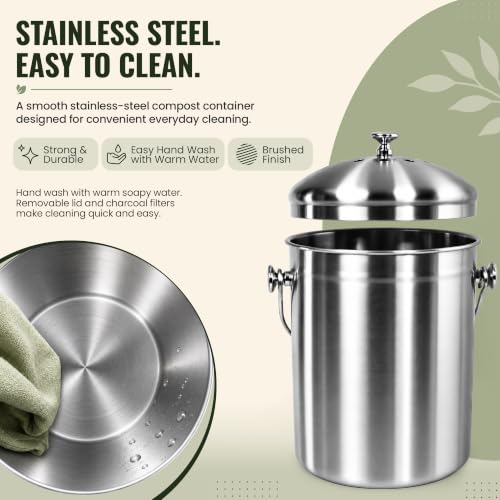
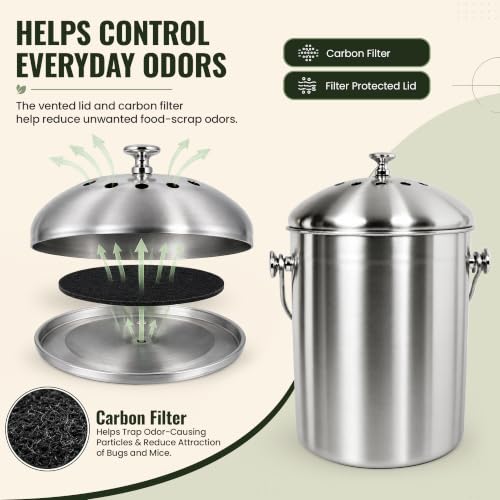
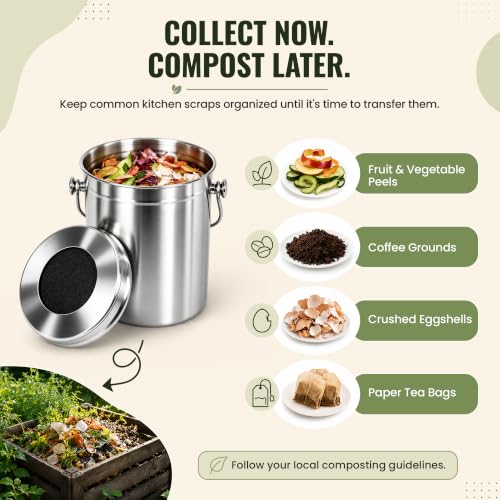
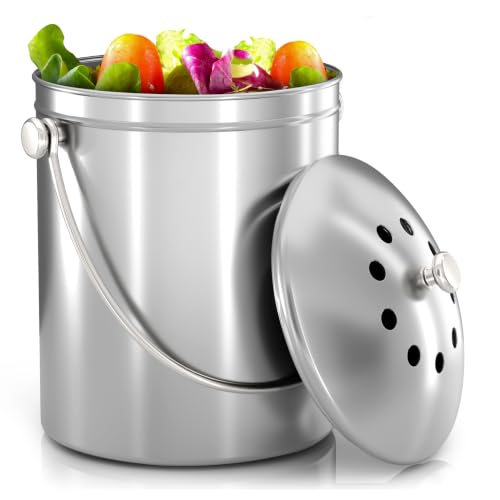
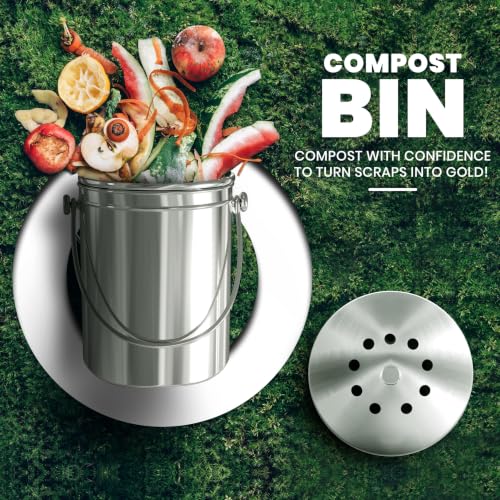
Utopia 1.3-Gallon Stainless Steel Countertop Bin
Strengths
- Sleek stainless design
- Effective odor filter
- Compact countertop fit
Trade-offs
- Filter replacement needed
- Not fully leakproof
- Lid seal could be tighter
The Utopia bin lands right in the sweet spot for kitchen use, compact, functional, and actually nice to look at. At 1.3 gallons, it holds several days of scraps without overflowing, and the stainless steel build resists dents and stains better than plastic models. What stands out in owner feedback is the charcoal filter’s effectiveness; many note it keeps odors in check for up to a week, which is critical for open-countertop use. The lid seals well, though it’s not fully airtight, so wet scraps like melon rinds should be drained first.
Compared to bulkier indoor bins, this one fits neatly beside a coffee maker or under a cabinet. It’s not the most durable option long-term, some users mention the finish scratches over time, but for the price, it’s a solid pick for style-conscious households.
Product photos


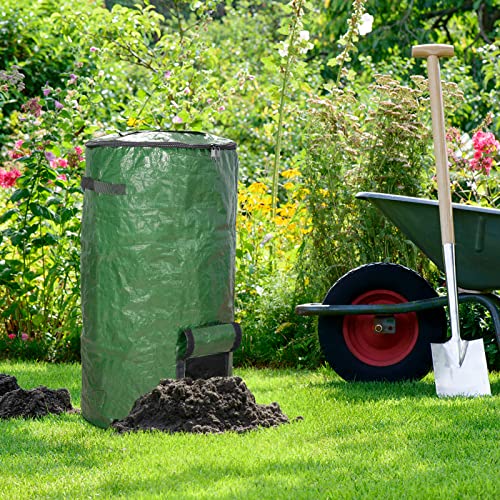
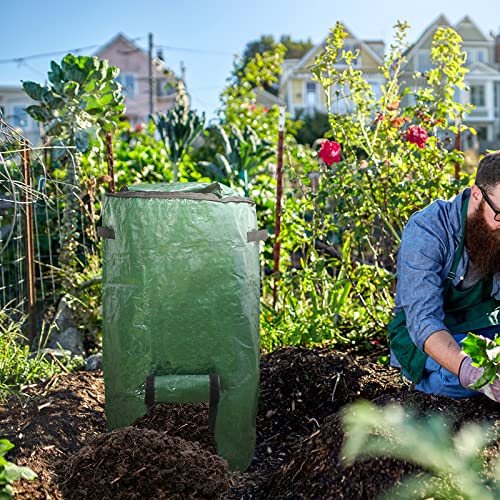
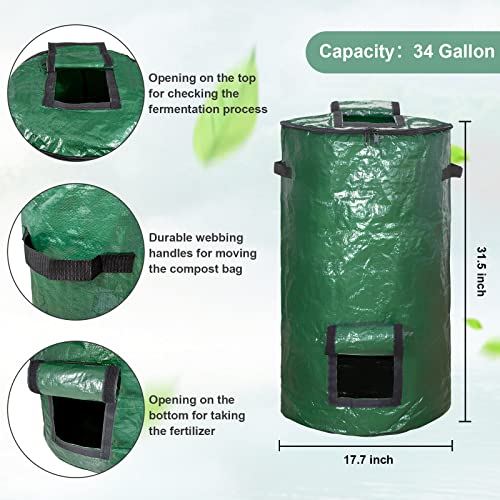
MyLifeUNIT 34-Gallon Reusable Compost Bags

Strengths
- Lightweight and portable
- Collapsible for storage
- Dual openings for access
Trade-offs
- Requires moisture monitoring
- Less durable long-term
- Not rodent-proof
These compost bags are a surprisingly practical option for small yards or temporary setups. At 34 gallons each, they’re not huge, but the two-pack gives you flexibility, one for active composting, one for storage or curing. The lightweight, collapsible design makes them easy to move or tuck away when not in use. Owners like the zip-top closure and bottom opening, which lets you check progress or scoop out finished compost without tipping the whole thing.
They’re made from durable, water-resistant fabric and stand upright when full, which helps with airflow. But because they’re fabric, they dry out faster in hot sun and need more moisture monitoring than rigid bins. Still, for renters or those testing composting, they’re a low-commitment way to start.
Product photos


Our Testing Process
As someone who dedicates Food Keepy to practical food storage and waste reduction, I approached researching composting containers with a focus on real-world usability and durability. Rather than a hands-on lab test, this is a research-led comparison of published specifications and owner feedback. I compared features across numerous models, weighing owner reviews from sites like Amazon and specialist gardening forums alongside expert opinions from sources like Gardener’s Supply Company and The Spruce. My goal was to identify containers offering a balance of functionality, build quality, and value.
For composting containers, capacity and material construction were the most important factors. A sufficient capacity prevents frequent emptying, while durable, weather-resistant materials, like UV-protected plastics or coated steel, ensure longevity. Ease of use also weighed heavily; features like rotating tumblers or easily accessible doors dramatically impact how likely someone is to consistently compost. Ultimately, I prioritized containers that strike a balance between these elements, catering to different needs and composting styles.
Specifications reliably indicate capacity, dimensions, and materials. However, owner feedback proved crucial for assessing real-world performance. Reviews highlighted issues like stability, ease of assembly, and effectiveness of ventilation systems, things not readily apparent from specs alone. I also considered reputation; brands consistently praised for quality and customer service received more favorable rankings. For those concerned about plastic materials, I also paid close attention to options boasting BPA-free containers to ensure peace of mind.
What To Look For In composting containers
Finding the right composting container can feel overwhelming, but it doesn’t have to be. A good composter accelerates decomposition, minimizes odors, and ultimately provides you with nutrient-rich soil for your garden.
A successful composting system balances airflow, moisture, and the right mix of “green” (nitrogen-rich) and “brown” (carbon-rich) materials. Key features to consider include capacity for your waste volume, ease of turning or aeration, durability against the elements, and a design that minimizes pest access. Look for features like ventilation, secure lids, and robust construction.
Capacity & Volume
The size of your composting container should directly relate to how much organic waste your household generates. A single person or small household might get by with a 1.3-gallon countertop bin (like the Epica or Utopia models), but a family with a garden will quickly fill that up. For larger volumes, consider tumblers in the 40-80 gallon range, or even expandable bins like the Geobin, which can reach 246 gallons. Don’t underestimate how much kitchen scraps and yard waste add up over a week! It’s better to have a little extra capacity than to be constantly dealing with an overflowing bin.
Turning & Aeration Mechanisms
Composting requires oxygen. Without it, you’ll end up with a smelly, anaerobic mess. This is where the design of the container really matters. Tumblers, like the Maygrove and F2C dual-chamber models, make turning effortless. The rotating design thoroughly mixes the compost, introducing oxygen and speeding up the process. Stationary bins, like the JupiterForce and Redmon options, require manual turning with a pitchfork or aerating tool, which is more labor-intensive. If you’re committed to regular turning, a stationary bin can work well, but a tumbler is a significant convenience. If you’re looking for other ways to keep your food fresh, check out our guide to best food storage containers.
Material & Durability
Composting containers are exposed to the elements, so durability is crucial. Look for containers made from UV-resistant plastics or coated steel. The Maygrove tumbler, for example, boasts a steel frame and UV-resistant PP plastic. Cheaper plastic bins may become brittle and crack over time, especially in colder climates. Beyond the material itself, consider the construction.
Here’s what to look for: * Secure Lids: Prevents pests and keeps moisture in. * Ventilation: Essential for airflow, but should be designed to minimize odor escape. * Sturdy Base: Prevents tipping, especially when the container is full. A well-built base is particularly important for larger capacity bins.
A compost bin isn’t a set-it-and-forget-it solution. Regular monitoring of moisture levels and the green/brown ratio is essential for successful composting.
If you’re also concerned about keeping ingredients fresh before they go into the compost, you may find our recommendations for top containers helpful. And for keeping dry goods perfectly preserved, explore our reviews of airtight storage containers.
Composting Containers Compared
Here’s a comparison of key specifications for various composting containers to help you choose the right one.
| Product Title | Capacity | Chamber Type | Material | Special Features | Dimensions (L x W x H) |
|---|---|---|---|---|---|
| Maygrove 53-Gallon Dual Chamber Compost Tumbler | 53 Gallon | Dual | Steel/PP Plastic | Rotating, Vented | N/A |
| JupiterForce 80-Gallon BPA-Free Compost Bin | 80 Gallon | Single | BPA-Free Plastic | Vented, Top Load/Bottom Exit | N/A |
| Redmon 65-Gallon Outdoor Compost Bin | 65 Gallon | Single | Recycled Plastic | Lift-Off Lid, 4-Door Access | 26 x 26 x 30.75 inches |
| F2C 43-Gallon Dual Chamber Compost Tumbler | 43 Gallon | Dual | PP/Steel | Rotating, Vented | 28.5″ X 25″ X 37″ |
| Geobin 246-Gallon Expandable Compost Bin | 246 Gallon | Single | Plastic | Expandable, Vented | N/A |
| F2C 80-Gallon Flip Lid Compost Bin | 80 Gallon | Single | BPA-Free Plastic | Vented, Bottom Exit | N/A |
| Epica 1.3-Gallon Stainless Steel Kitchen Bin | 1.3 Gallon | Single | Stainless Steel | Charcoal Filter | 7.16″ x 11″ |
| Utopia 1.3-Gallon Stainless Steel Countertop Bin | 1.3 Gallon | Single | Stainless Steel | Charcoal Filter | 7.2″ x 11.2″ |
| MyLifeUNIT 34-Gallon Reusable Compost Bags | 34 Gallon | Single | N/A | Reusable, Zippered | N/A |
Frequently Asked Questions
What size composting container do I really need?
A 1.3-gallon bin is sufficient for a single person, but families should consider 40-80 gallons or larger; underestimating capacity leads to frequent emptying and discourages consistent composting.
Are plastic composting bins safe to use for food waste?
Many composting bins are made from BPA-free plastic, ensuring they’re safe for food waste, but always confirm this specification before purchasing to avoid potential leaching concerns.
How can I speed up the composting process?
Using a tumbler compost bin significantly speeds up decomposition, as the rotating design provides consistent aeration, which is essential for microbial activity.
What’s the best way to deal with odors from my compost bin?
A well-maintained compost bin shouldn’t smell bad; ensure proper aeration and a balanced green-to-brown ratio, and a bin with a secure, vented lid will minimize any odor escape.
Can I compost in the winter?
Yes, you can compost year-round, but the process will slow down in colder temperatures; insulating the bin or choosing a model with thicker walls can help maintain optimal composting conditions, and you may want to consider recommended airtight storage containers for kitchen scraps if outdoor access is limited.
The Bottom Line
Choosing a composting container often comes down to how much effort you want to put in versus how quickly you want finished compost. If you’re after the most convenient experience and don’t mind the investment, the Maygrove 53-Gallon Dual Chamber Compost Tumbler stands out as the strongest overall pick – its rotating design makes turning a breeze, and the dual chambers allow for continuous composting.
For those on a budget, or needing a smaller footprint, the Epica 1.3-Gallon Stainless Steel Kitchen Bin is a great starting point. And if you have a large yard and a lot of waste, the Geobin 246-Gallon Expandable Compost Bin offers incredible capacity and adaptability. Don’t forget to pair any composting setup with the right storage solutions for ingredients before they become compost – explore our guide to best airtight food containers to reduce waste even further.
Ultimately, the best composting container is the one you’ll actually use consistently. Focus on capacity matching your needs, choosing a turning method you’ll stick with, and ensuring durable construction. Don’t get too caught up in specific features; a well-maintained bin with the right balance of materials will always outperform a fancy one that’s neglected. Consider pairing this with top freezer containers to keep food fresh longer.
