4 Best Containers for Freezing Food 2026
This post contains affiliate links. As an Amazon Associate, we earn from qualifying purchases.
The best containers for freezing food are the Rubbermaid Brilliance Tritan Containers for their reliable airtight seal and durability, the MCIRCO 30 oz Glass Containers as a top glass option that resists stains and odors, and the Tafura 32 Oz Leakproof Containers for budget-friendly, large-capacity freezing with strong leak protection.
Freezing food should protect it, not ruin it. Too often, people end up with icy, flavorless meals because their containers let air in or cracked under the cold. As someone who researches storage solutions daily on Food Keepy, I know how much difference the right container makes in reducing waste and keeping food tasting fresh.
This guide covers the key factors, like airtight seals, material strength, and stackability, based on specs and real owner feedback. We looked at how well each option prevents freezer burn, handles temperature shifts, and fits into real kitchen routines.
Top 4 Containers For Freezing Food in the Market
The Best Containers For Freezing Food, Reviewed
Rubbermaid Brilliance Tritan Containers

Strengths
- 100% leakproof guarantee
- Crystal-clear Tritan material
- Built-in microwave vents
- Stain and odor resistant
- Dishwasher, microwave, freezer safe
Trade-offs
- Higher cost per container
- Smaller capacity per unit
- Set includes only five containers
If I had to pick one set as the most balanced performer across all categories, it would be the Rubbermaid Brilliance line. The Tritan plastic stays crystal clear even after repeated use, resists stains from tomato sauce or turmeric, and doesn’t trap odors like cheaper plastics. More importantly, the airtight latches actually hold, owners repeatedly confirm these survive bag tosses and fridge stacking without spills.
The built-in microwave vents are a small but meaningful detail: you can heat food without popping off the lid, reducing mess and preserving moisture. At 3.2 cups, the size works for single meals or side portions. While pricier than budget packs, the durability makes it the smarter buy over time, especially compared to flimsier snap-lid alternatives.
Video review
Bentgo Prep 4-Cup Containers
Strengths
- PFAS and BPA free
- Lightweight and portable
- Clear portioned trays
- Dishwasher safe
- Great value 20-piece set
Trade-offs
- Not leakproof
- Lids less durable long-term
- Not ideal for saucy foods
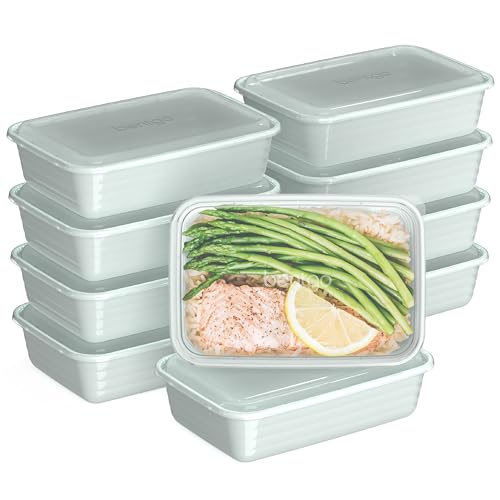
For anyone focused on portion control and daily prep, this Bentgo set stands out as one of the most practical buys in its class. The 4-cup trays are a smart size for balanced meals, and the embossed measurements help avoid guesswork when dividing proteins, grains, or veggies. Owners love how lightweight they are for taking lunches to work or school.
They’re not fully leakproof, so I wouldn’t trust them with oily curries or runny dressings, but for dry-ish meals like grilled chicken, rice bowls, or chopped salads, they perform well. The fact that they’re PFAS-free adds peace of mind, especially compared to older plastic models that used questionable coatings. Still, I’d say the Rubbermaid Brilliance line edges these out if you need true leak resistance.
Video review
MCIRCO 30 oz Glass Containers
Strengths
- Borosilicate glass construction
- Airtight silicone-seal lids
- Oven, microwave, freezer safe
- Stain and odor resistant
- Stackable design
Trade-offs
- Heavier than plastic
- Plastic lids not heat-safe
- Higher price point
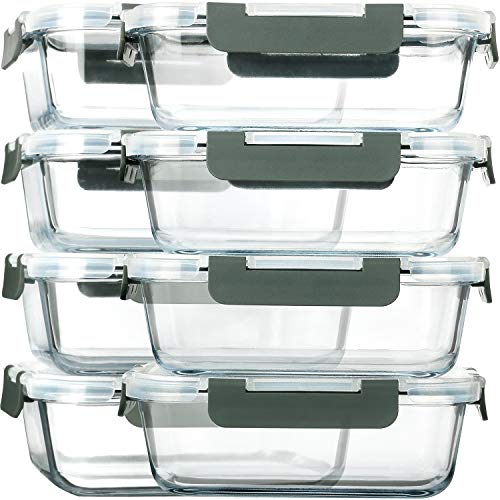
Glass lovers will appreciate what the MCIRCO containers offer, especially the use of borosilicate glass, which handles thermal shock better than regular tempered glass. That means fewer cracks when moving from freezer to microwave, a real concern with lesser glass sets. The 30 oz capacity gives enough room for full meals or leftovers without feeling oversized.
The snap-lock lids with silicone seals do a decent job keeping air out, though some users note they don’t last as long as the container itself. You also have to remove the lid before microwaving or oven use, which is standard but worth noting. These take up more space than plastic and are heavier, but if you prioritize non-reactive storage and hate plastic buildup over time, this is a solid long-term pick.
Product photos


Tafura 32 Oz Leakproof Containers

Strengths
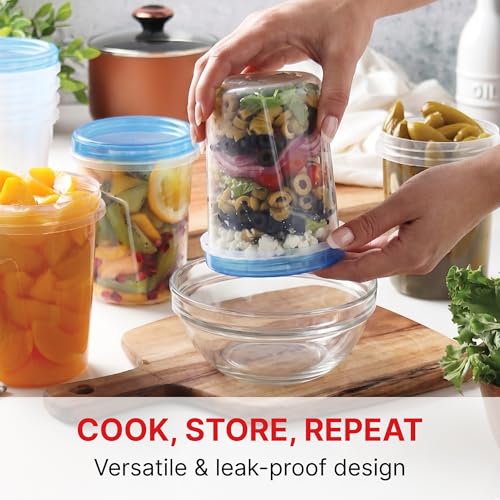
- Leakproof screw lids
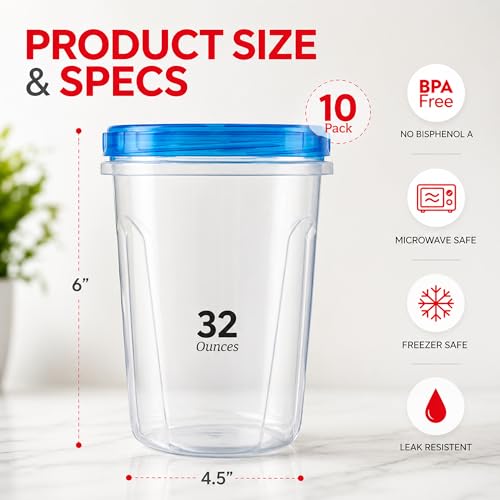
- Large 32 oz capacity
- BPA free material
- Stackable design
- Microwave and freezer safe
Trade-offs
- No microwave vents
- Lids require twisting
- Slightly bulky footprint
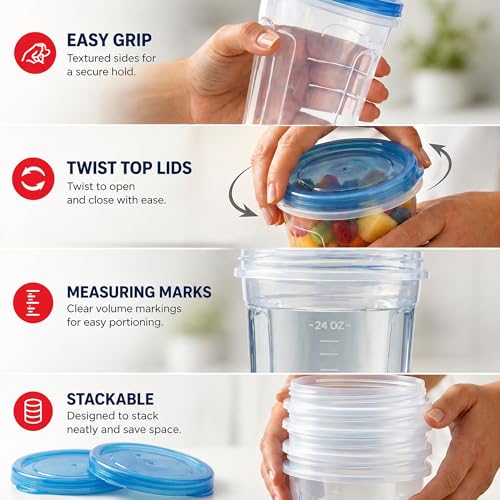
I like the straightforward design of these Tafura containers for people who freeze a lot of soups or batch-cooked meals. The screw-top lids deliver a genuinely tight seal, and owners consistently report no leaks even when transporting stews or broths. On paper, that 32 oz size is ideal for portioning out four-cup servings, which lines up well with standard meal prep routines.
They’re made from polypropylene, so they won’t shatter like glass, and the fact that they’re stackable helps keep freezer shelves from turning into chaos. While they don’t have built-in vents for microwaving, you can still reheat safely, just crack the lid. Compared to cheaper snap-lid models, these feel more durable over time.
Product photos


How We Chose These containers for freezing food
As someone who spends a lot of time thinking about food preservation – and sharing those ideas on Food Keepy – I approached researching containers for freezing food by looking at a combination of published product specifications, owner reviews from a variety of sources, and my understanding of what truly matters for long-term food storage. Rather than a hands-on test of each container, this is a research-led comparison focusing on features and how well those features address common freezing challenges, according to those who use these products daily.
For containers intended for the freezer, I weighted leak-proof construction and material durability most heavily. Freezer burn is a common frustration, so an airtight seal is critical. Beyond that, I prioritized containers that could withstand temperature fluctuations without becoming brittle or cracking. The ability to stack efficiently also factored in, as maximizing freezer space is often a priority for those doing a lot of meal prepping or preserving seasonal produce.
Product specifications readily tell you about capacity and material composition. However, real-world performance – how reliably a lid stays sealed, or how well a container resists staining – is best gleaned from owner feedback. I paid close attention to comments regarding long-term use, and specifically looked for mentions of freezer burn or breakage. I also considered whether a container was truly freezer-safe, or if only the container itself was, requiring caution when considering glass containers for freezer storage. For those seeking alternatives, my broader research into non-plastic storage options informed my understanding of the tradeoffs involved with different materials.
Choosing The Right containers for freezing food
Finding the right containers for freezing food is about more than just tossing leftovers in plastic bags. It’s about protecting flavor, preventing freezer burn, and making your life easier when it comes to meal planning and reducing food waste.
Successful long-term food storage relies on airtight seals, materials that withstand temperature swings, and designs that maximize space. Consider container size relative to typical meal portions, the type of food being frozen (liquids versus solids), and whether microwave reheating is desired. Prioritize durable construction and ease of cleaning for longevity.
Size and Portioning
One of the biggest mistakes I see people make is freezing food in containers that are either too large or too small. Too large, and you end up thawing more than you need, leading to waste. Too small, and you’re constantly juggling multiple containers. Think about how you typically eat. If you often make individual servings, a set with smaller compartments, like the Bentgo Prep containers, is a good choice. For larger batches, larger capacity containers – 30oz or even 32oz like the MCIRCO and Tafura options – are more practical. Don’t overlook the benefit of portioning before freezing; it saves time later.
Material Matters
The material of your container is critical for freezer success. Glass, like the MCIRCO containers, is excellent because it doesn’t absorb odors or stains and is generally considered more environmentally friendly. However, glass can be heavier and more prone to breakage. Plastic, particularly Tritan (as seen in the Rubbermaid Brilliance), offers a lightweight and durable alternative. When choosing plastic, always ensure it’s BPA-free and labeled as freezer safe materials. Remember that not all plastics are created equal.
Here’s what to keep in mind about plastic options: * Avoid flimsy, single-use plastics – they crack easily in the cold. * Look for thicker, reusable polypropylene (PP) plastics for better durability. * Consider Tritan for its clarity and stain resistance, though it may not be oven-safe like some borosilicate glass.
Leakproof Lids and Airtight Seals
This is where things get real. A leaky container isn’t just messy; it leads to freezer burn. Freezer burn happens when air reaches the food’s surface, causing dehydration and flavor loss. Airtight seals are essential. I often recommend containers with screw-on lids (like the Tafura options) for liquids because they generally provide a more secure seal than snap-on lids. However, well-designed snap-on lids, like those on the Rubbermaid Brilliance, can also be highly effective if they have a robust locking mechanism and a silicone gasket. Before committing to a large set, check owner reviews specifically regarding leakproof performance – people will definitely share if a container fails in this area! You want to be confident when storing cookies in freezer or anything else.
A good rule of thumb: if a container isn’t reliably leakproof with water at room temperature, it won’t be leakproof in the freezer when contents expand.
Containers for Freezing Food Compared
Here’s a comparison of key specifications for different containers designed for freezing food.
| Product Name | Capacity | Material | Leakproof | Microwave Safe | Dishwasher Safe | Stackable |
|---|---|---|---|---|---|---|
| Rubbermaid Brilliance Tritan Containers | 3.2 cup (x5) | Tritan Plastic | Yes | Yes | Yes | Yes |
| Bentgo Prep 4-Cup Containers | 4 cup (x10) | Plastic | N/A | Yes (tray only) | Yes (tray only) | Yes |
| MCIRCO 30 oz Glass Containers | 30 oz (x8) | Glass | Yes | Yes | Yes | Yes |
| Tafura 32 Oz Leakproof Containers | 32 oz (x10) | Polypropylene | Yes | Yes | Yes | Yes |
Frequently Asked Questions
What container material is best for preventing freezer burn?
Glass and thicker polypropylene plastics are best at preventing freezer burn. They create a more reliable barrier against air and moisture than thinner, single-use plastics, and glass doesn’t absorb odors or stains like some plastics can.
Are glass containers truly safe for freezing, considering potential cracking?
Yes, glass containers are safe for freezing if they are specifically labeled as freezer-safe borosilicate glass. This type of glass is designed to withstand temperature fluctuations, but rapid temperature changes should still be avoided to minimize the risk of breakage.
How do snap-on lids compare to screw-on lids in terms of leakproof performance?
Screw-on lids generally offer a more secure, leakproof seal, especially for liquids, because they provide more consistent pressure. However, high-quality snap-on lids with robust locking mechanisms and silicone gaskets can be nearly as effective and are often more convenient for everyday use.
If I plan to freeze soups or sauces, what size container do you recommend?
For soups and sauces, I recommend 16- to 32-ounce containers, depending on how many servings you typically need. Leaving about an inch of headspace at the top is also important to allow for expansion during freezing and prevent the lid from popping off. For those wanting to explore alternatives, consider vacuum sealers for freezing for optimal protection against freezer burn.
Is it better to use a set of matching containers or a variety of sizes?
A mix of sizes is generally most practical. While matching sets look neat, having a range of options allows you to efficiently store different portion sizes and minimize wasted space, especially if you’re interested in freezing individual meals.
The Bottom Line
Ultimately, choosing containers for freezing food comes down to balancing convenience with protection. You can spend a lot to get every bell and whistle, or prioritize core features and save. For the best overall performance and peace of mind, I recommend the Rubbermaid Brilliance Tritan Containers. They strike an excellent balance between durability, leakproof design, and ease of use, making them a solid choice for most freezing needs.
If you’re on a tighter budget, the Bentgo Prep 4-Cup Containers are a great starting point, especially if you’re primarily freezing individual portions. For those who prefer glass, the MCIRCO 30 oz Glass Containers are a fantastic option – and they’re among the top-rated glass containers for freezer use, though you’ll want to be mindful of potential breakage. And for those frequently freezing liquids, the Tafura 32 Oz Leakproof Containers offer a secure, screw-top seal that minimizes the risk of leaks and freezer burn, making them ideal for freezing soup containers.
Don’t get too caught up in chasing the latest materials or features. A reliably airtight seal, durable construction, and a size that suits your needs are far more important than any single specification. Prioritize those fundamentals, and you’ll be well-equipped to protect your food and reduce waste for months to come.
