
9 Best Compostable Bags of 2026
This post contains affiliate links. As an Amazon Associate, we earn from qualifying purchases.
The UNNI 3 Gallon Compost Bags are the best overall for strength and reliable compostability, with BPI and OK Compost HOME certifications and a durable 0.71 mil thickness. For a budget-friendly option, the ANECO 100% Compostable Waste Bags offer similar performance at a lower price point and slightly higher pack count.
If you’re like me and trying to cut down on kitchen waste, you’ve probably struggled with flimsy compost bags that leak, tear, or don’t break down as promised. It’s frustrating to invest in eco-friendly products that don’t deliver in practice.
This guide cuts through the greenwashing. I compared top compostable bags based on certifications, material strength, and real user feedback to find the ones that actually work in both kitchen and compost pile. You’ll learn what to look for so you can choose with confidence.
Top 9 Compostable Bags in the Market
The Best Compostable Bags, Reviewed
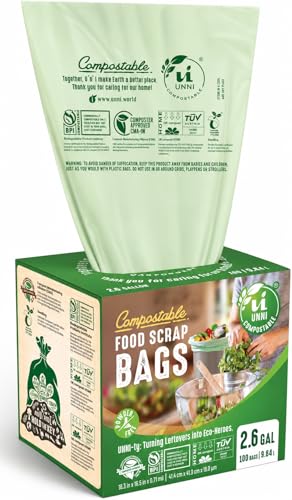
UNNI 2.6 Gallon Compostable Bags
Strengths
- Extra thick at 0.71 mil
- BPI and OK compost HOME certified
- Perfect fit for 2.6 gal bins
Trade-offs
- Slight odor retention reported
- Shelf life under 9 months
These UNNI 2.6 gallon bags hit the sweet spot for most kitchen setups. At 0.71 mil thickness, they’re among the thickest standard liners available, and owners consistently report fewer rips when hauling wet peels or dense scraps. The 100-count roll fits snugly in common countertop bins without overhanging, and the BPI, CMA, and OK compost HOME certifications mean they’re legit for both backyard and commercial systems.
What stands out is how well they balance durability and compostability, few bags this strong break down as reliably. Compared to thinner budget options, these feel like a smarter long-term pick if you hate mid-week leaks. I’d choose these over cheaper, flimsier liners any day for daily use.
Video review
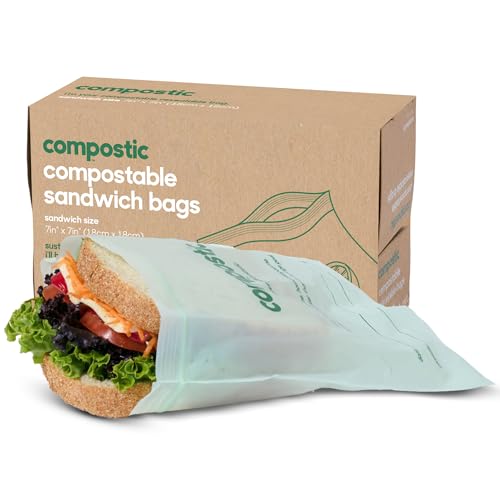
Compostic Compostable XL Sandwich Bags
Strengths
- Resealable zip-seal design
- Microwave and freezer safe
- 100% home compostable
Trade-offs
- Higher price per unit
- Not for heavy-duty storage
- Limited capacity
These aren’t bin liners, they’re resealable sandwich bags built to replace plastic in lunchboxes and pantries. What impresses me is how closely they mimic traditional zip-closure performance while being fully home compostable. Owners say the seal holds tight, even with damp items, and the fact they’re microwave and freezer safe makes them unusually versatile for compostable film.
They break down in 12–24 weeks in home compost, which is fast for this category. And since they’re tested for direct food contact, I feel confident recommending them for kids’ lunches. Compared to other “eco” sandwich bags that crack or leak, these stand out as genuinely functional. If you’re trying to cut plastic from food storage, not just trash collection, these are worth considering.
Video review
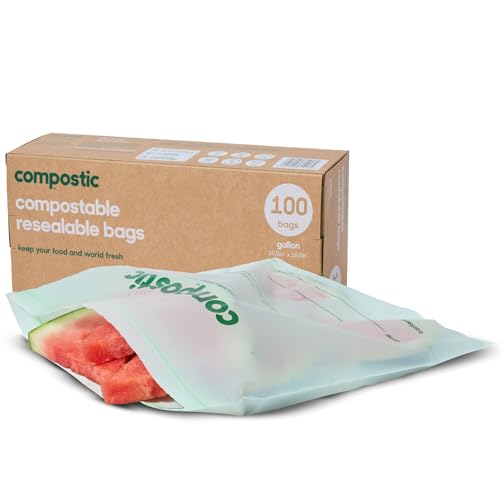
Compostic Compostable Gallon Bags
Strengths
- Freezer and microwave safe
- Leak-proof zip seal
- Breaks down in home compost
Trade-offs
- Expensive upfront cost
- Thicker film feels less flexible
- Not for high-heat cooking
When it comes to compostable freezer storage, options are slim, but these Compostic gallon bags fill a real gap. They’re thick, resealable, and rated for freezer use, which means you can safely store batch-cooked meals or marinated proteins without worrying about leaks or breakdown. Owners praise how well they prevent freezer burn, something many plant-based bags fail at.
Like their sandwich-sized cousins, they’re certified non-toxic and break down completely in home compost in under two years. That combo of performance and end-of-life clarity is rare. Sure, they cost more than basic liners, but for meal preppers aiming to go zero-waste, they’re one of the few truly viable plastic-free options. I’d pick these over conventional freezer bags any time.
Product photos


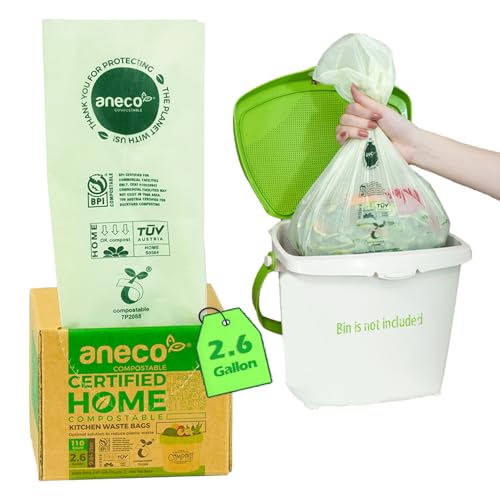
ANECO 100% Compostable Waste Bags
Strengths
- Certified for home compost
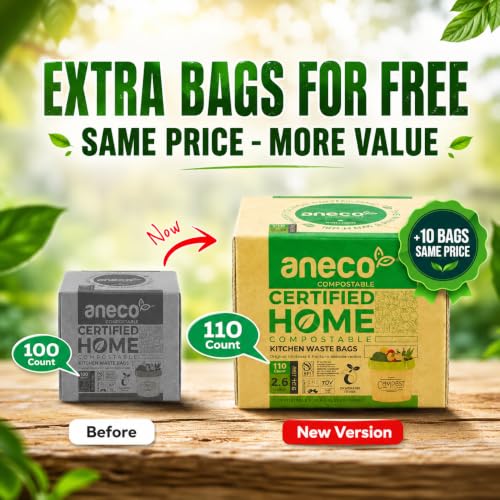
- Extra 10 free bags
- Extra thick and strong
Trade-offs
- Higher price point
- Sensitive to heat exposure
- Odor can linger
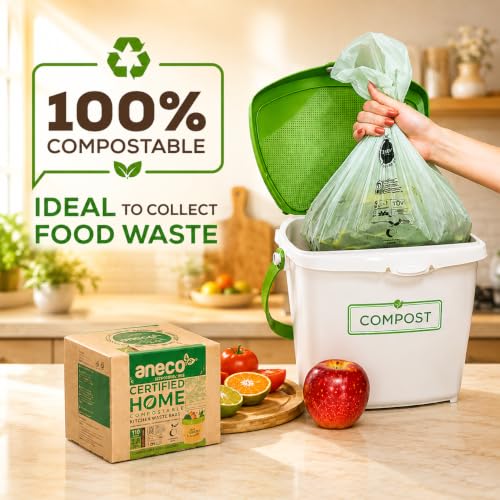
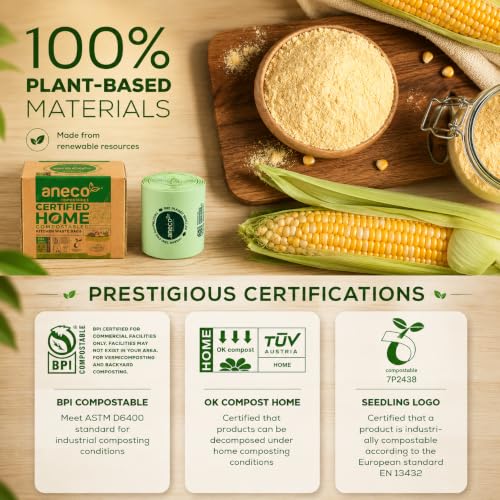
ANECO delivers one of the few bags that confidently claim home compostability alongside industrial certification. With OK Compost HOME, BPI, and Seedling logos, they’re verified to break down in backyard piles, not just facilities. That’s huge for off-grid composters or those without curbside pickup.
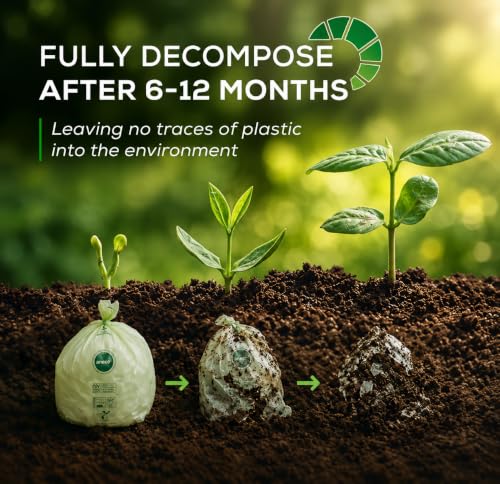
Owners highlight their thickness and leak resistance, even with juicy scraps left overnight. The 110-bag count (instead of 100) is a nice bonus, stretching value further. While similar in size to UNNI and BioBag, ANECO leans harder into home compost performance, making them my top recommendation for gardeners who toss scraps directly into soil. Just store them cool and dry, they degrade faster if exposed to heat.
Product photos

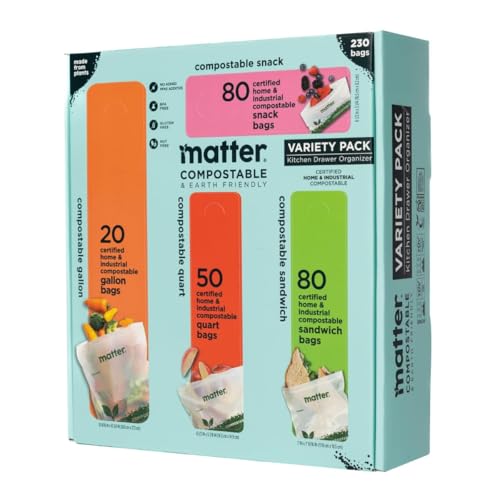
Matter Compostable Resealable Bags
Strengths
- Multiple sizes included
- PFAS-free materials
- TUV and BPI certified
Trade-offs
- Seals less secure than rivals
- Snack bags run small
- Pricier per unit
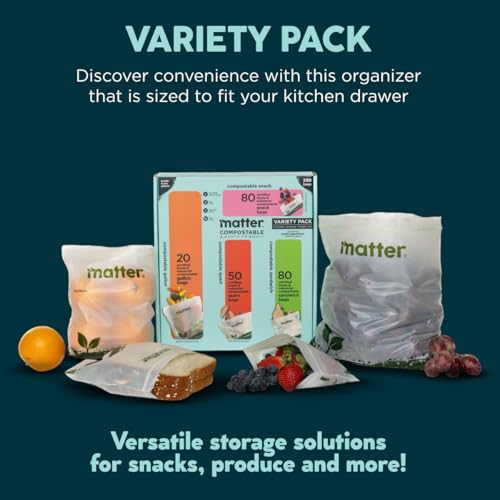
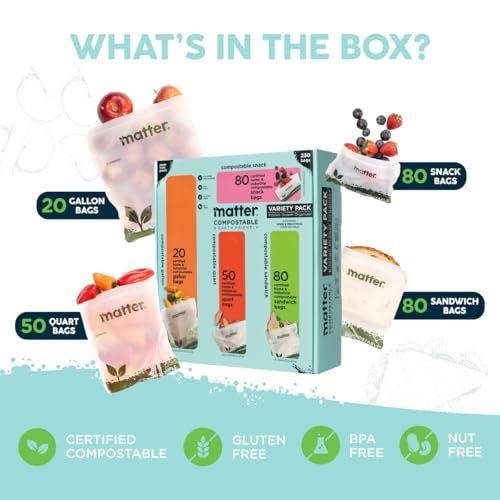
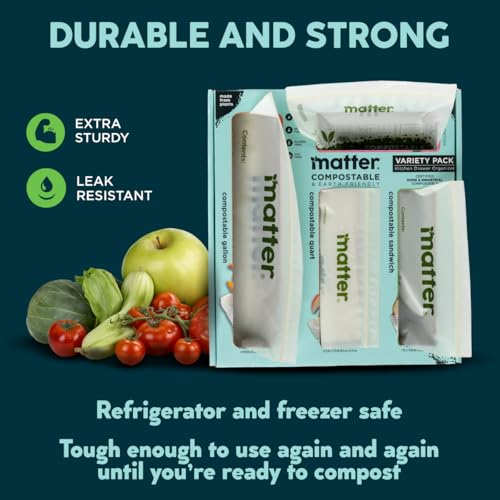
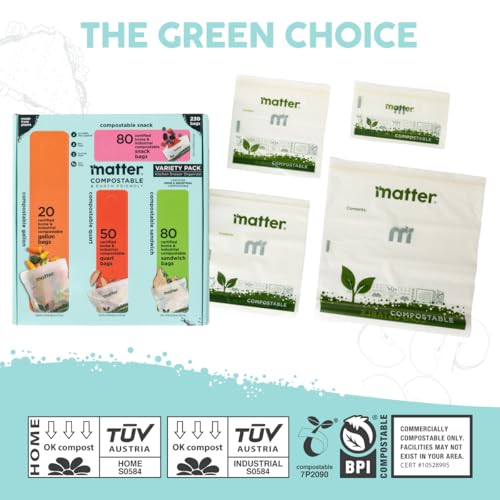
Matter’s 230-count variety pack is the most practical way to test different sizes without buying multiple products. With snack, sandwich, quart, and gallon options, it covers everything from carrot sticks to stew containers. The mix makes it easy to match bag size to task, a detail I appreciate as someone focused on reducing waste at every stage.
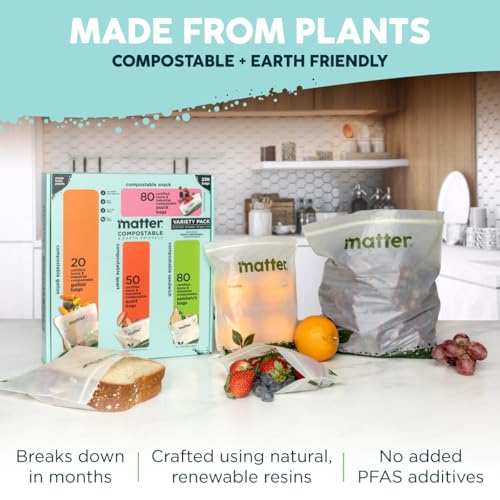
All bags are BPI and TUV certified, so disposal is straightforward. Made from plant fibers without PFAS, they’re a safer alternative to coated paper or plastic-lined pouches. Some owners say the seals aren’t as tight as Compostic’s, but they’re still strong enough for fridge and freezer use. If you’re transitioning away from plastic across your kitchen, this set offers the most flexibility.
Product photos
UNNI 3 Gallon Compost Bags

Strengths
- 200 bags for less frequent buying
- Same trusted UNNI quality
- Certified for home and industrial compost
Trade-offs
- Bulk packaging takes space
- May not fit small bins
- Requires dry storage
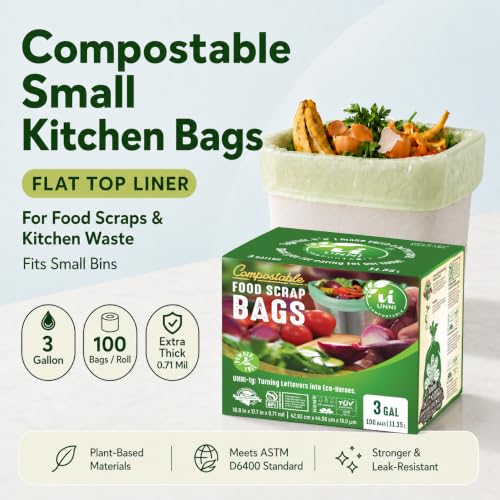
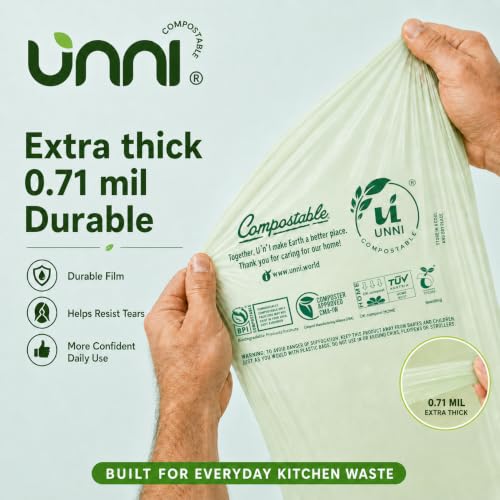
Twice the supply, same reliability, that’s the pitch here. These 3-gallon UNNI bags come in a 200-count pack (two 100-bag rolls), making them the best value for households that hate reordering. Same 0.71 mil thickness, same triple certifications (BPI, CMA, OK compost HOME), just more volume.
The slightly larger size fits taller bins better than 2.6 gallon versions, though they may overhang smaller pails. Owners appreciate the reduced frequency of replacements, especially in busy kitchens. Compared to single-roll options, this pack saves money over time, even if the upfront cost stings a little. For consistent quality and bulk convenience, it’s hard to beat.
Product photos


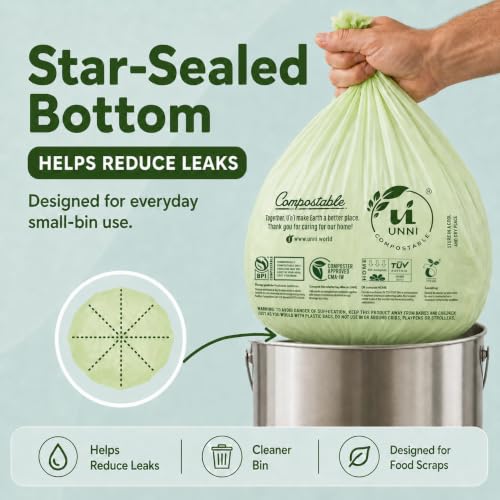
SUPERBIO 1.6 Gallon Food Scrap Bags

Strengths
- Handle tie for easy closure
- Star-sealed bottom
- OK compost HOME certified
Trade-offs
- Thinner at 0.63 mil
- Smaller capacity limits use
- Not ideal for wet waste
If you’ve got a tiny bin or just don’t generate much waste, these 1.6 gallon SUPERBIO bags make sense. They’re smaller than most, so they suit minimalist kitchens or single-person households where full-size bags would sag or bunch. The reinforced star-sealed bottom and handle tie are smart touches, owners note they hold up better with heavy loads than expected for their size.
Certifications are solid: BPI for commercial composting and OK compost HOME, so disposal flexibility is there. But they’re only 0.63 mil thick, so I wouldn’t trust them with soupy leftovers overnight. For light, dry scraps? Great. For messy peels and coffee grounds? A riskier bet than thicker models.
Product photos



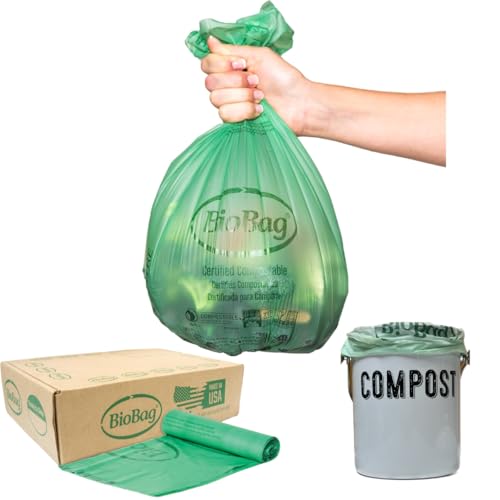
BioBag 2.6 Gallon Food Scrap Bags
Strengths
- Made in USA
- CMA composter approved
- BPI certified
Trade-offs
- Slightly thinner material
- No home compost logo listed
- Shorter shelf life
BioBag has been in the compost space longer than most, and these 2.6 gallon liners reflect that experience. At 0.64 mil, they’re slightly thinner than UNNI’s offering, but still durable enough for daily use according to owner feedback. They’re made in the USA with imported resin, which adds traceability some buyers value.
Their BPI certification is standard, but what sets them apart is CMA composter approval, meaning real facilities have tested them. That gives me more confidence they won’t gum up industrial systems. Still, they lack the extra thickness of top-tier picks, so I’d reserve them for drier scraps. For the price, they’re a dependable budget-certified option, especially if local compost access matters more than max strength.
Product photos

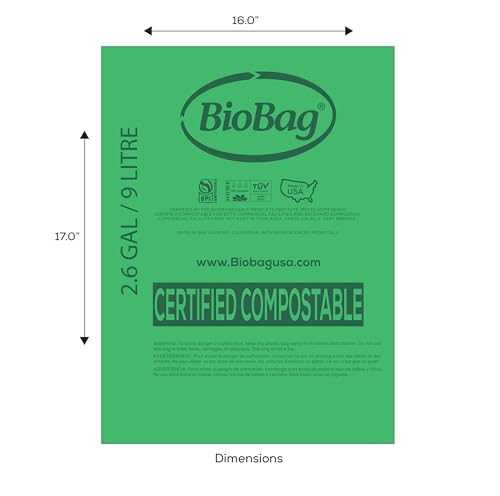


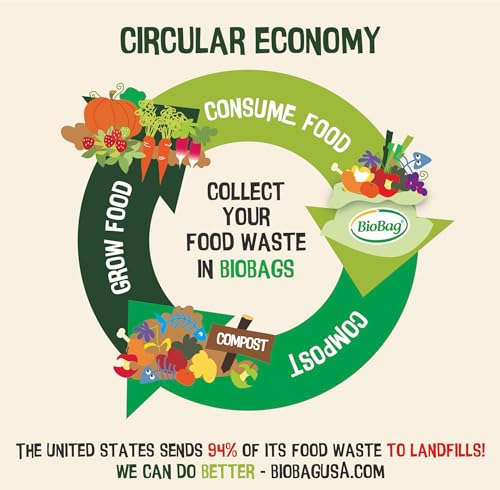
GreFusion 1.2 Gallon Compost Bags

Strengths
- Fits very small bins
- Odor-controlling design
- BPI and OK compost HOME certified
Trade-offs
- Too small for most kitchens
- Limited to light loads
- Not for tall or wide pails
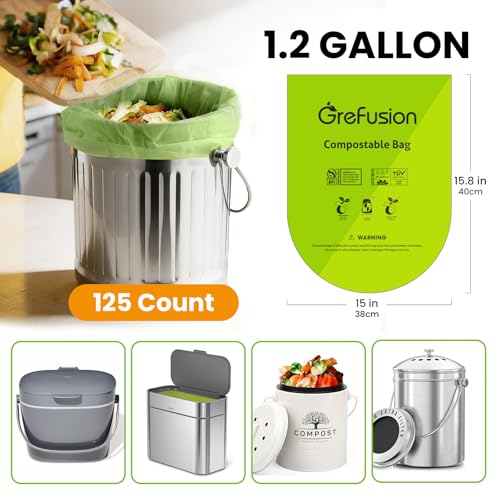
These 1.2 gallon bags are built for ultra-small bins, think under-sink units, car trash holders, or bathroom compost catchers. At 15.7 x 15 inches, they fit containers under 10 inches in diameter, which many standard bags don’t accommodate well. Their compact size and high-density blend help control odors, a feature several owners specifically praise.
Certified by BPI and OK Compost HOME, they’re legit for compost, and the corn-starch material breaks down cleanly. But with 125 bags per pack, the value only works if you actually need this size. For larger kitchens, they’d be impractical. I see them as niche, but essential for the right setup.
Product photos


How We Evaluated compostable bags
As someone deeply interested in reducing kitchen waste – a core focus of Food Keepy – I approached researching compostable bags with a focus on real-world usability and environmental impact. Rather than a hands-on lab test, this was a research-led comparison of published specifications and owner feedback from across numerous brands. I weighed features, certifications, and customer reviews to determine which bags offer the best combination of strength, compostability, and practicality for everyday use.
For this category, the most important factors were certification and thickness. Truly compostable bags need to meet recognized standards (like BPI or OK Compost HOME) to ensure they’ll break down as intended, and a thicker mil (measurement of plastic thickness) generally correlates with greater strength and fewer leaks. I also prioritized bags that received positive feedback regarding odor control, as this is a common concern with food scrap storage. Many consumers also look for alternatives to plastic when storing food, such as reusable beeswax bread bags.
Specifications reliably indicate bag size and material composition. However, owner reviews proved crucial for assessing real-world performance, specifically, how well the bags hold up to daily use, whether they tear easily, and if they actually compost effectively in home systems. Reputation and brand transparency also played a role; brands clearly committed to sustainability and providing accurate information were favored. It’s also worth considering options for longer-term food storage, like best bags for freezer burn if you want to extend the life of your ingredients.
How To Choose The compostable bags
Finding the right compostable bags requires a bit more thought than just grabbing any labeled “green” product.
A truly useful compostable bag balances strength for daily use with genuine compostability certification. Buyers should prioritize bags certified by organizations like BPI (ASTM D6400) or TÜV AUSTRIA (OK compost HOME) and consider the bag’s intended use – kitchen scraps, food storage, or larger waste – to select the appropriate size and thickness. Material composition impacts breakdown time and effectiveness.
Size and Capacity
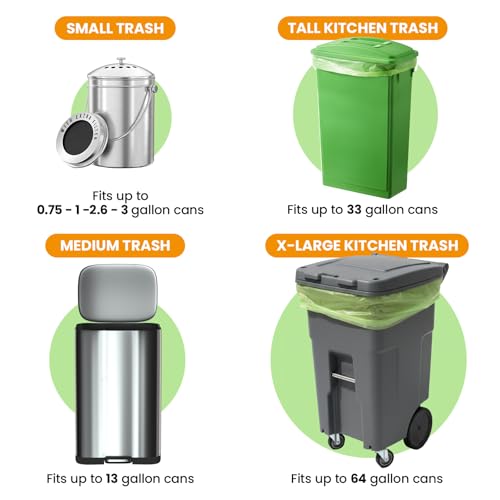
The sheer variety of sizes can be overwhelming. Don’t automatically assume bigger is better; a bag that’s too large will require more material and may not compost as efficiently in a home system. Think about what you’re composting. For daily kitchen scraps from fruit and vegetable prep, a 1.6 to 3 gallon bag, like the UNNI 3 Gallon Compost Bags or the ANECO 100% Compostable Waste Bags, is often sufficient. If you’re meal prepping or freezing leftovers, you’ll want to look at larger options.
Compostability Certifications
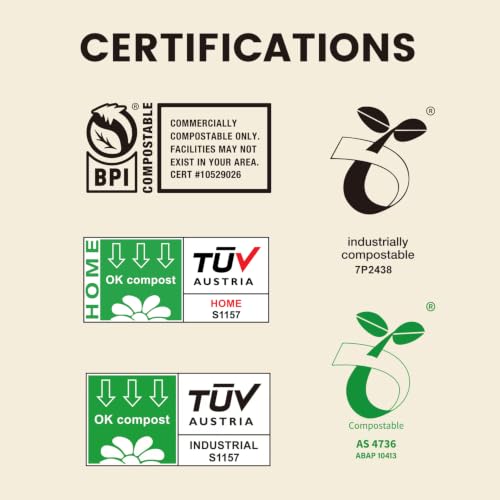
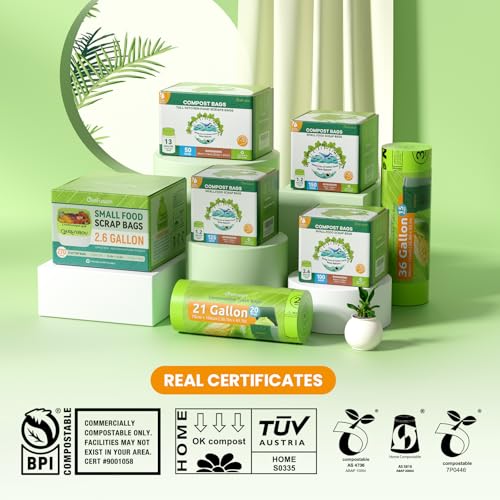
“Compostable” is a heavily marketed term, so relying on certifications is crucial. BPI certification (ASTM D6400) guarantees industrial compostability, meaning the bag will break down in a commercial facility. However, many people compost at home. Look for OK compost HOME certification from TÜV AUSTRIA, which verifies breakdown in a backyard compost pile. It’s also worth knowing that having both certifications, as seen in some Matter bags, offers maximum flexibility.
Here’s a quick guide to understanding certification levels: * BPI: Good for municipal composting programs. * OK compost HOME: Best for backyard composting. * Both: Offers options for various disposal methods. * No certification: Proceed with caution – the bag may not actually compost.
A bag without a recognized certification is unlikely to break down properly, potentially contaminating your compost or ending up as plastic pollution.
Material and Strength
While plant-based materials are key, the specific composition and thickness (measured in “mil”) impact durability. Thinner bags (under 0.6 mil) are suitable for dry scraps, but you’ll want something thicker (0.71 mil or higher) for wet or heavy waste. Compostic offers a great example of this with their range of options, including convenient compostable sandwich bags for packed lunches. If you’re planning on using compostable bags for longer-term storage, especially in the freezer, you’ll want to prioritize strength and leak-proof seals – you might even want to consider quality freezer bags as a more robust option for those applications.
Compostable Bags Compared
Here’s a comparison of key specifications for various compostable bag options.
| Product Name | Capacity | Certified Home Compostable | Certified Industrial Compostable | Bag Count | Thickness (mil) |
|---|---|---|---|---|---|
| UNNI 2.6 Gallon Compostable Bags | 2.6 Gallon | Yes | Yes | 100 | 0.71 |
| Compostic Compostable XL Sandwich Bags | N/A | Yes | N/A | N/A | N/A |
| Compostic Compostable Gallon Bags | 1 Gallon | Yes | N/A | N/A | N/A |
| ANECO 100% Compostable Waste Bags | 2.6 Gallon | Yes | Yes | 110 | 0.71 |
| Matter Compostable Resealable Bags | Variety Pack | Yes | Yes | 230 | N/A |
| UNNI 3 Gallon Compost Bags | 3 Gallon | Yes | Yes | 200 | 0.71 |
| SUPERBIO 1.6 Gallon Food Scrap Bags | 1.6 Gallon | Yes | Yes | 50 | 0.63 |
| BioBag 2.6 Gallon Food Scrap Bags | 2.6 Gallon | Yes | Yes | 100 | 0.64 |
| GreFusion 1.2 Gallon Compost Bags | 1.2 Gallon | N/A | Yes | N/A | N/A |
Frequently Asked Questions
What happens if my compostable bags don’t have a certification?
Bags without BPI or OK compost HOME certification likely won’t break down properly. They may end up as plastic pollution or contaminate your compost pile, defeating the purpose of choosing a compostable option.
Are thicker compostable bags always better?
Generally, yes. A thickness of 0.71 mil or higher offers greater strength and reduces the risk of leaks, especially when dealing with wet food scraps, but it’s not the only factor – certification is more important.
Can I use compostable bags for freezer storage?
While some thicker compostable bags can be used briefly in the freezer, they aren’t ideal for long-term storage. For extended freezing, consider mylar food storage bags or traditional freezer bags for better protection against freezer burn.
What’s the difference between BPI and OK compost HOME certification?
BPI certification means a bag is compostable in industrial facilities, while OK compost HOME verifies it breaks down in a backyard compost pile. Choosing bags with both certifications gives you more disposal options.
How do I store bread in compostable bags to maintain freshness?
Compostable bags can be used for short-term bread storage, but they aren’t as effective as dedicated freshness-preserving bread bags designed to maintain humidity and prevent staleness.
The Bottom Line
Choosing compostable bags often comes down to balancing convenience with a commitment to truly sustainable practices. While many options exist, the Matter Compostable Resealable Bags stand out as the strongest all-around pick, offering both home and industrial composting certifications alongside a variety of useful sizes. They represent a solid investment for anyone serious about reducing plastic waste.
For those on a tighter budget, or those primarily focused on kitchen scrap collection, the UNNI 3 Gallon Compost Bags are an excellent choice. If you’re looking for versatility – something suitable for everything from daily food scraps to storing leftovers – consider the range offered by Compostic, including their convenient food prep bags and best bread bags.
Ultimately, the most important factors aren’t a specific mil thickness or brand name, but rather consistently choosing certified compostable options and actively participating in a composting system – whether at home or through a municipal program. Prioritizing certified materials and proper disposal is what truly makes a difference.
