
8 Best Dorm Refrigerators of 2026
This post contains affiliate links. As an Amazon Associate, we earn from qualifying purchases.
The EUHOMY 3.2 Cu.Ft Compact Refrigerator is the best overall dorm fridge, offering smart temperature control and a usable layout. For tighter budgets, the Midea 1.6 Cu.ft Mini Fridge delivers reliable cooling with ultra-low energy use, while the Frestec 1.7 Cu.Ft Mini Fridge is a great middle ground with strong performance and a freezer compartment.
Dorm refrigerators need to do a lot in a small space, keep food cold, run quietly, and not spike your electric bill. Too many models sacrifice cooling performance or usable space just to look compact. After comparing the field, I focused on real-world usability, not just specs on a box.
This guide highlights dorm fridges that balance size, efficiency, and noise based on owner feedback and technical details. We looked at what actually matters in daily use: consistent cooling, how much you can fit, and whether it’ll keep you awake at night.
Top 7 Dorm Refrigerators in the Market
The Best Dorm Refrigerators, Reviewed
Frigidaire Mini Personal Fridge Cooler

Strengths
- 10L capacity
- Portable design
- Dual power options
Trade-offs
- Limited cooling range
- No freezer function
- Thermoelectric noise over time
This little thermoelectric cooler is a budget-friendly option for basic chilling, but it’s not a true refrigerator. It cools to about 26–28 degrees below room temperature, so if your dorm room is warm, don’t expect ice-cold drinks. Still, for keeping a few cans or snacks slightly cooler than ambient, it gets the job done without drawing much power.
Owners consistently report it works best in climate-controlled spaces, and the brushed stainless look does add a touch of style to a desk or nightstand. It’s also lightweight and portable, which makes it a decent pick for short trips or car use. But if you need actual refrigeration or freezing capability, this isn’t the unit.
Video review
Frestec 1.7 Cu.Ft Mini Fridge

Strengths
- Real freezer section
- Energy efficient
- Quiet operation
Trade-offs
- Small shelf space
- Freezer is very compact
- Light not always reliable
For the price, this Frestec model delivers solid value with a real compressor and a small freezer compartment. At 1.7 cubic feet, it’s compact enough to slide under a desk but still holds a week’s worth of snacks, drinks, and a few frozen items. The 6 temperature settings give decent control, and owners say the one-touch defrost is a real time-saver compared to manual scraping.
It’s also impressively quiet at 37dB, making it a smart pick for dorm rooms or shared apartments where noise matters. The reversible door and adjustable feet are thoughtful touches, though some users note the interior layout feels a bit tight for taller bottles. Still, for its size and feature set, it punches above its weight.
Video review
EUHOMY 3.2 Cu.Ft Mini Fridge
Strengths
- True dual-zone cooling
- Large usable capacity
- Energy efficient
Trade-offs
- Taller than most
- Higher price point
- Heavy when full
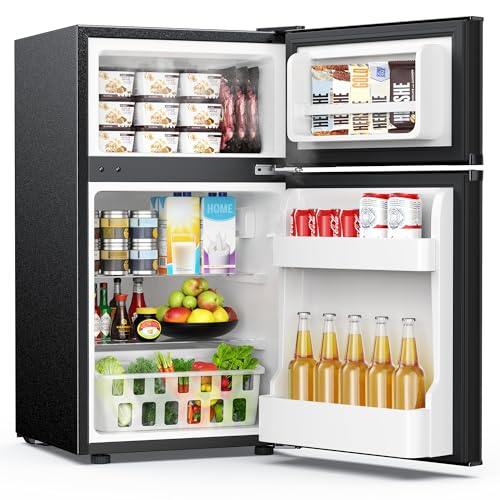
This two-door EUHOMY fridge is built for students planning to stay put. With 3.2 cubic feet of space and a true dual-zone design, it keeps frozen and fresh foods separate, something most mini fridges can’t offer. The freezer hits -7.6°F, which is cold enough for ice cream and frozen meals, and the fridge zone maintains a stable 32–50°F.
It’s also energy efficient for its size at 0.98 kWh/day and runs at a whisper-quiet 40 dB. The insulation is better than average, helping it maintain temps during power blips or door openings. Owners say it’s easy to set up and the reversible door adds placement flexibility. For long-term dorm or apartment use, this is the most complete package.
Product photos


EUHOMY 3.2 Cu.Ft Compact Refrigerator

Strengths
- Good fridge-freezer balance
- Energy efficient
- Quiet compressor
Trade-offs
- Tall footprint
- Fingerprints show
- No interior light
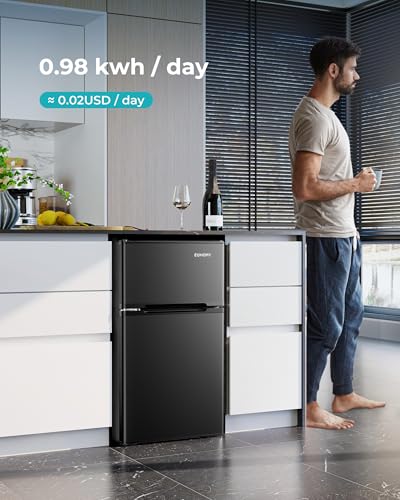
This EUHOMY model stands out with a larger 3.2 cubic foot capacity and a well-balanced fridge-to-freezer ratio. The 0.3 cu.ft freezer isn’t huge, but it’s functional for storing frozen meals or meat for short periods. On paper, the 0.66 kWh/day energy use is efficient, and reviewers confirm it runs quietly at 38dB, perfect for a bedroom or study area.
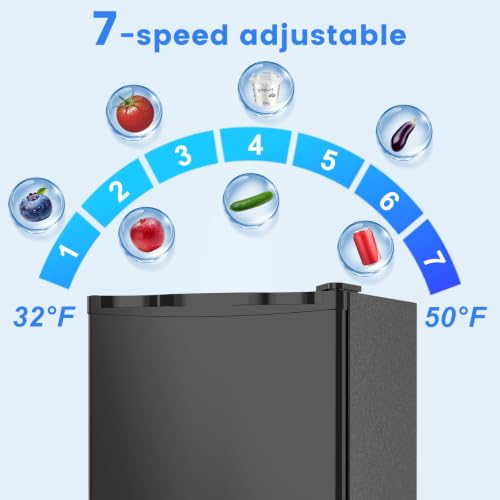
The 7-position thermostat offers precise control, and the drip tray is a small but appreciated detail for easier defrosting. Some owners mention the finish shows fingerprints easily, but overall build quality feels solid for the price. It’s a step up from basic mini fridges without the bulk of a full-size unit.
Product photos


Electactic 1.6 Cu.ft Mini Fridge
Strengths
- Ultra-quiet operation
- Fast cooling
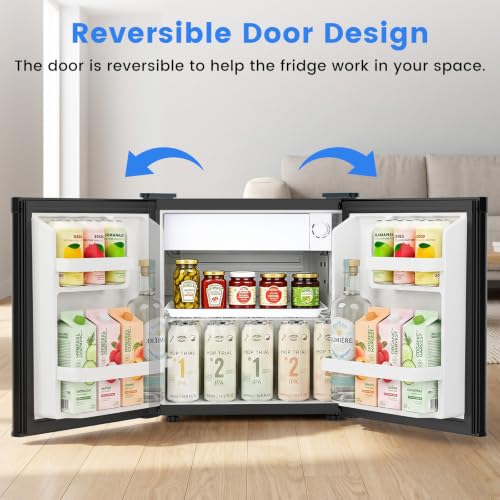
- Reversible door
Trade-offs
- No freezer
- Dim interior light
- Limited capacity
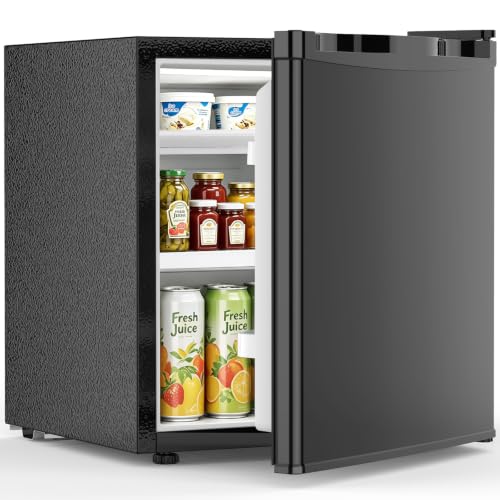
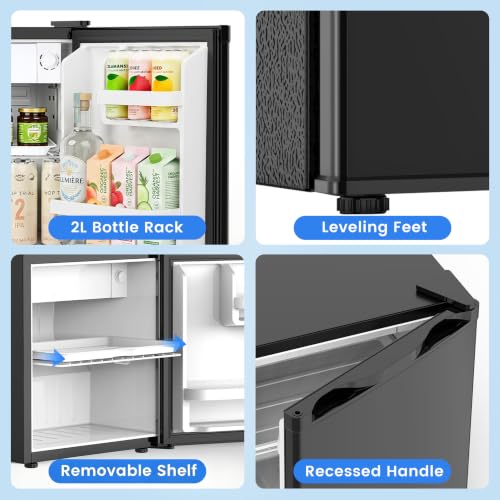
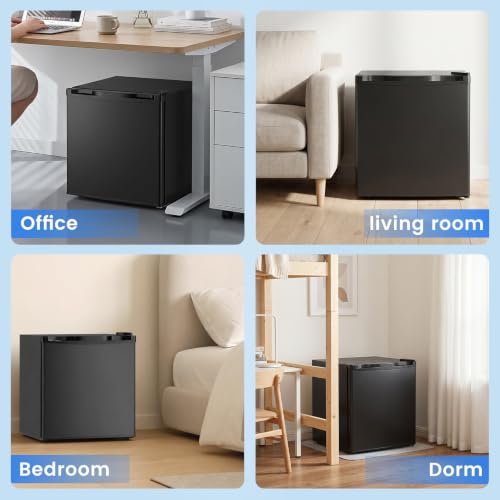
If quiet operation is your top priority, this Electactic model is worth serious consideration. At just 38 dB, it’s nearly silent, ideal for dorm rooms, study nooks, or bedrooms where even a faint hum can be distracting. The compressor delivers fast cooling, and the 7 thermostat settings offer flexibility within a 32°F to 50°F range.
It doesn’t have a freezer, but that’s expected at this size. Owners appreciate the compact footprint and reversible door, though some note the interior lighting is dim. Compared to the Midea, it’s slightly more modern in design and just as efficient, but lacks Energy Star certification. Still, for noise-sensitive environments, it’s a strong contender.
Product photos
Frigidaire EFR331 Retro Compact Refrigerator

Strengths
- Stylish retro design
- Blackboard front
- Built-in can dispenser
Trade-offs
- Not energy efficient
- No separate freezer
- Blackboard requires maintenance
Let’s be honest, this Frigidaire is as much a decor piece as it is an appliance. The retro design, blackboard front, and side bottle opener make it a standout in a dorm room or apartment. But it’s not just style over substance: the 3.2 cu.ft capacity is generous, and the chiller compartment with ice tray adds real utility.
It uses a standard compressor and cools reliably, though it’s not the quietest or most energy-efficient on the list. Owners love the built-in can dispenser and glass shelves, but some note the blackboard surface can stain if not cleaned regularly. If you want a fridge that doubles as a conversation starter, this is the one.
Product photos


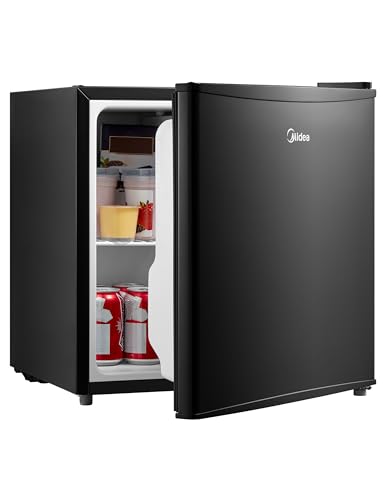
Midea 1.6 Cu.ft Mini Fridge
Strengths
- Energy Star certified
- Reliable compressor
- Reversible door
Trade-offs
- Smaller capacity
- No freezer
- Basic interior
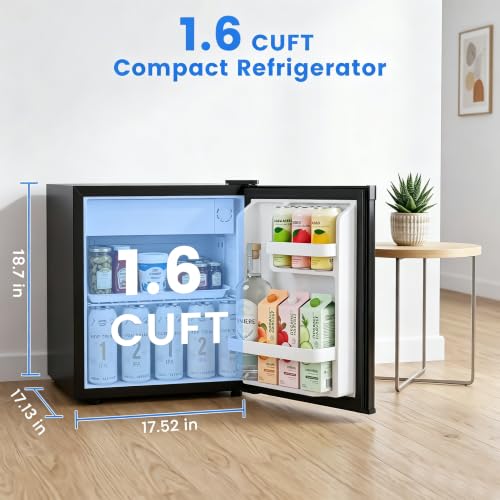
The Midea WHS-65LB1 is one of the most trusted names in compact refrigeration, and for good reason. It’s Energy Star certified, which means lower long-term energy costs, something I always highlight for students trying to keep expenses down. The R600A compressor is efficient and keeps temps steady between 28.4°F and 35.6°F, ideal for milk, yogurt, and drinks.
It’s not the quietest on the list at 42dB, but it’s still unobtrusive. The reversible door and removable shelf add flexibility, though the 1.6 cu.ft capacity is on the smaller side. Compared to others in this range, it’s less about bells and whistles and more about dependable, no-fuss cooling.
Product photos


How We Chose These dorm refrigerators
As someone who spends a lot of time thinking about food storage and minimizing waste at Food Keepy, I approached researching dorm refrigerators by looking at a combination of published specifications, owner reviews, and expert opinions. Rather than a hands-on lab test, this was a research-led comparison of features – capacity, temperature control, energy efficiency – alongside what current owners are saying about reliability and noise levels. I also considered the specific needs of dorm life, focusing on size and convenience.
For dorm refrigerators, several factors stood out as most crucial. Quiet operation is paramount, as these often sit in close quarters. Energy efficiency is also key, given student budgets and a desire to reduce environmental impact. Finally, usable capacity – how much you can actually fit inside – is more important than the total cubic footage, as many models have awkward internal layouts. Finding the right balance among these determined which models rose to the top.
Product specifications reliably indicate capacity and energy consumption. However, owner feedback was critical for assessing real-world noise levels and the accuracy of temperature controls. Reputation – how consistently a brand delivers quality appliances – also played a role. If you’re looking for further options, you might also find our guide to small dorm refrigerators helpful, or if you need something a bit larger, check out our recommendations for 10 cu ft refrigerators.
Choosing The Right dorm refrigerators
Choosing the right dorm refrigerator can make a huge difference in a student’s life, or anyone looking for convenient chilled storage in a small space.
A good dorm refrigerator balances cooling performance with quiet operation, energy efficiency, and a size appropriate for limited spaces. Look for models with adjustable temperature controls, a freezer compartment (if desired), and features like reversible doors to maximize flexibility. Prioritize energy efficiency to keep electricity bills down and consider noise levels to avoid disruptions.
Size and Capacity
It’s easy to fall for a larger refrigerator, but dorm rooms are notoriously tight on space. I often recommend carefully measuring the intended location before you start browsing. A 3.2 cubic foot model like the EUHOMY 3.2 Cu.Ft Compact Refrigerator offers a good balance of storage without being overwhelming, but a 1.7 or even 1.6 cu.ft. unit might be better if space is extremely limited. Consider what you realistically need to store: mostly drinks, a few snacks, or leftovers as well? Don’t overbuy capacity you won’t use.
Cooling Performance & Features
Don’t assume all “mini” fridges cool equally well. Look for models with adjustable thermostats, allowing you to fine-tune the temperature. Some, like the EUHOMY 3.2 Cu.Ft Mini Fridge, offer multiple cooling levels, including a freezer section, which is useful for ice cream or frozen meals.
Here’s what I look for in cooling features: * A temperature range that suits your needs (some prioritize chilling over freezing). * A defrosting system (manual or automatic) to prevent ice buildup. * Good insulation to maintain consistent temperatures and reduce energy consumption.
A one-touch defrosting system, like those found on the Frestec models, can save a lot of hassle.
A practical rule of thumb: if you plan to store temperature-sensitive items like medications, prioritize a model with a precise temperature control and a consistent cooling track record.
Noise Level & Energy Efficiency
Dorm life demands quiet, and a noisy refrigerator can be a real distraction. I always advise checking the decibel (dB) rating before purchasing. Anything above 40dB could be disruptive, especially in a small room. Models like the Electactic 1.6 Cu.ft Mini Fridge boast ultra-quiet operation, around 38dB, which is ideal. Beyond noise, energy efficiency is crucial, both for the environment and your wallet. Look for Energy Star certified models, such as the Midea 1.6 Cu.ft Mini Fridge, to minimize electricity usage. If you’re still comparing, check out these best dorm fridges for a detailed review. Many students also find themselves needing a larger refrigerator as they move into apartments after college, so you might also want to consider compact 7.5 cu ft models for a future upgrade.
Dorm Refrigerators Compared
Here’s a comparison of key specifications for several dorm refrigerators to help you make an informed purchase.
| Product Title | Capacity (Cu. Ft) | Temperature Control | Freezer? | Noise Level (dB) | Energy Use (kWh/day) |
|---|---|---|---|---|---|
| Frestec 3.2 Cu. Ft. Mini Fridge | 3.2 | 6 Adjustable | Yes | 37 | 0.55 |
| Frigidaire Mini Personal Fridge | 10L (approx 0.35) | N/A | No | N/A | N/A |
| Frestec 1.7 Cu.Ft Mini Fridge | 1.7 | 6 | Yes | 37 | 0.55 |
| EUHOMY 3.2 Cu.Ft Mini Fridge | 3.2 | 3 Levels | Yes | 40 | 0.98 |
| EUHOMY 3.2 Cu.Ft Compact Refrigerator | 3.2 | 7 Position | Yes (Micro) | 38 | 0.66 |
| Electactic 1.6 Cu.ft Mini Fridge | 1.6 | 7 Settings | No | 38 | N/A |
| Frigidaire EFR331 Retro Compact Refrigerator | 3.2 | N/A | No | N/A | N/A |
| Midea 1.6 Cu.ft Mini Fridge | 1.6 | Adjustable | No | 42 | 0.207 |
Frequently Asked Questions
What temperature should I set my dorm refrigerator to?
Generally, 37-40°F (3-4°C) is ideal for a dorm refrigerator. This keeps food safely chilled without freezing items unnecessarily, and most models with adjustable thermostats will allow you to reach this range.
Are dorm refrigerators really that energy efficient?
Many newer dorm refrigerators are Energy Star certified, meaning they meet strict guidelines for energy consumption. The Midea 1.6 Cu.ft Mini Fridge, for example, uses only 0.207 kWh per day, helping keep electricity costs down.
What does “reversible door” mean, and why is that useful?
A reversible door allows you to change which side the door swings from, offering flexibility in tight dorm room spaces. This can be incredibly helpful for fitting the refrigerator into an alcove or optimizing the layout of your room.
What’s the difference between a mini fridge and a compact refrigerator?
While the terms are often used interchangeably, compact refrigerators (around 3.2 cu. ft.) typically offer more storage and sometimes include a slightly larger freezer compartment than true mini fridges (under 2.0 cu. ft.). If you anticipate needing to store more than just beverages and small snacks, a compact refrigerator might be a better fit.
What do I do with an old refrigerator when upgrading to a new one, or moving to an apartment size refrigerators after college?
Many retailers offer haul-away services when you purchase a new appliance. Otherwise, check with your local waste management services; they often have specific guidelines for appliance recycling or disposal, and some even offer rebates for responsibly retiring older models.
The Bottom Line
Choosing a dorm refrigerator often comes down to balancing what you want with what you realistically need – and how much space you have. For the best overall combination of features, capacity, and quiet operation, I believe the Frestec 3.2 Cu. Ft. Mini Fridge strikes the right chord. It offers adjustable cooling, a freezer compartment, and a remarkably low noise level, making it a great choice for most students.
If budget is your primary concern, the Midea 1.6 Cu.ft Mini Fridge is an excellent pick. It’s Energy Star certified, meaning lower electricity bills, and still provides reliable cooling in a compact footprint. For those prioritizing maximum versatility and a bit more storage, the EUHOMY 3.2 Cu.Ft Compact Refrigerator with its 7-position temperature control is a solid contender, and for something even smaller, explore our guide to compact refrigerators.
Ultimately, the specifications are only part of the story. Don’t get hung up on finding the absolute lowest kWh/day or the most cubic feet. Focus on a refrigerator that fits your space, offers the temperature control you require, and – crucially – won’t disrupt your studies with excessive noise. Consider whether you might need to upsize to 24 inch refrigerators in the future, and choose accordingly.
