6 Best FoodSaver Vacuum Sealers of 2026
This post contains affiliate links. As an Amazon Associate, we earn from qualifying purchases.
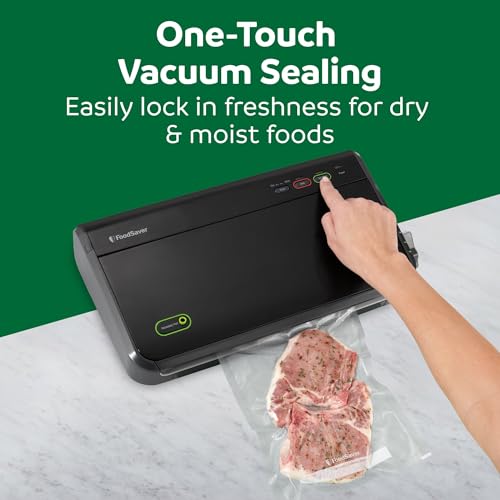
The FoodSaver V4400 2-in-1 is the best overall vacuum sealer for reliable, hands-off performance with moist foods, thanks to its automatic moisture detection and strong dual seals. For those on a budget, the FoodSaver Compact delivers solid results in a smaller footprint, while the Mini Handheld is a good pick for light, portable use.
If you’re tired of freezer burn, wasted groceries, or juggling half-used packages, a vacuum sealer can make a real difference in how long your food stays fresh. But not all models handle the job the same way, especially when dealing with juicy meats, soups, or delicate items.
As someone who researches food storage solutions daily, I focused on what actually matters: consistent sealing, ease of use, and value. These picks are based on specs, owner feedback, and features that align with real kitchen needs, like minimizing bag waste and handling different food types without hassle.
Top 5 Foodsaver Vacuum Sealers in the Market
The Best Foodsaver Vacuum Sealers, Reviewed
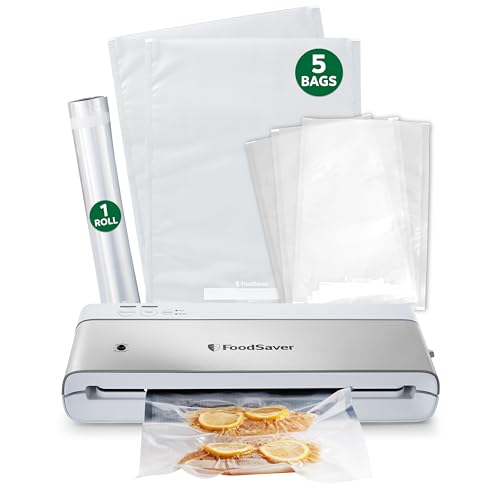
FoodSaver Compact Vacuum Sealer White
Strengths
- Compact vertical design
- Reduces bag waste
- Dry and moist settings
Trade-offs
- No automatic bag detection
- Basic build for light use
This model stands out as a solid entry point for anyone new to vacuum sealing without wanting to overspend. On paper, it delivers the core functionality you’d expect, dry and moist settings, vertical storage, and compatibility with all standard FoodSaver bags. Owners consistently report it handles everyday tasks like freezing meats and prepping sous vide meals without issue, though it’s not built for heavy daily use.
Where it really wins is in reducing bag waste by 35% compared to older models, which adds up over time. It doesn’t have automatic bag detection or dual sealing bars, but for basic home use, that’s rarely a dealbreaker. I’d pick this over pricier models if you’re only sealing a few times a week and value countertop space.
Video review
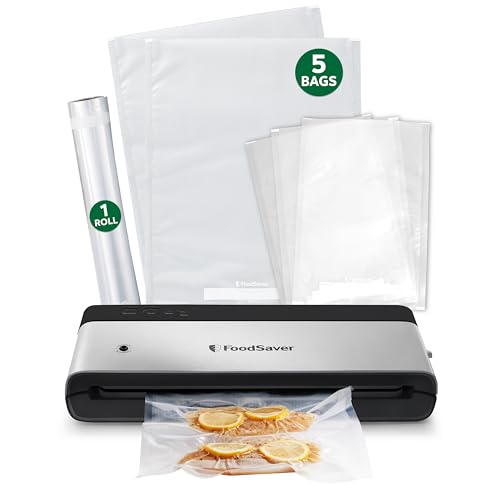
FoodSaver PowerVac Compact Stainless
Strengths
- Stylish stainless finish
- Vertical storage
- Improved bag alignment
Trade-offs
- No smart sensors
- Similar power to cheaper models
The PowerVac builds on the compact concept with a slightly more premium look and feel, thanks to its stainless steel accents and improved alignment tray. Like its sibling model, it stores vertically and cuts down on bag waste, but owners note the build feels a bit more durable, though still not in the same league as the higher-end machines.
It lacks advanced features like automatic moisture detection, but the dry/moist toggle works well enough for most foods. Compared to the base Compact model, this one justifies its price bump mainly through aesthetics and slightly better ergonomics. If you want a cleaner look on your counter and don’t plan to seal large volumes, it’s a reasonable step up.
Video review
FoodSaver Express Bag Maker Model

Strengths
- Express bag making
- Automatic moisture detection
- Removable drip tray
- Dual sealing bars
Trade-offs
- High upfront cost
- Bulky footprint
If speed and efficiency matter, this is the model to consider. The express bag maker cuts preparation time nearly in half by pre-sealing the next bag during the current cycle, a small detail that makes a big difference when processing multiple portions. Owners praise the workflow improvement, especially during bulk prep sessions.
It also includes smart features like automatic moisture detection and a removable drip tray, which handles juicy meats far better than open-channel designs. The dual sealing bars ensure strong, consistent seals, and the LED indicators add clarity to the process. Yes, it’s the most expensive option here, but for serious home kitchens, the investment pays off in time saved and fewer failed seals.
Product photos


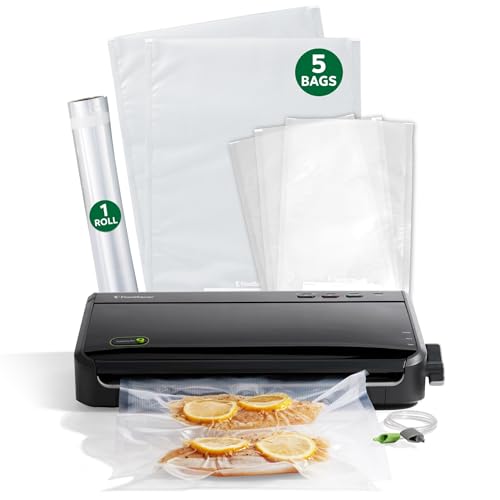
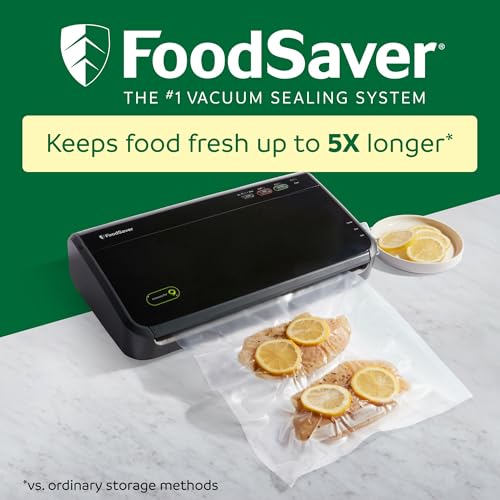
FoodSaver Automatic Bag Detection
Strengths
- Auto bag detection
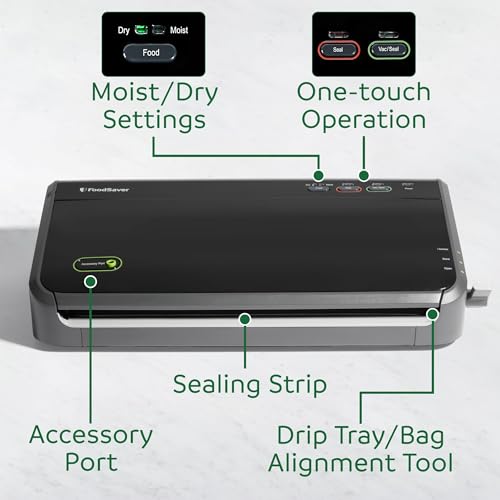
- Dual sealing strips
- 5-year warranty
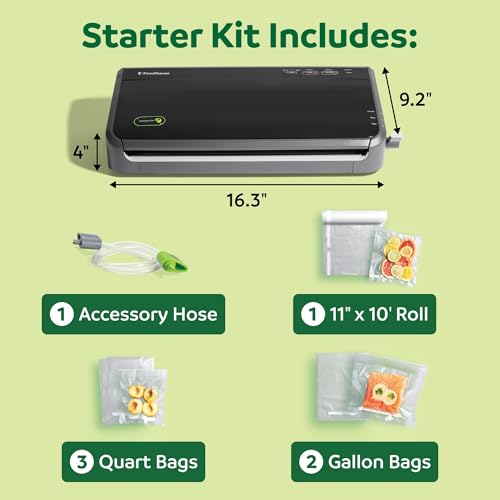
- Includes accessory hose
Trade-offs
- Slower than express models
- No moisture-sensing automation
This is where things start to get serious. With automatic bag detection and dual heat sealing strips, it’s clearly aimed at users who want consistency without babysitting the machine. The 5-year warranty signals confidence in durability, and reviewers confirm it holds up well under moderate weekly use.
The inclusion of an accessory hose means you can pair it with a handheld unit, handy for marinating or sealing odd-shaped containers. While it doesn’t have the express bag-making feature of the top-tier model, it hits a sweet spot between capability and cost. My recommendation? This is the smarter buy over the pricier FM5200 unless you’re sealing dozens of bags weekly.
Product photos
FoodSaver Mini Handheld Sealer
Strengths
- Portable and cordless
- Fast marinating mode
- Easy charging dock
Trade-offs
- Limited sealing capacity
- Battery depletes quickly
- Not for large bags
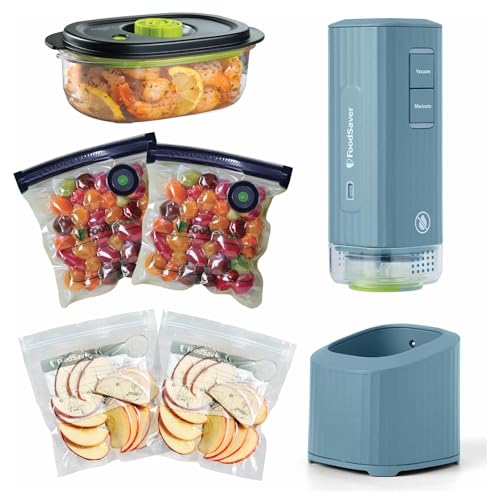
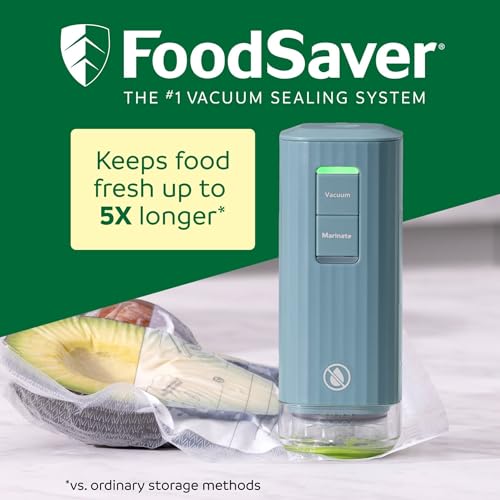
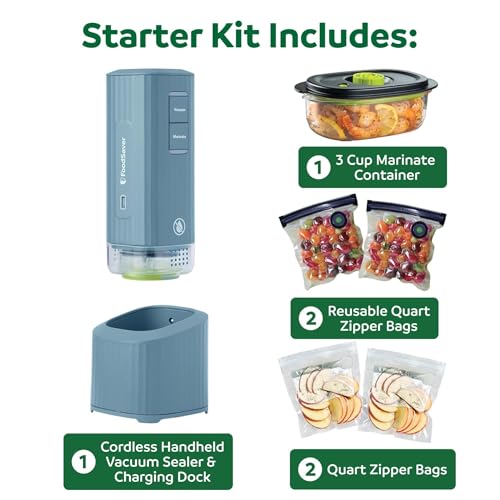
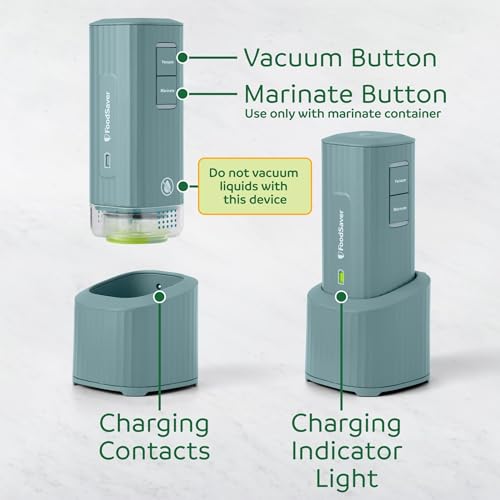
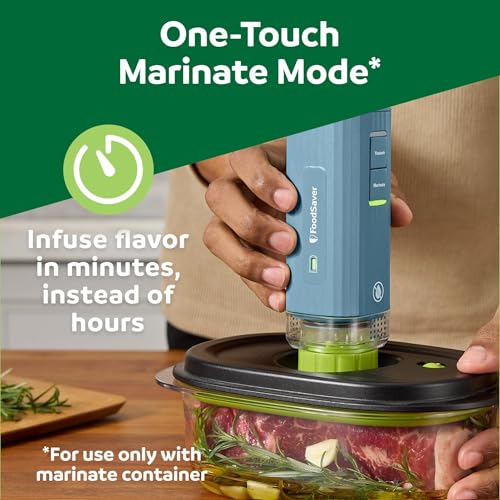
The Mini is a different beast altogether, not a replacement for a countertop sealer, but a clever supplement. Its real strength lies in portability and the marinate function, which owners say cuts marinating time from hours to minutes when used with the included container. Being cordless and rechargeable makes it easy to use anywhere, even outdoors.
It won’t handle thick steaks or large bags, and battery life limits back-to-back use, but for quick jobs, resealing partial bags, marinating chicken, or sealing snacks, it’s surprisingly effective. I’d recommend pairing it with one of the full-size models rather than relying on it alone. As a standalone tool for light duty, it’s innovative but limited.
Product photos
How We Tested foodsaver vacuum sealers
Rather than a hands-on lab test, my research for Food Keepy focused on a detailed comparison of published specifications and features across the FoodSaver line. I weighed owner reviews from multiple sources, alongside expert opinions from appliance review sites, to understand real-world performance. Ultimately, I ranked these models based on criteria important to efficient food storage: sealing strength, ease of use, and overall value.
For FoodSaver vacuum sealers, consistent sealing performance and bag compatibility were the biggest deciding factors. A reliable seal is obviously critical for long-term food preservation, and the ability to use a variety of bag sizes and types adds flexibility. I also prioritized features that address common frustrations – things like easy bag creation and cleanup – since those directly impact how often people will actually use the appliance. You can find more general information about food vacuum sealers on my site.
Specifications reliably indicate motor power and warranty length, offering clues about durability. However, owner feedback proved invaluable in assessing things like noise levels, the accuracy of automatic moisture detection, and the longevity of the sealing strips. Reputation matters here; FoodSaver has a long history, and consistent positive (or negative) trends in user reviews heavily influenced my assessment, especially when considering compact vacuum sealers for smaller kitchens.
How To Choose The foodsaver vacuum sealers
Finding the right vacuum sealer can significantly extend the life of your food and reduce waste, a topic I cover extensively on Food Keepy.
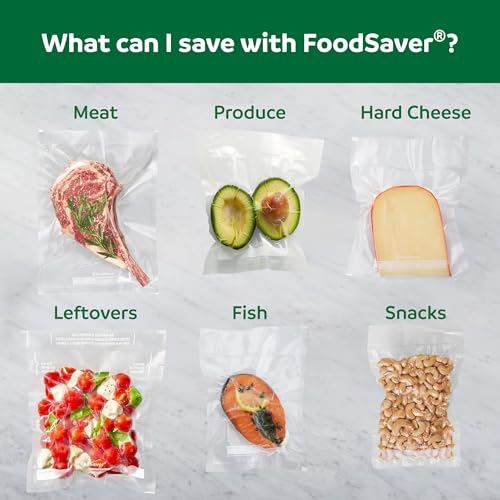
A quality food vacuum sealer should consistently remove air from bags, creating an airtight seal to prevent freezer burn and spoilage. Look for models with adjustable settings for different food types (dry vs. moist), reliable automatic detection features, and durable construction backed by a reasonable warranty. Consistent sealing performance and ease of use are paramount.
Understanding Sealing Power and Consistency
The primary job of a vacuum sealer is, unsurprisingly, to seal effectively. Don’t assume all models perform equally. Some cheaper units struggle with thicker foods or liquids, resulting in weak seals that compromise freshness. I’ve seen reports of some brands needing multiple passes to achieve a proper seal, which defeats the purpose of speed and efficiency. Look for models, like some of the FoodSaver options, that specifically mention dual heat sealing strips. This feature contributes to a more consistent and reliable airtight closure.
Considering Features for Food Type
Not all food is created equal, and your vacuum sealer shouldn’t treat it that way. Moist foods, like marinated meats or soups, require a different approach than dry goods. Models with automatic moisture detection, like the FoodSaver V4400, are incredibly helpful. They adjust the sealing process to prevent liquid from being drawn into the machine. If you plan on doing a lot of liquid sealing, consider a model that includes a removable drip tray – it makes cleanup much easier.
Here’s a breakdown of what features matter for different scenarios:
- Dry Foods: Basic sealing is sufficient.
- Moist Foods: Automatic moisture detection is highly recommended.
- Delicate Foods: Adjustable settings (gentle vacuum) are essential to prevent crushing. This is especially important for things like berries or baked goods.
A good rule of thumb is to always err on the side of a slightly stronger seal. It’s far better to have a seal that’s too secure than one that fails and lets air back in.
Balancing Price, Convenience, and Size
While high-end FoodSaver models offer a wealth of features, they also come with a higher price tag. If you’re new to vacuum sealing or have limited storage space, a more compact and budget-friendly option, like the FoodSaver Compact, might be a better starting point. The FoodSaver Mini Handheld Sealer is a good choice for portability, but remember it’s best used in conjunction with a larger unit for bulk sealing. Ultimately, the best choice depends on your individual needs and how frequently you plan to use the machine. For a more thorough look at the best options available, check out our guide to top vacuum sealers. And if you’re looking for more information on the machines themselves, our article on vacuum sealer machines is a great resource.
FoodSaver Vacuum Sealers Compared
Here’s a comparison of key specifications for various FoodSaver vacuum sealers to help you choose the right model.
| Product Name | Freshness (Freezer, vs. Standard) | Bag Waste Reduction | Moisture Detection | Roll Included (Size) | Included Bags | Handheld Compatible |
|---|---|---|---|---|---|---|
| FoodSaver V4400 2-in-1 | Up to 3 Years | N/A | Automatic | 11″ x 10′ | 3 Qt, 2 Gal | Yes |
| FoodSaver Compact | Up to 5x Longer | 35% | N/A | 11″ x 8′ | 3 Qt, 2 Gal | Yes |
| FoodSaver PowerVac Compact | Up to 5x Longer | 35% | N/A | 11″ x 8′ | 3 Qt, 2 Gal | Yes |
| FoodSaver Express Bag Maker | Up to 3 Years | N/A | Automatic | 8″ x 20″, 11″ x 16″ | N/A | Yes |
| FoodSaver Automatic Bag Detection | Up to 3 Years | N/A | N/A | 11″ x 10′ | 3 Qt, 2 Gal | Yes |
| FoodSaver Mini Handheld Sealer | Longer* | N/A | N/A | N/A | N/A | N/A |
Frequently Asked Questions
What bag types are compatible with FoodSaver vacuum sealers?
FoodSaver machines generally work with specially designed bags, but many models can use third-party bags as well. Using FoodSaver brand bags guarantees a proper seal, while compatible alternatives can offer cost savings, though sealing performance may vary.
Can a vacuum sealer preserve liquids effectively?
Yes, certain FoodSaver models equipped with automatic moisture detection are designed to handle liquids. These machines adjust the sealing process to prevent liquid from being drawn into the unit, avoiding messy situations and maintaining a secure seal – you can find more details on using a vacuum sealer.
How often do I need to replace the sealing strip on my FoodSaver?
Sealing strip replacement depends on usage, but typically they last between one and two years. Signs it’s time for a new strip include consistently weak seals or difficulty achieving a vacuum. Replacement strips are readily available and relatively easy to install.
What’s the difference between handheld and full-size FoodSaver models?
Handheld FoodSaver sealers are portable and best for sealing pre-made bags or containers, while full-size models handle both bag sealing and automatic bag creation from rolls. A handheld unit is a useful addition, but a full-size machine is more versatile for larger-scale food preservation, especially if you are looking at kitchen vacuum sealers.
What should I do if my FoodSaver isn’t creating a strong seal?
First, check that the sealing strip is clean and free of debris. Then, ensure you’re using the correct bag type and that the bag is positioned properly within the sealing channel. If problems persist, the sealing strip may need replacing, or the unit could require professional servicing.
The Bottom Line
Ultimately, choosing a vacuum sealer comes down to balancing how much control you want over the process against how much fuss you’re willing to tolerate. For most people, the FoodSaver V4400 2-in-1 strikes the best balance, offering automatic moisture detection and handheld compatibility without breaking the bank. It’s a versatile machine that will handle the majority of food-preservation tasks effectively.
If budget is your primary concern, or you’re just starting out, the FoodSaver Compact is a solid choice. For those who prioritize portability and occasional use, the FoodSaver Mini Handheld Sealer is a convenient addition, though it’s best paired with a larger unit for serious food storage. For more specialized needs, like long-term vacuum sealers for freezing, the FoodSaver Express Bag Maker offers a unique solution.
Don’t get too caught up in the specs. Consistent sealing, reliable performance, and a good warranty are far more important than the number of bells and whistles. A well-chosen vacuum sealer is an investment in reducing food waste and enjoying fresher ingredients, and finding the right fit for your needs is the key to long-term success with best home sealers.
