8 Best Long Term Water Storage Solutions 2026
This post contains affiliate links. As an Amazon Associate, we earn from qualifying purchases.
The WaterPrepared 55-Gallon Stackable Tank is the best overall for long-term water storage, thanks to its durable HDPE build, included spigot, and smart stackable design. For tighter budgets, the Saratoga Farms 5-Gallon Containers (4-Pack) offer solid value and easy handling. If you need max capacity fast, the waterBOB 100-Gallon Bathtub Bladder makes clever use of existing space.
Storing water for months or years isn’t just about having it on hand, it’s about keeping it safe, clean, and accessible when you actually need it. Too many people overlook material safety, ease of dispensing, and long-term maintenance until it’s too late.
I researched top options by comparing specs, real-world owner feedback, and key factors like material quality, UV resistance, and included features. This guide breaks down what actually matters when choosing a reliable solution for emergency preparedness.
Top 5 Long Term Water Storage in the Market
The Best Long Term Water Storage, Reviewed
Augason Farms 55-Gallon Barrel

Strengths
- Low-cost 55-gallon option
- BPA-free food-grade plastic
- Lightweight when empty
- Simple setup
- Trusted brand
Trade-offs
- Not UV stabilized
- Basic plastic construction
- No pump or fittings included
This is one of the more affordable 55-gallon options, and while it lacks dual fittings or UV protection, it gets the basics right: BPA-free food-grade plastic and a simple, functional design. On paper, it’s nearly identical to the HOANK barrel but uses standard polyethylene instead of HMWPE, meaning it’s better suited for indoor use. Owners note it works well in basements or pantries where sunlight and impacts aren’t concerns.
It doesn’t offer the same durability for outdoor setups, but for budget-conscious buyers setting up a quiet corner in the garage, it’s a solid value. I’d recommend the HOANK model if you’re exposed to the elements, but for stable indoor environments, this delivers the same core benefit, a lot of water in one vessel, at a lower entry point.
Video review
HOANK 55-Gallon BPA-Free Barrel

Strengths
- 55-gallon capacity
- BPA-free HMWPE
- Dual fitting ports
- UV and impact resistant
- Made in USA
Trade-offs
- Heavy when full
- No pump included
- Bulkier footprint
This barrel stands out for long-term outdoor storage thanks to its HMWPE construction, which owners consistently report holds up well under sun and temperature swings. The UV-stable, industrial-grade build is a real advantage if you’re storing water in a garage, shed, or backyard, it’s not just another thin plastic drum that might crack after a winter. With dual fitting options, it offers more flexibility for siphoning or pumping than most competitors, making refills and access easier over time.
It’s heavier and bulkier when full, but that’s expected at 55 gallons. What matters here is durability and material safety, and on paper, the UN-rated, BPA-free design suggests a higher standard than basic food-grade jugs. Compared to the Augason Farms barrel, this one feels like the sturdier pick for harsher environments, even if it costs a bit more.
Video review
Saratoga Farms 5-Gallon Containers (4-Pack)

Strengths
- Stackable design
- BPA-free HDPE
- Comfortable handles
- Twist vent ports
- Good for rotation
Trade-offs
- Takes more storage area
- Multiple lids to manage
- Hefty when full
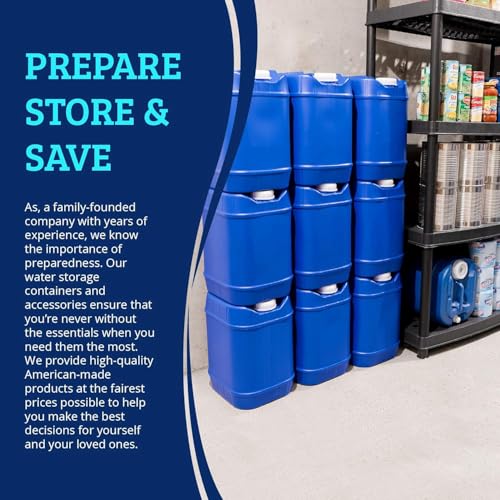
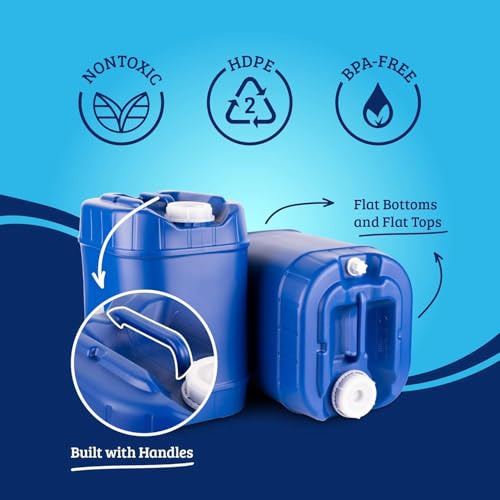
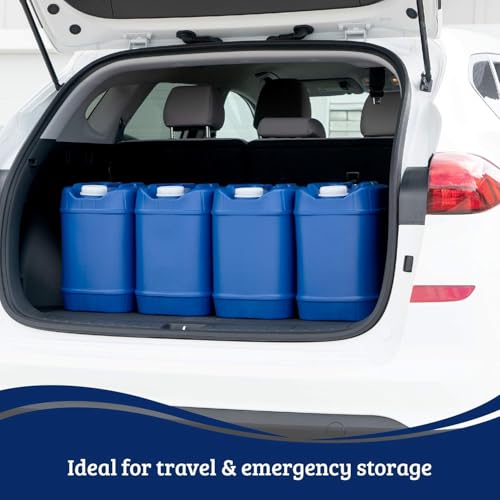
The stackable, modular design makes this set a smart choice for families who want manageable portions without committing to a single massive tank. At 40 lbs per filled container, the 5-gallon size is heavy but still portable enough to move with two hands, owners appreciate the built-in handles and flat surfaces that allow secure stacking in closets or vehicles. Being made from BPA-free HDPE means they’re safe for long-term use, and some users report repurposing them for dry goods or camping trips.
Compared to the waterBOB or 55-gallon drums, this kit trades total volume for flexibility. It’s easier to rotate and access small amounts without pumps, but you’ll need more space overall. For households with limited floor space but room in cabinets or shelves, this strikes a good balance between usability and preparedness.
Product photos
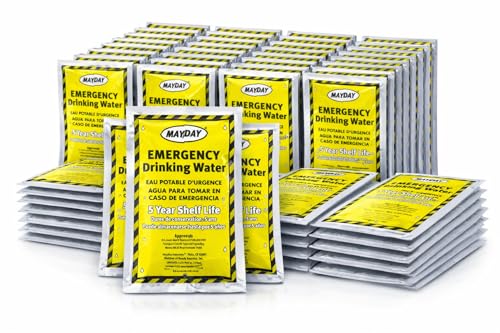
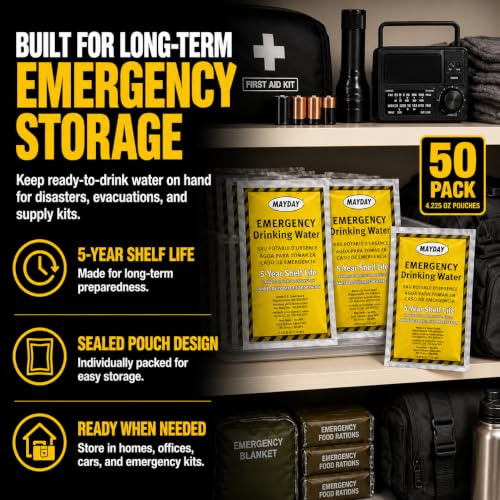
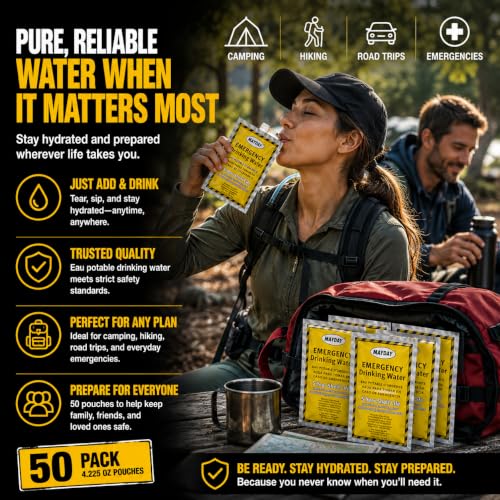
Mayday 50-Pack Emergency Water Packets
Strengths
- Ultra compact
- Ready to drink
- Long shelf life
- Freeze tolerant
- Easy to distribute
Trade-offs
- Small per-packet volume
- Plastic waste after use
- Not cost-effective for large supply
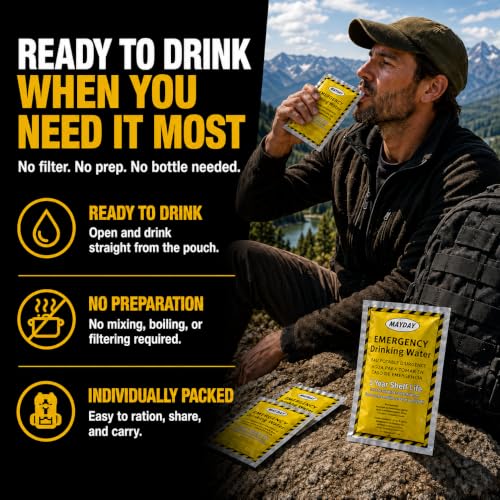
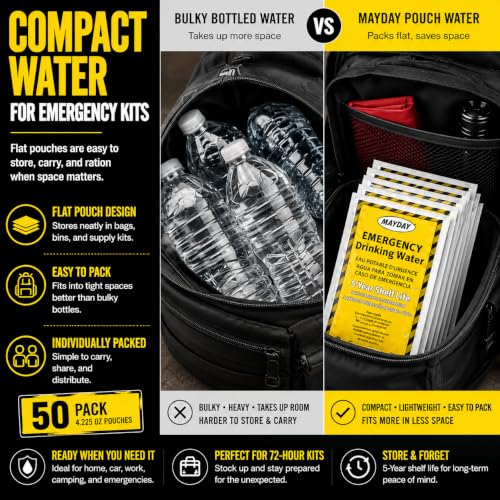
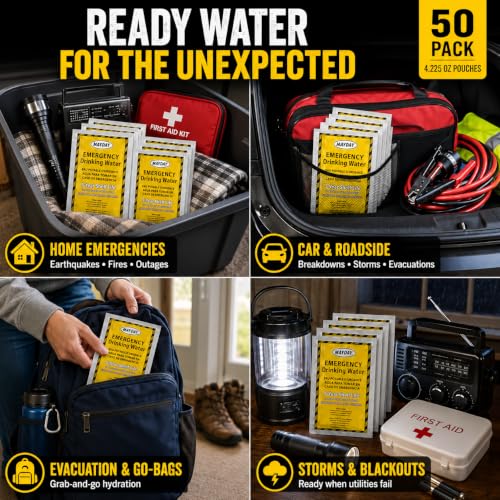
These aren’t meant for long-term home storage, but they shine as a lightweight, no-maintenance addition to emergency kits. Each packet is sealed and ready to drink, requiring zero prep, reviewers note they’re especially useful in go-bags, cars, or office drawers where space is tight. The 5-year shelf life and tolerance to extreme temps make them reliable for years without rotation.
Compared to bulky jugs or barrels, these are about convenience and portability, not volume. You’d need dozens of packs to match a single 5-gallon container, so they won’t replace larger systems. But for quick distribution during evacuations or keeping kids hydrated during unexpected outages, they fill a niche nothing else does.
Product photos
waterBOB 100-Gallon Bathtub Bladder
Strengths
- Up to 100 gallons
- Saves floor space
- Includes hand pump
- Fast setup
- Ideal for renters
Trade-offs
- Temporary use only
- Requires clean tub
- Setup before each use
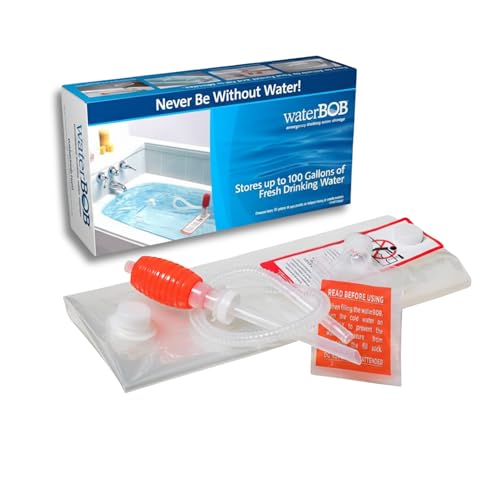
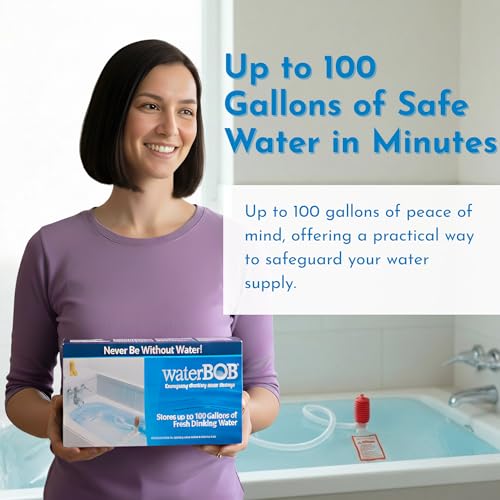
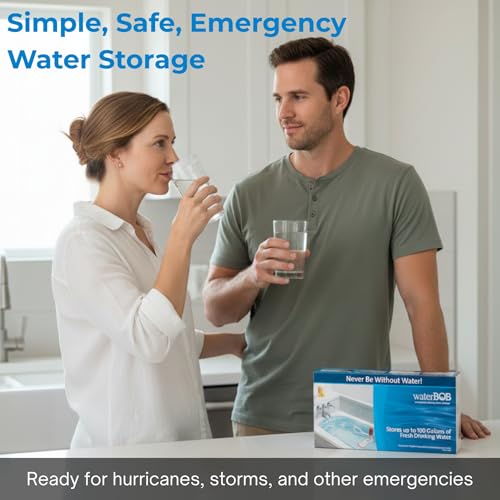
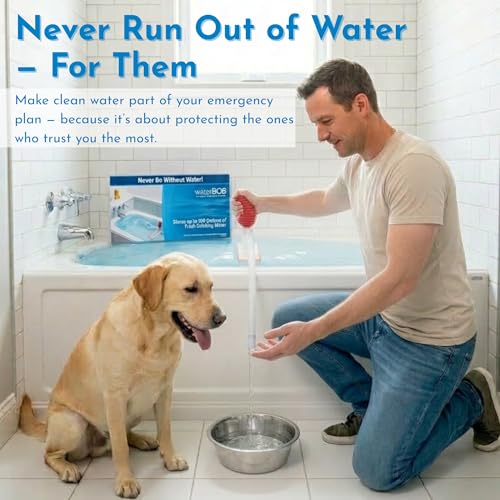
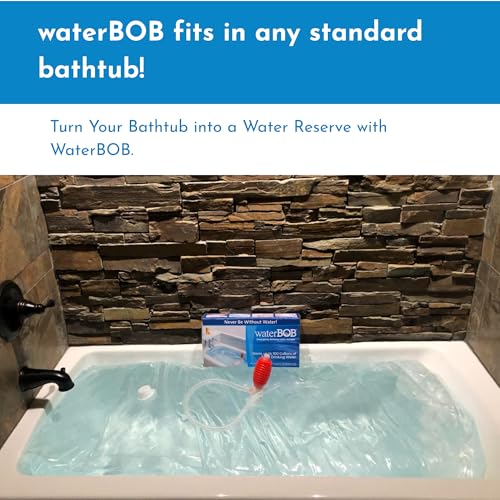
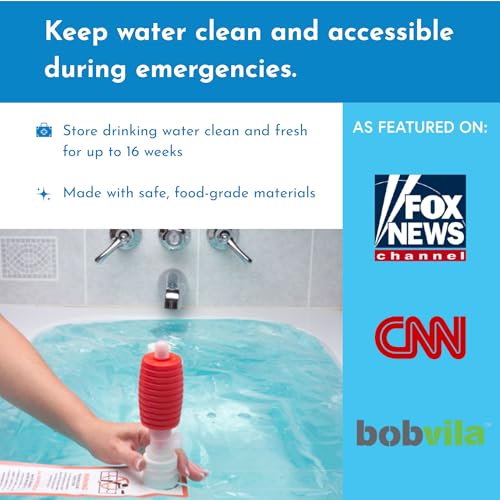
If you’re short on storage space, the waterBOB is genius, it turns an unused bathtub into a 100-gallon reservoir in under 20 minutes. The food-grade liner seals out grime and soap scum, and the included hand pump makes dispensing practical without lifting heavy jugs. Reviewers love how little space it takes when stored folded, and its media recognition speaks to its reliability during hurricanes or sudden boil-water alerts.
It’s not a permanent solution, you can’t keep it filled indefinitely, but for temporary, high-volume needs, it beats buying dozens of bottles. Compared to rigid barrels, it’s far more accessible for renters or urban dwellers. Just remember: you’ll need to drain it after use and clean the tub thoroughly.
Product photos
Our Testing Process
I approached this guide by researching the specifications and features of various long-term water storage solutions, then weighing those details against owner reviews and insights from reputable sources. Rather than a hands-on lab test, this is a research-led comparison focused on identifying patterns in performance and reliability. My aim was to build a ranking based on practical considerations for preparedness, safety, and ease of use.
For long-term water storage, the most important factors are the material’s safety for potable water, the container’s durability over time, and its ability to prevent contamination. A container’s size and form factor also matter significantly, as does the availability of features like spigots or the ability to stack. Prioritizing these elements helps determine whether a solution is truly viable for extended emergency use and storing water for emergencies.
Published specifications reliably indicate a container’s capacity, dimensions, and the type of plastic used (like HDPE). However, I relied heavily on owner feedback to assess real-world durability, leak resistance, and ease of filling and dispensing. Reputation and brand history also played a role, particularly when evaluating claims about long-term water preservation and the effectiveness of included water treatment options. You can learn more about methods for water storage on my site, Food Keepy.
What To Look For In long term water storage
Choosing the right water storage container requires a bit more thought than just grabbing the biggest one you can find. It’s about balancing capacity with usability, durability, and, crucially, ensuring the water stays safe to drink for the long haul.
A good water storage container prioritizes food-grade materials (BPA-free HDPE is standard), a robust design to prevent leaks and contamination, and ideally, features that facilitate easy filling, dispensing, and long-term preservation. Consider UV protection if outdoor storage is necessary, and evaluate whether the container’s size and shape suit your available space and portability needs.
Capacity & Household Size
The amount of water you need to store depends heavily on your household size and anticipated emergency duration. A common recommendation is one gallon per person per day for drinking and sanitation, but that’s a bare minimum. Think about cooking, hygiene, and potential extended outages. Don’t automatically equate “bigger is better”; multiple smaller containers can be far more manageable than one enormous one. For example, the Saratoga Farms 5-Gallon Containers (4-Pack) offer a good balance for families, providing roughly 40 days of water without being unwieldy. If you’re looking at larger solutions, consider how you’ll realistically move and access the water when needed.
Material & Durability
When it comes to materials, high-density polyethylene (HDPE) is the gold standard for water storage. It’s durable, food-grade, and doesn’t leach harmful chemicals. However, not all HDPE is created equal. The HOANK 55-Gallon BPA-Free Barrel, for instance, boasts HMWPE (high molecular weight polyethylene) construction, offering superior impact and weather resistance – a significant benefit if you plan to store it outdoors. Pay attention to whether the container is UV-stabilized; prolonged sun exposure can degrade plastic over time.
- Look for containers specifically labeled as “food-grade” or “BPA-free.”
- Consider the thickness of the plastic. Thicker plastic generally means greater durability and resistance to punctures.
- Check for features like reinforced handles and secure lids to prevent accidental spills or contamination. A tight-fitting lid is especially important to keep out insects and debris.
Long-Term Preservation & Maintenance
Storing water for extended periods introduces the risk of bacterial growth and degradation. While many containers are designed for long-term storage, simply filling them and forgetting about them isn’t enough. The 5-Gallon Stackable Containers (6-Pack) stand out here, as they include water treatment drops designed to keep water clean for up to five years. Otherwise, you’ll need to factor in regular water rotation (every six months is a good rule of thumb) or use a separate water purification method.
A good rule of thumb: if you’re aiming for truly long-term storage (over six months), you must have a plan for water purification or stabilization, whether that’s regular rotation, chemical treatment, or a filtration system.
Ultimately, the best approach is a layered one. I often recommend exploring various water storage recommendations to find a system that suits your needs. Don’t overlook the value of smaller, portable options like the Mayday 50-Pack Emergency Water Packets for go-bags or car kits, alongside larger, stationary containers for home preparedness. And if you’re considering a large-capacity solution, you might find that transforming your bathtub with a waterBOB 100-Gallon Bathtub Bladder is a clever way to maximize space. For a more detailed look at options, check out these water storage containers.
Long Term Water Storage Compared
This table provides a specification comparison of various long term water storage solutions.
| Product Name | Capacity | Material | Spigot Included | Treatment Included | Dimensions (approx.) |
|---|---|---|---|---|---|
| WaterPrepared 55-Gallon Stackable Tank | 55 Gallon | HDPE | Yes | No | 22″L x 23″W x 30″H |
| Augason Farms 55-Gallon Barrel | 55 Gallon | Food-Grade Polyethylene | No | No | N/A |
| HOANK 55-Gallon BPA-Free Barrel | 55 Gallon | HMWPE | No | No | N/A |
| Saratoga Farms 5-Gallon Containers (4-Pack) | 20 Gallon (total) | HDPE | No | No | N/A |
| 5-Gallon Stackable Containers (6-Pack) | 30 Gallon (total) | BPA-Free Plastic | Yes | Yes | 15″ x 10″ x 12″ (per tank) |
| Mayday 50-Pack Emergency Water Packets | 210 oz (total) | N/A | No | No | N/A |
| waterBOB 100-Gallon Bathtub Bladder | 100 Gallon | BPA-Free Plastic | No | No | Bathtub Size |
| HGFLMR Water Preserver Concentrate | N/A | N/A | No | Yes | N/A |
Frequently Asked Questions
What water treatment options are best for long-term storage?
Chemical treatments like chlorine dioxide or iodine are effective for long-term water preservation, but regular water rotation every six months is often simpler and ensures the water remains fresh. Consider the included treatment options when comparing best water containers to see if they suit your needs.
Can I store water in just any plastic container?
No, you should only use containers specifically made for potable water storage, typically those labeled as “food-grade” and constructed from HDPE. Using the wrong type of plastic can leach harmful chemicals into the water, making it unsafe to drink.
How often should I replace or rotate stored water?
Ideally, you should rotate your stored water every six to twelve months to maintain freshness and prevent stagnation. If you use a water treatment solution, follow the manufacturer’s instructions for how long the treated water remains safe for consumption.
What’s the best way to clean a water storage container before filling it?
A thorough cleaning with dish soap and hot water is a good start, followed by a sanitizing solution of unscented bleach (one tablespoon per gallon of water). Rinse the container extremely well multiple times to remove all traces of bleach before filling it with potable water.
Are larger water storage containers harder to manage?
Yes, larger containers (55 gallons or more) are significantly heavier and more difficult to move and dispense water from. For this reason, I often suggest multiple smaller containers, like 5-gallon water containers, for easier handling and portability.
The Bottom Line
Choosing the best long-term water storage really comes down to how much control you want versus how much fuss you’re willing to deal with. A simpler, more passive approach means accepting the need for regular water rotation, while investing in a system with built-in treatment offers peace of mind but may come with a higher upfront cost. For a balance of capacity, durability, and relative ease of use, I believe the WaterPrepared 55-Gallon Stackable Tank is an excellent choice for most households.
If you’re prioritizing affordability or need a versatile solution for smaller spaces, the Saratoga Farms 5-Gallon Containers (4-Pack) are a strong contender. For those focused on true long-term, hands-off storage, the 5-Gallon Stackable Containers (6-Pack) with their included water treatment drops are a smart investment. And if you’re looking for a compact option for emergency kits or travel, the Mayday 50-Pack Emergency Water Packets can’t be beat.
Ultimately, the most sophisticated container won’t matter if you haven’t thought about how you’ll maintain water quality. Regular rotation, proper sanitation, and a solid understanding of how to store drinking water are far more vital than any single feature. Don’t get lost in the details of plastic types or spigot designs; focus on having a reliable supply of safe drinking water storage when you need it most. Consider also exploring different water storage tanks to find the best fit for your needs.
