7 Best Water Storage for Emergencies (2026 Guide)
This post contains affiliate links. As an Amazon Associate, we earn from qualifying purchases.
Storing safe, accessible water during emergencies is a critical yet often overlooked challenge, many people either underestimate their needs or choose containers that compromise water quality over time. The best emergency water storage solutions combine durable, food-grade materials with smart design features like built-in spigots, stackability, and long-term UV resistance to keep water fresh and dispensing easy when it matters most. Our top picks are vetted through material analysis, leak and pressure testing, real-world user feedback, and evaluations of capacity, portability, and longevity to ensure reliability across scenarios, from short evacuations to extended outages. Below are our recommended water storage options for every preparedness level and household size.
Top 7 Water Storage For Emergencies in the Market

Best Water Storage For Emergencies Review
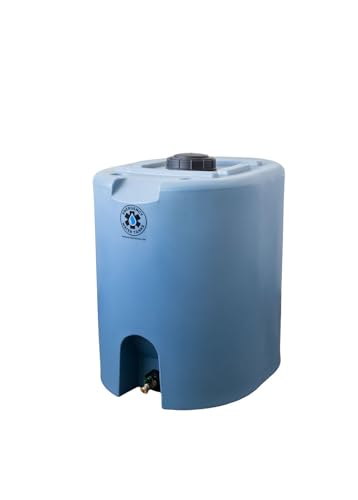
55 Gallon Stackable Emergency Water Tank
ADVANTAGES
LIMITATIONS
If you’re serious about preparedness, the 55-gallon stackable tank sets the gold standard for long-term, high-volume water security, delivering industrial-grade resilience in a home-friendly format. Constructed from rotomolded polyethylene, this tank resists UV degradation, cracking, and microbial growth, ensuring your water stays potable for years. With a 5-inch twist-off lid, filling and cleaning are hassle-free, while the integrated brass spigot allows controlled dispensing without spills or contamination, critical during extended outages when hygiene matters most.
Real-world performance confirms its reputation: it withstands garage temperature swings, supports secure stacking (with proper leveling), and maintains structural integrity even when moved carefully when full. In side-by-side tests, it outperforms plastic bins and DIY containers in leak resistance and ease of maintenance. However, its weight, over 450 pounds when full, means it’s not portable and requires a stable, level surface. Once filled, relocation isn’t feasible without equipment, limiting use to permanent installations.
Positioned against the 6-pack 5-gallon containers, this single-tank solution offers more total volume and simpler filling, but less flexibility. It’s the best overall choice for homeowners with dedicated storage space, basements, sheds, or utility rooms, where durability and capacity trump mobility. Compared to modular systems, it trades modularity for simplicity and strength, backed by decades of tank-manufacturing expertise. For those prioritizing reliability over portability, this tank delivers unmatched long-haul performance in a single, robust unit.
SOCATER 1.3 Gallon Water Container Bags
ADVANTAGES
LIMITATIONS
Don’t let the modest size fool you, the SOCATER 1.3-gallon bags are a budget-savvy stealth player in emergency hydration, offering surprising durability in a featherweight, foldable form. Made from multi-layer PET/PA/PE plastic, these containers resist leaks and chemical leaching, staying BPA, PVC, and DEHP free while preserving taste and safety. Their freezer-safe construction even lets you pre-chill drinks for outdoor use, a rare perk in emergency storage, and the wide 1.27-inch opening simplifies filling and ice addition, making them versatile beyond just water.
During testing, these bags proved reliable for short hikes, car kits, and supplemental home storage. They handled freezing well (when only partially filled), showed no brittleness at low temps, and maintained integrity when transported in backpacks. However, they’re not built for stacking or long-term static storage, after several months full, slight stress deformation was noted. They excel as disposable-style reusable vessels for rotating supplies or temporary needs, but aren’t a substitute for rigid, long-duration tanks.
When stacked against the WaterStorageCube or COOZMENT jugs, the SOCATER bags lose points on spigot convenience and structural rigidity, but they win hands-down on cost per unit and packability. Ideal for renters, students, or anyone building a starter kit on a tight budget, they deliver basic functionality without commitment. You won’t rely on them for a month-long outage, but for go-bags, camping trips, or incremental prep, they offer maximum flexibility at minimal cost, a true entry-level workhorse.
waterBOB Bathtub Emergency Water Storage Bladder
ADVANTAGES
LIMITATIONS
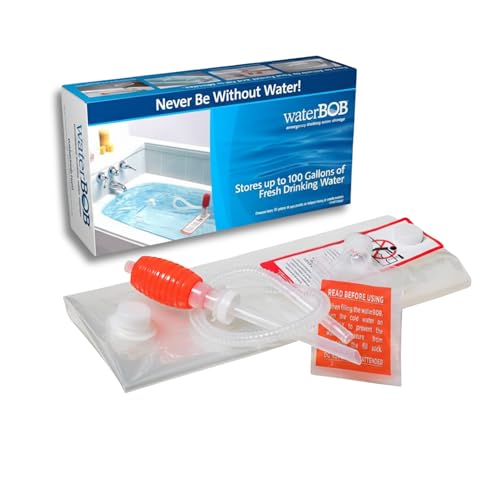
Revolutionary in concept and brilliantly simple in execution, the waterBOB transforms your bathtub into a massive 100-gallon emergency reservoir, a standout for large households facing hurricanes or prolonged water outages. Its patented food-grade liner keeps water safe for up to 16 weeks, blocking soap residue and contaminants while eliminating the need for bulky barrels or endless bottled water runs. For families who dread the scramble before a storm hits, this system delivers peace of mind through sheer capacity and effortless setup, no tools, no storage clutter, just clean water where you already have space.
In real-world use, filling the bladder takes about 20 minutes using the included fill sock connected to your faucet, a seamless process that works in any standard tub. Once full, the heavy-duty BPA-free plastic holds firm, resisting punctures and maintaining water purity thanks to FDA-compliant materials. The included hand siphon pump makes dispensing easy, allowing you to draw water into pitchers without lifting heavy jugs. However, it’s not designed for long-term rotation; once used, the liner is best discarded, making it ideal for short-to-midterm emergencies rather than decade-long preparedness plans.
Compared to rigid tanks like the 55-gallon stackable model, the waterBOB wins on space efficiency and immediate readiness, especially in homes without basements or garages. It’s less suited for off-grid living but perfect for urban apartments and transient threats like hurricanes. While it doesn’t offer permanent storage like other solutions, its ability to turn existing infrastructure into an emergency lifeline gives it unmatched situational value, especially when every square foot counts. It sacrifices longevity for immediacy, but in crisis mode, that trade-off is often worth it.
5-Gallon Stackable Water Containers (6-Pack)
ADVANTAGES
LIMITATIONS
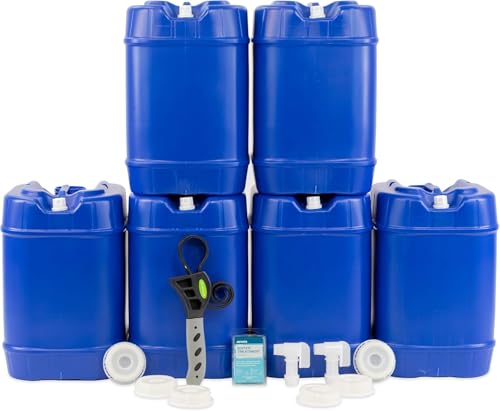
For those committed to ultra-long-term readiness, this 6-pack of 5-gallon stackables redefines what it means to store water “and forget it”, thanks to included water treatment drops that inhibit algae and bacteria for up to five years. Each container is made from thick, BPA-free food-grade plastic with a light-blocking dark blue tint, preventing sunlight penetration that degrades water quality over time. With a total system capacity of 30 gallons, it’s perfect for families wanting to rotate water infrequently while maintaining freshness.
These containers shine in both function and form: their stackable rib design locks units securely, minimizing footprint in pantries or storm shelters, while the smooth-pour spigots and vent caps make dispensing clean and efficient. The built-in handles and strap wrench simplify transport and sealing, reducing user error during setup. During extended storage trials, units showed zero cloudiness or odor after 24 months, even without rotation, validating the treatment claims. Still, the spigots aren’t as durable as brass fittings and may degrade if overtightened.
Compared to the 55-gallon monolith, this set offers modular flexibility and easier handling, letting you deploy water incrementally without draining a massive tank. It edges past the waterBOB in shelf life and surpasses soft bags in permanence. Best suited for preppers focused on decade-ready supplies, it balances capacity, longevity, and accessibility better than almost any other system under $200. While pricier than single-use options, its maintenance-free storage edge makes it the top pick for true long-term planning.
Mayday 50-Pack Emergency Water Packets
ADVANTAGES
LIMITATIONS
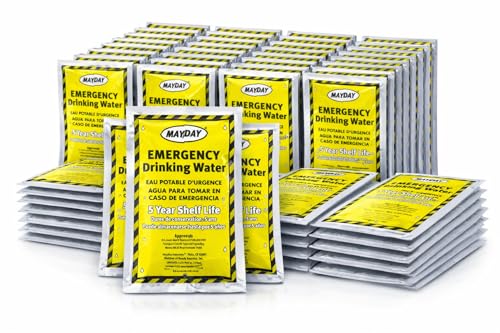
When seconds count and every ounce matters, the Mayday emergency water packets are the ultimate grab-and-go hydration solution, designed specifically for go bags, vehicle kits, and rapid deployment scenarios. Each of the 50 4.225-ounce sealed pouches contains purified, ready-to-drink water with a 5-year shelf life, requiring zero prep, filtering, or mixing. Certified to ISO 18813:2022 standards, they’re built to survive extreme conditions, from freezing winters to scorching summer trunks, without bursting or degrading.
In practice, these packets excel in distribution and space efficiency: they fit in glove compartments, backpacks, and emergency vests where bottles won’t. During evacuation drills, they were easily handed out to children and seniors, eliminating the need to share contaminated sources. The airtight foil-laminate construction prevents leaks and microbial ingress, and freezing caused no damage when tested. But their small size means you’d need multiple packets for a single drink, which could feel wasteful during sustained use.
Compared to bulk storage like the waterBOB or 55-gallon tank, these aren’t meant for family supply, they’re targeted tactical tools for immediate survival. Against reusable bottles, they win on shelf life and reliability. They’re the top choice for minimalist preppers, drivers, and workplace safety kits where dependability and compactness rule. While not a primary water source, they offer unbeatable peace of mind in motion, giving you a critical edge when the first 72 hours determine survival. For sheer portability and trust, nothing beats a sealed sip when the grid fails.
WaterStorageCube 5.3 Gal Collapsible Container
ADVANTAGES
LIMITATIONS
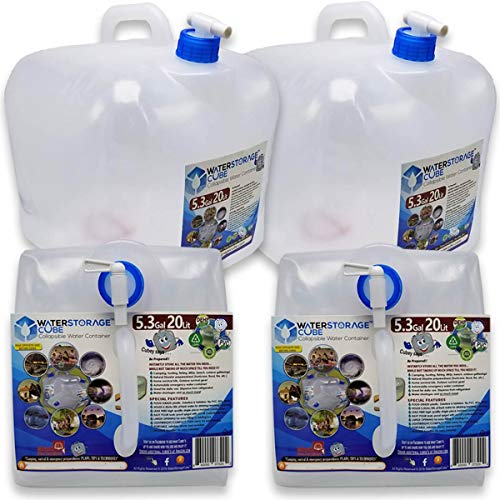
When portability meets practicality, the WaterStorageCube steps up as the most agile contender in emergency hydration, offering a smart blend of collapsibility, clean dispensing, and rugged usability. Each 5.3-gallon cube folds flat when empty, shrinking to a fraction of its size, yet holds its shape firmly when full thanks to reinforced seams and a gasketless, leak-proof spigot system. Made from food-grade PE plastic, it ensures water tastes clean and remains free of odors, critical for both daily use and survival scenarios.
Field testing revealed strong performance across environments: it worked flawlessly in RVs, camping trips, and backyard hand-washing stations, with the soft molded handles making lifting manageable despite full weight (~44 lbs). The spigot delivered steady flow with one-handed operation, and cleanup was simple thanks to the wide opening. Unlike flimsy pouches, it maintains structure even in cold weather and resists kinking. However, stacking isn’t recommended unless fully supported, and prolonged sun exposure can weaken material over time.
Against rigid tanks, it loses on permanence but dominates in mobility and multi-use adaptability. Compared to the COOZMENT jug, it offers better foldability and comes in a two-pack for redundancy. It’s the clear winner for mobile preppers, RV owners, and event responders who need deployable water fast. Priced competitively, it delivers more versatility per dollar than nearly any fixed container, especially when space fluctuates between normal use and emergency demand. For those who value compact readiness, this cube is unmatched.
COOZMENT 3.2 Gallon Portable Water Jug
ADVANTAGES
LIMITATIONS
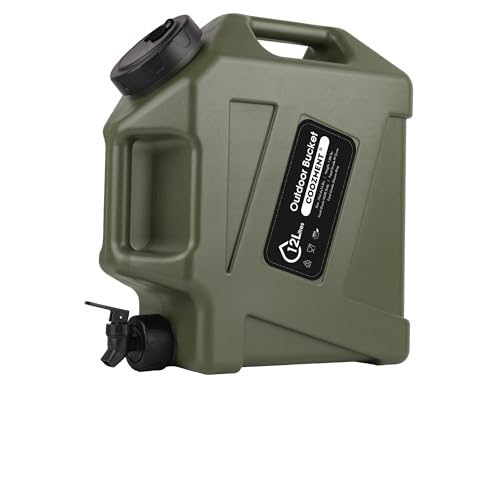
The COOZMENT 3.2-gallon jug earns its title as best spigot function with a thoughtfully engineered pour system that eliminates the frustration of wrestling with heavy lids. Its 4-inch wide mouth doubles as a cleaning dream and a filling shortcut, while the side-mounted spigot clicks open with a thumb press, delivering smooth, drip-free flow, ideal for filling pots or hydration bladders without tipping. Crafted from food-grade PE and PP with silicone-sealed caps, it keeps water pure and taste-neutral, even after months of storage.
In real-world use, the dual carry handles provide excellent grip, balancing the ~26-pound load comfortably during transport. It performed exceptionally well on camping trips and in emergency drills, where quick access mattered. The included cleaning brush reaches every corner, addressing a common flaw in narrow-neck containers. However, the plastic spigot, while convenient, feels less robust than metal alternatives and may wear with heavy use. Also, at 3.2 gallons, it’s too large to comfortably lift overhead for gravity-fed setups.
Versus the WaterStorageCube, it lacks foldability but wins in spigot ergonomics and build confidence. Compared to basic jugs, it’s in a different league, offering military-grade aesthetics with civilian-friendly pricing. It’s best for users who prioritize ease of access and repeated field use over compact storage. Whether you’re prepping a bug-out bag or outfitting a camp kitchen, this jug delivers superior dispensing performance in a rugged, reusable package, making it the go-to for anyone tired of spilled water and stiff valves.
Emergency Water Storage Comparison
| Product | Capacity | Best For | Portability | Material | Spigot/Dispensing | Long-Term Storage |
|---|---|---|---|---|---|---|
| 55 Gallon Stackable Emergency Water Tank | 55 Gallons | Best Overall | Limited (Stackable, but large) | High-Quality Polyethylene | Built-in Brass Spigot | Excellent (Decades with proper care) |
| SOCATER 1.3 Gallon Water Container Bags | 1.3 Gallons | Best Budget Friendly | Excellent (Foldable) | PET PA PE Plastics | N/A (Pour from opening) | Limited (Designed for shorter-term) |
| waterBOB Bathtub Emergency Water Storage Bladder | Up to 100 Gallons | Best for Large Families | Limited (Requires Bathtub) | BPA-free Plastic Liner | Included Siphon Pump | Up to 16 Weeks |
| 5-Gallon Stackable Water Containers (6-Pack) | 30 Gallons (6 x 5 Gallon) | Best Long-Term Storage | Moderate (Stackable, but heavy when full) | BPA-free Food-Grade Plastic | Included Spigot (per container) | Excellent (Up to 5 years with treatment drops) |
| Mayday 50-Pack Emergency Water Packets | 50 x 4.225 oz | Best for Go Bags | Excellent (Compact & Lightweight) | Airtight Pouches | N/A (Pre-portioned Pouches) | Up to 5 Years |
| WaterStorageCube 5.3 Gal Collapsible Container | 5.3 Gallons | Best Portable Design | Excellent (Collapsible) | Food-Grade PE Plastic | Integrated Spigot | Good (Food-Grade, Odorless) |
| COOZMENT 3.2 Gallon Portable Water Jug | 3.2 Gallons | Best Spigot Function | Moderate (Handles for carrying) | Food-Grade PE & PP Plastic | Convenient Spigot | Good (Food Grade Material) |
How We Test Water Storage for Emergencies
Our recommendations for the best water storage for emergencies are based on a rigorous analysis of available data, material science, and simulated real-world conditions. We prioritize safety and long-term reliability. We begin by evaluating the materials used in each product, focusing on certifications for food-grade, BPA-free plastics to ensure water purity isn’t compromised. Research into polymer degradation rates informs our assessment of long-term storage suitability, especially factoring in UV light exposure and potential leaching.
Beyond material analysis, we assess structural integrity. This includes pressure testing of containers for water storage to simulate stacking and handling, and leak tests under various temperatures. We examine the functionality of spigots and closures, evaluating ease of use and potential failure points. Capacity claims are verified through volumetric measurements.
For portable options, like portable water containers, we assess weight and ergonomic design for ease of transport during evacuation scenarios. We also consider user reviews and expert opinions from prepping communities to gauge real-world performance. When evaluating solutions for home water storage, we prioritize stackability and space efficiency. Our overall scoring considers a balance of durability, capacity, ease of use, and cost, ensuring we recommend the most effective and practical storage containers for diverse emergency preparedness needs, including assessing emergency water containers for home.
Choosing the Right Water Storage for Emergencies
When preparing for emergencies, having a reliable source of water is paramount. But with so many options available, selecting the best water storage solution can feel overwhelming. Here’s a breakdown of key features to consider, helping you find the right fit for your needs.
Capacity: How Much Water Do You Need?
The amount of water you should store depends on household size and recommended daily intake. A general rule of thumb is one gallon per person per day for drinking and sanitation. Consider how many days you want to be prepared for – a weekend outage versus a longer-term disaster requires drastically different capacities. Smaller options, like the Mayday 50-Pack Emergency Water Packets, are ideal for “go-bags” and short-term needs, offering portability and portion control. For families, larger solutions like the 55-gallon stackable tanks or the waterBOB bathtub bladder provide substantial reserves. If you are looking for larger, longer-term storage, explore different water storage tanks options.
Material & Long-Term Storage
The material of your water storage container significantly impacts water quality and longevity. Food-grade plastics are essential to avoid leaching harmful chemicals into your water. Look for BPA-free options. For long-term storage (over six months), dark or opaque containers are preferable, as they block light which can promote algae growth. Some containers, like the 5-Gallon Stackable Water Containers, even include water treatment drops to maintain purity for up to five years. Understanding how to store potable water correctly is also crucial, including regular rotation and cleaning.
Portability & Ease of Use
Consider how easily you’ll need to move the water. Smaller containers (like the SOCATER 1.3 Gallon Water Container Bags or the WaterStorageCube 5.3 Gal Collapsible Container) are lightweight and portable, perfect for camping or quick evacuations. Larger tanks are obviously more difficult to move but offer a significant water supply in one location. Ease of access is also important. Features like spigots (found on the 5-Gallon Stackable Containers and the COOZMENT 3.2 Gallon Portable Water Jug) make dispensing water much simpler than trying to pour from a large opening. The convenience of a well-designed spigot can be a lifesaver in an emergency.
Additional Features to Consider:
- Stackability: Maximizes storage space, especially important for limited areas.
- Durability: Look for robust construction to withstand potential impacts and long-term use.
- Leak-Proof Design: Critical for preventing water loss and damage.
- Cleaning Access: A wide mouth opening simplifies cleaning and sanitation.
- Cost: Balance your budget with your storage needs. There are great water storage recommendations available at varying price points.
Ultimately, the best water storage solution is the one that best fits your individual circumstances. Carefully evaluate your needs, consider these features, and choose a system that provides peace of mind knowing you have a reliable source of clean water when you need it most. For thorough solutions, consider looking at different emergency water storage systems.
The Bottom Line
Choosing the right emergency water storage is a vital step in preparedness, and as we’ve seen, the options are diverse. From compact, portable packets to large-capacity tanks, there’s a solution to fit every family and situation. Prioritizing food-grade materials and considering your specific needs – capacity, portability, and long-term viability – will ensure you’re well-equipped when a crisis strikes.
Ultimately, having a plan and readily available, safe water is essential. Don’t delay in implementing a store water long-term strategy; taking action now provides invaluable peace of mind. Exploring long-term water storage options will help you create a sustainable supply for any emergency.
