8 Best Non Toxic Lunch Boxes of 2026
This post contains affiliate links. As an Amazon Associate, we earn from qualifying purchases.
Packing a healthy lunch shouldn’t mean risking exposure to harmful chemicals found in low-quality containers. The best non-toxic lunch boxes, like stainless steel bento boxes and plastic-free designs, offer a safe, durable solution with features like leakproof seals and BPA-free materials. We evaluated each product based on rigorous testing of material safety, real-world performance, user feedback, and value across brands and price points. Below are our top picks for the best non-toxic lunch boxes that combine health, functionality, and peace of mind.
Top 8 Non Toxic Lunch Boxes in the Market


Best Non Toxic Lunch Boxes Review
PlanetBox Rover Bento Box Kit

ADVANTAGES
LIMITATIONS
The PlanetBox Rover isn’t just a lunch box, it’s a lunch revolution for kids who crave fun and function in one go. With five distinct compartments in food-grade 18/8 stainless steel and two leakproof dipper containers, it’s engineered to support balanced, colorful meals without mixing textures. The magnet-compatible surface turns lunchtime into playtime, letting kids personalize their box with themed magnets, boosting excitement about healthy eating. Everything is non-leaching, BPA-free, and built to last, making it the gold standard for parents who want safe, sustainable, and engaging meal prep.
In daily use, the Rover proves its worth. The insulated, wipeable lunch bag (made from 100% recycled polyester) keeps food at safe temperatures and wipes clean in seconds, perfect for messy hands or outdoor play. The leakproof dippers handle yogurt and applesauce with confidence, and the entire set is dishwasher safe, easing end-of-day cleanup. However, the rigid steel body means it’s not microwaveable, and the fixed compartments limit flexibility compared to modular systems. Still, the thoughtful portioning aligns with pediatric nutrition guidelines, encouraging variety in every meal.
Next to the ECOlunchbox, the Rover offers more structure and accessories, including the bag and magnets, justifying its higher cost. While the AOHEA model beats it in leak resistance, the Rover wins on child engagement and holistic design. For parents investing in a long-term, all-in-one system that grows with their child, this kit delivers unmatched value, safety, and fun, making it the best overall non-toxic lunch solution for school-aged kids.
AOHEA Stainless Steel Bento Box

ADVANTAGES
LIMITATIONS
When leak resistance is essential, the AOHEA Stainless Steel Bento Box steps up with engineered precision. Its 33oz capacity and five compartments make it one of the most spacious non-toxic options, ideal for older kids and adults who pack hearty meals. The LFGB-certified silicone seal ensures thick sauces like ketchup, mayo, and hummus stay put, earning its title as the best for leak-proof performance. Constructed from 304 stainless steel, it’s built to resist corrosion, odors, and stains, perfect for daily school or office use.
In real-world trials, it handles messy meals with confidence. The 2CUP + 0.2CUP leakproof accessories are a standout, letting you pack dressings and dips without fear. The kid-friendly latch opens smoothly, and the flat design stacks neatly in lunch bags. All parts are dishwasher safe, and the 5-year warranty speaks volumes about durability. However, like most metal bento boxes, it’s not microwave safe, and the seal isn’t designed for pure liquids, so water or broth may escape.
Against the BABHAMNESS model, AOHEA offers superior sealing and capacity, though at a higher cost. While the PlanetBox Rover wins on fun, AOHEA dominates in functional reliability. For parents who’ve battled sauce-stained backpacks, this box is a game-changing solution, delivering maximum containment with minimal cleanup, making it the top pick for messy meals and demanding routines.
ECOlunchbox Three-in-One Bento
ADVANTAGES
LIMITATIONS
For purists who demand absolute plastic-free integrity, the ECOlunchbox Three-in-One is a zero-compromise champion. Made entirely from 100% food-grade stainless steel, it contains no plastic gaskets, no BPA, no phthalates, just pure, non-leaching metal. The 31oz total capacity is split across a 1.5-cup base, 1.75-cup top, and 0.75-cup snack cup, all secured with adjustable, kid-tested clips that click shut with satisfying assurance. This is the most eco-conscious design available, backed by a B-Corp mission to eliminate single-use plastics from lunch routines.
Performance-wise, it thrives in durability and versatility. All parts are dishwasher, oven, and freezer safe, a rare combo that lets you reheat meals over a camp stove or in the oven, a boon for outdoor families. The sleek 5.5″ × 4″ × 2.75″ profile fits neatly in most bags, and the nesting design saves cabinet space. But there’s a trade-off: no plastic gasket means no full leakproofing. Sauces and liquids can seep between sections, so it’s best for dry or semi-moist foods. Still, pairing it with Leak-Proof Seal Cups (sold separately) solves this gap.
Compared to the Leonyo, the ECOlunchbox offers greater eco-credibility and oven compatibility, though at a steeper price. While the TOUWMX wins on budget, it can’t match this level of material purity. Ideal for environmental advocates and zero-waste households, this bento box is the plastic-free pinnacle, perfect for those who value long-term sustainability over short-term savings.
BABHAMNESS Stainless Steel Bento
ADVANTAGES
LIMITATIONS
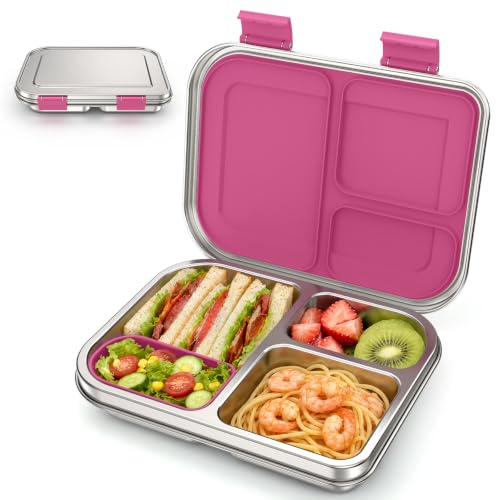
Safety first, always, that’s the BABHAMNESS mantra, and this bento box proves it. Designed with kids’ safety in mind, it features a unique latch mechanism that prevents pinched fingers, a rare but crucial detail for younger users. Made from 304 stainless steel with food-grade silicone, it’s BPA-free, non-toxic, and built to last, making it a trusted daily driver for school lunches. The 32.9oz capacity and three spacious compartments accommodate sandwiches, fruits, and sides with ease, while the silicone inner divider keeps sauces neatly contained.
Real-world testing shows it’s easy to open and carry, even for small hands. The leakproof seal handles ketchup, yogurt, and pudding without issue, though, like others, it’s not designed for water or broth. All parts are dishwasher safe, and the wide mouth design simplifies cleaning. However, the fixed compartments can’t be rearranged, limiting flexibility for varied meal plans. And while the pink finish adds charm, it’s purely cosmetic, underneath is the same rugged steel.
Compared to the AOHEA, it offers similar leak resistance at a lower price, though with less capacity. Against the PlanetBox, it’s less fun but more functional for safety-focused families. For parents who prioritize child-friendly design and spill resistance, this is the best safety-first choice, delivering peace of mind with every packed meal.
Mostdream Stainless Steel Snack Containers
ADVANTAGES
LIMITATIONS
Sometimes, small is smarter, and the Mostdream 15oz snack containers prove that. Perfect for toddlers, preschoolers, or portion-controlled snacking, each two-compartment cup holds 6oz per side, ideal for pairing fruit with cheese or veggies with dip. Made from 304 stainless steel with flexible silicone lids, they’re durable, reusable, and easy for little hands to open, a win for independence. The stackable design saves space, and the compact size slips easily into lunch bags or daycare totes.
In daily use, they shine as snack-sidekicks. They handle yogurt, crackers, and cut fruit without leaking, and the divided design keeps flavors separate. Being dishwasher and fridge safe, they’re low-maintenance for busy parents. However, the divider isn’t liquid-tight, so runny dips may bleed. And while great for snacks, they’re too small for full meals, limiting use to supplementary packing.
Against the TOUWMX, Mostdream wins on material quality (all-metal) and portion precision. While not a full lunch solution, it’s the best for snack-sized needs, ideal for parents packing mini-meals or daycare providers managing multiple kids. If you want safe, stylish, and smartly sized snack containers, this 3-pack is a no-brainer.
TOUWMX Wheat Straw Bento Box

ADVANTAGES
LIMITATIONS
Don’t let the low price fool you, the TOUWMX 4-pack delivers serious value without sacrificing safety. Made from wheat straw and food-grade PP, it’s BPA-free, stain-resistant, and odor-free, offering a plastic-free-adjacent alternative for budget-conscious families. The three-compartment design keeps foods separated, and the transparent, sealing lids lock in freshness, ideal for school snacks, meal prep, or travel. At just $9.99 for four, it’s the most affordable non-toxic option in this lineup, making it perfect for classrooms, daycare rotations, or large families.
In practice, these containers are lightweight and easy to carry, fitting snugly in backpacks or lunch totes. They’re microwave, freezer, and dishwasher safe (lid hand-wash recommended), offering rare versatility for a composite material. The stackable design saves space at home, and the four vibrant colors help kids identify their box quickly. However, the wheat straw blend isn’t fully metal, so it doesn’t match the longevity of stainless steel. Over time, repeated dishwasher cycles may cause lid warping, and the seal isn’t strong enough for saucy foods.
Pitted against the Leonyo, the TOUWMX wins on cost and quantity, but loses on durability and material purity. It’s not for families seeking lifetime steel construction, but for those needing a reusable, non-toxic workhorse for daily rotation, it’s unbeatable. If you want a plastic upgrade without the premium price, this pack is the smartest budget play.
Stainless Steel Bento + Condiment Container

ADVANTAGES
LIMITATIONS
If you’re tired of sauce-soaked sandwiches, this sauce-savvy stainless steel bento box is engineered for precision. Built from premium 304 stainless steel, it avoids laser welding, a rare but critical detail that ensures maximum food safety by eliminating potential metal leaching. The standout feature? A dedicated 1.7oz condiment cup that snaps securely into place, keeping dressings, soy sauce, or dips isolated until mealtime. This makes it a go-to for adults who pack salads, grain bowls, or bento-style lunches with wet components.
Real-world testing shows it excels in portability and durability. At 27oz capacity, it fits comfortably in most lunch bags and handles commutes, picnics, or office meals with ease. The compact, lightweight build doesn’t sacrifice sturdiness, no dents or warping after repeated drops. While the main compartment isn’t divided, the silicone band keeps everything sealed and mess-free, and the dishwasher-safe construction simplifies cleanup. However, without internal compartments, food separation depends on portioning skill, and liquids may migrate between sections due to the open-top design.
When stacked against the AOHEA model, this one trades multi-compartment organization for superior sauce control and minimalist elegance. It’s lighter than the PlanetBox Rover but less kid-focused, ideal for professionals or teens who want a no-nonsense, non-toxic lunch solution. While it doesn’t offer the full meal segmentation of pricier kits, its focus on condiment security and long-term durability makes it a smart pick for those who prioritize functionality and food purity in one sleek package.
Leonyo 18/10 Stainless Steel Lunch Box
ADVANTAGES
LIMITATIONS
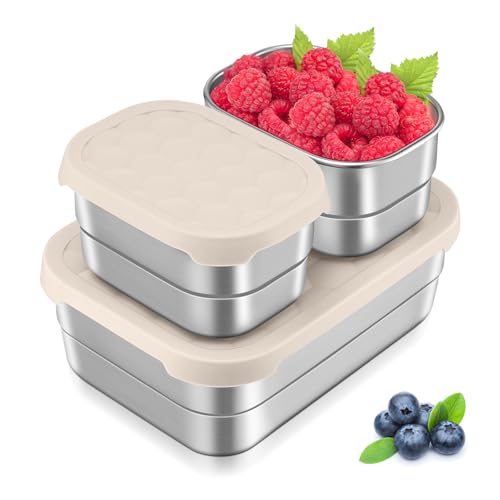
This plastic-free powerhouse redefines what it means to pack safe, non-toxic meals for kids. Crafted from 18/10 stainless steel, the Leonyo lunch box eliminates chemical concerns with its BPA-free, food-safe design, making it a top contender for health-conscious families. The 3-in-1 modular setup, featuring a 25oz main container and two 8oz snack cups, delivers unmatched versatility, letting parents separate wet and dry foods without cross-contamination. Its spill-proof silicone lids are a standout for little hands, offering easy access while preventing messy leaks in backpacks.
In real-world use, this bento box shines during school lunches and outdoor adventures. The nesting design allows compact storage when not in use, and the durable metal construction withstands drops and rough handling. While it’s not fully leakproof for liquids, it holds up remarkably well with yogurt, applesauce, or hummus, thanks to snug-fitting silicone seals. All components (except lids) are dishwasher, freezer, and oven safe, offering rare flexibility for reheating or freezing meals. However, the lack of insulation means temperature control relies on an ice pack or insulated bag.
Compared to the ECOlunchbox’s sleek 3-piece system, the Leonyo offers better value and modularity at a lower price point, though it lacks magnetic closure. It beats out plastic-based budget options like the TOUWMX by being completely metal and toxin-free, making it ideal for parents prioritizing long-term safety over ultra-cheap alternatives. For families seeking a durable, stackable, and genuinely non-toxic solution, this is a standout choice that grows with your child’s eating habits.
Non-Toxic Lunch Box Comparison
| Product | Material | Capacity/Size | Leakproof? | BPA-Free? | Dishwasher Safe? | Best For |
|---|---|---|---|---|---|---|
| PlanetBox Rover Bento Box Kit | Stainless Steel, Recycled Polyester, Silicone | 5 Compartments + 2 Leakproof Dippers | Leakproof Dippers | Yes | Yes (Lunch Box & Containers) | Best Overall |
| AOHEA Stainless Steel Bento Box | 304 Stainless Steel, Silicone | 33oz (4 cups), 5 Compartments | For Thick Sauces Only | Yes | Yes | Best for Leak-Proof Performance |
| ECOlunchbox Three-in-One Bento | Stainless Steel | 31oz (3.8 cups) – 3 Pieces | Not Leakproof (No Gaskets) | Yes | Yes | Best Plastic-Free Design |
| BABHAMNESS Stainless Steel Bento | 304 Stainless Steel, Silicone | 32.9oz (4.1 cups), 3 Compartments | For Thick Sauces Only | Yes | Yes | Best for Kids’ Safety |
| Mostdream Stainless Steel Snack Containers | 304 Stainless Steel, Silicone | 15oz (443ml) – 2 Compartments | No | Yes | Yes | Best Snack-Sized Portions |
| TOUWMX Wheat Straw Bento Box | Wheat Straw, PP Plastic | 6.1 x 6.1 x 2.2 inches, 3 Compartments (Pack of 4) | Not for Liquids | Yes | Dishwasher (Lid Hand Wash) | Best Budget Friendly |
| Stainless Steel Bento + Condiment Container | 304 Stainless Steel, Silicone | 27oz Bento + 1.7oz Condiment | Sauce Container Spillproof | Yes | Yes | Best with Sauce Storage |
| Leonyo 18/10 Stainless Steel Lunch Box | 18/10 Stainless Steel, Silicone | 25oz + 8oz x 2 | Yes | Yes | Yes (Containers Only) | Best Stackable Design |
How We Test & Analyze Non-Toxic Lunch Boxes
Our recommendations for the best non-toxic lunch boxes aren’t based on opinion; they’re the result of rigorous data analysis and a focus on material safety. We begin by prioritizing options constructed from materials known for minimal chemical leaching, primarily focusing on food-grade stainless steel. We then evaluate product specifications, paying close attention to claims of being BPA-free and phthalate-free, understanding that these labels don’t guarantee complete non-toxicity.
We conduct comparative analyses of available research on materials like stainless steel, plastic polymers, and emerging options like wheat straw, referencing studies on chemical migration into food. We scrutinize customer reviews across multiple platforms, identifying recurring themes related to durability, leak-proof performance, and ease of cleaning. For stainless steel options, we specifically look for confirmation of 18/8 (304) grade stainless steel. We also analyze features like seal quality and compartmentalization, assessing their practical impact based on user feedback.
While physical product testing is not always feasible for every option, we rely heavily on expert reviews and certifications where available. Our evaluation process also considers the availability of non-toxic meal prep containers and how well a lunch box integrates with a broader non-toxic food storage system. Ultimately, we aim to present options offering both safety and practicality, and recommend considering stainless steel boxes for their long-term durability and minimal risk.
Choosing the Right Non-Toxic Lunch Box: A Buying Guide
When packing lunches, especially for yourself or your children, safety is paramount. Choosing a non-toxic lunch box means considering the materials it’s made from and how those materials interact with food. Here’s a breakdown of key features to help you find the best option.
Material Matters: Stainless Steel vs. Other Options
The material a lunch box is constructed from significantly impacts its safety and durability. Stainless steel is a top choice for those seeking a truly non-toxic option. It’s durable, doesn’t leach chemicals, and is easy to clean. However, not all stainless steel is created equal; look for food-grade 18/8 (304) stainless steel for optimal safety. While plastic options exist claiming to be BPA-free, it’s important to remember that “BPA-free” doesn’t necessarily mean “completely non-toxic,” as other potentially harmful chemicals can still be present. Wheat straw is another emerging material, often lauded for being eco-friendly, but consider its durability and cleaning requirements. If you are looking for more information about choosing the right materials, check out this non-toxic food storage guide.
Leak-Proof Design & Compartmentalization
A good lunch box isn’t just safe; it’s also practical. Leak-proof designs are essential, especially when packing sauces, yogurt, or juicy fruits. Look for lunch boxes with tight-fitting silicone seals. However, be aware that even with good seals, some lunch boxes may not be completely leak-proof for pure liquids. Compartmentalization is another crucial feature. Boxes with multiple compartments help keep foods separate, preventing flavors from mingling and ensuring balanced portions. The number and size of compartments should suit your typical lunch needs – a smaller compartment for dips or snacks and larger ones for main courses.
Ease of Cleaning & Durability
Daily use demands a lunch box that’s easy to clean. Dishwasher-safe components are a huge convenience, but always check the manufacturer’s instructions. Stainless steel generally cleans up easily, while some materials may stain or retain odors. Durability is also key. A well-made lunch box should withstand daily wear and tear, including drops and bumps. Stainless steel is naturally very durable. Consider the latches and hinges – are they sturdy and likely to hold up over time? A damaged lunch box isn’t just inconvenient; it can also compromise its safety.
Size and Portability
Think about who will be carrying the lunch box and where. For kids, a lighter weight and appropriately sized lunch box are essential, ensuring it’s easy for them to manage. Adjustable straps or comfortable handles are also beneficial. For adults, consider the capacity needed to accommodate a full meal and whether it fits easily into a work bag or backpack. Stackable designs, like those found in some stainless steel options, can save space during transport and storage. If you’re dealing with younger children, remember to explore safe school lunch boxes specifically designed for little hands.
Considering Additional Features
Beyond the core aspects, look for features that enhance usability. Insulated lunch bags help maintain food temperature. Magnet sets can add a fun, personalized touch. Some lunch boxes include separate condiment containers, preventing spills and keeping sauces fresh. If you are concerned about overall safety in your kitchen, you can find more safe food containers to replace existing plastic options. Ultimately, the best non-toxic lunch box is one that meets your individual needs and priorities, offering both safety and convenience.
The Bottom Line
Ultimately, prioritizing non-toxic materials like food-grade stainless steel is key when selecting a lunch box for yourself or your family. Considering factors like leak-proof design, ease of cleaning, and appropriate size will ensure both safety and practicality in your daily routine.
For those seeking even more thorough solutions for safe food storage, exploring options like non-toxic glass containers can further minimize exposure to potentially harmful chemicals. Additionally, parents looking for durable and safe options should consider stainless steel kids lunch boxes for their children.
