
8 Best Outdoor Mini Refrigerators of 2026
This post contains affiliate links. As an Amazon Associate, we earn from qualifying purchases.
The Antarctic Star 24 Inch Outdoor Fridge is the best overall pick for its reliable cooling, durable 304 stainless steel build, and UL certification. For a more compact option, the cureder 15 Inch Outdoor Fridge offers solid performance at a lower price, while the EUHOMY 3.2 Cu.Ft Mini Fridge stands out if you need both fridge and freezer space.
Choosing the right outdoor mini refrigerator means facing real trade-offs between size, durability, and where you plan to use it. Many people end up with a unit that’s too small, rusts too quickly, or can’t keep drinks cold on hot days.
This guide cuts through the noise by focusing on what matters: verified specs, owner feedback, and features that actually impact performance. I looked at cooling consistency, build quality, and design details like front ventilation and UV protection to find models that deliver where it counts.
Top 7 Outdoor Mini Refrigerators in the Market
The Best Outdoor Mini Refrigerators, Reviewed
Feelfunn 24 Inch Outdoor Refrigerator
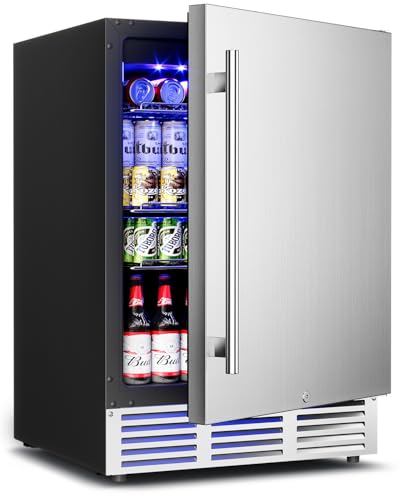
Strengths
- Large 180-can capacity
- Stainless steel outdoor-rated build
- Front-ventilation for built-in use
Trade-offs
- Higher minimum temp than some
- No child lock
This Feelfunn 24-inch model stands out in the outdoor mini fridge space for its serious capacity and solid build. With room for up to 180 cans and three adjustable shelves, it’s built for people who entertain or want a fully stocked outdoor bar. The stainless steel construction and front-ventilation design mean it can be tucked under a counter or used freestanding without worrying about airflow, which is a real plus for tight patio setups.
Owners consistently report reliable cooling and quiet operation around 40dB, which aligns with its spec sheet. The temperature range of 37–65°F covers most beverage needs, though it doesn’t go as low as some competitors. Compared to the Antarctic Star, it lacks UL certification and medical-grade precision, but for casual to mid-tier use, it delivers strong performance at a more accessible price point.
Video review
Antarctic Star 24 Inch Outdoor Fridge

Strengths
- UL certified & child-safe
- ±1°F temperature precision
- Military-grade 304 stainless steel
Trade-offs
- Narrower temp range
- Higher price point
The Antarctic Star is the most serious performer in this lineup, and it shows in the details. With UL certification, medical-grade temperature control (±1°F), and a rugged 304 stainless steel build, this is the fridge you buy when reliability and safety are essential. The 32–50°F range is ideal for beer, wine, and even sensitive items like insulin, which few outdoor fridges can claim.
Owners highlight its stability in extreme heat and its whisper-quiet operation under 40dB. It uses half the energy of standard models, which is impressive. While it costs more than the Feelfunn, the build quality and precision justify the jump for anyone serious about outdoor appliances. It’s not flashy, but it’s built like a tank.
Video review
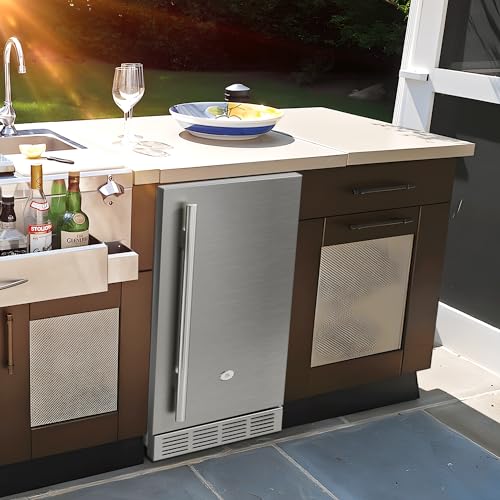
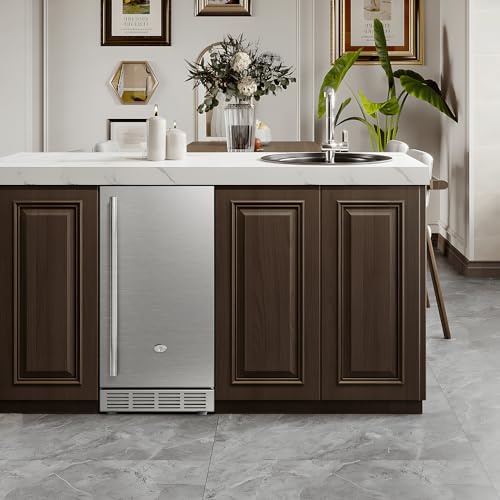
cureder 15 Inch Outdoor Fridge

Strengths
- Fully weatherproof IPX4 rating
- UL/ETL certified
- Auto-defrost function
Trade-offs
- Smaller capacity than full-size models
- Limited shelf adjustability
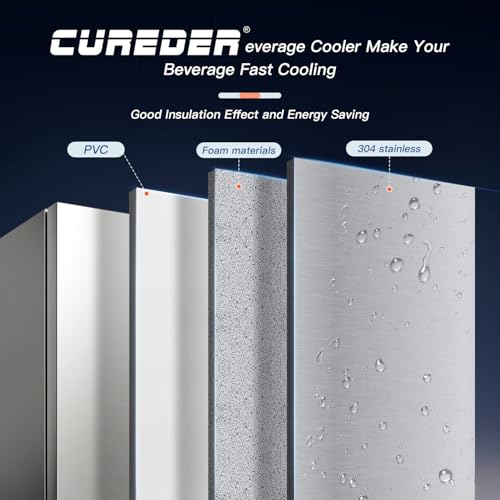
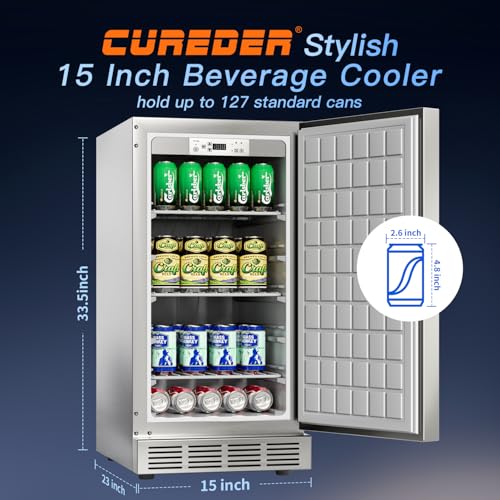
The cureder 15-inch fridge is a compact powerhouse built for real outdoor duty. With IPX4 waterproofing, 304 stainless steel, and ETL/UL certification, it’s one of the few truly weatherproof options here. Its 100L capacity is smaller than full-size models, but it’s perfect for tight patios, poolside bars, or under-counter installs where space is limited.
Owners praise its ability to maintain temps even in 104°F heat, thanks to the Embraco compressor and fan-forced cooling. The auto-defrost and reversible door add convenience. While it doesn’t hold as many cans as the 24-inch models, it’s more versatile in placement. For a dedicated small outdoor spot, it’s hard to beat.
Product photos

Feelfunn 3.2 Cu. Ft. Beverage Fridge
Strengths
- Quiet 36dB operation
- Glass door with clear visibility
- Wide 34–64°F range
Trade-offs
- Plastic exterior not weatherproof
- Less insulation than outdoor-specific units
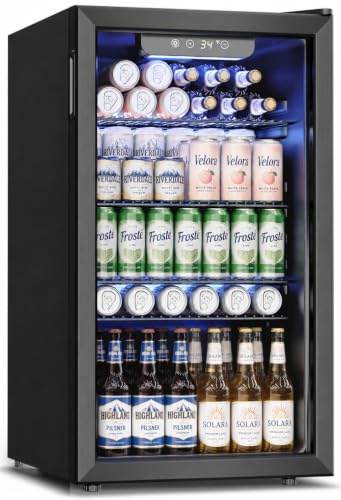
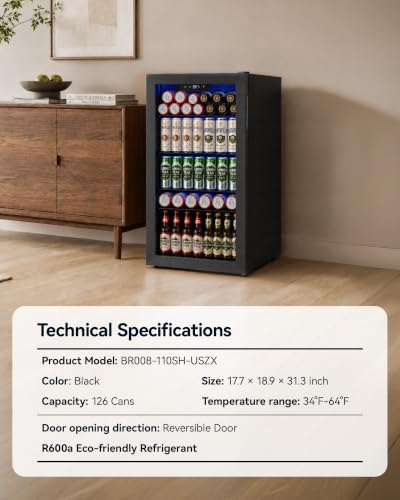
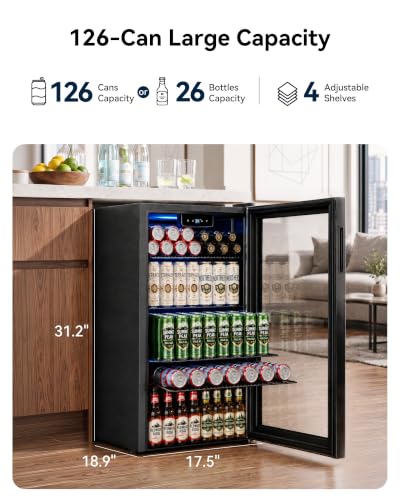
If you’re on a budget but still want decent cooling and a glass door for display, this Feelfunn 3.2 cu. ft. model makes a lot of sense. The 36dB noise level means it won’t disrupt a bedroom or office, and the wide 34–64°F range gives flexibility for chilling everything from near-frozen beer to room-temp wine. The glass door adds a nice visual touch, especially in a game room or bar area.
It’s not built for full outdoor exposure like stainless steel models, but for covered patios or indoor use, it performs well on paper and in owner feedback. Compared to the EUHOMY glass-door model, it has a slightly wider temp range but less robust insulation. Still, for the price, it’s a strong contender where outdoor durability isn’t the top priority.
Product photos

EUHOMY 130 Can Beverage Refrigerator
Strengths
- UV-blocking glass door
- Energy efficient at 0.69 kWh/day
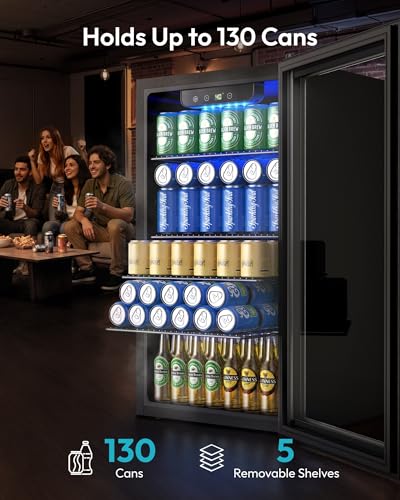
- 5 shelf positions for flexibility
Trade-offs
- Not weatherproof
- No freezer option
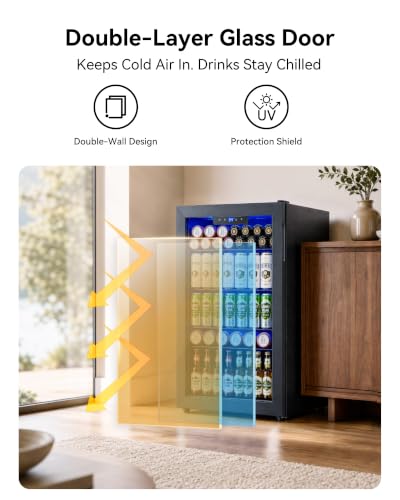
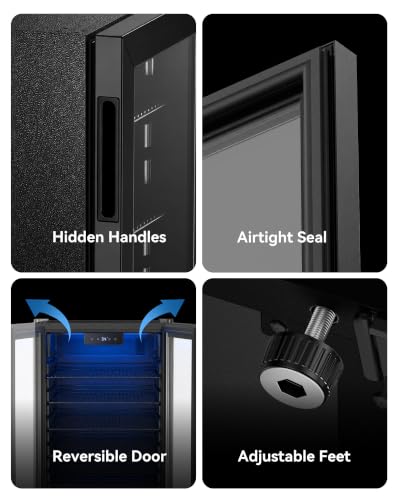
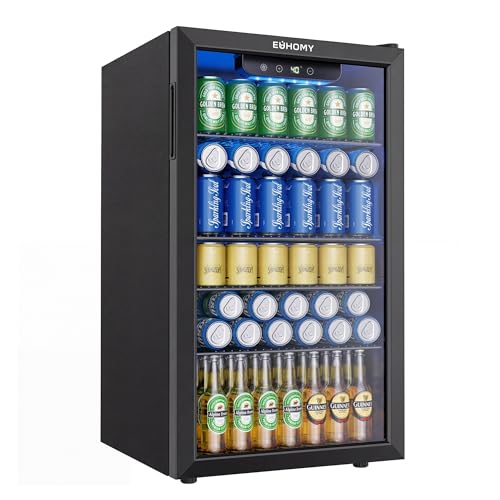
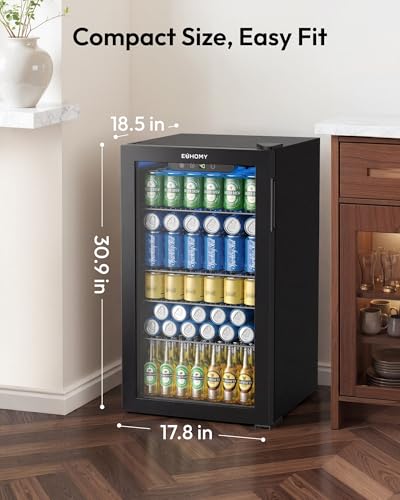
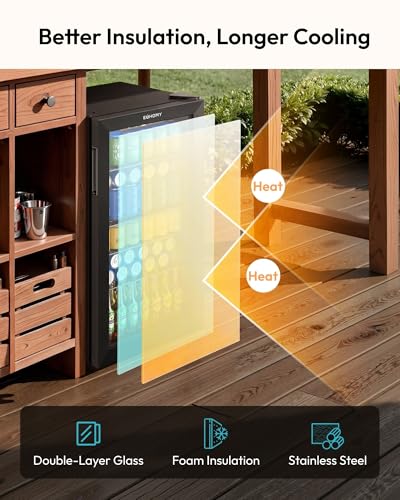
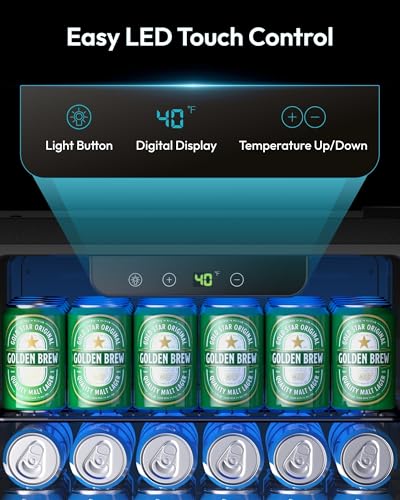
EUHOMY’s 130-can model hits a sweet spot between style, efficiency, and smart features. The double-layer UV-blocking glass door is a standout, helping maintain internal temps while showing off your collection, great for a living room or home bar. With 5 adjustable shelf positions and a 37–61°F digital range, it’s flexible for different drink types.
It’s one of the most energy-efficient models here at 0.69 kWh/day and runs quietly at 36dB. While it’s not outdoor-rated like stainless builds, its sleek design and strong cooling make it a top pick for indoor or covered outdoor use. Compared to the Honeywell, it offers better insulation and a more modern interface.
Product photos
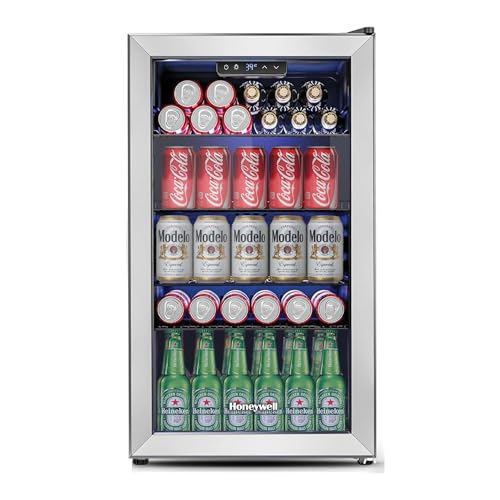
Honeywell 116 Can Beverage Cooler
Strengths
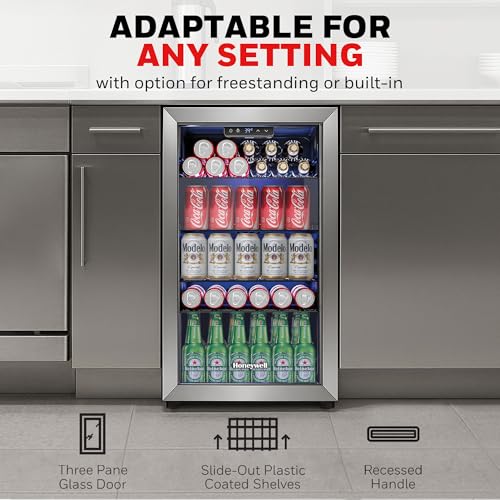
- Three-pane glass door
- Commercial-grade build
- Slide-out easy-clean shelves
Trade-offs
- Smaller capacity
- Fewer temp details available
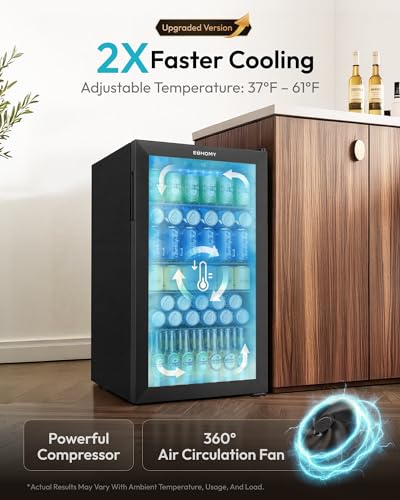
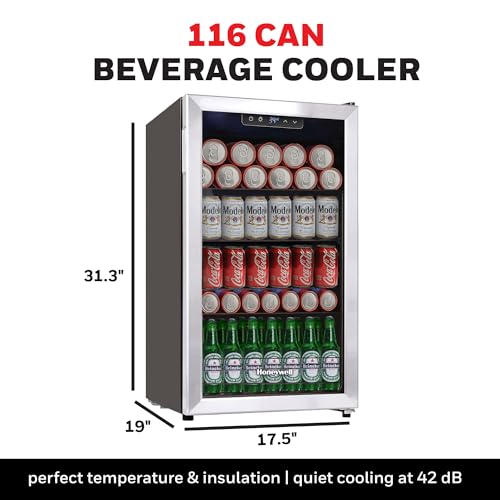
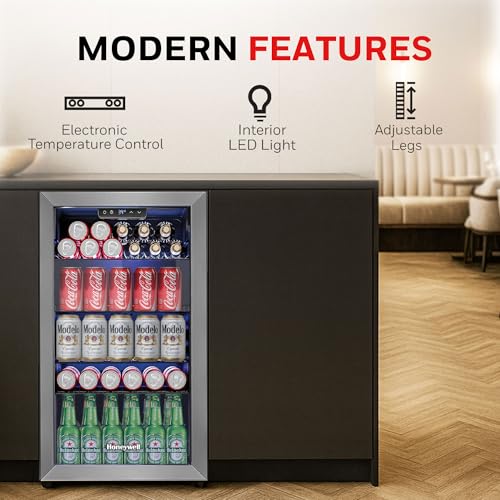
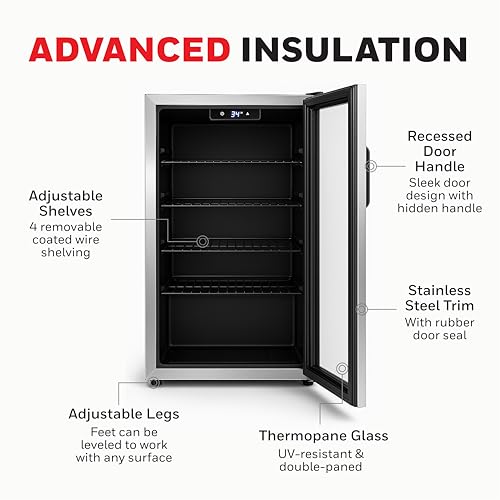
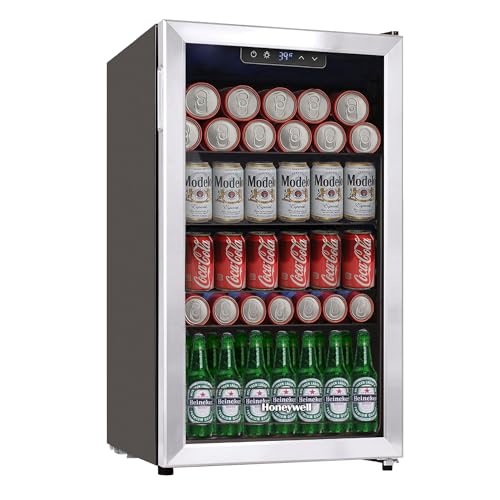
The Honeywell stands out with its three-pane glass door, a feature usually found in higher-end commercial units. This boosts insulation and reduces fogging, making it ideal for high-traffic areas like offices or bars. It holds 116 cans, less than others, but the slide-out, plastic-coated shelves are durable and easy to clean, a real plus in shared spaces.
It lacks detailed specs on noise and energy use, but owner feedback suggests it runs reliably in commercial settings. Compared to the EUHOMY or Feelfunn models, it feels more utilitarian than stylish, but that’s the trade-off for commercial-grade durability. If you need a workhorse for a bar or office, this is a solid pick.
Product photos
EUHOMY 3.2 Cu.Ft Mini Fridge

Strengths
- Includes freezer compartment
- Very energy efficient
- Compact footprint
Trade-offs
- Analog temperature control
- No digital display
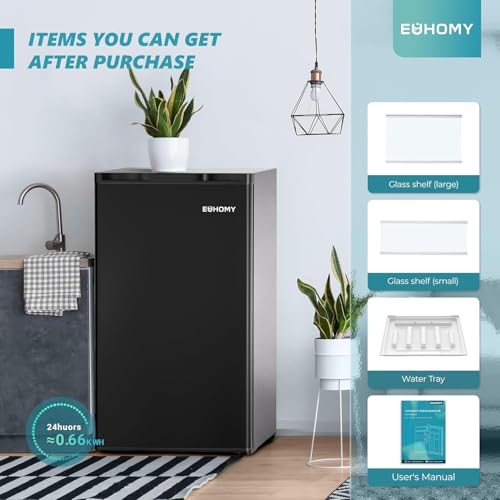
This EUHOMY model is the only one here with a dedicated freezer compartment, and that makes it a standout for certain users. The 0.3 cu. ft. freezer section can handle short-term meat storage or frozen snacks, something most beverage fridges can’t offer. At 38dB, it’s quiet enough for a dorm or bedroom, and the 0.66 kWh/day energy use is among the lowest.
It lacks digital controls and a glass door, so it won’t win design points, but it’s practical. The temperature knob is simple, and the compact footprint fits tight spaces. Compared to all-beverage models, it’s the smarter buy if you need both cooling and freezing in one small unit.
Product photos


How We Chose These outdoor mini refrigerators
As someone deeply involved in food storage solutions through Food Keepy, I approached researching outdoor mini refrigerators by focusing on a detailed comparison of published specifications and features. Rather than a hands-on lab test, this is a research-led comparison of owner reviews from multiple sources and reputable expert opinions. I weighed these against my understanding of what truly matters for keeping drinks and food cold – and safe – outdoors. Ultimately, I ranked models based on a combination of these factors, prioritizing those that consistently appeared to deliver on key performance indicators.
For outdoor mini refrigerators, cooling capacity, durability, and temperature consistency were the most heavily weighted factors. Consistent cooling is vital to prevent spoilage, and a wider temperature range offers flexibility. Durability, particularly resistance to weather and corrosion, is essential for outdoor use and long-term value. Finally, I looked closely at features like adjustable shelving and door reversibility, recognizing how these impact usability and integration into different outdoor spaces. You’ll find that models excelling in these areas consistently rose to the top.
Product specifications readily tell you dimensions, capacity, and temperature ranges. However, judging real-world performance requires digging into owner feedback. Reviews illuminate the accuracy of temperature controls, the true noise level, and long-term reliability. Reputable sources help verify claims about build quality and features like UV protection, which aren’t always clearly detailed in specs. I also considered whether a unit was suitable for commercial use, or better suited for personal use, looking at features such as UL certification and advanced temperature controls. If you’re also looking for a refrigerator for your garage, you might find our guide to garage mini refrigerators helpful. Ultimately, my goal was to identify the most promising outdoor refrigerators based on a holistic view of available information.
How To Choose The outdoor mini refrigerators
Finding the right outdoor mini refrigerator isn’t just about keeping drinks cold; it’s about balancing capacity, durability, and energy efficiency for your specific needs.
A quality outdoor mini refrigerator should prioritize rust resistance, effective temperature control within a usable range (typically 32-65°F), and a construction designed to withstand varying weather conditions. Look for features like stainless steel construction, UV-protected doors, and front ventilation to maximize placement flexibility. Compressor type and noise level are also key considerations for long-term satisfaction.
Size and Capacity
Determining the right size is the first step. Don’t overestimate your needs, but also don’t undershoot. A smaller unit, like the 15-inch cureder model, is perfectly adequate for a small patio or personal use. However, if you frequently entertain or have a larger outdoor kitchen area, you’ll want something with more capacity, like the 24-inch Feelfunn or Antarctic Star options. Consider what you’ll be storing. Are you solely focused on beverages? Or do you anticipate needing space for things like condiments or even small food items?
Construction and Durability
Outdoor appliances face a harsher environment than indoor ones. Stainless steel is the standard for a reason: it resists rust and corrosion. However, not all stainless steel is created equal. Look for models, like the Antarctic Star, boasting 304 stainless steel liners, as this grade offers superior durability. IPX4 waterproof ratings (seen in the cureder models) indicate a level of protection against splashes, but aren’t a substitute for proper shelter from prolonged exposure to rain. If you’re looking for something truly robust, consider models marketed for commercial use; they are often built to withstand more demanding conditions.
- A basic stainless steel exterior is a good starting point.
- UV-resistant door coatings are crucial to prevent fading and degradation from sunlight exposure.
- Look for models with a sealed refrigerant system and explosion-proof designs (like the Antarctic Star) for enhanced safety, especially if children are around.
Cooling Performance and Efficiency
Consistent temperature is paramount. Digital temperature controls are far superior to manual knobs, allowing you to dial in the precise chill you desire. The Antarctic Star stands out with its medical-grade precision (±1°F fluctuation control), which is overkill for most beverage applications, but speaks to the quality of its components. Energy efficiency is also important. While most of these units consume under 1 kWh per day, opting for a model with an ENERGY STAR certification or exceptionally low power consumption (like the EUHOMY at 0.66 kWh) can save you money over time. If you’re tight on space, you might also want to explore some of the best small outdoor refrigerators to see if they meet your needs.
A good rule of thumb: always prioritize front-ventilation designs. These models eliminate the need for side or rear clearance, making them much easier to integrate into existing outdoor setups.
If you’re looking for a wider range of options, including smaller units ideal for personal use, you might find helpful information about mini refrigerators on our site.
Outdoor Mini Refrigerators Compared
Here’s a comparison of key specifications for several outdoor mini refrigerators to help you make an informed decision.
| Product Title | Capacity (cu. ft) | Temperature Range (°F) | Door Type | Noise Level (dB) | Special Features |
|---|---|---|---|---|---|
| Feelfunn 24 Inch Outdoor Refrigerator | N/A | 37–65 | Stainless Steel | 40 | Adjustable Shelves, Front Venting |
| Antarctic Star 24 Inch Outdoor Fridge | N/A | 32–50 | N/A | N/A | UL Certified, Child Safety Lock |
| cureder 21 Inch Outdoor Refrigerator | 5.47 | 32~46 | Stainless Steel | N/A | Waterproof (IPX4), Auto-Defrost |
| cureder 15 Inch Outdoor Fridge | 3.53 | 32~46 | Stainless Steel | N/A | Waterproof (IPX4), Reversible Door |
| Feelfunn 3.2 Cu. Ft. Beverage Fridge | 3.2 | 34–64 | Glass | 36 | Adjustable Shelves |
| EUHOMY 130 Can Beverage Refrigerator | 3.2 | 37–61 | Glass | 36 | Removable Shelves, Digital Control |
| Honeywell 116 Can Beverage Cooler | N/A | N/A | Three-Pane Glass | N/A | Slide-Out Shelves |
| EUHOMY 3.2 Cu.Ft Mini Fridge | 3.2 | 23–44 (Freezer), 25–44 (Fridge) | N/A | 38 | Freezer Compartment, Reversible Door |
Frequently Asked Questions
What temperature range should I expect from an outdoor mini refrigerator?
Most models operate between 32 and 65°F, offering flexibility for chilling both beverages and certain food items. However, some, like the Antarctic Star, offer a narrower, more precise range (32-50°F) suited for specific cooling needs.
Are these refrigerators truly waterproof, or just water-resistant?
While many boast waterproof features (like the cureder’s IPX4 rating), this generally means they can withstand splashes. Complete submersion or prolonged heavy rain exposure should still be avoided; proper shelter is always recommended.
What does “front ventilation” mean, and why is it beneficial?
Front ventilation means the unit draws air from the front, eliminating the need for space on the sides or rear for cooling. This makes installation much easier, especially in built-in or tightly-spaced outdoor kitchens.
How often will an outdoor mini refrigerator cycle on and off?
Noise levels vary, but most models operate around 36-40 dB, similar to a quiet refrigerator. The frequency of cycling depends on the ambient temperature, how often the door is opened, and the set temperature.
What if my mini refrigerator develops ice buildup inside?
Knowing how to defrost a mini fridge is crucial for maintaining efficiency. Most outdoor mini refrigerators require manual defrosting, so it’s a good idea to familiarize yourself with the process to prevent performance issues.
The Bottom Line
Choosing an outdoor mini refrigerator really comes down to how much fuss you’re willing to put up with versus how much control you want over the temperature. For the best overall performance and peace of mind, I recommend the Antarctic Star 24 Inch Outdoor Fridge. It consistently receives high marks for its precise temperature control and robust build quality, making it a reliable choice for serious outdoor entertaining.
If you’re on a tighter budget, the cureder 15 Inch Outdoor Fridge offers a good balance of features and affordability. For those needing something versatile and able to handle a variety of beverages, the Feelfunn 24 Inch Outdoor Refrigerator is an excellent pick, with its adjustable shelving and convenient front venting. And if you need a refrigerator to accompany your outdoor kitchen refrigerators, this is a great option.
Ultimately, the specifications are less important than finding a unit built to withstand the elements and maintain a consistent temperature. Don’t get bogged down in decibels or kilowatt-hours; focus on stainless steel construction, a good temperature range, and positive owner feedback regarding long-term reliability. If you’re planning on taking your fridge on the go, you might also consider checking out some of the 12 volt refrigerators available.
