
7 Best Off Grid Refrigerators of 2026
This post contains affiliate links. As an Amazon Associate, we earn from qualifying purchases.
The Techomey 19 Cu.Ft propane refrigerator stands out as the best overall off-grid option for its large capacity and reliable dual-power operation, while the Smad 1.4 Cu.Ft 3 Way RV Fridge is a solid budget pick that runs on propane, 12V, or AC power, and the RecPro 10 Cu Ft 12V RV Fridge offers strong versatility for those relying on DC power systems.
Choosing the right off-grid refrigerator isn’t just about keeping food cold, it’s about matching your power setup, space, and lifestyle with a unit that won’t let you down when you’re off the grid. Many people end up frustrated by poor cooling, high fuel use, or a fridge that simply doesn’t fit their cabin, RV, or solar system.
This guide cuts through the noise by comparing real-world performance, energy efficiency, and owner experiences to help you find a dependable refrigerator built for life away from the utility lines. We focused on cooling type, power flexibility, capacity, and durability, key factors that matter most when reliability is essential.
Top 7 Off Grid Refrigerators in the Market
The Best Off Grid Refrigerators, Reviewed
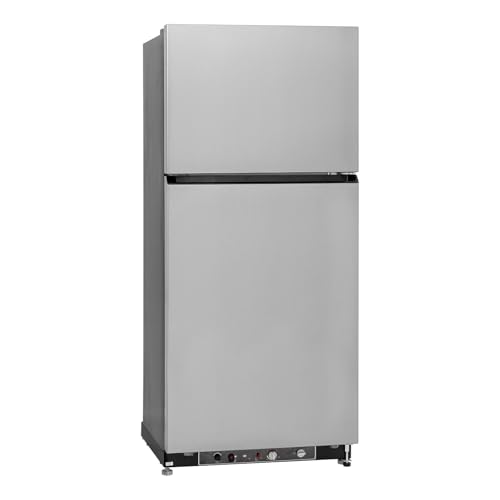
Techomey Propane Refrigerator 19 Cu.Ft
Strengths
- Extra large capacity
- Silent operation
- Rolling casters
- Humidity crispers
Trade-offs
- Slow recovery after opening
- Heavy unit
- Longer cooldown time
With 19 cubic feet of total space, this Techomey model is the closest thing to a full-size kitchen fridge you’ll find in the off-grid world. The absorption cooling system runs silently, 0 decibels is no exaggeration, and since there’s no compressor or fan, it won’t disturb sleep in shared spaces. For families tired of packing meals around tiny coolers, this is the kind of upgrade that changes daily life.
It supports both propane and 110V, has reversible doors, rolling casters, and humidity-controlled crispers, all thoughtful touches. Some owners mention slow cooldown times after door openings, but that’s typical for absorption units. Against other large-capacity models like the SMETA, this one simply offers more room and better build quality. My recommendation? This is the smarter buy if space and budget allow.
Video review
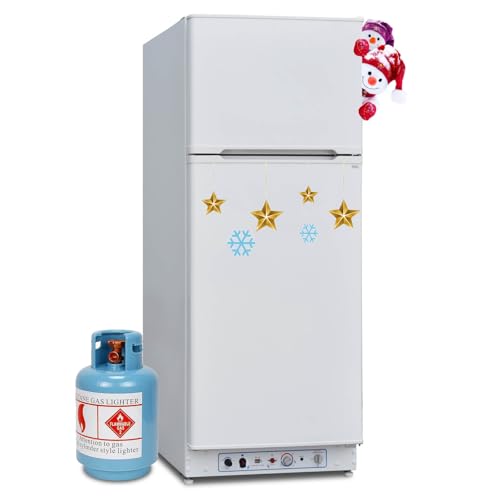
Techomey 6.1 Cu.Ft Propane Fridge
Strengths
- Affordable entry point
- Dual power compatible
- Compact yet spacious
Trade-offs
- Manual defrost required
- Limited shelf adjustability
- Gas connection sold separately
For those stepping into off-grid living without breaking the bank, this 6.1 cu.ft model strikes a strong balance between cost, size, and functionality. It runs on both LPG and 110V, uses modest amounts of gas, and operates quietly thanks to its absorption system. At under 58 inches tall, it fits well under counters or in compact kitchens, something apartment preppers or van lifers might appreciate.
The mechanical thermostat and LED lighting keep things user-friendly, and owners say it cools reliably once acclimated. While it doesn’t match the efficiency of 12V DC fridges like the RecPro, it avoids the need for complex electrical systems. Compared to the Smad mini fridge, this one gives far more usable space for only slightly higher cost.
Video review
Smad 1.4 Cu.Ft 3 Way RV Fridge

Strengths
- Three power options
- Extremely compact
- Lightweight design
Trade-offs
- Very limited capacity
- Basic interior
- Not for primary food storage
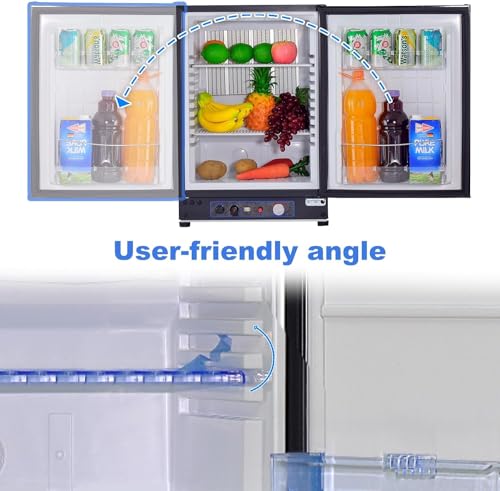
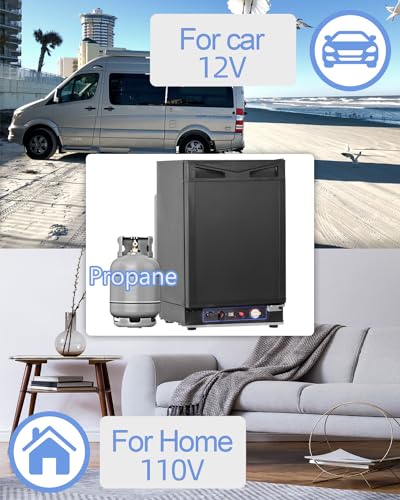
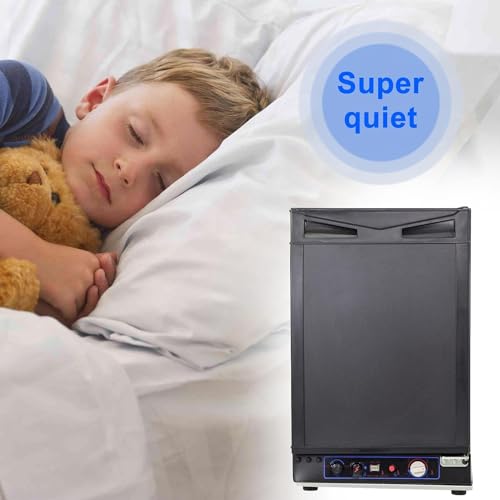
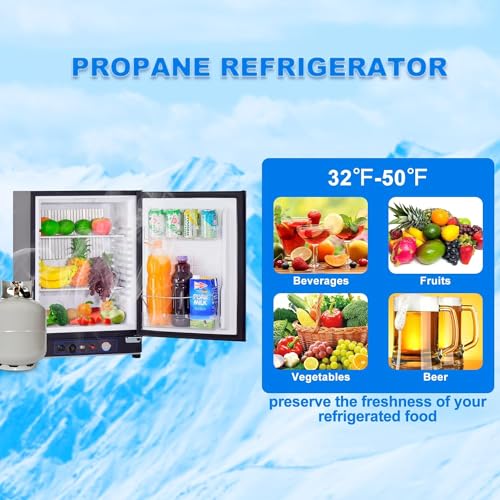
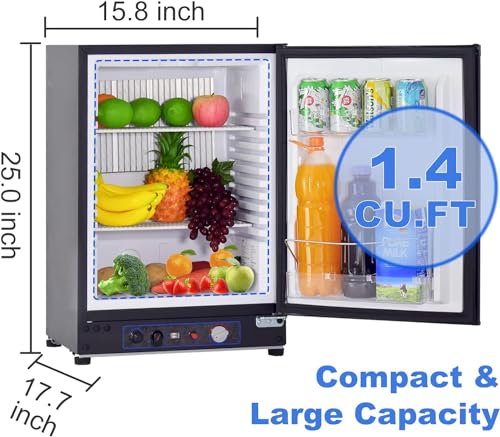
This tiny 3-way fridge is all about versatility in a pinch. At just 1.4 cu.ft, it won’t replace a kitchen refrigerator, but being able to run on 12V, 110V, or LPG makes it incredibly adaptable for trucks, dorm rooms, or emergency kits. Its miniature size means it fits almost anywhere, even sideways in a cabinet, and owners love using it as a beverage cooler or backup unit during outages.
It’s not meant for storing full meals or produce long-term, and the interior is pretty basic. But for what it is, the reversible door and quiet operation are nice perks. When compared to larger units, it’s obviously limited, but for targeted, mobile cooling, it serves a very specific niche well.
Product photos
RecPro 10 Cu Ft 12V RV Fridge

Strengths
- Energy efficient
- Frost-free design
- Quiet operation
- Adjustable shelves
Trade-offs
- Requires robust 12V system
- Heavier than gas models
- Stainless finish shows smudges
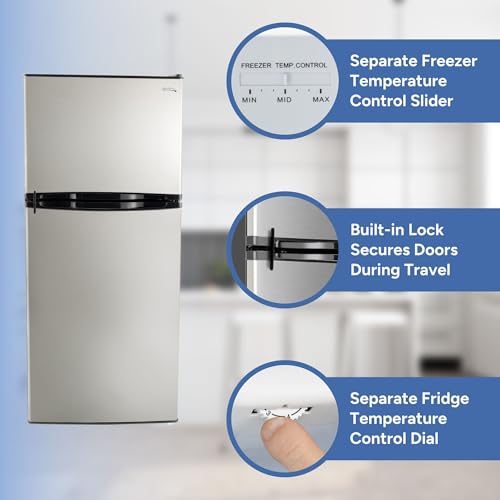
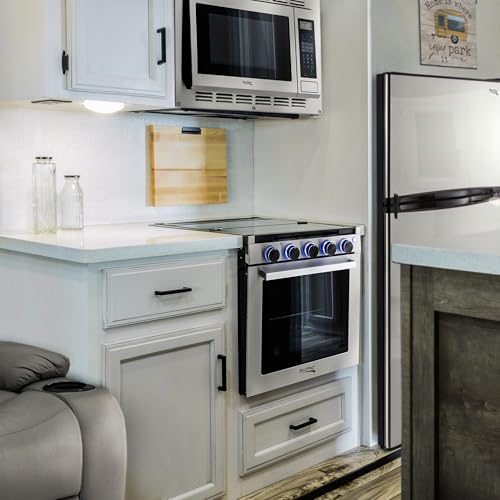
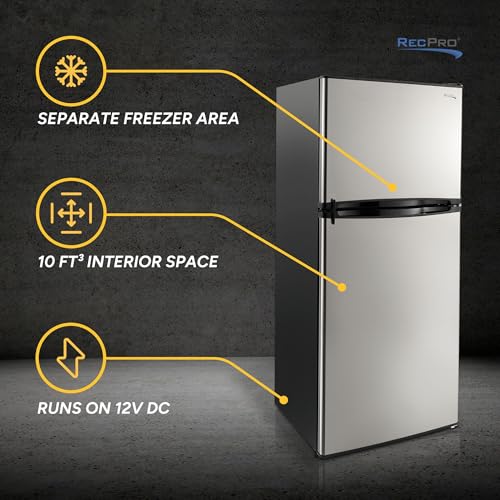
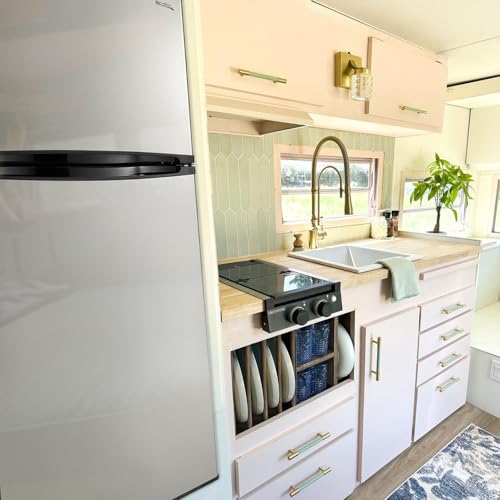
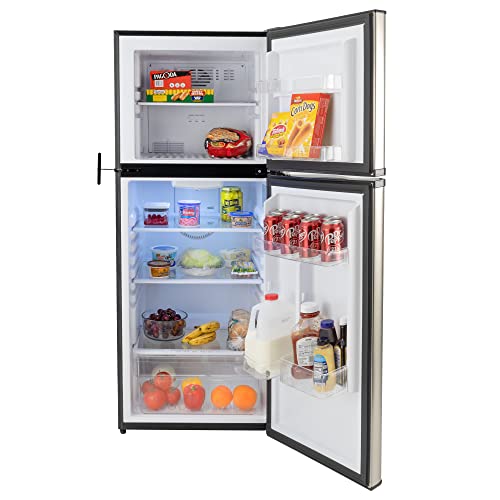
If you’re running on batteries and solar, this 12V DC fridge stands out for its energy efficiency and frost-free operation, two things that make long-term off-grid living actually manageable. The 10 cu.ft size fits well in most RVs, and reviewers frequently praise how little it draws from their systems, especially when paired with a decent charge controller. Compared to propane models, it eliminates fuel dependency and indoor combustion risks, which I see as a major safety win for family use.
It’s built tough for travel, and the adjustable shelves help keep things organized on bumpy roads. That said, it’s heavier than absorption fridges and needs a solid 12V supply, so if your solar setup isn’t mature, this won’t work as a drop-in solution. But for full-timers or frequent campers, it’s one of the smarter buys in its class.
Product photos
Unique Appliances Solar Powered Fridge

Strengths
- Solar optimized
- Retro aesthetic
- Humidity-controlled crispers
Trade-offs
- AC use requires add-on
- Limited availability
- Pricier than hybrid models
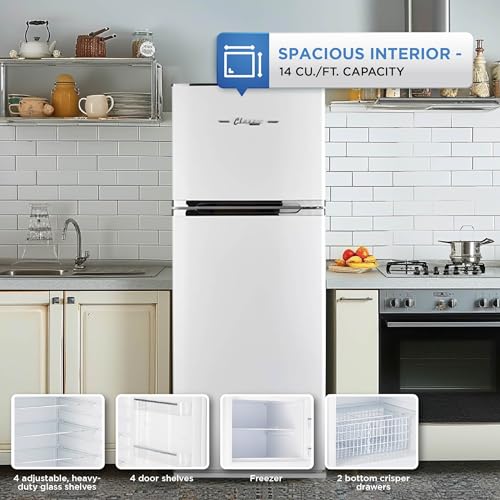
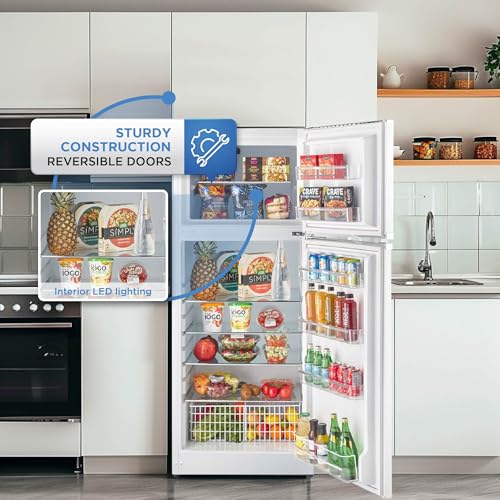
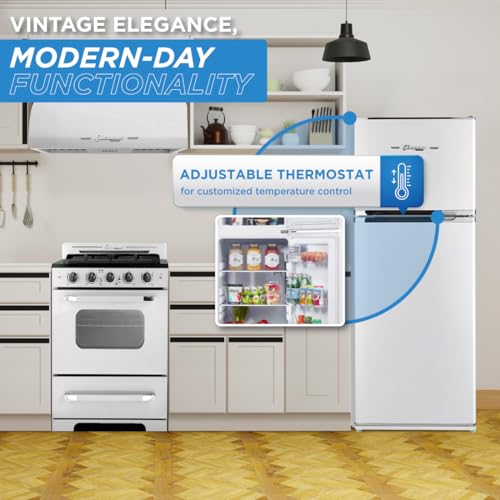
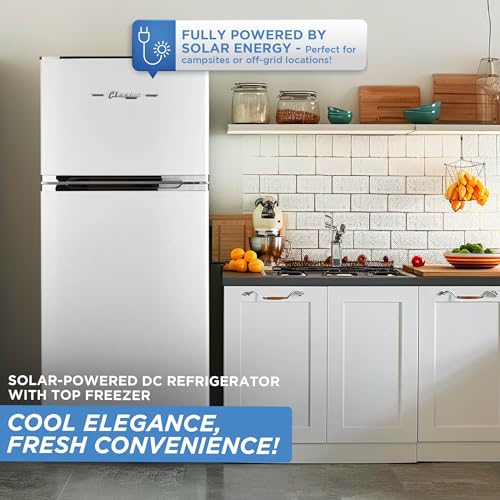
This retro-styled solar fridge is clearly designed to turn heads, and it does, but beyond looks, it delivers where it counts: true off-grid usability. Running exclusively on 12V or 24V DC, it’s meant to be paired directly with solar panels, making it a clean, silent alternative to propane. The 14 cu.ft layout includes a top freezer and humidity-controlled crispers, which helps extend produce life, a detail I appreciate from a food storage standpoint.
Owners note consistent performance in sunny climates, though cloudy regions may require oversized arrays. Unlike dual-power propane units, you can’t fall back on AC unless you buy a separate converter. But if you’re committed to solar living and want a fridge that feels like part of a self-sustaining home, this one brings both function and charm.
Product photos

SMETA 14.1 Cu.Ft Propane Fridge

Strengths
- Large capacity
- Dual power option
- Removable shelves
Trade-offs
- Higher fuel consumption
- No frost-free feature
- Requires ventilation clearance
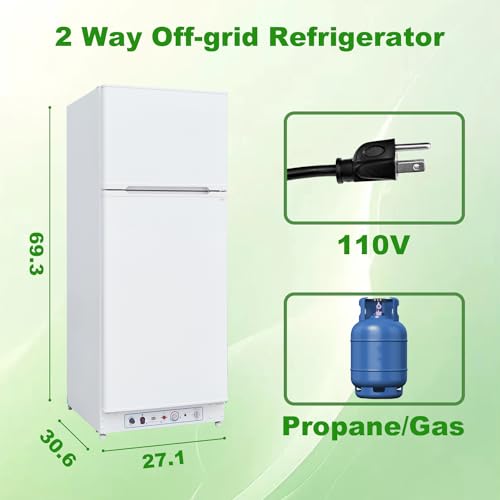
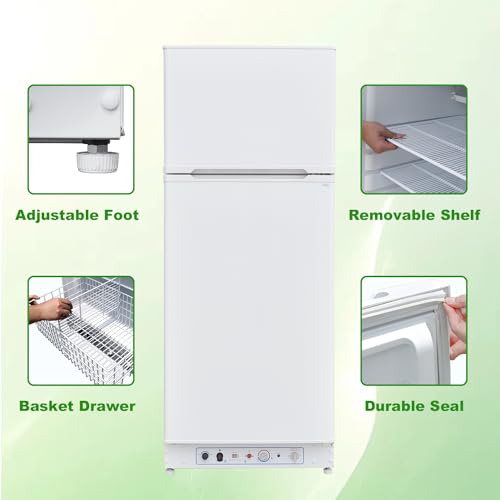
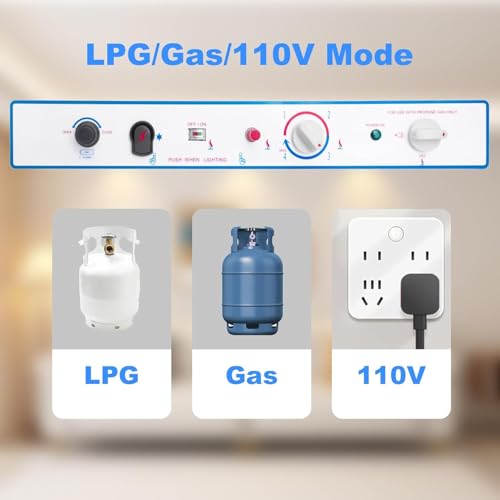
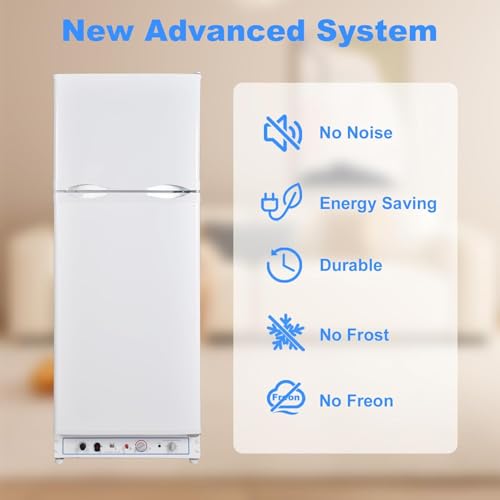
This 14.1 cu.ft propane fridge checks a lot of boxes for off-grid families who need reliable cooling without tying up battery banks. On paper, the dual LPG/110V power setup makes it flexible for cabin use or RV life, and owners consistently report stable temps even in warmer ambient conditions. The lack of a compressor means near-silent operation, which is a big plus in small living spaces, though you do have to stay on top of ventilation requirements.
Compared to similarly sized units like the Superior 10 cu.ft model, this one offers more usable space but drinks more fuel per day. Still, the removable shelves and crisper help with food organization, something I always emphasize when helping readers reduce spoilage. It’s not frost-free, so manual defrosting will be part of your routine.
Product photos
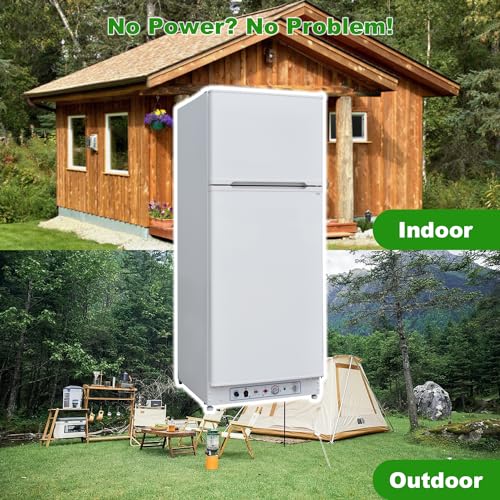
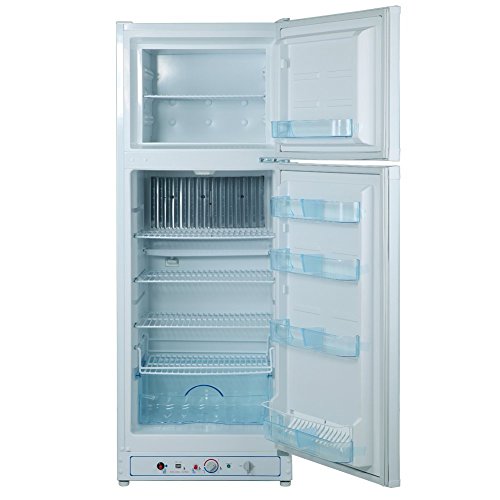
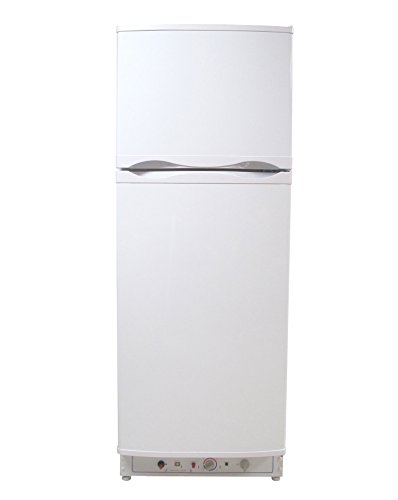
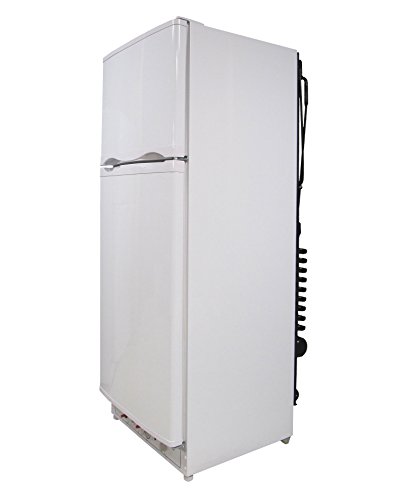
Superior 10 Cu Ft Off-Grid Fridge
Strengths
- Low fuel use
- Dual power support
- Compact footprint
Trade-offs
- Basic interior layout
- No crisper drawer
- Few storage customizations
At 10 cubic feet, this Superior unit hits a sweet spot between compactness and utility, especially for smaller cabins or weekenders. It runs on both propane and 110V, giving flexibility most basic models don’t offer at this price tier. The listed fuel consumption, 0.35 gallons per day, is impressively low, and owner feedback suggests it holds temperature well once stabilized, even in moderate heat.
But while it’s efficient, it lacks interior features like adjustable shelving or a crisper, which limits how well you can organize perishables. Compared to the SMETA 14.1 cu.ft model, it’s less spacious but easier to fit into tighter spots. If you’re after bare-bones reliability without bells and whistles, this gets the job done.
Product photos
How We Evaluated off grid refrigerators
Rather than a hands-on lab test, this is a research-led comparison of specifications and owner feedback for a range of off-grid refrigerators. I examined published specs – capacity, power source options (propane, 12V, AC), and energy consumption – across numerous models. We then weighed owner reviews from major retailers alongside expert opinions from RV and off-grid living publications to understand real-world performance and reliability. Finally, I assessed each refrigerator against criteria important for this category, prioritizing cooling efficiency, capacity, and suitability for remote locations.
For off-grid refrigerators, cooling method and power versatility were the biggest deciding factors. Absorption cooling (common in propane models) is favored for its quiet operation and lack of moving parts, which increases reliability. The ability to run on multiple power sources (propane, 12V DC, and AC) is crucial for adaptability, especially for those who move between locations or experience power outages. A larger capacity is helpful, but only if it doesn’t come at the expense of excessive energy use.
Specifications give a clear picture of capacity and power requirements, but owner feedback reveals how those numbers translate to everyday use. I paid close attention to reports on temperature consistency, noise levels, and the longevity of components. Reputation matters; brands known for quality in RV or marine appliances often signal better build quality. If you’re looking for something even smaller, you might also consider looking at our guide to compact refrigerators for alternative solutions. For narrow spaces, check out our recommendations for 24 inch refrigerators.
How To Choose The off grid refrigerators
Finding the right off-grid refrigerator requires a bit more thought than simply picking a model with a low price. These appliances need to be reliable, efficient, and suited to your specific power setup and lifestyle.
A good off-grid refrigerator prioritizes energy efficiency, whether through propane, 12V DC, or solar power. Look for models with robust insulation, absorption cooling systems (avoiding compressors when possible), and a capacity that realistically matches your needs. Dual-power options add versatility, while features like reversible doors and adjustable shelving maximize usability in limited spaces.
Power Source & Efficiency
The first, and arguably most important, decision is how you’ll power your refrigerator. Propane models, like the Techomey 19 Cu.Ft, are popular for their independence from the grid, but require safe venting and a consistent propane supply. 12V DC refrigerators, or those offering a 12V option, are excellent if you’re running off a battery bank and potentially solar power. If you’re considering 12V, it’s worth exploring dedicated 12 volt refrigerators for optimal performance. Absorption refrigerators, common in propane and 12V models, are quieter and use less energy than compressor-based units, but can be slower to cool. Pay close attention to daily energy consumption figures (both propane usage and wattage) to ensure the refrigerator fits within your power budget.
Capacity and Space Considerations
Don’t overestimate your needs, but don’t underestimate them either. A smaller fridge, like the Smad 1.4 Cu.Ft, might be perfect for a solo traveler or a weekend cabin, but a family will quickly find it limiting. Consider your typical grocery shopping habits and how often you can restock.
Here’s a quick guide to help you think through capacity: * Solo/Couple (short trips): 1.5 – 6 cu. ft. * Small Family (occasional use): 6 – 10 cu. ft. * Larger Family/Full-Time Living: 10+ cu. ft.
Remember to account for freezer space, too. If you rely heavily on frozen foods, a model with a substantial freezer compartment is essential. Also, carefully measure the space where the refrigerator will go, and don’t forget to factor in ventilation requirements (typically a few inches on all sides).
Features and Build Quality
Beyond power and capacity, certain features can significantly improve usability. Reversible doors are a huge plus, allowing you to adapt the refrigerator to your space. Adjustable shelving provides flexibility for storing items of different sizes. Look for durable construction, especially if you plan on moving the refrigerator frequently. The RecPro 10 Cu Ft model highlights the importance of robust construction for travel. Interior LED lighting makes finding items easier, and some models, like the Unique Appliances Solar Powered Fridge, offer convenient features like in-line fuses and error code warnings. If you’re looking for something that balances size and storage, exploring 10 cu ft refrigerators is a good starting point.
A refrigerator is a long-term investment. Don’t skimp on build quality; a well-made unit will save you money and headaches down the road.
Off Grid Refrigerators Compared
Here’s a comparison of key specifications for various off-grid refrigerators to help you choose the right model.
| Product Name | Capacity (Cu. Ft) | Power Source(s) | Voltage (V) | Gas Consumption (lbs/day) | Dimensions (W x D x H in) |
|---|---|---|---|---|---|
| Techomey Propane Refrigerator 19 | 19 | Propane, 110V AC | 110, LPG | N/A | 32.7 x 31.3 x 75.6 |
| Techomey 6.1 Cu.Ft Propane Fridge | 6.1 | Propane, 110V AC | 110, LPG | 0.56 | 23.6 x 25.6 x 57.5 |
| Smad 1.4 Cu.Ft 3 Way RV Fridge | 1.4 | 12V, 110V, Propane | 12, 110, LPG | N/A | 15.8 x 17.7 x 25 |
| RecPro 10 Cu Ft 12V RV Fridge | 10 | 12V | 12 | N/A | N/A |
| Unique Appliances Solar Fridge | N/A | 12V, 24V (Solar) | 12, 24 | N/A | N/A |
| SMETA 14.1 Cu.Ft Propane Fridge | 14.1 | Propane, 110V AC | 110, LPG | 1.06 | 27.1 x 30.6 x 69.3 |
| Superior 10 Cu Ft Off-Grid Fridge | 10 | Propane, 110V AC | 110, LPG | N/A | 24 x 29 x 64 |
Frequently Asked Questions
What refrigerator type is best for minimal power consumption?
Absorption refrigerators generally use less power than compressor-based models, making them ideal for off-grid setups. While they cool more slowly, their efficiency is a significant benefit when relying on limited power sources like solar or batteries.
How much propane does an off-grid refrigerator typically use?
Propane consumption varies widely by model and usage, but many propane refrigerators use around 0.5 to 1.1 pounds of propane per day. The Techomey 6.1 Cu.Ft Propane Fridge, for example, uses approximately 0.56 pounds daily, though this can change based on ambient temperature and how frequently the door is opened.
Are 12V refrigerators as effective as propane models?
12V refrigerators can be very effective, particularly those designed for RV or marine use. However, they often require a substantial battery bank and a reliable charging system to maintain consistent temperatures, and you may want to explore a compact 7.5 cu ft refrigerators if space is limited.
Can an off-grid refrigerator run on both propane and electricity?
Many off-grid refrigerators are designed with dual-power capabilities, allowing them to run on propane, 12V DC, and 110V AC. This provides flexibility and ensures you can still keep food cold during power outages or when propane isn’t readily available.
What size refrigerator is suitable for a small cabin or tiny home?
For a small cabin or tiny home, a refrigerator between 1.5 and 6 cubic feet is often sufficient, depending on how often you restock. If you are furnishing a student’s living space, you might also consider refrigerators for dorms as they are designed for limited spaces.
The Bottom Line
Choosing an off-grid refrigerator always involves trade-offs between initial cost, convenience, and long-term reliability. While features are nice, the best overall pick for most situations is the Techomey 19 Cu.Ft; its large capacity and dual-power options offer flexibility for a variety of off-grid setups, and owner feedback suggests it delivers consistent cooling. It’s a significant investment, but a well-chosen refrigerator is a cornerstone of comfortable off-grid living.
For those on a tighter budget, or with simpler needs, the Smad 1.4 Cu.Ft 3 Way RV Fridge is a fantastic option. If you need a dedicated 12V solution, especially for solar setups, the RecPro 10 Cu Ft 12V RV Fridge stands out for its simplicity and efficiency. And if you’re looking for something to fit a smaller space, don’t forget to check out our guide to apartment size refrigerators for more ideas.
Ultimately, the most important factors aren’t a specific brand or feature, but a realistic assessment of your power resources and food storage habits. Prioritize energy efficiency, build quality, and a capacity that truly meets your needs. A refrigerator that’s appropriately sized and powered will provide years of dependable service, reducing waste and simplifying life off the grid.
