8 Best Pressure Canners for Canning 2026
This post contains affiliate links. As an Amazon Associate, we earn from qualifying purchases.
The Presto 23-Quart Digital Pressure Canner stands out as the best overall for its precise digital control and reliable performance, while the Mirro 22 Qt with 3 Regulators is a solid, no-frills choice for those who prefer a trusted mechanical design. If you’re just starting out or canning in smaller batches, the Presto 12-Quart Digital Canner offers a manageable size with user-friendly features.
Choosing the right pressure canner means balancing safety, capacity, and ease of use, especially when you’re preserving large batches of homegrown food. As someone who focuses on practical, waste-reducing kitchen systems at Food Keepy, I know how important it is to have equipment that performs consistently.
This guide cuts through the noise by comparing specs, analyzing owner feedback, and highlighting models that deliver where it matters most: accurate pressure control, durable construction, and compatibility with your stovetop.
Top 8 Pressure Canners For Canning in the Market
The Best Pressure Canners For Canning, Reviewed
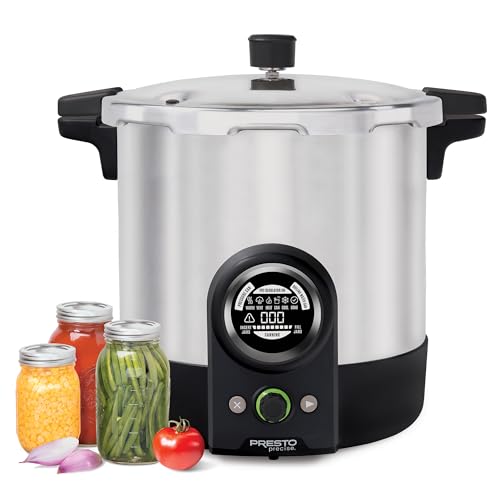
Presto 23-Quart Digital Pressure Canner
Strengths
- Automatic temperature control
- Large capacity
- Altitude adjustment
Trade-offs
- High price
- Large footprint
- Electric only
This is the most advanced option here, and it shows. The digital interface eliminates constant stove monitoring, which reviewers say reduces stress during long canning sessions. With automatic temperature control and altitude adjustments built in, it delivers repeatable results, especially helpful for beginners nervous about pressure accuracy. The 23-quart capacity handles up to 7 quarts or 20 pints, matching the best stovetop models.
While it’s the most expensive, the hands-free processing and guided prompts justify the cost if you value convenience and safety. It’s essentially a smart appliance for canning, and in this category, that’s rare. Compared to the compact digital model, this one scales better for families or gardeners.
Video review
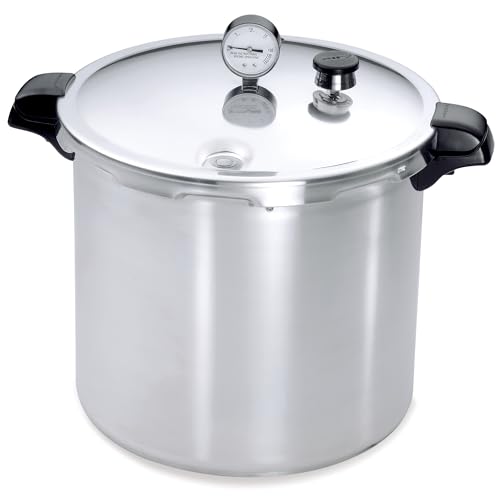
Presto 23-Quart Induction Compatible Canner
Strengths
- Induction compatible
- Large capacity
- USDA approved
Trade-offs
- No digital controls
- Heavier to handle
- Manual monitoring needed
This is the workhorse of budget-friendly stovetop canners, and owners consistently report it handles induction, gas, and electric ranges without issue. The 23-quart capacity lets you fit up to 20 pints per batch, which is solid for seasonal canning. It’s USDA-approved for low-acid foods, and the precision gauge gives more confidence than dial-only models when adjusting for altitude.
Where it really shines is dual functionality, switching from pressure to boiling water canning is straightforward, and the durable aluminum construction heats evenly. It lacks digital smarts, but for reliable, no-frills performance that scales, this model is hard to beat. I’d pick this over cheaper knockoffs any day.
Video review
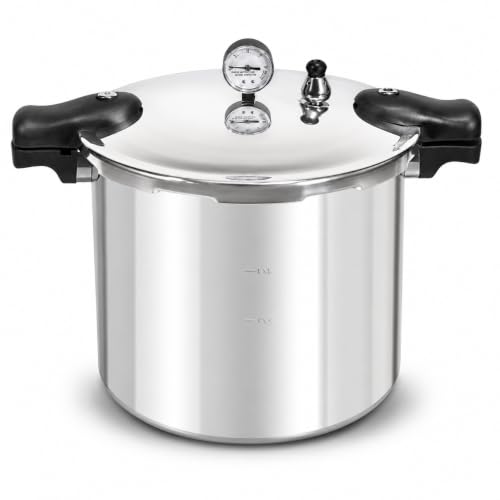
Barton 22-Quart Aluminum Pressure Canner
Strengths
- Low price
- Large capacity
- Induction compatible
Trade-offs
- Basic construction
- Gauge accuracy varies
- No starter tools
At under $110, this is one of the most affordable stovetop canners with a dial gauge and safety lock system. The 22-quart capacity fits up to 24 half-pints, making it a solid pick for budget-conscious preservers. It’s compatible with gas, electric, and induction, which adds flexibility, and the spring safety device adds peace of mind for new users.
Owners report it heats evenly and builds pressure quickly, though some mention the gauge may need occasional calibration. It doesn’t come with digital smarts or a full tool kit, but for the price, it delivers reliable performance. Compared to the Presto 01784, it’s cheaper but less refined, still, for the money, it’s hard to beat.
Product photos
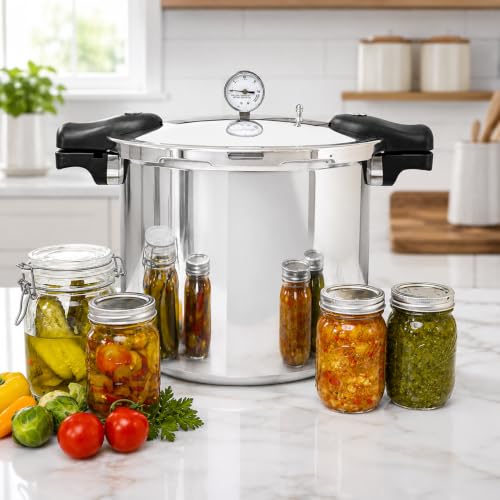
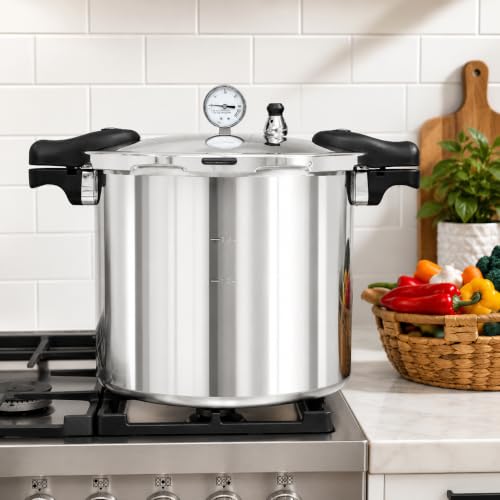


24 Quart Pressure Canner with Gauge
Strengths
- Extra-large capacity
- Includes canning tools
- Induction compatible
Trade-offs
- No digital controls
- Heavier to move
- Gauge may need calibration
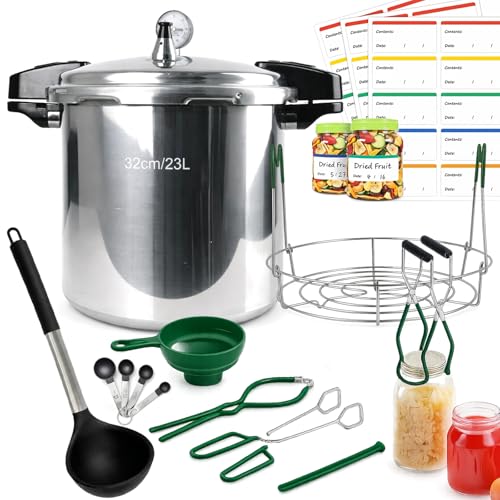
The standout here is the included 9-piece starter kit, owners love having the basics on hand, especially if they’re new to canning. The 24-quart capacity is among the largest available, ideal for processing big harvests or multiple jars in one go. The aluminum construction ensures fast, even heating, and the induction-compatible base adds versatility across stovetops.
The built-in gauge and 14.5 PSI regulator meet standard requirements, though some reviewers note that using a separate 10 PSI weight improves accuracy for certain recipes. While it lacks digital features, the size and included tools make it a strong value for hands-on canners. Compared to other large models, this one bundles convenience with performance.
Product photos


24QT Pressure Canner with 11-Piece Kit
Strengths
- Largest capacity
- Best starter kit
- Adjustable regulators
Trade-offs
- No digital features
- Bulky design
- Gauge not primary indicator
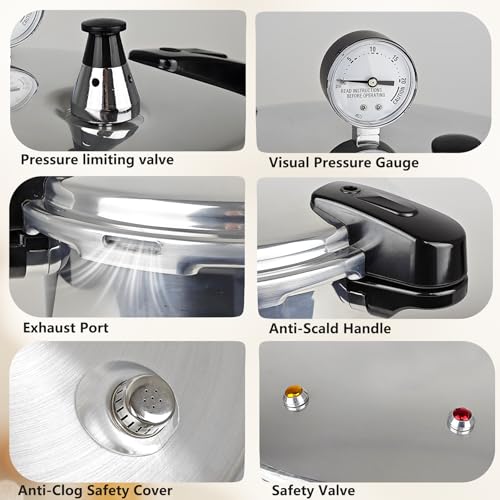
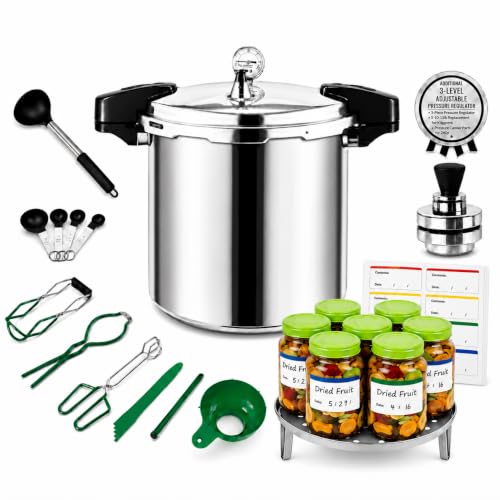
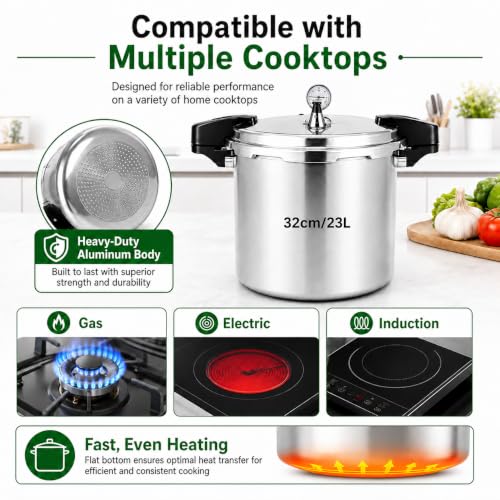
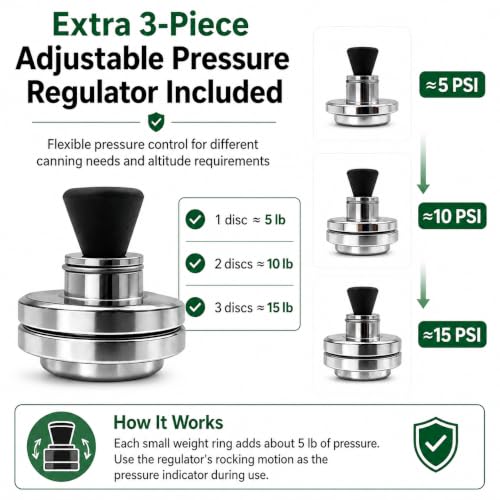
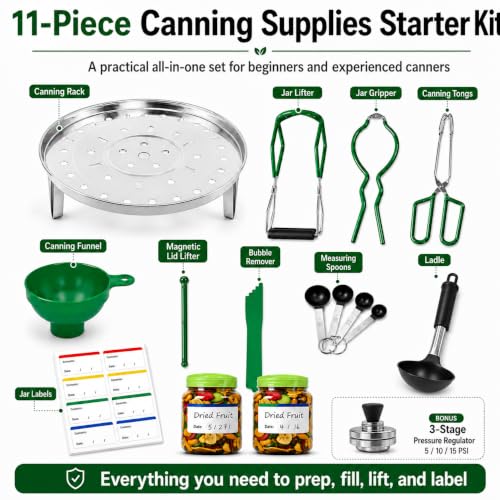
This model combines a massive 24-quart capacity with one of the most complete starter kits, 11 pieces, including labels and measuring spoons, which sets it apart from others. The included 3-piece adjustable regulator system lets you dial in 5, 10, or 15 PSI, which is ideal for customizing by recipe or altitude. The heavy-duty aluminum body heats quickly and works across all stovetops, including induction.
Reviewers note that the dial gauge should be used alongside the regulator’s rocking motion for best accuracy. While it’s not digital, the combination of size, included tools, and pressure flexibility makes it a top contender for beginners wanting everything in one box. Compared to the 9-piece kit model, this one just edges ahead in utility.
Product photos

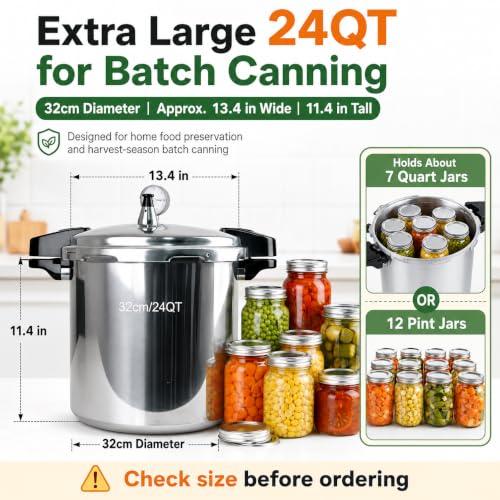
Mirro 22 Qt with 3 Regulators

Strengths
- Multiple pressure regulators
- Durable build
- Dual racks
Trade-offs
- No digital interface
- Manual monitoring
- Aluminum reactivity concerns
This model stands out for its three included regulators, 5, 10, and 15 PSI, which is rare and incredibly useful for canners at different altitudes or following varied recipes. The 22-quart capacity fits a solid number of jars, and the dual racks help organize loads efficiently. Mirro’s reputation for durable aluminum construction holds here, with a polished finish that’s easy to clean.
Owners report consistent performance, though the lack of a digital display means you’ll need to monitor pressure manually. But the flexibility of having multiple regulators on hand makes this a smart pick for anyone dealing with elevation changes or diverse canning needs. It’s a no-frills workhorse with a thoughtful feature set.
Product photos


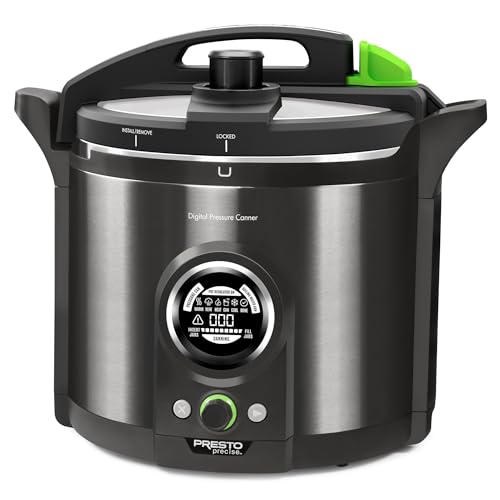
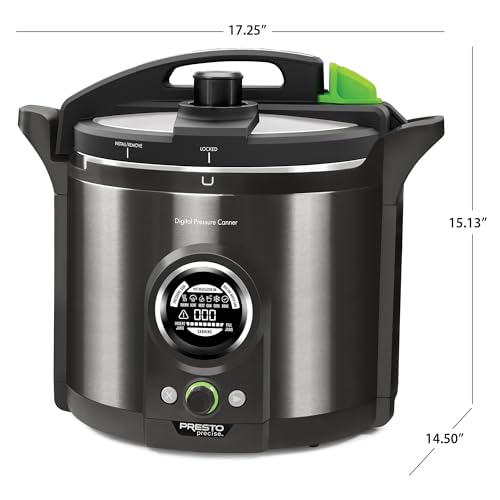
Presto 12-Quart Digital Canner
Strengths
- Digital automation
- Compact size
- Beginner-friendly
Trade-offs
- Limited jar capacity
- High price for size
- Electric only
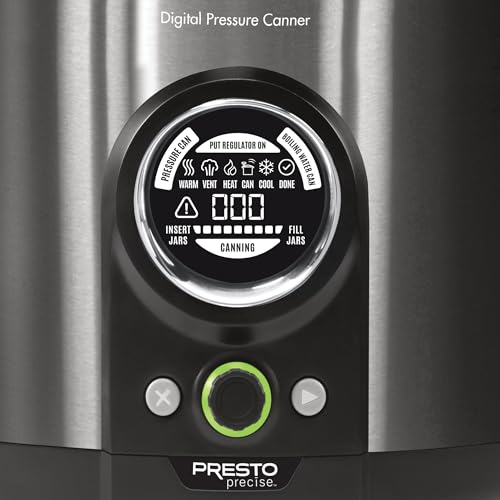
This is the compact sibling to the 23-quart digital model, and it fills a niche no other product does, small-space digital canning. At 12 quarts, it fits up to 7 pints, which is enough for small harvests or occasional use. The digital interface is simple, with step-by-step prompts that make USDA-compliant pressure canning more approachable, especially for first-timers.
It’s not meant for bulk processing, but the automation, like automatic pressure hold and safety lockouts, makes it safer and easier than most stovetop options. Compared to the larger digital Presto, this one sacrifices capacity for convenience, but it’s still a smarter buy than most electric multi-cookers pretending to be canners.
Product photos


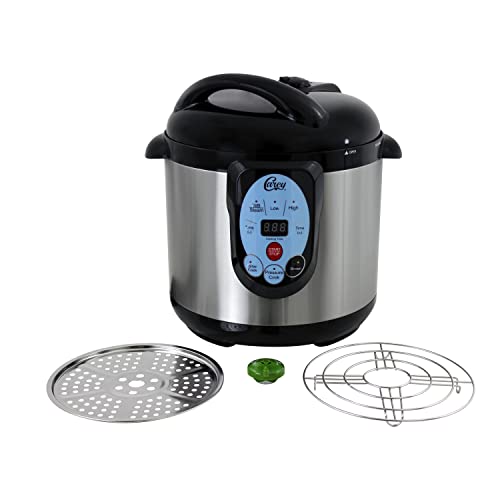
CAREY DPC-9SS 9.5 Qt Electric Canner
Strengths
- Dedicated canning mode
- Multiple cooking functions
- Digital presets
Trade-offs
- Small capacity
- Not ideal for large batches
- Limited to electric use
This electric canner stands out by blending pressure canning with everyday cooking modes, which is rare at this price. The dedicated canning function with automatic safety controls takes some of the guesswork out for beginners, and the digital presets help maintain consistency, something many owners appreciate when processing smaller batches. Still, the 9.5-quart capacity limits jar loading, especially for pint or quart jars, making it better suited for light canning rather than full harvest preservation.
Compared to stovetop models, it’s less versatile for USDA-approved low-acid canning at scale, but the nonstick inner pot and included racks do simplify cleanup and setup. For someone already using an electric pressure cooker, this feels like a logical upgrade if you’re just starting out.
Product photos


How We Chose These pressure canners for canning
Rather than a hands-on lab test, my research focused on comparing the published specifications and features of numerous pressure canners. I weighed owner reviews from major retailers alongside expert opinions from sites specializing in food preservation. As someone dedicated to finding practical kitchen solutions at Food Keepy, I applied my understanding of safe canning practices and prioritized features that contribute to consistent, reliable results. This analysis allowed me to rank canners against a set of clear criteria.
For pressure canners, capacity and safety features are paramount. A larger capacity reduces the number of batches needed for preserving a harvest, and the ability to process larger quantities is a significant time-saver. Equally important is a reliable pressure regulation system; accurate pressure is critical for safe food preservation. Beyond that, ease of use – particularly for beginners – figured heavily into my assessments.
Specifications reliably indicate capacity and materials, but owner feedback proved essential for judging real-world usability and durability. I paid close attention to comments about gauge accuracy, how easily the canner maintained consistent pressure, and the quality of included accessories. Reputation also played a role; brands with a long history of quality, like Presto and Mirro, received greater consideration, and I cross-referenced that with information on finding the right suitable canning jars for different models. Ensuring a proper seal jars properly is also a huge factor in successful canning.
Choosing The Right pressure canners for canning
Finding the right pressure canner can feel overwhelming, but it doesn’t have to be. A good canner will reliably preserve your harvest and provide peace of mind knowing your food is safely stored.
A quality pressure canner needs to build and maintain consistent pressure, offer robust safety features, and be appropriately sized for the typical batch sizes a home canner will process. Consider the stovetop type you have, the volume of food you typically preserve, and if features like digital controls or included accessories are important to you. Accurate pressure regulation is paramount for safe food preservation.
Capacity and Batch Size
The size of the pressure canner you choose should align with how much you typically can at once. A smaller, 12-quart model like the Presto 12-Quart Digital Canner is ideal for individuals or small families who are just starting out, or who primarily can smaller batches of jams and pickles. Larger households, or those who regularly process garden produce, will benefit from a 23-quart or even 24-quart canner. Don’t underestimate the convenience of larger capacity; it reduces the number of canning sessions needed during peak harvest times.
Stovetop Compatibility & Features
Many older homes, and even some newer ones, may not have induction cooktops. If you do, you’ll need to specifically look for an induction-compatible canner, such as the Presto 23-Quart Induction Compatible Canner. Otherwise, most traditional pressure canners will work on gas or electric ranges. Beyond compatibility, consider features like a pressure gauge.
- A dial gauge is standard, but can require periodic calibration.
- Weighted gauges, like those found on the Mirro 22 Qt, are generally considered more reliable long-term, as they don’t drift out of calibration.
- Digital models, like the Presto 23-Quart Digital Pressure Canner, offer the most precise temperature control and simplify the process, but they come at a higher price point.
Safety and Included Accessories
Pressure canning involves working with high temperatures and pressure, so safety is paramount. Look for features like a locking lid, a secure vent, and a reliable pressure regulator. It’s also worth considering what accessories are included. Many canners, like the 24QT Pressure Canner with 11-Piece Kit, come with a starter kit that includes a jar lifter, funnel, and other essential tools. If you are a beginner, investing in one of these best canning kits can save you money and ensure you have everything you need to get started.
Never attempt to force a pressure canner lid open while pressure remains inside. Allow the canner to cool completely and the pressure to return to zero before attempting to open it.
Pressure Canners for Canning Compared
Here’s a comparison of key specifications for several popular pressure canners to help you choose the right one for your needs.
| Product Title | Capacity (Quarts) | Stovetop Compatible | Induction Compatible | Digital Control | Pressure Regulator | Included Kit |
|---|---|---|---|---|---|---|
| Presto 23-Quart Digital Pressure Canner | 23 | No | No | Yes | Automatic | No |
| Presto 23-Quart Induction Compatible Canner | 23 | Yes | Yes | No | Standard | No |
| Barton 22-Quart Aluminum Pressure Canner | 22 | Yes | Yes | No | Standard | No |
| 24 Quart Pressure Canner with Gauge | 24 | Yes | Yes | No | Standard (14.5 PSI) | 9-Piece Kit |
| 24QT Pressure Canner with 11-Piece Kit | 24 | Yes | Yes | No | Multiple | 11-Piece Kit |
| Mirro 22 Qt with 3 Regulators | 22 | Yes | N/A | No | Multiple | No |
| Presto 12-Quart Digital Canner | 12 | No | No | Yes | Automatic | No |
| CAREY DPC-9SS 9.5 Qt Electric Canner | 9.5 | No | N/A | Yes | Automatic | Canning Rack |
Frequently Asked Questions
What pressure is needed for canning vegetables?
For safely canning low-acid vegetables, you generally need to reach 11 pounds of pressure at 0-2,000 feet elevation, and 15 pounds of pressure above that. Always consult a tested recipe for the specific pressure and processing time needed for the vegetables you are canning.
Can I use a pressure canner on a glass top stove?
Many pressure canners are suitable for glass top stoves, but it depends. Check the canner’s documentation to confirm compatibility, and be sure your stove’s surface is level and can support the canner’s weight; induction cooktops require specifically marked induction-compatible models.
How often should a dial gauge on a pressure canner be checked?
A dial gauge should be checked for accuracy annually. Most county extension offices offer this service, or you can purchase a gauge testing kit to do it yourself, ensuring accurate pressure readings for safe canning.
What’s the difference between a weighted gauge and a dial gauge canner?
A weighted gauge uses weights to regulate pressure, offering consistent performance without needing calibration, while a dial gauge displays the pressure numerically. Dial gauges require regular testing for accuracy, but many find them easier to read and control initially.
Where can I find more information about safe canning practices and essential canning equipment ?
The National Center for Home Food Preservation (NCHFP) is an excellent resource for research-based information on safe canning methods. They offer detailed guides covering everything from how to sterilize jars to processing times for various foods.
The Bottom Line
Choosing a pressure canner really comes down to balancing how much time and effort you want to invest with the level of precision and convenience you desire. For most home canners, I believe the Presto 23-Quart Induction Compatible Canner strikes the best balance. It offers a generous capacity, works on most cooktops, and has a reputation for reliability, all without the higher price tag of digital models.
If you’re on a tighter budget or are new to canning, the 24QT Pressure Canner with 11-Piece Kit is an excellent starting point. For those prioritizing precise control and ease of use, the Presto 23-Quart Digital Pressure Canner is worth considering, though be prepared to pay a premium. And remember, understanding how to pressure can is crucial, no matter which model you choose.
Ultimately, the most important factors aren’t the digital bells and whistles or even the exact quart size. Ensuring you’re using the right canning lids and following safe pressure canning procedures – like allowing the canner to cool completely before opening – are what truly determine the safety and quality of your preserved foods. Consistent, accurate processing, and proper jar sealing are the cornerstones of successful home canning.
