
9 Best Small Freezers of 2026
This post contains affiliate links. As an Amazon Associate, we earn from qualifying purchases.
The overall best small freezer for most people is the 3.5 Cu.Ft Chest Freezer, thanks to its reliable performance, energy efficiency, and quiet operation. For those tight on space or budget, the BANGSON 1.1 Cu.ft Mini Freezer is a solid pick, while the Maine 3.6 Cu.ft Upright Freezer offers the easiest access and organization.
Finding extra frozen storage that actually fits your kitchen, and your life, can be frustrating. Too often, small freezers sacrifice performance for size or end up costing more in electricity than they’re worth.
As someone who researches food storage solutions daily at Food Keepy, I know what separates a useful appliance from a space-waster. This guide cuts through the noise by comparing real-world specs and owner feedback to find models that keep food fresh, run efficiently, and make smart use of limited space.
Top 8 Small Freezers in the Market
The Best Small Freezers, Reviewed
3.5 Cu.Ft Chest Freezer
Strengths
- Extremely affordable
- Energy efficient
- Quiet operation
Trade-offs
- Basic finish and materials
- No garage-ready rating
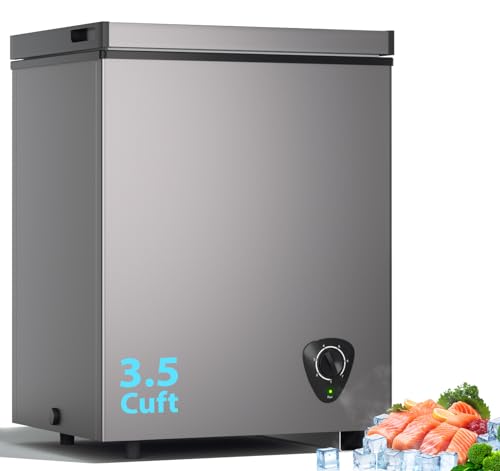
Priced under $80, this 3.5 cu.ft chest freezer is a budget powerhouse. It offers the same capacity as the Midea and Kismile but at nearly half the cost. The 7 temp settings and 0.37kWh/24h energy draw make it both flexible and efficient, owners consistently report low electricity use.
It’s quiet below 40dB, includes a removable basket, and fits in tight spaces. Build quality is basic, but for the price, it overdelivers. Compared to every other model, it’s the best value. If you don’t need convertible function or a lock, this is the best overall pick for most buyers.
Video review
Midea 3.5 Cu.ft Freezer

Strengths
- Convertible function
- Garage ready
- Power outage protection
Trade-offs
- No reversible door
- Slightly higher energy use
The Midea 3.5 Cu.ft chest freezer stands out for its convertible fridge-freezer functionality, which is rare in this size class. For someone managing food storage across seasons or with fluctuating needs, like preserving garden harvests in summer or switching to extra frozen meals in winter, this flexibility is a real advantage. It’s also garage-ready, meaning it can handle temperature swings, a big plus for anyone using it in an unheated space.
Owners consistently report that the 48-hour power outage protection works as advertised, which gives peace of mind during storms. While it lacks the organization of uprights, the removable basket helps. Compared to other 3.5 cu.ft models, this one justifies its price with versatility. I’d pick it over a single-mode unit if you need both fridge and freezer capacity at different times.
Video review
BANGSON 1.1 Cu.ft Mini Freezer
Strengths
- Ultra-compact size
- Affordable price
- Reversible door
Trade-offs
- No lock
- Limited capacity
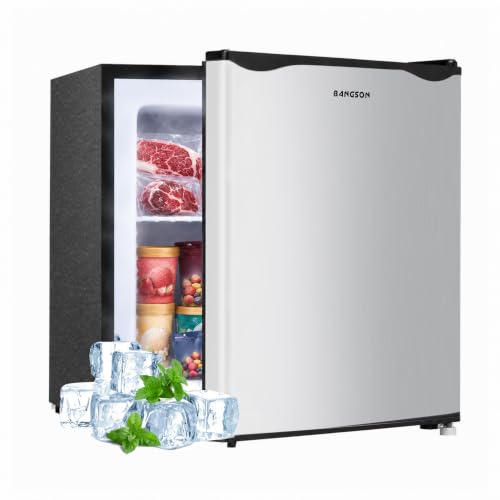
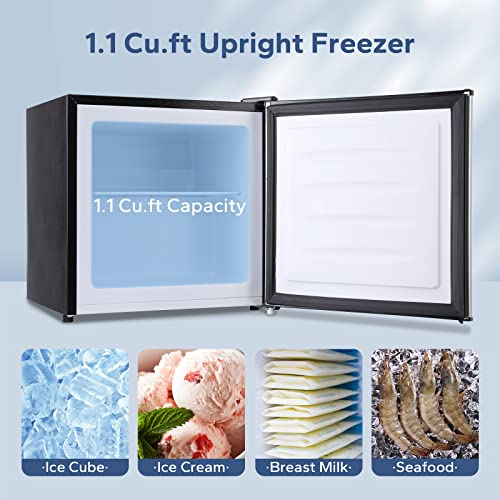
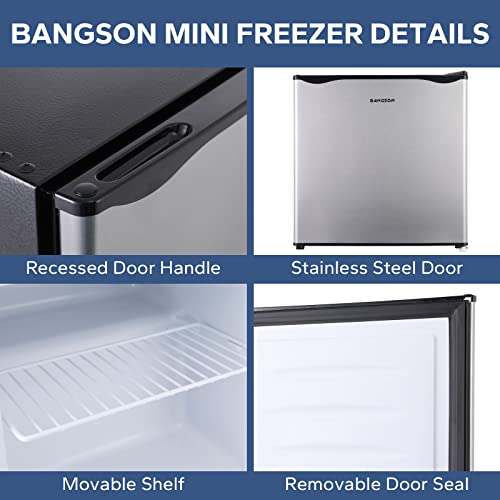
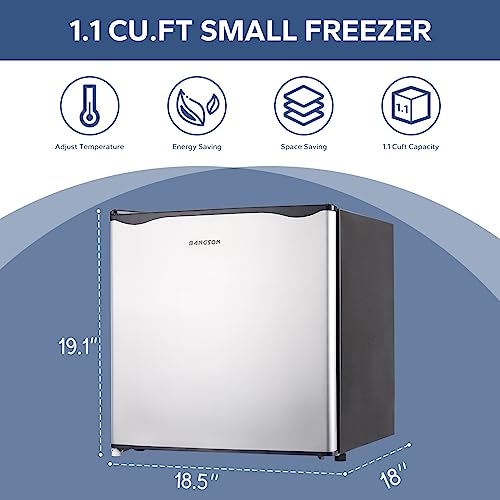
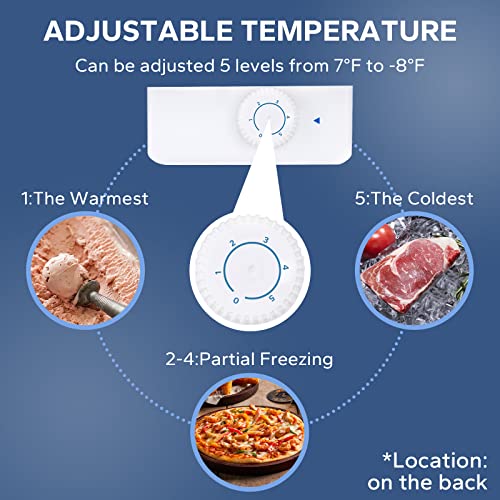
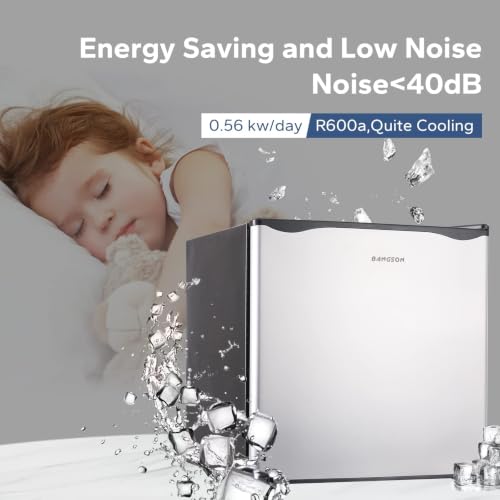
The BANGSON is one of the most space-smart mini freezers on the market, ideal for dorm rooms or tiny kitchens. At just over 1 cu.ft, it won’t hold a month’s worth of groceries, but it’s perfect for ice cream, snacks, or storing breast milk. The 5-grade temperature control is simple and effective, and owners say it reliably hits -8°F.
Its reversible door and compact height make it easy to tuck under counters or into corners. While it doesn’t have a lock or advanced features, it’s one of the most affordable uprights with decent build quality. Compared to the Whynter CUF-110B, it’s cheaper but lacks security. For basic personal use, it’s a solid entry-level pick.
Product photos
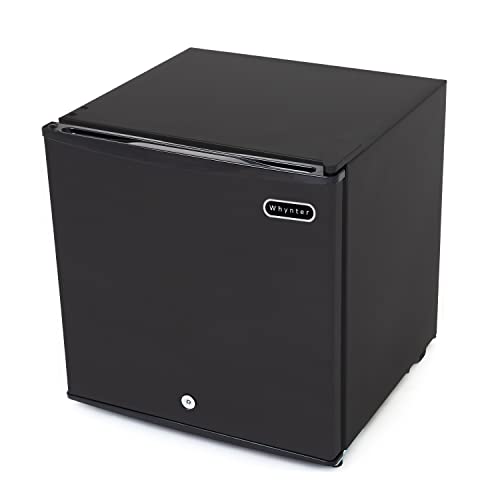
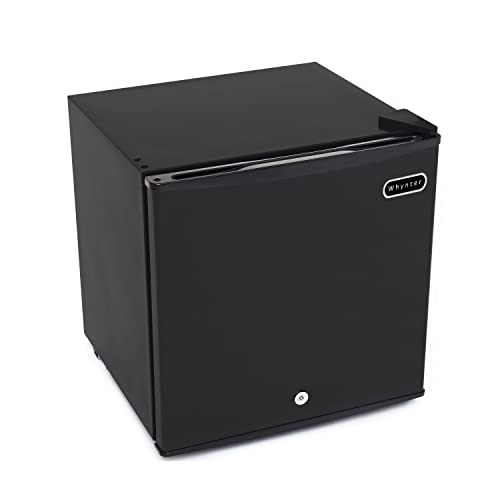
Whynter 1.1 Cu Ft Mini Freezer
Strengths
- Includes lock and keys
- Energy Star rated
- Slide-out shelf
Trade-offs
- Small capacity
- Basic temp control
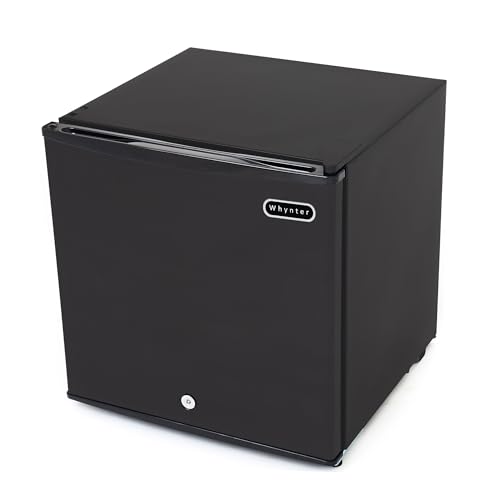
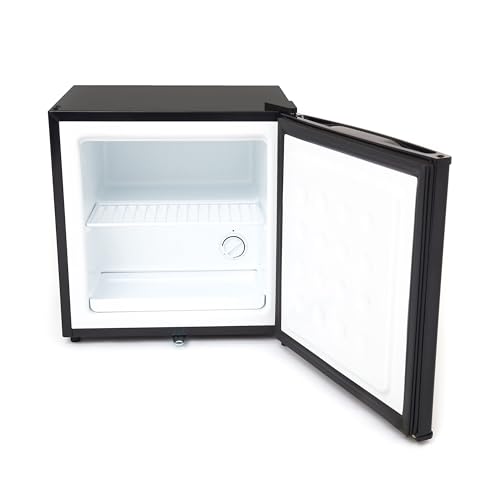
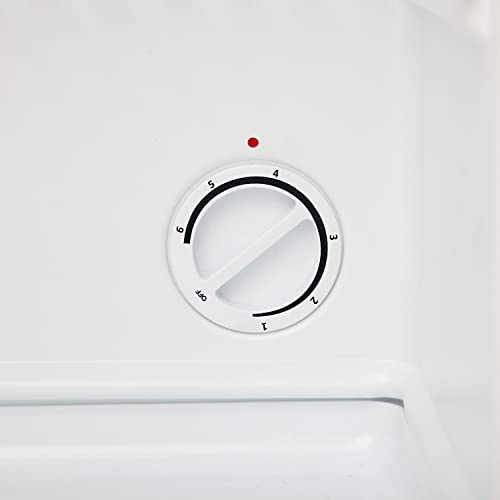
Security is rare in mini freezers, but the Whynter CUF-110B delivers with a built-in lock and two keys, making it a standout for shared spaces. It’s frequently used in offices, garages, or dorms where food theft is a concern. The mechanical thermostat reliably maintains temps from -11°F to 10.4°F, and the slide-out shelf makes organization easier than in most uprights this size.
It’s not the quietest or most energy-efficient, but the Energy Star rating helps. Owners appreciate the sleek black design and recessed handle. Compared to the BANGSON, it’s pricier but offers better security and slightly better build. If you need to lock down meds, breast milk, or expensive ingredients, this is the one to get.
Product photos
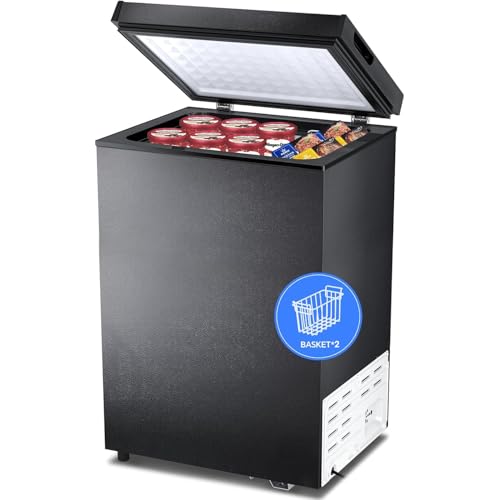
Kismile 3.2 Cubic Feet Freezer
Strengths
- Very quiet operation
- 7-level temp control
- Hinge-assisted door
Trade-offs
- Baskets feel lightweight
- Cord placement limits placement
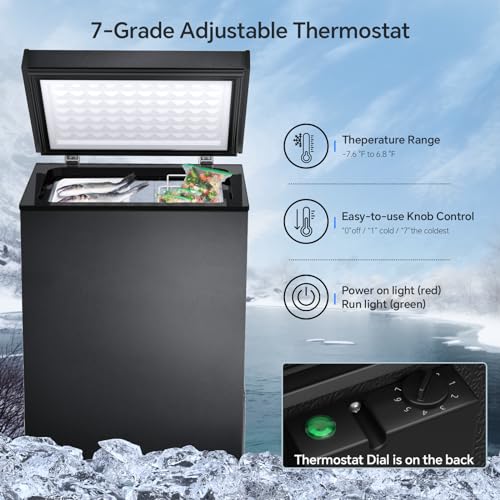
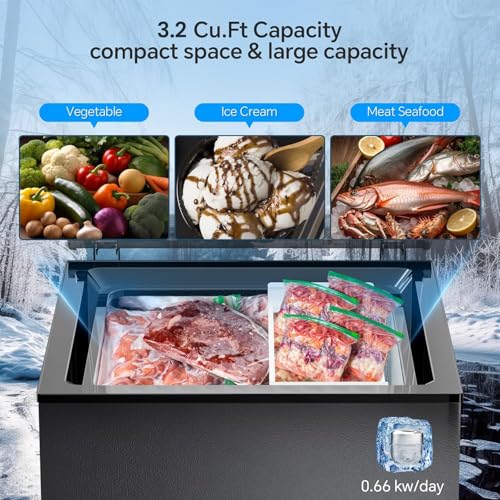
If noise is a concern, say you’re placing a freezer in a bedroom, office, or open-concept apartment, the Kismile 3.2 cu.ft model is a smart pick. It runs below 40 dB, making it one of the quietest in its class. The 7-grade thermostat gives precise control, and owners confirm it holds steady at -7.6°F, which is cold enough for long-term meat or fish storage.
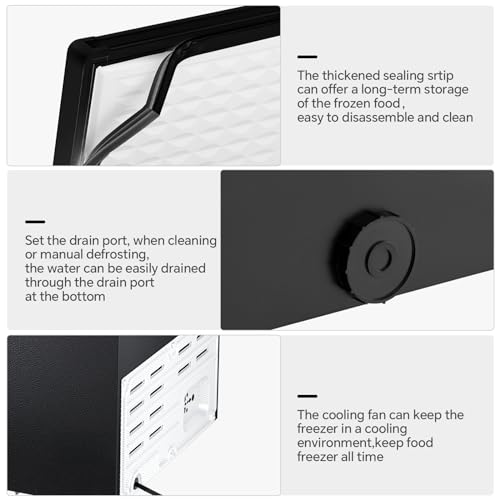
It’s not the most compact, but the hinge-style door stays open at usable angles, preventing that annoying snap-shut most chest freezers have. The dual baskets help with organization, though some users note they’re a bit flimsy. Still, for the price, it beats the Midea on noise and temperature control, though it lacks convertible function.
Product photos
BLACK+DECKER 2.0 Cu.ft Freezer

Strengths
- Good storage for size
- External temp control
- Removable basket
Trade-offs
- Manual defrost
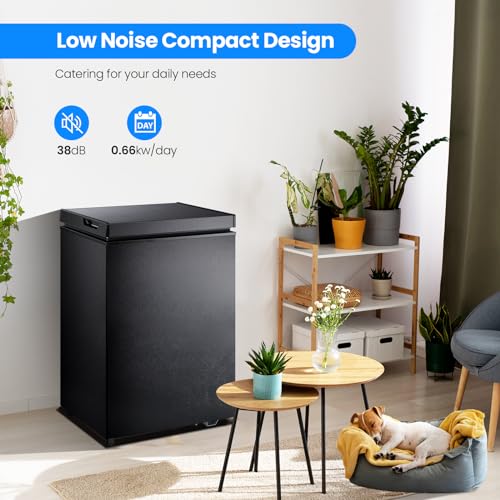
- Noisy compared to others
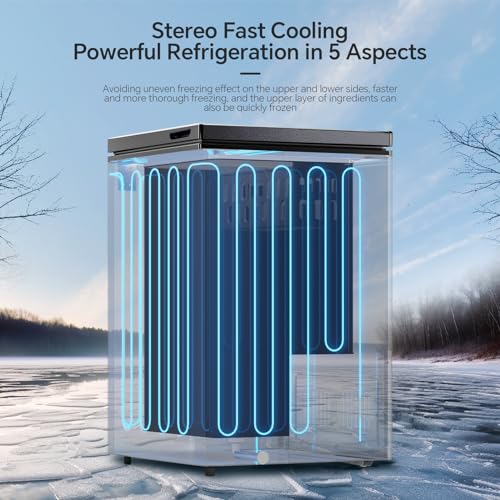
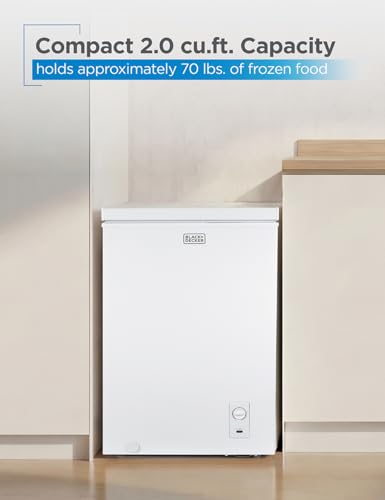
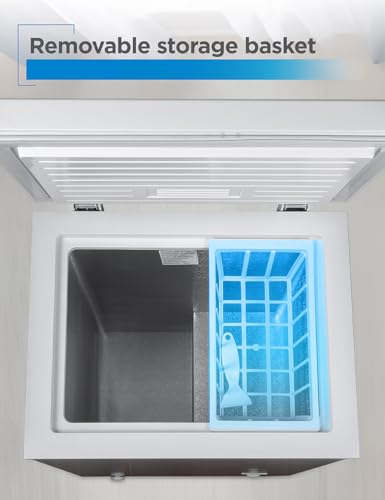
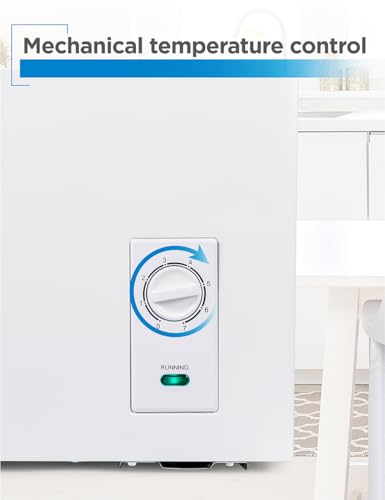
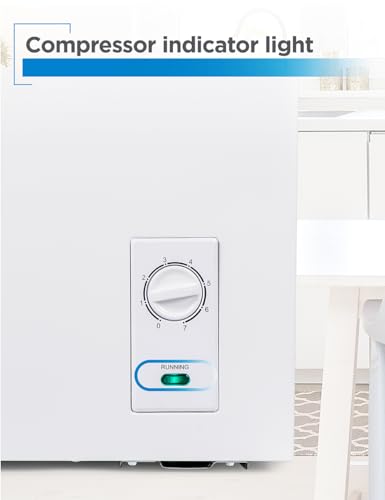
The BLACK+DECKER 2.0 cu.ft chest freezer hits a sweet spot between size and practicality. It’s small enough for tight spaces but holds up to 70 lbs of frozen food, making it useful for singles or couples who buy in bulk occasionally. The removable basket helps keep items sorted, and the external mechanical dial makes temperature adjustments simple without opening the lid.
It’s a no-frills model, but that’s part of its appeal. It’s manual defrost, which means occasional maintenance, but owners say it’s easy to clean thanks to the drain. Compared to the Kismile or Midea, it’s smaller but more affordable and still reliable. I’d recommend it as a secondary freezer for a pantry or utility room where space is limited.
Product photos
Maine 3.6 Cu.ft Upright Freezer
Strengths
- Easy item access
- Reversible door
- Sleek stainless finish
Trade-offs
- Higher frost buildup
- Less energy efficient than chest models
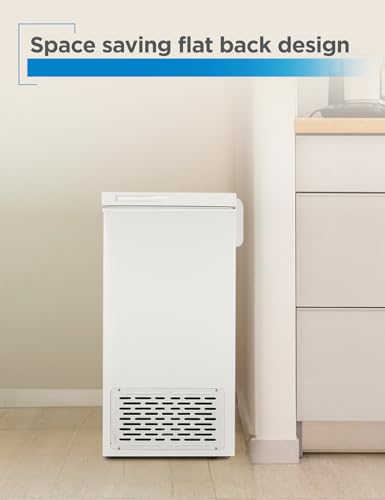
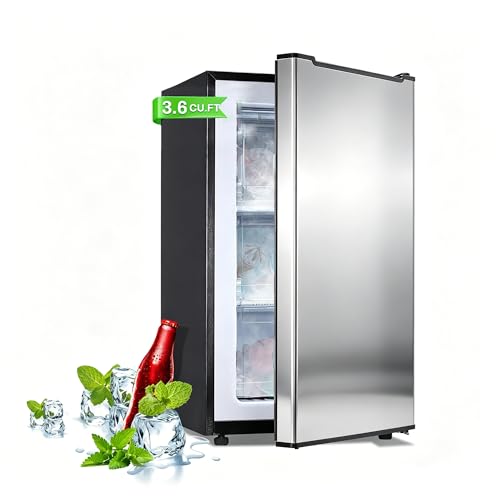
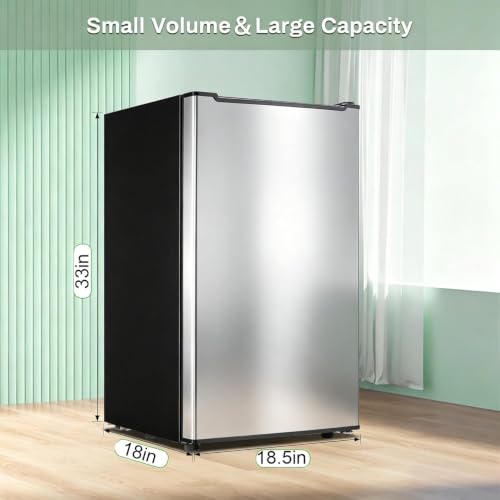
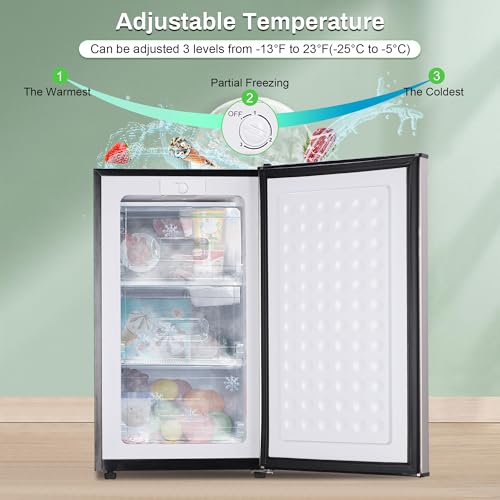
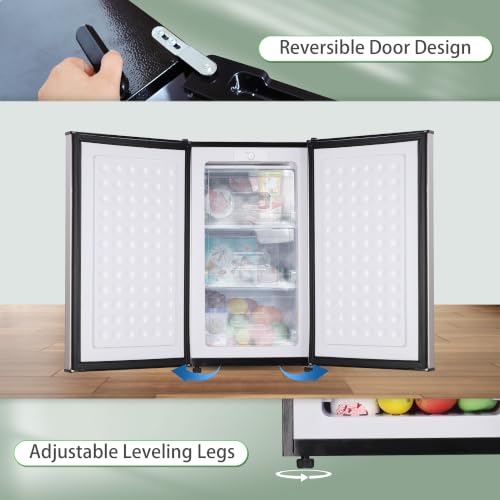
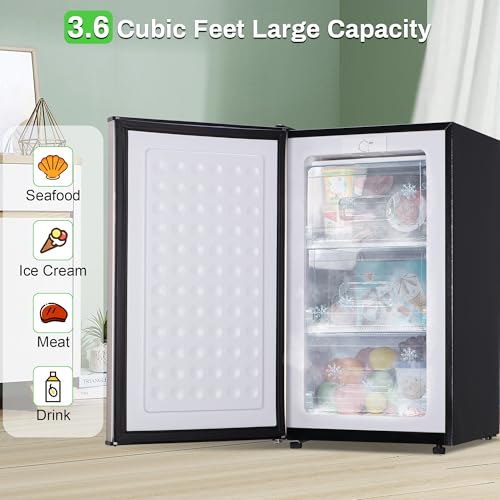
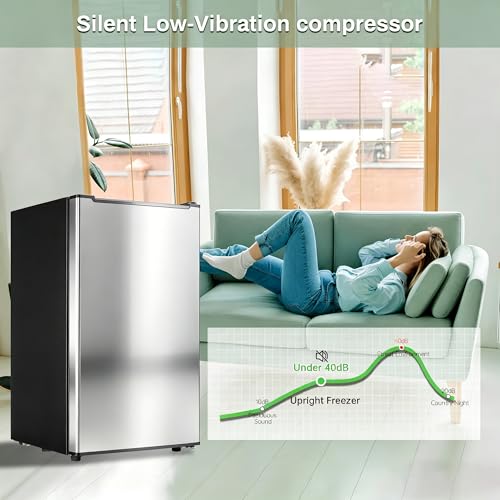
Upright freezers trade some efficiency for convenience, and the Maine 3.6 cu.ft model delivers on easy access and organization. If you hate digging through a chest freezer, this one’s adjustable shelves and door bins make it a no-brainer. The reversible stainless steel door is a nice touch for tight spaces, and the flush-back design helps it fit flush against walls.
It’s rated at 40 dB, which is acceptable for a bedroom or office, and the R600a compressor is efficient. However, uprights naturally lose more cold air when opened, so it’s not the best for long-term bulk storage. Compared to the BANGSON or Whynter, it offers more space and better build, though it costs more. I’d recommend it for kitchens or living areas where convenience trumps energy savings.
Product photos
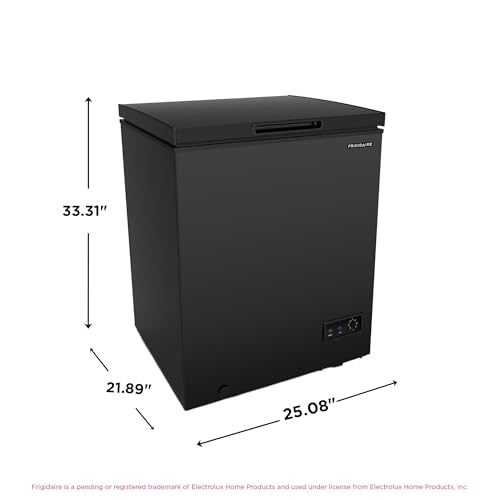
FRIGIDAIRE 5.0 Cu Ft Freezer

Strengths
- Large 5.0 cu.ft capacity
- Durable aluminum liner
- Easy defrost drain
Trade-offs
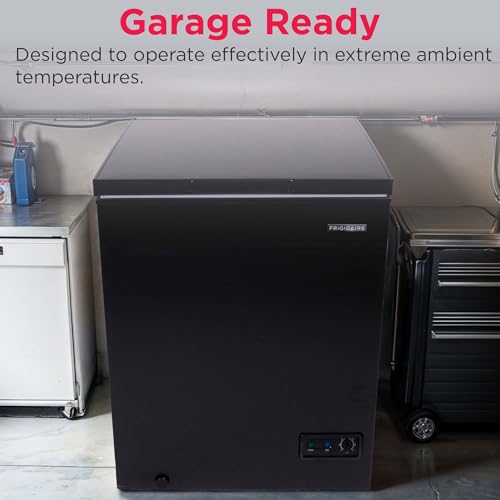
- Not garage-ready
- Heavier and harder to move
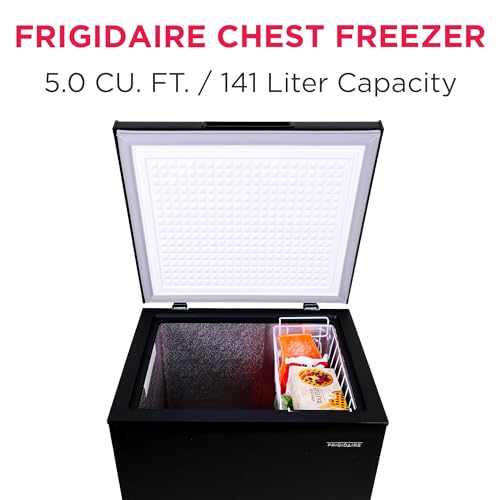
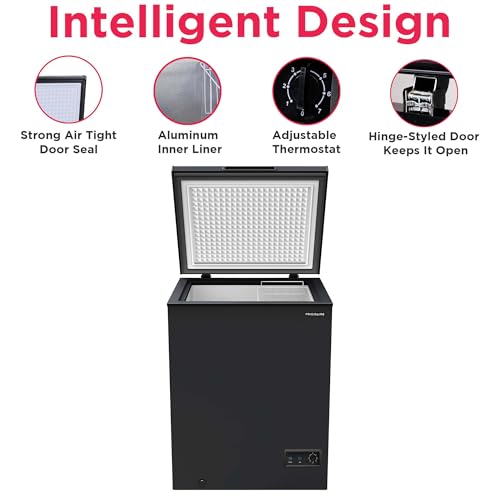
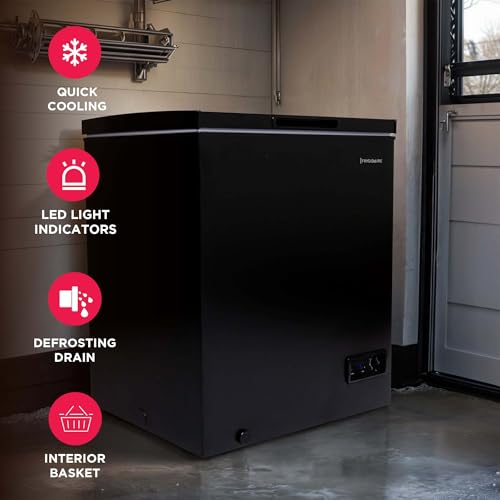
With 5.0 cu.ft of capacity, the Frigidaire is the largest here and built for serious storage. It’s ideal for families, hunters, or meal-preppers who freeze in bulk. The aluminum interior is durable and resists dents better than plastic-lined models, and the 7-setting thermostat gives good control over freezing levels.
Owners praise the easy-defrost drain and the vinyl-coated basket, which holds up well over time. It’s not garage-ready by spec, so avoid extreme temps. Compared to the Midea, it lacks convertible function but offers more space and sturdier construction. For long-term, high-volume freezing, it’s the smarter buy.
Product photos
How We Picked These small freezers
As someone who researches food storage solutions for Food Keepy, I approached evaluating small freezers by looking at a combination of published specifications, owner reviews, and my understanding of what makes a freezer truly useful in a home kitchen. Rather than a hands-on lab test, this is a research-led comparison of features and how real users report those features performing. I focused on models across a range of sizes and styles, from compact mini freezers to slightly larger chest and upright options.
For small freezers, consistent temperature control, energy efficiency, and usable space are the most critical factors. A freezer that can’t reliably maintain freezing temperatures is useless, no matter how affordable it is. Similarly, a unit that significantly increases your electricity bill defeats the purpose of supplemental storage. Finally, the interior layout and how effectively the space is used, even in a small capacity, directly impacts how much you can actually store.
Specifications reliably indicate a freezer’s capacity and energy consumption, but owner feedback proved crucial for understanding real-world performance. I weighed reports on noise levels, temperature consistency (particularly in garage environments), and the durability of components like baskets and hinges. Expert reviews from appliance sites helped validate these findings, and I also considered features like convertible designs and power outage protection when assessing overall value. If you’re considering an upright model, you might also find our guide to the best small upright freezers helpful. For those needing outdoor storage, exploring garage freezers is a good starting point.
Choosing The Right small freezers
Finding the right freezer isn’t just about capacity; it’s about matching the appliance to your lifestyle and needs.
A good freezer maintains a consistently cold temperature, offers usable storage solutions (shelves, baskets), operates quietly, and is appropriately sized for the available space. Energy efficiency and temperature control are also vital, as is considering whether a chest or upright design will better suit your access patterns and storage habits.
Size and Capacity
The first step is realistically assessing how much extra frozen storage you actually require. Don’t fall into the trap of thinking “bigger is always better.” A partially full freezer is less efficient than a properly filled one, and a massive unit takes up valuable space. Consider who you’re buying for – a single person or couple has very different needs than a family. Many people underestimate how much space they’ll actually use, but starting with a smaller unit, like those discussed in our guide to small freezers, is often a wiser approach.
Temperature Control and Efficiency
Consistent temperature is paramount. Fluctuating temperatures lead to freezer burn and spoiled food, defeating the purpose of freezing in the first place. Look for models with adjustable thermostats, allowing you to fine-tune the temperature based on what you’re storing. Many of the models we’ve looked at offer a range from around -11°F to 10°F, but the specifics matter. Equally important is energy efficiency. Freezers run 24/7, so even small differences in energy consumption add up over time.
- A model with an Energy Star rating is a good starting point.
- Consider the kWh/24h rating – lower is better, representing lower energy use.
- Look for features like robust insulation and efficient compressors; these contribute to lower operating costs and a quieter running experience. A small chest freezer tends to be more energy efficient than an upright, due to less cold air escaping when opened.
Design and Features
Beyond size and temperature, consider how you’ll interact with the freezer daily. Upright freezers offer easier access to items, similar to a refrigerator, but take up less floor space. Chest freezers generally offer more storage per cubic foot and are better at maintaining temperature during power outages.
A practical rule of thumb: If you frequently access small items, an upright freezer is more convenient. If you primarily store large, bulky items and prioritize temperature retention, a chest freezer is the better choice.
Small Freezers Compared
Here’s a comparison of key specifications for the small freezers described.
| Product Title | Capacity (Cu. Ft) | Temp. Range (F°) | Defrost Type | Door Type | Noise Level (dB) |
|---|---|---|---|---|---|
| 3.5 Cu.Ft Chest Freezer | 3.5 | -11.4° to 10.2° | Manual | Chest | <40 |
| 3.5 Cu.Ft Deep Freezer | 3.5 | -7.6° to 21.2° | Manual | Chest | N/A |
| Midea 3.5 Cu.ft Freezer | 3.5 | 0° to 110° (Freezer) | Manual | Chest | N/A |
| BANGSON 1.1 Cu.ft Mini Freezer | 1.1 | -8° to 7° | Manual | Upright | N/A |
| Whynter 1.1 Cu Ft Mini Freezer | 1.1 | -11° to 10.4° | Manual | Upright | N/A |
| Kismile 3.2 Cubic Feet Freezer | 3.2 | 6.8° to -7.6° | Manual | Chest | <40 |
| BLACK+DECKER 2.0 Cu.ft Freezer | 2.0 | N/A | Manual | Chest | N/A |
| Maine 3.6 Cu.ft Upright Freezer | 3.6 | 23° to -13° | Manual | Upright | <40 |
| FRIGIDAIRE 5.0 Cu Ft Freezer | 5.0 | N/A | Manual | Chest | N/A |
Frequently Asked Questions
What temperature should I actually set my small freezer to?
The ideal temperature is 0°F (-18°C). Maintaining this temperature consistently prevents freezer burn and ensures food safety, and most models have a setting to achieve this.
Are mini freezers energy efficient enough to leave running 24/7?
Generally, yes, but it depends on the model. Look for Energy Star-certified models, and check the kWh/24h rating; a lower number indicates better efficiency. Consider that even small differences in energy use add up over time.
What’s the difference between a manual and a frost-free defrost system?
A manual defrost system requires you to periodically turn off the freezer and scrape away accumulated frost, which is more labor-intensive but generally more energy efficient. Frost-free models automatically remove frost, but can use more energy in the process.
If I’m short on space, are there good space-saving upright freezers available?
Yes, there are. Our best compact upright freezers guide details several models specifically designed for smaller kitchens and offer convenient access in a limited footprint.
What size freezer do I need if I regularly buy meat in bulk?
For bulk meat purchases, a capacity of 5.0 cubic feet or larger is recommended. This allows you to store larger cuts and packages effectively; if you need a bit less space, checking out our guide to the 7 cu ft freezers might be helpful.
The Bottom Line
Choosing a small freezer often comes down to balancing convenience with capacity. You’ll need to decide if easy access is worth sacrificing some storage space, or if maximizing frozen goods is the priority. For overall performance and a good blend of features, the 3.5 Cu.Ft Chest Freezer stands out as a strong choice – it offers a solid capacity without overwhelming a smaller space and consistently receives positive feedback regarding temperature stability.
If you’re on a tighter budget, the BANGSON 1.1 Cu.ft Mini Freezer is a great option to add some extra storage. For those who need a versatile unit that fits easily into a dorm room or office, the Whynter 1.1 Cu Ft Mini Freezer is a popular pick. And if you’re specifically looking at small chest freezers, the Kismile 3.2 Cubic Feet Freezer is a well-regarded option in that category.
Ultimately, the best freezer isn’t about the flashiest features or the lowest price. It’s about reliable temperature control, efficient use of space, and choosing a style, chest or upright, that truly fits how you store and access food. Before getting too caught up in specs, think about your typical freezing habits and what will make your life easier when it comes to preserving your ingredients, as detailed in our freezer reviews and guides.
