
7 Best Small Refrigerators of 2026
This post contains affiliate links. As an Amazon Associate, we earn from qualifying purchases.
The Midea 3.1 Cu.ft Mini Fridge with Freezer stands out as the best overall small refrigerator for its reliable cooling, Energy Star certification, and smart storage design. For those on a tighter budget, the Frestec 3.2 Cu.Ft offers strong performance at a lower price. If you need something ultra-compact, the CROWNFUL Mini Fridge 4L is a portable pick that works well for drinks or skincare.
When you’re tight on space, whether it’s a dorm room, home office, or a small kitchen, finding a fridge that actually keeps food fresh without guzzling power or making noise is harder than it should be. Too many models sacrifice performance for size, or promise efficiency but fall short in real use.
As someone who’s spent years researching how to store food properly and reduce waste through better kitchen organization, I focused this guide on models that balance actual usable space, consistent cooling, and energy use, backed by specs, owner feedback, and what makes for practical, everyday reliability.
Top 7 Small Refrigerators in the Market
The Best Small Refrigerators, Reviewed
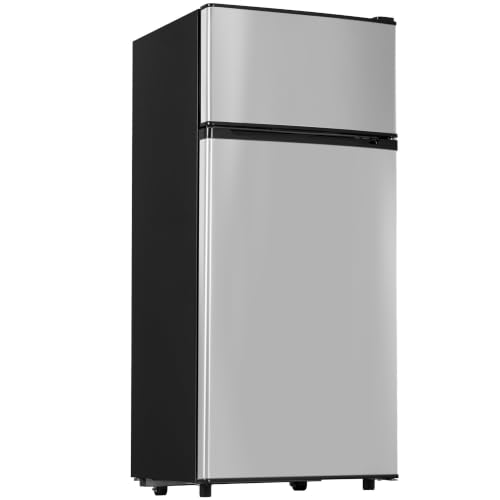
Manastin 4.5 Cu.Ft Mini Fridge Freezer
Strengths
- Spacious 4.5 cu.ft capacity
- Separate freezer compartment
- Very quiet operation
Trade-offs
- Higher price point
- Taller unit may not fit under counters
If you’re after a mini fridge that feels closer to a full-size appliance in function but still fits in constrained spaces, the Manastin 4.5 cu.ft model is hard to ignore. With nearly double the capacity of many competitors and a dual-door layout separating fridge and freezer, it delivers real versatility. Owners praise how well it maintains consistent temps across both compartments, thanks to the 7-level thermostat control. The whisper-quiet operation under 38 dB checks a major box for bedroom or office use, this won’t keep you up at night.
The three removable glass shelves and crisper drawer make organizing fresh produce easier than in most mini fridges, and the dual-door design helps prevent odor transfer, a common complaint in single-door units. While pricier, its balance of size, cooling precision, and quiet performance justifies the cost for long-term users. I’d pick this over smaller models if you plan to store actual meals regularly.
Video review
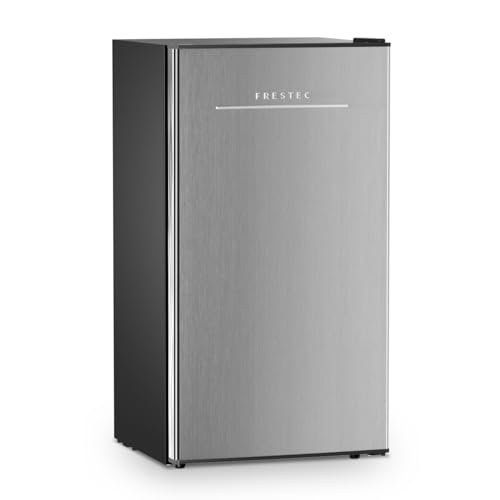
Frestec 3.2 Cu.Ft Mini Fridge with Freezer
Strengths
- Affordable price
- One-touch defrost
- Includes crisper drawer
Trade-offs
- Basic temp stability
- Plastic interior feels less durable
At this price, the Frestec 3.2 cu.ft model punches above its weight, delivering a full chiller-freezer combo, LED lighting, and even a one-touch defrost system, which is rare in budget units. On paper, it matches features found in more expensive models, and owner reviews confirm it cools effectively while staying quiet (below 37dB). The adjustable thermostat with six settings gives decent control, though some note minor temp swings during hot weather.
Its standout feature is clearly the ease of maintenance: the one-touch defrost and soft-seal door make cleaning less of a chore than manual-defrost rivals. Still, it uses a basic compressor without advanced airflow systems, so temperature consistency isn’t quite as strong as in the Midea or Manastin units. For the money, though, it’s a smart buy, especially when you factor in the included crisper drawer and two glass shelves.
Video review
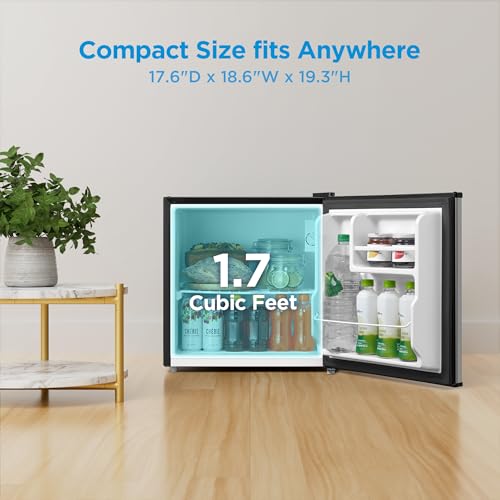
Midea 1.7 Cu.ft Mini Fridge

Strengths
- Compact footprint
- Energy efficient
- Reversible door
Trade-offs
- No freezer compartment
- Limited storage height
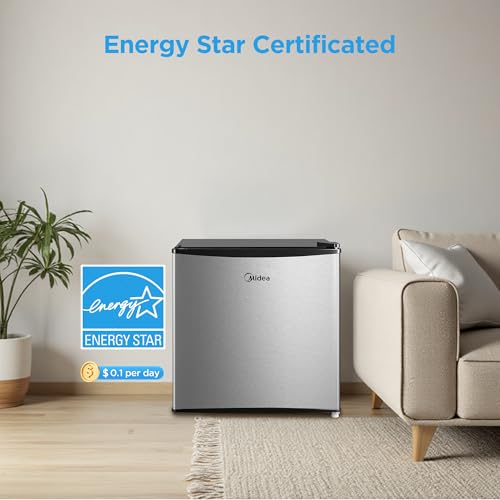
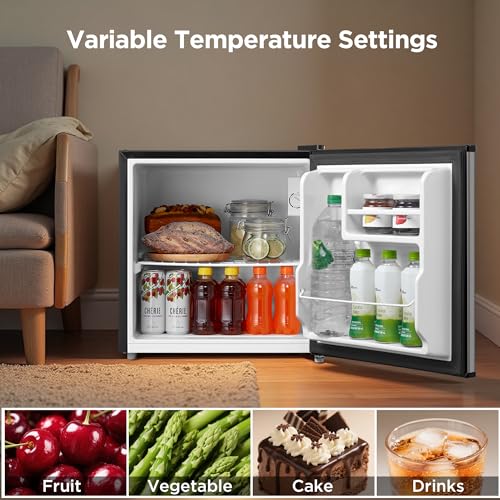
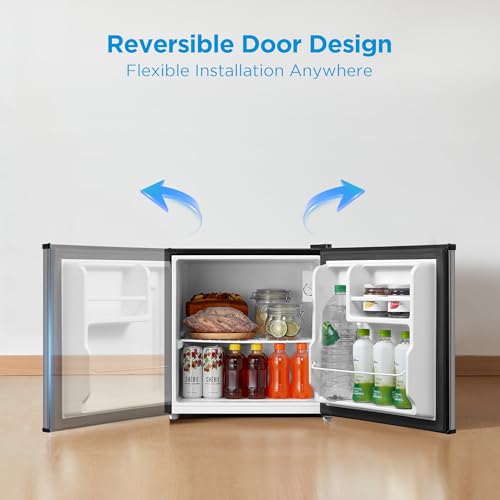
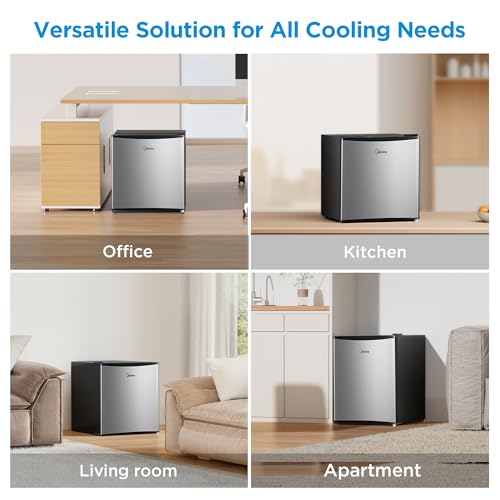
For those who need just enough cooling power for drinks and light snacks without cluttering a small space, this Midea model makes a lot of sense on paper. At 1.7 cubic feet, it’s one of the most compact options here, yet owners consistently report it handles daily beverage storage reliably, especially in dorms or tight apartments where square footage matters. The Energy Star certification is a real perk, suggesting lower long-term energy use, and the low noise rating aligns with feedback that it won’t disturb sleep or work nearby.
What stands out more is the thoughtful touches: the built-in 2L bottle shelf keeps larger containers upright, and the reversible door adds flexibility in awkward corners. It lacks a freezer, which limits its utility for meal preppers, but that’s expected at this size. Compared to bulkier models, this fridge wins on simplicity and footprint, not capacity.
Product photos
Frigidaire Mini Personal Fridge Cooler

Strengths
- Ultra-portable design
- Dual power cords
- Great for skincare
Trade-offs
- No freezing capability
- Limited cooling range
- Small capacity
This isn’t a fridge for food storage, it’s a portable cooler with style, and it excels in that niche. At just 10L and weighing only 6 pounds, it’s designed to move easily from desk to car to bedside, and the brushed stainless steel finish gives it a sleek look that works in modern spaces. What grabs attention is its marketing toward skincare users: people are using it to chill face rollers, serums, and masks, and given the thermoelectric cooling, that makes sense.
It only cools 26–28°F below ambient temperature, so don’t expect ice-cold temps in a hot room. And since it’s thermoelectric, it can’t freeze anything. But the dual power options (home and car) make it uniquely mobile. Compared to larger compressors, it’s less powerful but far more flexible. If you want cold toner before bed or a chilled drink at your desk, this does that job quietly and efficiently.
Product photos


CROWNFUL Mini Fridge 4L Portable

Strengths
- Cooling and heating modes
- Super quiet
- Portable with carry handle
Trade-offs
- Very small capacity
- Limited cooling power
- No freezer function
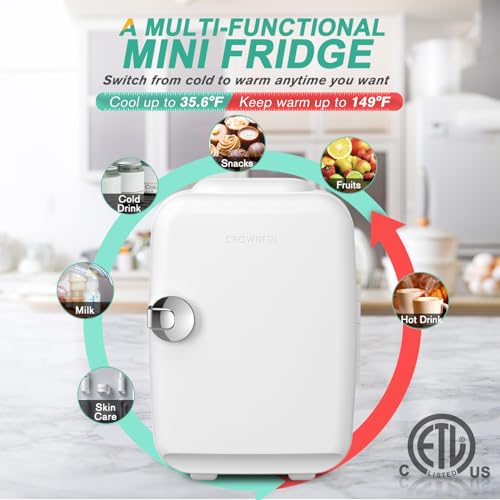
The ability to switch between cooling and warming sets this Crownful unit apart from every other mini fridge here. While others focus solely on chilling, this one can heat up to 149°F, useful for keeping baby bottles warm or storing ingredients that need gentle warmth. At only 4 liters, it’s tiny, but the sleep-mode quietness (25 dB) and ETL certification make it safe for bedside or nursery use.
Owners love using it for breast milk, skincare, or cosmetics, and the dual power options (car and home) enhance its portability. However, its cooling is limited to 10–20°C below room temp, so it won’t get icy in a warm room. Compared to compressor models, it’s weaker, but also lighter, quieter, and more versatile in function. For specific personal care uses, that trade-off makes sense.
Product photos



Frostorm 3.2 Cu Ft Mini Fridge with Freezer
Strengths
- Extremely energy efficient
- True freezer compartment
- Reversible door
Trade-offs
- No interior light
- Single-door design reduces efficiency
- Manual defrost only
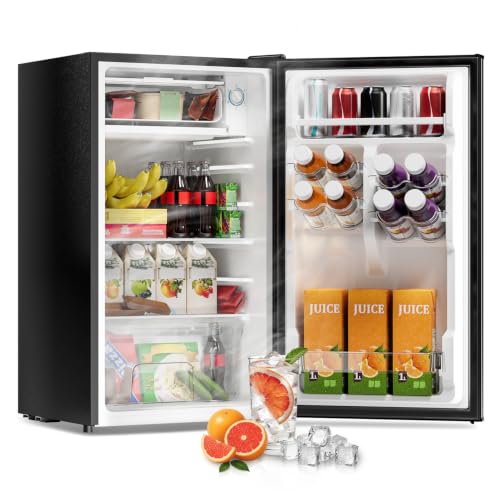
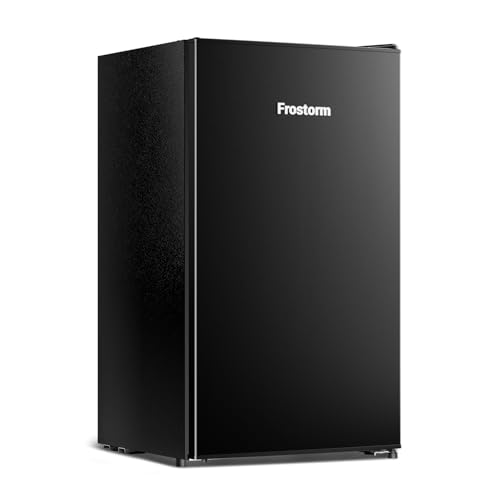
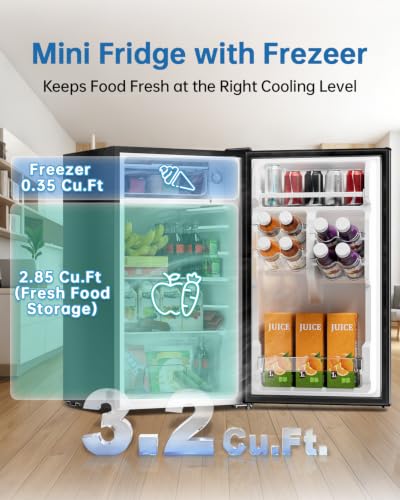
Among energy-sippers in this category, the Frostorm stands out with an average draw of just 0.6 kWh per day, making it one of the most economical long-term choices. For anyone worried about leaving a fridge running 24/7 in a dorm or studio, that efficiency matters, and owners report noticeable savings on utility bills. The 3.2 cu.ft layout includes a dedicated 0.35 cu.ft freezer compartment that reaches -24°C, which is cold enough for ice cubes and short-term frozen goods.
Storage is flexible thanks to adjustable shelves, and the reversible door adds placement freedom. However, being a single-door unit, opening it floods the freezer with warm air each time, less ideal for frequent access. It lacks LED lighting, which feels like a missed opportunity at this price. Still, when energy efficiency is your top priority, this model earns its place. I’d recommend it over flashier options for eco-conscious buyers.
Product photos


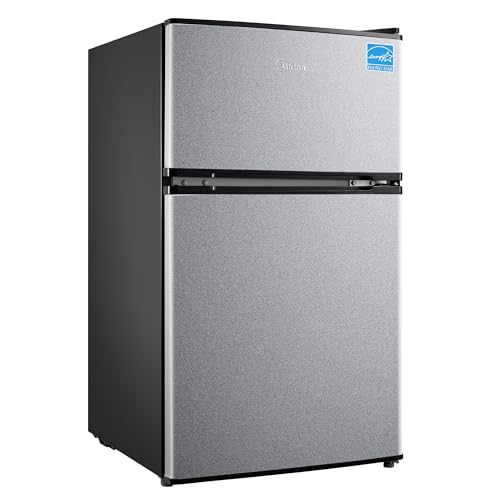
Midea 3.1 Cu.ft Mini Fridge with Freezer
Strengths
- Energy Star certified
- Freezer with low temp range
- Interior LED light
Trade-offs
- Higher initial cost
- No crisper drawer
- Manual defrost
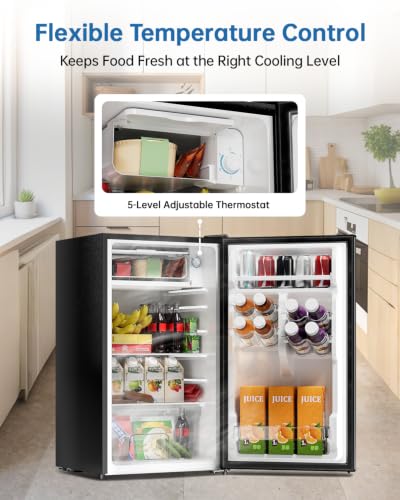
Midea builds a reputation for balancing reliability and smart design, and this 3.1 cu.ft model lives up to it, especially for dorm life. With Energy Star certification and a high-efficiency R600A compressor, it sips electricity while maintaining stable temps across both fridge and freezer zones. The adjustable thermostat lets users fine-tune cooling between 32°F–50°F for the main compartment and sub-zero temps in the freezer, ideal for frozen snacks or emergency ice.
Owners appreciate the LED interior light and reversible door, which add convenience in shared or dim spaces. The 2L bottle rack is a small touch that actually improves usability. While it costs more than budget picks, it’s less expensive than the Manastin despite offering similar core features. My recommendation? This is the smarter buy over pricier models if you want proven efficiency and dorm-ready durability without paying for extra flair.
Product photos


Our Testing Process
As someone who spends a lot of time thinking about food storage – and minimizing waste, as I share on Food Keepy – I approached researching small refrigerators by looking at a combination of published specifications, owner reviews, and expert opinions. Rather than a hands-on lab test, this was a research-led comparison of features and reported performance. I weighed the available models against what people are actually saying about their experiences, alongside my understanding of what makes for effective cooling and convenient use.
For this category, capacity and energy efficiency were the most important factors. A small refrigerator needs to offer usable space without being bulky, and the ongoing cost of running it is a real consideration for dorms, offices, or secondary kitchens. Beyond that, flexibility in storage – adjustable shelves, reversible doors – significantly impacts how well a unit will fit into different lifestyles. We also gave weight to reported noise levels, as many of these fridges end up in quieter environments.
Specifications are useful for understanding advertised capacity, temperature ranges, and energy consumption. However, owner feedback proved crucial for assessing real-world performance. I paid close attention to comments about consistent cooling, noise levels (manufacturers’ claims don’t always match reality!), and long-term reliability. You can find more information about choosing the right size refrigerator in our guide to refrigerators for small spaces. I also considered expert reviews from sites focused on appliance testing to validate owner experiences, especially when looking at the more technical aspects of energy efficiency. For students, our guide to fridges for dorms can provide further assistance.
Choosing The Right small refrigerators
Finding the right small refrigerator depends heavily on where you’ll use it and what you plan to store. It’s not a one-size-fits-all situation, and a little careful consideration upfront can save you money and frustration down the road.
A good small refrigerator balances capacity with energy efficiency, temperature consistency, and convenient features like adjustable shelving. Prioritize a model with a compressor known for quiet operation, especially for bedrooms or offices. Consider the door swing and whether reversible doors are necessary to fit your space. Finally, check owner reviews for reports of reliability and accurate temperature control.
Capacity and Dimensions
First, realistically assess how much space you actually have and how much you’ll need to chill. Don’t fall for the trap of thinking bigger is always better. A 4.5 Cu.Ft model like the Manastin might feel spacious, but it’s unnecessarily large for a single person’s dorm room. Conversely, the Midea 1.7 Cu.Ft is fantastic for skincare or a few beverages, but won’t handle grocery shopping for a family. Measure the available space carefully – height, width, and depth – and leave room for ventilation, especially at the back.
Temperature Control and Efficiency
Consistent temperature is critical, not just for food safety but also for preserving the quality of what you’re storing. Many models boast multiple thermostat levels, but the accuracy of those settings varies. Look for models with mechanical thermostats that have a clear, numbered dial (like the Midea 3.1 Cu.Ft) rather than vague markings. Energy efficiency is also important, particularly if the refrigerator will be running 24/7. If you’re concerned about energy usage, explore options like the Frostorm 3.2 Cu Ft, which emphasizes energy savings.
Here’s what to consider when comparing energy efficiency:
- Energy Star Certification: A good starting point, but doesn’t guarantee the lowest consumption.
- kWh per year: This figure provides a direct comparison of energy use. Lower is better.
- Compressor Type: R600A compressors (found in some Midea models) are generally more efficient than older refrigerant types.
A refrigerator that maintains a steady temperature and doesn’t drain your electricity bill is a win-win.
Features and Noise Level
Beyond the basics, consider features that align with your lifestyle. Do you want a separate freezer compartment? The Frigidaire Mini Personal Fridge is a great option for skincare and portability, but offers no freezer. If you need a freezer, look at the models with dedicated compartments. Noise is a frequently overlooked factor. If the refrigerator will be in a bedroom or office, a quiet model is essential. Many manufacturers advertise decibel (dB) levels, with anything under 40dB considered very quiet. For those prioritizing a quiet operation, you may want to explore quiet small refrigerators to find the most suitable option. And if you’re looking for a broader overview of options, check out our guide to small refrigerators.
Small Refrigerators Compared
Here’s a comparison of key specifications for several small refrigerators to help you make an informed purchase.
| Product Title | Capacity (Cu. Ft) | Freezer (Cu. Ft) | Energy Star Certified | Noise Level (dB) | Power Source |
|---|---|---|---|---|---|
| Manastin 4.5 Cu.Ft Mini Fridge Freezer | 4.5 | N/A | No | <38 | 110V |
| Frestec 3.2 Cu.Ft Mini Fridge with Freezer | 3.2 | N/A | No | <37 | 110V |
| Midea 1.7 Cu.ft Mini Fridge | 1.7 | N/A | Yes | N/A | 110V |
| Frigidaire Mini Personal Fridge Cooler | 10L (approx 0.35) | N/A | No | N/A | 12V/110V |
| CROWNFUL Mini Fridge 4L Portable | 4L (approx 0.14) | N/A | No | 25 | 12V/110V |
| Frostorm 3.2 Cu Ft Mini Fridge with Freezer | 3.2 | 0.35 | No | N/A | 110V |
| Midea 3.1 Cu.ft Mini Fridge with Freezer | 3.1 | N/A | Yes | N/A | 110V |
Frequently Asked Questions
What temperature should a small refrigerator be set to?
Ideally, a small refrigerator should be set to between 37°F and 40°F (3°C and 4°C) to safely store perishable foods. Many models have adjustable thermostats, but achieving and maintaining this range can vary based on ambient temperature and the refrigerator’s design.
Are small refrigerators energy efficient?
Energy efficiency varies significantly. Look for models with an Energy Star certification and check the kWh per year rating; lower numbers indicate less energy consumption. Models with R600A compressors, like some from Midea, generally offer improved efficiency.
Can a small refrigerator be used in a garage?
While some small refrigerators can be used in a garage, it’s not always recommended. Most are designed to operate within a specific temperature range (typically 50°F to 100°F) and may struggle to cool effectively in extreme temperatures.
What size small refrigerator is best for one person?
For a single person, a capacity between 1.7 and 3.1 Cu.Ft is often sufficient. This size can accommodate essentials like beverages, snacks, and leftovers without taking up excessive space. If you plan to store frozen items, explore small refrigerators with freezer options.
Are small refrigerators suitable for apartment living?
Yes, small refrigerators are a great solution for apartment living, especially if space is limited. When choosing a model, consider the overall dimensions and whether it will fit comfortably in your kitchen or other designated area. You can also explore apartment refrigerators designed specifically for smaller spaces.
The Bottom Line
Choosing a small refrigerator often comes down to balancing how much space you need with how much you’re willing to spend on features and energy use. For most people looking for a versatile and reliable option, the Manastin 4.5 Cu.Ft Mini Fridge Freezer strikes a good balance, offering a decent capacity without being overly bulky. It’s a solid all-around performer that should meet the needs of many households.
If your priorities are different, there are excellent alternatives. For those on a tighter budget, the Midea 1.7 Cu.Ft Mini Fridge provides a surprisingly efficient option for keeping a small number of items cold. And if you’re looking for something specifically for a garage or workshop, consider exploring garage refrigerators to find a model built to withstand temperature fluctuations.
Ultimately, the best small refrigerator isn’t about the flashiest features or the lowest price tag. It’s about finding a unit that reliably maintains a consistent temperature, fits your space, and matches your specific needs. Don’t get too caught up in specifications – focus on consistent cooling and a design that works with your lifestyle, and you’ll be happy with your choice.
