
7 Best Small Quiet Refrigerators of 2026
This post contains affiliate links. As an Amazon Associate, we earn from qualifying purchases.
The Frostorm 1.6 Cu Ft Mini Fridge stands out as the overall best small quiet refrigerator, combining strong cooling with very low noise, while the Upstreman 3.2 Cu.Ft offers a great budget-friendly option for those needing more space. For specialized needs, the CROWNFUL Mini Fridge is a solid pick if you’re focused on skincare storage.
Choosing a small refrigerator often means balancing tight space against real utility. Too often, people grab one based on size alone, only to find it’s too loud for a bedroom or doesn’t keep food cold enough. As someone who’s researched hundreds of storage solutions, I know the right unit should run quietly, maintain reliable temperatures, and fit smoothly into your daily routine.
This guide covers the top models based on verified specs and owner feedback, focusing on noise levels, cooling consistency, and practical features. We looked at what users report about long-term use, not just what the box promises.
Top 7 Small Quiet Refrigerators in the Market
The Best Small Quiet Refrigerators, Reviewed
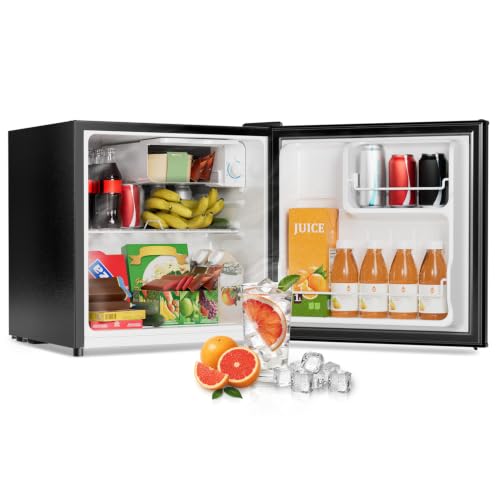
Frostorm 1.6 Cu Ft Mini Fridge
Strengths
- True freezer compartment
- Ultra-quiet at 30dB
- Low daily energy use
Trade-offs
- No Energy Star certification
- Basic interior layout
- Mechanical controls only
This Frostorm model stands out in the crowded mini fridge space because it actually delivers a true freezer compartment, not just a cold spot. At -14°C to -24°C, it’s cold enough for ice cream and ice cubes, which many similarly sized units can’t claim. That’s a real win for anyone who wants more than just chilled drinks. On paper, the 30dB noise level is impressive, and owners consistently report it’s quiet enough for bedrooms and offices, making it a strong contender where peace matters.
It’s also one of the more energy-efficient models, pulling just 0.6 kWh per day. The mechanical thermostat is simple, and reviewers say it’s reliable when set to 3 for everyday use. While it doesn’t have flashy features like LED lights or electronic controls, it focuses on core performance: consistent cooling, solid insulation, and a durable build. Compared to the Midea, it’s quieter and has a colder freezer, though it lacks Energy Star certification.
Video review
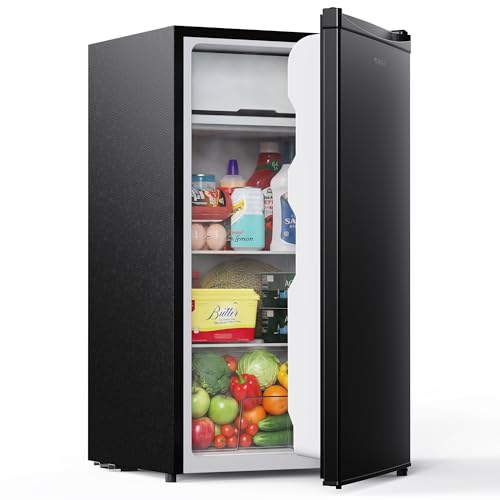
Upstreman 3.2 Cu.Ft Mini Fridge
Strengths
- Large 3.2 cu.ft capacity
- Energy Star certified
- Crisper drawer included
Trade-offs
- Freezer not deep-freeze capable
- Taller footprint needs space
- Cooling range on the warmer side
If you need more space without sacrificing quiet, the Upstreman BR321 is the one to beat. At 3.2 cu.ft, it nearly doubles the capacity of most mini fridges, with a 0.3 cu.ft freezer that’s usable for ice and frozen snacks. It runs at 38dB, quiet enough for a bedroom, and earns Energy Star certification, so it won’t spike your electric bill. Owners appreciate the crisper drawer and adjustable shelves, which add real food-storage flexibility.
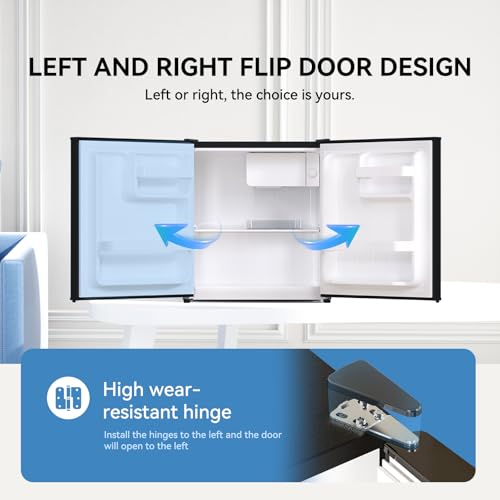
The cooling range (32°F–50°F) is a bit high for ideal dairy storage, and it’s not meant for ice cream, but it handles everyday refrigeration well. Compared to the Frostorm, it’s larger and more feature-rich, though not quite as quiet. The reversible door and leveling feet make it adaptable to uneven floors or tight corners. For a secondary fridge in a home office or larger dorm room, this is the smarter buy.
Video review
Antarctic Star 4L Portable Mini Fridge

Strengths
- Extremely quiet at 25dB
- AC/DC power options
- Ultra-affordable
Trade-offs
- Thermoelectric cooling only
- No freezing capability
- Limited capacity
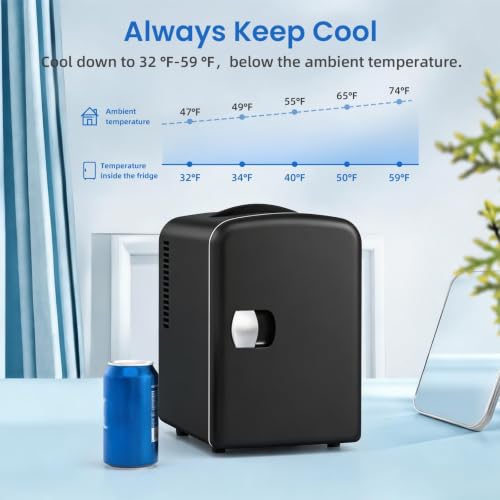
At just 4L and under $40, this Antarctic Star unit is the budget king, but with clear limits. It’s designed for portability, with AC/DC power options that make it perfect for cars, camping, or a college dorm desk. The 25dB noise level is impressively quiet, and reviewers confirm it runs smoothly without drawing attention. It cools to 32°F–59°F, which is fine for drinks or skincare, but don’t expect deep chilling.
It’s not a replacement for a real fridge. The thermoelectric cooling means performance drops in hot rooms, and it can’t freeze anything. But for storing a few sodas, snacks, or beauty products, it’s surprisingly effective. Compared to the Crownful, it’s cheaper but lacks heating functionality. If you need basic cooling on a tight budget or in a mobile setting, this one delivers.
Product photos



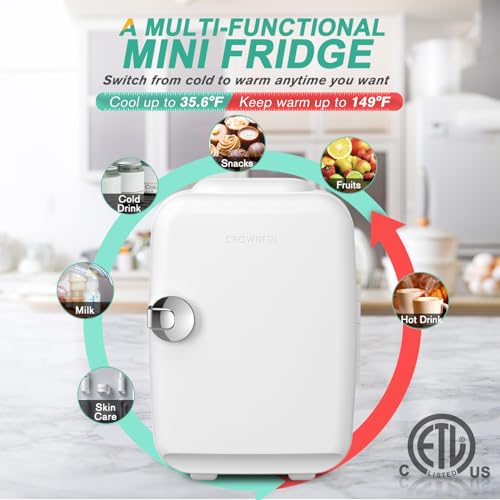
CROWNFUL Mini Fridge for Skin Care

Strengths
- Cooling and warming modes
- Super quiet at 25dB
- ETL safety certified
Trade-offs
- No freezing capability
- Small capacity
- Performance varies with room temp
The Crownful stands alone as the only cooler AND warmer in this lineup. That dual functionality makes it uniquely useful for skincare, warming serums or keeping masks chilled. It cools to 10–20°C below ambient, so in a 70°F room, it reaches the low 50s, which is fine for cosmetics and drinks. The 25dB sleep mode is whisper-quiet, and owners love the ETL certification for safety, especially in bedrooms.
It’s not a food fridge. The 4L capacity fits six cans, and the thermoelectric system can’t freeze. But for beauty storage, breast milk, or a nightstand cooler, it’s excellent. Compared to the Antarctic Star, it’s pricier but adds heating and a more polished design. If you’re organizing a vanity or need temperature flexibility, this is the only real choice.
Product photos



Antarctic Star 18L Beverage Refrigerator

Strengths
- Stable compressor cooling
- Holds 24 cans
- LED interior lighting
Trade-offs
- No freezer or food storage
- Limited temp range
- No adjustable shelves
This Antarctic Star beverage cooler is built for one job: keeping drinks cold and organized. With a 40°F–61°F range and compressor cooling, it maintains stable temps for sodas, beer, and wine, no temperature swings. The LED lighting makes it easy to grab a drink at night, and the horizontal racking holds 24 cans neatly. At 14.88” deep, it’s slim enough for tight spaces but still packs in a surprising amount.
Owners praise its quiet operation and lack of vibration, which matters for wine storage. It’s not for food, no freezer, no crisper, no low temps for dairy. But as a dedicated drink fridge, it outperforms general-purpose models. Compared to the Upstreman, it’s less versatile but better focused. If you want a sleek, quiet drink station for your living room or bar, this is the pick.
Product photos


Midea 1.6 Cu.ft Mini Fridge
Strengths
- Energy Star certified
- Consistent cooling performance
- Removable glass shelf
Trade-offs
- Louder than top quiet models
- No freezer compartment
- Chiller box takes up shelf space
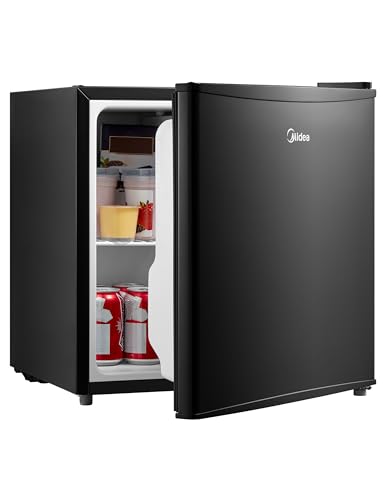
The Midea WHS-65LB1 is a no-frills workhorse that earns its Energy Star certification with a low 207 kWh/year draw, among the most efficient in this category. That matters if you’re leaving it on 24/7 in a dorm or bedroom. The compressor keeps temps steady between 28.4°F and 35.6°F, which is ideal for milk, drinks, and perishables. Owners note it cools quickly and holds temperature well, even in warmer rooms.
It’s not the quietest, 42dB is noticeable in a silent bedroom, but it’s not disruptive for most. Compared to the Frostorm, it lacks a true freezer, but it does offer a chiller box for faster cooling of drinks. The reversible door and removable glass shelf add flexibility, and the build feels sturdy. If energy savings and reliability are your top priorities, this one makes a strong case, even at a higher price point.
Product photos


Frestec 1.7 Cu.Ft Mini Fridge

Strengths
- One-touch defrost button
- Low energy use
- Six temp settings
Trade-offs
- Freezer not deep-freeze capable
- Basic interior finish
- No LED lighting
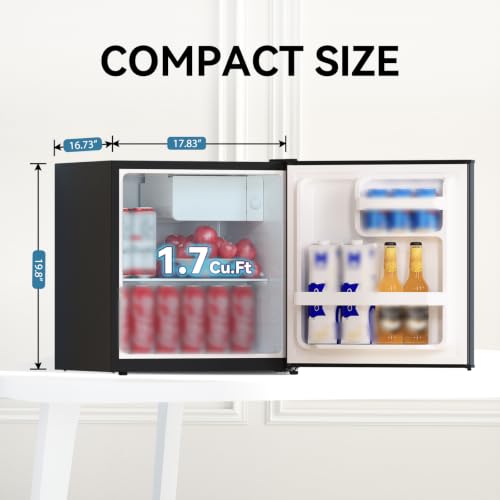
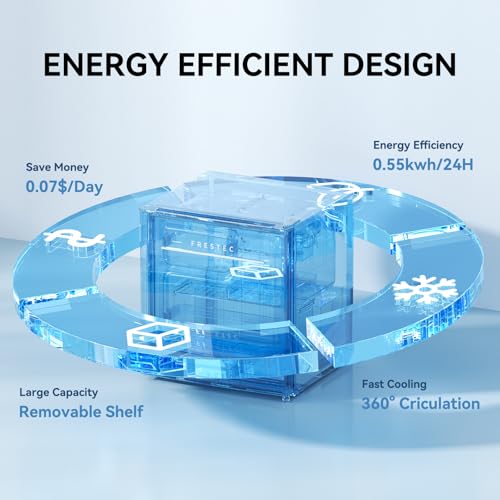
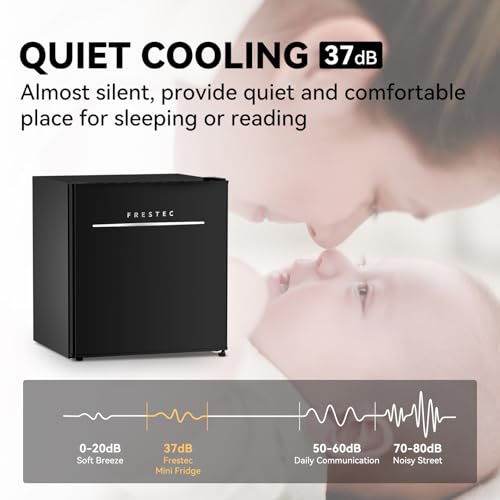
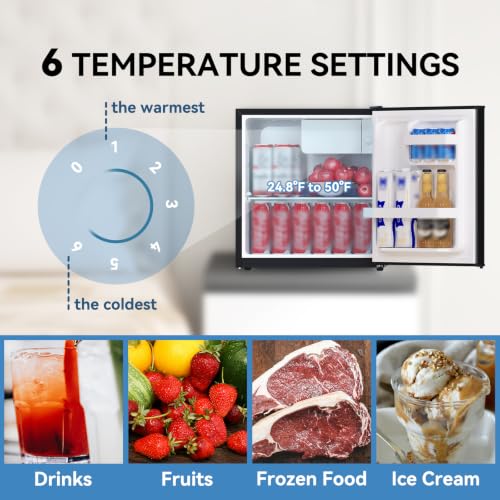
The Frestec 1.7 cu.ft model is the best value play, low price, solid specs, and a few standout features. At 37dB, it’s quiet enough for a bedroom, and the 0.55 kWh/day draw means low running costs. The six-level thermostat gives more control than most, letting you fine-tune from 28.4°F to 50°F. The one-touch defrost is a rare convenience in this class, no manual ice scraping.
It doesn’t have a true deep freezer, but the light-freeze zone works for ice cubes. Owners say it cools quickly and holds up well over time. Compared to the Frostorm, it’s slightly louder and less cold in the freezer, but cheaper and easier to defrost. For a dorm or apartment where budget and ease matter, this one hits the sweet spot.
Product photos
Our Testing Process
As someone who dedicates Food Keepy to helping people optimize food storage, I approached researching small quiet refrigerators by looking at a combination of published specifications, owner reviews, and expert opinions. Rather than a hands-on lab test, this is a research-led comparison of features and reported performance. I compared models across a range of retailers, focusing on stated noise levels, capacity, cooling performance, and energy efficiency. We then weighed these factors against what owners are actually saying about long-term reliability and real-world usability.
For this category, cooling performance and noise level were the most important considerations. A refrigerator’s ability to maintain consistent temperatures – especially for food safety – is paramount. Equally crucial, given the intended use cases (bedrooms, offices, dorms), is quiet operation. Energy efficiency also played a significant role, as these are often secondary appliances and owners want to avoid unnecessarily high electricity bills. You’ll find more information on selecting the right size for your needs in our guide to apartment size refrigerators.
Specifications reliably indicate capacity and energy consumption. However, owner feedback was essential for assessing noise levels (manufacturers’ dB ratings can be optimistic) and long-term durability. Reputable review sites helped validate claims about cooling performance and build quality. Ultimately, we prioritized models that consistently received positive feedback regarding quiet operation and consistent temperature maintenance, while also offering a good value for the features offered. If you are looking for more options, check out our recommendations for small compact refrigerators.
How To Choose The small quiet refrigerators
Finding the right small refrigerator involves more than just picking a cute color. We need to think about how and where it will be used, and what you genuinely expect it to do.
A good small refrigerator balances cooling performance with energy efficiency, quiet operation, and a footprint suited to its intended location. Key considerations include capacity, temperature control accuracy, noise level, and whether a freezer compartment is actually needed. Prioritize features aligned with your lifestyle, skincare storage demands different specs than beverage cooling.
Capacity and Dimensions
It’s easy to underestimate how much space you actually need. Don’t just measure the available area; visualize what you’ll be storing. A 1.6 cu ft model like the Frostorm might be perfect for a single person’s drinks and a few snacks, but a couple sharing a space will quickly find it limiting. The Upstreman 3.2 Cu.Ft offers a significant jump in capacity, which could be beneficial if you want to store more than just beverages. Consider the depth as well; a deep fridge might not fit comfortably behind a desk.
Temperature Control and Cooling Performance
Consistent temperature is vital for food safety and preservation. Many of these units use mechanical thermostats (a dial numbered 1-5), which can be imprecise. Look for models that specify a temperature range rather than a single temperature setting. The Antarctic Star 18L Beverage Refrigerator specifically mentions a working temperature range of 40°F-61°F, giving you a better idea of its capabilities. Don’t assume all “mini fridges” can reliably get things cold enough for sensitive items. If you’re looking for options with more precise temperature control, you might also want to check out our guide to small refrigerators.
- A mechanical thermostat is fine for basic cooling, but expect some fluctuation.
- Digital thermostats offer better precision, though they add to the cost.
- Look for models that use R600A refrigerant (like the Midea) as it’s more environmentally friendly and generally more efficient than older refrigerants.
A rule of thumb: if you plan to store anything perishable for more than a day or two, prioritize models with a clearly defined and narrow temperature range.
Features and Value
Beyond basic cooling, consider features that align with your needs. Do you want a reversible door? (Most do, thankfully.) Is a freezer compartment essential, or just a nice-to-have? If skincare is your priority, a model like the CROWNFUL Mini Fridge designed specifically for that purpose might be worth the investment. However, don’t pay for features you won’t use. For example, the Antarctic Star 4L Portable Mini Fridge offers both AC/DC power, making it great for travel, but is likely overkill if it will live permanently in a dorm room. If you need a freezer, consider exploring compact fridges with freezer options to ensure you get the functionality you require. The Frestec 1.7 Cu.Ft Mini Fridge strikes a good balance of features and price, offering a one-touch defrost and adjustable shelves.
Small Quiet Refrigerators Compared
Here’s a comparison of key specifications for several small, quiet refrigerators to help you make an informed decision.
| Product Title | Capacity (Cu. Ft) | Noise Level (dB) | Temperature Range (°F) | Power Consumption (kWh/day) | Special Features |
|---|---|---|---|---|---|
| Frostorm 1.6 Cu Ft Mini Fridge | 1.6 | 30 | -14 to 80 | 0.6 | Freezer Compartment |
| Upstreman 3.2 Cu.Ft Mini Fridge | 3.2 | 38 | 32 to 50 | N/A | Energy Star Certified |
| Antarctic Star 4L Portable Mini Fridge | 4L | 25 | 32 to 59 | N/A | AC/DC Power Options |
| CROWNFUL Mini Fridge for Skin Care | 4L | 25 | 10-20°F below ambient | N/A | Cooling/Warming Function |
| Antarctic Star 18L Beverage Refrigerator | 18L | N/A | 40 to 61 | N/A | Beverage Focused |
| Midea 1.6 Cu.ft Mini Fridge | 1.6 | <42 | 28.4 to 35.6 | 0.207 | E-Star Certified |
| Frestec 1.7 Cu.Ft Mini Fridge | 1.7 | 37 | 28.4 to 50 | 0.55 | One-Touch Defrosting |
Frequently Asked Questions
What decibel level is considered truly “quiet” for a mini fridge?
Anything under 40dB is generally considered quiet enough for a bedroom or office. However, owner reviews suggest manufacturer-reported decibel levels can be optimistic, so reading those firsthand accounts is crucial.
Can a mini fridge reliably keep medications at the correct temperature?
While some models can reach appropriate temperatures, it’s not generally recommended. Medications often require very precise temperature control, and most mini fridges with mechanical thermostats lack that consistency; consider dedicated medical refrigerators instead.
Are mini fridges with freezers actually useful, or do they sacrifice too much cooling space?
The usefulness of a freezer compartment depends on your needs. Many have very small freezers (under 1 cubic foot) that are best for ice packs or very small frozen items, and can reduce the main fridge’s capacity.
What’s the difference between R600A and older refrigerants, and why does it matter?
R600A is a more environmentally friendly refrigerant with a lower global warming potential than older types. It’s also typically more energy efficient, potentially saving you money on your electricity bill and aligning with more sustainable practices.
If I have limited space, should I consider looking at refrigerators for small kitchens instead of a mini fridge?
Sometimes, a slim, full-size refrigerator designed for compact spaces can offer more usable capacity than a mini fridge. You might also find options with better temperature control and features if you explore top fridge picks for tiny kitchens.
The Bottom Line
Choosing a small quiet refrigerator often comes down to balancing how much control you want over temperature with how much fuss you’re willing to tolerate. For the best overall performance and a good balance of features, I recommend the Upstreman 3.2 Cu.Ft. It offers a generous capacity without sacrificing quiet operation, and its Energy Star certification is a bonus.
If you’re on a tighter budget, the Frostorm 1.6 Cu Ft Mini Fridge is a solid option. For those with very specific needs – like skincare storage – the CROWNFUL Mini Fridge for Skin Care is a specialized choice. And if you’re looking for even more options for limited spaces, you can explore other refrigerators for small spaces.
Ultimately, remember that a precise temperature setting and quiet operation are more valuable than any extra feature. Don’t get caught up in bells and whistles; focus on a model that consistently maintains a cool, safe temperature and won’t disrupt your peace and quiet. Consider your needs, and don’t be afraid to look at 10 cu ft refrigerators if you need more space.
