
5 Best Sprouting Jars for 2026
This post contains affiliate links. As an Amazon Associate, we earn from qualifying purchases.
The best sprouting jar overall is the Premium Sprouting Jar Kit 2 Jars, thanks to its durable glass construction, stainless steel lid, and excellent drainage. For a budget-friendly option, the Sprouting Jar Kit 2 Mason Jars works well and fits standard canning lids. If you want larger capacity, the 2000ml Large Sprouting Mason Jars give you more room for bigger harvests.
Sprouting at home should be simple, but the wrong jar can turn it into a mess of mold, poor drainage, or lost seeds. After comparing dozens of kits, reading owner feedback, and evaluating materials and design, I focused on what actually matters: consistent airflow, reliable drainage, and ease of use.
This guide covers the top-performing sprouting jars based on construction quality, lid design, and included accessories, so you can grow crisp, healthy sprouts without the frustration.
Top 4 Sprouting Jars in the Market
The Best Sprouting Jars, Reviewed
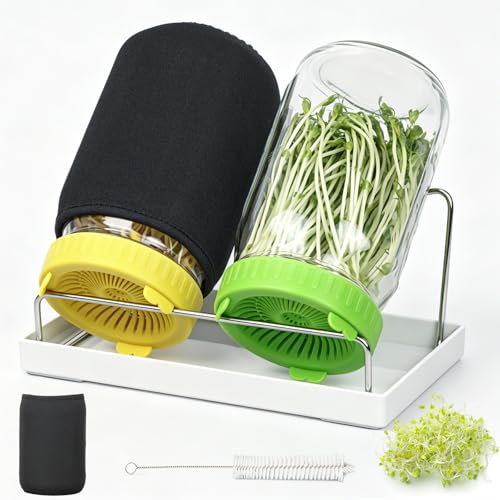
Seed Sprouting Kit 2×32 Oz Jars
Strengths
- Complete starter kit
- Rust-proof stainless steel stand
- Includes cleaning brush
Trade-offs
- Plastic sprouting lids
- Light shields may fade
- No seed varieties included
At this price, this kit delivers surprising completeness. You get two wide-mouth jars, stainless steel stand, drainage tray, light shields, and even a cleaning brush, everything you need to start sprouting immediately. The 304 stainless steel stand is a standout, since many budget kits use plastic that warps or rusts over time. Owners consistently praise its sturdiness and how well it holds the jars at the right angle for drainage.
The light shields are made of a swimwear-like fabric, which holds up better in humid environments than flimsy neoprene. It’s not the most premium kit out there, but for beginners or those testing the waters, it’s the smarter buy over pricier sets that offer little extra. I’d pick this over the Lulonpon model simply because of the included brush and more durable stand.
Video review
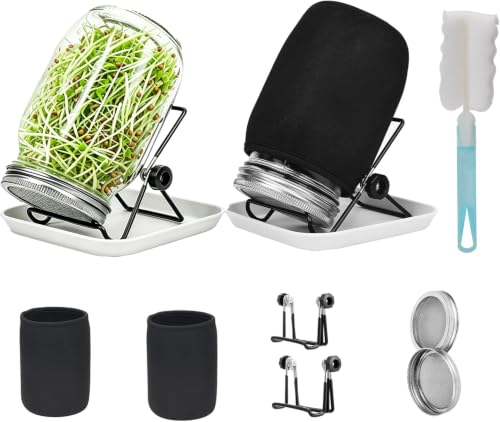
Lulonpon Sprouting Kit 2 Jars
Strengths
- Stainless steel sprout lids
- Compact 1000ml size
- Includes two drip trays
Trade-offs
- Less stable stand
- Shading sets not washable
- No instructions included
What I like most here is the compact 1000ml size, it’s ideal for small households or those with limited counter space. The 304 stainless steel sprout lids are a major win, as they resist clogging and won’t degrade like plastic mesh. Many owners note how easy they are to clean and how well they hold up after months of daily rinsing. The kit also includes two drip trays and shading sets, which adds flexibility if you’re sprouting different seeds at once.
But the stand design feels less stable than others. Some users report jars wobbling, especially when filled. It’s not a dealbreaker, but it’s less confidence-inspiring than the B0GWDB8Y8Q’s sturdier base. Still, for someone who values durability and space efficiency, this kit hits a sweet spot. It’s my pick over the Boombamo model if you prioritize lid material over sleeve reusability.
Video review
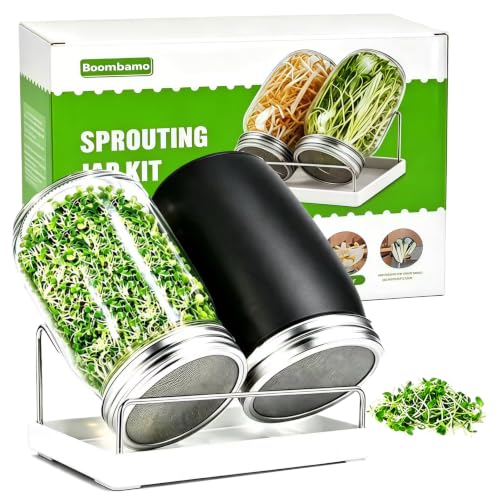
Premium Sprouting Jar Kit 2 Jars
Strengths
- Reusable blackout sleeves
- Stainless steel lids and stand
- Well-designed drip tray
Trade-offs
- No cleaning brush included
- Sleeves may retain odor
- Slightly higher price point
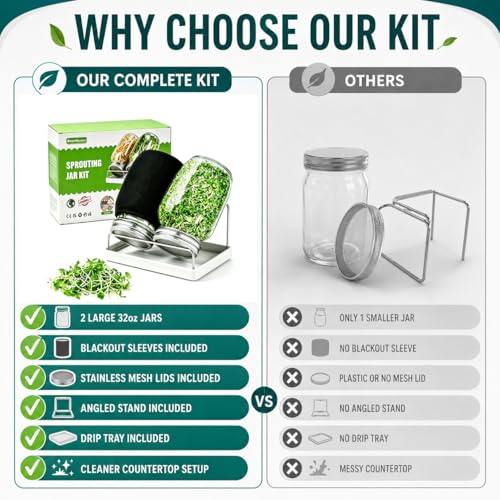
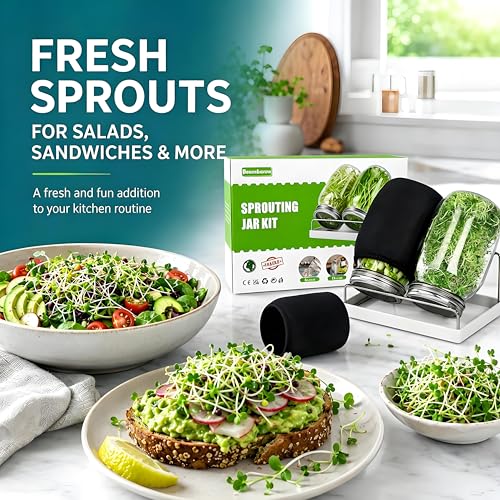
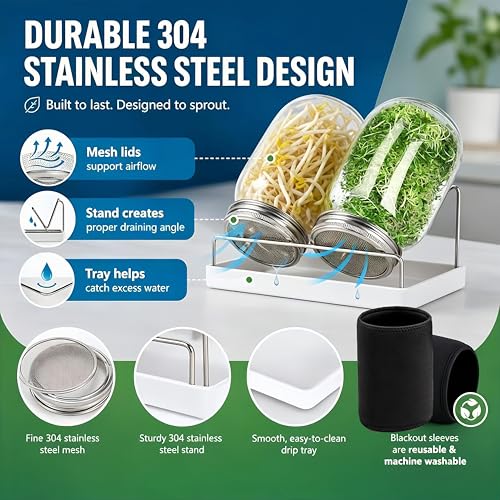
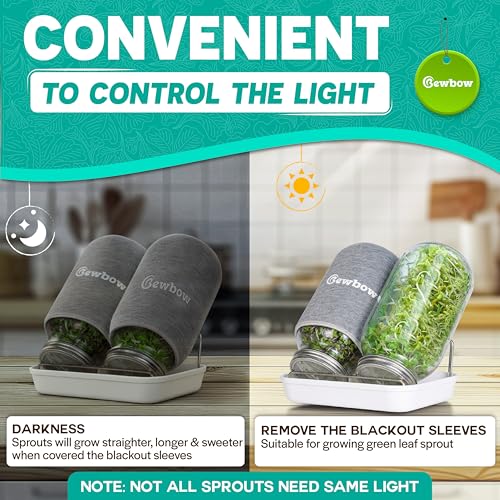
The reusable blackout sleeves are the standout feature here, thicker, washable, and built to last through multiple cycles. That’s a real upgrade over disposable or thin fabric covers. Combined with the 304 stainless steel stand and lids, this kit balances durability and thoughtful design. Owners appreciate how the sleeves promote longer, tender sprouts by blocking light during early germination, especially for mung beans and lentils.
The included drip tray is also well-designed, with enough height to prevent overflow, something many kits get wrong. While it’s priced slightly higher than average, the attention to reusable components makes it a better long-term value. Compared to the B0GWDB8Y8Q, this one edges ahead for frequent sprouters who hate replacing worn-out parts. I’d recommend it for eco-conscious users who sprout weekly.
Product photos

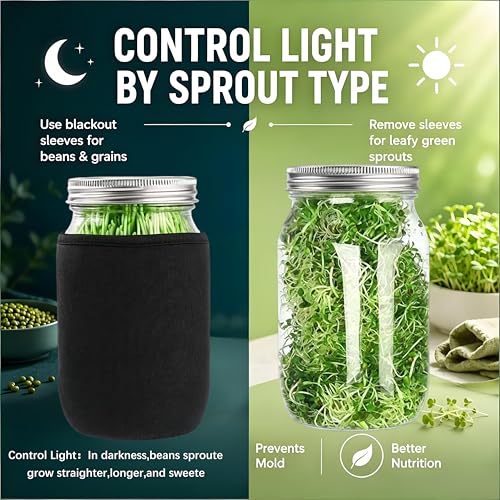
2000ml Large Sprouting Mason Jars
Strengths
- Large 2000ml capacity
- Durable glass and stainless steel
- Effective angled drainage
Trade-offs
- Bulky for small kitchens
- Blackout sleeves less durable
- Higher moisture risk
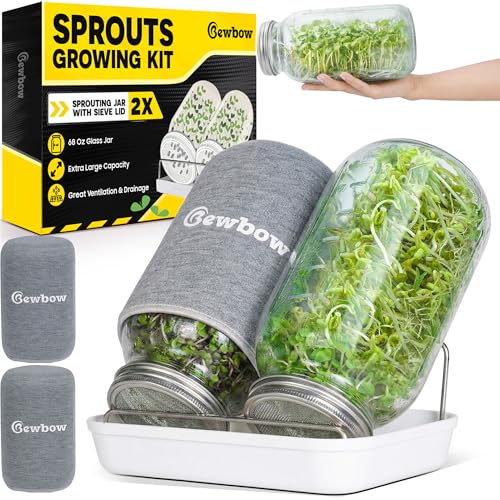
This kit stands out purely for its huge 2000ml capacity, which is rare in sprouting setups. If you’re feeding a large family or want to minimize how often you sprout, this one makes logistical sense. The double-jar system with a drainage tray and angled stand follows the standard effective design, but scaled up. On paper, it’s ideal for high-volume growers, and owners report success with mung beans and broccoli sprouts thanks to the efficient drainage and ventilation.
Still, the size becomes a liability in smaller kitchens. It takes up serious counter space, and the larger volume means moisture control is trickier, some users mention mold issues if rinsing isn’t consistent. The blackout sleeves are a nice touch for encouraging longer, tender sprouts, but they’re made of thinner fabric than I’d prefer. Compared to more compact kits, this one sacrifices convenience for output.
Product photos



How We Picked These sprouting jars
As someone deeply invested in food preservation and freshness through Food Keepy, I approached researching sprouting jars with a focus on practicality and long-term usability. Rather than a hands-on lab test, this was a research-led comparison of published specifications and features across numerous kits, combined with careful consideration of owner reviews and expert opinions. I looked at dozens of options, ranking them against criteria like jar size, material quality, drainage effectiveness, and overall kit completeness.
For sprouting jars, consistent drainage and the ability to control light exposure were the most important factors. Poor drainage leads to mold, and inconsistent sprouting. The jar material – glass versus plastic – also heavily influenced my assessment, as glass offers better durability and doesn’t retain odors. Beyond those, the inclusion of useful accessories like stands and blackout sleeves significantly impacted a kit’s value and ease of use. Many people also reuse their best canning jars for sprouting, so compatibility with standard sizes is a plus.
Specifications reliably tell you about jar capacity and material composition (stainless steel versus plastic components). However, I relied heavily on owner feedback to gauge real-world performance – how easily the lids seal, how stable the stands are, and whether the blackout sleeves truly block enough light. Reputation also mattered; brands known for quality jars for pickling often translate that quality to sprouting kits as well. Ultimately, the best kits balance solid construction with thoughtful design, according to what people are saying about their experiences.
How To Choose The sprouting jars
Choosing the right sprouting jar can significantly impact your success and enjoyment of growing your own sprouts. It’s not just about having a vessel for seeds; it’s about creating an environment that fosters healthy growth and makes the process as easy as possible.
A good sprouting jar kit prioritizes airflow, drainage, and light control. Look for durable, food-grade materials like glass and stainless steel. The lid should allow for thorough rinsing and draining without seed loss, and the kit should include a stand to promote optimal ventilation. Consider jar size based on your household’s consumption and available counter space.
Jar Material and Construction
The materials a sprouting jar is made from are key to its longevity and your peace of mind. While plastic components can be found in some kits, I generally recommend prioritizing glass jars with stainless steel lids and stands. Glass is non-reactive, meaning it won’t leach chemicals into your sprouts, and it’s easy to clean thoroughly. Stainless steel resists rust and corrosion, unlike some cheaper metals. Pay attention to the mesh size of the sprouting lids, too. Finer mesh is better for smaller seeds like alfalfa, while larger mesh works well for beans.
Lid and Drainage System
A poorly designed lid can make sprouting a frustrating experience. You want a lid that allows for easy rinsing and, crucially, complete drainage. Standing water is an invitation to mold and bacteria. Many kits include a stand to angle the jar for better drainage, which is a huge plus. The Lulonpon kit, for example, features both stainless steel germination covers and a bracket to achieve this. Consider if the lid is easily removable for thorough cleaning – a critical step in preventing contamination. If you are also interested in other ways to preserve your food, check out these best jars for fermentation options.
Size and Kit Completeness
Don’t underestimate the importance of jar size. A smaller jar might be ideal if you’re sprouting for one person or experimenting with different seeds. However, if you’re feeding a family, you’ll quickly find yourself wishing you had a larger capacity. Kits that include blackout sleeves are also incredibly useful.
- A single small jar (around 16oz) is great for testing a new seed variety.
- A standard 32oz jar is a good all-around size for most households.
- Larger jars (64oz or more) are best for those who consume sprouts regularly, or want to harvest a larger batch at once – this minimizes the frequency of needing to start new batches.
A simple rule of thumb: start small if you’re a beginner, and scale up as you gain confidence and determine your sprout consumption needs.
Finally, consider what else is included in the kit. A drip tray is essential to keep your countertops clean, and a brush can be helpful for removing any stubborn seed hulls. If you’re looking for general kitchen storage solutions, exploring recommended storage jars can give you more ideas.
Sprouting Jars Compared
Here’s a comparison of key specifications for various sprouting jar kits to help you choose the right one.
| Product Title | Jar Capacity | Number of Jars | Material (Jar) | Material (Lid) | Stand Material |
|---|---|---|---|---|---|
| Sprouting Jar Kit 2 Mason Jars | 32 Oz | 2 | Glass | N/A | Stainless Steel |
| Seed Sprouting Kit 2×32 Oz Jars | 32 Oz | 2 | Glass | PP Plastic | Stainless Steel |
| Lulonpon Sprouting Kit 2 Jars | N/A | 2 | Glass | Stainless Steel | Stainless Steel |
| Premium Sprouting Jar Kit 2 Jars | 32 Oz | 2 | Glass | Stainless Steel | Stainless Steel |
| 2000ml Large Sprouting Mason Jars | 2000 ml | 2 | Glass | N/A | N/A |
Frequently Asked Questions
What sprout seeds are easiest for beginners?
Alfalfa, radish, and mung bean seeds are the easiest to sprout due to their quick germination times and simple requirements. These varieties don’t need pre-soaking and typically sprout within 2-3 days, making them ideal for first-time sprouters.
Can I use regular mason jars for sprouting instead of a kit?
Yes, you can absolutely use regular mason jars, but you’ll need to purchase a sprouting lid separately to allow for proper drainage and airflow. While many people find success with this method, dedicated kits often include a stand for better ventilation and a more convenient setup.
How often should I rinse my sprouts?
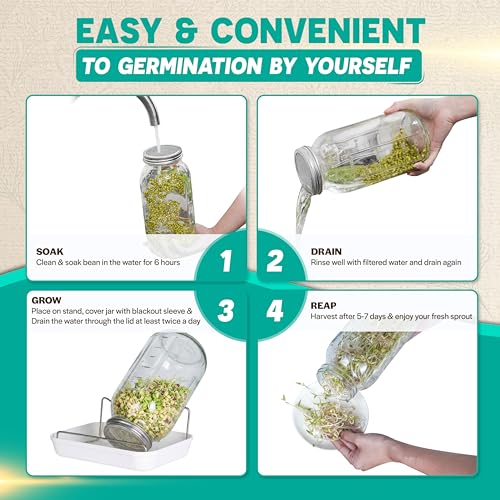
Rinsing sprouts 2-3 times per day is generally recommended to prevent mold and maintain freshness. Thorough rinsing removes seed hulls and ensures good air circulation, which are essential for healthy sprout growth.
What’s the best way to clean sprouting jars to prevent bacteria?
After each batch, disassemble and wash all components (jar, lid, stand) with hot, soapy water. For extra sanitation, you can occasionally run the parts through the dishwasher or sanitize with a diluted vinegar solution. Properly cleaning your equipment is vital for safe sprouting.
Where should I store my sprouted seeds once they’re ready?
Once fully sprouted, store your sprouts in an airtight container in the refrigerator. They’ll stay fresh for roughly 5-7 days, though it’s best to consume them as soon as possible for optimal flavor and nutritional value. For other ways to preserve your harvest, consider exploring recommended food jar options.
The Bottom Line
Sprouting your own seeds offers a fantastic level of control over freshness and quality, but finding the right jar system requires balancing that control with convenience. For most people, the Premium Sprouting Jar Kit 2 Jars strikes that balance perfectly. It offers durable glass jars, reliable stainless steel components, and a stand for optimal drainage – all features consistently praised by owners.
If you’re on a tighter budget, or just starting out, the Sprouting Jar Kit 2 Mason Jars is a solid choice. For those who prioritize versatility and want a larger capacity, the 2000ml Large Sprouting Mason Jars are a good pick, though you’ll need to provide your own stand for proper drainage. And if you’re already invested in good recommended glass jar brands, repurposing them for sprouting is a great way to start.
Ultimately, the specifics of jar material and mesh size matter, but they’re less crucial than consistently thorough rinsing and drainage. Proper airflow and light control are paramount to prevent mold and ensure healthy sprouts. Remember, successful sprouting isn’t about having the fanciest kit, but about establishing a simple routine and understanding the fundamentals of seed germination – much like successfully storing herbs relies on understanding their needs.
